Loading summary
Transcript49 lines
- [00:00]
A
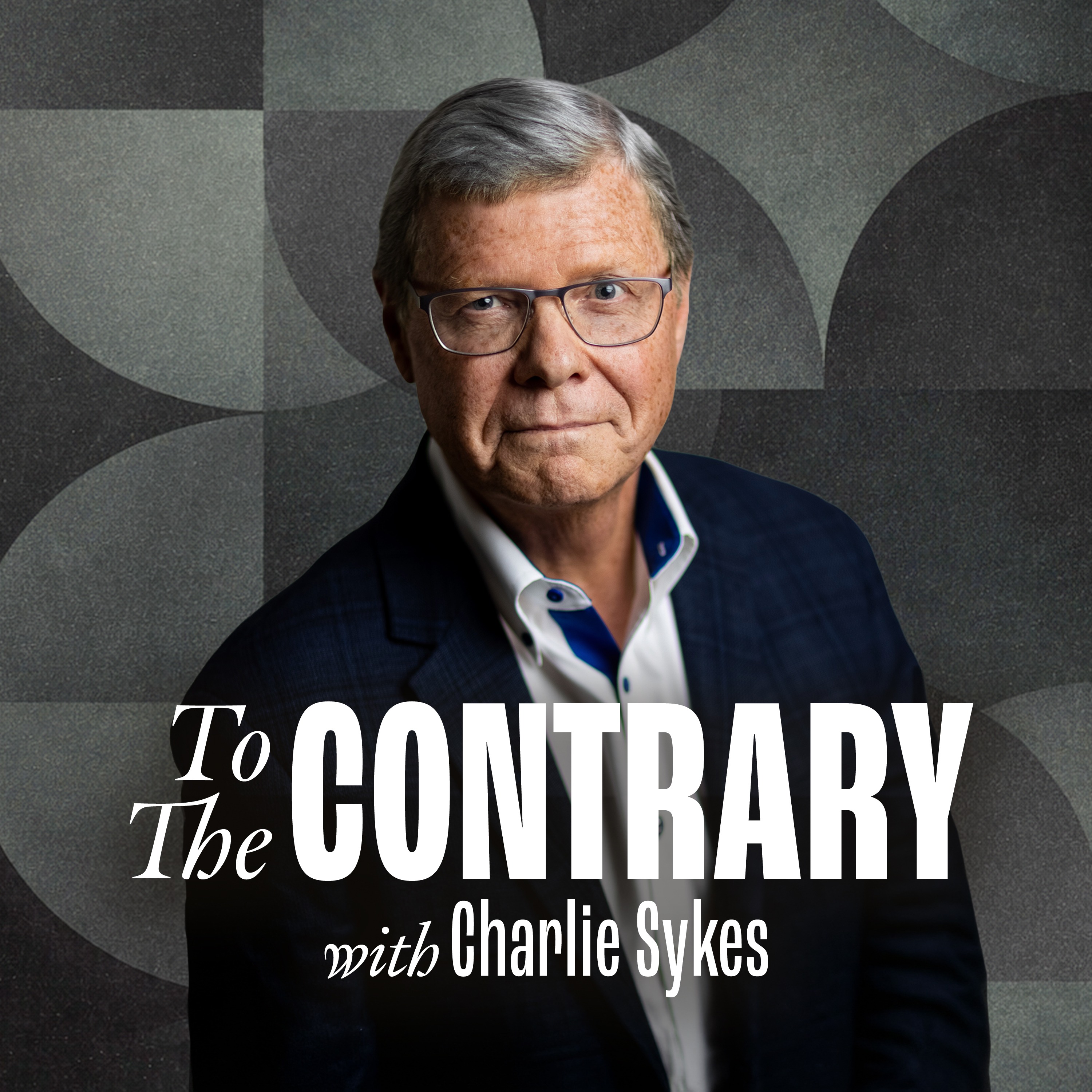
I'm Charlie Sykes. Welcome back to the to the Contrary podcast. You know, if you are under the impression that things are actually getting dumber, it's not just you, they actually are. The President of the United States, in the midst of surrendering to Iran, now has a new, slightly obscene but completely juvenile jibe about the Senator from Georgia, Ossoff, which I'm not even going to get into. I mean, we could spend a full half hour talking about the green algae in Donald Trump's reflecting pond, but we doactually, we put probably will spend a little bit of time on that, but there's so much going on. The President is at G7. We're getting the details about the deal, and if anything, they may be worse than people thought, which is why there's a lot of concern and hand wringing even among the MAGA loyalist base. Let's get to it. And joining me on this beautiful Wednesday Thursday morning, our good friend Ed Luce from the Financial Times, who been watching all of this. First of all, welcome back to the podcast, Ed.
- [01:08]
B
It's always a delight to be on,
- [01:10]
A
Charlie, because there's so many heavy things. Can we just like, start with the green pond? You know, in my newsletter yesterday, I said that your soul has to be drained of all poetry and irony, not to really kind of relish this moment. Donald Trump spends $14 million turning this pond into this beautiful patriotic blue, and nature defies him. And it is green. It just, it seems kind of on the nose, don't you think? Can we just do metaphor?
- [01:39]
B
It really does. I mean, I think if you fail to sort of exploit this gift of a galactic gift of a metaphor, then you don't have a heart. You really got to put your heart and soul into this metaphor because it is just an extraordinary own goal by the White House to, you know, present this David Hockney kind of image of the reflecting pool being perfect sort of Californian blue. And then the reality is that it turns sort of pea soup green within a couple of days. It's just too much of a gift of a metaphor. It really is.
- [02:22]
A
And also, I mean, to be a little bit serious, it's also kind of a metaphor of the limits of presidential power, which seems very, very timely at this point because Donald Trump is kind of, you know, King Canute who, you know, goes down and tells the tides to not come in. And he waves his hands and says, you know, you shall be blue. And nature says, we'd like a word with you on this. It's green. Donald Trump says, I'm going to have this really quick war of whim with Iran. So let's get to that in just a moment. What do you make of his performance at the G7 summit? Because I have to say I'm reading some of the quotes from the president. I mean, there are some good things. He apparently had a good sit down with Volodymyr Zelenskyy. But what do you make of the comments where he's saying, I never cared about regime change, poking at Israel, kind of throwing his former best friend Bibi Netanyahu under the bus while saying how rational and smart and nice and not at all radical the mullahs of Iran are. What do you make of that, Ed?
- [03:27]
B
I make of the fact that somewhere in his subconscious he is aware of, of what an extraordinary, dastardly climb down this is. And there is, if embarrassment is a word that can even be applied to President Trump, there is somewhere within him an awareness of that. And so he's trying to. I think his subconscious has basically been unfiltered since he got to evian to this G7 summit. It's not as if it's the Europeans who are reminding him. They're all being very polite and saying, this is an historic, wonderful deal, great for the world economy. We'll do everything we can to help reopen the Strait of Hormuz. But Trump's aware, I think, that this is a surrender document. These 14 points of the draft MoU that has been leaked, even if there is a slightly different version on Friday, that's clearly the body of what's been agreed. And it's giving Iran pallets and pallets and pallets of money in order to get to the situation we were at on February 27, namely an open waterway. So I think Trump's subconscious is giving quite a lot away here. There's no real way of talking himself out of this.
- [04:53]
A
Well, of course he'll try to talk himself out of it because he thinks he can always talk himself out of it. Look, I mean, the real tell was the fact that they declared the deal. They said that it was signed electronically, and then they kept it super secret day after day after day. If it was such a good deal, wouldn't you let us know what it is? He didn't even brief the Senate leader, John Thune, about it. So that was a tell. And then they sent J.D. vance, they push him through the curtain, and you go sell this thing. And before we get to the details, I really have the sense, especially as we're learning how bad the deal is that J.D. it feels like J.D. vance is being set up here. It's like, okay, J.D. you sell the shit sandwich. You notice that Donald Trump is not gonna be going to the signing ceremony. Marco Rubio is not on all the television shows, and here's J.D. vance, who is apparently going to roll into 2028 with his great signature accomplishment being the absolute humiliating capitulation to Iran. So this is not a real gift to J.D. vance, is it?
- [05:56]
B
It's not a real gift. And poor JD Vance was planning to do the rollout for his book Communion. And I just, in parenthesis, do have to emphasize the fact that Vance is selling a religious book, a moral book about his own ethics. The guy who's enabling the worst grift as vice president, the worst griff we've seen in presidential history, I think certainly in modern presidential history, and some of the nastiest social policies, that he is bringing out a book about his Catholic bona fides. You know, I don't think the word chutzpah even covers it, but he was planning to do. And he is doing a sort of tour of places like the View and liberal media outlets that have viewers that buy books. And now he's gotta go to Geneva and sign this essentially surrender document. So if he's not being set up, I mean, what it reminds me of is the Biden administration giving Kamala Harris the board portfolio. This feels like a poisoned chalice. But I should say that in the broader macro picture that we've got now with Trump's foreign policy and this mou, it's Vance's wing, America First Wing, that is happier with this situation than the Rubio hawkish, dare I say it, neoconservative wing. Because, you know, this is the end of Trump's brief and very foolish foray into, you know, dabbling with forever wars in the Middle East.
- [07:36]
A
This is a very important point.
- [07:37]
B
I'm going to be happy to sell this, but it's really unsellable.
- [07:41]
A
No, this is an important point because as I'm watching the reaction, the people who are the most hysterically upset about this are the. I suppose we used to call them the neocons, the supporters of the war, the ones who are telling Donald Trump, go in there with fire and fury, epic fury, finish the job, you know, get rid of the regime. Those folks are saying what just happened. It appears that he's completely given up on this war. And clearly, and I want to get to Bibi Netanyahu, I mean, has made it clear that we are not on the same page anymore. So let's just talk about. Okay. Oh, before I move on from the J.D. vance book, the fact that, you know, this wasn't going to go well this summer anyway, here's JD Vance, who's chosen to write this book about his conversion to Catholicism during a period in which the Pope has told him over and over and over again, you don't understand Catholicism, that The gospel of J.D. vance is not the gospel that the Catholic Church teaches. So there was always going to be a little bit of tension of J.D. vance, you know, pushing forward his faith and his morality, but also his Catholicism. And at a time when the entire Catholic Church is basically saying, yeah, welcome aboard, but you don't get it.
- [09:02]
B
Yeah, it's really cinematic, actually, having an American Pope, an Augustinian scholar, who Vance has attempted to school on not just theology, but on St. Augustine. And now he's got this book. If this is a 2028 campaign book, which I guess it is, because why else would he be doing it? Seems to me to be pretty badly misjudged. The whole sort of secret of Trumpianism is to have no rules and no morals and not to care. And the base loves that because they hate the hypocrisy of who, in their eyes, pretend to care. Well, Vance is pretending to care because, I mean, it's pretty hard to take him at face value on all this stuff. He's pretending to care. He's betting on a values with an America first twist, but on a values candidacy. And I have to question his judgment here. I haven't read the book. I don't know whether you've read it yet or excerpts from it, but I think I will. Just out of sort of sheer popcorn eating enthusiasm for train wrecks.
- [10:30]
A
Well, and to your point, this is part of the cognitive dissonance, why it's so hard to get your head around this, that they're running on this value based defenders of Christendom at a time when clearly the Trump MAGA project is to tear down all of the guardrails, all of the norms of civilization, all of the normal rules of decency. We saw this. And I don't want to dwell on the UFC fight on the grounds of the White House or the President's language or the way that people treat one another. But the whole project has been to take this notion that personal character matters, that traditional values matter, that certain things like civic virtue and civility matter and just take a hacksaw to them, take a chainsaw to them, and so on the One hand you're seeing the motorcycles leaping over the lawn of the White House, you know, men pummeling one another and screaming that Michelle Obama is a man. And there's J.D. vance, Father J.D. vance saying, and this is why we are going to bring Jesus Christ and values and Christianity back to American culture. I mean, what it's.
- [11:43]
B
Yeah, call me pedantic, but something doesn't quite fit there. I can't really put my finger on it. I mean he has a reputation and you know, I probably would have shared it. I reviewed his book 10 years ago, Hillbilly Energy and I was very impressed by the writing, the clarity, just by the sort of quality of the mind. So he has a reputation earned back then for being an intellect, but there's really little evidence of it right now. And you know, when he says on one of these shows that, well, Iran, I think it was to Jake Tapper on cnn he said, well look, the reason why we've got this deal and it's such a great deal is for 47 years Iran has been trying, I mean, I'm paraphrasing fanaticism and terrorism and they've suddenly realized it doesn't work and it's a good idea now to come to the table and just be reasonable. It's like, seriously, is that what you think is happening here? You think that Iran is making concessions? I mean, this is a deal that gives Iran hundreds of billions of dollars potentially and it unfreezes, I mean in the early phases, $24 billion. This will enable Iran to rearm, to consolidate for that regime to entrench itself. And if you look at the equation in the Middle east and you mentioned Bibi Netanyahu, Charlie, I mean if you look at the equation there, Netanyahu's life project, 30 years at least, has been. He will be the guy who removes the Iranian regime. And one of the last pieces that he wanted to put in place beforehand was Saudi normalization with Israel. Well now Saudi Arabia has no chance of normalizing with Israel. It's toxic and it's moving closer to Iran but for self protection. So Iran is been made in the space of 1112 weeks into a geopolitical force that was inconceivable before this war began. So I don't envy Vance attempting to sell an MoU that followed a war. He probably didn't advise, but his attempts at doing so are risible. They're not impressive.
- [14:14]
A
Well, I mean you think back on sort of bad deals, you know, bad events that take place, you know, including what happened with both Trump and Biden, with Afghanistan. But, you know, let's go to this detail the deal, because you mentioned, I mean, there's two dimensions, obviously, the domestic political dimension, how this is actually going to play, what Republicans in Congress are going to say or do about it, but also the way it looks to the world. And I have to admit that I was somewhat skeptical about the original reports about the $300 billion slush fund that we're going to give Iran to rebuild. I thought, no, that may sound good in Jared Kushner and Steve Witkoff's head, but there's no way that we're going to unfreeze $25 billion in assets, the pallets of cash, and then create this massive reconstruction, you know, fund for a ramp. But it is right there. It is number six of the 14 points. And my gut sense is that is going to haunt Donald Trump for a long time, and that he is. We'll see whether he repudiates it when the blowback occurs, but I just don't see how that works either internationally, but especially domestically. I mean, I'm trying to imagine going into any MAGA bar and saying, so what do you think of that? Isn't that great that we're giving Iran all of this money? I can't imagine any Republican who's gonna wanna stand up. And even people like, you know, even. Well, Lindsey Graham was defending other slush funds, but he's not gonna defend this slush fund, is he?
- [15:50]
B
Well, he's not gonna defend this one at all. No, I agree with you on that. I mean, I think it could be when we get into detail, and I'm not sure that they know the details. I think this was a headline number that the Iranians requested, and they called it an investment vehicle, which is reparations by any other name,
- [16:12]
A
that war is going to kill him.
- [16:14]
B
Reparations are pretty bad word. And it does imply you are the defeated power. I mean, obviously, the United States isn't militarily defeated, but by virtue of the fact that Iran is still standing, the US has been strategically defeated. And a lot of this money, I suspect, will be sort of. Wyckoff Kushner arranged Saudi Qatari Emirati deals to invest in oil production in Iran and attempt through that method, having failed with the stick, but with the carrot to bind the Iranian regime into being a slightly less badly behaved, terrorism sponsoring, you know, evil regime. I mean, because it is a terrible regime that the Iranians have. And so having failed with the stick, they're moving to the Carrot that I guess it's almost logical given where we are.
- [17:14]
A
But okay, let's go back to this. Reparations. I mean, when you think about how far we have come from February 28, where Iran was this evil state, it was Donald Trump was encouraging the Iranian people to rise up because help is on the way. Was regime change wiping out all of the missiles. Right. Making Iran no longer a regional power, destroying its ability to be a state sponsor of terror, and of course, denuclearizing it. I mean, this was always a question mark because Donald Trump kept talking about we can't have a nuclear weapon. Well, they didn't have a nuclear weapon. They weren't close to having a nuclear weapon. They agreed in the Obama deal that they were never going to have a nuclear weapon. But now he's left the Republican Guard in charge, in power. Iran, as you point out, is actually stronger because now they have flexed their muscles and the whole world knows that they have the ability to shut down the Strait of Hormuz. And we are apparently going to be giving them this massive amount of money. Now I understand the. Maybe I'm waiting for the first person to say, well, after World War II, we had the Marshall Plan, right. We rebuilt Europe, but of course we didn't offer the money when Adolf Hitler was in power. We didn't do that before we won the war. So this point, this recognition that not only we lost, but somehow that the mullahs are more powerful than ever before is mind bending. It's something that's really hard to kind of understand how bad it is. It's one thing not to win the war, but it's another thing to empower people that Donald Trump was describing as these evil monsters like five minutes ago. And now they're his besties.
- [19:05]
B
Now they're rational people, they're good people. And J.D. vance agrees. And of course Netanyahu cannot agree.
- [19:18]
A
So what's he gonna do? What happens to Netanyahu? You wrote a really interesting piece that he made one of the worst Jill Pitts political bets in recent memory. We know there's a lot of reasons why Benjamin Netanyahu wants to have wars. This was the one opportunity. He made a number of decisions, but one of them was to go all in on Donald Trump. And let's pull back for a moment because Benjamin Netanyahu went all in on Maga, all in on Donald Trump, squandered bipartisan support, went into Gaza. I think that the damage to Israel's reputation is generational. They could rationalize that by saying, but it's worth it because of the winds that we're getting now you have the reputational damage, which is long term, but also he's left completely isolated, isn't he? So what happens to Benjamin Netanyahu? What's your read there?
- [20:15]
B
Well, it's really interesting, as you say, just pull back a bit. I mean, the Obama deal, The JCPOA of 2015, Netanyahu. Netanyahu ripped up all sort of conventions and rules of diplomacy by speaking against the sitting president's deal to the joint houses of Congress and attempting to scuttle the deal. Failed. The deal went through. But then he got the last laugh because he persuaded Trump in his first term in 2018 to withdraw from the JCPOA. Now, at that point, Iran had had three years of international inspectors crawling all over its sites and installing cameras and doing spot visits without warning, et cetera. And Iran was deemed consistently to be complying with a very strict deal. Strict on the nuclear side, the criticisms of the deal, whether it didn't touch Iran's missile program or its sponsorship of Hezbollah, etc. Regional proxies. But on the nuclear side, this was a pretty good deal. They shipped out 97% of their enriched uranium and for the remaining 3%, they agreed not to enrich it beyond 3.67%. Very low, very specific. Trump pulled out of the deal in 2018. That's why they're up to 60% enriched uranium. Because Trump pulled out of the deal because America reneged on the deal, not because Iran did. But after America pulled out, Iran said, well, there's no deal to stick to. That's why they got up to 60%. So Netanyahu, it boomeranged him on that, boomeranged on him, but so he doubled his bets, which is, well, we've got to go for regime change and, well, that's blown up in his face. Trump's realized that there's just simply no way to change regime from the air. That clearly the 39 days of bombing and of missile strikes and leadership, decapitation, targeting, et cetera, has actually strengthened the Iranian regime. It's not Saddam Hussein, it's not a one man regime. This is a sort of system regime, quite a sophisticated one, and their grip has been strengthened by this. And so Netanyahu's got no more cards to play. If this MoU that's going to be signed on Friday, if the drafts that have been leaked are accurate, one of the conditions of this deal is that Israel withdraws from Lebanon. Israel is not going to Withdraw from Lebanon. Netanyahu is not going to withdraw from Lebanon. But the real question, and sorry to take so long to answer it, Charlie, the real question is, will Netanyahu try to scupper this deal? And he could do that by escalating with Hezbollah. And Hezbollah will always play along, you know, they are a terrorist group,
- [23:11]
A
or
- [23:12]
B
find some other way of trying to scupper the deal. But it'll be a really high stakes sort of gamble if he tries to take on Trump at this point, because Trump's clearly committed. He wants out of this war. He doesn't want to hear anything more about it.
- [23:27]
A
No, I agree with you. You know, I, I don't think there's a 100% chance this deal gets signed on Iran. But I do think that it's very, very likely that Netanyah Trump has made it absolutely clear that he's furious about this. And the fact that he calls up Axios after reaming out Netanyahu and says, I just reamed out Netanyahu. I told him, you're out of your effing mind. You have no judgment. I mean, this is a real breach. I am not going to tolerate this. But it is interesting once again, you have one of these peace deals that involve a country that's saying, no, we're not part of this at all. So what could go wrong? So many things can go wrong. What do you make of the noise from members of Congress from both parties that they want to have a vote on this, that they say, if you have, if there's a treaty at the end of this, we want an up or down vote on this. I'm not going to get into the politics whether that's a good idea or not a good idea. But from a constitutional basis, that's the way it's supposed to work.
- [24:27]
B
Right.
- [24:28]
A
So has this fiasco awakened Congress from its Trump 2.0 slumber to realize, hey, excuse me, we would like a say in this, too. Should we take that seriously?
- [24:40]
B
Yeah, I mean, it's very late on at the back end, not the front end. They decide maybe we should be consulted. I mean, we will see after the end of this 60 days, I guess the clock starts on Friday, that they're going to be negotiating with some very hardened negotiators whose middle name is patience. That has been a Persian sort of approach to hacking, is to wear down your interlocutors. And we will see whether Vance and Kushner and Wyckoff have the patience and have the technical expertise to get anything decent in these negotiations out of Iran.
- [25:27]
A
And once again, when Trump wants to put his fingerprints on something, he can do that. But the fact that it's their deal, I think is also kind of a tell. And what could go wrong over the next 60 days?
- [25:40]
B
I mean, it might have been you. Somebody this week said, I would love it if a reporter could ask Trump what was in the jcpoa. Could you tell us what you don't like about it? Cuz I think the suspicion is he has no clue what was in the jcpoa. What he disliked about the JCPOA is that Obama negotiated it. Yes, that's it. I would be fascinated to hear his answer to that question. I've done a few calls with him as well. He's not done the effing and blinding about Netanyahu, but the next time I will ask him that and I'll tell you what he says. But there's just no way he's going to get that kind of deal out of which of course is the ultimate
- [26:28]
A
humiliation from his point of view that when people, I think I was just reading a Bloomberg article in an analysis that suggests that it's very, very unlikely that he's going to get a deal as good as Barack Obama got. And of course this is the entire framing. So Donald Trump, one thing is he hates losing, hates anybody thinking he's losing. He hates weakness. The whole thing is about strength and winning and everything. And yet this was such a debacle. If you had asked me a couple of weeks ago, I would say that he's going to get out of this somehow and then he's going to pivot to invading Cuba. Does he have the appetite for that right now? Because he feels kind of low energy, but he always looks for something to change the subject, to change the channel. So are we moving on to Cuba or are Americans just too exhausted with his wars and his adventurism? What do you think?
- [27:27]
B
I would imagine that Rubio is thinking of ways as we speak to sort of get that morale boosting option back at the forefront of Trump's mind. And as you know, I mean, just like Netanyahu's life project has been ending the Iranian regime, Rubio's is to be the Simon bolivar of the 21st century. He wants to sort of deliver Cuba the land of his parents birth from the tyranny that Cubans have been undergoing since 1959. And unlike Iran, there's no Strait of Hormuz anywhere near Cuba. There are no choke points there. The Russians and the Chinese would not rush to their rescue. It probably imaginable. I mean, John Ratcliffe, the CIA director, made a visit to Havana a couple of weeks ago. It's probably imaginable that there could be some kind of a bargain. Del C. Rodriguez kind of bargain with Cuba, Cuba that might sort of boost Trump's morale. I don't think it'll play at all with the base, except in Florida. And it might lift Trump's mood briefly. But I don't think he can get out of the strategic blunder in Iran, which compares with, on a strategic level, not in terms of casualties and military losses, but on a strategic level with the Vietnam and Iran blunders. This is epic in terms of miscalculation, blowback, allies and partners alike now scrambling for other ways of doing business, trying just to avoid the United States whilst he is president. China getting gifts, falling into its lap every day. The geopolitical bill for Operation Epic Fury is something that Trump really can't change the subject from. It's epic.
- [29:26]
A
So I think it was Noah Smith who wrote yesterday that this is Donald Trump's Katrina. And for those of you who need a little historic of it, the Hurricane Katrina was really the beginning of the end of the beginning of George W. Bush losing the country completely. 2005 botched operation, and he never recovered his approval ratings never recovered from Katrina. And Noah Smith makes the point that the damage to Trump may not be as great in the polls because his approval rating is already so, so low. But this does feel like this one moment. I mean, there's a couple of moments. I don't think the Biden's approval rating ever really recovered from the fiasco in Afghanistan. And I agree with you, I think that this one is not going to get any better. But, you know, as you were talking about Marco Rubio being the, you know, being the liberator of Cuba, you know, you wonder in 2028, you know, because I'm guessing that the Iran deal is not going to look better in hindsight, the best Trump can hope for is that everybody forgets about it. So you have J.D. vance, the man who's, you know, got the photo, being, you know, indelibly associated with a surrender to Iran versus Marco Rubio, the liberator of Cuba. Kind of an interesting matchup, if you want to have a setup there. I'm not sure who comes out ahead. Okay. Speaking of people coming out ahead, you had a very interesting piece the other day about Elon Musk. I can't get over the fact that we have the world's first trillionaire, who is one of the most deplorable human beings around. Erratic, bigoted, very clearly willing to use his power in anti democratic ways. You had an interesting framing. You described Elon Musk, the world's richest man, first Trillionaire, as a Bond villain. Can you talk to me about that? Can you talk to us about that?
- [31:18]
B
I was trying to think about two things. One, SpaceX IPO, which is what catapulted him into being the first trillionaire in history. But two, perhaps less noticed in the United States. States was what Elon Musk has been doing in British politics in the last two weeks. And he's got a kind of obsession with Britain. He thinks it's a police state. He thinks it's basically, and he described it as a caliphate as well. He thinks it's like become a Muslim country. And he's sort of fallen, as a lot of people have on his site. He's been Twitter brained, he's sort of been wormholed into believing some really absurd stuff, which is what Twitter eventually does to your brain and that there are ISIS checkpoints in London and I mean it's really quite bizarre. But he's been boosting the far right in Britain. The idea that there was this murder in Southampton of a white boy by a brown boy, essentially in which the Sikh, the British Sikh boy, the murderer, the alleged murderer called the police after he'd stabbed the white boy and said that he'd been abusive and called him racist terms and the police believed it. And then they arrested the dying white 18 year old white boy on his doorstep, handcuffed him while terribly tragic. Bleeding to death and dying and bleeding to death and dying. Terribly tragic certainly sort of highlights the allegations of two tier policing that the police are now trying to sort of overcompensate for a history of having quite strong racial bias against non whites.
- [33:01]
A
What do you mean by the two tier policing in Britain? What is that?
- [33:05]
B
Yeah, so two tier policing is the claim that there's a softer policing for non whites as there is to whites, to make up for a pretty checkered history. And some of that might be true, but the, the way that Musk depicts it is that essentially whites are now second class citizens in Britain and that only this far right party called Restore Britain, which is way to the right incidentally of Nigel Farage's Reform Party, only they can reclaim Britain. They're the only hope left. And he's been boosting these real neo Nazi characters on X and claiming every case is like this. Now I cited in my piece there have been murder cases the other way around where white kids. There was one example recently, a bunch of white teenagers stabbing to death a non white British Muslim on his mother's doorstep whilst he was delivering groceries to her. That didn't merit any tweets from Musk, that didn't merit a national outcry or international attention. And it's clear that he is there to pick on some victims he cares about, others he doesn't give a damn about in order to boost really a neo Nazi agenda. And I find it extraordinary that there's so much hate and resentment and sort of agitating, sort of animosity from the richest man in the world. Certainly money doesn't make you happy, but Musk is like exhibit A, B and C.
- [34:49]
A
This seems like a central problem here is that first of all, we have this massive concentration of wealth, which I think is problematic to begin with, but we have the world's first trillionaire who is making it very clear that he is willing to use his power and his influence to overturn governments, to influence politics, and leaving aside this particular and obviously helping to foment real division and perhaps even violence. But the lack of blowback, I mean, I'm not calling for a return to cancel culture or anything like that, but there was a time when if you engage in the kind of chronic ranting racism. And again, this is not a one off. I got kicked off Twitter writing a piece that. Does anybody notice in the last week he has been going on this massive, like, blatantly racist storm. And yet the markets don't care, his colleagues don't care. There's actually just the crickets in reaction to all of this. There was a time when somebody who behaved with one tenth of the egregiousness of Elon Musk would not have been welcomed in polite society. People would not have wanted to do business with him. And yet there are no consequences. I mean, no consequences, no accountability for the man with so much money and apparently willing to use that money to rip people apart and to obtain more power. I mean, this is an alarming moment, Ed.
- [36:18]
B
You know, there was something Bill Gates actually said to a colleague of mine that became. It was sort of my quote of 2025, the most pithy quote, which was the site of the world's richest man taking from the world's poorest children after he basically gutted USAID during that Doge episode is another case in point. There's a malevolence, there's a darkness about Elon Musk I wish Walter Isaacson's biography had addressed that a little bit more because it does go back in his family history. There's a sort of deeper part of side, far right, particularly on his mother's side history there. And we're seeing that wash out in terms of. Well, this administration only takes Africana refugees, even though they're not refugees by any international definition. So there's a racial animosity there. This isn't just a midlife crisis of a man who thinks he should be treated as a genius in all respects and resents, you know, resents it when he isn't. I mean, clearly there's a lot of that involved, the sort of man child sort of facets to his personality. But there is a boy. You can take the boy out of apartheid, but you can't take apartheid out of the boy dimension to all of this, which I find is shocking, as you say, Charlie, that we're not responding with more pushback and censoriousness to views that should that absolutely be on the pale, their racial views.
- [37:58]
A
Well, I have two conflicting views on this. I mean, number one, or things are going on is number one is there is no pushback, so we've normalized it or we've become numb to it. It's become acceptable on one level. On the other level, I just sense, and I get your take on this, that there's a breaking point out there about the concentration of wealth, the arrogance of the oligarchs, the flaunting of the power, that at some point it feels like there's almost like a revolutionary moment potentially, that when you have this not just obscene income gap, but the concentration of power and people like Bezos and Zuckerberg and others who are clearly engaging in projects that endanger everyone, endanger your 401ks, endanger your jobs, endanger your children's future. At what point is there, you know, the weird part is this is happening during this alleged populist era, but there is a populist sensibility out there. It's like, are you guys really on our side or are you ripping us off? What do you think? Is there some breaking point? When does that happen?
- [39:13]
B
It's a really good question. And I think, you know, what we have in history, essentially the best comparator is the Gilded Age and the robber barons. And a number of economists have done some work on Musk's net worth. And the Carnegie's and JP Morgans, et cetera, were actually considerably less wealthy relative to America's economy.
- [39:35]
A
And they built libraries and churches. I mean, they build libraries and hospitals and, and endowed ballets and symphonies. Right.
- [39:43]
B
They were philanthropic. They funded the cognitive elites is how we would, how MAGA would think of it today. But what they did was, you know, I mean, no doubt about it, there was some really bad robber baron behavior. I mean, let's not sort of downplay that. But there was clearly a conscience and there was clearly a philanthropic sort of gene in their bodies that Musk simply doesn't. I don't think Bezos has much of one either. Certainly the people like Andreessen and Peter Thiel don't have it. There's a sense that they're owed more. And this was one of the very odd things about Musk's Doge episode. You remember when he was doing these rather painful sort of cringe making public tutorials from the overloft office with his kid running around and wiping his nose. And Trump sitting there about fiscal policy. He was talking about how essentially people who receive Social Security payments, I remember one of these spiels are taking money from a system that isn't properly funded, therefore we should look at reforming it. In other words, the poor have too much and the sense of, of, to use this word advisedly, entitlement, that he feels over everybody else has to come a cropper at some point. I mean, this cannot go on indefinitely, I think. I don't know what the correct fiscal policy is, but I do know that we should be looking at estate planning. And I don't know how many kids Elon Musk has. But what the vehicles that are available to avoid any kind of tax, they're just egregious. And it's not socialist to wish to have your most successful pay a reasonable rate of tax. And they're not, in some cases not paying any tax at all because there are so many of these vehicles and ruses and offshore legal ways of avoiding taxes.
- [41:54]
A
Well, I just question whether this is politically sustainable. And as somebody that comes from the free market world where I understand why people supported all of this, but it feels as if this is also one of those breaks in the social contract where I think that a lot of conservative voters in the past who've gone along with this believe that, but we're going to tolerate this because of social mobility. I don't feel envious about millionaires and millionaires because I would like to be one someday. If I play by the rules, if I work hard, I can get ahead. My children will have a better future than me. Very much part of the American ethos, but very much part of the American ethos that Republicans tapped into for a long time. But what happens when people realize, well, wait, that promise of social mobility no longer exists. My children might not have a better life than I have. In fact, the system is not a free market. It is rigged. It is rigged for these arrogant, narcissistic oligarchs who are benefiting themselves at my expense. That's a completely different political world because, you know, for years Republicans said, don't raise taxes because that will be an impediment for you to rise. But what if people begin to think, wait, this system isn't working that way? So social mobility is crucial, I think, to the health of a free market society. And I just wonder whether all of these things are breaking that faith. Do people have faith in the rule of law? Do they have faith in democracy? Do they have faith in the markets? Do they faith that politicians give a shit about them? And I think the answer is increasingly no, which is why we're in this incredibly volatile era. And I'm just not sure where it goes from here. I'm not sure the Democrats have figured out where it goes from here.
- [43:48]
B
I mean, there is this proposition in California that they're going to vote on November for 5% wealth tax. I don't know whether it'll pass. I do know that a lot of the California billionaires are funding big ad campaigns against it, that it will drive wealth out of California and lead to. But the politics is tending in that direction, and it would be good if centrist Democrats. And for what it's worth, I mean, at this point, moderate Republicans understand that it's part and parcel of capitalism to have a clear fiscal system where there is a progressive tax rate that's not punitive, but which is fair because the climate, the ecosystems in which people like Musk and Thiel get rich does involve public investment, public infrastructure, education systems, the rule of law, the sanctity of the contract. These things don't come free from heaven. They're built by society, funded by society. And therefore there is a social compact. And I think. I think Americans are right in thinking this social compact has been broken and it needs to be reinvented. And I would like to see more creative thinking, not just the sort of Bernie Sanders, we've got to tax the oligarchs. I want to see more intelligent politics and thinking about how to rebuild this social combat, because the sort of meritocratic escalator, it doesn't seem to be working anymore.
- [45:28]
A
Right. That is the key, because I think that a lot of people had just assumed that meritocratic escalator was always going to be there for them. I do think that there is going to be this tension in the center, left and left between the revolutionaries and the reformers. Obviously, everything cries out for massive reform, but reform may feel too tepid to some of the revolutionaries. Bernie Sanders of the world, and we can certainly understand why they would feel that way, except that when you start burning things down, sometimes it's hard to put out the fire. Isn't that kind of the history of revolutions? But we are in this moment and I think there's going to have to be this question, you know, is this a moment for reform or a moment for revolution?
- [46:21]
B
We're at that crossroads. I would argue that right wing populism that we've seen in the last decade is partly a result of what we've been talking about. Because if you look at you rightly said, Charlie, that class mobility, income mobility is really broken down. America used to be the most class, mobile society in the world. You're born in the bottom tenth. You had the highest chances of reaching the top tenth of any society comparatively. America's now at the bottom and that's been in the space of a generation, a generation and a half. Something's broken very fast. Yes, very fast. Very fast. And I mean, I guess a left wing way of putting it would be that the, the scales have tilted from labor to capital and AI is going to accelerate that tilting. Very, very dramatic. Well, it already is, but we're in the early stages. We need more thinking about this because the whole thing could, the whole shebang is really in jeopardy unless we restore that balance and people's sense of fairness.
- [47:40]
A
I agree completely. And I also agree that we're not prepared yet. We have not figured out how we are going to deal with this or what it is that we're going to have to deal. Ed Luce, thank you so much for your time and for a wide ranging conversation. I always enjoy it. Thank you.
- [47:55]
B
Hugely enjoyed it, Charlie. Thank you.
- [47:57]
A
And thank you all for listening to this episode of to the Contrary podcast. I'm Charlie Sykes with another reminder. And I hope this isn't becoming tedious because I think it's just absolutely necessary to constantly remind ourselves every single day you are not the crazy ones. Thank you, Sam.