Loading summary
Transcript78 lines
- [00:00]
Rippling Advertiser
Most all in one hr systems are a patchwork of disconnected and manual tools. Rippling is totally automated. If you promote an employee, Rippling can automatically handle necessary updates from payroll taxes and provisioning new app permissions to assigning required manager training. That's why Rippling is the 1 rated human capital management suite on G2 TrustRadius and Gartner. If you're ready to run the backbone of your business on one unified platform, head to rippling.com acastbiz and sign up today. R I p l-I n g.com acastbiz to sign up.
- [00:37]
Dr. Horton Advertiser
Your new home is now ready. Dr. Horton, America's builder has new homes that are ready today. With new construction communities throughout the Puget Sound and Central Washington areas and more coming, Dr. Horton has the right home for you at Dr. Horton, we're still building. With more construction, more communities and more homes available every day. Tap your screen now or visit drhorton.com to find your new home. Now ready. Dr. Horton, America's builder an equal housing opportunity builder.
- [01:09]
Peter Wehner
Acast powers the world's best podcasts. Here's a show that we Recommend.
- [01:17]
Dungeons and Daddies Narrator
Galactic year 69674204280085 the war for the spark rages on. Yet one last hope remains. Four ancient warriors are about to take to the stars and take the galaxy by storm.
- [01:36]
Peter Wehner
Hey, so here's what you're gonna do. You're gonna go to HTTPs they added that colon.
- [01:41]
Acast Advertiser
Yeah, Gotta check on that.
- [01:44]
Charlie Sykes
No.
- [01:44]
Acast Announcer
Don't we all.
- [01:45]
Charlie Sykes
I wish I were dead colon.
- [01:47]
Acast Advertiser
So do I.
- [01:50]
Dungeons and Daddies Narrator
Dungeons and Daddies Presents Grandpas and Galaxies. An improvised actual play senior star citizen space Opera adventure. Coming February 10th to our solar system.
- [02:03]
Acast Announcer
Acast helps creators launch, grow and monetize their podcasts everywhere. Acast.com.
- [02:13]
Charlie Sykes
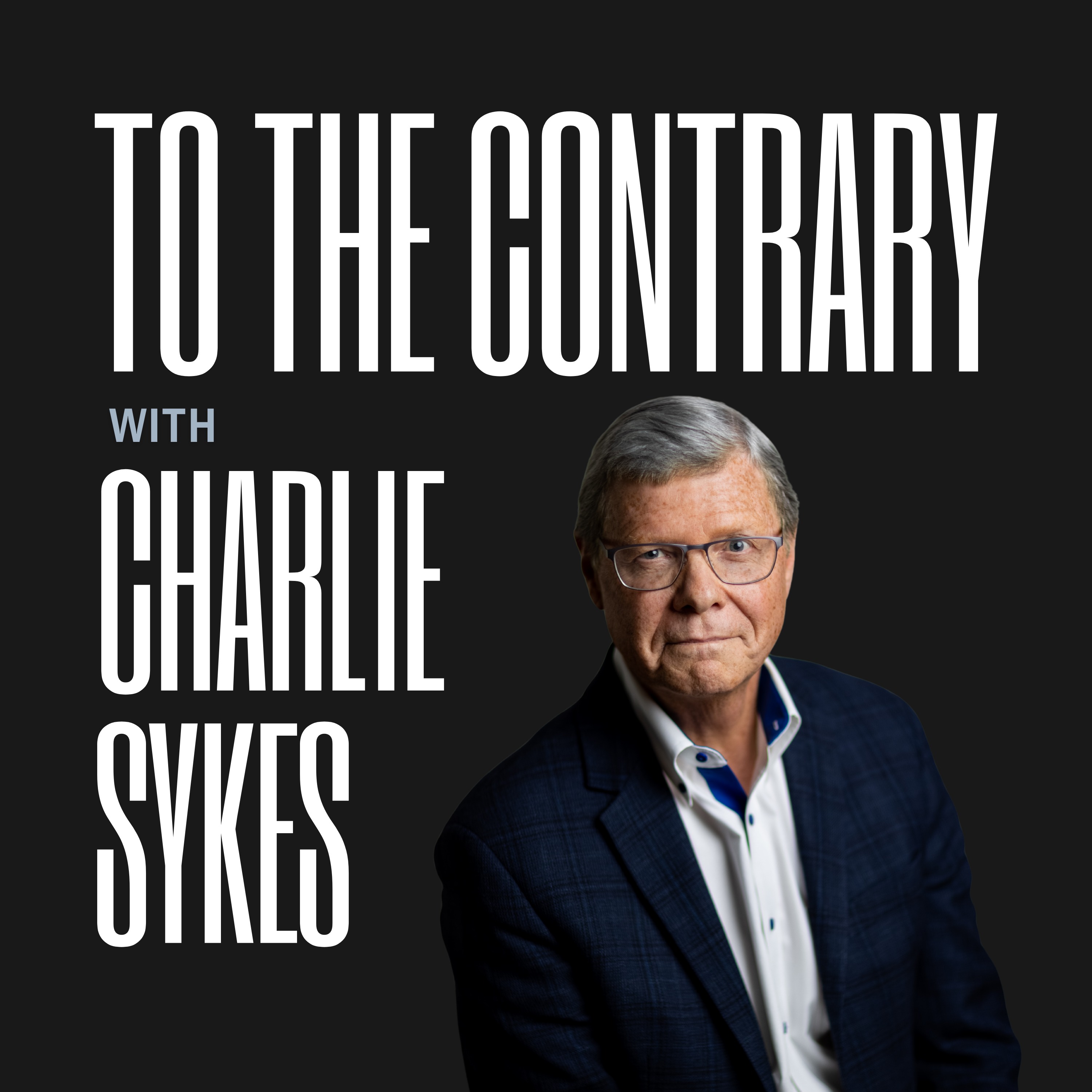
I'm Charlie Sykes. Welcome back to the to the Contrary podcast. You know, it occurs to me as we get into the month of February that Donald Trump's been kind of on a roll lately. And not in a good way. I mean you kind of run last couple of weeks, you know, the on again off again invasion of Greenland, the Epstein files, that Davos blather, the pushback from the Europeans. And then of course you had his. His attempt to spin the ice murders, which has not gone well for for him, the insult infested prayer breakfast. And then of course the racist videotapes that blew up in his face that he was kind of surprised that people actually thought that posting a video depicting the as apes he might cross some red lines. So what could possibly go wrong. We have a lot to talk about today. Well, who better to introduce the month of February than, than our good friend Peter Wehner, trying to make sense of all of this. Welcome back to the podcast, Peter. Well, let's, let's, let's start with something that, that happened last week. And I know that because people are going to be hearing this on Tuesday and something happened. So it feels like ancient, ancient history. But that extraordinary moment where the White House actually put out a video, a blatantly rancidly racist, radioactive in his racism, depicting the Obamas as apes. They tried to spin it. They eventually pulled it down, blamed it on a staffer. But as of now, Donald Trump is refusing to apologize. That's pretty much on Brand, isn't it?
- [03:54]
Peter Wehner
Yeah, I'm not sure that he's really apologized much for anything in his, in his, in his life. And I'm pretty confident there's nothing in his life that he's ever felt that he needs to apologize for. Whether at times he feels like the political conditions are such that he has to bow in the direction of an apology, maybe. But it is his psychological nature that he, that he, you know, he's a malignant narcissist. So he never, he never wants to, never believes he needs to, to, to, to apologize. And, and it, what's interesting about it, what it, why it's in some respects an important insight into who he is in terms of his psychological profile, is he does this even if it's damaging him politically. There are some things that he simply will not do because creates too much, you know, internal discord with, with, with him.
- [04:44]
Charlie Sykes
Well, you know, I describe this as shocking but not surprising. And I, I think that we ought to retain our ability to be shocked when, you know, puts out a historically racist meme. But on the other hand, it's not surprising. They have been headed toward this for years. They have been moving the window of acceptable racism. They have been marinating in increasingly woolly stuff. Right. So in a lot of ways, again, shocking, but not surprising, especially this Overton window of acceptability between him and Stephen Miller. J.D. vance. We were always going to end up here at some point, weren't we? It feels like.
- [05:27]
Dr. Horton Advertiser
Yeah.
- [05:28]
Peter Wehner
No, you actually took the phrase Overton window is what I was thinking about when you were, when you were talking, Charlie, because it's important to see these things as an arc, not in isolated instances. When this video came out, there was some outrage, not nearly as much as there should have been. There were some figures in the Republican Party and even the right wing party ecosystem that spoke out. The important thing, I think, but the important thing to keep in mind, I think, is to see where we were 10 years ago or five years ago versus now. As you said, this is just rancid racism. It's absolutely undisguised. And there may be a few voices, or even more than a few that express outrage in real time, but what it does is it creates the conditions for a next time. And so he goes further and further, and every time he goes further, that Overton window moves, it gets larger. And people may for a moment be upset by it, be repulsed by it, but they make their own inner peace. And he keeps getting worse. He keeps going more and more into the, into the gutter. And they follow him. It's just that there's a slight delay in how they follow him.
- [06:43]
Charlie Sykes
Yeah, and this has been happening, this pattern over and over and over. And by the way, as you and I have discussed many, many times, that's most disturbing thing. You know, the fact that Donald Trump is what he is, we can, we can handle that. It's the millions of people that look at him and take their cues from him and decide what is acceptable. A writer named Laura Bassett, I thought, made a really good point about all of this. You know, like, how did this happen? How does, how does a video like this get through the vetting process? Because this was not just some anonymous staffer. You know, there were senior people who saw this and apparently it didn't trigger any alarms in their head, which is a revealing. She writes. What it looks like to me is that the President and his all guys have been posting so much gutter racism on Truth Social X and elsewhere. Keep in mind that Elon Musk is openly white supremacist now and flooding the zone with neo Nazi content that they did not expect this kind of an uproar over the ape video. They did not expect it to make front page headlines in the New York Times and the Wall Street Journal and splashed across cable news because they thought that they had worn the media down to the point where we just accepted a certain level of rank bigotry as the new normal. And that strikes me as. Right. What do you think?
- [07:54]
Peter Wehner
I think that is right. I think that is, I mean, this is. These are waters in which, in which they, they, they swim. So, you know, I think they were taken aback by it. Their political reflexes were pretty dulled on, on this. They eventually did take it down, but as you say, did. He didn't apologize, but I suppose it says something that you have an administration that is swimming around in these gutter waters and that they can't even tell. And that fish don't know they're wet.
- [08:30]
Charlie Sykes
Right? Fish don't know they're wet. And apparently, if you hang around with Stephen Miller, you don't know that you're a rancid bigot anymore.
- [08:38]
Peter Wehner
Exactly. But I do. I come back to this. I think what we, you know, a month from now, six months from now, a year from now, it's going to be worse. And you. You can just chart if, if you, if he'd have said kind of a fraction of. Of this or, or go back to Charlottesville, you know, when that happened, that's like 2017, that what he said then was not as bad as what he did now. And there was more of an outrage at the, at the time. So people on his side have made their accommodations, their moral accommodations, you know, with. And they've come to accept it in some respects. I think they. They like it. They certainly have figured out how to, how to justify it. Then the question is, and I wonder how you tried to balance this, Charlie, to the rest of us who are not within that world, how you. You don't want to get a newer to it, and you don't want to live your life obsessing on it and, and how to get that balance, how to feel like we got to speak out when certain lines are crossed. We. We can't tell one another, you know, that we just have to get used to it. On the other hand, he wants to, you know, live rent free in everybody's mind, and it's not healthy for the country to do it. So trying to balance when to call them out and when not to, it's not easy. I don't, I'm curious how you've sort of thought that through.
- [10:09]
Charlie Sykes
Well, I thought it through. I don't think I've come up with an answer. But you're describing outrage fatigue as well as, like, you can't go around with your hair on fire all the time, and yet you also don't want to be numb to all of this. And I think this is really the challenge. This is a daily challenge. So the reason I keep telling people you're not the crazy ones, because I think, you know, keeping your head in this particular area is hard because you're right, you know, you don't want to, you know, have him live rent free in your head all the time, setting fires, you know, and, you know, peeing in the corners. And yet you also don't want to go, well, there he goes again. And, you know, Friday felt like one of those days. And I, I sort of glibly said, you know, in any other world, this would be career ending. This would just consume the political world within Donald Trump's world. It's just another day that ends and why. And, you know, part of that was the cynicism of that we kind of know that it gets forgotten rather easily and moves on. So I don't know the answer to that. So if anybody's got an answer, I would really, you know, I suppose to have an actual life that's outside of politics. Do you do this, that there's times of the day where you basically say, okay, I'm going to hit the switch and I'm going to think about something else. I'm going to find an escape, or I'm going to find something else. I have my turkeys and my deer and my dogs. I go for walks in the woods. I put on music. I do not listen. There was a long time when I would actually have Sirius XM radio, you know, cable television news in my ear. I'm out in the beautiful countryside listening to this, going, what am I doing? I mean, like, why would I be injecting this stuff into my head all the time? So you have to have an away time, don't you think?
- [11:58]
Peter Wehner
Yeah, I completely agree. I mean, I've been conscious about. About doing that kind of thing, and very much in the areas that you talk about. For me, I'll go down sports rabbit holes. I'm a big sports fan, and some of it would just be, you know, watching YouTube videos of 1970 NFL games and, and. And music is, Is another nature. My wife does this more than I do. But, you know, taking advantage of walks, we found ourselves going to the National Gallery of Art more than we did in the past. And she's good because, you know, she's. She's even encouraged me at times to do certain essays on reflections on Awe, which, Which. Which I did for. For the Atlantic, you know, several months ago, or I've written about television shows that mean a lot to me, whether it's Foyle's War or the Chosen and the other thing that I've done. And I wonder if you have, too, which is part of the way I consume news more as it relates to Trump into the past, is considering it through comedians. Oh. Because they, they actually make me. They. They make me laugh. I. I see the videos.
- [13:07]
Charlie Sykes
So funny.
- [13:07]
Peter Wehner
I get the point. And yet, while I'm doing it. It's not. It.
- [13:12]
Charlie Sykes
The.
- [13:13]
Peter Wehner
It's not outrage. It's almost. This is absurd. So that's one thing that I.
- [13:20]
Charlie Sykes
This is where the great minds link, because this is exactly what my wife and I have started doing. I cannot take, you know, the solid dose of the news cycle and cable television. So I've been dialing that down. But every night, you know, when we. Right before we get into our escapist television shows, I mean, and I'm talking about All Creatures Great and Small or, you know, a British art show or something like that, or we're watching a show called Riot Women right now, which is not totally escapist. But anyway, before we get into my, you know, British police procedural, we will always sit down and watch the Jimmy Kimmel monologue from the night before, the 15 minutes. And I am convinced. I'm glad to hear you say this. I am convinced that the best political commentary out right now are those comedians who are doing an amazing job, first of all, of following the news, being timely, connecting all of the dots and pointing out the absurdity. And in many ways, I kind of understand when people say, you know, you keep me sane because I'm watching Jimmy Kimmel. I'm not exactly laughing all the time, but at least it's like you recognize that this is nuts, too, right? It's not just me who recognize that it's nuts.
- [14:30]
Peter Wehner
Yeah, yeah. What you're describing is very much what happens to me as well. It may be, you know, Stephen Colbert or maybe Jon Stewart or others. And you're right, they offer commentary that's thoughtful, their clips work, but they do it in a way in which there is humor. And I think that's. That's. That's. That's important. And just to offer a couple of thoughts to the question I posed to you, Charlie, it's not an answer, you know, in terms of. Of how you balance the both. Not outrage fatigue, but also speaking to the moment. I'd say two things. One is, in the last six months, I found myself telling a friend this the other day. I've heard more in the last six months from people that I know, readers, friends who have said, thank you for continuing to write about what's happening, because you are giving me a voice that I don't otherwise have. And one person said to me was interesting. It was a psychologist that Cindy and I know. And she said, you know, I. I don't think about it as much as I. I would because I feel like, Pete, you've got this Covered. You're in a sense covering this stuff for me. And so I do think that that's important that as, as you were describing earlier, that there are people that want to be reminded that they're not crazy. And that's really important. And the second thing is, I think the degree to which writers and commentators cannot just get outraged, but explain why what's happening is an outrage in calm ways, but in direct ways. I think that seems to me that's helpful because that is a way to recall why norms matter in, in, in.
- [16:36]
Charlie Sykes
The first place, what those values were. And, and that, and because I think people looking at this and, and, and it's so disconcerting and you know, it's vertiginous that sometimes to be recalled to. Okay, remember when we thought of ourselves this way, Remember when we understood the value of, of, of this, that, that, that in fact, whether you're talking about religious values, whether you're talking about legal values. I think it is important, you know, because I'm glad you mentioned this as well, because, you know, we've been writing about this now for more than 10 years and I've gone from saying, you know, we've been fighting this fight for longer than the duration of World War II and now we're into like Vietnam War length and we're about to head toward Afghanistan length. And there's a moment, there's that part of you go like, can I keep writing the same thing over and over and over again? But it is important to, I think, provide that touchstone for people. You know, when something happens, it actually among that sounds counterintuitive to go on social media and to see someone that I respect say, this is insane and this is evil. Good. Okay, we've touched grass. We understand that this in fact is, it is either insane or it is evil. Okay, so among the various things, what was your reaction going back to Trump and his political instincts? This is not four dimensional chess. He is, you know, he has his reptilian moments where he's in touch with public opinion, but he's been picking some very, very weird fights. I mean, you think about it. I mean, he picked a bad fight on the Epstein files, I think with his MAGA base. He picked a bad fight on Greenland because everybody's going, well, what the hell? What's that all about? He picked, I think that he's miscalculated the way that ICE is performing in Minneapolis. I think he's locked into that tough man thing. But I think it may be in some level he's sort of getting it, the racist video. But give me your sense about. He went all out about the Super Bowl. My head is going, this is. The President of the United States went all out on this super bowl halftime party. And the snowflakes of MAGA had to have their alternative event with a lip syncing Kid Rock While more than 135 million Americans were watching Bad Bunny. And there's the president going, no one can understand what he's saying because he's never heard of Spanish, a language spoken by about what, about 41, 42 million Americans. So what was your reaction to the whole Bad Bunny thing?
- [19:22]
Peter Wehner
Well, for one thing, they walked into a trap. I mean, they were setting this up as a sort of denigration of America and divisive. And of course, the tone was very much different than that. Second is, I agree with you. I mean, Bad Bunny is pretty popular where the constituency that Donald Trump was pretty proud to have made inroads into. And I don't think this is going to help him. The third thing that struck me was Cindy and I were talking about this, you know, just the other day. It was the feeling that I had that this was just another manifestation of MAGA wanting to be outraged. Right. They, they, they weren't looking forward to the Super Bowl. They were looking forward to getting into a fight about the halftime super bowl show.
- [20:12]
Charlie Sykes
And they wanted to have some, they wanted to be upset about that.
- [20:14]
Peter Wehner
They wanted to be upset about something. And so they got upset even when there wasn't anything to be upset. They're in a constant state of wanting to feel aggrieved and anger. And you see it with the Grammys and you see it with the Academy Awards. You know, you just go on and on. These are people who, over a decade, their, their, their minds have been trained in a certain way and their emotions, their, their, their emotional responses have been trained. And I, I get the feeling sometimes that they feel like their life is somehow shrunken and miniaturized if they're not in some kind of fierce cultural battle. They just need enemies to live. And for them, it's. The conflict is a kind of human fulfillment.
- [21:01]
Charlie Sykes
Yeah. No, but it's right. They don't feel authentic unless they're angry. They're not being savvy unless they're outraged about something. They don't think that they're getting it unless they understand how they're being taken advantage of or persecut, repeated or victimized in some way.
- [21:20]
Peter Wehner
Right.
- [21:20]
Charlie Sykes
If you meet people like them.
- [21:22]
Peter Wehner
Yeah. And it's and it is why I think if there's actually not an outrage, they're, they're, they're, they're, they're, they're angry at that. And so they have to, they have to create it. If, you know, from time to time I go and I listen to, to bits and pieces from right wing radio, which is not as, as, as lunatic as podcasts now, but it's, it's bad enough and I see this pattern. It's just this constant search, where can we be angry? Where's the drag queen in San Jose that we can nationalize and pretend that this is happening in 3,000American cities? So they just live on a steady diet of that. It's not healthy mentally, it's probably not healthy physically as well, but it's really a notable quality. They sound outraged, but in fact they're not. It's like they're being, you know, the beast.
- [22:20]
Rippling Advertiser
Most all in one HR systems are a patchwork of disconnected and manual tools. Rippling is totally automated. If you promote an employee, Rippling can automatically handle necessary updates from payroll taxes and provisioning new app permissions to assigning required manager training. That's why Rippling is the 1 rated human capital management suite on G2 TrustRadius and Gartner. If you're ready to run the backbone of your business on one unified platform, head to rippling.com acastbiz and sign up today. That's R-I-P-P-L-I-N-.com acastbiz to sign up.
- [22:57]
Acast Advertiser
With endless scroll algorithms and AI flooding feeds, podcasting stands out. They're sought, not served. Audiences actively choose to hear trusted voices on topics they care about. In fact, 72% of listeners say podcasts shape cultural conversations for marketers. That means podcasts shift brand perception like no other channel. Acast's Podcast Pulse 2025 report has the proof. Get all the insights@podcastpulse2025.com.
- [23:31]
Charlie Sykes
Well, speaking of outrages, I don't know about your feedback. Mine is just overwhelmed with these videos. And the volume is so high of the video. There's so many of the videos that it doesn't feel like they are random anecdotes anymore. Of the ICE agents all kitted up like they're going into Fallujah. The way they're interacting with people, both migrants and American citizens. Just the pure brute squad thuggery of it all. I mean, it is. My sense is that they are losing the normies.
- [24:09]
Peter Wehner
Oh, I think that's Right. I think that's right there. I think even Trump and his people figured that out. The way they were backtracking on, on, on Minneapolis or all sorts of manifestations that they were, that they were doing. And I have a feeling that that moved the needle. I mean, one has to be careful during the Trump era because, you know, there have been 3,000 situations where people fought. Well, he's finally crossed a line. This one, I think registered, and it registered enough that again, that reacted to it. There's something about, I mean, what is it? Part of it is there's something about having state executions in the streets of an American city that bothers people. Well, that's good. We'll, we'll, we'll, we'll take a moral victory where we can, where we can find it. But, but as you said, it, it, it's, I mean, it's the echoes of a kind of Gestapo, secret police. The whole, you know, what they're wearing, how they're acting, and from five year old kids to grandmothers and other things, I think that kind of pricked the conscience of the country in a way that other things haven't. They should have, but they hadn't. But this one, I think kind of broke through.
- [25:24]
Charlie Sykes
Yeah. There's a small picture on the front page of the Drudge Report yesterday of a federal agent. I'm not sure whether he was from the Marshals Service or whatever, but he, he's kicking a small dog. And I thought, boy, there's like the meme of 26. You want to have an issue that actually changes hearts and minds, start kicking dogs. Okay, so this brings us to something that you wrote about. I wrote about last week, the President's performance at the prayer breakfast. And I asked, what is the point of the prayer breakfast if you turn it over to Donald Trump, who obviously is not interested in prayer or not all that much interested in God? I mean, the prayer breakfast. Has a prayer breakfast kind of, you know, run out of relevance as long as, I mean, what is your take on all of that?
- [26:19]
Peter Wehner
Yeah, I think it has, actually, I don't think it has the cachet, the hold that it did 20 or 30 years ago. I think part of it was, if you go back decades, one is the people who ran it were different. I think that it became a kind of. Somebody told me just the other day, I got an email and said, years ago, it became a kind of evangelical power and light show. And it really became a kind of vehicle for Christians to suck up to people in power.
- [26:54]
Charlie Sykes
Great.
- [26:57]
Peter Wehner
And I'VE noticed that. And I would talk to people who were involved with it. I remember some specific conversations this years ago. And I felt like I was talking to people almost in, I'm not sure if it was a cult, but it was like a secret society. And I would ask them, what is the prayer breakfast? And then some of the organizations that were running the prayer breakfast do. And they would say, we're just followers of Jesus. And I'd say, fine, but what do you do? And that was what I was getting. So I thought there's some kind of secret club thing here that's going, going on. The other thing, of course that's happened is, is now because of, because of Trump. And he's done, I guess, well, a lot of them, right. He's been two terms now. It's just changed. What the prayer breakfast was, was about, which was supposed to be comity, understanding, bipartisan, you know, let's set aside politics in order to talk about some of the elevating, capacious aspects of faith. And that's just gone. But look, at the same time, there's an evangelical world that loves him and loves what he says. And they show up and 3,500 people are in the ballroom, I think of the Sheraton, and he gets a standing ovation after a 75 minute screed. And so that tells you something, too.
- [28:17]
Charlie Sykes
It does. So you, this, by the way, never gets old for me, even though we've gone over this so many times. Your piece in the Atlantic that you wrote, the evangelicals who see Trump's viciousness as a virtue, and you write about how that at the prayer breakfast, the president tested his audience's commitment to Christian ethics. But okay, so these are evangelical Christians, followers of Jesus Christ, and they see viciousness as a virtue. Make it make sense, Peter.
- [28:49]
Peter Wehner
I'm not sure I can make it make sense, but I'll, I'll give it a hand to trying to explain almost as an anthropologist on like how, how does you know, how does, how does this happen? I think one important thing to understand and people who are not in the evangelical fundamentals world don't understand it precisely because they're not in, in that world, is that, you know, Donald Trump never sold himself as a Christian. He was smart enough as a marketing person to know that that just wasn't going to work. So what he did is he sold himself as an avenging kind of ruthless warrior on their behalf. And that created a connection. And then you had people like Robert Jeffress and Tony Perkins and Franklin Graham and Jerry Falwell Jr. At the time, you know, cheering him on, saying, you know, we want the meanest SOB we can find. We don't want a pastor. We want to, you know, we want a tough minded president. And he fit that bill. And so they view him not as one of their own, but a defender of their own. And even to the point in which I think he felt like he uses means and methods that were not fully comfortable with, but God, are we glad that he's using them on our behalf. So I think that was. That was the entry point. And I should say, just in terms of historically, it's kind of interesting because Trump was not the choice of evangelical leaders in 2016. Ted Cruz was much more. He was running as a traditional culture war conservative. And what happened is that Trump, just by sheer force of his personality, won over evangelical voters. The key moment in that, when it became clear to people was actually this month, 10 years ago, it was super. No, it was March, Super Tuesday, right? When they're 14, whatever, Southern, mostly Southern states. And Trump just cleaned up. I think he won like 50% of the vote in Alabama and elsewhere. And what became clear is that there was something about Trump in which, which the grassroots evangelical and fundamentalists found appealing. So he figured that out and they felt like, okay, this is our warrior. And Kristin demay wrote a very good book called Jesus and John Wayne in which he said, if you spent time in the evangelical world and understood it, you would have seen that Donald Trump was in some ways the personification of what they wanted. He was not a repudiation. People think, well, morality. They hit Clinton because Monica Lewinsky, they believed in piety. That was part of it, but an awful big part of it was a sense of, no, there's a kind of skewed, perverted sense of manliness that they were looking for. And they found that in Donald Trump, then he would press this narrative. And this is pushing on an open door of grievances. Right? So you're dealing with people who for decades have felt like the elite culture despises us, hates us, condescends to us. And there was something to that. I think it was wildly exaggerated at times, but there was something to it. And then it was also this sense that, you know, we're living in the time of Nero, where Christians are being persecuted in extraordinary ways. That term was thrown around persecution. It's like, like, are you serious? Have you, like, studied 2,000 years of Christian history? Do you know what it's like in countries in which there's authentic persecution. But that was the narrative they bought into. Trump met that moment.
- [32:36]
Charlie Sykes
And by the way, I remember back in 2016, the years before 2016, that I thought the Democrats were on the left, were somewhat tone deaf on the issue of religious liberty. You could feel that sense. And as you say, that sense of victimization was exaggerated by. But it wasn't completely in a vacuum. And I remember having conversations in the 2016 election like, you know, really, I think the Democrats need to understand how powerful this issue of religious freedom is and not to be so disdainful of it or think of it as a dog whistle. And I think that David French made the same point. I think you made the same point as well. So, yes, the door was open for him to walk in and say, I can be your. Your sword and your shield.
- [33:19]
Peter Wehner
Yeah, yeah. No, that's a good. That's a very good way to describe it.
- [33:22]
Charlie Sykes
Well, by the way, so you're talking about the switch of social conservatives and everything. I don't know if I've ever shown you my little souvenir that after. This is from 2016. We're like almost 10 years ago. Donald Trump. One day I get this envelope in the mail and it's from Donald Trump to me, and he sent me this front page of the New York Times, which.
- [33:47]
Peter Wehner
Oh, this is legit. This is really Trump that sent this to you?
- [33:49]
Charlie Sykes
Yeah, yeah. No, no. And this is what he wrote. I'm holding it up for people if they're watching. He wrote on it with his Sharpie, Charlie, I hope you can change your mind. Look forward to doing your show. I will win. And then he has the arrow going over to the story that he wanted me to read, which was once against another flank of the GOP warms up to Trump. Activists and leaders in the social conservative movement, after spending most of the past year opposing and condemning Donald Trump, are now moving to embrace his candidacy and are joining the growing number of mainstream Republicans who appear ready to coalesce around the presumptive nominee. So he sent me the article by. See, even the evangelicals, the evangelicals, the social conservatives are coming around. And so I'm putting this back in the envelope because I don't know, it'll never be worth anything, but I'm going to keep it. So you write here in your essay in the Atlantic right near the end, Non maga evangelical pastors are going to face a set of difficult questions during the next three years. Under what conditions, if any, are you willing to speak out? When a president and his administration repeatedly Violate Christian ethics? Will you stay silent even when acts of cruelty, lawlessness and injustice or are not the exception but the norm? How much more indecency do you need to see before you act? Now with the MAGA pastors, we already have the answer. Right, but you're talking about a group that has not actually stepped up to be what Martin Luther King Jr. Called the conscience of the state. The church is the conscience of the state. And that's kind of the challenge.
- [35:31]
Peter Wehner
Isn't is a challenge. It is a challenge. That's exactly right. I mean, I think about it as sort of three categories. They're the pro maga people who are unreachable. Then there are the more progressive Christians. And to their credit, they are speaking up in this moment. And you see that within United Methodists, Episcopal churches. I quote in the essay, a good friend of mine, Mark Laberton, who was evangelical and he was president of Fuller Theological Seminary, and he helped draft a statement of faithful resistance, didn't mention Trump or the Republican Party, but he and others were trying to did articulate what biblical values say about justice and so forth. So there's that category and then there's this third category, and that would be pastors of evangelical churches, mostly conservative churches. And these pastors see him for. For what he is and who he is. But they. They're really, I think, struggling. This I just know from conversations with. With some of them just what. What should be the proper posture. And it gets complicated because they are not political by nature, and they didn't get involved in the ministry to be political. And that, by the way, is my. My presupposition. The first piece I ever wrote that was ever published anywhere was a letter of the Tri City Herald, which was a local newspaper when I was in college. And it was a warning against Christians conflating at that time Christianity and the Reagan agenda. Now, I was pro Reagan agenda, but I said, this is dangerous. This is not really the role of the church. So that's always been my default position. The trouble is, or not the trouble, but the reality is that historically you have exceptions to that rule. You have Dietrich Bonhoeffer in Nazi Germany, the rise of the Deutsche Christian, as they refer to them, the German Christian church. And you had it with the Dutch Reformed Church in South Africa during apartheid. You had it in here with Martin Luther King Jr. And others during the civil rights struggle. You had it during the Civil War when there were great religious battles between the south and the Southern Baptist Convention, as you probably know, was born out of a pro Slavery sentiment. They broke with the Baptist movement at that point because they wanted to be. And so at certain moments when justice is really imperiled, does the church have anything to say about that? Because the church stands for justice. And the answer, I think, is yes. And then it takes discernment wisdom to figure out, what are those moments. This is a moment in which a lot of the pastors that I talk to would agree with. A very powerful essay in the Atlantic, my colleague and close friend John Rauch wrote, in which he declared, after resisting for a long time, that Donald Trump was indeed fascist. Now, he said, it's not a fascist country. We haven't gone that far down. But Trump himself is fascist, and John, typical for him, methodically laid out the case. So we're in one of those moments where you're on a continuum which you say, boy, this is different than most situations. And does the church. Do Christians have anything to say? And I think a lot of the pastors who are ministering in these churches are really battling. Part of them feels like, yeah, we should say something. I see this moment for what it is. On the other hand, they're thinking kind of prudentially, how do I speak out? If I speak out, is it a sermon? If I do, do I sign a statement? Do I have conversations with people? Do I have to get my session? If you're, you know, Presbyterian, to get along, to go along with me, will I succeed in dividing the congregation, but really have no good effect? That's the struggle that I see. That's. That's. That's. That's happening. And the last thing I'll say, Charlie and I mentioned this in the essay, which is, I would say almost to a person, these white ministers that I know would look back and they would say that they would hope that if they were white pastors in Birmingham, Alabama, 1958, of a white segregationist congregation, at least a number of people in their congregation were segregationists. I think they feel like they hoped that they would have the courage and the moral gravity and moral awareness to say something, to figure out, like, we can't stand back and do it. And in fact, they look back and say, boy, am I glad the king said what he said. And I'm glad that ministers that. That. That spoke up. It's easy to do 70 years after the fact. It's harder to do in real time.
- [40:24]
Charlie Sykes
No, I appreciated the fact that in your. In your Atlantic article, you.
- [40:27]
Peter Wehner
You.
- [40:28]
Charlie Sykes
You wrote about the letter from Birmingham jail, which is really one of the most important documents in American history. And that's. And that's. Martin Luther King Jr. Did basically, not basically challenging the white Alabama clergyman who had declared that he was an outside agitator, whose efforts were unwise and untimely, point out the letter cannot be understood apart from his Christian faith. I mean, faith shaped his views on ethics and human dignity. And this was the challenge to that generation of white pastors. And again, this phrase I thought was very interesting. What does it mean for the church to be the conscience of the state? Not the state, but the conscience of the state.
- [41:13]
Peter Wehner
Right. Not the master of the state, not the servant of the state, but what. But the conscience of the state. And that's a tool of the state. And the church has become the tool of the state in many cases, and it's not been the conscience of the state. Now, I do think that Pope Leo is speaking up and some important Catholic bishops are speaking up. So this is not true of the entirety of American Christianity, but it is absolutely an issue with fundamentalist world and the evangelical world. And I'm very curious to see how this plays out. As I said, and as we were talking about, what's the line that Donald Trump can cross where you feel like you finally have to say, enough?
- [42:02]
Charlie Sykes
I think he's crossed it. But it's a great question and we will have three years to answer it. So let me end on a positive note because I actually, I should have included this in my newsletter letter yesterday, but the Episcopal bishops just came out with a public letter that was very, very strongly written and signed by clergy from all over the country. And I think that, you know, for those of us who are waiting for when are they going to speak out? It is happening, but as you point out, not in the fundamentalist community. Peter Wehner, you can read his work in the Atlantic. You are a senior fellow at the Trinity Forum. It is always an honor to talk with you, Peter.
- [42:39]
Peter Wehner
Great to chat with you. Thanks, Charlie. And keep up the good work. Because it's important.
- [42:43]
Charlie Sykes
We're going to keep it up for at least a few more years. Thank you all for listening to this episode of to the Contrary podcast. I'm Charlie Sykes. We do this. You know why? Because it is so important to remind ourselves that we are not the crazy ones.
- [43:11]
Boost Mobile Expert
Knock, knock.
- [43:12]
Dr. Horton Advertiser
Ooh, who's there?
- [43:12]
Boost Mobile Expert
A Boost Mobile expert here to deliver and set up Your all new iPhone 17 Pro, designed to be the most powerful iPhone ever.
- [43:19]
Acast Announcer
You called that a knock knock joke.
- [43:20]
Boost Mobile Expert
This isn't a joke. Boost Mobile really sends experts to deliver and set up your phone at home or work.
- [43:25]
Peter Wehner
Okay.
- [43:25]
Acast Announcer
It's just that when people say knock knock, there's usually a joke to go with it.
- [43:28]
Boost Mobile Expert
Like I said, this isn't a joke.
- [43:30]
Acast Announcer
So the knock knock was just you knocking?
- [43:32]
Boost Mobile Expert
Yeah, that's how doors work.
- [43:34]
Acast Announcer
Get the new iPhone 17 Pro delivered and set up by an expert wherever you are. Delivery available for select devices purchased@boostmobile.com terms apply.
- [43:41]
Boost Mobile Expert
Boost Mobile is now sending experts nationwide to deliver and set up customers new phones.
- [43:45]
Acast Announcer
Wait, we're going on tour?
- [43:46]
Boost Mobile Expert
We're delivering and setting up customers phones? It's not a tour.
- [43:49]
Charlie Sykes
Not with that attitude.
- [43:50]
Boost Mobile Expert
Introducing store to door switch and get a new device with expert setup and delivery.
- [43:54]
Acast Announcer
Delivery available for select devices purchased at.
- [43:55]
Boost Mobile Advertiser
Boost Mobile device the longer you stay alive, the longer you can enjoy Boost Mobile's unlimited plan with a price that never goes up. So here are some tips. Do not parallel park on a cliff if you want to enjoy an unlimited plan with a price that never goes up. Do not mistake a wasp nest for a pinata if you want to enjoy an unlimited plan with a price that never goes up. Do not microwave a hard boiled egg if you want to enjoy an unlimited plan with the price that never goes up. Stay alive and Enjoy Unlimited Wireless for 25amonth. Forever. With Boost Mobile. After 30 gigs, customers may experience lower speeds. Customers will pay 25amonth as long as they remain active on the Boost Mobile unlimited plan.