← Today, Explained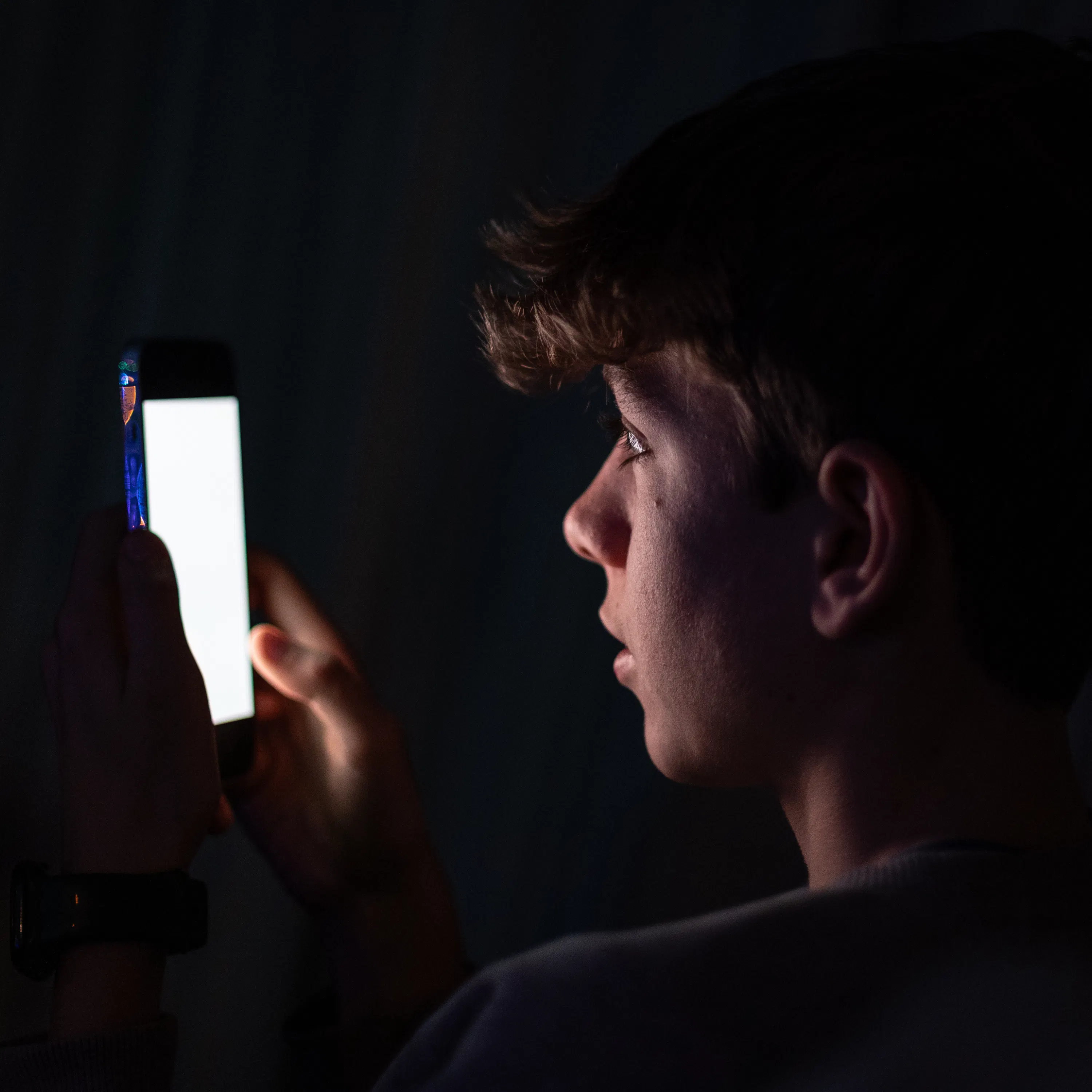
Today, Explained
TV is getting dumber
00:25:41
We revisit an episode about how our shrinking attention spans are changing TV.
Loading summary
Transcript118 lines
- [00:01]
Noel King
Today's show is a rerun. Americans, it seems have fallen back in love with going to the movies.
- [00:08]
C T Jones
Help me go home.
- [00:09]
Noel King
The Odyssey is nudging up on a billion dollars in ticket sales. Brand new day already hit a billion.
- [00:14]
Julia Alexander
You're gonna forget who I am.
- [00:16]
C T Jones
What? What are you talking about?
- [00:17]
Noel King
A tiny indie horror movie called Obsession did almost half a billion at the box office.
- [00:21]
Julia Alexander
Bear, I love you so, so, so, so, so much.
- [00:25]
Noel King
I don't think I could live without you for a while. The smart money said movies were dead. Hollywood, PIV on micro dramas. Disney, Fox, Alexis Ohanian, Kim Kardashian, Kris Jenner. All these bold faced names poured millions of dollars into the teeny tiny next big thing. We're gonna explain why they did. Coming up on Today Explained from Fox.
- [00:49]
Julia Alexander
Help me today explain. I love you so, so, so, so, so much.
- [00:54]
C T Jones
What? What?
- [01:00]
Sponsor/Advertisement Voice
Support for this show today comes from Anthropic, the team behind Claude. Claude is the AI for minds that don't stop at good enough. It's the collaborator that actually understands your entire workflow and thinks with you whether you're debugging code at midnight or strategizing your next business move. Claude extends your thinking to tackle the problems that matter with deep research. Claude's research capabilities go way deeper than basic web search, comprehensive research, reliable analysis with proper citations, turning hours of research into minutes for problems worth solving. You can get started with Claude at Claude AI Todayexplained. That's Claude AI Todayexplained.
- [01:39]
Noel King
Are you a pet owner? Every six seconds, a pet owner in the US gets hit with a vet bill over $1,000. Always an unwelcome surprise. That's where fetch comes in. Fetch is the most complete pet insurance for dogs and cats according to consumeradvocate. Dot or you get paid back up to 90% of vet bills at any vet in the US and Canada with claims paid back in as little as two days. Go to fetchpet.com save right now for your free quote. That's fetchpet.com save.
- [02:19]
C T Jones
It's a day explained Today Explained.
- [02:21]
Noel King
Gotta get down on the day explained.
- [02:24]
C T Jones
I'm C T Jones. I am a staff writer at Rolling Stone where I cover entertainment culture and the Internet.
- [02:30]
Noel King
What exactly is a microdrama?
- [02:34]
C T Jones
What a fantastic question. Microdramas are these short episodic films and they're filmed portrait mode and they're meant to be watched and shared primarily on your cell phone. So as you're scrolling, clicking on apps, that's where microdramas appear.
- [02:48]
Noel King
Okay, great. And now I Have so many more questions. Microdrama. Micro. I mean, microdrama is like me texting my sister about my brother. What? Why is it called a microdrama?
- [03:02]
C T Jones
Yeah, the whole point of them is that they're short, right? So they're in between films and TV seasons. But there are 60 to 90 episodes, and these episodes can range anywhere from four minutes to 10 to seven. It depends entirely on the project that you're watching. So that's why they call them micro. But it also refers to. To kind of the speed and the production. So we're talking about projects that have very, very, very tiny budgets and they have a very, very, very tiny shoot time. So altogether, microdrama, what is the appeal? Yeah, I think one of the really interesting things we've seen about the Internet in the past couple of years is that the way people scroll are changing the ways your attention span works. So we've already seen in cases like Mad Men, not Great Bob and Ugly Betty. Hi, that's me. People are watching things on their phone now. And that there is a link between how long people are willing to watch TV show, even if it's cut up into 100, 200 parts, if it means that they don't have to get off of their phone, go onto their laptop and log onto the streaming service where they know that that show exists. And it's also created for these kind of attention spans. So, like, you don't have time to probably watch four episodes of Ugly Betty between your commute and the. But if you're on the subway and you have access to data, you're like, I could watch 2:45 second clips of ugly Betty. You are an attractive, intelligent, confident businesswoman.
- [04:32]
Noel King
All right, so what's an example of a microdrama that's super popular? Like, what is the Young and the Restless microdrama or the Breaking Bad? Microdrama.
- [04:40]
C T Jones
So the best thing about microdramas is that they're not really dependent on these type of audiences that will give them the role. So basically, there are a bunch of titles that I could like, name. For instance, Loving My Brother's Best friend.
- [04:53]
Sponsor/Advertisement Voice
You have got to get over this crush. He's your brother's best friend.
- [04:56]
C T Jones
Or I kissed a CEO and he liked it.
- [04:59]
Sponsor/Advertisement Voice
Well, boss, who was that? I haven't seen you kiss anyone like that in ages.
- [05:05]
C T Jones
The titles themselves aren't very inventive, but they don't need to be to capture audiences.
- [05:09]
Sponsor/Advertisement Voice
And tell Nate, I'm not gonna kill his sister. I'm gonna marry her.
- [05:13]
C T Jones
Elena, I can't be with you.
- [05:15]
Sponsor/Advertisement Voice
I'm just a man with a prosthetic.
- [05:18]
Noel King
Aiden Gold is aw an alpha and I refuse to be his mate. How is anyone, Everyone? How is money being made here and for whom? Yeah.
- [05:31]
C T Jones
So basically what happens? It's kind of a freebie situation where you will either get an ad served an ad for these micro dramas, usually a very poignant part of the show.
- [05:41]
Sponsor/Advertisement Voice
I have a proposition for you. Kind of a proposition.
- [05:45]
Noel King
I know your situation.
- [05:46]
Sponsor/Advertisement Voice
You're working three jobs, you got a
- [05:49]
Julia Alexander
pile of medical bills, and you're behind on everything else.
- [05:54]
Noel King
How do you know all of that?
- [05:56]
C T Jones
That is exciting, is narrative driven. I will take care of all that.
- [06:00]
Noel King
I'll take care of you.
- [06:03]
Sponsor/Advertisement Voice
All you have to do is one
- [06:05]
C T Jones
thing for me, and then it cuts right before you find out what happens next.
- [06:09]
Sponsor/Advertisement Voice
What's the catch?
- [06:10]
C T Jones
And then the ad pops up and it's like, please go to the app to continue more.
- [06:14]
Sponsor/Advertisement Voice
You have to marry my daughter.
- [06:17]
C T Jones
But for people who are active microdrama watchers, what usually happens is you have a free subscription and you can watch up to a certain amount of episodes of a particular show, and then it costs anywhere between 4 to $15 to upload more credits so that you can finish the rest of the show. And a lot of these microdramas, because they are kind of reliant on these instant transactions. It's instant feedback, right? It's people who want to scroll, people who want to keep scrolling and keep following this. They're willing to be like, okay, here's $2, here's $3, here's $2 to finish the show. When in reality, if you look at it, most of these micro drama apps in a yearly format cost far more than a Netflix subscription or a Hulu subscription or a max subscription, as it were.
- [07:04]
Noel King
Where do microdramas come from?
- [07:07]
C T Jones
Microdramas are actually an import. The very first place where they really took off in popularity was actually in China. Oh. Between 2018 and 2020, we saw this huge, huge rise in interest in micro dramas. Look, there are over a billion Internet users in China.
- [07:30]
Noel King
Half of them have watched these mini drama series before, and a third of them are scrolling through them every day. So It's a huge industry. 35.
- [07:38]
C T Jones
But what China really set apart from this was that you could make micro dramas fast and cheap. And a lot of other countries saw the success of that and decided, we can do this as well. So when the United States kind of took on all of the things that made Chinese microdramas so successful, they ran into this huge Wall which was we can make things fast and we can make things cheap. I don't know if the actors are going to like it very much.
- [08:05]
Noel King
What is it like to be an actor and actress in a microdrama?
- [08:10]
C T Jones
It all depends on who hires you. A lot of microdramas in LA have tried to set themselves apart, especially these newer companies, as places where you can get great pay. You can kind of learn on the fly. You're getting a bunch of things and a lot of training that you might not get, say if you were straight out of NYU's Tisch. But other experiences on other sets could mean that if you sign with a microdrama company who is just in it to make the content as fast as possible. A lot of actors allege these grueling hours, poor pay, racial disparity in leading roles and lack of stunt safety. I talked to one vertical actress, 24 year old Molly Anderson, who told me about kind of how much harder it is for women who are acting in these micro dramas than men. Men have these beautiful, a lot of times handsome roles where they're the sex symbols. And micro dramas have mainly female audiences. Molly told me the male actor is going to be dressed up in a very nice suit and maybe he's got to shed a single tear once or twice, but for the most part he's going to stand in the back, brood and then sweep you off your feet. For actresses, you scream, cry, throw up on command, and then you run off to go get waterboarding.
- [09:22]
Noel King
You are not gonna crack, you are just gonna cry.
- [09:25]
Julia Alexander
You are gonna cry like you've never cried before. But your spirit, your spirit remain solid.
- [09:31]
C T Jones
That's the typical day.
- [09:37]
Noel King
Yikes. Are you Getting paid for 70 episodes?
- [09:41]
C T Jones
One of the interesting things about microdramas is that the contracts also vary wildly depending on what company you're working with. So as a writer, you could be looking at $2,000 to just hand in a script. As an author who has a book idea that they want to kind of take and use a thousand, five thousand, it really, really depends on who you're working with and how much they want it. For an actor, you're probably looking at $500 a day, which is super, super, super affordable and really great rate for people who are non union. And from a Hollywood perspective, you can say yes to projects because you're not committing the world and if anything you're committing $100,000 here, another hundred thousand dollars there. Costs and money that would frankly disappear or round up to small percentages for giant projects. I've talked to a bunch of vertical actors who are kind of caught in the middle of this. They see the way that the industry is changing and they love the idea of Hollywood executives being more willing to say yes to stories. What they're concerned about is that verticals, and particularly the way that they are made, will leave these actors behind in the process.
- [10:53]
Noel King
Hollywood is obviously having a lot of problems right now. So if you're Hollywood and you're seeing, hey, there's a way to do 70 episodes and pay an actor, you know, $500 a day and still make a little bit of money with every single person who views them, do you think that this is gonna change Hollywood?
- [11:13]
C T Jones
I actually don't. I think microdramas are incredibly interesting, but I think the problem Hollywood sees right now is frankly, a cowardice. Hollywood is drowning right now under this exhaustion with IP because for the past five years, executives have been afraid to make creative content. Microdramas, on the other hand, succeed by creating serialized content with storylines that are virtually public domain. So it's IP just so many IPs crammed together that you're like, yeah, I guess I'll watch it. Sure, I'll watch this. Werewolf billionaire CEO. Do you see what I mean? All of those buzzwords smashed together. I don't think this will change Hollywood, but I think it's because microdramas aren't intending to change Hollywood. Microdramas aren't about, you know, taking over the Emmys, taking over the Oscars. I doubt that you could find a microdrama CEO who says yes. I think kissing my brother's best friend is gonna sweep this year at the Oscars.
- [12:10]
Julia Alexander
That's fine. I'm not afraid of some competition.
- [12:12]
C T Jones
But what they want to do is target viewers that during their in between time, these kind of passive scrolls that you cano can kind of give your attention to an ad or a three minute clip about a cheerleader or a hockey player or a kind of sexy werewolf. This is where micro dramas thrive. And this is why I think they won't ever actually take over Hollywood, because they don't want your intention. Microdramas work the best when you're not really watching them. Because if you were going to watch a microdrama like you might watch the new Springsteen movie in a dark room with your closest friends. You've got nothing but time to look at the screen. I bet if you watched a microdrama like that you would go, wait a minute, I don't, I don't think this makes sense. This might not even be good.
- [13:14]
Noel King
How could rules were never her thing not be good? Just me. C T Jones writes for Rolling Stone. Coming up, Is TV getting dumber? Yes, of course it is. You don't need me to explain that. But did studio executives order it to get dumber? We're going to ask.
- [13:49]
Sponsor/Advertisement Voice
Support for the show day comes from Mint Mobile. When I say Mint, you don't have to say anything. When we were kids, summer meant freedom. No homework, no teachers, no school. And as adults, summer still means freedom thanks to Mint Mobile. Summer Sale Nothing says summer like a summer sale on your mobile plan. Right now, all of Mint's plans are $15 per month, including their unlimited plans. Hey, you can free yourself from big wireless and get away from the gimmicks and gotchas by switching to Mint. All their plans come with high speed data and unlimited talk and text delivered on the nation's largest 5G network. Bring your number, bring your phone to get your new wireless plan for just 15 bucks a month. Go to mintmobile.com explain. That's mintmobile.com explain. Cut your wireless bill to 15 bucks a month at mintmobile.com explain or that's it. There's no catch up from payments of $45 3 month, $90 for 6 month or $180 for 12 month plan required $15 per month equivalent taxes and fees extra initial plan term Only greater than 50 gigabytes may slow when network is busy. Includes up to 20 gigabyte hotspot capable device required availability, speed and coverage varies. Cmo.com. Support for the show today comes from article and if you're like which article? Well so often we end up with furn homes without much thought because maybe it was given to us, maybe it was cheap, but maybe you found it on the sidewalk. My New Yorkers or people who live in places where they put furniture on the sidewalk anyway. But if you've ever looked around your home and thought is this even my taste? Is this even me? Article may be able to help. Article makes it effortless to create a cohesive and stylish place with a curated range of quality furniture at an affordable price. And guess what? Claire White has tried.
- [15:32]
C T Jones
Article I got some really beautiful new pieces from article.
- [15:35]
Julia Alexander
A desk and a new desk chair.
- [15:38]
C T Jones
And the best part about all of
- [15:39]
Julia Alexander
it was their white glove delivery service.
- [15:41]
C T Jones
They put together all of the items. They took the boxes down when they were done. I live on a two floor walk up so I could not have done this myself and I'm really grateful that
- [15:50]
Julia Alexander
they offer this delivery service.
- [15:52]
C T Jones
It was so seamless and made the process that much more enjoyable.
- [15:56]
Sponsor/Advertisement Voice
Article is offering our listeners $50 off their first purchase of $100 or more. To claim it, visit article.comexplained and the discount will be automatically applied at checkout. That's article.com explained for $50 off your first purchase of $100 or more. Support for the show today comes from Anthropic. In case you were wondering who's behind Claude, that's Anthropic. Claude is the AI for minds that don't stop it. Good enough. Is that you? It's the collaborator that actually understands your entire workflow and thinks with you. Have you been looking for that? Whether you're debugging code at midnight or strategizing your next business move, Claude extends your thinking to tackle the problems that matter with deep research. Claude's research capabilities go way deeper than basic web search. Comprehensive, reliable analysis with proper citations. Turning hours of research into minutes. We love a proper citation, don't we? Plus, you can connect Claude to your professional tools like GitHub, Jira, HubSpot Notion, Google Workspace, and watch it become your command center with context from all your work. That means Claude has context from your calendar, emails, and all of your go to tools for problems worth solving. Get started with Claude at Claude AI Todayexplained. That's Claude. AISTodayexplained. Rebecca. Rebecca. Rebecca. Hop in.
- [17:32]
Noel King
Cool.
- [17:33]
Sponsor/Advertisement Voice
Which seat you choose?
- [17:36]
Noel King
Which seat should I take? Today Explained is so back with Julia Alexander. Julia is a media correspondent at Puck News. So, Julia, in the first half of the show, we talked about microdramas. You know what these are?
- [17:51]
Julia Alexander
Yes.
- [17:52]
Noel King
Do you have a favorite one?
- [17:53]
Julia Alexander
In the sense that they're all the same, I suppose I enjoy all of them as much as I dislike all of them.
- [18:00]
Noel King
What is the appeal? What is the love hate grounded in?
- [18:03]
Julia Alexander
Do you know what it is? It's not for me. And I understand the love for it, though I think the Venn diagram of people who like micro dramas and people who love to read smutty fan fiction is like one giant circle. And I think actually the appeal of microdramas is that they're not a Netflix original or a Martin Scorsese movie. They're the complete opposite. They're a guilty pleasure at 99 cents a chapter.
- [18:27]
Noel King
We were gonna title this episode the Second Screen Problem, but nobody actually knows what that means. When people in the industry talk about the second screen problem, what do they mean?
- [18:38]
Julia Alexander
So it depends on who you're asking. In the industry, if you talk to creatives. The second screen, meaning the phone that you're watching TikTok's on while watching a movie on your TV or the iPad. You're surfing Exxon while watching a TV show on your big TV. The second screen is just a lack of attention that is being paid to the main movie or film on the television. But if you talk to executives, the question or the problem of the second screen, rather, is one of does the adoration for TikTok and Instagram Reels and YouTube shorts mean that people will spend enough less time with our streaming services that they'll cancel and we have to fight back for those subscribers? But before the phone came around, people would do this with magazines and they would do it with books, and they would do it with other things. We've always been distracted by other forms of entertainment competing for our attention. We've just never had as many things competing for such tiny slices of the attention pie.
- [19:39]
Noel King
And Instagram is much more compelling than, like reading a Dean Koontz novel during. During the TV show.
- [19:47]
Julia Alexander
Yeah, it requires far less brain power.
- [19:51]
Noel King
I want to ask you about something that got everyone so angry when we found out about it earlier this year. So there was reporting in N1 saying that Netflix executives are telling writers to dumb down the writing in TV shows and movies and make it really clear what is happening. So this scene from the movie Irish Wish is used as an example in their reporting. We spent a day together.
- [20:18]
Julia Alexander
I admit it was a beautiful day and filled with dramatic vistas and romantic rain, but that doesn't give you the
- [20:25]
Noel King
right to question my life choices.
- [20:28]
Julia Alexander
Tomorrow I'm marrying Paul Kennedy.
- [20:31]
Noel King
Do people in the industry as you are, do people who cover the industry, did they know that this was happening?
- [20:38]
Julia Alexander
So I think it's important to clarify that no one is out. And by no one, I mean no executive is out saying, dumb this down. No executive is out in the town saying, hey, by the way, make shittier television. That's really gonna help us when we increase price again, right? What they're saying, if this is being said to people, and I have personally never heard it in my reporting, what there's. What they would be saying is we understand that our audience has less attention than they might have 10 years ago. And our audience has more opportunities to put that attention on another video format, whether they're watching Reels or TikTok. And we understand that that is our direct competitor in a way that, you know, someone flipping through a magazine or watching a movie that was not necessarily going to be A direct competitor. So it's not about dumbing down. It's about acknowledging where the future of competition is coming from.
- [21:29]
Noel King
That actually makes a lot of sense to me. What from the perspective of the business, what actually surprised me is how many people seemed so furious about this.
- [21:38]
Sponsor/Advertisement Voice
So I hate scripted television so much.
- [21:41]
Noel King
Like, especially lately, like, I don't know,
- [21:43]
Julia Alexander
it's just like, mind numbing.
- [21:44]
Sponsor/Advertisement Voice
But I can't help but feel that this change is going to lead to the downfall of society.
- [21:48]
Noel King
Where do you think as. As consumers of the stuff, as the people watching? Why does this make us angry?
- [21:56]
Julia Alexander
I think we all want to believe that we are of higher quality, caliber than in fact, we are. And by that, I mean, you look at all these people who are outraged. I mean, I'd be outraged if someone came out and said Netflix is, you know, purposely dumbing stuff down. I'd be like, well, that sucks and I don't like it. But in reality, I was watching Frankenstein the other night with my fiance, and he was playing Candy Crush the entire time. And then a group chat the next day. He's complaining about the quality of films, but the quality of the film, such as Frankenstein, a beautiful Guillermo del Toro movie, which is not the Lindsay Lohan Irish Wish. It has nothing to do with a Netflix executive coming out and saying, you know, you've got to dumb this down. It has everything to do with the fact that they're responding to what people are saying in the actions that they do. And if people really did not want Irish Wish, they would not watch Irish Wish. But the Lindsay Lohan Christmas movies, for example, and all those other kind of Netflix fare that we associate with a specific trope are heavily watched. One of the effects of what you're seeing play out is that we had a golden age of television about 15 years ago.
- [23:06]
Sponsor/Advertisement Voice
It's your job.
- [23:07]
Julia Alexander
I give you money, you give me ideas.
- [23:10]
Noel King
You never say thank you.
- [23:11]
C T Jones
That's what the money is for.
- [23:13]
Sponsor/Advertisement Voice
Say my name. Eisenberg. You're goddamn right.
- [23:19]
C T Jones
I'm so looking forward to seeing your mother again. When I'm with her, I'm reminded of
- [23:25]
Julia Alexander
the virtues of the English.
- [23:27]
C T Jones
But isn't she American?
- [23:28]
Noel King
Exactly. POTUS is gonna resign, and I'm about to become president.
- [23:37]
C T Jones
America.
- [23:39]
Julia Alexander
Fifteen years ago, a lot of the bigger movie stars and the writers and directors in film who didn't want to make Marvel movies and didn't want to make big sci fi blockbusters moved to TV. And so for a period of about 10 to 15 years, we had a great moment of just Stunning, well written, gorgeous television. And then what happened was the competition for eyeballs on the TV screen started to really speed up. And you had YouTube come in.
- [24:06]
Sponsor/Advertisement Voice
Oh,
- [24:08]
Julia Alexander
wow,
- [24:12]
Sponsor/Advertisement Voice
double rainbow all the way across the sky.
- [24:16]
Julia Alexander
Oh my God. You had Mr.
- [24:18]
Sponsor/Advertisement Voice
Beast, who would win in a game of tug of war, the strongest man on Earth, or 100 kids.
- [24:24]
Julia Alexander
All of a sudden people were watching this type of fair on their television screens, and that meant that they were watching less Netflix or less Hulu or whatever it might have been. So all of the prestige fare that really worked on Cable, you know, 20 years ago, it stopped working as today. And so you're getting a lot more unintentional slop. But it's not because they're trying to produce it. It's that they're trying to produce just more content than ever before. And if you put quantity over quality, you're going to inherently get some rough, rough gems with mixed in with all those diamonds.
- [25:03]
Noel King
Could you envision a world where viewers say, we don't want the slop, we don't want the dumb shows, we want prestige. Or is that unlikely to ever happen?
- [25:12]
Julia Alexander
I actually think that's exactly what's going to happen, and it's going to take some time. But here's what I think is going to happen. The amount of generative AI contents we talk about soar too. You think about even these micro dramas a little bit, which in part are being made because of generative AI technologies that are allowing them to make things cheaper and faster. This is going to increase the amount of content. We're going to enter an infinite content era, and a lot of it's going to be really sloppy. And as humans who love good storytelling, it's like how you were seeking out really good TV and I try to seek out really good TV and films. We're going to have to go and figure out where that is and we're going to pay for it. And so you might have an Apple TV plus or a Netflix in 20 years, 25 years, be $40, $50 a month, but you'll pay for it because they will end up leaning into higher quality programming and backing away from some of the slop as that slop takes over all other content viewing. But in order to get to that breaking point, things have to break a little bit further.
- [26:14]
Noel King
It is incredible to me that your take is so optimistic. I don't think I've heard this before. Everyone's so down on the future of movies and television.
- [26:26]
Julia Alexander
I mean, there is a world that is inevitable in where YouTube will eat everyone's lunch. It's kind of it's been happening, it'll continue to happen. The baseline quality of YouTube videos will likely get better over time as creators get more savv. But it's never going to replace the need to watch a really good movie or a really good TV show. Now I think the number of those titles will come down and I think that's going to be really cataclysmic for people who work in Hollywood and people who work in this industry because you'll have fewer jobs. But in terms of producing really high caliber art throughout it all, really high quality art has always stayed and people have always sought it out. I really do believe that there's a world for some of these streaming services, not all, some of these directors and actors, not all, to continue to leave a really strong mark. But it's going to be a much smaller industry than it has been over the last 100 years.
- [27:20]
Noel King
But there will still be an industry and it will still make good stuff
- [27:24]
Julia Alexander
and it won't charge you 99 cents a chapter.
- [27:28]
Noel King
Julia Alexander, media correspondent with Puck News, thank you. Kelly Wessinger produced today's show. Jolie Myers edited. Patrick Boyd and Adrienne Lilly are our engineers, Miles Bryan and Melissa Hirsch. Check the facts. I'm Noel King. It's Today Explained. Are you a pet owner? Every six seconds, a pet owner in the US gets hit with a vet bill over $1,000, always an unwelcome surprise. That's where Fetch comes in. Fetch is the most complete pet insurance for dogs and cats. According to consumeradvocate.org you get paid back up to 90% of vet bills at any vet in the US and Canada, with claims paid back in as little as two days. Go to fetchpet.com save right now for your free quote. That's fetchpet.com save.
- [28:47]
Sponsor/Advertisement Voice
Support for the show comes from kpmg. In any organization, disruption is inevitable, but struggling through it doesn't have to be. The KPMG Adaptability Index is your blog blueprint for building capabilities to handle what comes next. It uses real data to look at how your culture, strategy and partnerships all work together to help your business thrive. Stop reacting and start adapting. Visit kpmg.com US Adaptability to explore the Adaptability Index and Pulse Surveys today.