← Today, Explained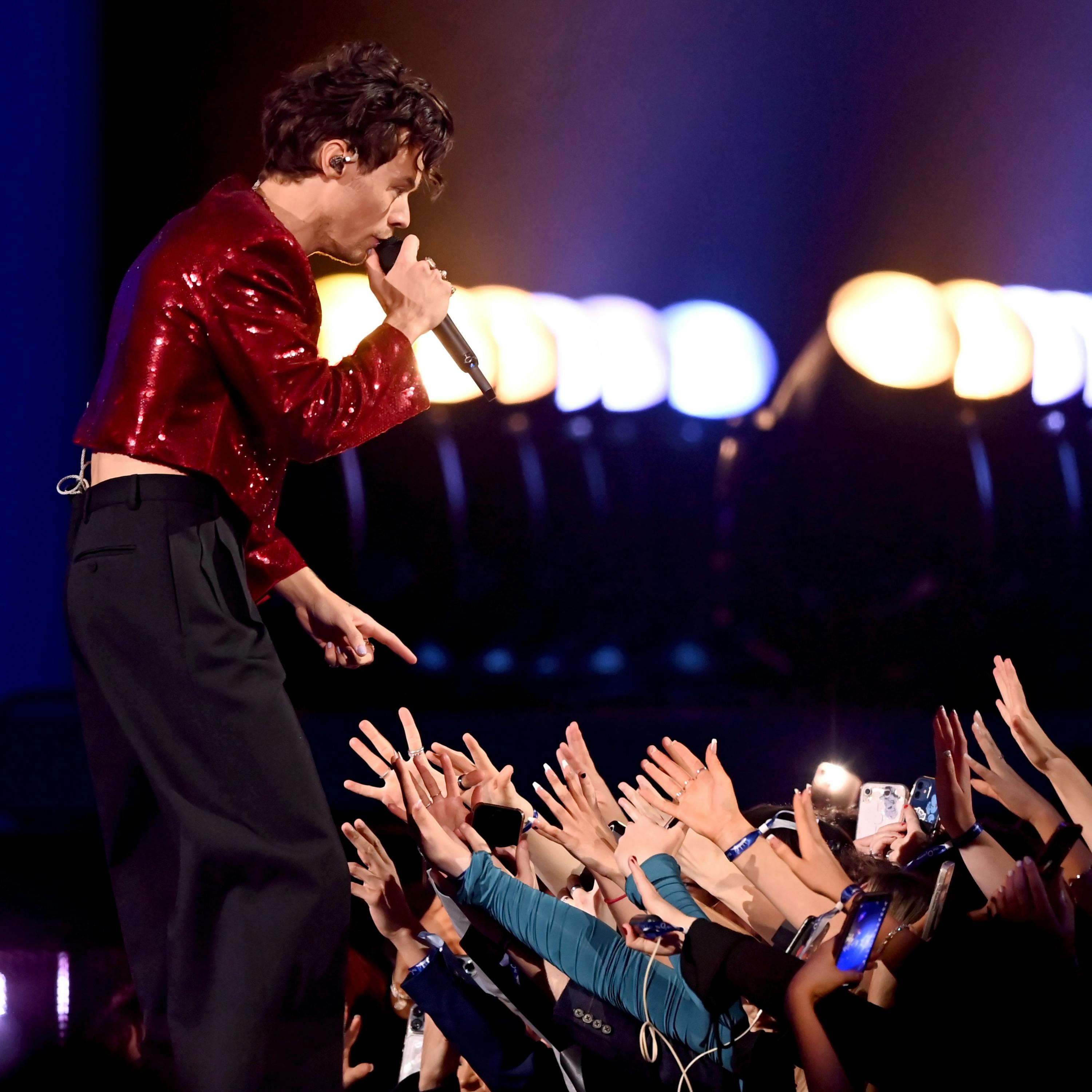
Today, Explained
A concert? In this economy?
00:26:07
A thousand bucks to see Harry Styles. Who’s to blame for high concert ticket prices, and why some artists are ditching the tour bus altogether.
Loading summary
Transcript98 lines
- [00:02]
Estad Herndon
What's the most you've ever paid for a live concert? I'll start. Floor seats at Beyonce's Renaissance Tour cost me $450, which seemed crazy at the time, but these days that could be considered a steal.
- [00:15]
Sponsor Voice 1
Oh, my God.
- [00:16]
Sponsor Voice 2
The most expensive tickets are $1,100.
- [00:19]
Taylor Mims
And I think we need to quote what it is. It's greed.
- [00:21]
Estad Herndon
It's gotten so bad, Kid Rock just went to the US Senate to complain that this industry is full of greedy snakes and scoundrels.
- [00:29]
Robert Levine
Too many suits lining their pockets off talent they had and fans they mislead.
- [00:34]
Estad Herndon
You've got Ticketmaster in its dynamic pricing, and then there's the whole secondary market with resellers jumping the line and scooping up all the cheap seats. The result? Some artists ditching the tour bus completely and higher prices for everyone. So where does that leave us fans? That's coming up on today. Explained from Vox.
- [00:56]
Robert Levine
Thank you.
- [00:57]
Estad Herndon
Rock on. Support for this show comes from the Working Forest Initiative. The working forest industry is committed to planting more trees than they harvest. More than 1 billion seedlings are planted in US working forests every year. From biologists to GIs, analysts, hiring managers, accountants and more, working forest professionals have dedicated their focus towards sustainability, using their expertise to help ensure a healthy future for America's forests. You can learn more about Working forest initiatives at workingforestinitiatives.com workingforestinitiatives.com
- [01:38]
Sponsor Voice 3
support for the show comes from Shopify. Every worthwhile journey starts with a handful of what ifs, but one day you'll be able to look back and realize that all those what ifs were small steps towards turning your dream into a thriving business. Shopify can help you get there. Shopify is the commerce platform behind millions of businesses around the world and 10% of all e commerce in the US join them and turn those what ifs into with Shopify today. Sign up for your $1 per month trial today at shopify.com Vox Business. Go to shopify.com Vox Business. That's shopify.com Vox Business.
- [02:20]
Taylor Mims
Today is gonna be explained to you. My name is Taylor Mims. I'm a senior editor at Billboard and I cover live entertainment and touring.
- [02:33]
Estad Herndon
Okay, so you are the right person to talk to because it feels like live entertainment and touring has changed a lot in recent years. I recently read that Harry Styles was charging $1,000 for a concert ticket. And, you know, no beef with Harry Styles, but that seems like a shocking price. Can you just tell me what's going on here?
- [02:53]
Taylor Mims
$1,000 is a lot of money for a ticket.
- [02:56]
Sponsor Voice 2
If Harry Styles thinks that his fans
- [02:57]
Taylor Mims
should pay that amount of money to go see him on stage for an
- [03:02]
Sponsor Voice 2
hour and a half, hard pass.
- [03:04]
Taylor Mims
Ick.
- [03:05]
Sponsor Voice 2
I don't even know what the price is.7,000.
- [03:07]
Sponsor Voice 3
How many dollars is that?
- [03:08]
Sponsor Voice 2
What do you mean?
- [03:09]
Taylor Mims
$900. I don't want those tickets. But if we're being completely honest, it's fairly typical for these big tours at this point to find tickets in the 1000s, 2000s, etc. Especially for those really valuable seats. It's been slowly going up over the years, but it really became the normal, I would say, following the COVID 19 pandemic. Concerts were so in demand, still are so in demand, and people really want to be there and they will pay good money to have a good seat at a good concert.
- [03:47]
Estad Herndon
You know, I love a good stadium tour, but give me the experience kind of step by step. If you're a Stan of Taylor Swift or someone who is playing these kind of big stadium tours and you're fighting with your fellow fans for tickets, what's that process like?
- [04:02]
Taylor Mims
Oof. Well, it can be really rough. You're gonna try and get codes to be in the presale. If you don't get pre sale, then you're gonna try to go to the general on sale, which should be a couple days later, and you should be signed in, ready to go. As soon as you hit the queue, you're going to see a number that you do not want to see.
- [04:22]
Sponsor Voice 2
18,500 people. So feeling a little hopeless, I started
- [04:28]
Robert Levine
at 175,000 on the queue. And as you can see, I'm going down to 82,000. Now this account has all of them
- [04:34]
Sponsor Voice 3
between 160 to 180,000 in the queue.
- [04:38]
Sponsor Voice 2
Okay.
- [04:40]
Taylor Mims
The demand is really high and the supply is limited.
- [04:48]
Estad Herndon
You know, I hear what you're saying, but supply and demand was true before the pandemic too. Is it just that, you know, more people want to go to the concerts now? What exactly has changed to make this process so much more sticky?
- [05:04]
Taylor Mims
Yeah, you're absolutely right. There's always been a supply and demand issue, but people have figured out that there's a way to get in, to get in that queue, to jump that queue and make a bunch of money off of these tickets. It's become its own marketplace. So this is something that people do and make a ton of money because ticket resellers get in there, buy those tickets at a low price, and then mark it up as much as they Possibly can, for the secondary market, resell that ticket. And that's their whole profit right there. It's not. It's not that difficult to make a bunch of money off of these concerts.
- [05:38]
Estad Herndon
So we know that people have been scalping tickets online for years, but now we're seeing huge ticket prices from the jump from the original seller places like Ticketmaster. Who sets that initial price for a ticket? And who should I be blaming here?
- [05:53]
Taylor Mims
That's going to be between the artist and the agent or the promoter. So they're the ones that are going to set the ticket price. To be honest, one of the big things that happened over the course of the pandemic is that we lost a lot of good staff, saw a lot of good crew because they couldn't make money when concerts were shut down. And the price of everything has gone up. So the price of touring, so that could be crew, that could be the price of supplies. Literally everything, travel has gone up. And so that makes the price of the ticket go up as well. Because these artists have to recoup costs at some point. And when you're telling a fan it's going to cost you this much to get into the door, they expect a show.
- [06:41]
Robert Levine
Welcome to the ERAS Touring seven bed.
- [06:54]
Taylor Mims
So on top of that, that means more rehearsal time. That costs a lot of money. It costs a lot of money for these giant productions. I mean, loading in and out of a stadium show is incredibly expensive, and so is, you know, hauling all that stuff across country, across oceans, et cetera. So there's a lot of costs that have made it more expensive just to be a touring artist.
- [07:17]
Estad Herndon
Is it also that artists are seeing these high resale prices and think, hey, you know, if people are going to pay, it might as well. Like, I mean, could this just be a case of artists prioritizing bottom line over fan accessibility?
- [07:32]
Taylor Mims
Yes, but also it's not necessarily that they're prioritizing the bottom line over the fan. It's that they know the fan's gonna pay that price either way, so that money might as well go to them. Right. So if you're selling a ticket for $200, but you know it's gonna go for $1,000 on a secondary market, if you raise that ticket price to 500, it's a lot less profitable for the ticket reseller. And that fan was going to pay that price anyway, if not more.
- [08:02]
Estad Herndon
But I've also seen some artists pushing back, like Olivia Dean.
- [08:06]
Taylor Mims
I think concert tickets are overpriced. I think that people should be able to Come to the show and it shouldn't cost an arm and a leg. Do you know what I mean? So, yeah, more of that.
- [08:17]
Estad Herndon
She called on Ticketmaster to cap what people can resell their tickets for or on their own platform.
- [08:23]
Taylor Mims
To support Olivia Dean's commitment to fair ticket pricing, Ticketmaster is capping all future ticket resale prices for the Art of Loving Live tour on its platform and refunding fans for any markup they already
- [08:36]
Sponsor Voice 2
paid to resellers on Ticketmaster.
- [08:39]
Estad Herndon
So Olivia Dean was successful, but obviously a lot of ticket prices are still sky high and a lot of other resellers are out there. It seems like these artists using their public platform, their bully pulpit, haven't really moved the needle when it comes to these resale markets.
- [08:55]
Taylor Mims
Yeah, that's because these resale markets are entirely legal. Nobody's doing anything illegal. So what are you going to do? They're allowed to do this. But the more people who make their complaints heard, I think the better it is because people understand that it's, it's, that part's out of their control. There's nothing you can do about the secondary market.
- [09:15]
Estad Herndon
You know, Taylor, you're kind of bumming me out because it sounds like there's really nothing we can do and that this kind of high ticket price extortion is just here to stay. Like is what is the recourse for fans who feel like maybe, I don't know, that $1,000 for a live concert might be too much.
- [09:34]
Taylor Mims
Sorry to bum you out, but there's absolutely no reason to be this dismayed. There are things that can change. So one of the things that's happening across the country right now is that a bunch of different states are trying to implement regulations on this because it has gotten really out of hand. And so you'll see recently in California, in New York, what they've introduced are resale caps.
- [10:04]
Estad Herndon
A new bill called the California Fans first act is taking aim at ticket price gouging.
- [10:09]
Robert Levine
My bill, the Affordable Concert act, caps all resale concert tickets at face value. Among many other much needed reforms. It's time for state government to step up and protect fans.
- [10:22]
Taylor Mims
So when somebody buys a face value ticket, if for whatever reason they can't go, they can resell that ticket for no more than 10% above face value. And what that does is take the wind completely out of the resale market. Because if I buy a ticket as a ticket reseller and think I'm going to make a bunch of money off of this, but all I can make is 10%. That makes it so much less lucrative to be in this job, to be doing this for a career. So it's very possible. It's very possible. But only one state so far has passed the ticket resale cap, which is Maine.
- [11:06]
Estad Herndon
So I guess my question is, do you think there will be a tipping point where fans may say, hey, we had enough and this kind of road we're on for live music as luxury only reverses course or at least slows down?
- [11:21]
Taylor Mims
Yeah, I definitely think if we're not there yet, we're getting very close because I think people are really tired of it because it keeps happening, it's not slowing down, it's only getting worse. And so I do think that this legislation is really going to tell us where we're at because we've had almost 10 states introduce this, these resale caps, and I would say even just a couple of years ago, you couldn't even get those bills discussed because there's so much lobbying money against it. So I think if we see more states able to pass this, I think that should tell you right there that the tide is turning. I mean, you want to see your favorite artists succeed, right? You want to see them play bigger venues, have a bigger crowd, everyone really appreciate them. But you know, with that obviously comes a more expensive ticket and a bigger room. But also like how exciting that you get to see that, that you got to see them in that small room and then you get to see them in a big arena or stadium. And the energy you can get in the stadium when there's thousands of people excited with you over one artist, that's also an amazing experience and it shouldn't be just for the select few.
- [12:50]
Estad Herndon
Taylor Mims is an editor at Billboard. Coming up, if you want to see one of those big stadium shows this summer, you'll probably have to travel to get there.
- [13:12]
Sponsor Voice 1
Support for this show comes from iM8. If you're having a hard time finishing your day strong, then you might want to check out iM8's daily Ultimate Essentials. It's a daily all in one wellness drink that gives my body the support it needs without juggling a bunch of different supplements. Im8's daily Ultimate Essentials is a go to for getting the benefits of 16 different supplements in one tasty drink. Co founded by David Beckham and crafted with insight from experts at Mayo Clinic, Cedars Sinai and a former NASA chief scientist, it can simplify your wellness routine and make it easier to support your health. This drink is loaded with 92 nutrient rich ingredients such as vitamins, minerals, adaptogens and CoQ 10 MSM and pre, pro and postbiotics. It's designed to help you feel good from the inside out. Plus it's vegan, gluten free and non GMO so you can feel confident about what you're putting in your body, making it a solid choice. If you're focused on your health. Feel your best self Every day with iM8 go to im8.com explained and use code explained for a free welcome kit 5 free travel sachets plus 10% off your order. That's I M number 8 H E A L T H dot com explained code explained for a free welcome kit Five free travel sachets plus 10 percent off your order imaidhealth.com explained code explained these statements have not been evaluated by the Food and Drug Administration. This product is not intended to diagnose, treat, cure or prevent any disease.
- [14:49]
Sponsor Voice 2
Support for Today Explained comes from Trust and Will. Perhaps you've been procrastinating. You have not done your taxes or cleaned out your garage remote. You're alone. Fair enough guys. Estate planning can be another easy to put off task, but if you are a parent, homeowner, spouse or caring for older parents, perhaps you should get yourself in gear. Trust and Will says they can help you create an estate plan in as little as 30 minutes to protect grab guardianship of those kids and those pets, those assets and those healthcare directives. Trust and Will says their products are attorney designed, state specific and customized to your needs. They say their plans are designed to grow with you so you can update your plan at any life stage. Plus, Trust and Will says they utilize bank level encryption and secure sharing features so your most important documents and details stay protected. You don't have to wait until it's too late. You can protect your loved ones today, tomorrow and beyond with Trust and Will, a trusted name and online estate planning. You can go to trustandwill.com today and get 20% off. That's trustandwill.com today to get 20% off trustand willcom Today. Support for Today Explained comes from Delete Me. If you're online, there's a decent chance that your personal information has been collected by bad actors. That's where Delete Me comes in. Delete Me can make it quick, easy and safe to remove your personal data online at a time when surveillance and data breaches are common enough to make everyone vulnerable. Worth noting, the New York Times Wirecutter has named Delete Me their top pick for data removal services compared to others out there. Claire White deleted herself the past year.
- [16:19]
Taylor Mims
Having Delete Me as my kind of security guard has been awesome. They remove tons of unwanted listings where my data is available to all kinds of bad actors on the Internet and I feel really good knowing that they continue to monitor it even after I've set up my account. You get monthly reports, you get to see where your information is leaving is being scrubbed from and places where you're clean, which feels really nice.
- [16:45]
Sponsor Voice 2
Take control of your data and keep your private life private by signing up for Delete Me now at a special discount for our listeners. Get 20 off your Delete Me plan when you go to JoinDeleteMe.com today and use the promo code today at checkout. The way to get 20 off is to go to joinedelete me.com today and enter code today at checkout. Joins elite me.com today codetoday.
- [17:05]
Robert Levine
I don't know what that is so I couldn't possibly endorse it. You've never had today explained in your life? I can't say that have.
- [17:14]
Estad Herndon
Robert Levine is based in Berlin and he writes a column for Billboard. It's called Follow the Money and it's
- [17:20]
Robert Levine
basically about the music business and often the economics of the music business. All the dull stuff that doesn't involve celebrities.
- [17:27]
Estad Herndon
Well, not dull at all because I just learned so much about just how concert ticket prices are changing and it helped really explain to me the sticker shock I've been experiencing as someone who loves and enjoys concerts. And now I'm based in New York, so the news of Harry Styles upcoming tour really perked my interest. He'll be here for a 30 night residency and he has no other US shows on his tour. I found that kind of interesting and it felt to me like a signal of something changing in the music industry largely. Can you explain to me the business of Harry staying put like this? Why has this become a thing for artists? What do we think this tour represents? Sure.
- [18:08]
Robert Levine
What's interesting is all the writing, all the talk about the concert business focuses on the money that's going in. Hardly anyone thinks about the money going out. Just as always, they have crew, they have musicians, they have expenses. The most expensive part is getting it all around. So imagine if you could minimize that expense and make the same amount of money.
- [18:37]
Estad Herndon
So is that why we're seeing someone like Harry styles sit for 30 nights at MSG? Is it it's to lower travel costs?
- [18:44]
Robert Levine
Well look, I mean I haven't talked to Harry Styles, so I'm just making an Educated guess, but yes, I think so. And you know, there's the sort of capital R residency that he's doing. He's declaring this a residency and he's making an event of it. But if you look at the concert business in general, you are still seeing a trend, and sometimes people don't notice it, toward playing more shows at fewer venues. The same kinds of economic forces are changing the nature of what we might call regular tours. Now you're seeing more two night stands, more three night stands, more four night stands. And this is in economics, but there's also like lifestyle considerations. You know all those classic rock songs about the romance of being on the road. Like Think of Turn the Page by Bob Seeger, where he's talking about how burnt out he is.
- [19:30]
Estad Herndon
When you're riding 16 hours and there's
- [19:34]
Robert Levine
nothing much to do and you don't
- [19:37]
Estad Herndon
feel much like riding, you just wish
- [19:40]
Robert Levine
the trip was through. There used to be a romance to being miserable and now there's not.
- [19:47]
Estad Herndon
Rock stars on tour, the crazy bus, all of that stuff.
- [19:51]
Robert Levine
We're coming to your town, we'll help you party down. Now you have to come to them and help them party down. And it's just like, I think people realize, I mean, a lot of the performers are getting older. They might not want to move around so much. But also remember when Elvis was in Vegas.
- [20:08]
Estad Herndon
Viva Las Vegas.
- [20:10]
Robert Levine
You know, this is not Elvis, the teen sensation who wouldn't be filmed below the waist. This is Elvis, the middle class performer. And in Vegas he could stay in a really nice hotel.
- [20:22]
Estad Herndon
I want to ask about the New York piece though. When we think about Harry Styles specifically, because, you know, I think back to the fame and I don't have to go all the way back to Elvis for kind of famous residencies in Vegas, think about Celine Dion.
- [20:33]
Taylor Mims
So in here it's quality sound, quality time. Got your own stage built, custom. Every seat is the best seat in the house.
- [20:39]
Estad Herndon
More recently, folks like Adele or even Usher.
- [20:42]
Robert Levine
Well, being able to be here in
- [20:44]
Estad Herndon
Las Vegas has given me that opportunity to find more balance.
- [20:46]
Robert Levine
Because I got kids that are going to school, babies that are learning how to swim, and I want to spend that time. So Vegas had an advantage in that a lot of people were there with expense accounts always. That's probably less the case today. But it's still a convention and conference town. If you're charging people that amount of money, it doesn't just need to be a great show, it needs to be part of a great weekend. It has to be a city With a lot to do. It has to have great air connections and a lot of hotel rooms. New York scores on all of those. Two summers ago, Adele did a series of shows in Munich. They actually custom built a 70,000 seat venue for her. They built a little fairgrounds around it. Adele spritzes instead of aperol spritzes like a souvenir shop that was as big as a starter home.
- [21:37]
Taylor Mims
They had this display of all Adele's most iconic looks, which was so cool
- [21:40]
Estad Herndon
to see in real life.
- [21:41]
Taylor Mims
We headed to Adele World and went
- [21:43]
Estad Herndon
to the Ardrick One ten chin chin.
- [21:48]
Robert Levine
A Ferris wheel, a whole thing. And why Munich? Second biggest airport in Germany, but it's also close to a lot of places in Europe where people have a lot of money. Munich's probably the richest city in Germany. It's close to northern Italy and it's close to Switzerland. I think once you start having to justify the price, the best thing to do seems to be to get people to spend more money, which is weird, but people love it.
- [22:14]
Sponsor Voice 2
Hello,
- [22:16]
Robert Levine
can you hear me?
- [22:21]
Estad Herndon
It seems as if from what you're saying, it makes sense for the artist in terms of reducing travel costs. It makes sense because, you know, maybe resale markets have made it clear to entertainment industry that the demand for higher prices is there. But it does as you mentioned, also raise expectations of what fans expect to experience at the concert. I wonder, in your opinion, are fans getting more for their money at these shows since they're more expensive now?
- [22:48]
Robert Levine
I think that's so much in the eyes of the beholder. Right? Like I thought, Adele, I think for Munich, they built the biggest video screen in the world. Bigger than a football field and was gigantic. And to me, I'm not that much interested in a big screen. I don't care if it's the biggest screen. I'm not counting. She performed with fantastic musicians and the staging was really creative. I thought it was an incredible show. You know, I took the train four or five hours to go from Berlin. I thought it was fantastic and well worth it. Now, was I excited about the Ferris wheel? Honestly, not really.
- [23:25]
Estad Herndon
I guess I wanted to know, does this model work for smaller artists? Like, what limits artists outside of the Adeles or Harry Styles from adopting this residency model?
- [23:35]
Robert Levine
I think it's less about the size of the artist and more about the implied specialness of it. It's about fomo. These are the biggest concerts, but there's a lot of great concerts. How do you sell this as a special thing? Well, you play your marquee album, you promise Two shows, two nights, no repeats. Metallica did that.
- [23:56]
Taylor Mims
And we do duets every. At every show. And it's never the same because it's a no repeat weekend.
- [24:05]
Robert Levine
The band will play two nights in each city with different set lists and
- [24:09]
Estad Herndon
different opening acts each night, all performed in the round.
- [24:12]
Robert Levine
You really have to create a sense of event. You have to have a claim on people's souls. You know, in the modern concert business, you have to say it's not so much why do you want to see them, but why now and not next year or the year after?
- [24:27]
Estad Herndon
I mean, one question I have is how do you see these residencies having an influence on the way the live event industry operates as a whole? You know, part of what we've been looking at are the changes that have occurred in the industry. Post pandemic. Where do you see this piece as fitting in?
- [24:42]
Robert Levine
So I have to admit that a lot of people in the business and who write about the business have been very cautious about the boom in the industry. Look at the price spike post Covid. But what happens when that ends? When will that bubble burst? Look at how high prices get. Will people still have the money to go to other concerts? And the truth is, and I sort of hate to admit it because I've been one of these people, the demand to see shows has proven all of this wrong. There's always this idea that it's a winner take all business. You're gonna go to a big festival, the rest of your concert money gets taken away. You're gonna travel to see Harry Styles, you're not gonna see other shows. That money ought to be, logically, that money ought to be not spent on other concerts. But you don't see that. And this is at a time when the economy is very, very good for some people and pretty lousy for most people. So that might be another reason why people are so interested in playing New York and la. Because you get more people with disposable income, other people can fly there. But at some point, I don't know what the limit is. We don't seem to get. People who might buy a cheaper pair of jeans or a cheaper television. Don't seem to look at, you know, concerts are not a competitive good. Like, who's your second if you can't go see Harry Styles, who's the artist most like Harry Styles, who's also playing a concert? Who's most like Beyonce? Who's not Beyonce? The answer is nobody.
- [26:26]
Estad Herndon
Yeah, yeah, yeah. It's not. If Kelly Rowland was doing concerts, I would be moving in the same way. Right. Like it's specific to that artist. And I can kind of see your point being that, you know, that has what has made this shift be more permanent than folks expect.
- [26:40]
Robert Levine
No. By the way, I bet some of those artists that you would say don't compare to Beyonce put on great shows.
- [26:47]
Estad Herndon
For sure.
- [26:47]
Robert Levine
If you went, you might go to three of those shows and say, wow, I actually like those better. But you're Let me not say yours. Our brains are not wired like that. We can't miss this thing. And the regular spending logic that we all have seems to not apply. How long will that last? I'm very wary of predicting it because everybody's been wrong.
- [27:21]
Estad Herndon
Robert Levine writes the Follow the Money column for Billboard. Today's show was produced by Art Ariana Espudu, edited by Jenny Lawton, engineered by Patrick Boyd and David Tadashore, and fact checked by Andrea Lopez Cruzado. The rest of the team includes Hadi Mwagdi, Miles Bryant, Peter Balinin Rosen, Danielle Hewitt, Kelly Wezinger, Dustin Desoto, Noel King and Sean Ramis. Firm. Our supervising team is Avishai Artsy, Aminah, Al Saadi and Jolie Myers. Our executive producer is Miranda Kennedy. We use music from Breakmaster Cylinder. I'm Estad Herndon and tune in tomorrow for Today Explained Saturday this week we're untangling the web of conspiracies and lies surrounding Jeffrey Epstein. This will be right here in this podcast feed or you can watch it on YouTube too. Go to YouTube.com Vox to watch and subscribe today. Today Explained is distributed by WNYC and the show is a part of Vox Media Podcast. For more award winning podcasts, visit podcast.voxmedia.com you can listen ad free by signing up to Vox.com members.