← Today, Explained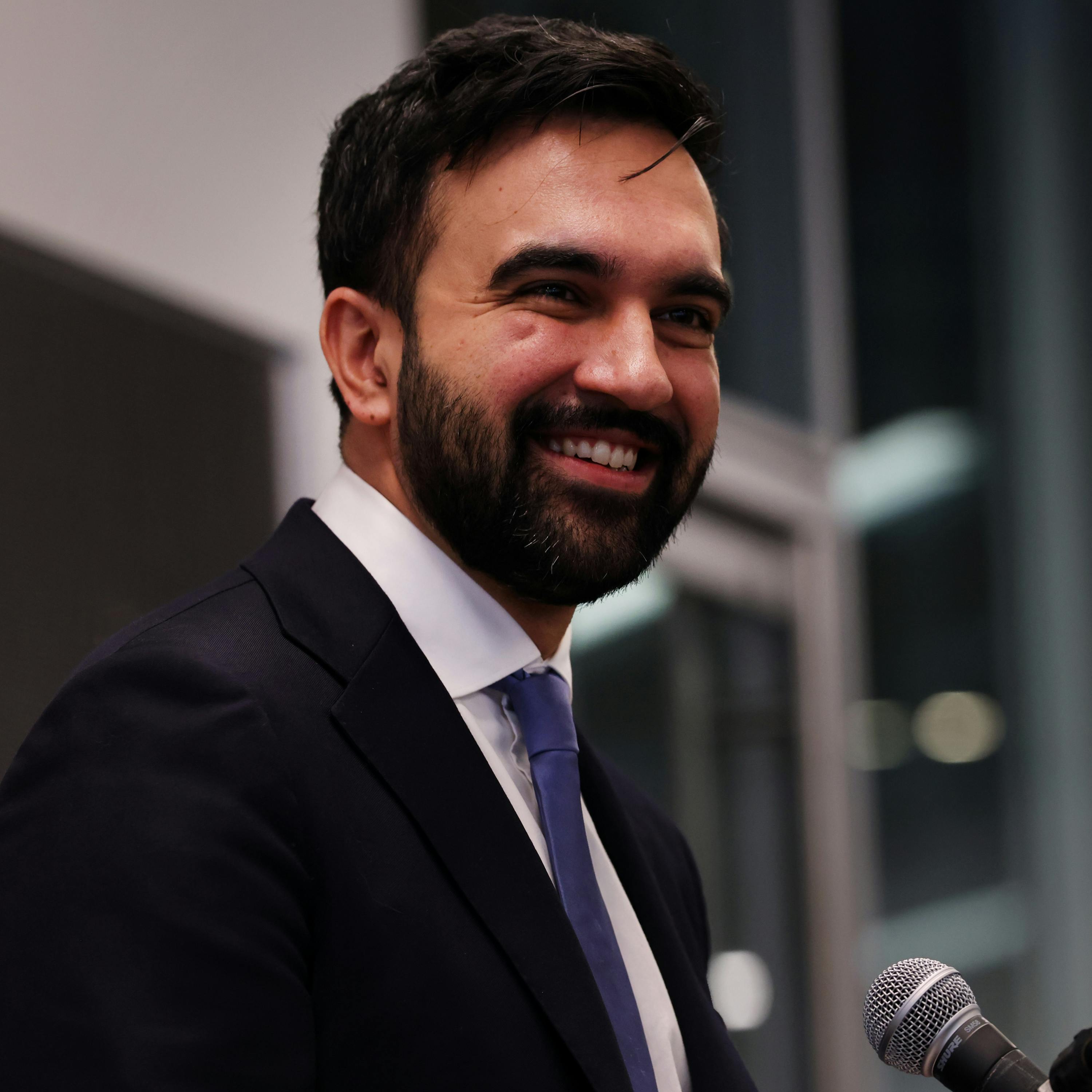
Today, Explained
A sit-down with Zohran Mamdani
00:26:26
New York City's Democratic socialist mayor takes office on January 1. Can he follow through on all those campaign promises? We ask him.
Loading summary
Transcript93 lines
- [00:01]
A
Okay, so you may have heard New York City gets a new mayor this week. 34 year old Democratic Socialist Zoran Mamdani. Mamdani's election was one of the biggest wins for the left in 2025, but since then he's been quietly going about a new task, trying to make sure his sweeping campaign promises can actually happen.
- [00:21]
B
An agenda that will freeze the rents for more than 2 million rent stabilized tenants, make buses fast and free, and deliver universal childcare across our A little skeptical about how he's going to get everything done. I think that's what a lot of people are promised. So many things like free buses, you know, housing and all of that. Promises, promises.
- [00:43]
A
Can this new kind of politics succeed? Or is this Mamdani's high point? The days before he gets into office on this episode of Today Explained from Vox, we sit down with New York City's mayor elect and ask him directly, is he for real?
- [01:00]
B
Here's a tip from the smartless guys. Most of us buy unlimited data, then live on wi fi like it's our full time job. That's why they started Smartless Mobile Wireless for non geniuses. Simple right sized plans based on what you actually use, not what big wireless loves to overcharge you for. No contracts, no overages, no gotchas and and you can sign up in minutes. Plans start at 10 bucks a month with unlimited talk and text and you can keep your number for a limited time. Get your first month free on select plans. Use code vox at checkout. Taxes and fees extra terms apply. Visit smartless mobile.com don't get outsmarted. Get Smartless Mobile.
- [01:47]
A
Right now. Get up to 20% off select online storage solutions put heavy duty HDX totes to good use, protecting what's important to you. The solid impact resistant design prevents cracking and the clear base and sides make items easy to find even when the totes are stacked. Find select online shelving and tote storage up to 20% off at the Home Depot. To organize every room in your home, from your garage to your attic, visit homedepot.com how doers get more done. You're listening to TODAY Explained. We're gonna sit down with Zoramdani in a minute, but first our producer Peter Baladnan Rosen is here to tell us about a pretty unique event he went to that the mayor elect recently held. Peter hit me.
- [02:38]
C
So it was this marathon listening session where over the course of 12 hours, Mamdani sat face to face with over 140 New Yorkers three minutes at a time at the Museum of the Moving Image in Queens. Now, this choice of venue, it's pretty notable because this is a museum dedicated to movies, tv, Hollywood, the Moving Image. It's a place built to pay respects to spectacle. So I was curious going in, is this Mamdani event just Spectacle two or could it be something more? Inside, we had volunteers checking people in. There were guys giving out chai tea who chug caffeine to be there real early.
- [03:15]
A
Red Bull tea, everything. I'm good to go for three days.
- [03:18]
C
Most of the people I ran into, they were Mamdani superfans. There had been this Instagram post telling people they could sign up for this event, and within 10 minutes, every single spot was full. And for the people here, one on one with the next mayor, it was pretty exciting stuff. Oh, it's surreal.
- [03:33]
B
Honestly, I'd followed his campaign so closely.
- [03:35]
C
I shouted out my wife and my.
- [03:37]
A
Kids and he wrote down all their names.
- [03:38]
B
This is a 12 hour event. I hope he has bathroom breaks.
- [03:41]
C
I grabbed Samina Kadir after she left her three minute sit down with Mamdani. And she said they spoke in Urdu, her native language, saying, you give us.
- [03:49]
B
Hope, happiness, peace of mind. That is enough.
- [03:53]
C
What did he say to you?
- [03:55]
B
He cried.
- [03:56]
C
Really?
- [03:58]
B
I saw he has a good heart. That's enough for me.
- [04:02]
A
So for Samina and others, it seemed to be about the feeling that they got out of this, the emotional response. It seems as if Mamdani was trying to create a sense of community between campaign and and supporters. Did you talk to anyone who had issues that they wanted addressed from Hamdani? Did you meet anyone who was also wondering whether this was all just spectacle?
- [04:21]
C
Yeah, I spoke with Ricky Kadir, no relation to Sameena. He was that wife and kids guy from just earlier. And he was here to tell Mamdani that the universal childcare that Mamdani campaigned on was gonna be crucial. But he did also see the public performance of this event.
- [04:37]
A
We're the museum of moving image, right? So, I mean, there's obvious, of course, there's some performance of picking this.
- [04:43]
C
But like Mom Donnie' says the idea for this did actually come from performance art. It was inspired by Marina Abramovic, the performance artist. She had this piece where for months she sat at the MoMA from open to close. People could come sit across from her while she just sat there. And the art was the public's reaction to her.
- [05:02]
A
Even if it is just performance art and they want to, like, get donations, they put this up on Instagram and get Donations, I mean, like, there are worse ways to do it, right?
- [05:12]
C
And people definitely brought their concerns. All right, so I gotta be honest, you're the only one I've seen here in a suit today.
- [05:19]
B
Suit? Because that's the official decorum I made.
- [05:23]
C
Joynal Abadan was looking pretty official. Bright blue suit, mink green shirt, matching tie. He's a small homeowner and said he's been having issues with his tenants.
- [05:32]
B
I know he's not in the office yet. We can just inform him and at the end of the day, we will give the report card what he did.
- [05:40]
C
You're watching?
- [05:40]
B
Yes, of course.
- [05:41]
C
One on1 sessions. 142 New Yorkers, 12 hours. It's all pretty remarkable. No one I spoke to had experienced anything like this in local, state or national politics before. And having that feeling of mom, Donnie in their corner, open to their concerns, it seemed to be working for folks, at least for now, before he's had any chance to let them down.
- [06:03]
B
Stead. How are you?
- [06:04]
A
I'm doing well. Mayor elect, how are you? Thank you for joining us.
- [06:07]
B
I was trying to be the host for a second.
- [06:09]
A
My plan with talking to the mayor elect was to figure out how he's going to avoid letting New Yorkers down, especially considering how much hope was surrounding his campaign. But I also wanted to figure out how he makes this agenda happen once he's sworn into office three days from now. Well, we're glad to talk to you at this point because, you know, we want to focus on the transition, not only how you all have conducted it, but also how you're thinking about how it informs the term ahead. We know that kind of mayoral transitions can sometimes be the high watermark for elected officials. I recently saw that you were +15 in your own favorability. How do you reverse what has been a historic trend? How do you make sure that this moment in office, that you're taking office is not the, the end of something, but the beginning?
- [06:52]
B
You know, I think I am aided by the fact that I have not given much weight to polls and favorability in the past, which is part of the reason why I'm sitting in front of you. So I think it, it comes back to the fact that we ran a race on an affordability agenda. It spoke to New Yorkers living in the most expensive city in the United States. We have to now deliver on that agenda. I think kind of the premise of your point is that this is the moment of hope and then the question of what comes next. And even beyond the transition, as A high watermark. Oftentimes campaigns, there's already a temptation of nostalgia for what the campaign was. We have to ensure the campaign is not the story we look back on. It's the path to the story that we've yet to start. And I think that comes back to delivery, that comes back to freezing the rent, making buses fast and free, delivering universal childcare. You have to transform people's lives in a way that they can actually touch and feel and hold onto so that they're not just grasping at the memories of what the struggle was like.
- [07:57]
A
I feel like the first clues of how you all plan to do that came in the transition. You all had kind of unique moments putting out these explanatory videos about semi mundane kind of process things. Baseball cards for staff appointments. We were at the event that you all held last week at the Museum of Moving Image. Why do that stuff? What is the goal of those type of events?
- [08:16]
B
I think there's a temptation when you win. We've seen it in the past to say now trust me, you can go home. The point of me winning is that you don't have to worry about politics anymore. The point of me winning is we keep fighting for the same agenda together. And that means you bring people along with you. And you also demystify what it is that you're doing. I mean, this transition period is probably the most opaque period, typically because it's between a campaign and governance and most New Yorkers are never brought into it.
- [08:50]
A
Yeah, it's usually insiders only.
- [08:51]
B
Yeah. And I think that's both in the way that it's funded and it's the way that it's also spoken about. And we wanted New Yorkers to be at the heart of that because most people didn't even know that there's no public funding for transitions. And I've had so many people ask me, what do you mean you have to pay for office space? What do you mean you have to pay for payroll, health care, inauguration. These are often things that are not brought up because you fundraise in the manner of previous administrations whose average donations were north of $1,000 per person and ours. You know, I think more than 95% of our donations are below $250. And I think that's just. That is one aspect of how you bring people into this.
- [09:32]
A
Sounds like the demystifying efforts are connected to what has been described as inside out strategy that to the goal of delivering. You feel as if you have to keep the public engaged, you have to keep that Public pressure going?
- [09:42]
B
You do. And I think there's often a description as if the campaign ends and governance begins with the implication that you leave people behind. And in many ways you have to keep going in the same kind of manner.
- [09:55]
A
I mean, how does that get harder once you're in office? To your point about the way the campaigns and transitions kind of create a sense of unity, you know, once the inauguration happens, you know, everything becomes Mayor Mamdani's problem. How do you ensure, how. How do you reverse the trend of public disengaging at that moment?
- [10:11]
B
I think you have to do the work to create actual opportunities for engagement as opposed to vague invitations. For 12 hours, I sat at the Museum of the Moving Image and I listened to New Yorkers. More than 140 New Yorkers came to share their stories with me. And the point of that is not just to say I listened, it's to actually take what they're saying and then act upon it. And some of the concerns were large. They were the concerns of undocumented New Yorkers sharing with me the immense fear that they live with on a day to day basis. And I think this idea that in fact governing could be informed by the people you're governing for, as opposed to treating New Yorkers as if they're just subjects. And also the understanding that in order for people to act upon something, they have to know about something. We even take that approach to rights. You know, in this moment, when so many New Yorkers are fearful of ICE agents and the potential of immigration enforcement as we've seen it take place across this city, we thought it was important to remind every New Yorker of their own rights and so that the only way they can exercise them is if they know about them. Yeah.
- [11:20]
A
You know, is there any argument though that like, you know, this is a little glitz and glamour? I mean, our folks were there largely supporters of yours. I want to hear more about. Like, did you hear criticism, did you hear any critiques of your campaign from some of those New Yorkers you sat down with? What set with you? That wasn't necessarily something that was already part of your agenda.
- [11:38]
B
You know, any gathering of New Yorkers has to have some critique. Otherwise, you know, it's not a gathering of New Yorkers. And I think there's critique in a fear of are you, are you going to be able to deliver on these things? Because there's a fear of, should I have believed in this? And my job and our job in building a team is to showcase the seriousness with which we took Those commitments and how we actually deliver them. You know, one New Yorker spoke to me about how their number one concern was about casinos. You know, and I shared with them that I myself am skeptical of the economic development promises that come with casinos. And I also know that there's a referendum that was passed by voters that creates the citation of three casinos within New York City, and I can't actually change that myself. And the frustration of knowing that this is something that person does not want and you cannot help them. And that's also part of what it looks like, is to be honest with people, even when that honesty isn't what they want to hear from you. Part of the reason why so many people are disengaged with our politics is there is a lack of honesty within the way in which we talk about it and the way in which we even explain it.
- [12:49]
A
I know that you have been a legislator, but not an executive. And back when I was doing the profile over the summer, I know that you were talking to people about what leadership means, about how to grow as an executive. I wanted to hear. Can you share any of that advice with us? What steps did you take to close a gap, to feel prepared for stepping into this moment? And do you?
- [13:08]
B
I think the key thing that I was told again and again is the importance of the team around you. And I think the other part of the advice that I've received is that you actually listen to people, that you actually bring New Yorkers along with you. Because our campaign was not just about reaching out to those who haven't voted in a long time. It was also reaching out to those who haven't voted at all. And that's an opportunity to show people that political engagement has to extend beyond the ballot box. It is not just one moment in one year that you come back to every four years. It is something that requires a participation and engagement. Engagement. And in the same way that New Yorkers won this election, not me. New Yorkers will win this agenda, not just me.
- [13:55]
A
I know that you previously had said that you wanted a team that did not have policy litmus tests that you wanted folks with differing opinions. Has that transition team. Has the staff you put in place lived up to that?
- [14:05]
B
Absolutely. I think you'll see that appointments are not simply a reflection of myself. And I think there's a tendency sometimes to just look to reproduce yourself, your ideas, your preferences in each and every person you hire. What you do, if you're to do that, is create the conditions where everyone in the room is measured by the quickness with which they can say yes to you and yes to any one of your ideas. You need to build a team where people can also say no to you, where people can push you, where you are able to have the debate inside the room as opposed to waiting to have the debate outside the room. And I think that in the appointments we've made thus far, it's not demanding alignment on each and every issue. It's asking, do you believe in the agenda at hand? And do you believe. Do you have a vision for this specific position that shows you can fulfill that?
- [14:52]
A
You know, at the same time, there's folks who have been frustrated with that, that thought that some of this coalition building, even among your appointments, has maybe betrayed the movement that got you here. I'm thinking about the appointment of Jessica Tisch as police commissioner. I'm thinking about a vocal rejection of a Democratic challenger to Hakeem Jeffries in Brooklyn. My question is like, have you had to embrace a different side of yourself? Do you hear any of the critiques that we're seeing insider Mamdani, these days?
- [15:17]
B
You know, I think you have to first and foremost take these critiques in good faith. That is how you become removed from the reason you did this in the first place. When you engage with it, you separate from the good faith, from the bad faith. And I think taking this at the good faith, I understand the criticism that those have shared. I also think that it is important that it's not just a reproduction of self in every single appointment and that we understand that, for example, with the nypd, my decision in retaining Commissioner Tisch is a decision on the basis of looking at her record of coming into an NYPD that the Adams administration had stacked the upper echelons of with corruption and incompetence and starting to root that out while lowering crime across the five boroughs. Making this decision not only in recognition of that, but also to fulfill the larger public safety vision that we had laid out over the course of the campaign, which focused on the creation of a Department of Community Safety that will tackle the mental health crisis, the homelessness crisis. This is also a decision that is not one that is in tension with the commitments I've made specific to the nypd, like the disbanding of the Strategic Response Group.
- [16:33]
A
Those things still happen.
- [16:34]
B
That still happens. And I think that's what's important to make clear to New Yorkers, is that the things that we campaigned on, these are still things that we will fulfill. We will do so with the teams that we're building around us.
- [16:46]
A
One question I have is like there's so much national and international focus on both campaign and I think your administration going forward, but it's such a hyper local job. You know, how do you balance what will be the intense attention with the reality of who you're serving?
- [17:02]
B
You have to remember not just that reality, but the point of this is to serve this city right? It's, it's not like a reality check. It's the reason why I did this. It's the reason why it was possible to weather difficult moments because it's all in service of a city that I love. And there's some days where it's hard to believe that my job is traveling around New York City and meeting New Yorkers and listening to their concerns and having the opportunity to act upon them. And I also think the greatest thing you can do is the power of example of what you can do, what you can succeed, what you can deliver. Because what we're talking about right now, the growing sense amongst New Yorkers that politics is irrelevant to their day to day struggles, the inability for our political system to deliver on crises large and small. These are not uniquely New York issues. These are issues that people feel outside of the city, outside of this country. And we have an opportunity to show that by serving New Yorkers, we can also showcase a politics that can serve working people wherever they may be.
- [18:18]
A
Coming up, I asked Zoram Abdani about what success or failure looks like in his new administration.
- [18:43]
B
So good, so good, so good.
- [18:46]
A
New Year New gear. Thousands of fresh active styles are at.
- [18:50]
B
Nordstrom Rack stores now. Save on top brands like Nike, Puma and free people starting at just $35. How did I not know Rack has Adidas? There's always something new.
- [19:00]
A
Plus, join the Nordy Club to shop.
- [19:02]
B
New arrivals first unlock exclusive discounts and more.
- [19:05]
A
Great brands, great prices.
- [19:08]
B
That's why you wreck.
- [19:11]
A
This episode is brought to you by Jack Daniels. Jack Daniels and music are made for each other. They share a rhythm in the craft of making something timeless while being a part of legendary nights. From backyard jams to sold out arenas, there's a song in every toast. Please drink responsibly. Responsibility.org, jack Daniels and Old Number 7 are registered trademark Tennessee whiskey 40% alcohol by volume. Jack Daniel Distillery, Lynchburg, Tennessee.
- [19:38]
B
This message may be shocking to many millennials. If you are one, you might want to sit down Right now, loads of people are searching the following on low rise. Jeans, halter top, velour, tracksuit, puka shell necklace, disc belt. You Likely placed these in the dark of your closet in 2004, never to be seen again. But if you can find it in yourself to dust them off, there are a lot of people who will give you money for them. Sell on Depop where taste recognizes taste.
- [20:10]
A
We're back. It's Today Explained. I'm Estad Herndon here with Mayor Elect Zoram Mamdani. I want to look ahead, you know, how would you define the priorities for your agenda? What would you define as success or failure? For the Mamdani administration, it comes back to affordability.
- [20:26]
B
The priorities have to be the fulfillment.
- [20:28]
A
Are those the three part. Are we talking about buses, childcare? What am I missing?
- [20:32]
B
Hit them. Come on.
- [20:33]
A
Buses, childcare, rent, freeze, boom. But what about like things like the publicly subsidized grocery stores? Is that priority too?
- [20:40]
B
That is a priority.
- [20:41]
A
So it's all of the above. When we think about the campaign priorities.
- [20:43]
B
I would say that the first order of priorities, like ranking best friends, the first order of priority are the three that we built the campaign around.
- [20:51]
A
Okay.
- [20:51]
B
There are obviously other commitments we made in addition to that. You know, five city owned grocery stores, one in each borough. The fulfillment of these things are not just critically important because you're fulfilling what animated so many to engage with the campaign, to support the campaign, but also because of the impact it can have on New Yorker's life. There's a lot of politics where it feels like it's a contest around narrative, that when you win something, it's just for the story that you can tell of what you won. But so many working people can't feel that victory in their lives. The point of a rent freeze is you feel it every first of the month. The point of a fast and free bus is you feel it every month, every day, when you're waiting for a bus that sometimes never comes. The point of universal childcare is so that you don't have to pay $22,500 a year for a single toddler. These are not things I have to explain the worth of to you or an intellectual victory. It is a material one. And so to me, when we talk about the struggles of our democracy, when we talk about a withering faith in it as a political system, we have to understand that the withering of that faith is intensely connected to the inability of that system to deliver needs of the people of it.
- [22:00]
A
So success is the big three promises.
- [22:02]
B
Success is the big three.
- [22:03]
A
What about political goals? I mean, I was literally on cable news today and they're talking about the mumdani wing of the Democratic Party, and they're talking about all challengers facing incumbents and the goal of spreading kind of progressivism, I think specifically socialism, across the country. Is that a goal you share? Do you look out at those challengers and say, that is the Mamdani wing?
- [22:22]
B
I think that anyone fighting for working people and fighting for a politics that doesn't just think of working people, but puts them at the heart of what it is that we're doing is critically important anywhere in this country. I think that for me, this is a moment in time where we have to reckon with why people feel this way about politics. And there is oftentimes an inability to reckon with the failures that have come before us because they implicate a lot of what we're doing right now.
- [22:51]
A
But the implication is that part of your political project is to spread across the country and to Congress.
- [22:57]
B
I mean, part of my political project is to spread the fight for working people everywhere. And I think that can mean new candidates. It can also mean a renewed belief amongst those who are already there to fight.
- [23:09]
A
You know, one of the things I also wanted to ask is like, it feels like core to the kind of Democratic Party's questions of moving forward has been to what to take from your campaign. I have heard people say everything from it's all about social media to kind of separate from the substance. I actually want to read you a quote. Hit me and have you respond to me.
- [23:27]
B
Has mean tweets or good tweets?
- [23:28]
A
No, no, no, not tweets at all. People who just said, I think if.
- [23:31]
B
My party wants to learn lessons from Mamdani's success that are portable to a place like Michigan, where I live, it's less about the ideology and more about the message discipline of focusing on what people care about and the tactical wisdom of getting out there and talking to everybody.
- [23:50]
A
I wanted to know, do you think this is true? Like, when we get outside of New York, how, you know, are we thinking that it's less about substance of campaign than tactics, or can we separate those things?
- [24:00]
B
I don't think you can fully separate the medium and the message. I think that that person is correct, that you have to have a politics that relates to working people's lives and their struggles. It can't be one that needs to be translated. I would also say that, yes, there are far more New Yorkers who do not ask me about how I describe my politics, and more they ask me, do I fit in that polit. I also think, however, that if all we did was make videos without a vision, an affirmative vision of how working class New Yorkers could afford this city, then I wouldn't be seated across from you right now. There are aspects of this campaign that are very much focused on New York City. I don't know if there's a rent guidelines board anywhere else in this country that can freeze the rent for more than 2 million tenants. We do have these slowest buses in the country. We do have childcare at costs that are astronomical. But the struggle for working people to afford day to day life, to afford dignity in the city they call home, that's not New York City specific. And what I would say is wherever anyone is to ask the people around them what is the example of that struggle in your life and what are the tools? And then for you as the candidate, think about what are the tools that government has to intervene in that to actually provide relief to that. Because so often politics feels like an exercise in language and ideas that you need to have been at the last meeting to understand this meeting and you actually need to meet people wherever they are and not explain to them why they should listen to you, but to actually have a vision that is intuitive for the struggles that they are living through.
- [25:44]
A
I appreciate your time and thank you for making time for us.
- [25:48]
B
You are very welcome. It's a pleasure to be here.
- [25:51]
A
This episode was produced by Ariana Ospadue and Peter Balinand Rosen, Edited by Miranda Kennedy, Fact checked by Danielle Hewitt and Laura Bullard and our engineers are Patrick Boyd and David Tadashore. You can get early access to the full video version of my interview with Mayor Alek Mamdani right now over patreon. Go to patreon.com Vox to get access to this video and other exclusive reporting from Vox.
- [26:16]
B
Thanks.
- [26:16]
A
I'm Esteet Herndon and this is today Explained.
- [26:39]
B
Support for this show comes from Odoo. Running a business is hard enough so why make it harder with a dozen different apps that don't talk to each other? Introducing Odoo. It's the only business software you'll ever need. It's an all in one fully integrated platform that makes your work easier. CRM, accounting, inventory, E commerce and more. And the best part, Odoo replaces multiple expensive platforms for a fraction of the cost. That's why over thousands of businesses have made the switch. So why not you try Odoo for free@odoo.com that's o d o o.com. And Doug, here we have the Limu emu in its natural habitat helping people customize their car insurance and save hundreds with Liberty Mutual. Fascinating. It's accompanied by his natural ally, Doug Limu. Is that guy with the binoculars watching us? Cut the camera. They see us. Only pay for what you need@libertymutual.com savings. Very underwritten by Liberty Mutual Insurance Company affiliates excludes Massachusetts.