← Today, Explained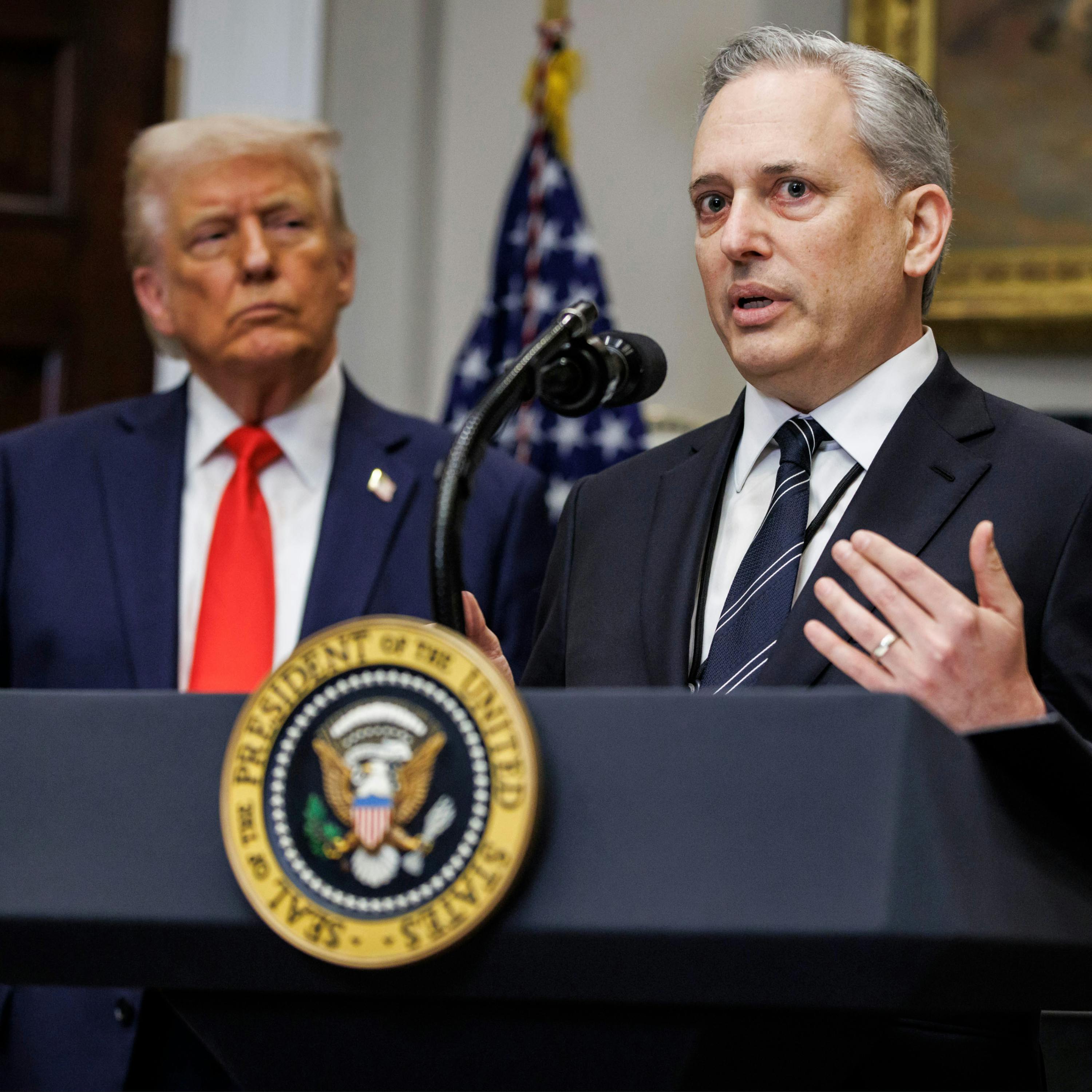
Today, Explained
AI: 1 — Humanity: 0
00:25:35
President Trump's new executive order makes it harder for states to regulate AI, giving a powerful industry even more power.
Loading summary
Transcript95 lines
- [00:01]
Noel King
People are worried about AI and they want states to make laws to protect them. Megan Garcia appeared with Governor Ron DeSantis at a press conference this week, where the governor proposed an AI Bill of Rights. Megan's teenage son talked to a bot about suicide.
- [00:17]
Tina Nguyen
The bot didn't stop and say, I'm an AI.
- [00:20]
Natasha Tiku
It sounds like you're having a problem. You need to talk to a human.
- [00:24]
Noel King
Before taking his own life. There are people who are suing employers claiming that AI discriminated against them.
- [00:30]
David Sachs
HR software company Workday is being sued over allegations of ageism.
- [00:36]
Sponsor/Ad Voice
The plaintiffs were rejected every time. They blame Workday's algorithm, which they claim disqualifies individuals over the age of 40.
- [00:44]
Noel King
And there are people worried about data centers being built in their backyards.
- [00:47]
Sponsor/Ad Voice
We live right down the street and.
- [00:49]
Natasha Tiku
We don't want this shit to happen, man.
- [00:51]
Noel King
But President Trump just signed an executive order that threatens states with lawsuits if they try to pass AI laws. That's coming up on the On Today Explained.
- [01:00]
Sponsor/Ad Voice
Support for the show comes from Smartless Mobile. The guys behind the podcast Smartless say that many of us are only using a tiny fraction of the data we pay for on those expensive unlimited plans. Smartless Mobile offers plans based on what you actually use. No contracts, no overage fees. You can visit smartlessmobile.com today. Plans start at $10 a month and for a limited time only. Get you can get your first month free on their 30 gigabytes plan, so you're more than covered. Just use the code todayexplain at checkout. Taxes and fees. Extra terms and conditions apply. Don't get outsmarted. Get Smartless Mobile Support for this show.
- [01:40]
Amazon Ads Voice
Comes from Amazon Ads. Every business owner has been there. You put a significant amount of money into an ad buy and then wonder, did those ads actually have an effect? Luckily, there's Omni Channel Metrics from Amazon Ads. Omnichannel Metrics helps advertisers understand how their Amazon Ads campaigns drive sales both on and beyond Amazon. While campaigns are still mid flight whether customers buy on Amazon or at a brick and mortar store, you'll understand the full impact of your campaigns. Head to advertising.Amazon.com to learn more. That's advertising.Amazon.com.
- [02:21]
Governor Ron DeSantis
There's only going to be one winner here, and that's probably going to be today.
- [02:25]
Tina Nguyen
Explained My name is Tina Nguyen. I'm a senior reporter at the Verge. I cover Big Politics vs Big Tech and the way that technology in the tech industry has started to shape politics and civil society.
- [02:42]
Noel King
Why do individual US States want to regulate AI, it's because they're the only.
- [02:47]
Tina Nguyen
People who can do it right now. Immediately. Congress is famously very bad at passing laws right now. There's very little chance that a comprehensive AI bill will be put together soon enough to address the immediate concerns that families, employers, workers, anyone who interacts with a computer will have about artificial intelligence. California sees this risk on the horizon. They're like, oh, gosh, we need to take care of this right now, especially since we're the hub of the tech industry. Let's make a law. Here we go.
- [03:27]
Natasha Tiku
Tonight, Governor Newsom signing into law a new AI regulation, Transparency in Frontier Artificial Intelligence act, or SB 53. It is the first to focus on the safety of these powerful AI models.
- [03:41]
Tina Nguyen
Texas starts seeing social threats that AI poses to their kids.
- [03:46]
Sponsor/Ad Voice
House Bill 149 requires governments to disclose how they use AI, bans images encouraging self harm and criminal activity. Ban social scoring and the use of sexual images of children. Texas is, with this bill, signaling to the country and the world that we are going to be the epicenter of responsible innovation with AI.
- [04:06]
Tina Nguyen
Texas is able to put that law together, implement it very quickly. Once you get to Congress, so many different interests are colliding. Like you'll have Colorado, for instance, who just put this law in place saying that hiring decisions can't rely on AI to commit algorithmic bias.
- [04:28]
David Sachs
I think if you're applying for a loan and you're denied, you should have.
- [04:33]
Sponsor/Ad Voice
The right to know why. If we're a leader in innovation and technology, what's wrong with being a leader in safe innovation and technology?
- [04:42]
Tina Nguyen
Then you might have a red state come in going, when you say algorithmic bias, do you mean woke stuff? And then that fight starts happening in Congress. And in the meantime, unless there's laws on the state level that address any of these concerns, there will be no laws addressing these concerns.
- [05:01]
Noel King
All right, so the 50 US states are trying to make laws that are applicable to them. And in the meantime, well, thank you very much.
- [05:10]
Governor Ron DeSantis
We have a big signing right now.
- [05:12]
Noel King
And President Trump comes along, signs an executive order that says what exactly?
- [05:19]
Tina Nguyen
The order was signed last week.
- [05:21]
Governor Ron DeSantis
It's the AI artificial intelligence. I always thought it should be si, Supreme Intelligence, but I guess somewhere along the line they decided on the word artificial. And that's okay with me. That's up to them.
- [05:33]
Tina Nguyen
It states, essentially, if you are a state that is writing or implementing or enforcing an AI regulation that we, we don't like for whatever reason, then we will sue you for it. And, or we can take away federal Discretionary funding that you might rely on for critical infrastructure.
- [05:59]
Noel King
So the Trump administration is giving AI companies exactly what they want. Did they lobby for this? Like, how did this work out so well in their favor?
- [06:10]
Tina Nguyen
There are a couple of billionaires who have Trump's ear on this. Primarily. There is this one billionaire named David Sachs, who is similar to Elon Musk, has a special government employee status that allows him to both work in the private sector and in the federal government. His position is the special advisor on AI and crypto, the AI crypto czar, in other words. And he's been pretty influential in getting Trump to warm up to the industry's views on artificial intelligence and how it should or should not, not be regulated. According to my sources, the argument that they've been making is, look, Mr. President, you want to be part of a massive technical revolution. You're helping build out this brand new infrastructure. You love building things. Also, you do want to beat China in the artificial intelligence races, right?
- [07:08]
Governor Ron DeSantis
There's only going to be one winner here, and that's probably going to be the US Or China. And right now, we're winning by a lot.
- [07:16]
Tina Nguyen
These are all things that really do speak to Trump. And even though he represented a populist movement when he became president, he's also still a billionaire at the end of the day. And if a fellow billionaire is talking to him, they have that understanding and they have that relationship that you really can't replicate with regular people in government. They don't have that aura of a tech billionaire, you know.
- [07:46]
Noel King
So this being the United States of America, this could get very interesting because one thing we do believe in in this country is states rights. And it sort of sounds like this is headed down a path of a state says we have the right to regulate AI in our backyard. You can't tell us what to do. What do you know about forthcoming legal challenges? What do you know about state, state saying, Mr. President?
- [08:12]
Tina Nguyen
No, I wouldn't be surprised if California filed a lawsuit against the Trump administration saying that what you're doing is blatantly illegal. Texas, you don't really want to mess with them. I believe there is very strong support in the state government against the Trump administration on this. And in Florida, Governor Ron DeSantis signed a bill of rights that listed out what Floridians want and don't want from artificial intelligence.
- [08:42]
Sponsor/Ad Voice
The more it veers into the consumer facing, just trying to monetize, trying to addict people, trying to do all that, you know, that is obviously going to create a lot, a lot of harm.
- [08:51]
Tina Nguyen
And so let's just do so. There is a broad bipartisan opposition across red blue states against this executive order. On the other hand, for smaller states that want to implement their own AI laws, they could look at this and see Trump and his fellow billionaires threatening to make it hurt for their constituents at that very moment. So they could say, okay, it's not worth having this fight because otherwise our constituents get hurt.
- [09:26]
Noel King
It is interesting that Governor DeSantis is one of the people loudly pushing back because we recall that President Trump was elected for many reasons, but there was a sense that parents rights had been overlooked. There was a sense that, you know, parents were losing control of their children in schools, in hospitals, et cetera, et cetera. And Trump's base was like, give the power back to the parents. Something that the president, you know, in his campaigning said he was going to do.
- [09:55]
Governor Ron DeSantis
I'm for parental rights all the way. I don't even understand the concept of not being.
- [10:00]
Noel King
What do we know about how this executive order is playing with ordinary people?
- [10:05]
Tina Nguyen
I don't think it's coming across very well. Discussions are really early right now. I think you'll start seeing it erupt more in the midterms, but in red states, you're gonna start seeing churches, religious groups, concerned parent groups come out really strongly against this type of legislation. Marjorie Taylor Greene, one of the ways that she broke with Trump early on was because she Congress was trying to pass the moratorium, the full on ban on state laws and went, when I voted for the one big beautiful bill, I didn't know about this clause. I thought I was voting on taxes, energy and border security. And when it comes to AI and regulation, when we get to vote on this bill again, I will be voting no because of this clause. I do want to point out that during the last election when you mentioned that a lot of voters wanted Trump to come in and stop teachers and hospitals and medical professionals from dictating what they could and could not do, indoctrinating their kids and quote, unquote, woke whatever like that. I don't think they realized that artificial intelligence was on the horizon. And I don't think they realized that Trump would immediately flip to the billionaire position on this. Honestly, I think everyone thought, including myself, that Trump was going to be much harsher on these big tech companies. But like over the past administration, I think big tech has realized the best way to get Trump on their side is to literally bypass all of the MAGA aligned regulators that are in the administration who instinctively hate them and go straight to Trump, who is more malleable and likes to talk to billionaires because he views them as his peers.
- [11:59]
Noel King
That was Tina Nguyen of the Verge. Coming up, what you need to know about AI czar David Sacks. Support for today's show comes from Shopify. Perhaps you've been thinking about starting a business, but you're waiting for the stars to align to actually do it. That's not how anything works. 2026 might be the year you should just like do something guys. Shopify says they can help you. Just do something. Shopify says they can give you everything you need to sell online and in person. Millions of entrepreneurs have already made this leap. They're not waiting from household names to first time business owners. Just getting started. And Shopify says they can give you all the tools to easily build your dream store. Hundreds of beautiful templates I'm told that you can then customize to match your brand. And they say setup is fast with built in AI tools which can write product descriptions and headlines and help you edit product photos. Also built in marketing, Shopify says you can create email and social campaigns that reach customers wherever they scroll. In 2026, stop waiting on the stars to align and start selling with Shopify. Sign up for your $1 per month trial and start selling today at shopify.com/explained. Go to shopify.comexplained that's shopify.comexplained. hear your first this new year with Shopify by your side. Support for Today Explained comes from Bombas. Putting on a new pair of socks can instantly feel refreshing, according to Bombas. Especially according to Bombas. If they're Bombas socks. Bombas make socks for just about any activity. Your warm merino wools, your comfortable compressions, your cushioned running socks and so much more. High quality slippers. T shirts Mudans Nisha Chital tried Bombas. Here's what she thinks.
- [13:49]
Natasha Tiku
Bombas has great kids socks. I have a three year old, she runs around a lot indoors in her socks and she's often slipping on the hardwood floors. But Bombas kid socks have grips on the bottom and they're really great to prevent that slipping around on hardwood or tile floors. So we love those for her. They're definitely our preferred socks for our daughter.
- [14:13]
Noel King
Bombas says that for every pair of Bombas you buy, they donate one to someone facing homelessness. Anytime you get something cozy, someone else can too. According to Bombas. You can go to bombas.com explain and use code explain for 20% off your first purchase. That's B O M B A S.com explain code explained at checkout.
- [14:34]
Sponsor/Ad Voice
Support for the show comes from Chime. If time is money, then using a clunky, outdated online banking platform could be costing you. Chime says they're here to help Chime is a financial technology company that wants to help you embrace each and every dollar. When you set up direct deposit with Chime, you can get access to fee free features like overdraft protection and you can get paid up to two days early and more. And they also have 47,000 fee free ATMs, which Chime says is more than the top three national banks combined. Chime is not just smarter banking. It's the most rewarding way to bank and you can join the millions who are already banking fee free today. It just takes a few minutes to sign up. You can head to chime.comexplained. that's chime.comexplained.
- [15:22]
Chime Legal Disclaimer Voice
Chime is a financial technology company, not a bank. Banking Services A secured Chime Visa credit card and MyPay line of credit provided by the Bancor Bank NA or Stride Bank NA. MyPay eligibility requirements apply and credit limit ranges $20 to $500. Optional services and products may have fees or charges. See chime.com feesinfo advertised annual percentage yield with Chime+status only. Otherwise 1.00% APY applies. No min balance required. Chime card on time may have a positive impact on your credit score. Results may vary. See chime.com for details and applicable terms.
- [15:48]
David Sachs
Hey chatgpt, can you introduce today explained?
- [15:52]
Sponsor/Ad Voice
Sure. Oh my God. That's a lovely idea and I can't wait to help you do that. We can do it a number of different ways. I could do it upbeat or I could do it somber. It really just depends on the topic and what you want. Never mind.
- [16:05]
Noel King
I'm Noel King. David Sachs, President Trump's aizar was an early friend of Peter Thiel and part of thiel and Elon Musk's PayPal mafia. He started a company, he sold it to Microsoft as you do. Then he started a VC firm and he now has big stakes in SpaceX and Xai. Like me, David Sachs is also a podcast host. Natasha Tiku, tech culture reporter for the Washington Post. Tell us about him.
- [16:30]
Natasha Tiku
Sachs has a very popular tech podcast.
- [16:34]
Sponsor/Ad Voice
All right everybody, welcome back to the number one podcast in world, the all in podcast in the news in your.
- [16:40]
Natasha Tiku
Feed that co hosts with three of his quote unquote besties.
- [16:45]
Sponsor/Ad Voice
Okay, let's go to Emperor Palpatine. This is coming together as exactly as you orchestrated you as the czar of AI and crypto. Thank you for your service.
- [16:55]
Natasha Tiku
Civil servant David Sachs, they're all investors. And one of the other co hosts was also part of the, you know, war room as Elon's taking over. And they kind of cheered a lot of his ideas, like, yes, fire, fire your trust and safety department. Like, get rid of dei, you know, like, fight for free speech.
- [17:15]
David Sachs
Jamath. Do you hear that Freeberg got busted looking at porn on his computer?
- [17:19]
Sponsor/Ad Voice
No, I did not. You got busted looking at porn?
- [17:22]
David Sachs
You want to know what it was?
- [17:23]
Sponsor/Ad Voice
Yeah.
- [17:24]
David Sachs
It was Elon of a Vicks Wall Street Journal op ed.
- [17:26]
Sponsor/Ad Voice
It was. I lost it. Oh, man, it was too good.
- [17:31]
Natasha Tiku
The idea is like you're getting a, you know, unfiltered, candid look from people who are in the game, in the arena, as they actually do like to on the podcast.
- [17:42]
Sponsor/Ad Voice
There are the people that are in the arena doing, and then there are.
- [17:45]
David Sachs
The people that kind of get kicked.
- [17:46]
Sponsor/Ad Voice
Out and get really upset.
- [17:48]
Natasha Tiku
But increasingly they started talking about politics. And, you know, David started out as kind of like the conservative foil. His co hosts were much more like centrist Democrats. And the evolution of, of their worldview, of their political stances is pretty close to what we see from, you know, the, the tech supporters of, of Trump's second term.
- [18:12]
Noel King
We learn more from all in about David Sacks politics. What do we learn about his politics?
- [18:17]
Natasha Tiku
We learn that he is conservative. He has also been politically involved in previous election cycles, giving to different candidates. He's given to Hillary Clinton. He mostly gives to Republicans. He spoke out against the January 6th insurrection. He was actually backing Ron DeSantis. He asked his buddy Elon to host Twitter Spaces with DeSantis back when they were still calling it Twitter, if you remember, it was kind of like an audio disaster. Yeah.
- [18:51]
David Sachs
From Twitter headquarters, it's David Sachs here. Elon is sitting next to me, and we want to welcome you to this historic Twitter Spaces event.
- [18:59]
Natasha Tiku
And he hosted a fundraiser for Vivek Ramaswamy. Not only that, but they had all of these candidates, or at least all of the Republican candidates, and Dean Phillips on the all in podcast. And we saw him also become, I think, increasingly closer to the maga. Right.
- [19:18]
Noel King
How did Trump and Sachs end up getting involved?
- [19:20]
Natasha Tiku
Well, Sachs hosts a fundraiser for Trump in June of 2024 at his home in San Francisco. And it seems like that dinner kind of really cemented the deal. There were a lot of crypto entrepreneurs, and Trump just loved it. I mean, Sachs has a very nice home on Billionaires Row in San Francis. When Trump came on the all in podcast afterward, he was like, I love.
- [19:49]
Governor Ron DeSantis
That house he has. I love David's house.
- [19:52]
Natasha Tiku
And Sachs is very deferential towards him.
- [19:54]
David Sachs
Thank you, sir. I heard you have a pretty nice house too.
- [19:57]
Governor Ron DeSantis
Yeah, I have a. We're in a nice house.
- [19:59]
Natasha Tiku
And they, they talked about what was happening to the crypto industry and I think a way that really resonated with Trump. They were talking about being persecuted by the SEC chairman, Gary Gensler, how hard it was for crypto entrepreneurs to bank, you know, what the Trump administration could do for them. Here's this empowering technology. And keep in mind that Trump has previously called crypto a scam. I think, you know, we've seen this, like, very quick evolution on that since inauguration, but that was really the start of it. And, you know, there's another quote in that episode where Trump talks about how Sachs introduced him to all the tech.
- [20:40]
Governor Ron DeSantis
Geniuses when we were at David's house and talking to a lot of geniuses from Silicon Valley and other places.
- [20:47]
Natasha Tiku
And that ends up being the start of this, you know, faction of the tech industry that helps bring Trump into the White House for a second term.
- [21:01]
Noel King
Okay, so David Sachs goes from outside of the Washington D.C. establishment into a role in the White House, in the Trump White House. What is he doing for Trump now and how serious is this job?
- [21:15]
Natasha Tiku
You know, we weren't sure how serious it was going to be. His title is the White House AI and Crypto Czar.
- [21:22]
Governor Ron DeSantis
You have been unbelievable. It's our White House AI and Crypto Czar, David Sachs, who has done such a great job.
- [21:31]
David Sachs
I want to thank President Trump for accomplishing what nobody thought was possible. And it's true.
- [21:36]
Natasha Tiku
Trump and Sachs have a very close and mutually respectful relationship. And he has ended up playing a extremely pivotal role in these two technologies that he has been put in charge of. And we've all witnessed the power of the AI industry through this post ChatGPT boom. So it ends up having a lot of geopolitical significance in terms of how we think about national security in China. All of that is tied in with GPUs and chips that are needed by companies like OpenAI, anthropic meta chips that are built by Nvidia, depending on the day, the top of the stock market, Trillion Dollar Me. So his profile is, is just so much higher than it used to be.
- [22:22]
Noel King
In the first half of the show, we talked about how states want to regulate AI and the way that governors are putting it is we want laws on the Books protecting people from artificial intelligence. The Trump administration says, no, you can't do that. Where do you think David Sachs fits into the executive order that says state, states. You don't get to make laws around AI.
- [22:45]
Natasha Tiku
He played a very instrumental role in this eo.
- [22:48]
Governor Ron DeSantis
We only have a system that's good if it's smart. David Sacks, could you say a few words?
- [22:53]
David Sachs
Yes, sir. So, as you pointed out, we have over a thousand bills going through state legislatures right now to regulate AI.
- [22:59]
Natasha Tiku
It involved David Sachs doing a lot of work behind the scenes, talking to, you know, the populist wing of the Republican Party, you know, trying to get them on board, emphasizing that this would not affect those, those laws that would keep their constituents safe. They tried to make it clear, like, look, we're not trying to stop you from protecting teens in your district or what have you. You know, we just want laws that are not onerous, that won't slow down the development of the AI industry.
- [23:32]
David Sachs
You can't regulate your, your way to winning the AI race. And in the United States, the innovation's done by the private sector. So it's really the job of government to enable, enable the private sector and get the red tape out of the way.
- [23:42]
Natasha Tiku
And that very much matches what you are hearing from the VC crowd that worked in the Trump administration that, you know, was aligned with the tech. Right. When they came into office, it was like, we want rules of the road for crypto and we want no hindrance for AI. You know, this EO definitely reflects their interest in making sure that there's not a, quote, unquote, patchwork of laws that a startup has to abide by.
- [24:13]
Noel King
So the stakes here are very high. David Sachs is a rich man who is powerfully connected in the White House, and he does not want there to be AI regulation. And he's made that clear. And for the moment, the President says there will be no AI regulation. On the other hand, you have American citizens, many of whom vote, saying, we are concerned about AI. We want laws around this stuff. So as we try to project over the next couple of years, which side of this do you think is going to end up winning, David Sachs or, you know, the concerned citizens of America?
- [24:50]
Natasha Tiku
Just in the last couple months, we've seen this particular question really gear up for a fight because you have increasing concerns, right from parents who are reading these stories about chat box, you know, encouraging teenagers to die by suicide or manipulating them in, in ways that look extremely uncomfortable when you start reading the, the chats. My son said explicitly to the spot on several occasions that he wanted to die by suicide, but there weren't any mechanisms to protect him. And at the same time you have people kind of pushing back in an organized way against having more data centers in their neighborhood. And the idea that, you know, we're going to literally change the landscape of and other countries, you know, in order to power this technology that CEOs say is going to put everybody out of work.
- [25:45]
Tina Nguyen
We are absolutely worried about this and other energy infrastructure increases from data centers driving up our electric bills and our neighbors electric bills, because it already has been.
- [25:57]
Natasha Tiku
So I would say, you know, before maybe some of the chatbot pushback, you would have had the industry get its way. And I think that the industry will still be able to win. And I think that some of the like the ability to do little carve outs for child safety for issues that are kind of like kitchen table issues or things that just sound terribly bad, like encouraging a child to commit suicide, you know, you might be able to get some restrictions on that. But the thing that will really shape how the tech industry has to behave is any checks on its ability to grow. I'm not saying that it's futile. You know, this is, I think drawing attention to these issues could hopefully potentially change the outcome towards what voters want, what people want. But I think that we should watch for, for that distinction between some of like these little safeguards that nominally seem like they're going to protect people or you know, carve out a safe space for them and some of the bigger, more existential factors.
- [27:15]
Noel King
Natasha Tikku Tech Culture Reporter what a beat. The Washington Post Today's show was produced by Danielle Hewitt and Avishai Artsy. It was edited by Amina Elsadi. In fact checked by Laura Bullard, Patrick Boyd and David Tadashore engineered. I'm Noel King. It's today explained Sa.