Loading summary
Transcript63 lines
- [00:01]
Noel King
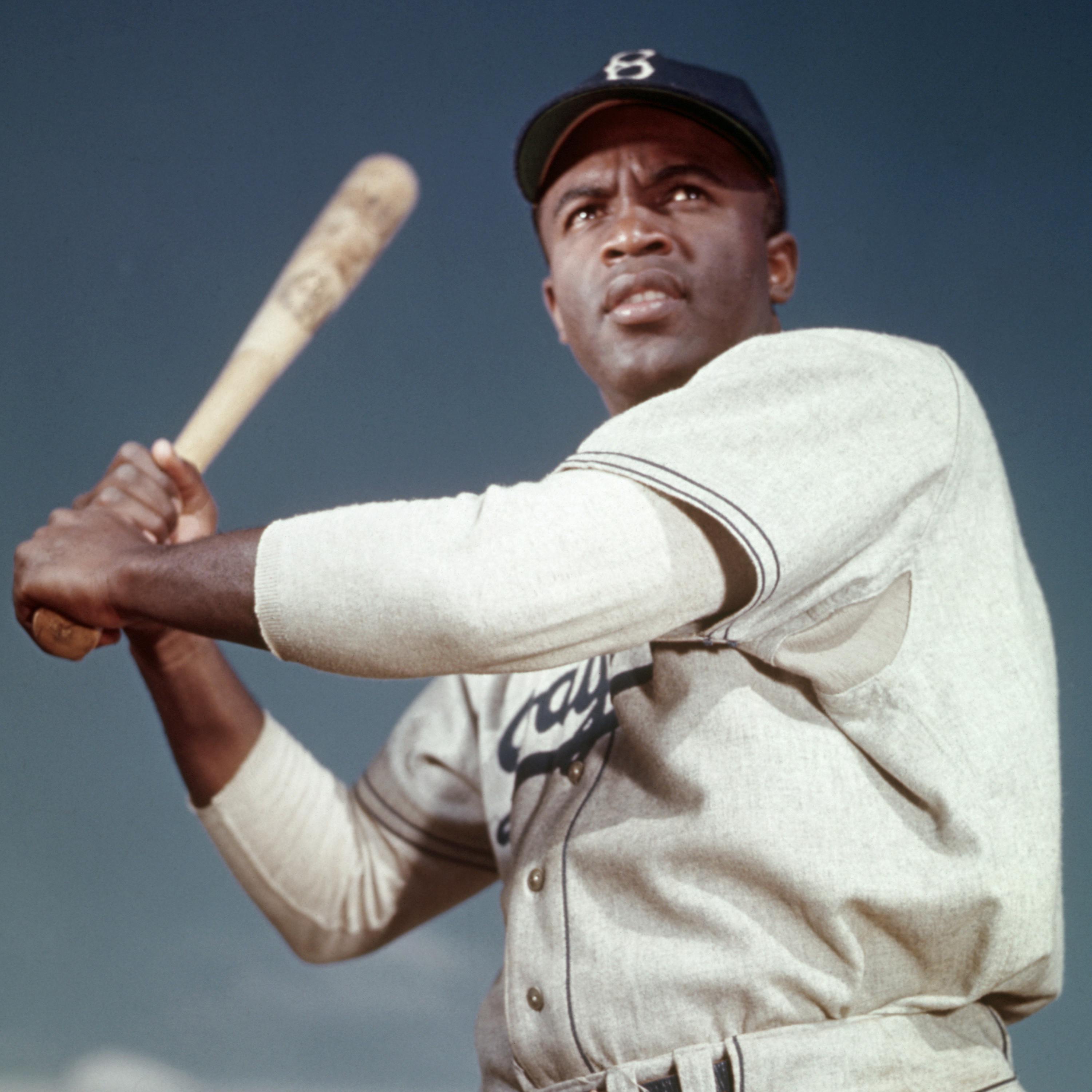
Mr. Jackie Robinson, number 42, integrated baseball not because DEI, but because he was so good that to paraphrase his manager, I don't care if the guy is yellow or black or if he has stripes like a fucking zebra, he can make us all rich.
- [00:14]
John Swain
Jackie Robinson steps in against Ford, deep into left center Irv Noren races After Robinson's blast, Jackie really teed off on Ford.
- [00:25]
Noel King
He also served in the military, during which time he was court martialed after peacefully refusing to move to the back of an army bus. He was acquitted. The Department of Defense website featured Robinson in a section called Sports Heroes, who served until March 19, when his page disappeared and the URL redirected to one that had the letters DEI in front of Sports Heroes. A Pentagon spokesman defended the removal, but about 90 minutes later the page was restored. That spokesman resigned last week. Ahead on Today Explained, the Trump administration tries to rewrite history.
- [01:01]
Unknown
Support for TODAY explained comes from HubSpot. Remember when you signed up for that software that promised to transform everything for your business? Six months later, you're still waiting on the results. HubSpot says they're proving you don't have to wait for ROI. Thanks to Breez, their suite of AI tools. HubSpot says their Breeze agents automate tasks that would normally take up your whole day. Creating marketing content, finding sales leads, handling customer service tickets. I hate those pesky customer service tickets. Visit HubSpot.comai to get started today.
- [01:45]
Sean
Hey everyone, Sean here. I'm really excited to share with you our special series, AI and Us, sponsored by canva. We'll take an in depth look at how AI will impact our lives in the future and explore the observations, ambitions and reasoning behind it all. In our first episode, I'll interview futurist and tech pioneer Jaron Lanier about the current state of AI, the potential it can unlock if we manage this technology well, and the implications for humanity if we don't. And then in the second episode, I'll talk to Julia Longoria, host of Vox's Good Robot, about the beliefs and ideologies of the people building, funding and influencing artificial intelligence and how looking at this AI origin story can provide clues into how this technology will change the way we live and work. You can find our special series AI and Us right here on the gray area.
- [02:41]
Unknown
You're listening to TODAY Explained.
- [02:48]
Noel King
It's TODAY Explained. I'm Noel King with John Swain, who's an investigative reporter at the Washington Post. John, the mess that we're here to discuss today started with an executive order from President Trump what was the order and how did it lead to the reporting that you've been doing?
- [03:05]
Unknown
That's right. On President Trump's first day back in office, he issued an order titled Ending Radical and Wasteful Government DEI Programs and Preferencing. And basically this order reversed something that Trump, Joe Biden had ordered very early in his term, which was the Biden administration made it government policy to pursue equity.
- [03:26]
David W. Blight
And that means we need to make the issue of racial equity not just an issue for any one department of government. It has to be the business of.
- [03:36]
Unknown
The whole of government that involved training and programs in the government to make that happen. And President Trump's order scrapped all that. It said, not going to do that anymore. It's immoral, it's wasteful. Discrimination programs, that's what he calls them, are gone.
- [03:52]
David W. Blight
And we will forge a society that is colorblind and merit based.
- [04:02]
Unknown
A key step in this sequence was the Defense Department under Pete Hegseth, taking President Trump's executive order and kind of running with it, saying that it applied to the Defense Department's web presence and kind of publications. The Pentagon has taken down thousands of pages honoring women and minority groups.
- [04:24]
David W. Blight
Critics attacked the U.S. department of Defense after a webpage was removed that honored the military career of sports legend Jackie.
- [04:32]
Unknown
Robinson, but that they called it a digital content refresh, which explicitly ordered the Defense Department to take these things down. And my reporting on this area began there. We found that several notable veterans from minority groups, so Native Americans, African Americans, pages that had been published celebrating their achievements. And one in particular that we focused on was one of the Marines who hoisted up the flag at Iwo Jima towards the end of the Second World War. Those pages had just been taken down. So other government departments, federal agencies, seemed to take the lead from the Defence Department and start doing the same thing. So we at the Post, we really wanted to look at more broad historical themes. Sort of was the government looking at places online where the government wrote about American history and possibly making any changes there? And so we went looking really for places online where the federal government writes about American history.
- [05:34]
Noel King
I don't really know the ins and outs of the battle of Iwo Jima. What did the Marines at Iwo Jima do that got them taken down off a government website?
- [05:43]
Unknown
It wasn't really what the Marines at Iwo Jima did. We all know the image of them hoisting the flag, the US Flag, as a sort of emblem of the victory in the Second World War.
- [05:54]
John Swain
On February 23, 1945, the Marines raised the US flag atop Mount Suribachi as a signal to the troops below that the mountain was won. That flag was seen around the world.
- [06:07]
Unknown
One of the Marines was a Pima Indian. His name was Ira Hayes. And a page on the Defense Department's website celebrated the fact that he had been a Native American and that he had taken part in this sort of emblematic, iconic moment in US Military history. And it was just a page that talked about his life. You know, his life actually had ended quite sadly. He wasn't really supported after the war, and he had problems with alcohol, and he died relatively young, without a fan. But this page was just a sort of small tribute to the small role he played in a big part of American history. And it was just taken down because it had focused on his ethnicity, basically.
- [06:50]
Noel King
Aha. So they kept the iconic picture up, but they removed the information about Mr. Hayes being American Indian. What other kinds of changes did you uncover in your reporting?
- [07:01]
Unknown
So when we turned our attention to the National Park Service, we found quite quickly, actually, that several themes kept coming up. Pages that dealt with women's rights, pages that dealt with civil rights and the sort of struggle for racial equality in the 20th century, and pages that looked at the Civil War and even earlier, sometimes the founding and the Revolutionary War and slavery. Around that time, in the 18th and 19th centuries, there were changes being made. And we noticed that in the most part, they were going one way, which was to soften the accounts and to remove some of the references to enslavement, to slaves, to the pursuit of equality by civil rights advocates, and to remove mentions of some of the struggles that women in the Park Service, for example, had had when they were working there. One of the cases that really leapt out was the Little Rock Nine. So people may remember, in the 1950s, nine brave young African American students walked through an angry mob to integrate their high school in Arkansas.
- [08:14]
John Swain
This girl here was the first Negro, apparently of high school age, show up at Central High School the day that the federal court ordered it integrated. She was followed in front of the school by an angry crowd, many of them shouting epithets at her.
- [08:31]
Unknown
The Little Rock High School where this happened is now a national parks monument. Essentially, it's a site and historic site, and it has a web presence. And we found that on, like, half a dozen pages on their website, A reference that had been there to the fact that The Little Rock 9 had opened doors for people around the world seeking equality. And education had been changed to just education. So their pursuit of equality and the opening doors to other People pursuing equality had just been erased. And I called one of them, Elizabeth Eckford. She appears in some of the very memorable photography from the time. And I just talked her through it and said what was happening to the website, and she was shocked. She said they were trying to rewrite history and that true racial reconciliation would never come until the painful past and the wrongs of the past were acknowledged.
- [09:31]
Noel King
I wonder if you were able to talk to employees of the Park Service and ask them how they're deciding which pages to change or to take down. Are they being given ordered? Are they making these choices on their own?
- [09:43]
Unknown
I did speak with some current employees, and it was a couple of things. First, they said that the Park Services is overseen by the Department of the Interior. And they said that early on in this Trump administration, political appointees at the Interior Department had directed senior Park Service people to have their employees scour the websites for potentially problematic content in light of President Trump's executive order. This was at a time, as people will remember. Suddenly, tens of thousands of federal employees were being fired from their jobs or their projects were being cut. And I think people were scared that they might lose their job if they didn't do a strong enough job in this request. And so that was one way. But one employee I spoke to told me about an even more interesting thing that happened, I think, which is that some corners of the Park Service that weren't even given this instruction took it upon themselves to do it anyway, because they'd heard on the grapevine that things were happening, that people were changing websites, and they, too, were scared that their projects might lose funding, that they might lose their jobs. And they kind of thought, well, we better get our house in order and make it acceptable to the political appointees above us, because if they stumble upon our website and it's full of championing equality and so on, we could be in trouble. And so some people, without even being told, were making these changes off their own back.
- [11:12]
Noel King
So we've talked about the Park Service, we've talked about the Department of Defense. Is this something happening elsewhere? To either other agencies, other websites?
- [11:22]
Unknown
I think the next thing to look for is the Smithsonian Institution. While we were reporting on the National Park Service, President Trump issued another executive order specifically targeting the Interior Department and the Smithsonian on what he called a sort of liberal rewriting of history that had happened prior to him coming back to office. And so he has directed the Smithsonian and the Park Service to make sure that exhibitions, monuments and statues and markers at historical sites do not do what he calls sort of unfair traducing of Americans past and present. I think. Well, it's clear that lots of historians are very worried about this because we all know that historic figures are complicated. The founding fathers, many of them held slaves. There are these parts of history that are uncomfortable and unpleasant that have to be reconciled. I think everyone agree, most people agree with the good and the heroic. And I think a lot of historians are concerned that President Trump wants to get rid of the uncomfortable and the unpleasant.
- [12:41]
Noel King
And we're gonna have more with a deeply concerned historian when we come back. John Swain of the Washington Post, Investigative Reporter thanks him. Support for Today Explained comes from Deleteme. Your data is a commodity and it has already been stolen. That can lead to identity theft, phishing attempts, harassment. Now you can protect your privacy with Deleteme. Deleteme says they make it easy and quick and safe to get your personal data off the Internet at a time when surveillance and data breaches are common enough to make everyone vulnerable. Claire White is my colleague here at Vox and she tried out DeleteMe.
- [13:29]
Unknown
I've been using Deleteme for a few months and I'm so grateful for the amount of information it has removed from websites that they predetermined to be bad. I feel like my information is much more secure and I feel much safer being a person online like we all are.
- [13:46]
Noel King
Take control of your data and keep your private life private by signing up for Deleteme now at a special discount for our listeners. You can get 20% off your delete me plan by texting today to 64000. The only way to get 20% off is to text today to 64000. That's today to 64000. Message and data rates may apply. Support for Today Explained comes from Green Light. Talking about money with kids isn't always easy, says Greenlight, even for the most finance savvy parents. Who among us? That's where Greenlight comes in. Greenlight says it's more than just a debit card. It's a money app built for families that gives parents a simple way to send money, track spending and help kids develop smart saving habits. Greenlight says kids and teens get freedom to manage their own money, gaining conf responsibility and lifelong financial skills along the way. One of our colleagues at Vox, Otisham has used Greenlight and here are her thoughts.
- [14:47]
Claire White
My family uses Greenlight by putting money into accounts for both our kids so that they have spending money whether it's after school, with friends, on the weekends, or if they're going on field trips. It's easier than sending cash with them in case there's not enough or it's too much. My 15 year old, he's thinking about like, I want to build my own computer. This is where, you know, having the savings account helps him. He sees it and he knows how much he can spend. But he also can be very deliberate in how he's saving his money versus spending it.
- [15:16]
Noel King
You can start your risk free Greenlight trial today. Greenlight.com explained. That's Greenlight.com explained. To get started, Greenlight.com explained.
- [15:29]
Unknown
Support for Today Explained comes from Mint Mobile or as its friends know it, Minty. Minty Cellular. No, no one says that. That's, that's so silly. Anyway, Mint Mobile is famous for the cheaper mobile plan. It's famous for Deadpool and Wolverine. They say you don't have to worry about unexpected overages with Mint Mobile. No matter how you say it, don't overpay for it. Shop data plans@mintmobile.com explained. That's mintmobile.explained. upfront payment of $45 for three month 5GB plan required. That's equivalent to $15 per month for the mathematicians in the audience. New customer offer for first three months only, then full price plan options available, taxes and fees, extra cement mobile for.
- [16:38]
David W. Blight
This is TODAY Explained.
- [16:42]
Noel King
We're back with historian and Yale professor David W. Blight.
- [16:46]
David W. Blight
I study slavery, abolition, the Civil War, reconstruction and African American history over time.
- [16:54]
Noel King
Okay, so nothing that's ever been contested.
- [16:57]
David W. Blight
Well, what do you mean? Contestants?
- [16:59]
Noel King
I'm joking. I'm joking.
- [17:01]
David W. Blight
Yeah, it's always been a little edgy, but actually never as much as right.
- [17:06]
Noel King
Now in the first half of the show. Professor Blight, we heard that many historians are really quite angry about some of the changes that the Trump administration has been demanding. What does an angry historian look like? What's been going on?
- [17:20]
David W. Blight
Well, just a week ago, from where we are now in Chicago, the Organization of American Historians had its annual gathering. I, for my sins, was the current president. It was almost a kind of a rolling fear and despair in a lot of the conversations. And in many cases it was a council of fear because let's face it, historians don't have, we don't have a legal defense fund. We don't have huge resources by any means. I don't think the history profession has ever received quite a frontal attack like this. They are going for the essence of what it means to do research and convert it into the narratives of history.
- [18:10]
Noel King
We often reporters will often say Donald Trump is unprecedented. The things that he does are unprecedented. I imagine you would tell me the United States has in the past, tried to rewrite its own history at certain times.
- [18:26]
David W. Blight
Many times, yes.
- [18:27]
Noel King
Give me some examples of the times. We've. We've tried to do this.
- [18:32]
David W. Blight
During World War II, the United States created a massive propaganda machine called the Office of War Information. Now, that's what governments do during wartime. They do. But that organization did indeed engage in a lot of propaganda, selling stories to keep Americans patriotic.
- [18:51]
John Swain
And the people of the United States, an angry people whose resources and privileges were the envy of the world, offering these without stint fighting in the factories and the foxholes.
- [19:03]
David W. Blight
Move ahead from that to McCarthyism. Anti communism was a very deep phenomenon in America, and not without some reasons, in the 30s and 40s and the war years and immediately after. But McCarthyism caused a wave of attempts of trying to control what writers wrote, what historians could teach, who could teach anything.
- [19:27]
John Swain
The thing that the American people can do is to be vigilant day and night to make sure they don't have communists teaching the sons and daughters of America.
- [19:43]
David W. Blight
Let's take the Civil War if you want. In 1865-1870. 75, there was an organization in the south, for example, that called themselves the Southern Historical Society. That was originally made up mostly of former Confederate officers who were determined to try to control the story of what the war had been about, what they had actually fought for, what their crusade meant, what the Confederacy actually was.
- [20:09]
Noel King
What was the story they were trying to sell?
- [20:12]
David W. Blight
They told a story that we've come to know as the Confederate Lost Cause. Namely, they. They were arguing early on that they did not really lose the war on the battlefield. They only lost to superior numbers and resources. They lost only. They said they lost only to the Leviathan of Northern industrialization. There's some truth in that, but that's not the full explanation. They also argued in season and out for generations that the war was not really about slavery. It was really about state sovereignty and states rights. It was really about resisting the federal interference with their lives and their civilization and their mores and folkways.
- [21:01]
Noel King
Can I jump in and actually just tell you something? I'm from central New York. I went to public school. That was what I learned.
- [21:08]
David W. Blight
Wow.
- [21:10]
Noel King
Why did I learn something that wasn't true in public school?
- [21:16]
David W. Blight
Because over time, in culture and in schooling and in politics and in rituals from the 1870s and 80s well on into the 20th century and still surviving in a textbook you were learning from in the 1990s, I am sorry to hear was this idea that the United States, divided, terribly divided, had this all out horrific war, but it had to put itself back together again. It had to reunite. It had to have reunion. And how do you have reunion? How do you put back together something so horrifically divided? You're going to have to find mutuality. You're going to have to find some kind of unified narrative. Well, one of the unified narratives they did develop in the 19th century, and there's reality to this is that you unify around the valor of soldiers. But if we admire valor without ever looking at the cause for which they fought, it's of course, limited. Now, the typical and powerful belief in the national reunion that occurred in America by the late 19th, early 20th century was that everybody in that war fought for the cause they believed in. And if you fought for the cause you believed in with great valor, you. You fought for the right. Everybody was equal in valor. The causes had to be muted, put aside. Well, you know, and we all know that that's part of human relations as well. How do you keep a family together? Well, there's some things you don't talk about, but for nations and whole peoples and cultures, the dangers in this is that the stories you take on, the stories you develop that define the identity of who you are, the identity of your nation, the identity of your past and now your future is going to lease somebody out. In fact, it may end up allowing you to reconcile on the backs of those who most suffered from the conflict you are trying to reconcile. Obviously, that meant in America, black Americans in the south or the north, it meant their civil and political rights which were created and then slowly but surely abandoned and then crushed in the Jim Crow system of the South. Now, the point of all of this is that that lost cause, Confederate lost cause, that said the south fought for noble ends. They fought for their homes, they fought for their sovereignty, they fought for their integrity. It eventually becomes, though not a story of loss at all. It becomes by the 1890s and into the 20th century, a victory narrative. And this was an age now of a lot of sentimental literature. Americans came to love stories of the old South. And of course, it's there in Gone with the Wind, the most, still, maybe the most famous movie ever made.
- [24:41]
John Swain
Most of the miseries of the world.
- [24:43]
David W. Blight
Were caused by wars.
- [24:45]
John Swain
And when the wars were over, no one ever knew what they were about.
- [24:50]
David W. Blight
So the lost cause was both was a political movement, it was a literary movement, but it was at its core a racial ideology. And it lasted a very Long time. Now. That was a version of history.
- [25:07]
Noel King
That was a version of history. But let's compare that to what we're seeing today, what you're talking about with these popular books and Gone with the Wind, and then they make it a movie. That seems to me more subtle than the president says. You delete that information about Jackie Robinson's military service from the website. Will what Trump is doing succeed because it is so unsubtle?
- [25:33]
David W. Blight
That's a very good question. And my. My instinctive answer is partly my wishful answer is that no, he won't. It is not subtle. You're right. They're wiping out websites. They are explicitly saying professional history, whether it's in our greatest museums or our greatest university, has been teaching us all the wrong ways. They've been dividing us. This is the word they love to use. The history we write has been divisive. Divisive? Divisive. Well, no, it's not. It's simply informative. Sometimes it gets people riled up, and sometimes it gets them arguing and sometimes fighting. But what the Trumpists are doing is they are telling us that they know better policy. People at the Heritage foundation or pseudo historians who think that studying all this stuff about race, studying all this stuff about gender, studying all this stuff about all the ethnicities that make us up, all this pluralism, is just taking away from American greatness, and they use that term a lot. We're no longer teaching our youth about American greatness. Yes, we are. We're teaching our youth that our greatness is in the pluralism. Our greatness is in the amazing strivings and triumphs of all kinds of people in the past who challenged power. What will you know about World War I if you try to find nothing but greatness? What will you know about the history of imperialism and expansion if all you want to know is about greatness? What will you actually know about Native American history if all you look for is greatness? It defies the intelligence of anyone with an education and a whole lot of people who don't have a lot of formal education. I'm not very optimistic right now about what's going on, but I do have a certain faith that people just aren't gonna buy.
- [27:58]
Noel King
Professor David Blight of Yale, Amanda Llewellyn, producer. Doli Myers, editor Andrea Christensdotter and Patrick Boyd, engineers. Laura Bullard keeps us Honest. President Trump. We can give you her cell number if you want. I'm Noel King. It's Today Explained.
- [28:29]
Sean
Support for this show comes from the 2025 James Beard Awards Presented by Capital One every year, the James Beard foundation recognizes exceptional talent and achievement in the culinary arts, hospitality, media and the broader food system with its highly anticipated awards. To learn more, visit the 2025 James Beard Awards Hub at jamesbeard.org awards and be sure to watch the James Beard Awards From Chicago on June 16th at 5:30pm Eastern, live on Iter. Growing a business can feel impossible. But with HubSpot's built in AI, you can get more done than ever before, which means anything's possible. Breeze agents help you do things in seconds that used to take hours, providing the customer support of 5 us generating the content of 10 use. And Breeze Copilot keeps you two steps ahead, giving you the right insights at the right time to close more deals than ever. HubSpot Impossible growth made impossibly easy. Get started today@HubSpot.com AI.