Loading summary
Transcript151 lines
- [00:01]
Miles Bryan
Knock, knock.
- [00:01]
Sean Ramiswamy
Who's there?
- [00:02]
Miles Bryan
It's Miles Bryan, senior producer and reporter for this program. And, Sean, I'm here with a good news story.
- [00:10]
Sean Ramiswamy
Good news. Do today explained. Listeners like good news. Let's find out together. What is it, Miles?
- [00:16]
Miles Bryan
Well, the story is summed up in one statistic that I just find astonishing. The United States homicide rate is falling faster now than it ever has in the history of our data on this, which goes back to the early 1960s. And this year, Sean, 2020 is on track to have what could be the lowest homicide rate ever recorded.
- [00:37]
Sean Ramiswamy
Hmm, amazing. Because I'm old enough to remember the great COVID 19 pandemic and the spike in crime that came thereafter.
- [00:44]
Miles Bryan
Me, too. We covered it on this show, but quietly. The whole country has been going through a sort of miraculous recovery in the last couple years, and I think the story of Baltimore helps explain how that happened.
- [00:56]
Sean Ramiswamy
Take us to Charm City, Miles.
- [00:58]
Miles Bryan
See you there.
- [01:01]
Dell Advertisement
Introducing the new Dell AI PC. Powered by the Intel Core Ultra processor, it helps do your busy work for you so you can fast forward through editing images, designing presentations, generating code, debugging code, summarizing meeting notes, finding files, managing your schedule, responding to Jim's long emails, leaving all the time in the world for the things you actually want to do. No offense, Jim. Get a new Dell AI PC starting at $699.99 at Dell.com AI.
- [01:36]
JCPenney Advertisement
This episode is brought to you by JCPenney. And if you've been to JCPenney recently. Yes, JCPenney, you'll know it's becoming the way to find good clothes for prices that still make sense. They've got hidden gems for everyone and every budget with deals and rewards that actually make a dent. If you already shop JCPenney, you feel like you know a secret. But if not, it's time to ask. Wait, am I sleeping on JCPenney. Shop JCPenney.com, yes, JCPenney.
- [02:10]
Sean Ramiswamy
All right, today explained here with Miles Bryan, who's here to talk about crime in Baltimore. Miles, how many seconds can we go without you mentioning the Wire?
- [02:18]
Miles Bryan
Very few.
- [02:19]
Sean Ramiswamy
I actually.0.
- [02:20]
Miles Bryan
I actually wanted to start this story with the Wire. You know, for the listeners who haven't seen it. It's this beloved HBO series about crime and policing in Baltimore. It ran from 2002 to 2008.
- [02:31]
Sean Ramiswamy
It's where Idris Elba comes from and Michael B. Jordan. Oh, my gosh, what a show. Okay, what are we doing?
- [02:37]
Miles Bryan
All right. I wanted to start with the show because it's not just Baltimore's national reputation. It's where this specific story of crime and policing starts. I don't know if you've watched the Wire lately, but the police tactics in that show are pretty brutal. Some of the street level cops are depicted as just being sort of head bashers.
- [02:54]
Pastor John
Hands on the wall, fucker.
- [02:56]
Dell Advertisement
Hey.
- [02:56]
Miles Bryan
Listen to me, you little fucking piece of shit. I'm gonna tell you one thing and.
- [03:00]
James
One thing only about the western boys.
- [03:02]
Pastor John
You are playing with.
- [03:04]
Brandon Scott
We do not lose.
- [03:05]
Miles Bryan
And this is the Baltimore that Brandon Scott grew up in.
- [03:08]
Brandon Scott
I am Brandon Scott, the 52nd mayor of the city of Baltimore, the greatest city in America.
- [03:14]
Sean Ramiswamy
All right, Coming right out swinging.
- [03:16]
Miles Bryan
Scott's 41, but he looks younger than me, which is, frankly offensive.
- [03:20]
Sean Ramiswamy
Hmm.
- [03:20]
Miles Bryan
He GRE neighborhood called Park Heights, which has been poor and violent for a long time. And Scott says he got harassed by cops roaming around wire style. As a kid.
- [03:29]
Brandon Scott
When I was growing up in Baltimore, they. I was a data point, right? I was a young black man in Park Heights. I was a data point, but I was a data point that they looked at as an issue to solve.
- [03:40]
Miles Bryan
Scott always wanted to get into politics, even as a kid. And he gets hired as a city council staffer right after college. In 2011, he's elected to Baltimore city council. And that's where he is in 2015 when Freddie Gray dies in police custody.
- [03:55]
Sean Ramiswamy
Freddie Gray, huge national story that casts an unfortunate light on Baltimore. Remind people what happened.
- [04:03]
Miles Bryan
Yeah. So he was a black man in his mid-20s. In the spring of 2015, Baltimore police arrest him near the public housing complex where he lived. They put him in the back of a police van with his legs shackled and hands cuffed during the ride. He suffers a severe spinal cord injury. He died a week later. And his death set off these huge protests.
- [04:25]
James
We are not the enemy. I'm tired of seeing this. It's too much. It's gone too far. And all I'm begging them to do is hold these cops accountable.
- [04:34]
Miles Bryan
Those protests eventually turned into riots.
- [04:37]
Sean Ramiswamy
Today, a small group of agitators became violent, targeting police with bricks and burning abandoned squad cars. We can tell you hundreds of police.
- [04:44]
Miles Bryan
Officers are now pouring into this area.
- [04:47]
Sean Ramiswamy
The national guard is now on standby.
- [04:49]
Miles Bryan
And councilman Scott is out there. He's been doing anti violence work for years at that point, and he's pleading with protesters to be peaceful and take cues from local leaders.
- [04:59]
Sean Ramiswamy
Do you believe that tonight will be.
- [05:02]
Pastor John
Different than last night?
- [05:03]
Brandon Scott
Yeah, my hope is that it will be. I believe it will be because folks know that this is not the way to get answered. This is not the way to get justice. This is not the way to try to repair our city and heal our city.
- [05:14]
Miles Bryan
But a lot of people don't listen to him. And then something starts happening. Right after this period of unrest, there's a huge spike in gun violence in Baltimore. In 2014, the year before Freddie Gray died, Baltimore had 211 murders. The next year, it saw 344. For comparison, New York City, which has more than 10 times as many people, had about the same number of murders that year.
- [05:38]
Sean Ramiswamy
Yikes.
- [05:38]
Miles Bryan
Yeah. And at the same time, instead of seeing the number of arrests skyrocket alongside the violent crime, you see the opposite happen. You know, Baltimore police pulled back. And this doesn't sit right with Scott either. He feels like the police slowdown was missing the point.
- [05:53]
Brandon Scott
Even doing Freddie Gray. Right. If you were talking to my grandmother and her friends, you never heard black people who have lived in Baltimore for a long time, who have lived and experienced these things, say that we don't want any policing.
- [06:06]
James
Right.
- [06:07]
Brandon Scott
My grandmother never said she didn't want any police in my neighborhood. What she would say is that she wanted policing in our neighborhood that were focusing in on who they need to be focused on and not or my brother's just simply because we were making a three minute walk from her house to my house. Right. That's the difference.
- [06:24]
Miles Bryan
But Baltimore's police keep making fewer and fewer arrests, and the city sees more and more homicides.
- [06:30]
Sean Ramiswamy
This kind of happened across the country. I'm not sure if the timelines align, but we heard a lot of this after George Floyd during the pandemic. A lot of police forces in response to ACAB and abolish the police pull back.
- [06:45]
Miles Bryan
Yeah, Freddie Gray was a Baltimore thing, but the whole country went through basically the same experience five years later when George Floyd was murdered. The anger, the unrest, the police pullback and the spike in violence. And in Baltimore, gun crime just stayed elevated when Covid hit and when George Floyd was killed. And Baltimore is sort of going through it politically during those years. The mayor during that time, Catherine Pugh, is indicted and forced to resign when she gets caught trading city contracts to organizations willing to buy large amounts of copies of her children's book, Relata. But this creates an opening for Scott. He decides to run for mayor, and he runs on a platform of getting gun violence down.
- [07:24]
Brandon Scott
As mayor, I will focus on addressing the root causes of crime and investing in our communities, all while acting with the urgency to address the violence we see on a Day to Day basis.
- [07:37]
Miles Bryan
And in late 2020, he won.
- [07:39]
Brandon Scott
The goal was very simple. We were going to reduce the number that has sunk many Baltimore mayors for years by 15% from one year to the next. And that was homicide.
- [07:53]
Sean Ramiswamy
Okay, so Mayor Scott's coming to this with perhaps unique vantage. He's seen over policing as a kid, where he was profiled a bunch, and now he's seen underpolicing as a politician who's trying to get the crime rates down. What's he do?
- [08:08]
Miles Bryan
So Scott goes all in on a crime fighting strategy known as focused deterrence. It was developed in Boston in the 90s, and it's based on this fact. There's a small group of people, mostly young men, in every city who are most likely to be both gun violence victims and gun violence perpetrators to shoot or be shot. Every week, the cops, the prosecutors, the mayor's office, and anti violence groups, they meet to discuss recent shootings and find people in those shootings. Orbit the people in that small group.
- [08:38]
Brandon Scott
And what that looks like on the ground is that we actually go to many of these folks first and give them the opportunity to change their life.
- [08:47]
Miles Bryan
That approach comes with a carrot and a stick.
- [08:49]
Brandon Scott
And they actually get a letter from me as the mayor that says, I know who you are. I know what you do essentially, and we want you to stay alive for you and your family. But in order to do that, you have to change the way that you're living.
- [09:01]
Miles Bryan
The letter says, like, sincerely, Mayor Scott.
- [09:05]
Brandon Scott
Yeah, we can show you a copy of one of one of the letters.
- [09:08]
Miles Bryan
Quote, first, we would like to help you. We can offer you education, job training, job placement, emergency assistance, and other services. We're eager to help you succeed, and we'll do anything we can to support you and your friends.
- [09:20]
Sean Ramiswamy
That's nice.
- [09:21]
Miles Bryan
Yeah. And that's what's new here. Baltimore's tried focused deterrence before, but never with this kind of concerted effort to provide social services to people at risk of being involved in gun violence. But there's also the threat of the stick if you don't take the carrot. Here's more from the letter. We will be looking at probation and parole violations, outstanding warrants, open cases, cold cases, drug sale and possession violations, unpaid fines and child support, weapons charges, any and all legal violations committed by members of violent groups. Basically, we're watching you, and we're gonna find a way to get you if you don't stay on the straight and narrow.
- [09:57]
Sean Ramiswamy
Okay? So this letter's got the carrot, and it's got the stick also. It's a piece of paper that's tried to affect gun violence. How does it go?
- [10:07]
Miles Bryan
Well, you know, it's a whole strategy. But at first the strategy does not look like it's going great. Mayor Scott starts ramping it up in 2021, but the number of killings that year stays high. 2022 is even worse. That spring, Maryland's then governor, Republican Larry Hogan, attacked Scott for the lack of progress.
- [10:26]
Sean Ramiswamy
It's pronounced Hogan Hogan.
- [10:28]
Brandon Scott
The first year we didn't hit our goal and there was a lot of pressure to change, but we did not change the strategy. I said when I first took office that I'm going to do the right thing, not the even if it means I get unelected because I've lived it. If zero tolerance policing was the solution to public safety in Baltimore, I wouldn't be here because we'd have all. We'd have been a safe city when I was a child. And I've been chosen to do something else with my life. Right.
- [10:55]
Miles Bryan
And slowly the numbers start going their way down. Yeah. 2022 saw 333 killings. In 2023, that number was 261. In 2024 it was 201. And so far this year, b Baltimore has only seen about 80 killings, the lowest number for that stretch in 50 years.
- [11:17]
Sean Ramiswamy
Okay, we're gonna find out more about what's going right in Baltimore. Was it just the letter or was there something else going on? And the rest of the country, what's going on there when we return on today.
- [11:28]
Miles Bryan
Exploring foreign.
- [11:47]
Shopify Advertisement
Comes from Shopify. If you have a business idea or just an idea of some something you want to sell, you won't get far without the right tools. But you can start with Shopify. Says Shopify. Shopify is the commerce platform behind millions of online stores around the world and they say 10% of all E commerce in the US from household names such as Mattel and Gymshark to brands just getting started. Their design studio lets you build an online store store that matches your style. You can choose from ready made templates or you can use their helpful AI tools. Shopify says that you can create email and social media campaigns with ease and meet your customers where they're at. If you're ready to sell, you can be ready for Shopify. You can turn your big business idea into reality with Shopify on your side. You can sign up for a one per month trial and start selling today@shopify.com explained. Go to shopify.com explained. Shopify.com explained.
- [12:47]
Sean Ramiswamy
Support for the show comes from Wondery Today and the upcoming season of their podcast business, the AOL Time Warner Disaster. Okay, tell me more. Here's the thing, okay, this season focuses on the dramatic merger of AOL and Time Warner. Before the Internet ruled our lives, AOL brought America Online with email and Instant messenger. By 2000, AOL was so powerful itself on media giant Time Warner, the deal was supposed to bring us into the future, but instead it became one of the messiest corporate disasters on record. But what went wrong? Was it culture clashes, the dot com crash, or something even deeper? You can follow business awards on the Wondery app or wherever you get your podcasts. To find out, you can binge all episodes of Business wars, the AOL Time Warner Disaster early and ad free right now on Wondery.
- [13:50]
Shopify Advertisement
Support for today's show comes from GiveWell. Perhaps you've heard about these cuts to foreign aid. Perhaps you even heard about them on today explained. GiveWell is a nonprofit research organization that says for the last 18 years they've helped guide more than 130,000 donors and two and a half billion of their dollars to highly cost effective aid. GiveWell does not claim to have all the answers, but they do say their researchers are analyzing the effect of cuts to USAID in real time and sharing what they've learned with everyone for free through research updates, grant write ups and candid conversations on podcasts. GiveWell says they've already committed tens of millions of dollars in response to this year's cuts and that their researchers are working to forecast, find and fund other cost effective needs for trusted evidence backed insights into this evolving situation and information on how you can help. Follow along@givewell.org USAID.
- [14:50]
James
Look man, I do what I can do to help y'.
- [14:52]
Miles Bryan
All, but TODAY Explained is out there.
- [14:57]
Sean Ramiswamy
Sean Ramiswerm here with Miles Bryan who went down to Baltimore to find out how they got their violent crimes to go down right.
- [15:05]
Miles Bryan
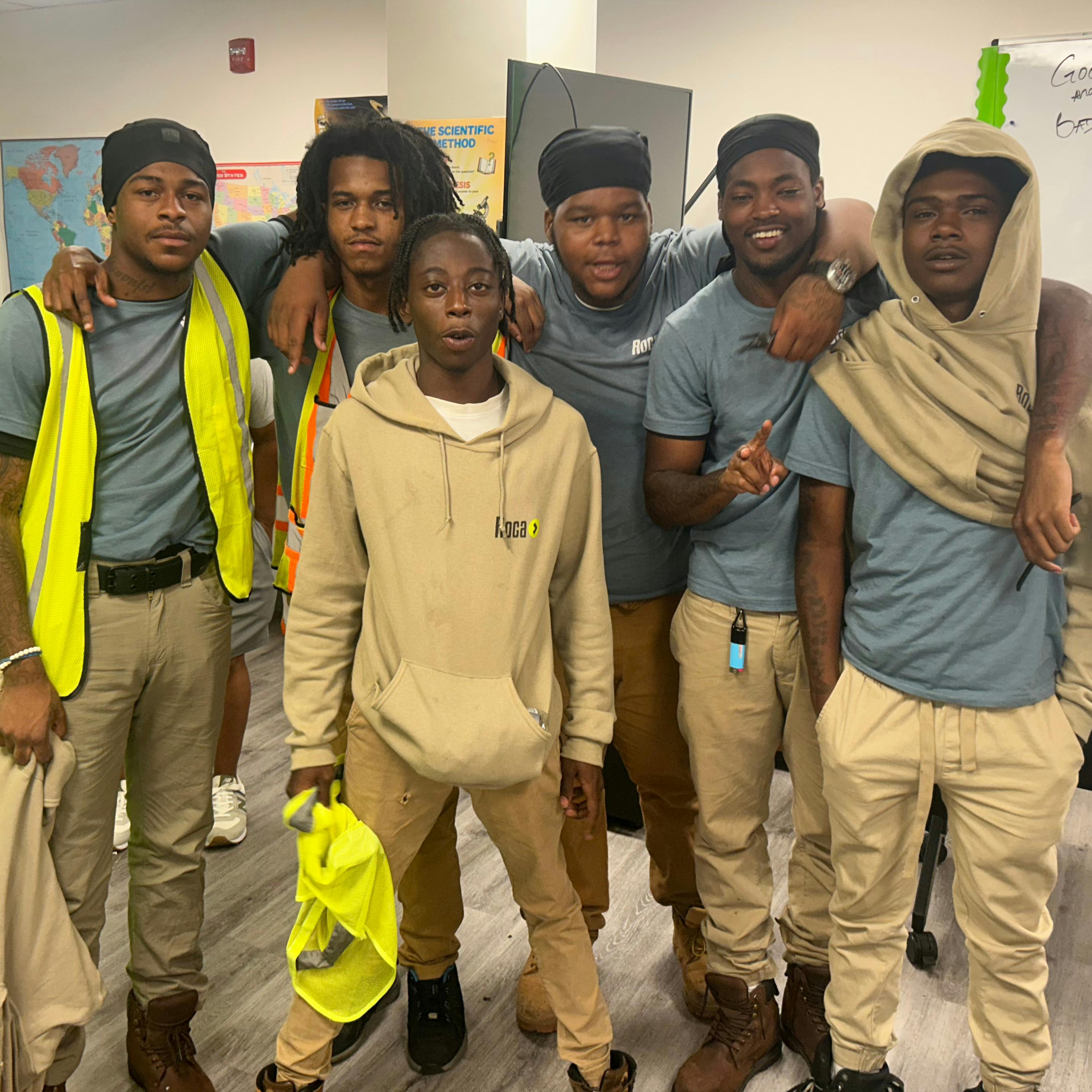
So the strategy that Baltimore's pursuing is focused deterrence, focusing on the small group of guys at high risk for shooting or being shot. And there's a shift in the policing part of that. They start making more arrests and prosecuting more gun crimes. But the other part of the strategy is outreach. The people I talked to for this story kept pointing me towards an organization called Roca. It's a nonprofit that does outreach to 16 to 24 year olds who are considered high risk who are on that list.
- [15:31]
Sean Ramiswamy
What's ROCA stand for?
- [15:32]
Miles Bryan
I think it's just roca.
- [15:34]
Sean Ramiswamy
No way. Oh, it's low case. Interesting.
- [15:38]
Miles Bryan
Roka is one of the main partners working with the police in Baltimore's focused deterrence program. The police find these people and refer them to Roka, and then Roca goes out and tries to get them to join up. And if they do, they're signing up for a combination therapist job training program. There's even a gym.
- [15:53]
Sean Ramiswamy
Nice.
- [15:54]
Miles Bryan
Yeah. They learn cognitive behavioral therapy to try and get a handle on their impulses. They get paid work doing things like cleaning up city parks. They can get their ged. When I was talking to the program staff about this, I was thinking like, okay, this sounds good to me, A nerdy reporter, but what kind of teenager wants to do all this stuff? Then I ran into a crew of guys who'd been out working who were back for lunch.
- [16:17]
James
Why you ain't breaking me bread with the oranges?
- [16:19]
Brandon Scott
You ain't ask for no orange.
- [16:20]
James
I don't ask for the oranges. Every morning I see you with the oranges.
- [16:24]
Miles Bryan
What's for lunch, guys?
- [16:30]
Sean Ramiswamy
Oranges? Miles, you just said it.
- [16:32]
Miles Bryan
Look, I can't say I wasn't awkward, but they were nice enough to let me ask those questions anyway. And I asked them what they thought was working in the city to get gun violence down.
- [16:42]
James
Huh?
- [16:43]
Miles Bryan
Yeah, it's on. And these guys were like, look around you.
- [16:47]
James
With Rutler, probably the best thing that ever happened for Baltimore. Like, it changed a lot of people's lives. Like, everybody.
- [16:54]
Miles Bryan
You guys aren't just saying that because we're at ruka?
- [16:56]
James
No, I'm saying that because it changed. I've been in this program since, what, 2023, right? I came home in 2023. January 10, 2023, I came home for real. I got booked for a gun. For real. I was locked up when I came home. Like I'm saying, from then to now, my whole mindset changed. Your life, I think way different. You learn mannerism. You learn mannerism. That's the word right there.
- [17:21]
Sean Ramiswamy
Oh, that's nice.
- [17:22]
Miles Bryan
Yeah. Roka reaches hundreds of young men in Baltimore every year, according to their own stats. For young guys who stay enrolled in the program for at least two years, 80% have no new arrests, and 92% don't go back to prison.
- [17:36]
Sean Ramiswamy
Okay, so the kids are really impressed with Roca, and it sounds like Roca's working for Baltimore, but how do you get someone who's, like, I don't know, just immersed in a gang or in some turf war or something or making money, dealing drugs to come to Roca?
- [17:55]
Miles Bryan
Yeah, I think that's the real sticky question here. Like, My sense is when they're in, they're in. But getting them to get involved can be tough. It's a lot of door knocking, a lot of following up. I actually went out with a Roca outreach worker who goes by Pastor John.
- [18:10]
Pastor John
I'm a youth worker, technically from 9 to 5, but the guys know that I'm a pastor 24 7. That never turned that off.
- [18:19]
Miles Bryan
Pastor John got into being a youth worker after doing a stint in prison for dealing drugs. These days, he's all about his guys. We went to check in with one of them.
- [18:28]
Pastor John
Yes, he's actually gonna come down.
- [18:30]
Miles Bryan
Okay. What's this fella's name?
- [18:31]
Pastor John
His name is James.
- [18:33]
Miles Bryan
James.
- [18:34]
James
Hold on, Pastor John. I'm coming down.
- [18:35]
Pastor John
I'm on a jail car.
- [18:36]
James
I'm coming down now.
- [18:37]
Miles Bryan
James hopped in our car. What's going on, James?
- [18:40]
James
Another day, another day off. I'm off today.
- [18:43]
Miles Bryan
The whole time we talked, he kept his phone on speaker.
- [18:45]
James
I'm on a jail car with my brother here. Just give him some motivational, you know, advice. You feel me? And that's all just cooling. I'm just chilling.
- [18:54]
Pastor John
Everything going good with the job?
- [18:55]
James
Yeah, everything going good. It's a cool job. For real, easy money.
- [18:59]
Miles Bryan
James is 19, and he's doing great now. But a couple years ago, he was struggling. He got arrested for a gun charge. Identified as a high risk person likely to shoot or be shot, and referred to Roca.
- [19:10]
James
When I first started off, it was rough for me. I wasn't talking to my mentors, none of that. They was reaching out to me. I wasn't reaching back. It was rough.
- [19:22]
Pastor John
His initial introduction into Roca was rough.
- [19:25]
Miles Bryan
James and the pastor were obviously tight, and on the way back, I asked him how that came to be.
- [19:29]
Pastor John
Unfortunately for him, the catalyst, the thing that triggered him to really get him on the right track was his brother was killed. He was the guy that was on my caseload. And I ended up being the pastor at his funeral. And I preached at his funeral. That's when I met that young man. And he just came and gave me a hug, and he was weeping, and he was like, I need. You know, I need Roca. I really need Roca. From that point on, he'll pick up the phone. Pastor John, I need to talk to you. This happened at work today. Pastor John. I got robbed. They stole my paycheck. You know, I'm feeling some kind of way. You know, all my guys are like, come on, let's go get him. And doing stuff like that. But he's never Acted on that.
- [20:14]
Miles Bryan
That is so much work and luck and coincidence just to. For one guy to help pull him on the right path. It's kind of amazing.
- [20:22]
Pastor John
Yeah, it is. It's absolutely amazing. But I don't take any credit for it. Like I said, Roka was here long before I ever did. I just thank them for giving me the opportunity to share that with these young men.
- [20:37]
Sean Ramiswamy
Okay, Miles, help me with something, because this sounds great, but the program itself doesn't sound new. We've talked about violence interrupters on this show before. They've been doing this stuff for a long time in cities across the country. What makes something like Roca so special in this moment? Or are there other factors here?
- [20:54]
Miles Bryan
You know, I think Baltimore's focused deterrence strategy and stuff like Roca has actually moved the needle, but I don't think it explains the whole picture. Baltimore has seen this huge decrease in gun crime, but so have many other American cities, right? Like the whole country. And after talking to a bunch of experts, and more helpfully, that group of kids at lunch, I think there's at least three other national factors worth mentioning.
- [21:16]
Sean Ramiswamy
What are they?
- [21:17]
Miles Bryan
Okay, first, most obviously, the end of the pandemic.
- [21:20]
James
They closed all the fields and all.
- [21:22]
Sean Ramiswamy
The gyms, so we had nothing to.
- [21:24]
James
Do but be outside.
- [21:25]
Miles Bryan
In most cities, gun crime spiked in 2020, right? During that time, schools were shut down, malls were closed, Basketball hoops were taped off. All that stuff's back open now.
- [21:35]
James
I feel like with stopping, everything is more stuff to do now. Like, it's more activities, more. You feel me? The pool's open now.
- [21:43]
Sean Ramiswamy
Okay, so everything opens back up, and that helps. What else?
- [21:46]
Miles Bryan
The second factor I think can be summed up in one word. Exhaustion.
- [21:50]
James
A lot of older guys locked up. For real, for real. Like, they really put a certain influence on young n. For real, for real.
- [21:56]
Miles Bryan
Gun violence feeds on itself, right? One shooting leads to two retaliatory shootings, which leads to four more, and on and on. I talked to Daniel Webster, a criminologist at Johns Hopkins, who says that cycle tends to exhaust itself. A lot of the people involved in the shootings are either killed or maimed or arrested. And others just look around and decide, like, hey, it's not worth it.
- [22:17]
James
A lot of people never been in them type of situations to where they was fighting for their life in the court system, so they think it's all cool and good. But now a lot of people are coming to a realization like, man, it's not it. Like, I don't got the money for A lawyer like you feel Just like that.
- [22:34]
Sean Ramiswamy
Okay, so it sounds like crime sort of hits rock bottom. What's the third factor?
- [22:38]
Miles Bryan
The third factor, the final factor here is money.
- [22:41]
Sean Ramiswamy
Money.
- [22:41]
Miles Bryan
Let's talk about Baltimore's rec centers.
- [22:43]
James
All the recs getting reopened, refurnished, rebuilding and all. Everything getting. Looking better and stuff like that. Like just simple things like that. They can go a long way because if somebody. If you got somebody in a messed up environment, all they see is abandoned houses, all the wrecks closed, no activities. What else is there to do outside? You feel me?
- [23:05]
Miles Bryan
Yes, the rec centers, the pools, all that stuff reopened after being closed for Covid. But it's not just that. Baltimore city has been spending a ton of money redoing rec centers, redoing pools, redoing other kinds of public infrastructure, and the people they're trying to reach are noticing. But this part has historically been tricky for local governments to tackle because doing this kind of thing is expensive. Brandon Scott's arrival in the mayor's office in 2020 turned out to be perfect timing. In 2021, Biden signs the American Rescue Plan Act, a Covid stimulus bill that provides hundreds of millions of dollars to Baltimore and most other cities. Baltimore got $40 million for upgrading parks and rec centers. Mayor Scott put $50 million into his gun violence reduction plan right away. The only reason Baltimore has so many pastor Johns out and about right now is that groups like Roca got a big cash infusion from the feds.
- [24:01]
JCPenney Advertisement
Come on.
- [24:02]
Miles Bryan
Come on, folks.
- [24:03]
Sean Ramiswamy
And it wasn't just Baltimore who got some love from the feds, I assume.
- [24:06]
Miles Bryan
No. Across the country, local and state government spending on policing and public safety went up by 49% between 2021 and 2024. That one's sort of obvious. But local and state spending on neighborhood social centers went up by 82%. Spending on lighting, which has been proven to help reduce gun violence, went up by 45%. And that's all in addition to the billions of dollars that the Biden administration paid out to Roca and other anti violence groups during those years. I talked to the criminal analyst Jeff Asher about this. He put it on my radar. He said most of the systemic factors we think of as driving gun violence in America, they did not change in the last couple years. Right. Like, the country's still swimming with guns. There's still a lot of people in poverty, but local governments all over got a ton of money to try stuff. He called it, quote, slop being thrown against the wall. But it's also, I think, well, Informed slop, if that's a thing. And it is the thing that I think helps to explain why we're seeing it everywhere and why it has been so significant because it was a really enormous increase in spending above and beyond what we've ever done before.
- [25:14]
Sean Ramiswamy
Miles, I know you're trying to bring us good news, but now I have to ask if this is gonna take a turn for the worse because Joe Biden was all about spending that money, as we've talked about, you know, ad nauseam on this show. But Donald Trump is all about cutting funding for anything in sight, except maybe tax cuts for rich people.
- [25:38]
Miles Bryan
Yeah, this is the bummer part of a feel good story. The Trump administration already cut nearly a billion dollars of grants for anti violence groups back in April, like in a Doge style cut. They took money back that they'd already promised Roca lost a million bucks that had to eliminate some jobs. It's going to serve 15% fewer kids this year than last. And that's super frustrating to Mayor Scott, who's otherwise kind of having a moment in the sun.
- [26:03]
Brandon Scott
It's really sad because you have a president and administration and party that claims that they want to deal with violent crime, right? That they care about violent crime in these inner cities or as they would say, Democratic led cities. But then they cut Roca, they cut the center for Hope, people that are out here helping to prevent violence simply because they don't believe in the methods that they use.
- [26:29]
Miles Bryan
If you talk to criminologists, if you talk to anti violence people, they're frustrated because, you know, they can look out onto the horizon and they know that if history is our guide, something is going to happen that will trigger another uptick in gun violence at some point. And we've got this system right now, this tenuous balance that seems to be working. And there's a decent chance we're just going to throw it all away.
- [26:59]
Sean Ramiswamy
So much for good news. Miles Bryan is our senior producer and reporter and our Philadelphia bureau chief. Shout outs to the Northeast Regional. Jolie Myers edited the show today. Laura Bullard fact checked it. Patrick Boyd and Andrea Christensdotter mixed it. It's.
- [27:30]
Miles Bryan
Sam.