← Today, Explained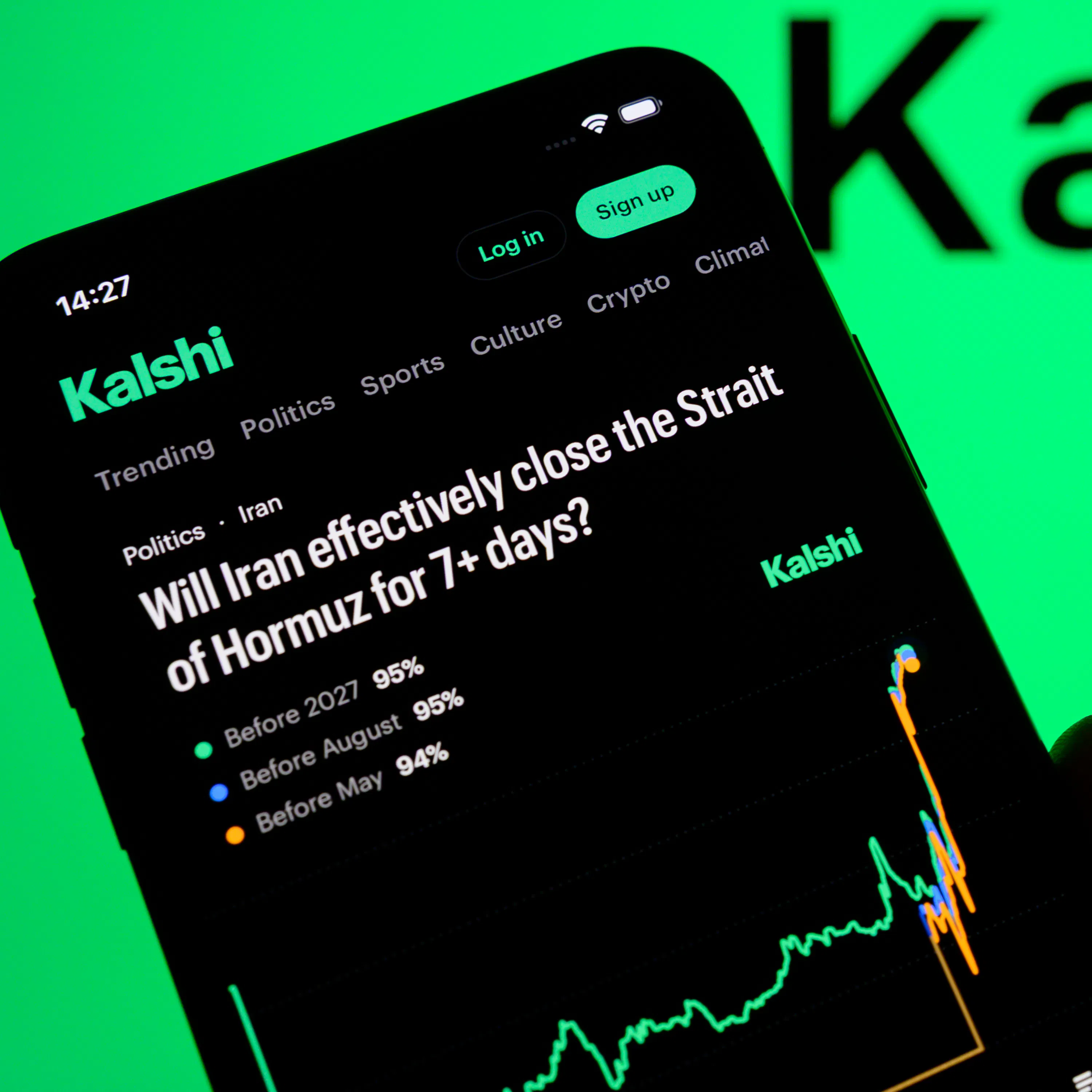
Today, Explained
Betting on the Iran war
00:25:49
Prediction markets like Kalshi and Polymarket are making it possible for just about anyone to profit off war.
Loading summary
Transcript108 lines
- [00:00]
Sean Ramis
There's a reporter named Emmanuel Fabian who's been covering the war in Iran for the Times of Israel recently. He got a ton of feedback about a tiny article he wrote, but he couldn't figure out why. It was about a missile that exploded just outside the Israeli city Beit Shemesh.
- [00:15]
Anonymous Critic/Threatener
I'd appreciate it if you could update your article as in its current form. It does not reflect reality.
- [00:21]
Sean Ramis
Someone wanted him to say it was a missile fragment instead of a missile. Weird, because it was a missile, not a fragment.
- [00:28]
Anonymous Critic/Threatener
If you could correct this tonight, you'd be doing me and many others a great favor.
- [00:32]
Sean Ramis
Eventually, the messages got more threatening.
- [00:35]
Anonymous Critic/Threatener
You have exactly half an hour to correct your attempt at influence. You will pay the full price for your irresponsible act.
- [00:42]
Sean Ramis
Emmanuel finally figured out why people were getting so aggressive. They had bet money on how bombings in Israel would play out on Polymarket.
- [00:51]
Anonymous Critic/Threatener
After you make us lose $900,000, we will invest no less than that to
- [00:55]
Sean Ramis
finish you betting on the Iran war on Today Expl
- [01:01]
Kate Nibbs
so good, so good, so good.
- [01:03]
Nordstrom Rack Advertiser
Spring styles are at Nordstrom Rack stores now and they're up to 60% off. Stock up and save on Rag and Bone, Madewell, Vince, All Saints, and more of your favorites.
- [01:12]
Emmanuel Fabian
How did I not know Rack has Adidas? Why do we rac for the hottest deal? Just so many good brands.
- [01:17]
Nordstrom Rack Advertiser
Join the Norty Club to unlock exclusive discounts. Shop new arrivals first and more. Plus buy online and pick up at your favorite Rack store for free. Great brands, great prices. That's why you Rack.
- [01:31]
White Claw Surge Advertiser
This episode is brought to you by White Claw Surge. Nice choice hitting up this podcast. No surprises. You're all about diving into tastes everyone in the room can enjoy. Just like White Claw Surge, it's for celebrating those moments when connections have been made and the night's just begun. With bold flavors and 8% alcohol by volume, Unleash the night. Unleash White Claw Surge. Please drink responsibly. Hard seltzer with flavors. 8% alcohol by volume. White Claw Seltzer Works Chicago, Illinois.
- [02:04]
Sean Ramis
Today explains Sean Ramis room. You've heard us cover prediction markets like Kalshi or Polymarket on the show before. Places you can go to gamble on just about anything. Who's going to win an election? Who's going to hit a three pointer? What Taylor Swift might say on late night tv. These markets harness the wisdom of the crowd. Sometimes regular people are pretty good at guessing what might happen in an election. But also in our economy and culture and now maybe in our wars. Prediction markets are making it possible for just about anyone to become a war profiteer? Kate Nibs from Wired is here to help us pick our jaws up off the floor.
- [02:43]
Kate Nibbs
You know, you could bet on, like, when the Strait of Hormuz is going to open.
- [02:46]
Podcast Sponsor Announcer
Bet.
- [02:47]
Sports Gambler
When will traffic at the Strait of Hormuz return to normal?
- [02:50]
Kate Nibbs
There was famously this market about whether the Supreme Leader would remain in power or not.
- [02:56]
Sports Gambler
Bet Ali Ham and out as supreme leader.
- [02:58]
Kate Nibbs
There were markets on who his successor was going to be.
- [03:01]
Sports Gambler
Bet who will be the next Supreme Leader of Iran.
- [03:04]
Kate Nibbs
There are markets, I believe, on whether there will be troops on the ground.
- [03:09]
Sports Gambler
Bet will US forces enter Iran by March 31?
- [03:13]
Kate Nibbs
There are markets on, you know, who allies will be.
- [03:17]
Sports Gambler
Bet which countries will strike Iran by March 31st. Saudi Arabia, the UAE, Qatar.
- [03:24]
Kate Nibbs
It's almost like anything you think might be a market probably is a market, At least on polymarket, because Kalshi has some stricter rules and its offerings are not quite as morbid. You can't bet on assassinations, for instance, there. But polymarket largely exists outside of the United States, so it's like less beholden to US Law, or at least that's how it's acting.
- [03:56]
Sean Ramis
How much money are people making on these kinds of bets right now? Do we know?
- [04:02]
Kate Nibbs
Like, in all gambling, most people who are participating in these markets are actually losing money. So the winners is like this tiny little percentage. And the winners who are winning big is an even like smaller slice of that small slice. So we have like a very select group of people who are making, in some cases, millions and millions of dollars on war.
- [04:23]
Sean Ramis
And some of those people making millions and millions of dollars kind of looked suspicious. Right? Because I don't know, they made a big bet the night before the war started that we'd be going to war in a few hours. And then they made hundreds of thousands of dollars.
- [04:37]
Kate Nibbs
Yeah, especially because in a lot of those cases, like, it wasn't as though they had this long history of just being super smart and savvy at geopolitical contracts. In a lot of these cases, the wallets were just create making these highly suspect trades. And so, you know, a lot of different organizations that like can trace crypto wallets have been looking at the patterns that are emerging around these war markets and basically saying, look, we don't know exactly who is doing this, but it's probably insider trading.
- [05:10]
Sean Ramis
While most people are just sitting around watching the missiles fly across the screen on the news, there are literally people with insider information placing predictions on war.
- [05:18]
White Claw Surge Advertiser
Yeah, it's not a prediction if you
- [05:20]
Sean Ramis
know it's going to happen.
- [05:20]
Kate Nibbs
Because there's, there's just no way that these people are popping up out of nowhere to drop a bunch of money and make these incredibly precise bets and profit and then disappear into the ether.
- [05:34]
Sean Ramis
And is insider trading on a poly market or a Kalshi as it pertains to a war the United States is fighting in the Middle East? Is that allowed? Is that within the parameters of what's allowed on these betting markets?
- [05:47]
Kate Nibbs
It seems like it shouldn't be. Right. Like, it seems morally repugnant. It seems obviously ethically flawed. But when it comes to like, what is the definition of insider trading? We typically think of it in terms of like someone having non public material information about a company that will like change how their stocks perform. It has a very specific definition when you're talking about like SEC stock market stuff. Prediction markets are regulated differently and like there's sort of a fuzziness around what constitutes non public material information. It's like if there's a Google insider who's insider trading, it's, it's kind of obvious. Oh, they learned these specific facts about how the company is going to perform when it comes to prediction markets. It's like there's markets on everything. So who's an insider? And we're seeing this on like even less serious markets, like the bad bunny super bowl markets. People were suspecting people of insider trading. In a lot of cases it was like their cousin was performing as the grass and told them something.
- [06:49]
Sean Ramis
Classic scenario.
- [06:50]
Kate Nibbs
Yeah, yeah. You know, you know, when your cousin's grass. Yeah.
- [06:54]
Sean Ramis
I'm glad you brought up the grossness, the ick. The moral. Just basement. It feels like all of this lives in because children are dying in this war as they do in most wars. Is there anyone out there saying, guys, have we lost our moral compass?
- [07:15]
Kate Nibbs
Yeah, I mean, I think there's been decently widespread questioning of whether this is good for society. At least in my corners of the Internet. I'm seeing a lot of people express discomfort and I think it's completely reasonable.
- [07:31]
Sean Ramis
Betting markets and any sort of military conflict need to end. You don't know what kind of corruption can occur there.
- [07:40]
Sports Gambler
Our men and women in uniform are
- [07:41]
Sean Ramis
being put in harm's way.
- [07:43]
Sports Gambler
People like your brother who are traveling
- [07:44]
Sean Ramis
Americans abroad and people are betting on this crap.
- [07:47]
Sports Gambler
Yo, are people going to die? Yes or no? Yes or no? Put in $10, maybe you get 14. If enough people die, maybe you'll get 21.
- [07:54]
Kate Nibbs
And I feel that discomfort too. And it's especially jarring because some of the prediction market boosters in particular, like polymarket CEO have actually come out and said like, no insider trading in like war markets. And all this stuff actually could be good for society because it's just allowing us to have access to more accurate information. Wisdom of the crowds.
- [08:19]
Sean Ramis
I saw that argument and I was just like, I sat there and I like closed my eyes and I tried to understand it and I couldn't really get there. Like, what is the argument? Can you help us understand it?
- [08:29]
Kate Nibbs
Yes. So the Polymarket CEO came out and said at a conference like a week or two ago when he was being questioned about this. It's actually good because if there is a market saying where is going to be bombed in Iran next and the people in Iran are following the market and like, you know, the thing that's in the lead is their hometown, then they could take shelter and not die. That's the argument.
- [08:55]
Sean Ramis
A lot of ifs in there. Here's another if if there's a market where you can make bets on when the United States is going to take various actions in a war, and if you're in the United States military and you actually can influence the outcomes of what the military does in a war, can you place bets on actions that you're about to take, or can you do things based on what people are betting on to profit off of the war and thus influence the war based on the market?
- [09:28]
Kate Nibbs
Yeah. These are real questions that we're having to ask because of this entire situation. It is really wild and like, I would bet that that is happening to some degree right now. And we're not releasing, you know, Israel investigated two people for how they had traded on a market at some point. But we're not seeing that sort of public investigation happening yet in the U.S. like, I'm waiting for it and so far I don't think anyone's been arrested. It's wild.
- [09:56]
Sean Ramis
Do you think what's happened in the past couple of weeks and what people have seen with, with these sort of brand new accounts making tons of money off of a war that' starting and wildly controversial is gonna be the driving force behind some regulation? Or does the government feel like this is okay and this is just gonna be the new normal for whatever following conflicts? We have Cuba.
- [10:23]
Kate Nibbs
Yeah.
- [10:24]
Sean Ramis
North Korea, who knows?
- [10:25]
Kate Nibbs
Well, right now the Trump administration is very friendly towards prediction markets. Donald Trump Jr. Is an advisor to both Kelshi and Polymarket. The Trump family is planning on launching their own prediction market called Truth Predict, like a spinoff of Truth Social and the White House hasn't been commenting directly on the prediction market stuff, but the cftc, the Commodity Futures Trading Commission, which is the government agency that regulates these on a federal level, the chairman Michael Selig has like come out swinging saying this is our turf. All of these efforts on the state level to make all of these companies abide by state gambling regulations and to put guardrails up, those efforts are something we don't stand by. We actually strongly disagree with them.
- [11:18]
White Claw Surge Advertiser
We have authority to regulate that. So it's not the state's authority to get into regulating our swaps markets, which are a 500 plus trillion notional market. These are significant markets that we don't have a, a role for the states in regulating.
- [11:32]
Kate Nibbs
I think there's over 50 different lawsuits flying around about this right now. Some of them the states stand a chance at winning. And so if the states win, it'll set a precedent and you know, these prediction markets will no longer be able to operate as they currently are. And that could really change things. But other than that, I don't see these being curbed in any real way soon.
- [11:56]
Sean Ramis
Fun.
- [11:58]
Kate Nibbs
It just seems so. Sometimes I feel like I'm being a sucker by being repulsed by some of this activity, but it makes me, makes me question my life.
- [12:15]
Sean Ramis
Big same. Maybe you're with Kate, but maybe you're not. Who's placing these bets? To the best of our knowledge, When Today Explained gets Back.
- [12:37]
Podcast Sponsor Announcer
Support for Today Explained comes from Vanta. If you run a business, perhaps you've noticed a shift. Risk and regulation are increasing and customers want clear proof of security before they will even consider signing with you. Building that trust is essential to closing deals, says Vanna. But it's also complex to costly and time consuming. Vanna says they can automate that process to bring compliance, risk and customer trust together on one AI powered platform. They say they automate the process of achieving and maintaining compliance with over 35 security and privacy frameworks including SOC2, ISO 27001 and HIPAA. This helps companies get compliant fast and remain compliant, freeing up time instead of getting buried in audits and spreadsheets. Vanna says you get a system that runs behind the scenes and minimizing risk, powering growth. Vanna says that companies such as Ramp and writer spend 82% less time on audits with Vanna. Not just faster compliance, more time for your business to grow. You can get started@vanna.com explained it's v a n t a dot com explained vanna.com explained. Support for Today explained comes from Bombas. Perhaps you want to get in shape this year. Bombas wants to tell you about the all new Bombas sports socks engineered with the sport specific comfort for running, golf, hiking, skiing, snowboarding and all sport. Meanwhile for the loungers among us, Bombas has non sport footwear available. But Bombas doesn't just offer sport and non sport socks, they also offer super soft base layers that they claim will have you rethinking your whole wardrobe. Underwear, T shirts, flexible, breathable, buttery smooth, premium everyday go tos. They say you won't want to leave the house without here's Nisha Chital.
- [14:22]
Kate Nibbs
I've been wearing Bombas for several years now. I have several pairs. My whole family loves to wear Bombas. I have several pairs of Bombas ankle socks and I have some no show socks as well that are great for things like loafers and ballet flats.
- [14:40]
Podcast Sponsor Announcer
For every item you purchase, Bombas says an essential clothing item is donated to someone facing housing insecurity. One purchased one donated over 150 million donations and counting I'm told. You can go to bombas.comexplained and use code explained for 20 off your first purchase. That's B M B A S.comexplained code explained at checkout.
- [15:05]
Sports Gambler
My day kicks off with a refreshing Celsius energy drink, then straight to the gym pre K pickup back home to meal prep time for my fire station shift. One more Celsius. Gotta keep the lights on when the three alarm hits. I'm ready. Celsius Live Fit. Go grab a cold refreshing Celsius at your local retailer or locate now@celsius.com.
- [15:30]
Sean Ramis
It's Today Explained. Hannah Aaron Lang writes about the markets for the Wall Street Journal, and lately she's been writing about the prediction markets. She just wrote about how Kalshee in particular is trying to attract more women users because it turns out these prediction markets are mostly frequented by men. And it's kind of weird to be like, ooh, check out our markets where the wisdom of the crowd is gonna help you understand the world when that crowd is not representative of said world.
- [15:59]
Emmanuel Fabian
Yeah, exactly. And I think that's what the female traders that I spoke to that are involved with prediction markets and are trying to sort of bring more women into the fold themselves. That's exactly what they mentioned. Right? Like this wisdom of the crowd's premise is kind of core to the entire prediction market's pitch, which just means that a group of independent, diverse opinions can make better decisions than experts can.
- [16:23]
Kate Nibbs
So together, when we are all involved in the Decision making, we can make a wise choice because of all of our different views.
- [16:31]
Emmanuel Fabian
So it seems strange that, you know, that crowd would be overwhelmingly male or not a reflection of, you know, what the actual world looks like.
- [16:42]
Sean Ramis
And do we know how the user base on, say, Kalshi breaks down between men and women? Like the ratio?
- [16:48]
Emmanuel Fabian
Yeah. So we know that Kalshi has been trying to reach out to more women and sort of diversify the traders on its platform. And, you know, those efforts seem to be paying off so far because the company told me that women now account for 26% of the users on its platform. That's up from about 13% 10 months ago.
- [17:10]
Sean Ramis
Oh, wow. Yeah, that's a big jump.
- [17:11]
Podcast Sponsor Announcer
Yeah, yeah.
- [17:12]
Emmanuel Fabian
I mean, so still predominantly male, but it's definitely a growing part of the user base.
- [17:18]
Sean Ramis
Is that jump due to Kalshi's recruiting efforts, and if so, what do those recruiting efforts look like?
- [17:24]
Emmanuel Fabian
Yeah, so, I mean, we know that this is something that Kalshi has been trying to cultivate, really intentionally. So this includes paying users like this female trader named Gigi that we talked to, who's super passionate about bringing more women into the space of prediction markets.
- [17:41]
Nordstrom Rack Advertiser
The way that prediction market platforms are designed right now appeal to traders and people who are used to betting. What about the rest of the world? If we really want to build a true surfacing machine that can make a more certain future on any topic, we need everyone else.
- [17:56]
Emmanuel Fabian
And basically, as a part of a broader social media marketing push, Gigi was paid to post about Kalshee and her bets. There's also been instances where some of the sources I talked to were female users that had encountered Kalshi on their own, but, you know, got connected with the company through, you know, a friend that worked there or a friend of a friend, then got put in touch with them to kind of give feedback, be a kind of beta user, let them know what appealed to them and what didn't about the Kalshi experience. And then Kalshi is also hosting these in person events here in New York City that are not necessarily new, but they've been planning some that are a bit more targeted to a more diverse audience when it comes to gender. So, for example, like an Oscars watch party or a bachelorette watch party versus a Super bowl watch party or something like that. So those are a few of the tactics that we've heard. And then of course, the company is telling us on the record that this is something that they're doing and something that they want to see more of. On their platform. I think it's worth mentioning that these efforts are kind of nascent at. We spoke to two women who have been a part of Kalshee's marketing program. You know, they've been paid in the past to post about Kalshee on social media, but also, you know, on their own. They're actively trying to bring more women into this space just because, you know, they feel that there should be more participation there.
- [19:23]
Nordstrom Rack Advertiser
I swear Taylor Swift will be the number one artist on Spotify this year. Bold call, because the market slightly disagrees.
- [19:30]
Kate Nibbs
Market?
- [19:30]
Nordstrom Rack Advertiser
You mean like Spotify charts? No, prediction markets.
- [19:34]
Emmanuel Fabian
Like real money on the line.
- [19:35]
Nordstrom Rack Advertiser
Who will headline Coachella in 2027? This market is basically forecasting pop culture a year ahead before the lineup leaks, the rumors hit Reddit or Twitter decides who's having a moment.
- [19:47]
Emmanuel Fabian
And, you know, they told us it's slow going. I heard from, you know, one of the traders that we interviewed that she went to a New York City mayoral election watch party late last year with another one of the female traders that we interviewed for the piece. And, you know, she told me that they were the only two women there in the whole crowd, except for like girlfriends of other traitors. So, like, I think this is still slow going.
- [20:12]
Sean Ramis
Hmm. Why was there such an imbalance between men and women to begin with? Is there something about these sites that are inherently more appealing to dudes?
- [20:20]
Emmanuel Fabian
I mean, I think of the three worlds that prediction markets are kind of tangential to, right? You have this world of sports gambling, which, you know, is predominantly male.
- [20:32]
Sean Ramis
Oh my God, I just won 117,000, doll.
- [20:37]
Sports Gambler
Oh my God, I gotta watch this game.
- [20:39]
Kate Nibbs
I'll show you later.
- [20:40]
Sports Gambler
I did like a 10 leg parlay. If I hit this one for real,
- [20:42]
Sean Ramis
I'm be good if you stole me money.
- [20:44]
Emmanuel Fabian
And you know, this is by virtue of the fact that an overwhelming amount of the volume on kalshi of the trading volume is sports contracts. So, you know, basketball, football, tennis, for example. And yeah, of course, that world has been historically male dominated. And then you have, say, the world of, of crypto, which, you know, I think is close to prediction markets in the sense that it's another innovative high risk piece of the financial world. Crypto contracts also make up a sizable amount of volume on kalshi. Like, you know, the price of bitcoin contracts based on things like that.
- [21:21]
Sports Gambler
Bitcoin price at the end of 2026 bet. Bitcoin price on Friday at 5pm Eastern.
- [21:28]
Anonymous Critic/Threatener
Bet.
- [21:29]
Sports Gambler
Will Trump create a national Bitcoin reserve before 2027 and then the other world
- [21:34]
Emmanuel Fabian
that this is very close to is that of traditional finance. So think stocks, options, futures, contracts. And you know, that's historically been extremely male dominated. And so when you kind of think about where Kalshi and other prediction market platforms operate in close proximity to it, you know, it kind of makes sense that this is a bit of a boys club to a certain extent, as all of these spaces are and have been historically. So I think that's primarily what's going on here. And then Kalshee's bet, bet, no pun intended, is that prediction markets and event contracts are unique enough that they can sort of break through all that and appeal to a new cohort of traders in a way that traditional financial assets or capital markets haven't been able to yet.
- [22:29]
Sean Ramis
Right. So I think a co founder of Kalshi, who's a woman, told you that she wants the market to mirror the US population in a decade, which I'm pretty sure is kind of like a 50, 50 population when it comes to gender. More or less, yeah. Based on everything you've seen, is that a realistic goal for a market like this or is that just prior to.
- [22:53]
Emmanuel Fabian
There is some credibility to the idea at the core of this, which is that prediction markets and event contracts, by virtue of being so straightforward and by reaching into all these different areas of life where capital markets have not previously gone, such as politics, weather, entertainment, for example, that they can sort of reach people that might not have ventured into, you know, the quote unquote, traditional finance world otherwise. One example I heard from Kalshee, and this is not to say that women are only trading entertainment or culture markets, but one example would be like the Bachelorette, Will you marry me?
- [23:37]
Nordstrom Rack Advertiser
Yes, I will.
- [23:39]
Emmanuel Fabian
So, you know, trading on some sort of contracts on, you know, who might win or what's going to happen in a particular episode. You know, that show likely has mostly female audience, so women might have the expertise to trade on that in a way that a male audience might not. And I also think of things like music. We talked to some prediction market customers who were trading on sort of Taylor Swift. It's me what she might say in an interview on late night television. So those are just a couple examples. Again, this is not to say that women are only interested in entertainment, culture and music. Kalshee told me they're also trading politics. You know, they're very interested in weather, for example.
- [24:20]
Anonymous Critic/Threatener
Same.
- [24:21]
Emmanuel Fabian
But there are some instances in which, you know, female traders might have expertise than a demographic of young men might not. So I think there's veracity to this idea that prediction markets can sort of cater directly to people's interests and expertise and hobbies in a way that something like an options contract might not.
- [24:41]
Anonymous Critic/Threatener
Fair.
- [24:42]
Sean Ramis
Fair, do you think, to bring this back to where we started in the show today, that at this moment where markets like Kalshi are trying to appeal to women and certainly diversify their user base, the fact that people are betting on whether or not people are gonna die in a war pretty casually is gonna hurt their PR campaign. Turn people off, turn people away.
- [25:08]
Emmanuel Fabian
Yeah. I mean, I think that this campaign to reach more women and more diverse types of audiences is like. Is Kalshi's way to try to combat that.
- [25:19]
Anonymous Critic/Threatener
Right.
- [25:19]
Emmanuel Fabian
Or is a part of a broader effort to be known for something that is different than the types of markets that have attracted a lot of the spotlight or been the focus of a lot of the headlines so far, which is these war related markets, as you mentioned, which have been reported on in the context of polymarket and Kalshi, I should note. So I think that the hope is by diversifying into these other areas, again, sort of beefing up the number of traders, the types of traders in these different types of markets, that they can both diversify their business model in a financial sense and also maybe transform public perception as well. But you know, I think given the focus on these things, because it is so new and so out there in terms of the world of finance, to be able to bet directly on these types of things, I think my sense is that there might be a long way to go.
- [26:31]
Sean Ramis
Read Hannah aaron lange@WSJ.com you can bet on Hadi Mwadi, who produced the show, Jolie Myers who edited David Tadashore and Patrick Boyd who mixed and Andrea Lopez Crusado, who fact checked for us at Today, explained.