Loading summary
Transcript85 lines
- [00:02]
Noel King
President Trump's big, beautiful bill was many things to many people. For those people who are worried about climate change, it was a disaster. Gone are the solar tax credits, the EV tax credits, and no surprise, given the President's long running fixation on birds, the wind tax credits.
- [00:19]
Dylan Matthews
But I've restricted windmills in the United States because they also kill all your birds. You know, they wipe out. You know, it's interesting, if you shoot a bald eagle in the United States.
- [00:29]
Noam Hassenfeld
They put you in jail for five.
- [00:31]
Dylan Matthews
Years and yet windmills knock out hundreds of them.
- [00:35]
Noel King
But one form of clean energy did survive the bill's assault, and that is geothermal energy. Geothermal projects are still going to get those tax credits. Why Today on Today Explained we're going to travel to Iceland to learn why everyone is so excited about geothermal energy.
- [01:01]
Unknown
Support for this show comes from Strawberry Me. Be honest, are you happy with your job or are you stuck in one you've outgrown or never wanted in the first place? Sure, you can probably list the reasons for staying, but are they actually just excuses for not leaving? Let a career coach from Strawberry Me help you get unstuck. Don't discover the benefits of having a dedicated career coach in your corner. Go to Strawberry Me Unstuck to claim a special offer.
- [01:34]
Support for this show is brought to you by CVS Caremark. CVS Caremark plays an important role in the healthcare ecosystem and provides unmatched value to those they serve. They do this by effectively managing costs and providing the right access and personalized support. The care, empathy and knowledge that CVS Caremark provides its customers is proven time and time again with their 94% customer satisfaction rating. Go to CMK Co Stories to learn how we help you provide the affordability, support and access your members need.
- [02:16]
Noel King
I'm Noel King. It's TODAY Explained from Vox with a very special episode from Unexplainable from Vox. Here's Noam Hassenfeld.
- [02:28]
Noam Hassenfeld
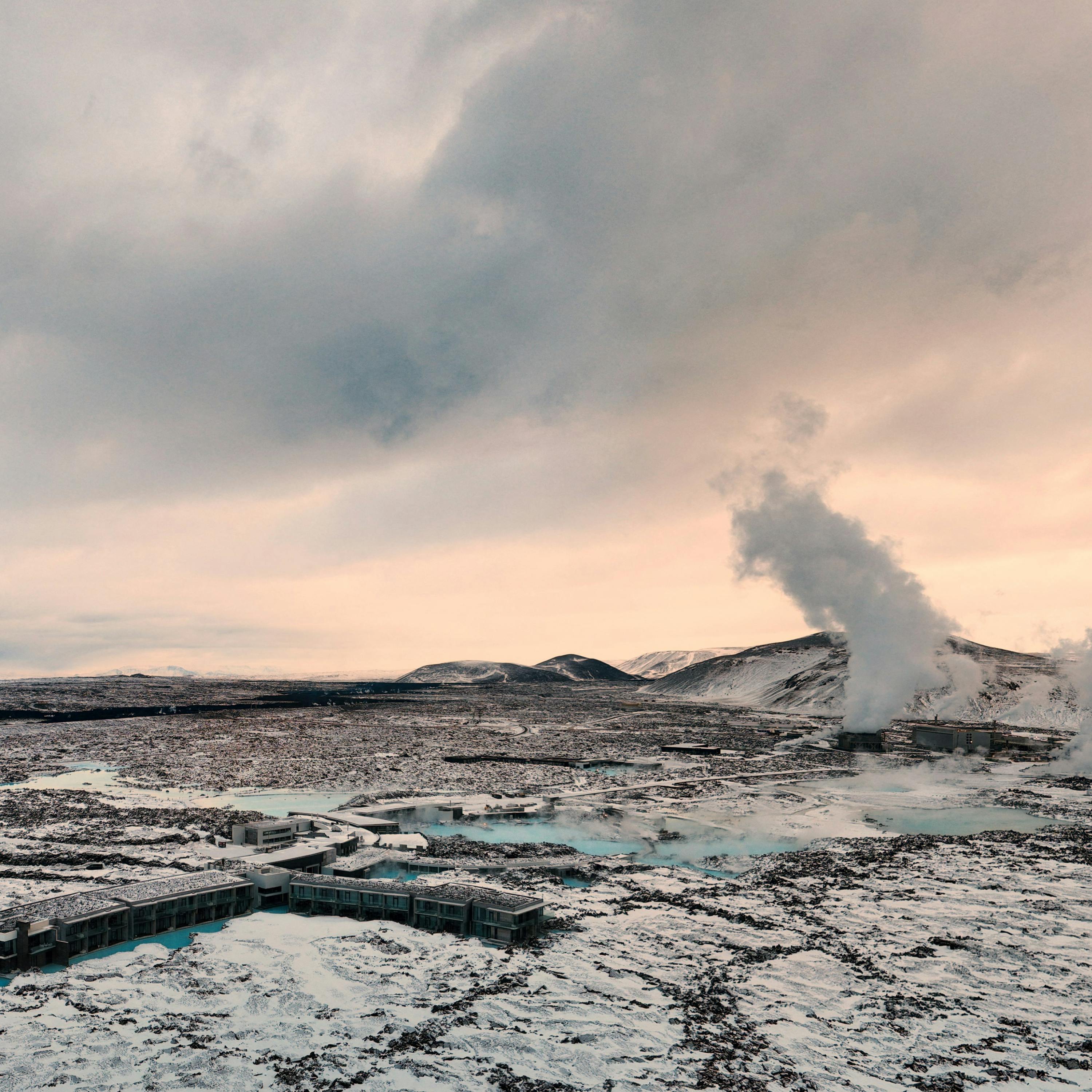
All right, so I'm at the Blue Lagoon in Iceland, which is this 100 degree almost fell into the blue a while back. I went to Iceland and I decided to check out this dreamy hot spring. It's kind of like in Pirates of the Caribbean where Jack Sparrow is like kind of slowly going through the fog. I actually got lost for 15 minutes a couple minutes ago trying to find my way through this place because you can't see more than 5 or 10ft in front of you because it's so misty. The whole place is filled with this mineral rich blue water. It's this Weird kind of thing where you can see your hand when it's at the top of the water and then you move it away and you basically can't see it at all because there's so much stuff in the water here. It's also filled with tons of tourists like me just hanging out, drinking cocktails, getting massages. And then there's just all this steam in the distance, I guess, like from the power plant. The power plant. And I am bathing in power plant wastewater at the moment. This is not what I expected to be swimming in on vacation. But this is a power plant that's so incredibly clean, even its wastewater is a spa. And tourists like me, we love it. National Geographic even picked it as one of the 25 wonders of the world. But I got to say, I think National Geographic slept on the real wonder here, what that wastewater does before it gets to the tourists. The water bubbles up from deep underground, it gets converted into steam, spins a turbine, generates power, and then after that whole process, that's when it settles into this eerie blue pool, the blue lagoon. The reason I think this is the real wonder here is because of what this means for climate change. By far the biggest contributor to global warming is fossil fuels. But geothermal energy barely has any emissions. In a lot of ways, it's even better than solar wind, because the inside of the Earth doesn't turn off at night or stop making power when there's no breeze. And these plants are all over Iceland. A ridiculous sounding two thirds of Iceland's energy is geothermal. The country basically runs off power from the Earth itself, which makes sense. It's on a fault line. So all this hot water is just bubbling up to the surface all the time. But the fact is, no matter where you are on Earth, there's just tons of potential clean energy buried underneath you. We all just need to figure out how to get at it. I'm Noam Hassenfeld, and today on Unexplainable why getting at all that unlimited energy is such a tough problem and how we might just be on the verge of cracking it.
- [05:53]
Dylan Matthews
It's really tantalizing that we are sitting on this big mass of hot rocks just a few miles beneath us, and it's so hot that in theory, it's more energy than we could ever need if we could maybe get at it.
- [06:06]
Noam Hassenfeld
That's Dylan Matthews. He's a senior correspondent on Vox's Future Perfect Team. And he writes about all kinds of big world changing ideas, from global health to economics to energy. So I asked him just how Possible all of this is. So if you aren't lucky enough to have that hot water kind of bubble all the way up like it does in Iceland, what do you do to get at it?
- [06:31]
Dylan Matthews
So up to now, the answer's been that unless you're on geysers or volcanoes or things, you don't. But there are efforts to make geothermal viable outside those areas. And the basic idea, which takes a bunch of forms, but all of them share the idea that you drill down really, really deep and you pour some kind of liquid down there and you get steam or hot water coming up, and then you can either use the hot water directly or you can use it to spin a turbine and make electricity.
- [06:58]
Noam Hassenfeld
Okay.
- [06:59]
Dylan Matthews
There's a few different companies trying this, but they're all variations on the same idea of like dig or blast really, really deep, pour some liquid in there, use that to spin a turbine, or get some hot water.
- [07:10]
Noam Hassenfeld
I mean, that seems like relatively straightforward to me.
- [07:14]
Dylan Matthews
It is a lot harder than it seems. The biggest barrier that I've heard from people is just that getting that deep into the earth is really tough. It's really expensive, but. And there's also been a concern about what happens when you pour liquid into rocks that deep. There was a demonstration project in South Korea that wound up causing a magnitude 5.5 earthquake. Whoa.
- [07:39]
Noel King
Residents of the city of Pohang had.
- [07:40]
Dylan Matthews
To evacuate as aftershocks from Korea's second.
- [07:43]
Noel King
Largest earthquake on record destroyed thousands of.
- [07:46]
Dylan Matthews
Homes and injured dozens of people.
- [07:48]
Noam Hassenfeld
Investigators confirmed it was man made, caused by a nearby geothermal power plant.
- [07:57]
Dylan Matthews
I feel obliged to say that this was an unusual incident in most geothermals today. It has not been associated with any significant seismic activity. But this was a concern people had about fracking that has, I think, held up to some degree.
- [08:10]
Noam Hassenfeld
Yeah, I mean, you're. You're kind of like weakening the. The ground, right?
- [08:14]
Dylan Matthews
You're weakening the ground. You're messing with the system deep in the earth and you're putting liquid potentially in places where it hasn't been before.
- [08:23]
Noam Hassenfeld
Yeah.
- [08:23]
Dylan Matthews
This is part of the reason why some companies are building what they call close loop system. So instead of just pumping liquid into the ground and it heating up, you actually place a pipe all the way into the ground. And that way you're not leaking the liquid permanently. But that's really hard. You're actually like placing in piping potentially thousands of meters under the earth. And so it's more investment in a very difficult kind of drilling. And we don't have really good drill bits. It sounds like such a trivial or technical thing. But when I talk to people about geothermal, one of the things they bring up again and again is just like, we don't have good drill bits.
- [09:04]
Noam Hassenfeld
That is crazy that the thing that is standing, or at least one thing that is standing between us and kind of limitless, clean, constant energy is drill bits.
- [09:13]
Dylan Matthews
It seems really dumb, but also, I don't know, rocks are really hard. It makes sense that that can be a real technical limitation. The more you learn about industries like this, it all becomes incredibly complex to do something seemingly simple in the most closed loop systems that people are trying to build right now. It is still at a point where you could generate electricity, but it won't do so super efficiently. So even if you nail all this, it might be hard for it to be cost competitive with something like solar or wind.
- [09:44]
Noam Hassenfeld
So then why do it at all?
- [09:47]
Dylan Matthews
So right now it's inefficient and we can't make that much energy from it relative to the cost. But the ultimate dream is that you can get 4km or even deeper into the ground. And this is where we get into what is super technically known as super hot rock energy.
- [10:04]
Noam Hassenfeld
Oh, all right.
- [10:06]
Dylan Matthews
We've so far been talking about hot rocks. Now we're going to talk about super hot rocks.
- [10:10]
Noam Hassenfeld
Hot and hard rocks.
- [10:11]
Dylan Matthews
Hot, hard rocks. Super hot, super hot, super hard rocks. And at that point the rocks are going to be over 752 degrees Fahrenheit. And a special thing happens then, which is that water H2O becomes supercritical, which is a phenomenon where it acts both like a liquid and a gas. The pressure sort of liquefies it. The heat like is pushing it toward being a gas. It's stuck in this sort of mysterious in between state, but that means it can hold a lot more energy. The heat in the water is easier for turbines to turn into electricity. And you can get more electricity from the heat you're taking out of the earth than if you were sort of digging a little shallower and not getting to the supercritical level.
- [10:56]
Noam Hassenfeld
Okay.
- [10:56]
Dylan Matthews
The hard part is getting 4 km into the earth. Yeah. And so once you start asking that question, you start to hear ideas like this one company wants to fire what are called millimeter waves into the ground. Vaporize the rock.
- [11:10]
Noam Hassenfeld
Vaporize the rock.
- [11:11]
Dylan Matthews
Just like fully vaporize it. Things get more and more sci fi sounding in this. And the best part about this is you could just hook into our pre existing power grid. So we've got all these coal plants, they're already Hooked up to the grid, they already have the transmission you need. And you could just replace the sort of coal burning that goes into the turbines with geothermal. So once you get this to work, it's kind of plug and play. It's a pretty easy transition. But the sort of once we get this to work is a huge caveat.
- [11:44]
Noam Hassenfeld
So given what we know we need to do here and even the vision that we have of it working efficiently someday.
- [11:50]
Dylan Matthews
Right.
- [11:51]
Noam Hassenfeld
Why isn't this happening? Is it the drill bits?
- [11:55]
Dylan Matthews
I mean, there's. Yeah, there's a lot of ways to look at the causes. Some degree it's about the drill bits, but why don't we have better drill bits? We've gotten better mining technology and other things. We've gotten better solar. Why haven't we invested in this? And I think some of that is that we need a lot for this to go. Right. You need a lot of technical innovations, especially if you want super hot rocks. And often when we're trying to develop early stage technologies like this, you need a lot of government help and subsidy. It requires a ton of, of just like physical investment up front.
- [12:25]
Noam Hassenfeld
Yeah, they're like these huge complexes.
- [12:27]
Dylan Matthews
Right. And we're at a time when administrations differ really profoundly on energy issues. Politics is really unpredictable with Trump. It's not always clear what he feels about stuff day to day.
- [12:39]
Noam Hassenfeld
Right.
- [12:39]
Dylan Matthews
So if you're one of these projects that's like a multi year, hundreds of millions of dollars physical infrastructure project, one thing you want is consistency. You just like want to know that the support you're relying on from the government is always going to be there. And one thing our government has not been recently is consistent. All that said, the geothermal people I talk to are kind of optimistic, cautiously optimistic at this point for some maybe surprising reasons.
- [13:18]
Noel King
Dylan Matthews, he's a reporter on vox's Future Perfect Team. Coming up, Noam Hassenfeld returns from Iceland to tell us where all this optimism is coming from.
- [13:45]
Unknown
Support for the program comes from Quints. Fall is around the corner. Really can't wait, love. Fall may be my favorite season. Vacations are coming to an end.
- [13:53]
Noam Hassenfeld
Ooh, brutal. School is starting up again.
- [13:56]
Unknown
Need learning, and you might be looking for some new clothes. Now we have reached the crux of this advertisement. Quinn says they offer luxury essentials that feel effortless and look polished. Perfect for layering and mixing. This is one of the things I like about fall layering. And Claire White, our friend at Vox, has used Quint.
- [14:18]
Dylan Matthews
I just received some Italian leather, bold buckle slingback flats. From Quince. I think they're going to be a perfect transitional staple. The leather is really great quality, the fit is perfect and I could see these living in my closet for a really long time.
- [14:34]
Unknown
You can elevate your fall wardrobe essentials with Quince. Go to Quince.com explained for free shipping on your order and 365 day returns. That's Q-U-I-N-Z-E.com explained to get free shipping and 365 day returns. Quick Twins.com explained.
- [14:55]
Noel King
Support for today's show comes from Three Day Blinds. DIY projects can be fun, says Three Day Blinds. But if you've ever tried to measure and install your own blinds, you know that's not actually really fun at all. The blind experts at three Day Blinds say they handle all the heavy lifting, the designing, the measuring, the installing. So you get two to just kick back. I don't know, watch. They say they have thousands of options to fit your budget and style. They say they have actual samples so you don't have to guess. And you can set up an appointment with a local professionally trained design consultant and get that free quote, no obligation guys the same day. Right now you can get quality window treatments that fit your budget with three day blinds. You can head to three day blinds.com explained for their buy one get one 50 off deal on custom blinds, shipping, shades, shutters and drapery. For a free no charge, no obligation consultation, you can head to three day blinds.com explained one last time. That's buy one get one 50 off when you head to the number 3D a Y blinds.com explained.
- [16:01]
Noam Hassenfeld
Support for today.
- [16:01]
Unknown
Explained comes from Found for all of you Feeling lost. If you run a business, managing your finances can feel like a second full time job. And every hour spent sorting expenses or figuring out taxes is time taken away from. It really matters. Serving your customers. Found is a business banking platform that says they let you effortlessly track expenses, manage invoices and prepare for taxes all in one place. That saves you time. Time that you can now devote to chasing new opportunities and doing the work you love. They say. Other small businesses are loving Found too. According to Found, one user said Found is going to save me so much headache. It makes everything so much easier. Expenses and income, profits, taxes, invoices even. And found says they have 30,000 5 star reviews just like that one. You can leave the next one open a found account for free at f o n d.com explained. Found is a financial technology company, not a bank. Banking services are provided by Piermont bank member fdic. You can join the thousands of small business owners who have streamlined their finances with foundation.
- [17:08]
Noel King
I'm Noel King. Today Explained is airing an episode from our friends at Unexplainable.
- [17:12]
Noam Hassenfeld
Here's Noam simple, hot, simple. This year, geothermal has been everywhere that geothermal so hot right now in the first few months of 2025, there's been almost as much geothermal investment as there was all of last. And there's also been a lot of progress on the ground or under the ground. One company in Utah has drilled 15,000ft down to a point where the temperature is over 500 degrees Fahrenheit. So almost to that supercritical stage. There's a company that does closed loop geothermal. So the kind where the water is always in an underground pipe and it doesn't leak, they're on track to generate actual electricity. This year, the rock vaporization guys just made their first real world demonstration. And then, even though Trump's big old bill made huge cuts to wind and solar investment, there was a specific carve out for geothermal, in large part due to the current Energy secretary, Chris Wright.
- [18:19]
Dylan Matthews
Will you pick up the phone and push congressional Republicans to maintain the energy.
- [18:24]
Noam Hassenfeld
Tax credits for geothermal? I have been doing just that. Wright has founded multiple fracking companies and he's been a big investor and backer of geothermal for years. It's just an enormous, abundant energy resource below everyone's feet. Geothermal energy crosses partisan lines. It's renewable energy just for people that like oil and gas, because it's all about drilling. And fracking is a big reason geothermal has even gotten this far.
- [18:57]
Dylan Matthews
The fracking revolution has dramatically improved the technology for drilling deep into the earth. And it's been a big boon to geothermal, sort of accidentally, that natural gas has invested many, many billions of dollars into getting better at drilling deep. And so you have this very skilled workforce and these new drilling technologies that can make it easier than it would have been 15 years ago before fracking had made all this progress.
- [19:26]
Noam Hassenfeld
That's interesting.
- [19:27]
Dylan Matthews
Yeah, this is something you hear a lot from geothermal people of. What does a just transition away from a fossil fuel economy look like? And one of the questions they want to ask is, you know, what happens to the people who are doing all the drilling, who are producing all this oil and gas right now? And one potential answer is, well, they keep drilling, but they drill geothermal wells rather than oil and gas wells.
- [19:49]
Noam Hassenfeld
This all sounds great. It sounds even, you know, dreamily bipartisan, but we do Know, there are downsides. There's the earthquake you mentioned. Even if it's maybe a rare event, if this is kind of relying on a lot of fracking technology, is there a possibility that this is going to lead to a lot of the problems that fracking led to?
- [20:08]
Dylan Matthews
I mean, I think there is. Anytime you're drilling into the earth, there are risks, especially regarding sort of the liquid you're using, potential contamination of groundwater. And I think there have been fracking projects in the US that have had fairly minimal impacts in that regard. There are ones that have had very bad impacts. And so I would hope that if we're doing this with geothermal, we would try to emulate best practices and avoid that. But at the end of the day, geothermal and natural gas are very different technologies. One of the big concerns with natural gas is that methane leaks from either drilling site or from pipelines, and that just doesn't happen to any significant degree with geothermal.
- [20:44]
Noam Hassenfeld
Yeah, we're not trying to get at methane in the ground here.
- [20:47]
Dylan Matthews
Right, right. Natural gas, like, sort of is methane. Yeah. Yeah. That's strange rebranding. Yeah. It's a fairly specific problem to them. And I think with any new technology like this, the thing that everyone developing is afraid of is that people will get spooked about it the way people got spooked about nuclear, and will shut it down before it has a chance to prove itself. And so I would say that the attitude is one of an abundance of caution.
- [21:12]
Noam Hassenfeld
So if this does work, you know, and we do end up doing it safely and responsibly, it feels like this has the potential to really stick.
- [21:20]
Dylan Matthews
Yeah, I think that's the dream. The asterisk is always like, it needs to work.
- [21:26]
Noam Hassenfeld
Right.
- [21:27]
Dylan Matthews
The thing about fracking is that it provided all these jobs for people in drilling, but it also provided a really cheap and reliable source of energy. It worked, and it was cost competitive. And the challenge for geothermal is, okay, you have this attention, you have government regulators that are paying attention, you have the Trump administration that is pretty positive on all kinds of drilling, both oil and gas and geothermal. So now can you do it right? And I don't know. I think the nuclear industry has had a lot of, like, innovation and big ideas in the last 15 years, and it's just kept getting more expensive. And ultimately the. The proof is in the.
- [22:08]
Noam Hassenfeld
The drilling.
- [22:09]
Dylan Matthews
The proof. The proof is in the drilling. I was going to say something about the levelized cost of energy, but the proof is in the drilling is pithier.
- [22:19]
Noam Hassenfeld
I'm curious if you can just paint me a picture of what the world might look like if we do get this right. Like what would a world with fully tapped geothermal potential look like?
- [22:31]
Dylan Matthews
Yeah. There was a report from these two energy experts I like a lot, Austin Vernon and Eli Dorado, that was trying to like really give a kind of blue sky, almost sci fi picture of what you could do if you just like didn't need to worry about scarcity of energy. And I think part of the point of the exercise is to sort of highlight ways in which not having enough energy for stuff kind of structures our world even as we don't realize it. Like vertical farming. People have been trying to do farming in a way that makes better use of land and takes up less of our landscape. The real problem is that you need tons of energy for it. If you had abundant geothermal, you could have skyscraper farms, you could have desalination plants that sort of obviate the need for these huge aqueduct systems in places like California. You would have more than enough energy to get all the drinking water you need from the ocean. I think the point of this is not like draw some sci fi utopia, but just a lot of our world is structured by what we don't have. And we definitely don't have enough energy to do all the things that we want to do. And an appealing thing about geothermal is that there's way more heat in the earth's crust than humans would ever know how to use in a million years. And that can be pretty exciting.
- [23:53]
Noam Hassenfeld
So then to get to our sci fi energy abundant future, we just need to have consistent politics that we all agree on. Massive government spending and really, really good drill bits.
- [24:08]
Dylan Matthews
Yeah, but other than that. Yeah, very easy.
- [24:12]
Noam Hassenfeld
So what do you think ends up happening here? How optimistic are you in the end?
- [24:17]
Dylan Matthews
So I want to sort of distinguish kinds of optimism here. Do I think there will be one company or two that is doing geothermal, the kind that you can do almost anywhere and doing that at a reasonable scale? I say I'm pretty optimistic. I think that's more likely than not. There's a difference though between that and this is a major source of energy in the US And I'm a lot less certain on this will get to a point fast enough that it is, it can sort of win the race with wind and solar and batteries and that kind of thing.
- [24:51]
Noam Hassenfeld
And it's just a matter of what works fastest, best and cheapest in the end.
- [24:56]
Dylan Matthews
Yeah. For better or worse, the US energy system is run by rapaciously bottom line oriented capitalists. And so if the cheapest way to provide electricity in Texas, the state that produces more oil than any other state, is to use solar, they'll use solar. And sure enough, they build a lot more solar than states that you would think of as more pro solar. And I think that's been driving a lot of progress toward renewables lately. And that can be pretty ruthless for young technologies. So I don't want to I think there's still totally a world where this is a cool idea that gets some adoption but does not take the world by storm. But there's also a world where it works better than we thought it would and it kind of surprises everybody. And yeah, in that world, maybe you come back and you re listen to this and think, yeah, maybe those guys were onto something.
- [25:46]
Noam Hassenfeld
All right, Dylan, thanks so much for coming on the show.
- [25:49]
Dylan Matthews
Thanks for having me.
- [26:00]
Noam Hassenfeld
This episode was produced by me, Noam Hassenfeld. We had editing from Jorge Just mixing and sound design from Christian Ayala, music from me, production support from Thomas Lu, and fact checking from Melissa Hirsch. Meredith Hodinot runs the show, Julia Longoria is our editorial director and Bird Pinkerton stared at the platypus who looked down and sighed. They have the babies, the puggles. The birds said if we didn't help them. Thanks as always to Brian Resnik for co creating the show. And if you have any thoughts about the show, any criticisms, show ideas, personal reflections on anything you've heard, send us an email. We're@ unexplainableox.com we love hearing from you and we read every email.
- [26:52]
Noel King
They do read every email today explained. We'll be back tomorrow with an episode about affirmative action. The Supreme Court ended race conscious admissions two years ago. About two years ago. But the Trump administration thinks elite colleges are cheating and it's trying to catch them in the act.
- [27:19]
Noam Hassenfeld
Sa.