Loading summary
Transcript83 lines
- [00:03]
Noel King
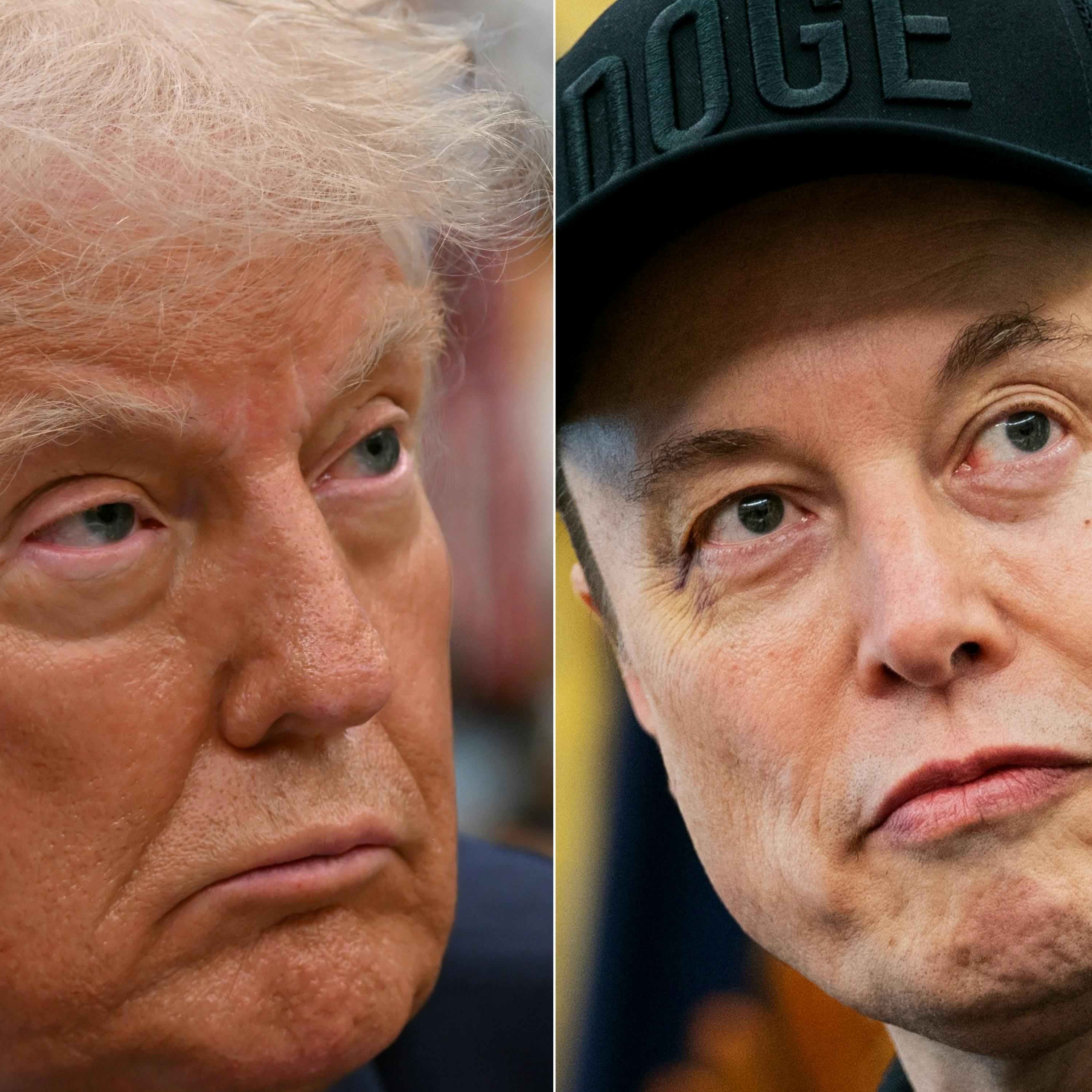
Elon Musk wants to create a new political party. He's fed up with excessive government spending and waste and graft and he's mad about the Epstein files. And he did a poll and people were actually really into the idea, but then he stopped mentioning it. And he's just been tweeting about Grok and Europe's fertility rate. And did you hear he unfollowed Pam Bondi? President Trump thinks we're too simple. Lol.
- [00:26]
Joshua Green
We have a tremendous success with the Republican Party. The Democrats have lost their way, but it's always been a two party system and I think starting a third party just adds to confusion. It really seems to have been developed for two parties.
- [00:41]
Lee Drutman
Third parties have never worked.
- [00:43]
Joshua Green
So he can have fun with it, but I think it's ridiculous.
- [00:46]
Noel King
But is Elon serious? That's coming up on Today Explained.
- [01:01]
Lee Drutman
Support for this show comes from Salesforce Today.
- [01:04]
Noel King
Every team has more work to do.
- [01:06]
Lee Drutman
Than resources available, but digital labor is here to help.
- [01:10]
Noel King
Agentforce, the powerful AI from Salesforce, provides a limitless workforce of AI agents for every department.
- [01:17]
Lee Drutman
Built into your existing workflows and your.
- [01:20]
Noel King
Trusted customer data, AgentForce can analyze, decide.
- [01:23]
Lee Drutman
And execute tasks autonomously, letting you and.
- [01:26]
Noel King
Your employees save time and money to.
- [01:28]
Lee Drutman
Focus on the bigger picture, like moving your business forward.
- [01:32]
Noel King
AgentForce what AI was meant to be? Learn more at salesforce.com AgentForce.
- [01:41]
Joshua Green
Avoiding your unfinished home projects because you're not sure where to start. Thumbtack knows homes, so you don't have to don't know the difference between matte, paint, finish and satin or what that clunking sound from your dryer is. With thumbtack, you don't have to be a home pro.
- [01:57]
Lee Drutman
You just have to hire one.
- [01:58]
Joshua Green
You can hire top rated pros, see price estimates and read reviews all on the app. Download Today I only do this body.
- [02:08]
Noel King
For you only do this body for today Explained.
- [02:12]
Lee Drutman
My name is Joshua Green. I'm a national correspondent for Bloomberg Businessweek magazine and I spend a lot of my time covering Elon and Trump.
- [02:20]
Noel King
Why?
- [02:20]
Lee Drutman
The official reason is because they're important newsmakers. The less official reason is that it's just a lot of fun and chaos. And then as a reporter and a columnist, it makes for good grist for columns.
- [02:31]
Noel King
All right, so you heard that Elon wants to start a new political party. What's he thinking?
- [02:36]
Lee Drutman
You know, it's a good question. Everybody always wonders what Elon's thinking when he does his series of bizarre posts, tweets. But I think he's doing this because what he really wants is political power and attention. And I think he thought he'd essentially bought that by backing Donald Trump to the tune of, like, $300 million in the last election.
- [02:54]
Joshua Green
Let me tell you, we have a new star.
- [02:57]
Lee Drutman
A star is born, Elon. But as it turned out, he didn't. He's worn the hat.
- [03:03]
Joshua Green
Trump was right about everything, but I'm very disappointed.
- [03:06]
Lee Drutman
And Trump turned on him, ousted him, took away his EV tax credits, didn't cut the deficit, trashed him on social media.
- [03:13]
Joshua Green
I don't know what it is. It's sort of Trump derangement syndrome, I guess they call it.
- [03:17]
Lee Drutman
And now I think Elon is. Is humiliated and looking for a way to respond back.
- [03:23]
Noel King
He is not saying those things, though. He's saying they're, like, real reasons that I want to do this. What is he claiming he wants here?
- [03:31]
Lee Drutman
Well, you know, yes, I'm reading between the lines a little bit, but I think what he's claiming he wants is he wants to cut the deficit, and I think that he'd like to restore those EV tax credits. You know, he's. He's tweeted to the effect that this is terrible for, you know, for science, for America's place, and it's. It's technological race with China. If this insane spending bill passes, the America Part Party will be formed the next day. Our country needs an alternative to the Democrat Republican uniparty so that the people actually have a voice. I mean, there are certainly valid reasons why Elon would want to start a political third party, you know, presuming he could and could field competitive candidates. But there are a lot of doubts about any of those things. But right now, you know, he wanted what he wanted, and he didn't get a lot of it from Donald Trump. And so now he's trying a different route, or says he's trying a different route.
- [04:24]
Noel King
Do we know anything about what the party would stand for, like what its platform would be?
- [04:29]
Lee Drutman
I mean, to the extent that it even exists, which it doesn't yet, it'll stand for whatever Elon wants it to.
- [04:36]
Joshua Green
Hmm.
- [04:38]
Lee Drutman
I think that, you know, we could presume that it would be pro business, that it would be pro science, that would probably be pro clean energy, pro space travel. I mean, certainly Elon has a list of policy interests that would overlap with a serious political third party. And if you were to kind of subtract Elon Musk himself from the equation, you could even kind of put together a pretty interesting party based on a lot of those principles. But the thing With Elon is anybody who follows his social media feed for more than five minutes will notice is that he's constantly hemming and hawing and he's going back and forth and he's prone to conspiracy theories and temporary periodic obsessions. I don't remember Elon Musk being particularly concerned about the deficit, you know, before this latest episode, but now, now he claims that he is. I think a bull can be, can.
- [05:29]
Joshua Green
Be big or it can be beautiful.
- [05:31]
Lee Drutman
But I don't know if it could be both. I don't remember him being super concerned about the Jeffrey Epstein files, but, you know, that's, that's a recent obsession of his too. How can people be expected to have faith in Trump if he won't release the Epstein files? So I think what, I think what the America Party winds up standing for will very much be up in the air and, you know, might not even be the kind of thing that you could, like, put down on paper and expect to last for, for any degree of time, because I think is so prone to getting excited about different things and changing his mind.
- [06:06]
Noel King
I was on his Twitter feed this morning and he was tweeting up a storm last night, but it was all about Grok having problems.
- [06:15]
Lee Drutman
Oh, yeah, tell me about that.
- [06:18]
Noel King
I. Out of journalistic restraint. I'm not even going to try to characterize what is going on here. But okay, my question for you is this. How will we know he's serious about this? Like, what'll it take for you to be like, oh, this is not just a five minute obsession. He means it.
- [06:33]
Lee Drutman
Well, what it's gonna take to actually start a political party, you have to do a bunch of different things. You can't just announce it on Twitter and you can't just donate a bunch of money to a political action committee, which, by the way, he already has. And he's perfectly capable of influencing American politics in either party or both parties just based on what he already has now. But if he wants to start an actual third party, you have to file a lot of paperwork. You have to get lots and lots of signatures. You have to have some kind of a platform, some kind of a rationale to make it official. It's very work intensive. It takes a lot of people to get it done and it takes a lot of time and effort. Now, certainly he's got the money to back this kind of effort if he wants to. But as we all know, Elon Musk isn't always the most reliable when it comes to following through on his claims or his Big ideas. I mean, I kind of categorize this mentally in the realm of like, you know, Elon wanting to go to Mars or Elon saying that there's going to be fully automated Teslas driving fleets of cars all over the U.S. it's something he'd like to happen. It's something I think he's genuinely interested in, thinks it would be a neat idea, but I don't think that he necessarily is going to kind of follow through on it or has any idea what it is he's actually fighting off.
- [07:42]
Noel King
How's the idea being received? Like, who's taking him seriously?
- [07:45]
Lee Drutman
Nobody that I've come across yet. Most people are kind of scoffing at the idea, thinking it's just a periodic whim because Elon has a long track record of saying things in the and then not following through. I think also, like, he's not the first rich, politically interested newcomer to hit upon the idea of starting out some kind of a centrist, pro America third party. I mean, it's almost a cliche how many wealthy people new to politics kind of come up with this idea, think it's original, misread poll numbers. Imagine in themselves that there's a huge constituency out there just waiting to line up behind them and their particular idiosyncratic views and then when they go and run or test it out, turns out that there isn't. So I think if Elon were to move forward with the idea, it wouldn't be nearly as easy as he's claiming it would be in his social media posts.
- [08:37]
Noel King
Elon Musk has some other day jobs, right? He's responsible for Space X for Tesla. Ever since he got involved with government, his businesses, his actual businesses have been taken some hits, right? People are not thrilled about Tesla buying fewer Teslas. Tesla stock is whipsawing all over the place. How are his investors, the people to whom, you know, in a business environment, he really owes the most, how are they reacting to this idea?
- [09:04]
Lee Drutman
Not well. You know, I don't think it was any accident that when Trump and Musk, before their fallout, announced that Musk was leaving government and going back to the private sector, Tesla stock rallied quite a bit. And there was great sighs of relief from Tesla bulls that Elon was going to come back, he was going to focus on the work and, and now we've learned that no, as a matter of fact, he probably isn't. He's going to, he's going to launch off on some kind of a quixotic political crusade and you could kind of See the disappointment and frustration and angst playing out among Tesla investors.
- [09:39]
Joshua Green
Tesla stocks are down 8% this morning after Elon Musk announced a new political party. This is not what investors want. They don't want Elon Musk focusing on political activities or spending most of his time talking about politics and fighting with the president.
- [09:55]
Lee Drutman
One of them prominently, who's a big Elon Bull, had said on social media, oh, you know, we could make this work. Let's give Elon a better pay package that'll concentrate him on his Tesla mission. It'll, it'll help the stock price and maybe, you know, we can have a rider in his new contract saying no, no political involvement. And Elon sort of tweeted back and said, that's a dumb idea, shut up. And something to that effect. So Elon does not want to be limited in terms of his political activities. It seems that's probably bad news for his companies.
- [10:27]
Noel King
He has talked on Twitter about what he wants to do specifically and he's made it seem like he wants to actually just focus on Senate seats and House seats. Like he doesn't. He's not expressing like a grand ambition. He's like a couple seats here, a couple seats there. Has he been talking to anybody that could help make this a reality?
- [10:46]
Lee Drutman
So if what he wants to do really is just play in the midterm elections, that's actually something he really could do. And he doesn't even need an America party in order to be able do it. He has a political action committee that was very active in the last election on behalf of all sorts of House and Senate candidates, probably helped Republicans win or expand their margins in the House and in the Senate. And it's the kind of thing he could do this time around. I think the challenge though is what does Elon actually want to accomplish in the midterm? Does he want to punish Republicans who voted for the big beautiful bill? If he does, that's going to present sort of a problem because he's either going to have to get centrist or non trumpy Republicans to run in these seats and that's a really tall order, or he's going to have to back Democrats. And I mean, I wouldn't rule that out either. If what he really is concerned about is to put the brakes on government spending, then maybe the best thing for him is to get Democrats elected, have them win back the House, and then you wind up in a situation where Washington is in gridlock and nothing can pass, including additional budget busting, deficit exploding bills like the one we just saw signed in law.
- [11:54]
Noel King
So what do we make of all this? You said earlier, like lots of rich guys have tried to start third parties. Is this time different?
- [12:03]
Lee Drutman
Josh, I, you know, I'm not really in the business of making predictions, but if you put a gun to my head and made me make one, I'd say that no, this time probably isn't different. The one wild card is that I think Elon is much more aggressive and willing to spend his own money and lots of his own money in the service of plans and projects that probably aren't going to work out or that other people might view as ridiculous. I was a big skeptic of him kind of getting behind Trump and thinking he'd really be able or be willing to write those kind of huge checks. Because the knock on Elon in Washington over the last eight, 10 years was, well, he talks a big game and he promises he's going to get involved, but when it comes time to stroke a check, he's never willing to do that. Well, turned out he was willing to do that. He wrote a bunch of really great big checks. And so if he's willing to back his America Party idea with lots and lots, lots and lots of money, who knows? I mean, he could have an effect. It might not be the effect that he intends, but he could certainly disrupt any number of House and Senate races in a way that produces a meaningful impact not just on the outcome of those races, but in terms of who winds up, which party winds up controlling the House and to a lesser extent, the Senate after the 2026 midterms.
- [13:20]
Noel King
Joshua Green of Bloomberg Businessweek coming up, polling shows, and I did not know this, that most Americans are actually s of the two party system. The argument that getting rid of it is possible. Support for Today explained comes from Quince. Summer is in full swing and perhaps you want to refresh your closet. Perhaps you're looking for things that you're gonna wear again and again. Maybe, says Quince. Take a look at what Quince has on offer. Quince says their clothes are timeless, feel luxurious, look elevated, and the quality is way beyond what you'd expect for the price. By working directly with top artisans and cutting out those middlemen, Quince gives you luxury without the markup. Our colleague Nisha Chital got to try out Quince. One thing I like about the Quince linen button downs that I have and the linen pants is they really, they have such a good range of colors that I think can pair with a lot of different things and, and work with a lot of different outfits. They can layer really well with other things. They're very versatile. You can give your summer closet an upgrade with quince go to quince.com explain for free shipping on your order and 365 day returns. That's Q-U-I-N-C E.com explained to get free shipping and 365 day returns, quince.com explained.
- [14:49]
Joshua Green
You know what time it is. It's time to talk about three day blinds again. Support for the show today comes from three day Blinds. They manufacture high quality custom blinds, shades, shutters and drapery. You could say they keep it shady. Their local, professionally trained consultants can provide expert guidance on the right blinds for you, for your dog, for your cat, for your home. And you can set up an appointment and get a free no obligation quote the same day. Right now you can get quality window treatments that fit your budget with three day blinds. You can head to three day blinds.com explained for their buy one get one 50% off deal on custom blinds, shades, shutters and drapery. For a free no charge, no obligation consultation. You can head to threedayblinds.com explained one last time. That's buy one get one 50% off when you head to the number 3D a Y blinds.com explained Fox Creative this is Advertiser content from Adobe. Our real estate consulting business is always marketing to new clients. Real estate is still about relationships and first impressions matter. We need to project credibility, style and a personal touch. It's my job to make sure our team has the tools they need to create standout content quickly and easily. That's why I decided to use Adobe Express. From business cards to social media, the templates in Adobe Express keep our team looking polished and on brand.
- [16:30]
Noel King
As a creative on the marketing team, I'm always looking for ways to make.
- [16:33]
Joshua Green
Our content break through the noise.
- [16:36]
Noel King
The generative AI in Adobe Express is safe for business so I can create graphics and videos that even our lawyers love.
- [16:44]
Joshua Green
From landing new clients to taking projects over the finish line, Adobe Express helps us break new ground. Adobe Express the quick and easy app to create on brand content. Learn more@adobe.com Express Business It's a party of the biggest plan. My name is Lee Drutman. I am a senior fellow at the New America Think Tank. I'm a political scientist and I'm the author of Breaking the Two Party Doom the Case for Multi Party Democracy in America.
- [17:22]
Noel King
You are. You are not a big fan of the two party system?
- [17:26]
Joshua Green
You know, I think it's outlived its usefulness.
- [17:28]
Noel King
Huh? What's the thesis? Go ahead, tell me what.
- [17:32]
Joshua Green
America is a pretty big diverse country these days, you may have noticed. And to fit everybody into just two parties seems like kind of insanity, and it's clearly not working. Also, it has divided this country into two teams, the red and the blue team, that have learned to absolutely hate each other. It's created these artificial divisions around this zero sum, winner take all electoral politics that is just really breaking down the foundations of democracy in this country. So I think there was a time when it worked reasonably well for certain reasons. But that time is in the past.
- [18:11]
Noel King
Okay, so you will know that Elon Musk agrees with you. He says he wants to start a third party. He ran one of his little polls on Twitter and the question was, is it time to create a new political party in America that actually represents the 80% in the middle? I'm looking at that poll now. 80% of people said yes, 20% said no. How does that, how does that match up with reality in the U.S. well.
- [18:38]
Joshua Green
There are two parts to that question. One is how many people want a third party. And then two is how many people want that party to be somewhere in the middle. Now, the first part, how many people want a third party? That 80% is a little bit higher. There might be some selection bias there, but it is close to polls that I've seen. Generally, it's about 60 to 70% of Americans say there ought to be more than two parties when polled. So overwhelmingly Americans say they want more than two parties. Now, is the party that they want a party in the center that's less clear? I think people's perception of the political center depends on themselves. I think everybody, most people think that they're more reasonable and they're more moderate. But in reality, when you look at the viewpoints of the American electorate, as I've done repeatedly, you see that the support for a genuine center party is Limited, maybe 10 to 15%. But there is a lot of interest in parties that are maybe not as traditional.
- [19:51]
Noel King
Third party candidates do, run for office all the time in the United States. They very rarely win. If so many voters want more options, why don't we have more people in elected office from third parties here?
- [20:06]
Joshua Green
You're hitting on the core problem, which is that we have a single winner system of elections. So in a single winner election, third parties become spoilers and wasted votes because it's one of the two major major parties is going to win every election. So voting for a third party is Just basically a protest vote or maybe, maybe it could spoil the election. And as a result, most people don't want to do that because they think, well, I want to vote for somebody who at least has a chance of winning. And more importantly, people who have ambition in politics say, well, I'm not going to, you know, waste my time with one of these fringe parties. I want to actually win. So you get minor parties that are, you know, mostly cranks and weirdos and people say, well, I don't know, I'd like to vote for another party, but not that third party.
- [21:08]
Noel King
What's the recent history of third party candidates, serious third party candidates at a national level? I have like a vague memory of Ross Perot.
- [21:16]
Joshua Green
Now, just for the record, I don't have any spin doctors, I don't have any speechwriters. Probably shows I make those charts you see on television, even that show.
- [21:28]
Noel King
But I couldn't give you many details because it was the 90s. How serious have third party candidates been over time?
- [21:37]
Joshua Green
Yeah, well, Ross Perot is the most recent third party candidate to actually get a pretty decent share of the electorate. He got almost 20% of the electorate, although he didn't win a single state. A lot of people remember Ralph Nader in 2000. Here we go again. Who only got about 3% of the vote, but it was a very well placed 3% because his votes were more than the difference between Bush and Gore in Florida and a few other states. Clearly George W. Bush took far more.
- [22:10]
Lee Drutman
Votes away from Gore, didn't he?
- [22:11]
Joshua Green
But why not call him a spoiler before that you had George Wallace running in 1968 on the American Independent Party as sort of a, you know, a preserve segregation platform. The Supreme Court of our country has handcuffed the police. They have rendered decisions today that are absolutely ludicrous and asinine. And then 1912, you have Teddy Roosevelt running as a Bull Moose. Third party candidate was the most successful third party candidate. Are the American people fit to govern themselves, to rule themselves, to control? I believe right now, of course he had already been president. So you've had periodically third party challenges at a presidential level, at a House and Senate level. You have a few people who run as independents, but people tend to go right for the presidency because that creates a level of visibility if you're trying to build a party.
- [23:13]
Noel King
All right, so in terms of solutions, if one thinks that the two party system is a problem, let's talk about solutions. You, you advocate for something called proportional representation. Explain what, what, what that is and why you Think it might be a solution here?
- [23:28]
Joshua Green
Well, proportional representation is the most common system of voting. And it basically, at its simplest level, it means that parties get shares of seats in proportion to what percent of the vote they get. So if a party gets 30% of the vote, it gets 30% of the seats in the legislature. If it gets 10%, gets 10%. Now, there are varieties of proportional representation that we could spend an hour going in the weeds on.
- [24:02]
Noel King
But tell me the one you like the best. Like what would work in the U.S.
- [24:06]
Joshua Green
So what I think would work in the U.S. is probably the most commonly used version, which is called open list proportional representation with multi member districts, which is this idea that rather than having a single district with a single representative, you have a single district with five representatives, the district is larger, and then the parties put forward lists of candidates. You choose the candidate from the party that you like, all the votes for each party get tallied up, and then the seats get allocated in proportion. So if a party gets 40% of the votes in that five member district, its top two candidates go represent the district. If a party gets 20%, it's top candidate. So in theory, you could have five parties representing the same district. So, you know, we talk a lot about gerrymandering as a huge problem, and it is fair elections, the cornerstone of American democracy. Psych. Welcome to my political pizzeria where my pies are as screwed up as the gerrymandered districts in your congressional home.
- [25:15]
Lee Drutman
Gerrymandering sucks.
- [25:16]
Joshua Green
But you move to five member proportional districts, gerrymandering becomes irrelevant. It doesn't matter because votes are going to be allocated proportionally no matter what. So everybody gets to cast a meaningful vote because every seat matters. Every, every seat is competitive, every vote matters. So electoral reform is the most powerful tool we have.
- [25:38]
Noel King
So at the end of the day, Elon Musk done something admirable here?
- [25:45]
Joshua Green
Well, we will see by keep making.
- [25:47]
Noel King
This a topic of conversation in a kind of real way.
- [25:51]
Joshua Green
Right? Yeah. So I think by raising the issue of the need for a third party, I think it certainly opens up a conversation about what it would take. I'm not sure Elon's approach is going to be successful. On the other hand, if he's strategic and wants to spoil a few races that will determine control of the House and the Senate by running a spoiler candidate, then historically that's actually what has led to a wider conversation about electoral reform. That's one of the reasons that a lot of countries move to electoral reform. We've never had this level of dissatisfaction with the two party system as far as far back as we've seen polling. So there is a real kind of understanding that what we're doing in our electoral system is just not working.
- [27:05]
Noel King
Lee Drutman is the author of Breaking the Two Party Doom Loop. Today's Episode was produced by Avishai Artsy and Rebecca Ibarra. It was edited by Jolie Myers and fact checked by Laura Bullard. Our engineers are Matthew, Billy and Patrick Boyd. I'm Noel King. It's Today. Explain it.