Loading summary
Transcript87 lines
- [00:00]
A
Today explained. Sean Ramishrom here with a confession. When I think about AI, I mostly think about how long it's gonna be before the machines come for my job. The Washington Post has already launched an AI generated news podcast, the Washington Post the good news. It makes factual errors, so my job is safe for now. But AI is already out here replacing jobs. And one of the first jobs it appears to be replacing is, ironically, web developer. Because everyone is Vibe coding. Now, if you're not familiar, Vibe coding is writing code through conversation. You tell the AI software what you want using your words, and it tries to build it using generative AI models. Gotta build a site for your small business Vibe code. Gotta sketch out some ideas for your tech behemoth Vibe code and you've got your choice of services. Google, Microsoft, OpenAI, anthropic, and something called Lovable, which I'm gonna use to build a website for your listening pleasure or on Today explained from Vox.
- [01:00]
B
Once upon a dismal day, Bob's ice cream van looked gloomy and gray. Although he had big ambitions, his socials lacked creative vision. Ew.
- [01:09]
A
That bad?
- [01:09]
B
Maybe Vampire appetize. I have an idea. Bob launched Canva and got into gear. Create the video in the vampire theme and make it the funniest meme. It went viral. Bob's business, a revival. Now imagine what your dreams can become when you put imagination work@canva.com. close your eyes, listen to Monday.com. feel the sensation of an AI work
- [01:36]
A
platform so flexible and intuitive it feels like it was built just for you.
- [01:41]
B
Now open your eyes, go to Monday.com, start for free, and finally breathe.
- [01:47]
C
You're listening to Today Explained. This is the irony of Vibe coding, which is that we probably are going to build an entire website and machine right now. And we're still just like, how can we get Zoom to work?
- [02:03]
A
Okay, can you see?
- [02:05]
C
I can see it now.
- [02:06]
A
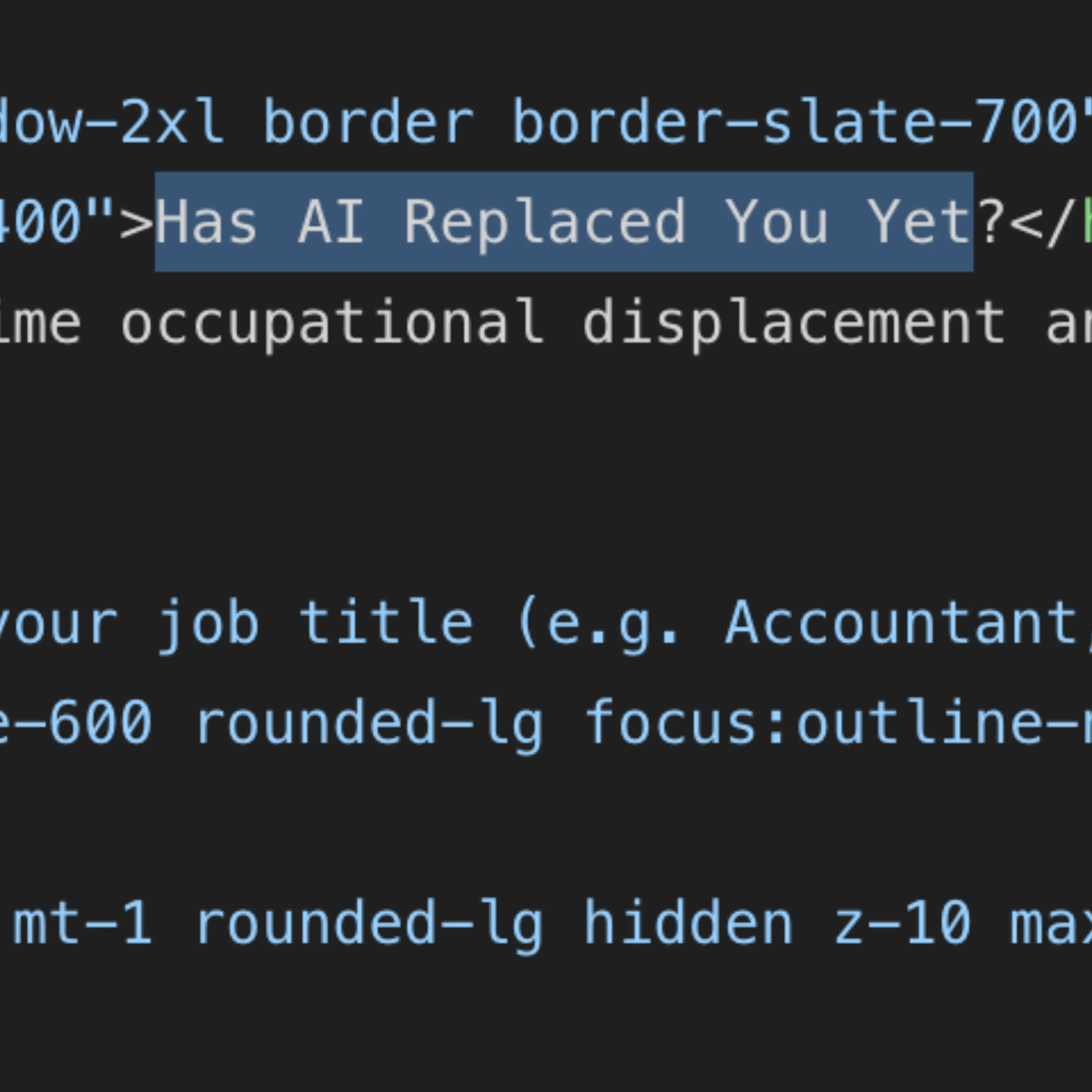
Lauren Good, senior correspondent at Wired. We asked you here today to talk about Vibe coding, which we haven't really talked about on this show before. I did a little HTTP back in middle school, a href and company, but it's been like a minute and now it turns out I, I don't have to know how to code to build a website. So the question was, like, what kind of website should we build? So I had this idea to build a website because I feel like a lot of the anxiety around AI is about how soon it's gonna steal all of our jobs. So I thought, let's build a website that tells you if you've Been replaced by AI.
- [02:41]
C
I love it. I love it. What's it called?
- [02:44]
A
That's a great question.
- [02:46]
C
Your job explained.
- [02:48]
B
You're old.
- [02:49]
A
This little box. Cross branding. I like that. Here we go. Create a website that. Where I'm gonna say where I can input a job and then it will tell me a simple yes or no if my job has been replaced by AI. Let's see what it says. It says thinking, evaluating AI job replacement risk drivers. Tell us what is happening right now while we wait for the A.
- [03:24]
C
So right now this is retrieving information from one of the AI models that Lovable is using on the back end. And it's basically scanning through massive, massive amounts of data and using predictive technology to basically guess what the best answer is to your prompt. And so it's not crawling the web right in the way that Google works. And it's not necessarily generating something whole cloth like the way that people are talking about how AI is going to replace us in writing or a creative field. This is basically just saying it's pulling together a tool set for you based on the data set that the AI model is built on.
- [04:09]
A
Okay, it says thought for 50 seconds, I'll build the verdict.
- [04:15]
C
Oh, God.
- [04:20]
A
A brutalist binary AI job replacement tool with dramatic color transitions and sharp typography. Wow. They named it for me too. The Verdict. Interesting.
- [04:31]
C
Okay, maybe it is actually trying to be creative.
- [04:34]
A
And it just says your labor comma quantified in kind of voxy style. And then it's got a. In like a grayish font, it says job title. And where you're supposed to type your job title.
- [04:45]
C
But we. Sean, it feels obvious that where it says job title, we have to type in journalist.
- [04:52]
A
I couldn't agree more because we're selfish. Okay, here we go. Jur nal ist. Here we go. Pressing enter. Yes.
- [05:03]
B
Oh, no.
- [05:04]
A
Oh, no. Yes is bad.
- [05:05]
C
Oh, our risk level. It's in bright red. Yes, it's a huge font. And the risk level below that, it says the risk level, the timeframe in which we're going to be replaced and then the action that we need to take. Honestly, this looks like Centcom. This is like very. Okay, and in there, our risk level, Sean, is critical 82%.
- [05:25]
A
Critical 82%. Time frame 2025, 2028. Pivot to investigative work.
- [05:32]
C
Now, Sean, the thing with vibe coding is that if you didn't like some element of this, and not just the response, but the actual design of it. I mean, this is where you can just type in another prompt and iterate on it. And like we have to know, no coding. But I would say right now in Silicon Valley, when, you know, some people are very bullish on this, other people are saying, no, you're still going to need to have some foundational knowledge and understanding of how to code and how it works. But there's absolutely no doubt that right now within tech companies, there are employees using this tech to basically do way more coding than they've ever done before.
- [06:09]
A
When did everyone start Vibe coding?
- [06:13]
D
If you're not using Claude code, you need to start because how did I just completely redesign my portfolio in a day as a designer who doesn't really know how to code?
- [06:21]
A
I built an app with zero code
- [06:23]
C
and here's my tech stack and exactly how much I spent. Here's everything I vibe coded this week and how long it took me. This is something that's really taken the software industry by storm over the past year or so. And the phrase vibe coding took off when a well known AI researcher, Andrej Karpathy, used it.
- [06:41]
A
There's a new kind of coding I call Vibe coding, where you fully give into the vibes, embrace exponentials and forget that the code even exists.
- [06:53]
C
And in a lot of ways, this has been kind of like the fever dream of Silicon Valley for a while. I don't know if you used to watch HBO's show Silicon Valley, Silicon Valley, Sean, but there's a really great clip where one of the engineers admits that he has been allowing an AI to code for him.
- [07:09]
A
You gave your AI permission to overwrite
- [07:12]
C
code in the internal file system.
- [07:13]
A
Were you going to tell me about this? No, I thought that was the company policy these days.
- [07:19]
C
And the founder of the company is just horrified by it and saying, you can't allow the AI to do this. It's going to basically mess everything up. Well, that moment has arrived.
- [07:32]
A
We've spoken a lot about various risks that come with our rapid adoption of AI tools. What are the risks when it comes to Vibe coding?
- [07:44]
C
On one hand, there's the risk that the code that's being generated just isn't very good. There's something in the tech industry that's known as technical debt, which basically means that you get into a lot of debt with the tech that you've built and then you have to spend a lot of time and resources and capital to basically fix it. There are also some security risks that come with deploying these AI agents. I don't know if you've heard of something called claws, Sean, like Santa Clause are sort of taking AI agents And coding bots to the next level where they've become a lot more autonomous and they run locally on someone's machine. And this is something that like Silicon Valley is very excited about right now. You can basically run them on a Mac Mini and have it do a whole bunch of stuff for you on your machine, but in order to do that, you have to give it access to a bunch of information. So whether you're using a coding bot in your work or whether you're running claws on your personal computer, you are basically telling this agent, here's some access to some of the most sensitive information on my machine or in the cloud. Build something with it.
- [08:52]
A
So, so there, there are security concerns for you, the Vibe coder. I wonder if that means there are security concerns for me, the person visiting like a Vibe coded website. Is there a chance that like if I'm inputting personal information to a website like this, that their security isn't up to snuff?
- [09:11]
C
I think that's certainly possible, yeah. I mean there's the possibility that someone literally just isn't using like basic HTTPs level of security on. They haven't really considered a privacy policy that they're supposed to implement before they start running this website and collecting people's data.
- [09:31]
A
But the train has left the station. Everyone is jumping over to Vibe coding because it's just so much cheaper, so much easier and so much faster.
- [09:40]
C
Yeah, I mean, you probably know this, Sean, but Silicon Valley is pretty obsessed with productivity. In fact, there's a phrase that's known as 10x amongst the engineering crowd that sort of describes a person who outputs 10x the amount of work that's really expected of them, that they're like hyper efficient and productive for the sake of it.
- [10:02]
A
I'm just going to say aiming high. I'm going to define it as aiming at least 10x. It is very important that whatever is you do has to be 10 times
- [10:10]
B
better, 10 times cheaper or 10 times faster.
- [10:13]
A
Maybe ideally all three than the competition, than the existing solutions.
- [10:17]
C
But now with Vibe coding, the idea that you could run two or three coding agents at the same time and you know, manage them like they're interns, check in on them from time to time, but that they're basically doing the coding for you. It's like this pipe dream that maybe if we use AI to do our work for us, we might only have to work a four day work week or free up some time so we can like sit on our patio and drink lemonade. That's not really what's happening here. What's happening here is that everyone just accepts, expects everyone to do a lot more. And that's definitely the case with software engineering.
- [10:57]
A
Lauren Good with an e, writes for Wired.com also with an E. You know how the normies vibe code now, but when we're back you're going to hear how the coders are doing it and it's a whole different vibe.
- [11:13]
D
Support for Today Explained comes from Shipstation. Perhaps your company is growing quickly and order fulfillment is threatening to break your momentum. Shipstation says their intelligence driven platform helps take the pressure off by bringing order management, rate shopping, inventory and returns, warehouse systems and powerful analytics all into one place. Instead of juggling all those disconnected tools, you get one system designed to scale with your business. Shipstation says their automations can save you up to 15 hours a week on fulfill. They say sharing tracking details can reduce customer service inquiries by up to 12% while returns management gives you insight into what's coming back and why. Analytics show where you're saving, where you can optimize. They choose the best carrier, find competitive rates, print labels in bulk and send tracking updates. You can try shipstation free for 60 days with full access to all those features. No credit card needed. You can go to shipstation.com and use the code today for 60 days free. And Shipstation says that 60 days should give you plenty of time to see exactly how much time and money you're saving. That's shipstation.com code today shipstation.com code today.
- [12:24]
A
Support for the show today comes from Granola, my old friend. You know that moment when a meeting ends and someone says, let's circle back on this next week? Everyone nods, but no one writes anything down. Then all of a sudden the next week rolls around and it's radio silence. Those sorts of situations and the inevitable aftermath are what Granola wants to fix. Okay, what I'm getting here is this is not the gran I thought it was. Granola is an AI powered notepad built for the way real people actually meet. You simply take rough notes like you normally would, and in the background, Granola securely transcribes the meeting. Then it turns everything into clean, structured, actually useful notes. When the meeting ends and Granola works through your device's audio, which means it integrates seamlessly into the video conferencing tools you already use. So if meetings are eating up your day, Granola says they're a no brainer. You can try it totally free for three months. Just head to Granola AI explained it's Granola AI Explained. To get your time back, get three months free at Granola. AI explained. Support for the show today comes from hims. ED is more common than many people realize, and it can often be easier to treat than you might think. With hims, you can connect online with a licensed provider to explore personalized treatment options, all discreetly and on your terms. HIMSS offers access to personalized prescription treatment options for ED if prescribed, and their options range from personalized products to trusted generics, which can cost 95% less than brand names. Hims says they bring expert care straight to you with 100% online access to personalized treatments that put your goals first. You can get simple online access to personalized Affordable care for ED, hair loss, weight loss and more by visiting hims.comexplained. that's hims.comexplained. for your free online visit. Hims.comexplained. featured products include compounded drug products which the FDA does not approve or verify for safety, effectiveness or quality. Prescription required. Seek website for details, restrictions and important safety information. Actual price will depend on product and subscription plan.
- [14:47]
B
This is an artificial intelligence version of
- [14:50]
A
Drake and Jewel is named Toad.
- [14:52]
B
Explain. My name is Clive Thompson. I'm the author of the Making of a New Tribe and the Remaking of the World. And I'm a contributing writer for the New York Times Magazine.
- [15:08]
A
And you just spent a lot of time hanging out with coders who were vibe coding. And from what I could tell from reading your piece in New York Times Magazine about your experience is that they're not vibe coding the same way that Lauren and I were just vibe coding earlier in the show.
- [15:25]
B
No, they're doing something that's a lot more aggressive, I guess, and ambitious. What they're doing is they are using multiple agents, kind of swarms of agents at the same time. So they will have, you know, if they're using Claude code or Codex by, you know, by OpenAI or Gemini by Google, they will have it kind of wired into their laptops. So those agents can like, create files, destroy files. They can create new folders, they can take code that's been written, they can push it, you know, live into production in the world, you know, and they will also work like little teams. So when they want to create a piece of software, sometimes they'll write like a spec, like, like a page saying, here's what I wanted to do. Or sometimes they'll just talk, you know, to, to the agent, but they'll be kind of talking to the lead agent that's like going to be the. The head of the Team. And. And they'll talk to it and say, you know, here's what I want you to do. You know, what do you think? You know, give me your ideas. And they'll sort of go back and forth, like generating a plan. And when they are confident that this top agent understands what is to be done, they'll say, all right, go do it. And that one will spawn off several sub agents. Like, it will. It will. It will have one agent that's writing code, another one that is testing the code. Only when it has sort of written it and it passed a lot of tests, they're, like, confident. Okay, now we'll show it to the human, right? And so it is. It's quite wild to sort of watch them do this. I'll be sitting next to them, and they'll be like, you know, having this conversation with the lead agent. You know, what's our plan? What's your plan? What are you gonna do? Tell me. I don't think that's quite the way I should do it. Let's do it this way. You know, and then. And sometimes, you know, if. If it does something wrong, like, they'll have to sort of yell at it, right? You know, like. Like, sometimes it'll be like, yeah, boss, you know, I didn't really think those tests were necessary, so I didn't do them, like, literally. Well, it will, like, just do that. And then this. This coder will go like, no, you have to pass the test. Go. Go back and do it again. And they'll. They'll often have to use kind of emotional language. Like, they'll be like, this is unacceptable. Or they'll say things like, you know, this is. This is. This is embarrassing. You're humiliating me.
- [17:43]
A
You know, it's very.
- [17:45]
B
It's very, very weird.
- [17:46]
A
This was something that stuck out in your piece. Was that in. In a prompt, one of your coders said, don't embarrass yourself.
- [17:52]
B
And I said to him, I said, like, you know, like, what's up with that? Like, you know, does that language improve the sort of output of these agents? And he was like, you know, I couldn't prove it. But, you know, generally we find that when we sort of reprimand them a little bit, yeah, they become a little more reliable. And. And. And again, it sort of sounds bonkers. But when you think about it, large language models are language machines, right? So it sort of registers embarrassing as having a bunch of being in a bad neighborhood, like a neighborhood you don't want to go to. Right. And so probably that does help, you know, the AI sort of register that, oh, this instruction here is actually serious in a way that the other ones were not.
- [18:43]
A
Where I was noticing how much time the models were saving me while building an elementary website. Can you help us understand just how much time, money, humans, human labor is being saved by. By vibe coding at the level that you observed?
- [19:03]
B
Yeah, it can be really, really significant. It is most significant. Those time savings, those productivity increases, they are most significant when someone is building something new from scratch. So the startup founders one or two person, three person shops. They're like, I need to get to market fast. Like, there might be 10 other people with this idea. I got to beat them. It's dizzying. Some of those people were telling me that they were working like 20 times faster than they would on their own. That stuff that would normally have taken them a day now takes, you know, half an hour. But at a very large and mature company like Amazon or Google, you know, you've got billions of lines of existing code. They're out there, they're running, customers are relying on it, and if you one little part of it stops working, that could cascade through everything. So those folks are, you know, they're definitely using the agents, but they are less likely to be pushing rapidly out stuff. They're more likely to be looking carefully at it and putting it through what's known as code review, where multiple humans look at it and go, oh, okay, does that work? That might have problems with this other thing that might have an unintended consequence that the agent didn't really understand, because the agent doesn't have the mental picture of how all of this massive fang company works that I, the human, has in my head. So for them, basically, it's like a 10% improvement in terms of the velocity of productivity of the engineers, how fast they go from having an idea to making it happen. And you know what's really interesting, and you may have discovered that this too, in your vibe coding. I've certainly discovered my vibe coding. A lot of engineers told me up and down the food chain that in some respects it was even less about speed than about the ability to experiment with a bunch of ideas and see which one might really work without having
- [20:51]
A
to invest the time in.
- [20:52]
B
Right, exactly. Because in the, in the before times, you have an idea for a feature, all right, are you really going to spend six weeks developing it just to discover that it's not really what you thought it was going to be? Whereas now, you know, well, let's just do 10 different versions of that over the next week and let's look at all of them and then we can pick the one we want.
- [21:11]
A
Right.
- [21:11]
B
So you might not necessarily have gone faster, but the feature that you've got is exactly the one you wanted. And you kind of know because you felt it, you held it in your hands.
- [21:20]
A
You know, you mentioned Google, of course, a lot of tech layoffs in the past few years, and now we're talking about, you know, how vibe coding has dramatically overturned the norms in engineering. How are developers feeling about that? Surely there's some tension there. I think you call it a civil war in your piece.
- [21:43]
B
Yeah, well, here's the thing. So there is definitely a civil war insofar as there is a. The majority of people that I spoke to and I reached out to a very wide array, I talked to 75 developers and I actively wanted to talk to ones that didn't like AI because I wanted to know their feelings. It's a minority of people that are really hotly opposed, but they're very, very strongly opposed. They don't like the fact that these are trained on stolen materials. They don't like the fact that it uses tons of energy. They don't like the fact that they think it's going to de skill.
- [22:11]
D
And then this poor performing code will
- [22:13]
A
be used to train new AI models,
- [22:15]
B
creating a vicious cycle of terrible software we'll all have to learn to live with.
- [22:19]
A
I don't care that you made an app in one hour. What does the back end look like?
- [22:23]
D
It's not modular.
- [22:25]
A
It looks like shit.
- [22:26]
D
Join me in making the serious dev movement.
- [22:31]
A
No more vibe coding. Why do you think they're not the majority when this is so clearly going to replace so many of them and bypass all of their ethical, moral concerns and objections?
- [22:48]
B
I think it's because for a lot of developers, it's just been a delightful experience in the short term of going from like, everything being a slow slog to it being like, oh my God, I'm just. All these ideas and things I wanted to do, I can now try them and do them.
- [23:05]
A
Being able to just vibe code anything you think of, like, spend 30 minutes and you have a tool that just does stuff for you, it makes you feel limitless. It's just a constant novelty factor. Like, you start working something and usually when you hit the point of like, I'm like bored and I've got this other better idea and I should start on that and then come back to this, you can do that now, but everything can actually get finished because it's fun, basically.
- [23:27]
B
It's enormously fun. The pleasure of coding used to be you wanted to make something and so you wanted that to exist. But along the way, there were a lot of these little wins when you fixed a bug, when you got something working, those little wins have gone away because you're not doing that bug fixing, you're not doing that line writing. So the big wins are just coming in avalanches. And it's very intelligent, intoxicating. They also, you know, there are ones who like, essentially don't think that those bad labor things are going to, are going to obtain. Like, they're like, well, it's probably maybe true that, you know, we lose some jobs here, but they think there's a potential that more will get created in areas that they have previously been unable to be created.
- [24:16]
A
Give it five years for us. I mean, from what you gathered, talking to people in the industry, from being someone who codes yourself, does this harken the, you know, end of computer programming as we know it? It seems like probably. And if so, where does it go from here?
- [24:35]
B
No, I would not go so far as to say that it ends in five years. I do think it becomes something very, very different. Different potentially. Like, I still think everyone told me, and I believe them, that you still need some understanding of the way a code base works and things happen at a computer science level, at a computer engineering level, to do the complicated things. I think actually, weirdly, what you might see is something a little different, which is the explosion of code in areas where there is currently none. Like, there's a bazillion people out there that are code adjacent, right? So you work in accounting, you are a wizard at Excel. Like, you have these, you know, these Excel spreadsheets are like 7,000 rows wide and whatnot, runs all this logic. And you can import data if you're given the ability now to have, you know, an agent, say, okay, like, could you bring more data in or could you do these things? There is going to be this really weird world where there's a lot of customized software for an audience of like two people, right? Like three people. Like right now. We have thought of software historically as something that only exists if 10,000 people or a million people want it because it costs a lot of money to make it. But if you can now start making it for next to nothing, you can start using it the way that we use post it notes. I just put it all over the place, you know, like, I need to jot this idea down. I'm going to make this happen and maybe the software solves one problem for this afternoon and we never use it again, right? Like software starts becoming all disposable. The huge gulf between a coder and a non coder shrinks and it allows all those non coders to fan out and do stuff. Right? I do think that software developers, they're going to go through a major transition. I would not predict it's going to go away, but I do predict it's going to be tougher. Definitely tougher than some of the really enthusiastic people predict. And that's just because that's kind of the way money and capital works, right? You know, money and capital love to squeeze labor in every way it can. Here is a great way to squeeze labor.
- [26:48]
A
Clive's piece in the New York Times Magazine, oddly enough, was titled Coding After Coders the End of Computer Programming as We Know It. But the authors seldom pick the headlines. It was maybe the first piece of long form journalism I've ever read about AI that didn't depress me or make me roll my eyes right out of my skull. Ariana Spuru produced today's show. Andrea Lopez Crusado Check the facts David Tadashore Engineer Jenny Lawton Edited Jenny Lawton this is TODAY Explained. Tomorrow we're heading into the kitchen.
- [27:23]
B
Foreign.
- [27:40]
D
Support for Today Explained comes from Shopify. Starting a new business has never been easy, says Shopify. But without the right tools, it can feel almost impossible. Perhaps Shopify can set you up for success. Shopify is a commerce platform used by millions of businesses around the world. They say they can help you tackle important tasks. Inventory, payments, analytics, so much more. No need to save multiple websites or try to figure out what platform is hosting the tool that you need. Everything is all in one place, making your life easier and your business operations smoother. Let Shopify be your commerce expert. With world class expertise in everything from managing inventory to international shipping to processing returns and beyond, you can get started with your own design studio. With hundreds of ready to use templates, Shopify helps you build a beautiful online store that matches your brand style. It's time to turn those what ifs into with Shopify. Today you can sign up for your $1 per month trial and start selling today@shopify.com explained. Go to shopify.com explained.
- [28:37]
A
What's that?
- [28:37]
D
That's shopify.com explained.
- [28:43]
E
This is advertiser content brought to you by Stonyfield Organic. Our cows, them going out to pasture. They love it. They're so excited to go out every day. They wait right at the door. In fact, we milk them and we just open up the laneway and let them just go right out to pasture. I'm Rhonda Miller Goodrich and I'm a dairy farmer in Cabot, Vermont. Our farm is Molly Brook Farm. We're an organic dairy farm and we are a supplier to Stonyfield. Molly Brook Farm has been in my husband's family since 1835. We started our organic transition in 2015. We had 53 acres of corn ground and of course we had to use herbicides and pesticides and the soil was dead, really, for all intents purposes. We stopped growing corn and stopped using herbicides and pesticides and we seeded that down to perennial grasses. After that, we begin to see biodiversity in that soil again. To be organic certified, our cows need to be in pasture at least 120 days. I think the organic practices really benefit our animals. You know, having good feed, good water, a nice light area. That's what's important to us, and that's what's important to Stonyfield. Visit stonyfield.com to find Stonyfield organic Yog Yogurt near you.