← Today, Explained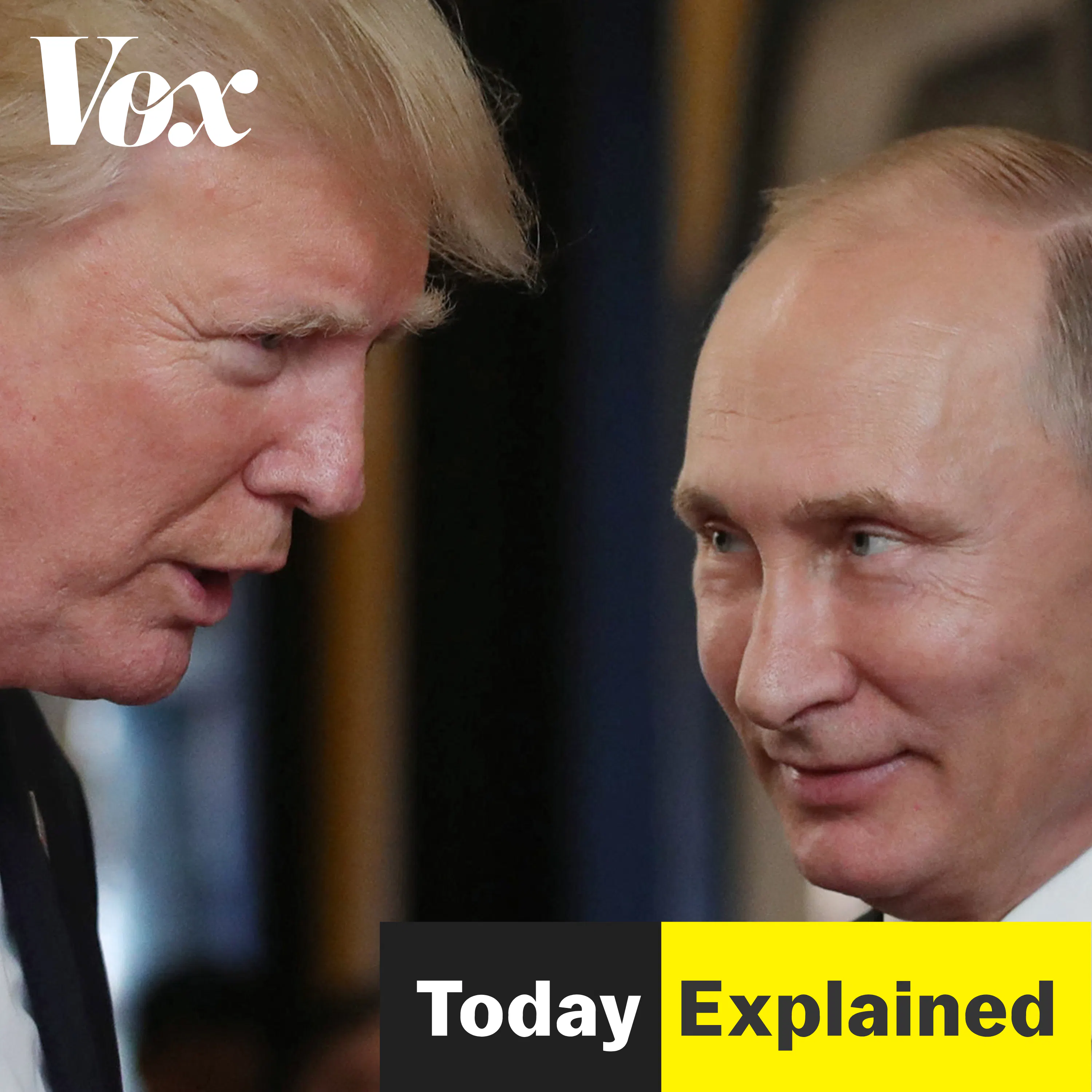
Today, Explained
Handing off a war
00:27:20
Two American presidents are trying to shape the future of the war in Ukraine at the same time.
Loading summary
Transcript81 lines
- [00:01]
Sean Ramaswamy
This is TODAY Explained. I'm Sean Ramasrom. There's been a lot of news out of Ukraine in the past few weeks.
- [00:06]
Luke Harding
Ukraine used a US Missile system to strike deep into Russian territory for the first time on Tuesday. People in Dnipro saw the extraordinary scene on their skyline of that multi warhead Russian missile experiment. Nuclear saber rattling from the Kremlin this morning with Vladimir Putin and I don't.
- [00:22]
Sean Ramaswamy
Want to make it about us, but I couldn't help but wonder how much of it had to do with our recent election here in the United States. So I asked Josh Keating at Vox.
- [00:31]
Josh Keating
I think it has a lot do with the election. President Trump has come and said he wants to push for negotiations to end the war and I think what we see from both sides is an attempt to press their advantage before they're pushed by the new US Administration into some kind of talks.
- [00:51]
Sean Ramaswamy
How two American Presidents are shaping the future of the war in Ukraine at the same time Coming up on the.
- [00:57]
Advertisement Host
Show today, support for this episode comes from aws. AWS Generative AI gives you the tools to power your business forward with the security and speed of the world's most experienced cloud. Support for this podcast comes from Stripe. Stripe is a payments and billing platform supporting millions of businesses around the world, including companies like uber, BMW and DoorDash. Stripe has helped countless startups and established companies alike reach their growth targets, make progress on their missions and reach more customers globally. The platform offers a suite of specialized features and tools to fast track growth like Stripe Billing which makes it easy to handle subscription based charges, invoicing and all recurring revenue management needs. You can learn how Stripe helps companies of all sizes make progress@swepe.com that's stripe.com to learn more stripe Make Progress. You're listening to Today, explained.
- [02:00]
Sean Ramaswamy
Luke Harding at the Guardian has been covering the war in Ukraine since it started. We asked him what's changed in the past few weeks.
- [02:08]
Luke Harding
Yeah, it's really been hotting up on several fronts, political, military, internationally. On the battlefield I visited recently in the northeast Kharkiv region, a place called Kupinsk and also so another front line near Sumy where Ukraine has since August occupied a chunk of territory inside Russia. At least 11 people including two children were killed by a Russian missile on Sunday night, Ukraine officials said it hit a nine story residential building in the northeastern region of Sumy. There is full scale fighting going on. It's loud a morning shattered by the eerie wail of air raid sirens, then drones and missiles that were intercepted.
- [03:01]
Josh Keating
And.
- [03:01]
Luke Harding
Those that were not In Kupinsk, where I was, the Russians were a couple of miles away. They are sending drones into the streets to chase and hunt civilians. And Russia is winning the war in the east of Ukraine purely because of mass. It's got more of everything. It's got more men, it's got more tanks, it's got more warplanes. And you know, meanwhile, of course, the other big development is Donald Trump.
- [03:32]
Donald Trump
I believe I will be able to make a deal between President Putin and President Zelensky quite quickly, what that means.
- [03:41]
Luke Harding
Kyiv, the presidential administration of Volodymyr Zelensky is bracing for impact.
- [03:49]
Sean Ramaswamy
I believe that the war will end.
- [03:51]
Luke Harding
And it will not end in the abstract.
- [03:53]
Sean Ramaswamy
The war will end faster with the policy of the steam that will now lead the White House.
- [04:00]
Luke Harding
And interestingly, opinion in Kiev about what Trump will mean for Ukraine is mixed. There's quite a strong faction group of people who think that Trump might just be good news for Ukraine, that he might somehow bring about an end to the war.
- [04:16]
Donald Trump
I will get it solved in rapid order and it will take me no longer than one day.
- [04:22]
Luke Harding
And managed to cut a deal with Vladimir Putin because by now there was an enormous frustration with the Biden administration with its policy of incrementalism, everything too little, too late, with its caution, with the fact that it freaks out whenever Putin says the nuclear word. And some people think that Trump might just be the person to kind of change all this. There are other more cool headed Ukrainians who think that Trump will be a disaster, that he will sell out Ukraine to Russia and essentially enforce a kind of capitulation, light some kind of deal where Ukraine gives up territory, makes a commitment not to join NATO and so on. But the countdown is on until January 20th. We don't really quite know what's gonna happen.
- [05:13]
Sean Ramaswamy
And in addition to the Trump development, we also have some Biden related developments, namely Biden giving Zelensky permission to do things they haven't been able to do to this point. Can you tell us a bit about that?
- [05:29]
Luke Harding
Yeah, there's been a long and difficult and contentious conversation that has been happening since really last year, or if not before, where Zelensky and his team have been asking the White House, the Biden White House, for permission to carry out deep strikes inside Russia using atacms, using long range American systems, which are highly effective and highly accurate. And Jake Sullivan, the national Security Adviser, Biden have basically said no, no, no, no, no, no, no. And to the point where really I think to some degree you can say it's spoiled the relationship between Biden and Zelensky because it's become mistrustful. Various official Pentagon officials, other officials complaining loudly about the ukra, rudeness, about the military failings and so on. And the Ukrainians, for whom this war is existential. Bear in mind that people are dying every night. Russian missiles are striking all the time, killing civilians, killing kids, killing families. They are saying, just give us these tools. And finally, in the very twilight of his presidency, after Kamala Harris lost the election, with Trump on the horizon, the White House has allowed these strikes and Ukraine has wasted no time in whacking strategic targets. So there's a real sense that the tempo of war is stepping up. Not that it's ever been slack. It's always been pretty busy.
- [07:01]
Sean Ramaswamy
Presumably the chief reason Biden didn't want to give Ukraine the go ahead here is because he wanted to avoid escalating with Russia, provoking Russia. How is Russia responding? Was Russia provoked?
- [07:14]
Luke Harding
Yeah, I mean, the question is a fair one, but the paradigm is completely wrong. I mean, we just have to sort of go back to basics here. Russia invaded Ukraine more than 10 years ago when annexed Crimea and started a kind of COVID military operation in the east of the country and seized the cities of Donetsk and Luhansk.
- [07:33]
Sean Ramaswamy
Large groups of pro Russia troops surrounding Ukrainian bases, ordering their forces off of.
- [07:39]
Luke Harding
Them so they can occupy them.
- [07:41]
Sean Ramaswamy
The international warning to Russia to end its invasion is being ignored.
- [07:45]
Luke Harding
So Russia's been escalating all the way through. And then of course, in February 2022, it launched the biggest war land war in Europe since 1945 with shock and awe, with tank divisions trying to capture Kiev with a multi pronged invasion.
- [08:02]
Sean Ramaswamy
They're being pushed to the limit by.
- [08:04]
Luke Harding
Russia's full scale invasion with attacks across.
- [08:07]
Sean Ramaswamy
Ukraine from areas near those pro Russian.
- [08:10]
Josh Keating
Enclaves in the east to the capital.
- [08:12]
Luke Harding
Kiev in the west, which the Ukrainians really, to the surprise of America and other allies, kind of batted back village by village. Ukrainian soldiers are pushing Russian troops away from Kharkiv and back towards the Russian border. And they've been trying to take back territory and really in the last year or so, just hold the front line with varying degrees of success. And during this period, there have been no nuclear strikes. Putin has not nuked Texas or London or Paris or indeed Kiev or southern Ukraine. It's the most enormous bluff and it's a sort of psychological operation designed to cow the democratic world and to make them afraid of supporting Ukraine and also to promote the myth that Russia can't lose this war.
- [09:08]
Sean Ramaswamy
And if I'M not mistaken, Russia is now increasing the threat of nuclear warfare. Is that right?
- [09:15]
Luke Harding
No, not really. Is it a myth? I mean, it's rhetorical, it's performative, it's ultimately fake. I mean, the threat of Russia launching a nuclear attack is no greater now than it was two years ago. The reality is that in any direct confrontation between Russia and the US and its allies, Russia would lose. I mean, America is a more formidable power. NATO is bigger and mightier, and it's just a sort of tremendous bluff. I mean, I think it should be interpreted as a operational informational game. I think what's a more realistic scenario is not the Russians launching nukes, is some kind of fuck up. Bear in mind that Russia has occupied since spring 2022 the nuclear power station in Zaporizhzhia. It blew up the reservoir which provided the cooling pond. It's been shelling from this nuclear facility across the river into Ukrainian settlements. I've seen them, I've been there. And I think some kind of Chernobyl style mess up where Russia just gets it wrong because it's not very good at these protocols is more probable than a kind of calculated Russian military strike. I think that is just kind of negotiating tactic ahead of some kind of possible deal in spring. And the ultimate audience for this is one Donald J. Trump back in the White House, who could potentially portray himself as a peacemaker, the man who avoided nuclear war. And all of his flatterers and supporters can say Trump should win the Nobel Peace Prize because, look, he's avoided World War Three and he's brought peace to Ukraine, which, by the way, I don't think is going to be peace. Look at Russia's past record for deals. It breaks them and then it sort of continues doing what it wants to do. And I think, Sean, this is a fascist project. Putin believes that Ukraine does not exist. He thinks this is historical Russia. He wants to de ukrainianize Ukraine and turn the whole country, its people, back into a Russian province. That's his goal. He thinks he can get there. And I think he thinks that Trump ultimately is someone that he can, if not exactly dupe, I would say, outmaneuver.
- [11:55]
Sean Ramaswamy
Luke Harding. He's got a new book about Ukraine. It's called Invasion Russia's Bloody War and Ukraine's Fight For Survival. Find this light holiday reading wherever you find your books. Biden's in charge for the moment, but all eyes are on Trump. The trouble with two presidents. When we're back on Today Explained.
- [12:28]
Advertisement Host
Support for Today Explained comes from aura. What will you get your loved ones for the holidays this year? Maybe an Aura Digital Picture Frame it was named the number one digital photo frame by wirecutter. Aura Digital Picture frames make it easy to share unlimited photos and video directly from your phone to the frame. When you give an Aura Frame as a gift, you can personalize it, you can preload it, maybe a thoughtful message, maybe your favorite photos. Our colleague Andrew tried an Aura Frame immediately.
- [12:55]
Josh Keating
When I took the frame out of the box, I was impressed by the.
- [12:58]
Luke Harding
Quality of the overall structure of it.
- [13:00]
Josh Keating
I think when you look at previous digital frames that I've tried in the past, they kind of feel flimsy, the exterior of the frame's kind of falling off or just feels cheap. Overall, this one had a sense of.
- [13:11]
Advertisement Host
Sort of weightiness and quality to it.
- [13:14]
For a limited time, you can visit auraframes.com and get $45 off Aura's best selling carver Matte frames by using promo code explained at checkout. That's a U R A frames.com promo code explained this exclusive Black Friday Cyber Monday deal is their best of the year, so don't miss out. Terms and conditions do apply.
- [13:36]
Support for this show comes from DraftKings. Waiting for dinner to cook? Spice things up with Golden Nugget Online Casino. With hundreds of the hottest games, Golden Nugget lets you live it up in your downtime on classics like Cleopatra or exclusive games only found on Golden Nugget Online Casino. Forget about waiting. Golden Nugget keeps the action rolling while your dinner simmers. New players can get $50 instantly in casino credits. All you have to do is sign up with code todayexplained and deposit just $5 to get 50 in casino credits. Make any moment golden gambling problem. Call 1-800-GAMBLER or in West Virginia, visit www.1-800GAMBLER.net Please play responsibly. 21/physically present in Michigan, New Jersey, Pennsylvania and West Virginia. Only Boyd in Ontario. One per new customer minimum five dollar deposit max fifty dollars issued in non withdrawable casino credits that expire in 168 hours. See terms@goldennuggetcasino.com welcome.
- [14:38]
Weight loss. It needs to be fast and sustainable. Noom GLP1 starts at just $149 and ships to your door in seven days. Take it from Clevoisier who lost 35 pounds on Noom.
- [14:50]
It's a psychological thing too. They're definitely teaching how to live a better, healthier lifestyle. Noom is teaching me the habit so I do not have to be on weight loss meds forever.
- [15:00]
Don't believe it. Take it from Lauren who lost 22 pounds on Noom. If I come off of the GLP1, it's not going to automatic make my weight. Yo yo back. I'm gonna have good skills and know what to do to take care of myself. $149 GLP ones now that's Noom Smart Noom the smart way to lose weight. Get started with Noom GLP1@noom.com Real Noom users compensated to provide their story. Individual results may vary. Not all customers will medically qualify for prescription medications. Compounded medications are not reviewed by the FDA for safety, efficacy or quality.
- [15:34]
Donald Trump
Ukraine Ukraine explained. It's Ukraine explained.
- [15:40]
Sean Ramaswamy
Josh Keating is a senior correspondent at Vox who writes about foreign policy. We asked him if the incoming Trump administration is at all miffed by how much action the outgoing Biden administration is taking on Ukraine.
- [15:54]
Josh Keating
So the last tranche of Ukraine aid was allocated by Congress last April.
- [16:02]
Luke Harding
After more than six months, a bill pledging further military aid for Ukraine finally passed. President Zelensky had personally met with U.S. lawmakers to lobby for support.
- [16:15]
Josh Keating
That was $61 billion. And basically they're trying to rush whatever they can out the door before Inauguration Day. So they're trying to like get all these contracts in place, get as much aid moving to Ukraine now as they can. The incoming Trump administration does seem to be sort of irritated by this. We saw Richard Grenell, who was the former Trump administration ambassador to Germany, a real kind of like sharp elbowed troll, basically a guy who talks a lot of smack on social media and did so even when he was a diplomat. He's accused the Biden administration on Twitter of escalating the war before he leaves office. There's been some coverage that's mentioned him as potentially a candidate for the Trump administration's envoy to Ukraine. So he could be somebody who's very closely involved in this.
- [17:18]
Sean Ramaswamy
Right. It is plausible that Biden is trying to ramp up his support for Ukraine in advance of an administration coming in that has been less than totally sympathetic to Ukraine.
- [17:32]
Josh Keating
Absolutely. And whenever you're in a negotiation, you want to be in the best position possible. When you start from that negotiation, you don't have to have written the art of the deal to know that you want to move into talks from a position of strength. And I think that there's clearly a desire that if Ukraine and Russia are pressured into a position where they're talking about territorial concessions, you want Ukraine to be controlling as much territory as they can before those talks start.
- [18:04]
Sean Ramaswamy
Have we seen something like this before? I mean, certainly this isn't the first time a presidential transition is happening in the middle of a conflict abroad.
- [18:15]
Josh Keating
Yeah, I mean, we're in this awkward period right now where there are basically two US Presidents. Foreign actors, international actors have to deal with both of those realities. They have to press their advantage as much as they can with the team that's there now and also position themselves for the one that's coming in. We have seen this before, especially when one administration is handing off a war to the next one. One example you could look at is the transition from Harry Truman to Dwight Eisenhower. When the Korean War was going on.
- [18:55]
Donald Trump
UN forces recapture this South Korean capital. These are Marines and U.S. 7th Division troops advancing into Seoul under enemy fire.
- [19:05]
Josh Keating
Eisenhower had promised to end the war, which by that point had become very unpopular. But he hadn't quite spelled out on the campaign trail how he was going to do it. And this really annoyed Truman, who had basically made the argument, hey, buddy, if you know how to end the war, could you please share that with us? We'd like to end the war before we leave office. And Eisenhower made this famous pledge. He said, I shall go to Korea to basically, you know, assess the situation on the ground and figure out how to end it.
- [19:37]
Donald Trump
During his three day stay in Korea, Ike is determined to meet as many veterans from the battlefront as he can and from their experiences, plan a way.
- [19:45]
Luke Harding
Of ending this bitter conflict.
- [19:47]
Josh Keating
And he went and, you know, had a fact finding mission and came to the conclusion the war wouldn't be winnable with, you know, another big offensive, which is what, you know, the South Koreans and what hawks in the US wanted. And he basically continued the armistice talks that Truman had started, and that helped. A few months after he took office, that war did finally end.
- [20:07]
Donald Trump
Tonight we greeted with prayers of thanksgiving. The official news that Anonymous was signed almost an hour ago in Korea.
- [20:19]
Josh Keating
Sometimes we've seen the incoming administration actually kind of stymie or sabotage the efforts of the outgoing one.
- [20:29]
Donald Trump
I pledge to you we shall have an honorable end to the war in Vietnam.
- [20:36]
Josh Keating
In 1968, the Nixon campaign basically reached out to the South Vietnamese negotiators and told them not to agree to a deal that would end the war in Vietnam and would presumably give the outgoing Johnson administration a big win and make the Democrats look good in that election.
- [20:58]
Donald Trump
We have found that our friend, Republican nominee, our California friend, has been playing on this outskirts with our enemies and our friends both.
- [21:14]
Josh Keating
And so the war actually ended up continuing for another few years with, you know, a lot more casualties, Americans and Vietnamese.
- [21:22]
Donald Trump
I came back from Vietnam in 1967, and here it is, 1971. I still haven't seen the end of the war in sight yet.
- [21:33]
Josh Keating
And then, you know, a final example we could talk to is a more recent one is the war in Afghanistan. President Trump has just nine weeks left in his term. During that time, he's expected to sharply.
- [21:44]
Advertisement Host
Cut US Troop strength in Afghanistan and Iraq.
- [21:50]
Josh Keating
Donald Trump agreed to the deal with the Taliban that led to the withdrawal of U.S. troops. And the withdrawal actually began before the Biden administration came in.
- [22:02]
Donald Trump
Two days ago, the United States signed a deal with the Taliban so that after 19 years of conflict and very close to 20, we can finally begin to bring our amazing troops back home.
- [22:16]
Josh Keating
Biden probably would have wanted to get those troops out anyway, but I think would have preferred to negotiate it on his own terms.
- [22:24]
Donald Trump
So we're left with a simple either follow through on the commitment made by the last administration and leave Afghanistan, or say we weren't leaving and commit another tens of thousands more troops going back to war.
- [22:40]
Josh Keating
And it's actually interesting if you look at how Trump talks about that now. He's criticized Biden quite a bit for how the withdrawal was handled, including, you know, the terrorist attack that could, you know, kill people, including a number of US Troops.
- [22:55]
Donald Trump
Afghanistan, the most embarrassing day in the history of our country, and none of the generals got fired for the incompetence that they showed.
- [23:04]
Josh Keating
But I think all these examples just go to show you can talk about conditions on the battlefield, the weapons each side has, but these US Elections are themselves kind of developments in the war, and they affect the strategy that all sides in the conflict are pursuing.
- [23:21]
Sean Ramaswamy
And do these examples, especially the last one you gave about Afghanistan, where it was the same two characters involved, tell us anything about what might shake out with this war in Ukraine in the coming months?
- [23:37]
Josh Keating
Yeah, well, I'm going to steal an argument from Sam Green, a really smart Russian analyst who his basic point was that Putin, up until this point, has managed to use uncertainty to his advantage and use the fact that he's the most unpredictable character in this drama to his advantage. He's no longer the most unpredictable character.
- [23:59]
Donald Trump
I'll keep you in suspense.
- [24:01]
Josh Keating
Trump's coming in, and Putin may not be able to leverage uncertainty about just how crazy he is, just how much he's willing to escalate this to his advantage to quite the same extent, because now there's somebody who prides himself on being the potentially craziest guy in the room. That's not me saying that. That's Trump has actually talked about his approach and framed it that way. I think it's pretty clear that the Trump team is going to push for negotiations. Will that work, though? It's possible. Russia may just say no. They may say we're winning on the battlefield, we're walking away from this. In which case Trump has said that he would tell Putin he's just going to give Zelensky everything right now. He's going to send him all the weapons, let him do whatever he wants. I don't think it's out of the question. This could actually end with the US Escalating its involvement in the war in Ukraine. And then there's the question, what does a deal actually look like? You can say we want to freeze the lines in place. I think there is a consensus developing that this is going to end with some current internationally recognized Ukrainian territory held by Russia. But the Ukrainians are going to want security guarantees. They don't want a repeat of the deals they've made in the past where they've sort of agreed to ceasefires with Russia and then Russia's violated them. And so they say they want full membership in NATO. That, to be honest, seems unlikely, but. So then what does security guarantees look like? Is it basing Western troops in Ukraine? Is it providing them with a lot more military aid? If they don't get that, I could see the Ukrainians just walking away from the deal saying we're going to keep fighting with whatever we have. We shouldn't assume that this war is going to end just because Donald Trump wants it to.
- [26:09]
Sean Ramaswamy
Josh Keating, Vox.com this episode of Today Explained was produced by Hadi Mawagdi and Halima Shah. They were edited by Jolie Myers, Fact checked by Laura Bullard and mixed by Patrick Boyd and Andrea Christensdottir. Tomorrow on the show we're going to talk about how you can make the world a.
- [26:51]
Advertisement Host
Support for this episode comes from aws. Aws Generative AI gives you the tools to power your business forward with the security and speed of the world's most experienced cloud.
- [27:04]
Support for the show comes from AT&T. What does it feel like to get the new iPhone 16 Pro with AT&T? Next up anytime. It's like when you first light up the grill and think of all the mouth watering possibilities. Learn how to get the new iPhone 16 Pro with Apple Intelligence on AT&T and the latest iPhone every year with AT and T. Next up anytime. ATT connecting changes everything. Apple Intelligence coming fall 2024 with Siri and device language set to US English. Some features and languages will be coming over the next year. $0 offer may not be available on future iPhones. Next Up Anytime feature may be discontinued at any time, subject to change additional fees. Terms and restrictions apply. See att.com iPhone for details.