← Today, Explained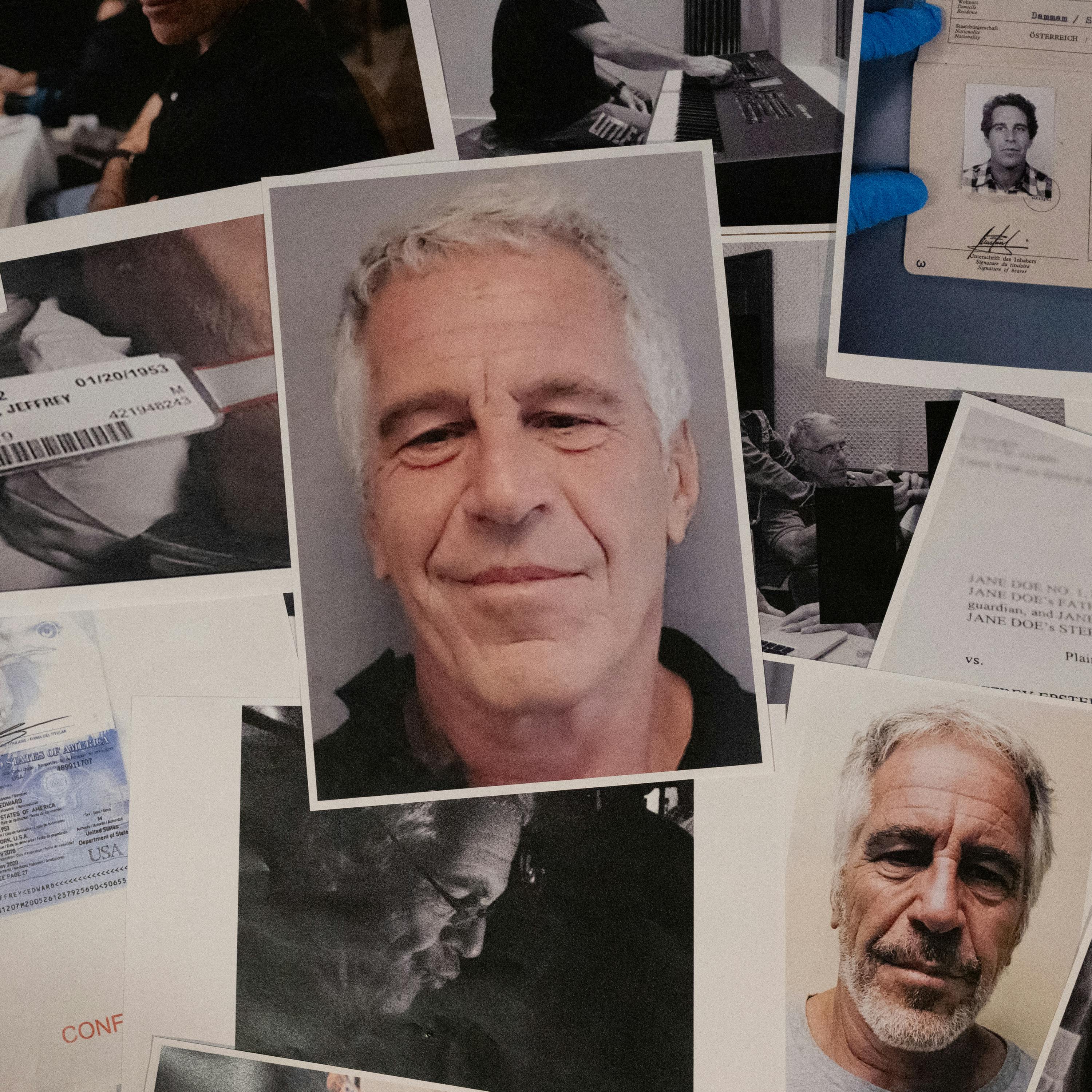
Today, Explained
How Epstein fooled America
00:26:19
Jeffrey Epstein remained a thriving member of the elite for decades, even when everyone seemed to know what he was doing.
Loading summary
Transcript53 lines
- [00:00]
A
It's true that some things change as we get older. But if you're a woman over 40 and you're dealing with insomnia, brain fog, moodiness and weight gain, you don't have to accept it as just another part of aging. And with MITI Health, you can get help and stop pushing through it alone. The experts at MIDI understand that all these symptoms can be connected to the hormonal changes that happen around menopause, and MIDI can help you feel more like yourself again. Many healthcare providers aren't trained to treat or even recognize menopause symptoms. MIDI clinicians are menopause experts. They're dedicated to providing safe, effective, FDA approved solutions for dozens of hormonal symptoms, not just hot flashes. Most importantly, they're covered by insurance. 91% of MDI patients get relief from symptoms within just two months. You deserve to feel great. Book your virtual Visit today@joinmidi.com that's join M I D I.com hi and welcome
- [01:02]
B
to TODAY Explained Saturday. I'm Estad Herndon and every week I'll be talking to someone in the news, in the culture, or just exploring an idea I can't get out of my head. Now this week is a little different because I have something embarrassing to admit. I have not really followed the Epstein files as closely as I should have. Now, of course, I've tracked the news. I've seen people losing their jobs, the former Prince Andrew getting arrested. I know Epstein was a monster. But like most Americans, I haven't sorted through all those documents separated truth and fiction, and I have a lot of unanswered questions. So this week we decided to dig into it. But first we started with an exercise. I wanted to write out everything I already knew about Epstein, the things I know to be true. So I can also create a list of questions. I still had to give it to an expert. So here's the list of facts. 1. Epstein was a monster, a convicted sexual predator, first in 2008 and arrested again in 2019. The second thing I know is that Jeffrey Epstein was ridiculously rich. And he got rich by handling other people's money. He was a financier, a money manager for folks like Leslie Wexner, the Victoria's Secret mogul who took that brand nationwide. The third thing I know is that Epstein kept a group of famous rich guys around him, folks like Elon Musk, Bill Gates, the former Prince Andrew, and of course, Donald Trump. Epstein also kept a group of elite enablers, people who are at the top of the legal and finance Fields. And they were crucial to him being able to last without justice for so long. Folks like Kathy Ruemmler, Jeff Staley, and Brad Karp. The other thing I know about Epstein is that his life and death was shrouded in conspiracy. There were questions about whether he used the information he knew for blackmail against powerful people, whether he was a government agent or linked to a national spy agency. The other thing that, of course, swirls around him is the question of whether he actually killed himself. That led me to some things I wanted to know immediately, some questions I wanted to take to an expert. First, what took so long for these files to come out? Second, how many of the people in Jeffrey Epstein's circle were hanging out with him post conviction? How aware were they of his sex trafficking? The third thing I want to know is how much did his life as a money manager overlap with his activities as a trafficker? Why were his elite enablers so attached to him? And the last thing, and maybe the most important, is what does justice for the survivors look like? So I decided to call up Tara Palmeri, independent journalist. Palmeri is an expert on the Epstein files. She's dedicated several years to reporting on them. She has talked and interviewed the victims, broke down legal documents, and untangled the web of influence that surrounds Epstein. And I also think Palmeri represents something important. The independent journalists who have basically followed it from the beginning and made sure the public got answers, because it was the independent journalists who were putting the pieces together, maybe before mainstream news ever was. Thank you for joining us today. I really appreciate your time.
- [04:19]
C
Oh, thanks for having me. Estad.
- [04:21]
B
You know, I think that you're the person, perfect person for us to chat with. You know, at the end of the day, this is about exploitation. This is about abuse. And your reporting has focused on advocating for the voices of these survivors. You recently wrote that the survivors remain hopeful that they might still be able to testify before Congress. They still want to speak to the FBI. I guess my first question is, why hasn't that happened yet?
- [04:42]
C
I know, it's absurd, right? Like, why have they. They have reached out to Pam Bondi and they want to speak with her. And in fact, around the time when the files were first released, back in December, the original deadline, one of the survivors of Epstein told me, like, we have a request with Pambondi. We're supposed to meet with her. And I was like, well, can I report on it? Because that's news, obviously, if she's going to meet with them. And the survivor was like, please, that's off. The record. We don't want to lose this chance to sit down with her and, like, really make our case, because they are genuinely hopeful that there would. That she would take them seriously. And, of course, she had some sort of scheduling conflict, never followed up. They've never seen her. And as you saw in that hearing, they stood up and raised their hands when asked if any of them, like, had. Like, if they had not been contacted by the FBI. And it just seems like if this was truly an active investigation and you were following up on the leads and you would be in contact with victims who had valuable information, and if you actually took their account seriously and not just seeing them as hearsay and gossip, like, I feel like that is the one thing that has been consistent throughout multiple administrations, is that they've really taken the testimonies of these victims as just, like, hearsay and gossip.
- [06:00]
B
I want to ask about that timeline. I mean, I'm struck on just how many times it seems as if law enforcement was close to closing in on him before his final arrest in 2019. Can you isolate the kind of tipping points where, like, it seemed like in those 14 years, Jeffrey Epstein could face some sense of law enforcement or justice that he did not.
- [06:20]
C
Oh, my God. Estad. I mean, here's a few things that I have gleaned along the way from this. First of all, Marie Villafana, who was the prosecutor in charge of this in the Southern. Sorry, in Florida's federal prosecutor's office, you know, she built a serious case over years. She tracked down a lot of reluctant survivors, like, a lot of reluctant victims who felt because they were so young when they were trafficked, like. Like, for example, Jane Doe 1, Courtney Wild, showed up on Epstein's doorstep with braces on her teeth at 14. And when the FBI was trying to contact her to sit down and speak with them, she ran from them. She thought they were coming for her because he had told them that they were the ones who had committed a crime. They were essentially prostitutes. And he offered them his lawyer. Like, he said, here, I'll protect you. And she took his lawyers until she sat down with them, and. And she got the feeling that they were trying to tell her that she was a prostitute. And it just didn't sit well for her. So she picked up a phone book and found Brad Edwards, who has now become the lawyer for so many of the victims. But it was her, and it was her best friend who told the FBI about, you know, about her and her story. And then when she read her best friend's deposition, she was still reluctant to testify and to help. She started to cry. And it wasn't because the crime was committed against her, because she had become so dehumanized by this crime. And that is the thing about child predation and sex trafficking. It's so dehumanizing that so many of them, they're not running to, to lawyers and police and looking for help. They're ashamed. But when she saw that the same crime against crime that was committed against her was committed against her friend, she decided to help.
- [08:03]
B
What do we know about the extent, if we think about three people in particular? Donald Trump, Elon Musk, Bill Gates, do we know if they knew about Jeffrey Epstein sexual crimes?
- [08:15]
C
I think it would be very hard to not know, because even from the evidence that the Palm beach police pulled from his home, many of the pictures in his house were Polaroids of young girls. And they looked young, very young. Virginia Roberts Duffrey told me that when someone walked into that house in Palm beach specifically, there were naked girls usually hanging around the pool. He didn't like tan lines, and he wanted them to look prepubescent and even fed them that way. A lot of these, a lot of these flight logs include girls who are underage being flown around. I don't think you could be friends with Jeffrey Epstein, whose MO Was obviously having sex with young girls, even, as Trump said, on the younger side, and not know his M.O.
- [08:57]
B
i want to ask about some of the most popular conspiracies surrounding him, particularly the one that he had been handled as a national security asset or played some role with law enforcement. What do the fouls say to that?
- [09:10]
C
I think that the requests from his lawyers to the CIA and NSA for some sort of affiliation are very. It's very telling because that's a strategy, that's a legal strategy that you're doing right there. And I think the fact that he met with Bill Burns when he was at State, and as we know, State and CIA work very closely in terms of clandestine services. I think the fact that the State Department leased him a townhome, that's very interesting. And I think that we can't ignore those clear, you know, clues. And also from my own reporting, I know based on an interview with Brad Edwards, that his bodyguard went to Langley, the CIA's headquarters, while he was in jail to pick up a notebook of information for him. I spoke with an ex CIA analyst who said that, you know, at that level, if he's meeting with Burns, it's likely to pass off just tips, open doors, high Level kind of conversations. And people do that. They volunteer it to intelligence services all the time. And it provides value and let's be honest, value provides protection.
- [10:17]
B
Yeah. One of the most popular conspiracies about Jeffrey Epstein is that he didn't kill himself. I was someone who was quite skeptical of that one. But then I heard Julie K. Brown, actually the kind of journalist who kicked a lot of this off, say that she's quite skeptical of the idea that he killed. That he killed himself. And that made me kind of question why. I've been dismissive of those theories for so long. I wanted to put in front of you, what do you think and what do we know?
- [10:40]
C
Julie and I have always agreed on this one. And she's always said that this isn't something new, like even. And actually CBS 60 Minutes has done some of the best reporting on this. When, you know, we realized the guards were asleep and now there's new footage that's arrived that you can all see again. CBS I think, has really been ahead of this story. The actual lapse of inside of this prison and you see a blob in that missing minute, an orange blob going towards the cell. We don't even have footage of the cell. Like there are just so many.
- [11:12]
B
It's scary stuff. Like you're, you know, it's, it's a little, it's a little.
- [11:17]
C
Sadly when the, when the f. To line up against the idea that a true narcissist killed himself. I mean, I spent years on this and at least a year.
- [11:26]
B
Can you tell me why you decided to focus on this case so early when others weren't?
- [11:32]
C
Well, it actually like there for me it was personal. Like I felt that when I saw this story and how it was playing out, I thought there was too much of an obsession on the wealth porn of it all and the porn porn of it all and the idea that he was this like jet setting, high like flying guy who had connections all over the world. And I felt that the survivors and their stories were being ignored in all of it and that there had just become this obsession and fascination with him and his network and his money and his wealth and his ability to live in a world without impunity. That he was some sort of James Bond 007 and that. That the actual victims were not being. Their stories weren't being told.
- [12:17]
D
It's time to level the up. I'm Robin Archison and I light fires. I'm an executive founder, bestselling author, ultra marathoner, mother, proud Latina and I'm not done yet. Announcing Project Swagger, my new weekly podcast, your transformation toolkit. I'm going to cut through the noise and give you actionable takeaways each week in under 30 minutes. Elevate your hustle with routines, strategies, and mindset shifts that I have pressure tested. I have burnt down this Beyonce candle,
- [12:51]
B
like, all the way to the bottom.
- [12:52]
D
We have been trying to manifest. Carbs are not the enemy. I probably have a piece of bread or a bagel with me at all times, and I am not exaggerating. Tune in on February 24 for episode one, building the skill of Self Talk. This is the foundation. Follow Project Swagger wherever you get your podcasts. Let's go.
- [13:15]
B
The fixer skill, you know, I guess got him some powerful friends. Folks like Steve Bannon asked him to funnel money for political campaigns throughout Europe. Marine Le Pen in European Parliament. Epstein sends Hermes Apple watches to Bannon. When we come to this relationship specifically, do we know how much of him and Steve Bannon's closeness was based in politics, was based in money, or was based in his criminal activity specific to the abuse?
- [13:43]
C
I think Steve Bannon courts controversy. That's what he likes. He saw him as a useful funnel for his political activity. So I think they were a natural fit. He doesn't have that morality like odometer that the rest of us have that says sex offender, dirty money. Don't want that.
- [14:03]
B
So should we see these as just mutualistic, mutually beneficial relationships? So people like, you know, even if I think about the other folks who have had to speak to their relationship with Jeffrey Epstein, folks like Katherine Rumler at Goldman Sachs who recently resigned, or Brad Karp who recently resigned, like, why are folks at the top of the legal profession maintaining a relationship with someone who. Who has at minimum, such a sullied reputation?
- [14:30]
C
Because they're making money from him and they're getting access to contacts. They're getting that hyper fixer access, you know, Kathy Rumler I'm sure now has like a door into talking to Bill Gates and she can, you know, exist. I mean, honestly, the way that he operated with Jess Staley, who was at J.P. morgan and was. And who kept banking for Jeffrey after 2008 after his sex offender arrest, and. And actually like, convince the people at JP Morgan that it was fine to do it, opening accounts for girls, even when he was pushed out of the bank. It was Jeffrey Epstein who got him the job at Barclays. Now, that's valuable. This is a guy who can move people from one job to the next job. And that's how, like, Epstein played. I do think there were also shades of blackmail in there. I think there's a shade of, like, I'm the party guy. They had. They were putting cameras in Kleenex boxes instead. Just let that linger for a minute.
- [15:29]
B
We know that. We know that.
- [15:30]
C
That's in the depth, that's in the files. I mean, Larry Vasoski, who is the. Who was his pilot, was saying, I found these cameras. They can be put. They're so small, they can go in Kleenex boxes.
- [15:45]
B
Okay, let me ask you a question.
- [15:46]
C
Cameras. What's the point?
- [15:48]
B
In all the footage, I get that I'm saying that, like, let's devil's advocate it. Let me put on my devil's adv. Advocate at. And I heard some of these excuses from some. From even some. Some. Some prominent journalists. I heard folks like Katie Courg, someone who I kind of, like, said that they were at. You know, were seen at a dinner. I just go. Because I'm invited. I mean, like. And is there any. Are we throwing the baby out with the bathwater? Is this a little, you know, is there any fear that some of this
- [16:15]
C
has dipped in after, like, sure, fine. Little over the top? Yeah. Everybody knew that Jeffrey Ephesian was a sex offender who lived in New York. Because I worked at the New York Post, and I remember this. Like, he was comparing his crimes to stealing a bagel. It was very much a thing that was known in New York City. So I don't get the whole, like, I didn't know he was a sex offender.
- [16:36]
B
Hold on. I'm gonna slow down there. I want you to say that factually. You're saying at the time, you feel fairly confident, both as a person who was a New York Post reporter and for what you're seeing in said files right now, that the community around Jeffrey Epstein knew what he was up to.
- [16:49]
C
Oh, for sure. Also, he had the biggest townhouse in the Upper east side. And believe me, everybody knows every. About everybody in New York City. Okay. And he's a friend of Prince Andrew. Come on. Like. And he was being written about in the New York Post. They covered this. And everybody reads the New York Post. I hate, like, sorry, but I don't think you could show up and be like, I didn't know what he was all about. But they liked him because he did something. He fixed it things. He. He connected people. They wanted to sit down with Prince Andrew. They wanted the interview with Prince Andrew. You know, that was the reason that these journalists were showing up now, is that the most nefarious thing? Should they be flogged in a town square? No, but, like, do you look at their judgment sometimes and think, like, hey, what's up with that? Now, also, let's look at other people who sent emails with Jeffrey Epstein, and they're very much sexual in nature. Okay? So everybody who's, like, onto his whole perv lifestyle and just kind of thought it was a laugh, now I know I've, like, increased my suspicions of them.
- [17:45]
B
Do you have any. Do you have any fear, journalistically that, you know, info's just getting out there that's. That's not vetted and that, you know,
- [17:54]
C
is, you know, that I don't report on it?
- [17:57]
B
And that's what I wanted to ask about, too. Like, from the victim's perspective, too. I've heard there be some criticism from them.
- [18:02]
C
Yeah, of course. And I think, like, you know, people, I don't report on the stuff that's not been substantiated or reported on by me, myself, as a journalist. Like, you know, I've been a journalist for 17 years now. I do see people on TikTok and Instagram, and I think it's irresponsible when I see people reading off wild tips, called into the FBI on their Instagram accounts, on their TikTok, TikTok on their YouTube, acting as if it is fact. It is not fact. And yes, but here's the thing. What government just, like, does this at the same time? And even the way Pam Bondi released names of people found in the files, like, including Marilyn Monroe and Elvis Presley with, like, Michelle Obama and Nancy Pelosi, and then, like, Leon Black and Les Wexner all in the same, like, 300 name tranche. And we're just supposed to be like, what? It's. It's meant to confuse.
- [18:57]
B
I was gonna ask about the process because it does seem so confusing. I mean, you mentioned the way that. I think a lot of people have understood how the Trump administration is not, you know, lived up to the transparency threshold laid out in the law, but also has, I think, released them in a way that folks have found confusing, from redactions to all that kind of stuff. I wanted to ask, though, about, like, why this is happening now. You mentioned administrations, both Democrat and Republican, who had the opportunity to kind of make this information known before. Can you lay that out for us? Should we take the Democrats who have made this their cause today as doing so just because it's anti Trump at the moment?
- [19:36]
C
I do think that's the case. Like I do, I mean like whatever they're calling a blue and on why,
- [19:42]
B
why weren't they, why didn't they follow up on in the Biden years? Can we get an answer that I
- [19:46]
C
think it was because a lot of people that were in those files, including the ex CIA director Bill Burns, who had many contacts with Jeffrey Epstein, they were entangled in this as well. And it goes back to Bill Clinton, Bill Richardson, like pals of Joe Biden, like I don't want to make assumptions for them, but it did not make the Democrats look good. And I keep reminding people that I'm like he was a Democrat. But I think when the, when it became clear that like there was a cover up, case closed and there they had, that Epstein and Trump had such an extensive relationship and there was a sense of fear on Trump, you know, there was a feeling like attack, attack, attack. And also it's cool, let's burn down all the old warts in the party that were close with Jeffrey Epstein anyway because we want to bring in a new wave of Democrats. So I think there's also a feeling of whatever, you know, the Clintons got
- [20:38]
B
it, Kerry, whoever 2024 has allowed a new slate to come in in general
- [20:42]
C
turn them down anyway because they screwed up anyway. And I think if it wasn't politically beneficial for them, they wouldn't be going after it the way that they are. But I do think that there are just cynical political acts, people who are, are interested in it because they know it makes President Trump squirm. As he says, I'm exonerated. I'm exonerated. And you see 3300 files mentioning him.
- [21:02]
B
You mentioned the, the, the, the, you used the word cover up. And I, I, I hear you. But at the same time, because of the amount of circumstantial evidence, how do we know that this constitutes something that factually we should be saying is a cover up? Is there any concern that in using those words we fall in or fall into the same type of tinfoil hatness that, that you know, has taken over the, the TikTok timeline has taken over some of this story in general?
- [21:30]
C
I mean, I think that they're married. Like just the fact that now we know about Prince Andrew and the fact that he was emailing out that information, just the fact that like Peter Mandelson had to go down for this. I mean the COVID up, like these are, this is all information that we didn't know before that we now know because the Epstein files have been revealed. This story needed this level of transparency, even if there are the crazy tips that have been called in causing mass hysteria because so much of it had been covered, covered up. And by the way, 2 million files are still in the DOJ's possession that we don't see and we don't know. And then you see Thomas Massie, you know, saying, why is this sultan from the Emirates? Why is his name, you know, redacted in an email about torture videos who by the way, had to lose his position. Why is his name when this, if you are truly following the Epstein Transparency file, Transparency act should only be the victims whose names are redacted. You know why? How can you not see this as a cover up? Also said, in your time as a journalist, have you ever seen the DOJ say case closed, nothing to see here, we're done. Like in the way that he handled it. And now the suddenly they reopen the case to just target Democrats. Like, everything about this reeks. Like, it's almost like there's nothing about this story that does not feel like a cover up.
- [22:55]
B
There is a undeniable amount of smoke and there's a lot. There's some fire. There are some legitimate real points here to what you're saying have caught particularly powerful people in lies that they were holding for years. And I think relationships that were mutually beneficial, that turned a blind eye to abuse, have been called out in ways that are deeply important. At the same time, I do want to pose a question directly just because I do think it's something that's in the air. Like, is there a financial incentive for the independent journalists to continue focusing on something like this? Have they kicked it up for their own good?
- [23:34]
C
No. I mean, honestly, like I think on YouTube or whatever these like my videos have probably been like derated or something like that. They're hard. Like I don't monetize as well on an Epstein story. So now, like there are other things that could be better. And honestly, like I said, you know what really bothers me? And I'm going to be honest with you, a lot of people say to me, like, when are you going to move on from the Epstein story? Okay? And I'm like, this is like Watergate. And nobody probably ever said to Bob Woodward, when are you going to move on from the Watergate story?
- [24:02]
B
I wonder right now, now that we have this trove of evidence, whether that kind of incentive or whether that, or whether that, you know, that moral charge has changed any for you, considering now there is more information and some of those lies have Been called out.
- [24:20]
C
Yeah, I think the lies, like, over and, like, why would Howard Lutnick go on a podcast and say, I just went to his house once, he was my neighbor with my wife, and I was grossed out. Like, why are these people just going out there and lying? What else are they lying about? Do you know what I mean?
- [24:35]
B
Like, fair.
- [24:36]
C
Why? You know, why is Dr. Oz inviting him to his Valentine's Day party in 2016? Like, just. I just don't understand, like, why people are going out of their way to lie about Jeffrey Epstein. Like, what is wrong with the elites in this country? Why are these people, like, why are these people so base? These are the leaders of our country. You know what I'm saying? Like, I really think this is a reckoning of elites. As journalists, we have elite positions as well, and we shouldn't be telling the people who care about this story. You're crazy to care, and you're crazy to think that these people are irresponsible that are in power. I dismiss all of it. And I think you have to be a responsible journalist, and you can't just push conspiracy theories. But I think a lot of people have some explaining to do, and I actually think they should be called before Congress, and I do. I really think that they should be called in front of cameras.
- [25:28]
B
Well, Tara, your work has really stood out here and I think has given this story the seriousness it deserves, and it's gonna help inform us for going forward. So thank you for your time.
- [25:39]
C
Thanks, Estad. I appreciate it.
- [25:45]
B
That was Tara Palmeri, journalist who has been following the Jeffrey Epstein story for years. She's also the author of the Red Letter. Substack. This episode was produced by Jesse Ash. It was edited by Today explained executive producer Miranda Kennedy, fact checked by Andrea Lopez Cruzado and mixed by Shannon Mahoney. Special thanks to our supervising engineer, David Tadashore and Christina Vallis, our head of video. Every Saturday, we'll be in your video and audio feeds with an interesting interview in culture or politics. You can also watch the Saturday interviews this week and every week on the Vox YouTube channel. Subscribe@YouTube.com vox.