← Today, Explained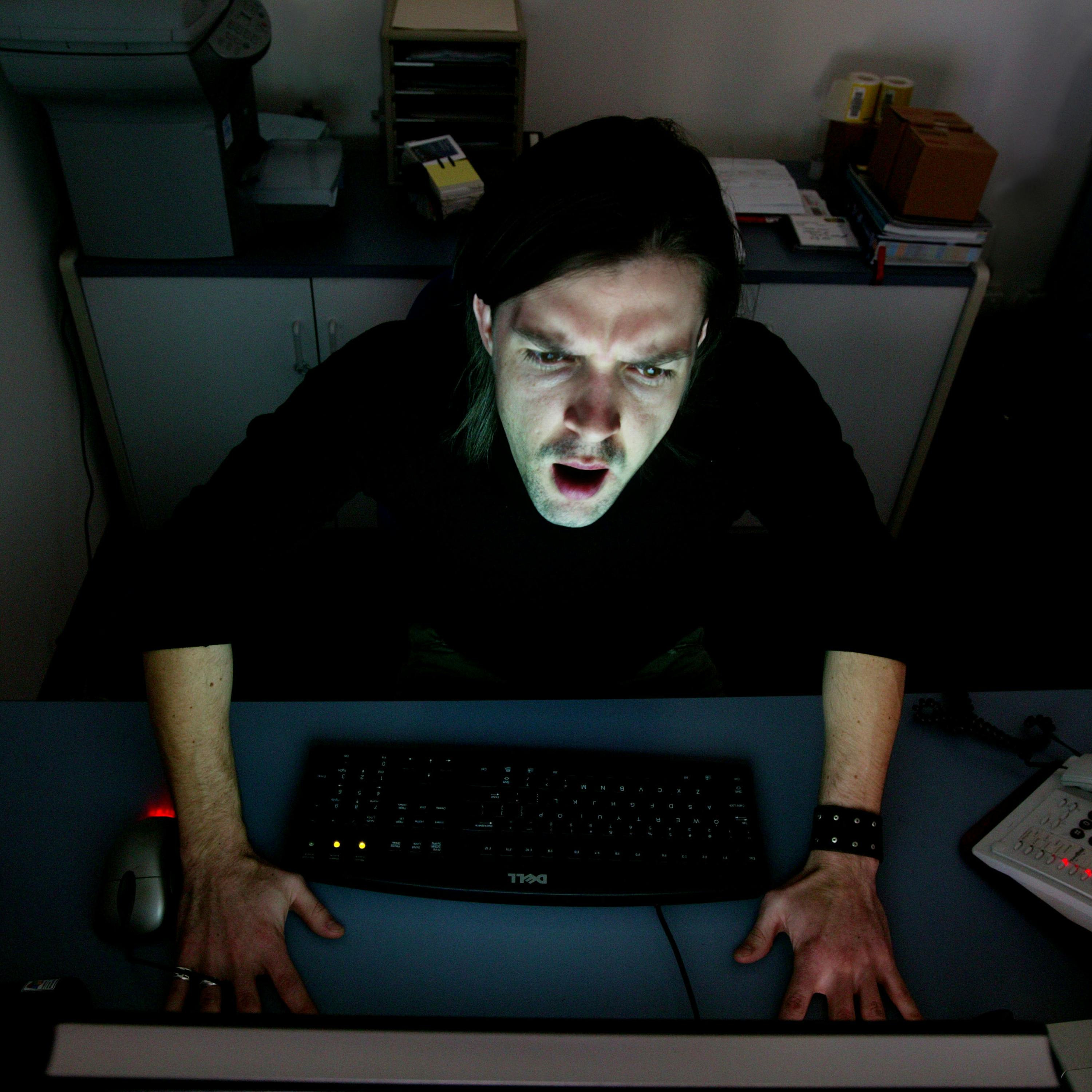
Today, Explained
Internet bad
00:30:28
Once a place of serendipity and discovery, the internet now thrives on feeding us toxic rage bait designed to piss us off. Can we get the good internet back?
Loading summary
Transcript99 lines
- [00:02]
Jimmy Wales
The website stumbleupon.com was Reddit before Reddit.
- [00:07]
Craig Silverman
In this AOL chat room, my face just was gone one day and I wish I could log back in and see how I represented myself on the.
- [00:19]
Jacqueline Hill
Internet back in the day. If you look over my shoulder while I'm on my phone, you'll see my feed is pretty wall to wall food content. Easy rice dishes to up upgrade your rice game recipes to try.
- [00:34]
Nick Plant
I'm cooking the top 50 New York.
- [00:35]
Craig Silverman
Times recipes of 2025.
- [00:37]
Jacqueline Hill
Dinner party inspiration this week I had a friend over for a blueberry themed dinner party. But in the last year or so I noticed something that a lot of the food I was seeing was pissing me off. Let's make my grandma's famous McDonald's casserole. Just chop up some burgers, layer with ranch nuggets, fries and finish with melted American cheese. I honestly, I'm getting served the most bizarre stuff. I'm talking disgusting food combinations, unsanitary kitchen practices. Oh, you put this pasta right in an aluminum pan. Don't even take the paper out. Cause you want all the seasonings. And it turns out making me mad is the goal. This stuff is rage bait.
- [01:19]
Craig Silverman
Rage bait to me is in a way, it's kind of like an engine that makes the Internet work in some ways.
- [01:27]
Jacqueline Hill
Craig Silverman is co founder of Indicator, a website that investigates digital deception.
- [01:32]
Craig Silverman
But in a strict kind of definition, it's to me, it's, it's kind of content that elicits a very strong emotional reaction, typically anger.
- [01:43]
Jacqueline Hill
I'm Jacqueline Hill. This is Explain it to me from Vox this week. The Internet's just gotten so freaking mean. But does it have to be this way? Is it possible to bring back the kinder, weirder Internet we fell in love with? To start, we have to understand how we got here in the first place.
- [02:04]
Craig Silverman
It's been sort of figured out that, oh yeah, the more I can create content that gets a very powerful and often enraged emotional reaction, the more power I have potentially over people. And so to me, like rage bait is kind of the currency or the power that's behind a lot of the content we might see.
- [02:23]
Jacqueline Hill
Are there like particular videos you've seen online and you're like, ooh, that just raised my blood pressure a little bit. Because I admit I see that some of those pop the balloon, a lot of the dating content stresses me out.
- [02:34]
Craig Silverman
Yeah, the pop the balloon and the dating ones, this sort of, you know, the cringe.
- [02:38]
Max Reed
Welcome in.
- [02:40]
Jacqueline Hill
We can have your name. Raelynn. Why did you Pop your balloon. Initially, I saw. I thought the shoe was beautiful, but the toes hanging off the shoes.
- [02:49]
Craig Silverman
For me, there's a whole, I think, genre of streamers who go around in public doing outrageous things to people and getting them to react and then getting them on camera. If he keeps recording, I'm gonna camera.
- [03:02]
Jacqueline Hill
I don't care.
- [03:02]
Craig Silverman
You're kicked out of your school and you're going to have, Like, the dude is walking around, he's got three or four bodyguards with him, and he just does really offensive, gross, obnoxious things to people and then is like, hiding literally behind the bodyguards. That one drives me absolutely crazy.
- [03:21]
Jacqueline Hill
It's like, okay, if you have to be scared you're going to get beat up. Should you be doing this?
- [03:24]
Craig Silverman
Yeah. And. And here's the problem. Like, it works if you are uploading that content, then to YouTube later, the people who think you are such a jerk and the worst, they're still going to sit there and watch it. And the people who get enjoyment out of seeing that and think, like, oh, man, this is crazy what he's getting away with. Like, they're watching it too. So you kind of win no matter what. And then I think there's a category of a lot of political rage bait that I think people encounter a lot.
- [03:51]
Jacqueline Hill
What's the problem with xenophobic nationalism? Don't you think that's better for Americans in general?
- [03:55]
Craig Silverman
Like, xenophobic nationalism is better.
- [03:57]
Jacqueline Hill
We should have a coherent culture.
- [03:59]
Craig Silverman
Comments that are, you know, particularly racist, sexist. Also just, you know, political ideas veering into, like, Nazism and things like that that were, you know, considered completely unacceptable for a long time. Suddenly, you know, people are saying them, people are putting it out there because they kind of win. Even if it makes people outraged and they've said this outrageous thing, it still makes people engage, it still makes people listen. It makes people write comments. They're getting the engagement and they're building an audience by engaging in that kind of political rage bait of saying the outrageous thing or showing the outrageous thing that the people from the other side have said or done.
- [04:40]
Jacqueline Hill
What does it tell us about the state of the Internet that rage bait is so central to it? I mean, it's Oxford's 2025 word of the year.
- [04:50]
Craig Silverman
Yeah, it's funny. We went from brain rot in 2024 to rage bait in 2025. For me, one of the things that stuck out with it in 2025 was it was kind of operationalized in certain ways. And what I mean by that is, like, I saw A lot of kind of app entrepreneurs and tech entrepreneurs talking on X and talking in other places about how this is the way to get customers, this is the way to build your business. And so, like, an example of that would be a guy named Roy Lee who launched a product called Clulee in 2025.
- [05:33]
Jacqueline Hill
I think I remember this. Yeah, yeah.
- [05:36]
Craig Silverman
Clulee was a program you could use to cheat during job interviews as a coder. He really advertised it and really, you know, leaned into the cheating aspect. His whole thing was enraging people about, oh, I can't believe this product. Cluely, it's so unethical. And he wrote that. And actually I encountered a lot of marketing strategies around that of like, staged content and things that were really felt very manipulative and at the end of the day weren't even labeled as ads. A story that I worked on was about a bunch of different AI enabled study apps where you could upload your course materials and get quizzes and tests out of them. And they just flooded these rage filled classroom interaction confrontations where the professor is yelling at students and the student's like, well, I've been using this tool.
- [06:24]
Nick Plant
You read 100 pages in 13 minutes.
- [06:26]
Jacqueline Hill
Yes, I did. Yeah.
- [06:28]
Nick Plant
No. How did you do that?
- [06:29]
Jacqueline Hill
I asked what I needed to know and I extract all that and then.
- [06:32]
Nick Plant
I'm good, you need to leave.
- [06:33]
Jacqueline Hill
Go.
- [06:34]
Craig Silverman
And it's all presented like these are real classroom interactions. And I mean, in some cases, you know, they're using AI to do it. They might be using AI avatars. So the rage bait is not even coming from real people. You know, it's a completely manufactured scene. And I think that was a big piece.
- [06:54]
Jacqueline Hill
Wow. So it's not just, you know, individual people who want to go viral doing this. It's companies who are flooding our algorithms and making us get enraged.
- [07:03]
Craig Silverman
Yeah.
- [07:03]
Jacqueline Hill
How are all of these changes to the Internet reshaping our emotional experiences of going online?
- [07:13]
Craig Silverman
I feel like more people feel bad about the time they're spending on the Internet. You know, they feel bad about all of the brain rot that they feel they're looking at the rage bait they're looking at. One of the things that also happened was the big platform started to kind of roll back some of their oversight where Mark Zuckerberg does this two camera video saying it's time to get back.
- [07:33]
Max Reed
To our roots around free expression on Facebook and Instagram.
- [07:37]
Craig Silverman
Hey, you know, we've been working with fact checkers and trying to do these things over the years to, you know, reduce the amount of False and misleading content. And you know what, these fact checkers, they're so biased. We can't do this anymore.
- [07:48]
Max Reed
We're going to get rid of fact checkers and replace them with community notes.
- [07:52]
Craig Silverman
The same platforms, they also have systems and algorithms that reward the content that gets the strongest engagement and the strongest reactions, which always goes back in a lot of cases to emotion. And so I feel like the average person is probably encountering a lot of this emotion driven content, this divisive content, content that is a little more titillating, a little more risque, and it's just kind of pushing us more and more.
- [08:18]
Jacqueline Hill
It feels like the Internet used to be this place where you could discover anything. There have always been dark corners of it, don't get me wrong. But it felt like there were a lot of more options, like a lot more discovery. It somehow felt bigger and you never knew what you would stumble on.
- [08:36]
Craig Silverman
Yeah.
- [08:36]
Jacqueline Hill
Are there pockets of the Internet that still feel that way to you?
- [08:39]
Craig Silverman
We definitely have more choices than ever before. But the reality is that because so much of it is mediated by these systems and algorithms that are really just looking for what is making someone like this person spend time on our platform. I feel like there's a lot of choice, but it's also kind of flattens it out. You end up in your timeline on social media getting fed a lot of the same stuff. Rage, bait, brain rot. And so it feels like there's a lack of understanding and it feels like there's a lack of serendipity and of joy of what we used to get on the Internet.
- [09:18]
Jacqueline Hill
Up next are Internet glory days. Is there any way to bring them back? Support for this show comes from Rocket Money. We all have goals that require a little bit of planning in the money department. If you need help getting your finances under control, you can turn to Rocket Money Money. Rocket Money is a personal finance app that helps find and cancel your unwanted subscriptions, monitors your spending, and helps lower your bills so you can grow your savings. Rocket Money doesn't just help you track and cancel your subscriptions. They also make it easy to build and stick with a budget. It automatically categorizes transactions, so you can easily monitor your spending by category. That way you get to include whatever silly thing you like to spend money on while making sure you have enough for everything else. Let Rocket Money help you reach your financial goals faster. Join@RocketMoney.com ExplainIt that's RocketMoney.com ExplainIt RocketMoney.com ExplainIt.
- [10:34]
Odoo Sponsor Voice
Support for this show comes from Odoo. Running a business is hard enough, so why make it harder with a dozen different apps that don't talk to each other? Introducing Odoo. It's the only business software you'll ever need. It's an all in one fully integrated platform that makes your work easier. CRM, accounting, inventory, e commerce, and more. And the best part, Odoo replaces multiple expensive platforms for a fraction of the cost. That's why over thousands of businesses have made the switch. So why not you try Odoo for free@odoo.com that's o d o-o.com.
- [11:15]
Jacqueline Hill
We're back. It's Explain it to me. I'm J.Q. it feels like the Internet is full of slop, but I remember a different time. The days of logging onto the computer in my dad's study, printing out random song lyrics, reading fan fiction, and making a secret MySpace account, by the way. My parents eventually found out about it and took away my ipod shuffle for like an entire semester. Max Reed remembers this era too.
- [11:45]
Max Reed
My first Internet connection was with AOL in 97, 98, something like that.
- [11:51]
Nick Plant
Welcome, you've got mail.
- [11:53]
Max Reed
And I have really fond memories of going to the Mad Magazine AOL page and having to download all the graphics. I don't even know what was on there, but it was a very different kind of Internet and experience.
- [12:05]
Jacqueline Hill
What are some of the websites that you spent most of your time on back then?
- [12:09]
Max Reed
Well, once I moved off of aol, I would go to link aggregating sites like Fark when I was a little older. Metafilter was another one. Places you'd go and people would have found weird news, interesting news. There'd be discussions in the comments and people would be talking about it and you know, you'd get linked out to other websites that you could find and discover webcomics and bloggers and whatever else.
- [12:33]
Jacqueline Hill
Max grew up to write about tech and culture. He has a substack called Readmax that's R E A D. And he says compared to now, the Internet, even just a decade ago was a happier place.
- [12:46]
Max Reed
Yeah, it was obviously very different from now because there were fewer mega platforms, by which I mean these huge sites that become effectively the whole Internet for people. Facebook, Instagram, Twitter, TikTok. Places where you go and you can spend hours without ever leaving that particular website. It is our mission to try to help connect everyone around the world and to bring the world closer together. And we're committed to doing that. It's much more likely that you'd go to what we call a web portal like Yahoo or Huffington Post, or even a site like Tumblr, which is sort of located in between what would later be these mega platforms and this sense of a landing page that you'd go to and you'd click out to find other things. And one thing about this previous Internet we're talking about is most of the content online was just made by amateurs who generally weren't looking to make a ton of money from what they were doing. They were making fan sites, hanging out on message boards, giving home improvement advice. But it wasn't a world of influencers. It wasn't a world of, you know, engagement turning into money. So there was a little bit less of this sort of slick professional edge to a lot of what you were encountering.
- [13:55]
Jacqueline Hill
What changed and when did it change? How did the Internet get this way?
- [14:00]
Max Reed
Yeah, I would say there's sort of two big shifts. The first one happened almost 20 years ago. In 2006, Facebook introduced the News feed.
- [14:10]
Facebook Engineer
The idea was to update the homepage to make it easier for people to see what was going on with their friends.
- [14:15]
Max Reed
This one size fits all feed running down the center of the site when you visited, that just showed you everything that was happening.
- [14:22]
Facebook Engineer
And it basically looked like a wall of text.
- [14:25]
Max Reed
And Facebook introduced this in 2006, and people revolted. They hated it. There were all these groups created, people saying, o, oh, we hate this, we hate this.
- [14:31]
Facebook Engineer
We eventually got an alert from the security team that there was a protest gathering in front of our office and that we would need to be escorted out the back.
- [14:40]
Max Reed
But what Facebook was seeing on the back end was that all of their numbers were up, engagement was up. You know, time on site was up, visitors was up, people kept coming back for more.
- [14:50]
Facebook Engineer
People learned how to use it, and they used it a lot, and they liked it.
- [14:55]
Max Reed
And the feed has become the paradigm for how we engage with the Internet ever since. Right. So I think that's one major shift. Right. And then the second change, which is less of a kind of step change and more an acceleration of something that was already happening, was the TikTok. Introducing the FYP as a sort of concept. You go to TikTok because TikTok has this incredibly dialed in algorithm that's going to show you weird videos as you scroll through it. And so that FYP concept is other people's videos, strangers that you don't know, but that are going viral, that the algorithm that the sorting mechanisms have determined are for you. And I think that's a. That's the Other change that sort of created this really wholly separate kind of unsocial or anti social Internet that we're on now.
- [15:46]
Jacqueline Hill
Has the algorithm killed the Internet?
- [15:49]
Max Reed
You know, yes and no. I mean, this is a sort of. I think it's worth keeping in mind, you know, the algorithm has also brought in like, the Internet is what it is today, is the size it is today, has the engagement it is today, because it brought people in. I think something that, you know, is worth grappling with. What Facebook would say, what Mark Zuckerberg would say if he was on this podcast with us, is like, you guys can complain about this, but every single time we've done made one of these moves, the numbers have shown that people spend more time on Facebook. They want to be there more, they enjoy the time, the time spent, they feel like it was better spent.
- [16:19]
Jacqueline Hill
Are we conflating time spent and liking a thing?
- [16:23]
Max Reed
Well, that's definitely one. I mean, one thing to think about is like, all of the metrics that Facebook is gathering tell us something fairly narrow. But it is also true that when they quiz, when they sort of interview people, people will say they felt like their time was better spent, you know, with the algorithmic, you know, FYP type feeds than with the way Facebook was 10 years ago.
- [16:45]
Jacqueline Hill
I wonder if this kind of trashy, toxic Internet, was it inevitable, you know, like, can a website grow and make money and be a place that brings in an audience without ruining itself?
- [17:01]
Max Reed
I think a website that shows us a different path is Wikipedia, which is as big by the numbers as basically any of the platforms we're talking about, and is arguably more essential to the web as we know it than even a Facebook.
- [17:16]
Jimmy Wales
Wikipedia, on the other hand, begins with a very radical idea, and that's for all of us to imagine. A world in which every single person on the planet is given free access to the sum of all human knowledge. And that's what we're doing.
- [17:28]
Max Reed
And in that sense, to answer your question, well, no, it's not inevitable in the absolute sense that a huge, important website turn into shit. But I think the other thing is, I think it's real that the culture of Wikipedia as formulated by Jimmy Wick and the many people who've worked at the Wikimedia foundation over the years and by the volunteers who contribute and edit and monitor and otherwise work on Wikipedia, the culture of Wikipedia has been a really important factor in ensuring that it maintains itself as a free resource for anyone online.
- [18:01]
Jimmy Wales
The core aim of the Wikimedia foundation is to get a free encyclopedia to every single person on the planet.
- [18:06]
Max Reed
And I think that part of the problem with many of the big platforms we're talking about isn't merely that there's, like, a set of structural incentives that is pushing them into the sort of darker corners of what they're doing, but that the overall culture of Silicon Valley isn't one that values any of the things we're talking about, isn't one that values challenge and friction and selflessness. I suppose in some ways, Max, you.
- [18:30]
Jacqueline Hill
And I are millennials. Could it be that we've just aged out of the Internet? We're no longer the target audience?
- [18:39]
Max Reed
I mean, I hate to break it to you, we are old. We are middle aged. Unfortunately, we have reached middle age. I. I think I want to believe that I'm right and that I know everything. I know enough about the Internet to know that it's fallen from its height in the early 2000s. Millennials like us, we were the protagonists of the Internet for a really long time because we were the people who grew up on it. We were the people who, in our offices, knew the most about it. We were the people who created most of the content, were first on most of the social networks, and we're not the protagonists anymore. And some of that is aging out. Some of that is there are people who are even more raised by the Internet than we were, who have been for an even higher percentage of their lives. And I think the other part of it is that the Internet we see on all these websites now is really a truly global Internet. And so, you know, in some sense, there's a lot of stuff we don't see. There's also a lot of stuff we see that just isn't for us and that we're not going to understand as cool or whatever else. That's maybe slightly separate from the question of, like, are the structures of the Internet worse off than they were 20 years ago? Because I think it's true. Like, they are, but the old Internet's gone, is not coming back. So I think people our age, the best you can do is retreat to your group chats. You know, keep a bunch of group chats handy when you need to waste some time and say hi to your friends.
- [19:53]
Jacqueline Hill
Yeah, man. Long live the group chat. Coming up. What if the Internet is made for you and you hate it anyway?
- [20:22]
Craig Silverman
This is.
- [20:23]
Jacqueline Hill
Explain it to me. I'm jq.
- [20:26]
Nick Plant
So, yeah, I'm Nick Plant. I do a lot of organizing around New York City for people who are trying to resist the current suite of technology in their lives and build better alternatives together.
- [20:41]
Jacqueline Hill
Nick Plant is 25 years old. He's part of a growing movement of young people who've grown up online and are seriously over it. A couple months ago, he helped organize an event called Delete Day. The idea was that people would come together to release themselves of the shackles of social media. Word spread the old fashioned way. Flyers, sidewalk chalk.
- [21:03]
Nick Plant
And the turnout was really great. We had between 80 to 100 people, probably at least 10, picnic blankets set up, candles in the middle. Real people in real time together. I got up and did an introduction for everyone, kind of tried to hype them up for what they were about to do. And then it turned into, yeah, really electric kind of moment where everyone was deleting, people were getting up and like shouting the apps that they were getting off. Everything from dating apps like Hinge to someone did Spotify, Instagram, TikTok, Twitter. I actually still had a LinkedIn myself. It was just kind of lingering there. So I decided I was gonna do. Was a final signal in, like me claiming this lifestyle. I'm not just being critical of these technologies. I'm and truly trying to live in a way where my center of gravity is elsewhere and less about me, you know, chasing some kind of like preordained script that I'm finding online.
- [22:24]
Jacqueline Hill
When did you first get a smartphone?
- [22:27]
Nick Plant
I got a smartphone when I was around 10 or 11, I would say. I think when I was in fifth grade, I signed up for Instagram. I remember a friend and I, we told all our friends to join and we were almost like peer pressuring them to try it out and to start posting and to follow us and like our posts and we'll like theirs in return. And then I spent a lot of time on Instagram, on Snapchat, on YouTube. And then by the time I got to college, it did feel at that point like I needed Instagram to stay in touch with people. I needed Snapchat. I needed LinkedIn at that point too, to start getting internships and share my research that I'm doing as a student. But I did start to think about it, right? That's where, like, the uphill nature of it really kicked in for me. And I felt the kind of inertia, the gravity weighing against my face. And I started by deleting Snapchat.
- [23:32]
Jacqueline Hill
It felt like this first big step. But the real turning point came his junior year of college. The pandemic hit. He gave up his smartphone, turned away from his screens, and he went on a road trip with some friends. Three weeks, no devices.
- [23:49]
Nick Plant
Ooh, I still think about that trip. It felt. It felt like I was starting to lift that veil that the rationales I was making for staying on Instagram, for keeping an iPhone 24. Seven, were not quite accurate.
- [24:08]
Jacqueline Hill
Has sort of getting rid of the apps, not doing a smartphone. Has it impacted the way you connect with other people.
- [24:18]
Nick Plant
It's only helped for the better in terms of ways that we're socializing. Post social media, you actually find that you do truly get a bunch of time back when you quit. And we don't have as much trouble scheduling as we did when we were all chronically online. And then another thing I do is just put out, like, an open schedule to people. Sometimes where I'm like, hey, I'm gonna be in this place for the next few hours. Stop by, and then people do. And it's a lot of fun. And it's a lot more serendipitous that way, too.
- [24:52]
Jacqueline Hill
Do you do, like, lots of, like, more snail mail, more writing letters? Like, is that a way you connect with people now?
- [24:58]
Craig Silverman
Yeah.
- [24:58]
Nick Plant
Some friends and I are doing a snail mail project this winter. My friend Kyle came up with it. And basically, it's like we mail one page at a time to each other, and by the end, we'll have a zn created.
- [25:14]
Jacqueline Hill
Oh, I love that. When I was in middle school, I moved, and me and my best friend from the city I used to live in, we would just mail each other a notebook back and forth with like, this is who I saw in class today. This is what's going on. And just. I don't know. It's very funny to hear it. You be like, no, we're going back to that.
- [25:33]
Nick Plant
Yeah. I think ultimately we're creating a new life for ourselves, but there are a lot of components that we're borrowing from previous generations.
- [25:45]
Jacqueline Hill
One of the things that the Internet promised us initially was discovery. You know, that you could learn about new things and niche communities and find new music. I wonder, you know, if you give up spending a lot of time online, how do you get your fix for discovery? Like, what advice do you have for people who are like, I'm curious. I want to learn more about the world around me, but I have to step away from the Internet that you.
- [26:13]
Nick Plant
Kind of reset to a state where maybe you don't need or expect. You don't expect as much information, as much entertainment to come into your mind as you used to. I had appeared. It was like, short books, only short poetry collections. I don't have the bandwidth for anything else. And you can actually reach a point where you can, like, sit with your thoughts for a lot longer and those become more interesting. I, you know, often wake up and leave my apartment without a phone or anything on me, go for walks, grab some coffee, just kind of like think. And that alone is an experience that is somehow full of, like, at its best, connections between different threads in my brain being made, moments of serendipity, something as simple as, like, oh, I was reading about that yesterday and I see it out on the street now, or oh my God, you're the person I met a week ago and now you're randomly on the street corner. Everything I was experiencing felt. I just felt it more. It felt like more.
- [27:39]
Jacqueline Hill
That's our show this week. If you want something about our world explained to you, call 1-800-618-8545 or send an email to ask vox vox.com and if you like the show, become a VOX member. You can listen to our episodes with zero ads. Go to Vox.com members to learn more. This episode was produced by Peter Balanon Rosen and Hadi Milwaukti. It was edited by Ginny Lawton and fact checked by Sarah Schweppe. It was engineered by David Tadashore and our executive producer is Miranda Kennedy. I'm your host, Jon Flynn Hill. Thank you so much for listening. I'll talk to you soon. By. Sam.