Loading summary
Transcript84 lines
- [00:01]
Noel King
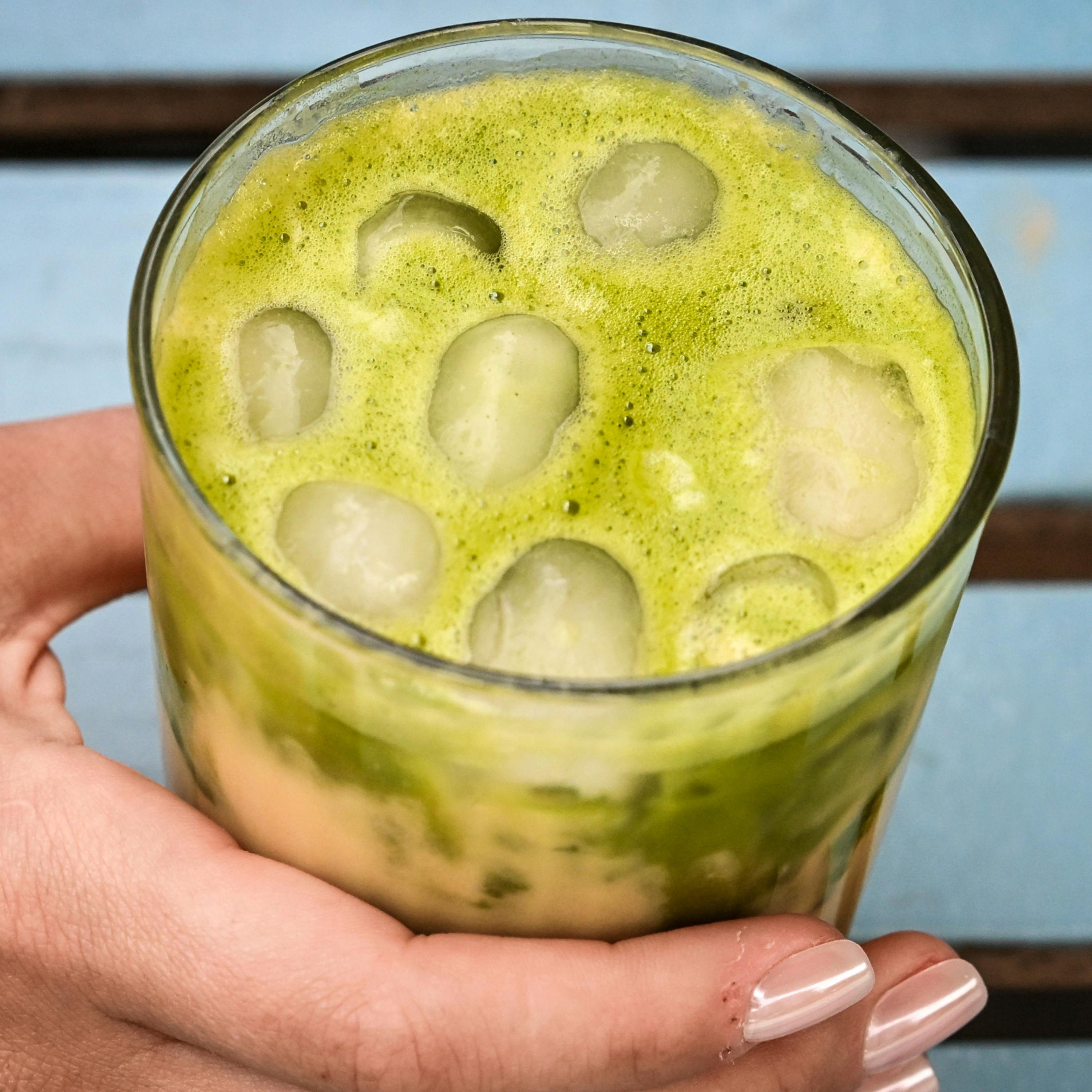
Today, explained Sean Ramsford, a thing about me is I don't drink coffee, but I can handle a matcha every now and then. Recently, I found myself in New York City at a very cute straight out of Tokyo, tiny little matcha shop in Soho. And there was a line, of course. And one by one I watched as almost every person ahead of me broke out their telephones and filmed like a mini documentary while getting their iced matcha lattes. They were getting all the angles, selfies, regular camera, front facing camera, peace signs, one with Boo, one with the squad. And I was like, what is going on, you guys? It's a drink. And then I read that there was a worldwide matcha shortage. And then I was really like, what is going on? And it turns out Labubu Matcha Dubai Chocolate was going on. And for anyone who missed it, we're going to explain on the show today. Support for the show today comes from Anthropic, the team behind Claude. Today's news moves fast, but the most important stories deserve deeper thinking. Whether you're trying to understand the implications of a policy change or connecting dots across breaking stories, Claude, your new AI collaborator, can help you go beyond the headlines. Claude doesn't just summarize the news. It helps you explore the context, analyze the patterns, and think through what it all means together. Try Claude for free at Claude AI Todayexplained support for the show today comes from the Guardian. If you listen to our show, my guess is that you value independent voices and perspectives on the news. You want real reporting on real stories, and you don't want to wonder if the news you're getting is being skewed by an unseen hand. The Guardian says they're fiercely independent too. They aspire to report the whole picture and their coverage goes beyond the news. They have new perspectives on culture, wellness, sports and more for U.S. and world news without compromise or a paywall. Read, watch and listen today@theguardian.com.
- [02:00]
Dr. Rebecca Corbett
We'Ve got a matcha latte up here for Ta.
- [02:05]
Noel King
Da Exploring with matcha why it was seemingly everywhere this summer, why people were acting all Ken Burnsy about their beverages. Why is there a shortage? Is there a shortage? We asked Dr. Rebecca Corbett from the University of Southern California for the tea. She specializes in Japanese studies.
- [02:26]
Dr. Rebecca Corbett
Yes, there is a shortage of matcha right now. Like with any crop, the production cycle, it's cyclical, right? Like it goes with the seasons. And so in late October and early November is when last year's crop is starting to run out and the new crop is about to hit the market. And I remember tea shops in Tokyo, where I was based, started putting signs up saying, you know, there's a matcha shortage. Each customer can only buy one can per day and things like that. And also warning that there would be price increases coming because of the shortage.
- [03:04]
Amanda Mull
Matcha mania is sweeping the world.
- [03:06]
Sponsor/Ad Voice
Seems like everyone these days wants a cup of matcha and there's so little supply to go around.
- [03:12]
Noel King
Something the Japan Ministry of Finance says the U.S. made up nearly 80% of the country's powdered green tea exports last year. 80%.
- [03:21]
Dr. Rebecca Corbett
Matcha is powdered green tea. What's important to know is that all tea comes from the same plant. For green teas like matcha, the leaves are heated to prevent oxidation. That's what makes it different from black tea that is oxidized. Another important thing for matcha is that it's the freshest, youngest leaves of the plant that are picked to go into matcha production. And they're picked by hand every year in spring, and then they're steamed and they're crushed and dried. And those leaves are called tencha, and then they're ground to become matcha. The grinding process is also quite expensive and slow. So there's these huge stone grinders that are used, and they can cost like, one piece of that equipment costs like tens of thousands of dollars. And then we also have to consider that the amount of arable land available in Japan for grow tea is limited as well. So it's not super easy for producers to just scale up because there's been this unprecedented spike in global demand.
- [04:33]
Noel King
How long have humans been drinking matcha and which humans?
- [04:37]
Dr. Rebecca Corbett
Certainly over a thousand years. Matcha is the Japanese term. But if we think of powdered tea, it was originally being drunk in China. It then came to Japan a few hundred years later in the hands of Buddhist monks. So this was in around 1250, so mid 13th century, that matcha comes to Japan from China, and then matcha drinking or powdered tea drinking really falls out of popularity and use in China about 100 years later or late 14th century, and it's only then for the next 700 years or so being produced and drunk in Japan. And now we're in this global matcha boom where producers in other countries, including China, are starting to re enter the market.
- [05:29]
Noel King
When did matcha really arrive in the West? It doesn't feel like it was actually this summer. It was earlier than that, wasn't it?
- [05:36]
Dr. Rebecca Corbett
Yeah, it wasn't this summer. I think it's just like exploded this summer. And I would say as a rough date, the matcha boom started around 2021. But we can actually look back earlier than I have seen clips from the Today show in 2015. So are you ready to give it a try? How much do you have to consume? They did a little story on like, matcha is the newest superfood trend and they made some for the hosts to drink. And Al Roker's face when he drunk the matcha was like, yeah, he was not a fan.
- [06:15]
Amanda Mull
You guys all think it's bitter. It's like, why don't you hand me a handful of grass to eat?
- [06:20]
Dr. Rebecca Corbett
It's healthy to see. So here's the thing.
- [06:23]
Amanda Mull
It starts bad and it gets worse.
- [06:25]
Noel King
Rude. Al, what took the west so long to catch up on matcha?
- [06:31]
Dr. Rebecca Corbett
It has taken a while for Westerners to decide that they actually really like matcha. Probably because these days people are mixing it a lot with sugar and milk and other flavorings.
- [06:42]
Amanda Mull
I used to hate matcha until I figured out how to make it taste good.
- [06:45]
Dr. Rebecca Corbett
This easy. Five minute Strawberry Matcha Latte is my favorite drink of the summer.
- [06:49]
Amanda Mull
Salted honey, cold foam, iced matcha latte.
- [06:53]
Dr. Rebecca Corbett
Pumpkin spice ice matcha latte, Mango and lilikoi syrup, almond milk Matcha latte with a macadamia nut, pineapple cold foam. I would say though that in Chanoyu, a Japanese tea ceremony, which is an entire cultural practice, an aesthetic practice based around preparing and drinking matcha, and we don't add anything to it, that has been very popular globally since the post World War II period, so since the 1950s. But that's a very niche specific practice. There's some thousands of non Japanese and Japanese people around the world who practice that. But it's completely separate to the global macha boom and this huge rise in demand that we've seen since about 2021.
- [07:45]
Noel King
Surely it can't just be the fact that people discovered that you can sweeten matcha with sugar or honey that's led to the matcha craze of our particular moment. Was there something else going on?
- [07:59]
Dr. Rebecca Corbett
It's kind of caught those of us who work in the field a little bit by surprise as well. So I can't give you one clear answer. I think there's a confluence of reasons. I think it is the kind of cool Japan image. The post pandemic period, we've seen a huge tourism boom to Japan that's being fueled by the weekend, so that may be related as well. And then I think it's definitely clear that social media, especially Instagram and TikTok that are very visual have played a significant role.
- [08:34]
Amanda Mull
I mean, tell me where you can get a strawberry matcha that looks this majestic and magical.
- [08:39]
Dr. Rebecca Corbett
You're going to listen and it's not hard to understand why, because you have, you have this beautiful bright green beverage, right?
- [08:46]
Amanda Mull
Look at her.
- [08:46]
Dr. Rebecca Corbett
She is beautiful. I'm a proud mother. It's aesthetically pleasing. It kind of looks fresh, it looks natural. This is how you're gonna make a.
- [08:55]
Sponsor/Ad Voice
Matcha that's amazing for your gut. Skin, hair and nails, all of the.
- [08:59]
Dr. Rebecca Corbett
Things that we associate with healthfulness.
- [09:02]
Amanda Mull
I cut out coffee for 30 days.
- [09:03]
Dr. Rebecca Corbett
And switched to matcha. And here's what happened. Relax, chill, breathe, have a matcha. And then people are also borrowing from the aesthetics of Japanese tea ceremony in this way that looks sort of minimalist and trendy. So I think it's all like tied together in this sort of cool Japan slash appeal of East Asian culture with the healthiness, healthfulness of matcha and then the just the role of social media.
- [09:43]
Noel King
Do we know what the Japanese think of the Western adoption of their cherished drink?
- [09:53]
Dr. Rebecca Corbett
So what's interesting is that I would say some of the stuff that's happening in the global matcha boom, it's not just confined to the west, it's actually also happening in Japan and Japanese influences are involved in it as well. I would say that the main group I would be thinking about is people who are tea practitioners. So people who enrol in a school of Japanese tea ceremony and study it because they have always been the core matcha drinkers, both inside and outside Japan. And so among that group, a lot of us are feeling that kind of bemusement, but also frustration. And we're kind of waiting for the boom to die a little bit so we can just go back to the normal matcha prices. But at the same time, I think we also feel like we want to share our knowledge with people and we just wish people were perhaps a little more interested in understanding this cultural practice that focuses on mindfulness and creating an atmosphere of peacefulness and tranquility, which is quite different from what's happening in the global matcha boom.
- [11:05]
Noel King
Dr. Rebecca Corbett, history, USC. Go Bruins. It's not just matcha, it's also Dubai Chocolate and Labubu. Why the TikTok trends seem to be getting more and more random when we're back on Today Explained. Support for Today Explained comes from Anthropic, the team behind Claude. Every entrepreneur knows that moment when breaking news hits and you're thinking, what does this actually mean for my business? New regulations drop, markets shift, geopolitical events unfold, and suddenly you need to understand not just what happened, but how it connects to everything else. Claude by Anthropic is an AI collaborator that can help you work through information in real time. You can upload docs, regulatory filings or multiple news sources to to help you see the bigger picture. Need to verify claims or research background context? Claude searches current sources and provides citations you can check. It works through complex news stories step by step, asking questions that reveal deeper meanings and connections. Others miss See why the world's best problem solvers choose Claude as their thinking partner and try Claude for free at Claude AI Todayexplained.
- [12:26]
Amanda Mull
Fox Creative this is.
- [12:29]
Alnylam Pharmaceuticals Representative
Advertiser content from Al Nylon.
- [12:40]
Dr. Rebecca Corbett
Hello Ms. Smith, I'm glad I reached you.
- [12:43]
Alnylam Pharmaceuticals Representative
We have your test results. We all dread the phone call that could change everything. Because living with disease can be life altering and noisy. The constant tests, staying on top of medications, the medical jargon, the mental way of learning your new normal. Before you know it, the everyday joys of life take a backseat and your new normal becomes managing your symptoms. What if there was a way to silence disease at the source so you could get back to the best parts of life and ease the burdens of disease? Alnylam Pharmaceuticals has pioneered a class of medicine that use RNA interference to silence genes that cause or contribute to disease. This innovative approach to treating disease is already helping thousands of people around the world live amplified lives. And it's just the beginning. Learn more about RNAi therapeutics and Alnylam science@silencedisease.com Silence Disease Amplify Life.
- [13:58]
Sponsor/Ad Voice
Support for today's show comes from Vanta. If your mind can be blown by compliance automation, let Vanta blow your mind, says Vanta. Vanta is a trust management platform that says they help businesses automate security and compliance. Demonstrating trust to customers and prospects is critical to closing deals. I wouldn't know that's according to Vanta. But it can also be costly and complicated. Vantas says they help companies of all sizes, large, small, medium get compliant fast and stay that way with industry leading AI automation and that continuous monitoring you do know so well. So whether you're a startup tackling your first SoC2 or ISO 27001 or an enterprise managing vendor risk, Vanta says their trust management platform makes it quicker, easier and more safe scalable. Vanta also says they help you complete security questionnaires up to five times faster, which could help you win those bigger deals sooner. You can visit vanta.com explain to sign up for a free demo today. That's V A N T a dot com explained.
- [15:10]
Amanda Mull
Today Flame Dubai Talk today. Flame My name is Amanda Mull. I'm a senior reporter at Bloomberg Businessweek, and I write our Buying Power column about consumer culture.
- [15:20]
Noel King
And you wrote about a strange group of items that had a very big summer.
- [15:24]
Amanda Mull
Well, I have to give full credit for this to zoomer Internet users who sort of created this grouping of trends on their own. The Matcha Lattes go along with Dubai Chocolate, Viral Dubai Chocolate Bars and Labubus.
- [15:39]
Sponsor/Ad Voice
Oh my gosh, this is a secret.
- [15:40]
Amanda Mull
And Love island and Benson Boone and, you know, you can sort of spiral out from there.
- [15:49]
Noel King
Hush little Matcha don't you cry Everything's.
- [15:54]
Amanda Mull
Gonna be Benson Boone Crumble cookie la Boo boo Dubai. This set of like, like, weird recent trends, I think, is indicative of how weird the trend cycles have gotten in consumer goods. You know, in the past, trends have forever seemed a little bit weird because the average person doesn't have, like, a ton of insight on, like, where something ultimately came from that is suddenly everywhere. You know, in the Devil Wears Prada, the scene about cerulean, what you don't.
- [16:24]
Dr. Rebecca Corbett
Know is that that sweater is not just blue, it's not turquoise, it's not lapis. It's actually cerulean.
- [16:32]
Amanda Mull
And blue sweaters sort of demonstrates that dynamic, and that's existed for a long time.
- [16:37]
Dr. Rebecca Corbett
And it's sort of comical how you think that you've made a choice that exempts you from the fashion industry when in fact, you're wearing a sweater that was selected for you by the people in this room from a pile of stuff.
- [16:51]
Amanda Mull
But when you get down to it, a lot of, like, sort of random seeming trends in consumer goods from decades past have, like, a pretty easy way to explain them, if you dig a little bit. Trends recently seem to have, like, even less connective tissue to culture at large than they used to, which is a real change in how trends are produced, how people become aware of things, why people buy things. And I think that Labubus and Matcha Lattes and Dubai Chocolate and Benson Boone and Crumbl Cookies, and all of these things are sort of that have arisen at, like, sort of the same time to each other are good examples of this phenomenon.
- [17:36]
Noel King
So what binds all these things together, Dubai Chocolate, Matcha Latte, Labu Boos, Benson Boone, is that they're kind of weird and they all are getting noticed in a kind of weird ecosystem called TikTok.
- [17:52]
Amanda Mull
Yes, a lot of this is TikTok fueled. But in general, this, I think is a phenomenon of algorithmic social media. Because you, when you interact with things on these platforms, when you're presented with things on these platforms, you have very little context. So you don't have the sort of traditional methods of learning about new pieces of culture, whether that's like word of mouth or dissemination through traditional media. You just have a series of things that you're presented with with no context and no connective tissue to anything else really.
- [18:27]
Noel King
Matcha 24 Karat Labu Boo Dubai Chocolate Benson Boonbeam. It's not clocking to you that I'm standing on Moonbeams.
- [18:33]
Sponsor/Ad Voice
Get ready with me to the new.
- [18:34]
Dr. Rebecca Corbett
Golden Labubu Dubai Chocolate Matcha Latte Moonbeam.
- [18:37]
Sponsor/Ad Voice
Ice cream Boba Crumble Cookie on my.
- [18:39]
Amanda Mull
Bi weekly trip to Japan. And that means that the things that catch on, the things that end up getting seen by a large audience, it's very, very difficult to trace where they came from, why they became interesting to so many people, or what any of it means.
- [18:55]
Noel King
The algorithm certainly feels like a helpful explanation of how these random things sort of took the summer by storm. But I think you write in your piece about the fact that we have seen stuff like these things become popular before. Like I think the best example might be not Benson Boone, but like the Beanie Baby, because it's so close to a Labubu. And that happened, of course, in an age before algorithms. What algorithms existed, just not the kinds we have now. What was the difference then? And why did Beanie Babies happen then?
- [19:37]
Amanda Mull
Yeah, well, Beanie Babies are a fascinating story because they seem so random and so from nowhere and so one of one. But they're actually a really good demonstration of how trends are traditionally disseminated through culture. They came around as collectibles sold in gift shops and stationary stores by a relatively small toys company who was looking to increase sales by, you know, stoking demand through the sort of traditional, well known marketing tactics of, you know, false scarcity and limited editions and things like that. Here's a quick lesson on this Beanie craze. A company called Tye makes them, releases them with different names.
- [20:21]
Dr. Rebecca Corbett
They're all named after something, an animal. An animal. Basically. They haven't done like funguses, then retires.
- [20:28]
Amanda Mull
Them one at a time because they.
- [20:31]
Dr. Rebecca Corbett
Were an inexpensive item you could pick up at the mall for your child. And now they become collector's items.
- [20:38]
Amanda Mull
But they really took off because ebay was launching at the same time. So Americans were presented with this idea that anybody could resell anything to anybody else in the country and you could do it from home and you could, you know, quit your day job by.
- [20:57]
Noel King
Selling random stuff from doctors, lawyers, just a regular white collar, blue collar workers. And they all want Beanie Babies.
- [21:06]
Amanda Mull
But isn't that cute? What would you rather have, a new car or peanut the elephant Beanie Babies as like a financial instrument? That was the response to a new type of commerce. That's what really fueled them.
- [21:21]
Noel King
And how does that compare then to like the Labubu thing?
- [21:25]
Amanda Mull
Well, the Labubu thing is sort of fascinating because in the sort of traditional trend environment, like with Beanie Babies, it really mattered if the thing you were selling or buying was real.
- [21:37]
Dr. Rebecca Corbett
Here's the certificate of authenticity right here, Right? Correct.
- [21:41]
Noel King
And this is what people need nowadays, isn't it?
- [21:44]
Dr. Rebecca Corbett
Well, it's a good idea if they're buying an expensive beanie. In this video, I'm comparing a authentic Thai beanie baby Bronte the dinosaur versus two counterfeit Brontes.
- [21:55]
Amanda Mull
People had sort of like rational beliefs about. And by rational I don't mean reasonable, let me be clear. But they had reasons that were rational enough for wanting particular dolls at particular prices. With the Labubus, there's not quite so much of that at all. In fact, it's. There's very real demand for real Labubus. But alongside them, the market for fakes, which are, you know, adorably called Lefoufus, has really exploded. The craze is fueled by people just wanting to clip one of these things onto their outfits. It's not about the Labubus themselves, really.
- [22:38]
Noel King
Is that something else that binds all of these weird trends together? That they're all kind of. I don't like, no judgment, but like a little infantile. We're talking about like sweet treats and toys and Benson Boone.
- [22:55]
Amanda Mull
Yeah, I think so. The way that algorithmically mediated social platforms work is by sort of collapsing your capacity to understand the context of what you're looking at. And so if you're being served things that like, you don't know why you're saying this, you don't really know what it is. And then suddenly that thing is everywhere. You know, you sort of lose your capacity to use some of your more mature emotional skills to limit your reactions, because you get sort of a split second to react to things. That is why stuff on social media tends to do the best and tends to get the most engagement. If it's like highly stimulating, if it's colorful or incredibly delicious looking or outrageous or maddening or offensive. Like these are the sort of like emotional reactions that the algorithmic social media values because they stoke engagement, they increase people's time on the platforms. So things that do well in these environments are sort of like maximally stimulating. And that means that you're gonna get sold a lot of things that are mostly sold to kids because the sort of like maximal, colorful, sweet, cuddly, fun stuff is like generally made for children.
- [24:24]
Noel King
How do we feel about that, Amanda?
- [24:27]
Amanda Mull
You know, I think that's pretty bad. I think that that's not doing anybody any favors culturally. But I think that the sort of like persistent interest in staying power in like a few of these trends, including Labubus, including Dubai Chocolate, including Matcha Lattes, I think is also like indicative of a real desire on the part of people who use these platforms to try to make sense of the Internet and online life in real life, in physical reality. Because these are all, by and large, these are all objects or things or experiences that you need to get up and leave your house and go have. They are things that exist in physical reality that you're looking for or trying to get or wanting to try. And I think that like, that these are the things that ultimately go the furthest for people, I think is a real indication that there's still something that people want to do to reconcile their online lives with their offline lives. Those are not really separate anymore. And I think that some of these sort of like viral objects are a way for people to sort of like emotionally, intellectually, like bridge that gap that they are constantly straddling. It's like a consensus experience. If you're having a matcha latte, you are having an experience that a lot of people with a lot of different feeds than you have also had recently. And it, I think gives people a little bit of a sense of participation in a sense of that the stuff they look at on their phone is real.
- [26:14]
Noel King
And is that a good thing? I mean, we talked about the infantilization of adults being a bad thing. But is getting out and making, I don't know, a thing you see on your phone a tangible consensus reality good for us?
- [26:34]
Amanda Mull
I think it's a positive indicator that people still want a little bit of consensus reality that people aren't entirely sort of like feed brained at this point? I think it is indicative that people aren't like fully satisfied just with seeing things online and participating online. I think that any indicator that we have that people want to have normal physical, social experiences with each other is probably a good one.
- [27:09]
Noel King
Amanda Mull have a good one@Bloomberg.com Danielle Hewitt produced our program today. Thanks to Kendall Cunningham at VO for her help. Aminah Al Saadi edited Patrick Boyd Mix. Laura Bullard maintains that the funny bone of the universe bends towards Labubu. The rest of Today Explained is Noel King, but also Peter Balnon Rosen, Denise Guerra, Abhishai Artsy, Kelly Wessinger, Hari Mwagdi, Ariana Aspuru, Devin Schwartz, Adrian Lilly and Miles Bryan. Our Deputy Executive Producer is Jolie Myers. Our Executive Executive Producer is Miranda Kennedy. We use music by Breakmaster Cylinder Today explained as distributed by wnyc. The show is a part of the Vox Media POD Network. For more about our shows you can go to podcasts.voxmedia.com you can find stuff to listen to until kingdom come. You can listen to our show ad free by signing up@vox.com members fun fact. Also a way to support everything we do here@vox.com and right now even funner fact there is a sale going on Vox.com membership. You can sign up now and you'll save $20 on an annual membership and you'll get more than 30% off said annual membership. Thank you so much for supporting us. Head over to Vox.com members to join. A good time to support journalism.
- [28:52]
Amanda Mull
And.
- [28:52]
Noel King
Doug Limu and I always tell you to customize your car insurance and save hundreds with Liberty Mutual. But now we want you to feel it. Cue the emu music.
- [29:00]
Amanda Mull
Limu Save yourself money today.
- [29:04]
Dr. Rebecca Corbett
Increase your wealth. Customize and save. We save.
- [29:10]
Noel King
That may have been too much feeling. Only pay for what you need@libertymutual.com Liberty Liberty Liberty Liberty Savings Very underwritten by Liberty Mutual Insurance Company and affiliates.
- [29:19]
Amanda Mull
Excludes Massachusetts.