← Today, Explained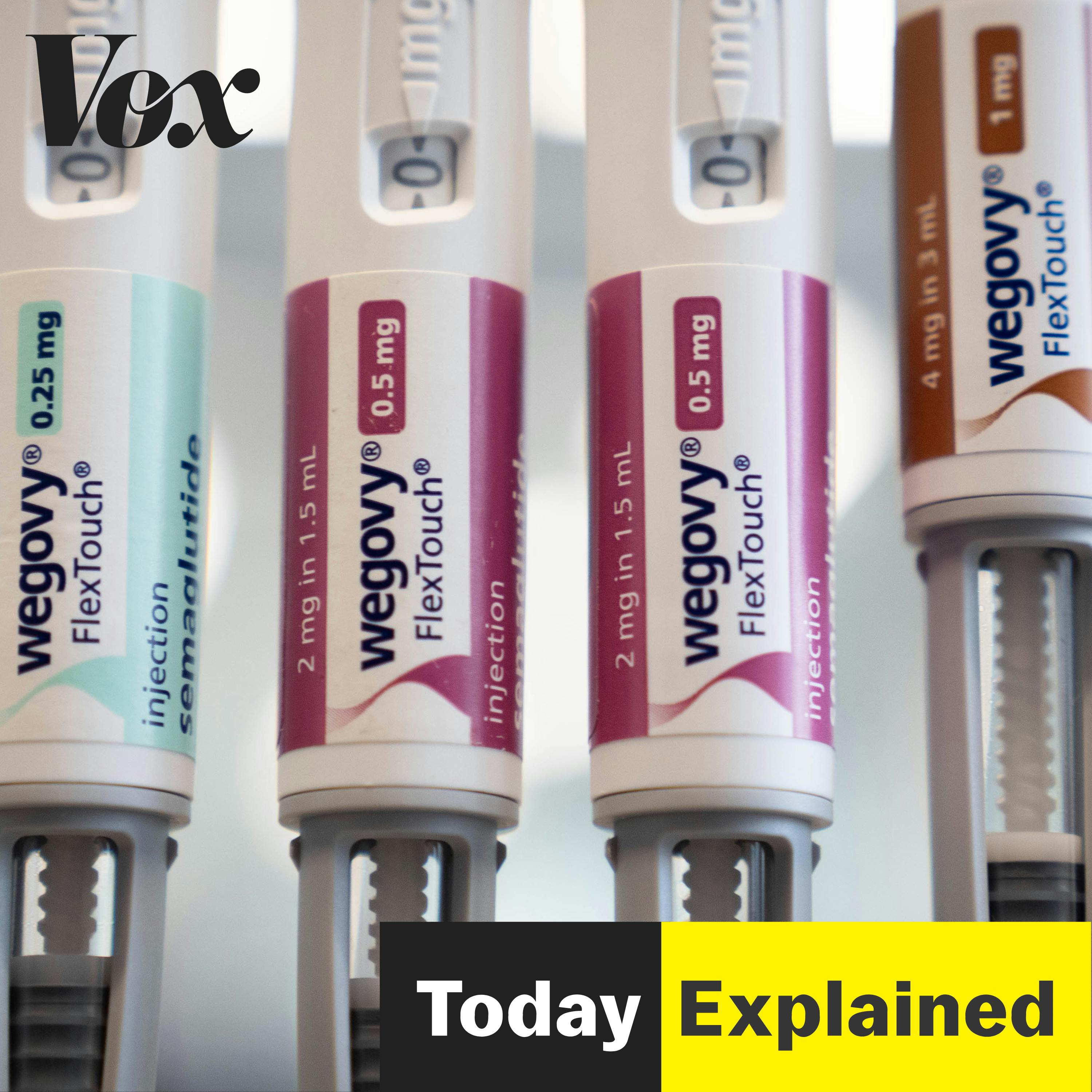
Today, Explained
Life after Ozempic
00:25:06
Americans were told “diet and exercise” was the key to better health, but lifestyle changes were never that life changing. Medication is.
Loading summary
Transcript59 lines
- [00:02]
Noel King
During the 2024 Olympics, a player on the US women's rugby team, Alona Mar, got a ton of attention for talking about her body mass index.
- [00:11]
Sumita Mukapadai
I do have a BMI of 30.
- [00:12]
Dr. Dan Bestason
Well, 29.3 to be more exact.
- [00:14]
Noel King
I've been considered overweight my whole life. I remember vividly one time in high.
- [00:19]
Dr. Dan Bestason
School I did turning the physical to.
- [00:20]
Noel King
The office and right at the bottom of the page it said overweight Miss Ma'am went on to win a bronze medal. And also to illustrate the absurdity of bmi. But doctors and insurance companies this number to make judgments about your health. And then just yesterday, a global panel of experts advised that we measure obesity differently. The relationship between diet and weight and health seems like it should be clear and knowable by this point, but it's really not. Coming up on Today explained why the gospel on weight loss is always being rewritten and how medications have added a brand new chapter.
- [01:00]
Dr. Dan Bestason
Amazon Pharmacy presents Painful Thoughts. The guy in front of me in the pharmacy line is halfway through an incredibly detailed 17 minute story about his gout. A story likely more painful than the gout itself. Next time, save yourself the pain and let Amazon Pharmacy deliver your meds right to your door. Amazon Pharmacy Healthcare just got less painful.
- [01:36]
Noel King
You're listening to Today Explained. Sumita Mukapadai is a writer and editor who was very anxious when she was hired as the executive editor of Teen Vogue back in 2018. Like everyone else, Sumita had seen the Devil Wears Prada and she knew that the fashion industry was unforgiving. But not long after she started there, she, she realized that things were changing.
- [01:59]
Sumita Mukapadai
You know, I entered the fashion industry at a really unique moment where there was an increased interest in plus fashion, you know. And so when I got the job at Teen Vogue, I started having all these fashion brands reaching out to me to be like, wow, we're so excited. We're launching a plus collection. We'd love to like talk to you about it. We'd love to send it to you. How does it feel to be a fat fashion editor? And at the time, I had kind of newly gained the weight and so I wasn't totally embracing it. I was, I wasn't, I didn't, it didn't feel empowering. It was almost felt like something that was happening to me where I was like, oh wait, I'm fat. Like, you know, I had to kind of get over that first step before being like, I'm fabulous. I love being fat.
- [02:41]
Noel King
Okay, so you're in a period where Teen Vogue has become More accepting, it is okay to be a person in a larger body. And in fact, there's even some sort of advocacy or activism around the fact that there is more than one body type. And then you get some news that again, changes how you see and experience all of this.
- [03:05]
Sumita Mukapadai
What happened while I was at Teen Vogue? And kind of as I was leaving Teen Vogue, I had had a series of stressful family related things happen. My father passed away of diabetes related complications. My mother was diagnosed with breast cancer. I had this really hectic job and I was managing all of it. And my stress response was eating. And it was. And not just eating. It was like really not taking care of myself ultimately, right? It was taking Ubers, it was getting takeout. It was kind of not really having a lot of time for myself. And that did lead to some unwanted weight gain on my part. And I was having some mobility issues. I was having trouble kind of. I just thought it was cause I was exhausted because I had never had these experiences, but I was having trouble getting up and down the stairs on the subway. And I would just chalk it up to like, oh, I'm just so busy, you know, like, I have to take Ubers. Cause I'm like busy and I'm exhausted. And I was having trouble keeping up on walks and I was having trouble sleeping. I wasn't feeling well. And you know, on top of that, my clothes weren't fitting. And so I went to the doctor and you know, this is after I had left Teen Vogue and like kind of after the pandemic, I decided to start the process of, you know, figuring out if I was okay and also, you know, what I could do. Because I knew and I understood that diets don't work, right. Like, I knew I could restrict what I was eating, but eventually I'd gain the weight back. And I really wanted something. I really wanted a strategy that would be more effective. And so I went in and got my blood work done. And you know, pretty much every indicator was elevated. So I was had become pre diabetic. My cholesterol was elevated. And so those scared me, right? Like I had just lost my father to exactly the things that I'm now looking at in my blood report. And so I was like, you know, I think it's finally time for me to really take this seriously and figure out, you know, a strategy to move forward. And she suggested Mounjaro. It is a injectable that you take weekly. It slows your digestion, basically is how it works. And in doing so, it reduces the rate at which you can eat and how hungry you get. And so, you know, I decided to go on it.
- [05:32]
Noel King
What did that mean for you? Like, once you start taking it, what happens?
- [05:36]
Sumita Mukapadai
Do you mean emotionally or physically?
- [05:38]
Noel King
Both. Both entirely. I mean both. Thank you for asking.
- [05:42]
Sumita Mukapadai
Yeah, yeah, for sure. I mean, emotionally. It was really hard to make the decision to go on it. I saw it as two things. I saw it as a betrayal to the kind of body positivity and feminism that I had ascribed to. Of loving yourself at any size and not trusting pharmaceutical interventions. And also, there was another voice inside me that was like, this is how bad it's gotten, girl. Like, you couldn't control this, and now you have to take a drug. That's how. That's how not well you are. And so a lot of self judgment, a lot of shame came out with the decision to go on the medication. Physically, it is a bumpy road. It was for me. For me, I struggled with very intense nausea. So one of the ways that it works is since it slows your digestion, if you overeat, you feel very sick, and then a lot of digestive issues. It is very hard to go to the bathroom when you're on it. You have to take all kinds of laxatives. They now have additional prescriptions they put people on that are taking it to help support with, you know, regular bowel movements. And so it was not the best physical experience. And then, you know, at a certain point, I got used to it, but I think it was more that I just got used to managing the side effects. They never really went away for me.
- [06:59]
Noel King
You have made, interestingly enough, being on Mounjaro sound absolutely horrible. But I appreciate you. I appreciate you being honest about the side effects, because I don't hear talk about the side effects very often. What was the good in this? What kept you on it?
- [07:17]
Sumita Mukapadai
It does something, and I think it's. It's physiological. And a doctor can speak more eloquently to this, but it does trigger something in your brain, a hormone that suggests that you're satiated. Right. And so it started to help me feel satisfied with less. One of my behaviors is I tend to compulsively eat in the evening, Whether it's stress or just fun or boredom or binge watching tv, whatever it might be. I will sit down with, like, an array of snacks and kind of eat mindlessly, not always keeping track of how much I'm eating, Not necessarily food that had good nutritional value. When I was on Mounjaro, I would finish dinner, and I pretty much would not physically be hungry in the evening, and I just wouldn't have space to eat anything else. And if I got the munchies, I started to reach for healthier snacks because I noticed that I digested them easier. And so if I just, like, ate an apple or some grapes, you know, like, I eat so many freaking grapes or, you know, a handful of carrots or whatever that might be, and all the things we tell ourselves, we were like, this is the healthy choice. Let's make the healthy choice. The healthy choice, all of a sudden became easier. And that was part of why I stayed on it, that it really gave me this release from this yearning that I always had where. And it wasn't a challenging decision. I didn't feel a lot of strain around it. Whereas historically, when I would beat myself up for eating at night, I never felt like I could stop. And with the kind of pharmaceutical intervention, I was able to stop.
- [08:52]
Noel King
Okay, so there are pros, there are cons. Here we are early in 2025. How is it going?
- [08:59]
Sumita Mukapadai
I guess when Manjaro hit the market, they had given a manufacturer's coupon to early people, to people that had first started taking the drug. And, you know, I don't read the fine print, Noel. Like, I don't know.
- [09:12]
Noel King
Like, no one does, girl.
- [09:13]
Sumita Mukapadai
I thought that was my insurance covering it. Like, I didn't understand that. Like, the reason it cost that much was a coupon and not my insurance. And so the coupon is rescinded, and overnight the drug becomes six to eight hundred dollars a month. I think it was like. I think it was 800. And they were like, we can do this other coupon that will get you to, like, 600. Like, I'm kind of like, these aren't the exact numbers, but all I'm saying is, like, it was an insane amount of money that I was like, what? Like, I live in New York City. You can't just take on another payment like that. That's crazy. Yeah, exactly. Exactly. I think the combination of the cost and the side effects, and I had lost a lot of weight. Like, I think I lost 50 pounds, about. Wow. And I was feeling great. And I was like, you know, let me just try without it. Let me phase out of it. And so I came off the drug at the end of 2023, and, you know, I will say, like, maintained the loss for quite a bit of time. I probably gained, like, 10 to £15 within, like, two or three months. And that was definitely not a great mental experience. Like, I definitely came back to that feeling of control, of like, oh, my God, I'm losing control. I'm losing control. And, you know, but I was excited because I had made some lifestyle changes that I was maintaining, and that felt like a really positive intervention. Now this is, like, the first interview I'm doing about this in, like, six months. And so I will say the last six months have been really stressful for me. I launched a book. I got married. Nothing like, thank you. Nothing like gaining weight for your wedding. But I started, you know, some of the things that I had been committing to, like cooking and getting enough, you know, my steps every day and all of that, like, fell to the wayside a little bit. And so the weight started to creep on and creep on and creep on. And now I've probably gained back like, 60 or 70% of what I lost, which has been really hard. You know, it's hard. And it's also feels like it's forcing me to really face my relationship, relationship with my health and my own body and to, like. It's like, I understand the options that are out there, but the options are limited. I wouldn't even say that I would necessarily go back on it because when I think about it, I just get sick to my stomach. I'm just like, oh, I just don't know if I can go through that again. But, you know, it's been a roller coaster, emotional roller coaster, having the kind of high of like, oh, like, the weight came off. And then to like, be. Feel like I'm back to square one. Even though I know in my mind and my heart and my spirit, I am not.
- [11:59]
Noel King
Sumita Mukapadai, writer and editor. Coming up is the age of diet and exercise over.
- [12:17]
Dr. Dan Bestason
Amazon One Medical presents painful thoughts. I could catch anything sitting in this doctor's waiting room. A kid just wiped his runny nose on my jacket, and the guy next to me sitting in a pool of perspiration insists on sharing my armrest. Next time, make an appointment with an Amazon One Medical provider. There's no waiting and no sweaty guy. Amazon One Medical healthcare just got less painful.
- [12:53]
Sumita Mukapadai
You're listening to Today, except explained.
- [12:56]
Dr. Dan Bestason
I'm Dan Bestason. I'm an MD by training. I'm an endocrinologist. I'm here at the University of Colorado in Denver, and I do clinical work taking care of patients at our county hospital, Denver Health, and I do research here at the medical school. I'm also the director of this building called the Anschutz Health and Wellness center.
- [13:16]
Noel King
Dan, you have 47 jobs, man. All right, let's talk about the beginnings of this sort of cultural and medical interest in obesity. When did doctors start thinking of obesity as something that needed to be fixed, something that needed medical attention?
- [13:37]
Dr. Dan Bestason
I think there's always been people with really high weights that doctors thought, well, that's probably a health problem. But I don't think it entered the general public consciousness until sort of the late 80s to the mid-90s.
- [13:54]
Sumita Mukapadai
The disease is obesity, but obesity is.
- [13:56]
Dr. Dan Bestason
Just a symptom of the real problem we as a nation face.
- [14:00]
Sumita Mukapadai
Frances, you've been overweight since you can remember, since a child about early teens. Americans overeat.
- [14:08]
Dr. Dan Bestason
We are obsessed with food, and it's.
- [14:10]
Sumita Mukapadai
An obsession that's killing us. And When Greta was one year old, she weighed 100 pounds. Almost 100?
- [14:16]
Dr. Dan Bestason
Yeah, almost 100.
- [14:18]
Sumita Mukapadai
That's a lot.
- [14:19]
Dr. Dan Bestason
I think people looked around and thought, what's going on here? There seems to be more and more people at higher weights. And NIH had an expert panel that defined obesity using bmi. BMI is sort of controversial, but that was the point at which we had this accepted standard. And shortly after that, the CDC looked at data that they had and said, what's been happening with obesity? And I think they were sort of shocked to find there was just a dramatic increase in the number of people with obesity. And so in 1999, they published these maps, these CDC obesity maps. Maybe some people have seen those. And they really brought a lot of attention to what really looked like an epidemic. If you had looked at those numbers and it was HIV or cancer, people would be quite worried. And people said, gosh, something is happening here. We should do something about this.
- [15:18]
Noel King
And what was the something that doctors decided they should do?
- [15:22]
Dr. Dan Bestason
Yeah, I think that the NIH panel had thought about levels of weight, and that treatment or what intervention somebody did should be based on how serious the problem was. So people with a modest increase in their weight might change their diet and increase their physical activity. People with a more severe weight problem might take a medication, and those at the highest weight might benefit from surgery. For most Americans, lifestyle is what was suggested. And I think at that point, we were still early in understanding the biologic basis of weight regulation. And we all eat, we all move, and it seems like we choose those things. And so the obvious first step was to say, maybe people just don't know what to eat, and if they just thought about it some more and ate less and moved more, that this problem might go away. So that was the first thought. And The Surgeon General had a call to action. Obesity, a major problem that has increased dramatically since 1990. Based on these numbers rising of obesity, saying, you know, people ought to move more and eat a healthier diet when it comes to physical inactivity, obesity, diabetes. Fact of the matter is, we're moving in the wrong direction in terms of these areas.
- [16:39]
Noel King
The advice seems obvious. Change what you eat and move more. Do diet and exercise prove to work?
- [16:48]
Dr. Dan Bestason
I think there's a couple ways to look at that. One is around the same time, there was a study published, the Diabetes Prevention Program. And what they found was that a modest weight loss, a 5% weight loss, could reduce the risk of developing type 2 diabetes by half. It was a really dramatic study, and so it was really based on that that people said, gosh, this is achievable, and it has clear health benefits of 5% weight loss.
- [17:23]
Noel King
I'm just doing the math in my head. If you weigh 200 pounds, that's take. Take 10 pounds off.
- [17:28]
Dr. Dan Bestason
Yeah.
- [17:29]
Noel King
300 pounds, take 15 pounds off. That feels like nothing.
- [17:31]
Dr. Dan Bestason
It seems like a small change in weight, and yet it had dramatic benefits. I gotta tell you. I mean, I see people in clinic, and so I've spent whatever, 20 years trying to sell the benefits of a 5% weight loss. Most people don't buy it. Most people want more weight loss than that. It's not a weight loss that most people see in the mirror or that their friends are going to notice, but it has clear health benefits and has become a benchmark of what a clinically significant weight loss is. A little bit of weight loss helps.
- [18:01]
Noel King
So what happened after the study was over with these folks who lost 5% of their weight and then saw their health improve? Did they keep the weight off?
- [18:11]
Dr. Dan Bestason
Most lifestyle studies show that most people regain much of the weight. It's not like everybody regains all of the weight, but much of the weight is regained. What has happened over the last 25 years is a real explosion in our understanding of the biology that underlies weight regulation. I think now we think of weight much like we think about blood pressure or glucose, that there's complex biology, that the body's got its own idea about what it wants to weigh and what it seems like the body wants to do. It doesn't regulate around a set point. It regulates around a trajectory of gradual weight gain across the life. So the biology of weight really pushes back against efforts to change our diet. And so that's why people regain the weight, is when they lose weight, the body goes, this is not good. And the people become more hungry, their energy expenditure goes down. And these things tend to push the weight back up to where it was before.
- [19:09]
Noel King
Were there. You mentioned two other ways that doctors saw of treating obesity medications and surgeries. How common was it for a doctor to say, you, sir or madam, you're gonna need medication. You're gonn. I don't remember so much of that.
- [19:26]
Dr. Dan Bestason
Like 20 years ago, only maybe 1 or 2% of people ever had that conversation ever got that medication. And there are a number of reasons for that. One is the older medicines had some side effects. There were some bad stories about health problems with fen phen and other medicines.
- [19:42]
Noel King
Oh, fen phen.
- [19:44]
Dr. Dan Bestason
If you took the diet drug combination known as fen phen or the diet drugs Pondamin or redux, you may have.
- [19:50]
Noel King
Heart valve problems and not know it before. Chicago area women are taking the makers of fin phin to court. It's been one week since the prescription diet drug was pulled off the market.
- [20:01]
Dr. Dan Bestason
And I think too, doctors and patients, doctors especially have this IDEA that, well, Mrs. Jones, you ought to be able to handle this on your own. This idea that weight is regulated, it's taken a long time to get any traction there. Doctors would say things like, you know, if you show me you can stick to a diet, well, then I'll maybe talk to you about a medicine. We don't do that with diabetes or high blood pressure. We're very quick to go to a medication in those conditions. So I think there's a lot of maybe bias and stigma directed at people living with obesity that we tend to blame them for their health problem. So medicines that weren't super effective and an environment that really thought that people could do this on their own.
- [20:41]
Noel King
How long have you been in this line of work, Dr. Dan?
- [20:45]
Dr. Dan Bestason
I'm an old person with kind of gray hair. I prescribed fen phen. So I've been doing this for, gosh, whatever, almost 30 years.
- [20:54]
Noel King
You've been doing this for 30 years? Sometime in the last 24 months, I became aware of Ozempic. A lot of people became aware of Ozempic. I'm just wondering what the conversation was like in the medical community among doctors who do your type of work, about the fact that There are these GLP1 drugs that seem to work magically, work for a lot of people and are now widely available.
- [21:19]
Dr. Dan Bestason
Yeah, I would use the term game changer. There's never been anything like this. We've done studies with older medications and, you know, the medications worked okay, but people weren't happy with them. These medicines, just not only the ones we have now, which are semaglutide and tirzepatide, but the ones that are coming after that that are in clinical trials. We're in a time now that medications are likely to provide the kind of weight loss that we used to only see with bariatric surgery. I understand that there's more than 100 medications in this anti obesity medication pipeline. We've been doing studies with some of the next generation and they're even more effective than the semaglutide and tirzepatide are.
- [22:06]
Noel King
Oh, damn.
- [22:07]
Dr. Dan Bestason
Yeah. And you know, when we have somebody go to bariatric surgery, we prepare them for that. They see a psychologist, they see a nutritionist, they talk to other people who've had surgery and say, how was that for you? They think about it and then it's kind of a go, no go, you know, either you have surgery, you don't, you get what you get. Medications are going to give that kind of weight loss, but we're not preparing people for that. We're not. What does your life look like when you're not interested in food? I had a woman tell me, you know, my husband took me out to this fancy restaurant here in Denver for my birthday. He was so excited. I looked at the food and I thought, gee, this is not going to work for me. So it makes changes in people's relationships with other folks. When people see someone losing weight, they wonder, what are you doing? Do you have cancer? Who do you tell that you're out of medicine? What do you tell them about why and what your goals are? What are your goals? How much weight do you want to lose? And how will you know when you're done? These are questions that we've never had to ask before and we don't have good data and people are willing to pay. So there's all these market forces with people just want a medicine, they don't want a doctor, they don't want advice, they just want the medicine. But they don't really know what they're getting into. So it's a bit of a chaotic environment. I think the key message I'd ask people to understand is this idea that weight is biologically regulated and that it has some health problems for some people, maybe even many people, and that ideally they find somebody that they can talk to, a doctor or healthcare provider that they can get useful information from over time, because It's a journey.
- [23:50]
Noel King
Dr. Dan Besseson, he's an endocrinologist. Miles Bryan produced today's show. Jolie Myers edited Laura Bullard Fact checked and Andrea, Kristen's daughter, and Patrick Boyd are our engineers. I'm Noel King. It's today, explained.
- [24:21]
Dr. Dan Bestason
Amazon One Medical presents Painful Thoughts I could catch anything sitting in this doctor's waiting room. A kid just wiped his runny nose on my jacket and the guy next to me sitting in a pool of perspiration insists on sharing my armrest. Next time, make an appointment with an Amazon One medical provider fighter. There's no waiting and no sweaty guy. Amazon One Medical healthcare just got less painful.