← Today, Explained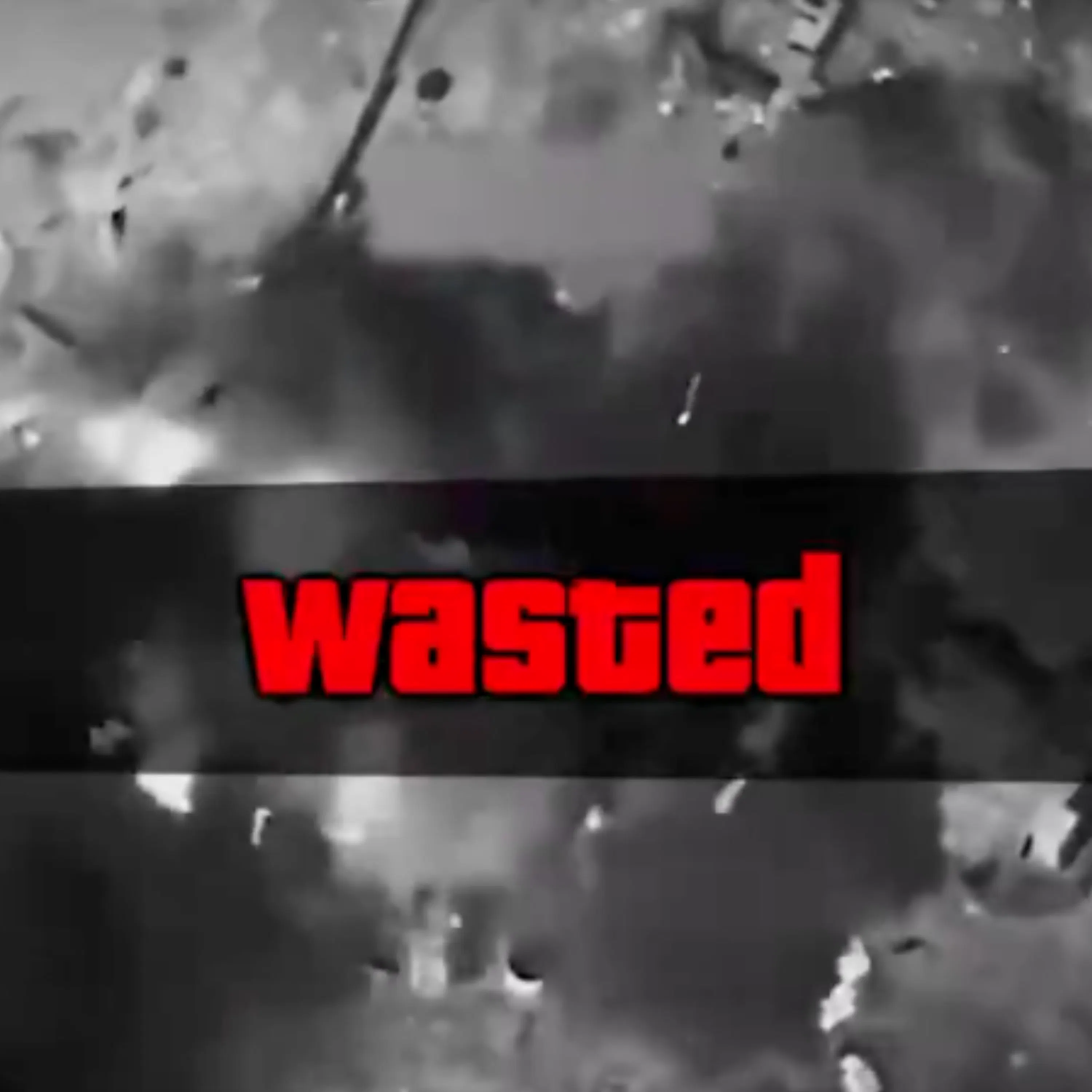
Today, Explained
Meme warfare
00:26:12
Have you seen the video of the US military bombing Iran spliced with clips of SpongeBob Squarepants? It’s an official video released by the US government and represents a new kind of wartime propaganda.
Loading summary
Transcript56 lines
- [00:03]
Noel King
The White House is tweeting videos of the Iran war as a Nintendo game, holy water as a scene from Braveheart.
- [00:10]
Nick Cole
What will you do without freedom?
- [00:13]
Noel King
The Iranians are tweeting videos of the American and Israeli war featuring Lego Trump and Lego Bibi, Lego Strait of Hormuz. Propaganda is a part of every war. It has not always been this dumb. But there are other differences this time around that might matter more.
- [00:30]
Nick Cole
Quite often the moral aspects of war are laid out before the American public before any American shooting has begun. That was the case for World War I, World War II, you the case was being made around Vietnam before anything happened.
- [00:44]
Noel King
That's coming up on Today Explained.
- [01:00]
Will Aremus
Support for the program today comes from Attio, the AICRM for modern teams. Are you a modern team? Are we a modern team? Attio connects to your email, calendar, calls, product data, billing data, and more. So your CRM is always complete, always enriched, and always in sync. Ask Atteo anything. What's the status of this deal? What should I know before my next meeting? Attio will search across all your data to give you exactly what you need. If you want a CRM built for how you want to work, you can check out Attio. You can go to attio.comtodayexplain. you'll get 15% off your first year. That's a T T I O.comtodayexplained. once upon a dismal day, Bob's ice cream van looked gloomy and gray. Although he had big ambitions, his socials lacked creative vision. Ew, that bad? Maybe vamp it up a tan. I have an idea. Bob launched Canva and got into gear. Create the video in the vampire theme and make it the me as a meme. It went viral. Bob's business a revival. Now imagine what your dreams can become
- [02:10]
Nick Cole
when you put imagination to work.
- [02:12]
Will Aremus
@canva.com
- [02:18]
Noel King
you're listening to TODAY Explained. I'm Noel King with Nick Cole. He specializes in the history of propaganda at USC Annenberg. Nick, in a time of war, what's the the objective of propaganda?
- [02:30]
Nick Cole
Well, propaganda has three objectives in wartime. The first is to rally your own population. The second is to persuade allies that you're doing the right thing. So maybe they might actually support you. So to make friends friendlier, to make allies more supportive, and maybe even create a few new allies. And the third is to demoralize your enemy. So some people would call that cyber psychological warfare. To break your enemy's will. To resist, to protect images of your strength that are so overwhelming that the enemy hastens to surrender or to compromise. And, you know, that's also a very old element in communication in wartime, in the past. This is what propaganda looks like when the US Is coming into a war, that you have this explanation of what the war is going to be about, something that appeals to the American public while also maybe even inspiring international audiences. So President Wilson, in the First World War, or on the eve of the First World War, from the American point of view, spoke about a war to end all wars, a war to make the world safe for democracy.
- [04:05]
Will Aremus
The world must be made safe for democracy. Its peace must be planted upon the tested foundations of political liberty. We have no selfish ends to serve. We desire no conquest, no dominion.
- [04:17]
Nick Cole
He had his 14 points for how the diplomatic scene was going to be reformed on the eve of World War II. President Roosevelt spoke about the four freedoms and set out a whole vision for a new international order. Freedom means the supremacy of human rights everywhere. All our support goes to those who struggle to gain those rights and keep them. Think about President Bush talking about a war to protect a new order. The first President Bush on the eve of the war with Iraq, the first Iraq War. Iraq will eventually comply with all relevant United nations resolutions. And then when peace is restored, it is our hope that Iraq will live as a peaceful and cooperative member of the family of nations. So these are the sorts of messaging that we are used to. Of course, there's always been a chaotic, a violent kind of message around American war, and sometimes this occurs in popular culture. One example would be the song made famous by the Beach Boys, Barbara Ann, which was recorded in a parody version by a group called Vince Vance and the Valiants in 1980. And they did a version. Bomb Iran, bomb, bomb, bomb, bomb, bomb. It had lines in it like, we're going to a mosque, we're going to throw some rocks. We're going to put the Ayatollah in a box to a mosque, going to throw some rocks. Tell the ayatollah gonna put you in
- [06:20]
Will Aremus
a box by my rack.
- [06:22]
Nick Cole
It was really bloodthirsty stuff. Got a lot of airplay on radios and then was brought back last year by President Trump. He used it as the soundtrack in a White House video celebrating the bombing of the Iranian nuclear sites.
- [06:39]
Noel King
This user says, oh, my God. Trump posted bomb Iran music video.
- [06:44]
Nick Cole
The video shows clips of B2 stealth fighter jets, the same used in the
- [06:48]
Noel King
strike on Iran's nuclear facilities. Okay, so during wartime, governments always do propaganda. That's nothing new. Let's talk about the Trump administration and the war in Iran is the propaganda different this time?
- [07:09]
Nick Cole
This time around, what we're seeing from the Trump White House are videos that integrate footage from video games.
- [07:20]
Will Aremus
Ah, shit, here we go again.
- [07:28]
Nick Cole
With clips from Hollywood movies. Wake up, daddy's home.
- [07:32]
Noel King
Welcome home, son.
- [07:33]
Nick Cole
Strength and honor, strength and honor. What will you do without freedom? Maverick's in doubt. And with great declarations of kaboom. There's even one with spongebob. You wanna see me do it again? And all of this plays into an idea that war can be communicated through memes, clips from games. So I think it's a memeification of war, a gamification of war, an appeal, warlike images that are bizarrely taken out of context. Here it comes.
- [08:16]
Will Aremus
War. Now end this flawless victory.
- [08:26]
Nick Cole
If you've got clips from Gladiator, clips from Braveheart, you know those films are about opposition to totalitarians, about people who fight against evil emperors and evil kings. To see them edited to pump up people who are endorsing a authoritarian approach to foreign policy rather than a voice of the more vulnerable is bizarre and I suppose shows how we are beyond irony.
- [09:00]
Noel King
Okay, so then the question is, if a government normally aims propaganda at the broadest section of society to bring it along and to get it to support the war, what Trump is doing. These memes have proven to be very, very divisive. They are not convincing anyone who wasn't already in support of this war. Right, so who are they for? And why would the White House not aim at the broadest part of the population?
- [09:29]
Nick Cole
One of the common misunderstandings of propaganda is that people imagine it as being a process where an evil leader thinks up bad ideas and transmits them into the head of an innocent population. And what I see as a historian is that very often the most effective propaganda is not about a leader inventing and transmitting material. Rather, it's about a leader recognizing things that are already in a population's mind. I mean, the obvious example is that Adolf Hitler did not invent antisemitism. Rather, he harnessed antisemitism in the mind of the population of Germany and linked it into his political career and the success of his party. Similarly, he didn't invent a narrative of German victimhood. He exploited existing ideas in people's minds about German victimhood. What I see going on now is that all kinds of ideas about American strength, about the great release that comes from successfully destroying the enemy, the kind of energy that's released by a football coach in the heat of a big match, this stuff is already in the minds of the audience or a certain audience and is being appealed to. Well, I see these videos as having been created by young men for young men. They're full of references to the culture of young men, including game culture, including war oriented video games, and references that other people just wouldn't get. So it's like they're articulating a visual and a cultural language specific to a generation. So it has a propaganda purpose, but it's not a purpose that is focused on a wider section of the American public. And I think that the president has no interest in people who weren't planning to vote for him, to be honest. So this is evidence that we don't matter, because if we did matter, we'd get different messages. If you ask me who benefits most from this tone in US Propaganda, my feeling is that it benefits China because it makes the Chinese look like the adults in the diplomatic room. And that will have tremendous appeal just by doing nothing. China will have tremendous appeal to the countries of the global south, even to former partners of the United States in Europe who are appalled by this kind of unpredictable messaging and unpredictable behavior that goes along with it.
- [12:39]
Noel King
Nick cole, usc annenberg propaganda coming up the meme war.
- [12:52]
Will Aremus
Foreign.
- [12:59]
Noel King
Explained comes from Vanta if you run a business, perhaps you've noticed a shift. Risk and regulation are increasing and customers want clear proof of security before they will even consider signing with you. Building that trust is essential to closing deals, says Vanna. But it's also complex, costly and time consuming. Vanna says they can automate that process to bring compliance, risk and customer trust together on one AI powered platform. They say they automate the process of achieving and maintaining compliance with over 35 security and privacy frameworks, including SoC2, ISO 2, 701 and HIPAA. This helps companies get compliant fast and remain compliant, freeing up time instead of getting buried in audits and spreadsheets, Vanna says, you get a system that runs behind the scenes, minimizing risk, powering growth. Vanna says that companies such as Ramp and writer spend 82% less less time on audits with Vanna. Not just faster compliance. More time for your business to grow. You can get started@vanna.com explain. That's V A N T A dot com explained Vanna.com explained. Support for Today Explained comes from Shopify. Starting a new business has never been easy, says Shopify. But without the right tools, it can feel almost impossible. Perhaps Shopify can set you up for success. Shopify is a commerce platform used by millions of businesses around the world. They say they can help you tackle important tasks. Inventory, payments, analytics. So much more. No need to save multiple websites or try to figure out what platform is hosting the tool that you need. Everything is all in one place, making your life easier and your business operations smoother. Let Shopify be your commerce expert. With world class expertise in everything from managing inventory to international shipping to processing returns and beyond, you can get started with your own design studio. With hundreds of ready to use templates, Shopify helps you build a beautiful online store that matches your brand's style. It's time to turn those what ifs into With Shopify today you can sign up for your $1 per month trial and start selling today at shopify.com explained go to shopify.com explained what's that? That's shopify.com explained.
- [15:09]
Sponsor/Ad Voice
Work, School, Chores, Bills. Those are just a few of the things that act like energy vampires throughout your day. It can be hard to try and get everything done when you're running on empty. That's why there's iM8's Daily Ultimate Essentials. It's an all in one wellness drink that gives your body the support it needs without juggling a bunch of different supplements. Im8's daily Ultimate Essentials is the go to for getting the benefits of 16 different supplements in one tasty drink. Co founded by David Beckham and crafted with insight from experts at Mayo Clinic, Cedars Sinai and a former NASA chew scientist, it simplifies your wellness routine and is loaded with 92 nutrient rich ingredients such as vitamins, minerals, adaptogens, CoQ10, MSM and pre pro and postbiotics. Plus it's vegan, gluten free and non GMO. Feel your best self every day with im8. Go to im8health.com and use code explained for a free welcome kit 5 free travel sachets plus 10% off your order. That's I am number 8 h e a l t h.com explained code explained for a free welcome kit Five free travel sachets plus 10 percent off your order im8health.com explained code explained these statements have not been evaluated by the Food Drug Administration. This product is not intended to diagnose, treat, cure or prevent any disease.
- [16:45]
Will Aremus
This is Gay.
- [16:45]
Noel King
Today it's funny.
- [16:46]
Nick Cole
This is Gabe.
- [16:49]
Noel King
Today is game.
- [16:52]
Will Aremus
My name's Will Orimus and I write about technology at the Washington Post on the Social Network X there is a group of accounts that look like sort of generic news aggregation accounts. They have names like HDX News and GPX Press. These accounts have been cranking out what looks like mostly pretty run of the mill pro Iran propaganda. But amid that generic propaganda is something a little different stuff about Jeffrey Epstein. These accounts found a huge amount of viral traction by posting an AI deepfake video. The video is this grainy footage and it cuts between a number of scenes, but the most prominent one has a line of young girls, like quite young, probably prepubescent girls. And it has Donald Trump in boxers and an undershirt. And they're all lined up and the girls are blindfolded and Trump is leaning in and leering at them, leering at their bodies. And in the background is this girl's voice shrieking in German. And it's extremely creepy and it's harrowing. And it's also completely fake.
- [18:27]
Nick Cole
Fake.
- [18:30]
Noel King
Okay, so explain how we understand it to be Iranian propaganda. Donald Trump in a video in a compromising position with young girls, Epstein related. I get it. But how does that tie to Iran?
- [18:42]
Will Aremus
Yeah, so that's what's unusual about this, and it's part of what made me interested in writing about it. A lot of the posts that are coming from these accounts are pretty typical pro Iranian regime propaganda stuff about how the United States and Israel are evil and corrupt and how the military operation there is illegitimate. There's a meme of a lion with an Iranian flag on it chasing these two scurvy dogs with Israeli and American flags on them. There are lots of posts that are purporting to show big Iranian successes in the conflict, purporting to show that they've struck a key building in Tel Aviv. Oh, God, Tel Aviv.
- [19:29]
Nick Cole
I can't believe this.
- [19:30]
Will Aremus
Or purporting to show that US forces are on the run or that They've captured a B2 stealth bomber and captured its American crew. Most of this stuff is unverified and probably untrue, but that's pretty typical propaganda. The Epstein stuff isn't obviously pro Iran propaganda. And that is the stuff that's actually resonating two different accounts. At least two of the accounts in this network posted that video and got more than 4 million views on each post. One of them got nearly 7 million views on its post. This is an inordinate amount of traffic for, you know, pro Iran propaganda. And it's probably because it doesn't look like pro Iran propaganda. The people who are seeing it in their feed and resharing it and liking it probably in most cases have no idea that this is pro Iran propaganda, because this isn't just an Iranian talking point. Right?
- [20:30]
Nick Cole
Right.
- [20:30]
Will Aremus
This is something that people in the United States believe that. Critics of the Trump administration have also argued that the war or the military operation in Iran is really meant to distract from the Epstein files, and that's why we're involved in this military conflict there.
- [20:49]
Noel King
I mean, I'm a journalist, and I have rhetorically questioned whether the war in Iran is a distraction from the Epstein files. So, yes, I mean, what you're saying is true. You don't have to be a conspiracy theorist to look for reasons why the United States is in Iran in the first place and to look at what was going on immediately before the war in Iran started. So what else are these accounts posting about?
- [21:15]
Will Aremus
So, in addition to posting the Epstein content, which has gotten a lot of traffic, and also posting the sort of more run of the mill pro Iran propaganda that says Iran's doing great and the US And Israel are on their heels and on the run, they have also posted some really blatantly anti Semitic content. There was one that said, now we know why Hitler wanted to kill all the Jews. There is another one that said, you know, that compared the US And Israeli leaders unfavorably to Hitler and said, at least Hitler was kind to children.
- [21:50]
Nick Cole
Wow.
- [21:51]
Noel King
Okay, so who's behind the accounts that are tweeting and sharing these videos? Do we know?
- [21:55]
Will Aremus
What's interesting about this is that we don't actually know for sure who's behind these accounts. This network was brought to my attention by researchers at a nonprofit called the Institute for Strategic Dialogue, and they were the ones who first noticed that these fake Epstein Trump videos seem to be coming from a network of X accounts that were interconnected. Many of them also have the blue check mark next to their account name, which is supposed to indicate that they are authentic and have been verified. But these days, a blue check on X mostly just means that they're paying X for a premium subscription. And that blue check mark comes as a perk of that subscription. Presumably X has some information on them, but if it does, it's not sharing. What we know is that the content that they're putting out is absolutely aligned with Iranian state propaganda. It's using talking points from Iranian state media. But who is actually behind it? We just can't say for sure.
- [22:58]
Noel King
So the White House we know is very online, more online than any other White House in the history of the universe, the history of America, certainly. What is the White House saying? They must recognize this is a problem.
- [23:11]
Will Aremus
Yeah, well, the White House, it was interesting when I reached out to them for comment on my story they said, yeah, there's a lot of, you know, fake stuff going all around, a lot of pro Iran propaganda. And that's why we warn you folks in the fake news media not to fall for it and amplify it. I mean, I think the Trump administration is actually interested in this idea that a lot of these criticisms are stemming from Iranian propaganda.
- [23:39]
Nick Cole
Terrible situation. That's a terrible situation. They showed all sorts of things happening in the last two weeks that never happened.
- [23:48]
Will Aremus
But, of course, we know that the Trump administration and President Trump himself, on his Truth Social account, have on many occasions done something pretty similar, which is to put out fake AI videos of people that he disagrees with or wants to criticize.
- [24:03]
Noel King
Donald Trump has posted a fake video to his truth social media platform showing former US President Barack Obama being arrested. An AI video depicting himself and Russell Vogt as the grim reaper going after
- [24:15]
Will Aremus
Democrats, sharing a video on Truth Social that depicted the Obamas as apes. Some might question what ground the president is standing on when he criticizes Iran for using AI to spread disinformation.
- [24:30]
Noel King
You know, Will, I'm going to admit that I've. I've always been a bit of a skeptic about whether disinformation really changes people's opinions. I'm inclined to think, you American individual, you know, whether you think the war in Iran is legit or not, and regardless of what you come across on Twitter, you have, you're gonna hold the same opinion. But I could be wrong. What do we know about whether these. These memes and videos are swaying public opinion on the legitimacy of the war in Iran?
- [24:57]
Will Aremus
That's a great question. I'm glad you asked it, because I do think, having covered misinformation and its impacts for a decade, I do think it's nuanced. I think it's easy to fall into the trap of believing that just because there's false information on social media and people are sharing it, that that means that people are being duped or falling for it or completely changing their minds about something based on false information. What we know in general is that much more often, these are people who are already inclined to agree with a certain point of view. Right? So these are people who already think that Trump is using the Iran war to distract from the Epstein files. And they see this fake video and they're like, ah, here it is. You know, here's the proof. Are they being deceived? Do they really think it's true? In some cases, probably yes. In other cases, they may not care. Right. It's like it's more like sharing a political cartoon or a meme. It makes your point for you in a vivid way, but it was something that you already believed. I think the success of the Epstein content, in particular from these pro Iran accounts, underscores a lesson that we've seen several times over the years. When it comes to propaganda, misinformation, conspiracy theories, the stuff that resonates the most is not something that just sort of comes out of the blue. It's usually something that's picking up on an existing rift in the culture or in our politics. They're taking something that is already dividing Americans, which is the mistrust around the Epstein files, mistrust around the Trump administration's motivations for military conflict in the Middle East. It's taking that and it's blowing it up. It's playing on it, it's exploiting that. And I think that that is a sort of a more subtle and effective way for a lot of these propaganda campaigns to have an impact is to just try to drive that wedge in a little further around a military operation like that. Because the Trump administration has failed to convince a large swath of the American public as to its motivations for the military operation in Iran, people are already inclined to be skeptical of why we're going to war there. And so that makes the Iranian message that this is an illegitimate war by this corrupt Epstein regime. They've even picked up on calling it Operation Epstein Fury instead of Operation Epic Fury. You know, that makes that message all the more likely to resonate.
- [27:43]
Noel King
That is Will Aremus. He writes about technology for the Washington Post. Dustin De Soto and Peter Balanon Rosen produced today's show. Aminah Elsadi was our editor. Patrick Boyd and David Tadashore engineered. And Andrea Lopez Crusado checked the facts. The rest of the team includes Miles Bryan, Hadi Muagdi, Arianna Espudu, Danielle Hewitt, Kelly Wessinger, Avishai Artsy, Jolie Meyer Myers, Miranda Kennedy and Sean Ramas firm. I'm Noel King. Today Explained is distributed by WNYC as part of the Vox Media podcast network. For more award winning excellent podcasts, check out podcast.voxmedia.com you can listen ad free by signing up@vox.com members. It's today explained. You know what they say. Early bird gets the ultimate vacation home. Book early and save over $120 with Robo because early gets you closer to the app action. Whether it's waves lapping at the shore or snoozing in a hammock. That overlooks. Well, whatever you want it to. So you can all enjoy the payoff come summer with Verbo's early booking deals. Rise and shine. Average savings, $141. Select homes only.