Loading summary
Transcript176 lines
- [00:00]
Noel King
Noel.
- [00:01]
Myles Bryan
It's Today Explained. I'm Noel King.
- [00:02]
Noel King
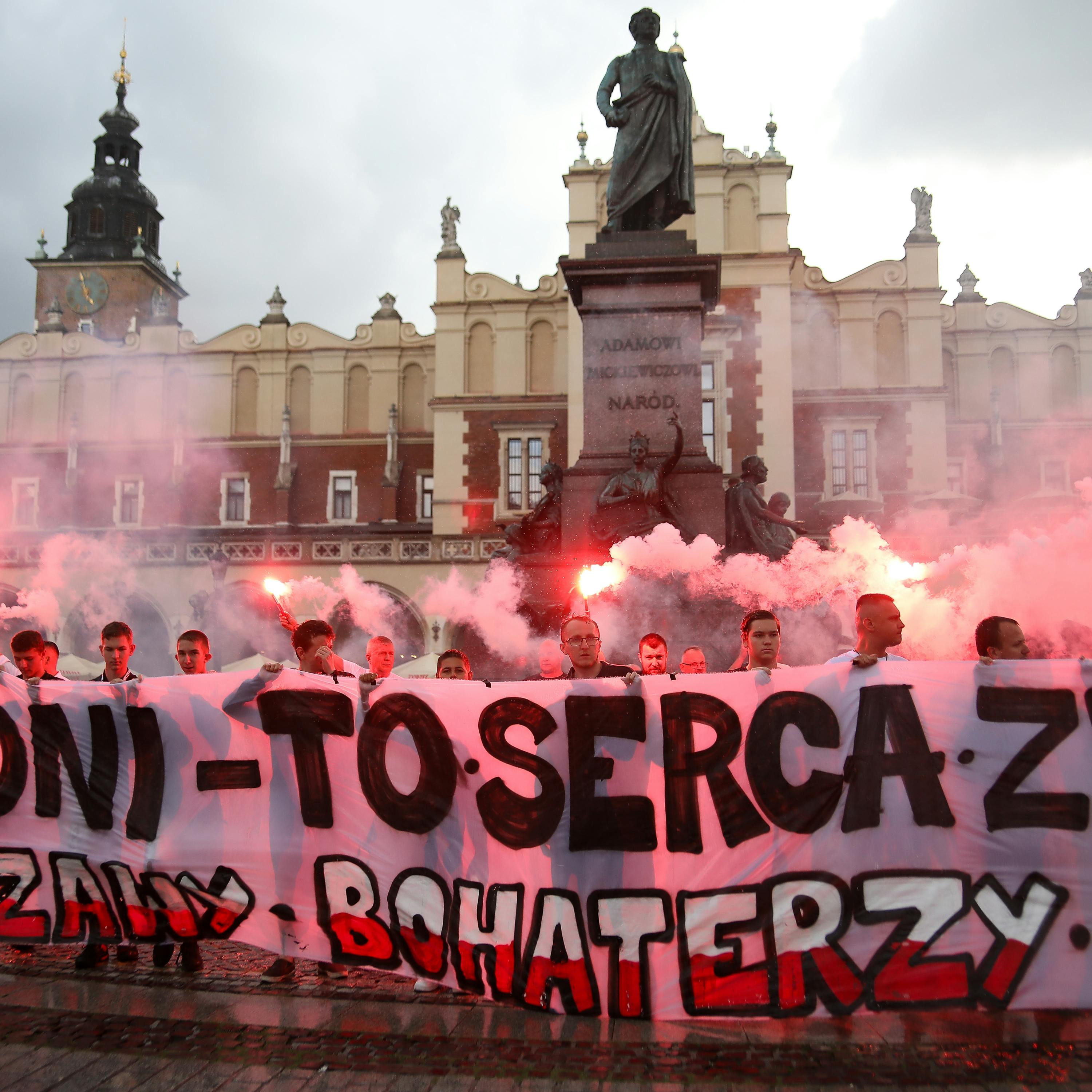
And I'm Myles Bryan. A few weeks back, Noel and I went to Poland to report on what happened a little over a decade ago when Poles voted into power a government with authoritarian leanings.
- [00:14]
Myles Bryan
This set Poland down a perilous path that seemed almost impossible to come back from.
- [00:20]
Jaroslav Kursky
They had the presidency, they had the prime minister and government, and they also decided to sort of destroy the judiciary and the media.
- [00:30]
Myles Bryan
Let's talk about that.
- [00:31]
Jaroslav Kursky
Does it sound. Does it sound familiar?
- [00:33]
Noel King
Yes, it does sound very familiar to an American. It sure does. So we went to check the story out.
- [00:41]
Myles Bryan
It's the story of how polls democratically elected an undemocratic government and how, against
- [00:46]
Noel King
considerable odds, they booted out the authoritarians and got their democracy back.
- [01:00]
Myles Bryan
Support for Today Explained comes from Anthropic, the team behind Claude. Perhaps you want a deeper, more complex understanding of the world around you. That same instinct is worth protecting when you're using AI says Anthropic. Anthropic, the company behind Claude, committed to their AI without ads, meaning what you see won't be shaped by what an advertiser paid for. Claude says Claude is built to sit with the complicated version of a story, not hand you the tidy one. Try Claude. Free at Claude AI todayexplained.
- [01:33]
Noel King
So good, so good, so good.
- [01:36]
Myles Bryan
New spring arrivals are at Nordstrom Rack stores. Now get ready to save big with up to 60% off rag and bone. Marc Jacobs free people and more.
- [01:45]
Jaroslav Kursky
How did I not know Rack has Adidas?
- [01:47]
Myles Bryan
Because there's always something new. Join the NordicLub to unlock exclusive discounts. Shop new arrivals first and more. Plus, buy online and pick up at your favorite Rack store for free. Great brands, great, great prices. That's why you wreck.
- [02:04]
Noel King
Okay, the camera. Lights.
- [02:07]
Myles Bryan
Camera, action.
- [02:09]
Jaroslav Kursky
This is the old way. There we go.
- [02:12]
Myles Bryan
All right, how about this? Tell me your full name. Pronounce it very clearly so that I say it right. Yeah. And what do you do?
- [02:26]
Jaroslav Kursky
I'm a journalist.
- [02:27]
Myles Bryan
He's a legendary journalist, in fact, and a former teenage freedom fighter, which is more common than you'd think in Poland.
- [02:34]
Noel King
Yeah. After World War II, the Soviet Union took over Poland. Unhappily, in the early 1980s, Poles started organizing, trying to throw the Communists out. Mr. Kursky, Jaroslav, he was one of them.
- [02:48]
Jaroslav Kursky
I was caught by the police and I was beaten, you know, with batons and. Badly beaten, and then kept in prison for three months.
- [02:55]
Noel King
Our colleague Gregor is translating here.
- [02:57]
Jaroslav Kursky
They broke my nose and I was all covered in blood and that's why they left me sort of in peace at last. Do you know what the so called health paths are?
- [03:06]
Myles Bryan
No.
- [03:07]
Jaroslav Kursky
So you have two rows of policemen standing parallel to each other, and in the middle you make the prisoners run and they're standing and beating them with batons. But again, there's no reason to sort of overly dramatize this.
- [03:20]
Myles Bryan
This is dramatic. The health path is dramatic.
- [03:25]
Noel King
It was dramatic.
- [03:26]
Jaroslav Kursky
Police troops refused to fire on striking coal miners in Silesia. They are insisting on open ballots and a free voice for their representatives. The government spokesman hinted last week that
- [03:36]
Myles Bryan
authorities may now be ready to bite
- [03:38]
Jaroslav Kursky
the bullet and accord Solidarity some kind of recognition.
- [03:42]
Noel King
It took a decade, but this enormous Polish freedom movement, millions of people marched, held strikes until the Soviets got out. Then the polls said, we want democracy.
- [03:55]
Myles Bryan
They specifically wanted American style democracy. America was very big in Poland. One of the get out the vote posters from that very first election in 1989 had this black and white sketch of Gary Cooper in High Noon. He had the sheriff's hat, he had the boots, but he wasn't holding a gun, he was holding a ballot.
- [04:11]
Noel King
A party called Solidarity, which was rooted in the old protest movement, won the election.
- [04:16]
Jaroslav Kursky
Good evening. This could turn out to be one of the most extraordinary days in recent Polish history. After taking support of two smaller wing parties away from the Communists, Solidarity tonight proposed a coalition government.
- [04:28]
Noel King
For years afterward, Poland was a stable democracy. It was a lot like the U.S.
- [04:32]
Myles Bryan
yeah, it swung from liberal governments to conservative governments. They had their Reagan, they had their Clinton. The economy kept getting stronger and stronger. This was a success story.
- [04:41]
Noel King
We're welcoming 10 new member states into the European Union.
- [04:45]
Jaroslav Kursky
Fireworks lit up the night sky in Poland, the third of the Eastern bloc countries to join NATO.
- [04:50]
Noel King
Yeah. You know, just about every poll agreed they hated Communism and they wanted the democracy they fought for. Whatever your policy stances, you agreed on the basic rules of the game. Regular elections, free media, independent courts, checks on executive power, protections for minorities.
- [05:05]
Myles Bryan
And for many years, polls got the elections and the free media and the courts. But then, in a split second In April of 2010, there was a disaster. And things in Poland took a bad and, in retrospect, decisive turn.
- [05:22]
Jaroslav Kursky
Amateur video caught the start of the Polish president's trip this morning in Warsaw. Then, in a bleak and foggy forest in western Russia, news cameras documented its tragic end.
- [05:34]
Noel King
There was a plane crash.
- [05:35]
Jaroslav Kursky
Pull up. Pull up.
- [05:37]
Myles Bryan
Pull up. Pull up.
- [05:39]
Noel King
Fire crews were quick to the scene Saturday, but there's little left for them to salvage as debris laid strewn across the field. The president Top political and military leaders, huge chunk of Poland's leadership gone down in flames.
- [05:56]
Myles Bryan
Now, this crash was an accident. It was pilot error. And in the immediate aftermath, polls came together and they mourned together. But then in the weeks and months that followed, something very, very dark emerged. A conspiracy.
- [06:09]
Noel King
A conspiracy that said it was not an accident. That the people on board that plane, all of our leaders, were murdered.
- [06:16]
Myles Bryan
Now here was the biggest problem. Poland's president died in the crash. His twin bro believed the conspiracy. And this was not some random guy. The twin was also a leading politician. His name is Yaroslav Kaczynski. We now know for sure that they were betrayed. It is shameful that the inquiry was handed over to Russia.
- [06:38]
Noel King
And just as shameful that we lied to ourselves.
- [06:45]
Jaroslav Kursky
Was unable to accept that his brother would die in a banal crash. He actually believed that he was murdered.
- [06:54]
Noel King
Kicinski and his twin had founded a political party called Law and Justice. And Law and Justice is key to this story. Before the crash, it had been this, like, relatively normal, center right conservative political party. But after the crash, it changed.
- [07:07]
Myles Bryan
Yeah, Law and Justice looked around for someone to blame, and they found a mark on the other side of the political aisle. The Liberal Democrats, the Liberal Dems, led by a man named Donald Tusk, were elite and worldly and believed in tolerance.
- [07:23]
Noel King
And the conservatives in Law and Justice. They became convinced the liberals who were in power at that point were lying about the crash. They started politicking off the back of it.
- [07:32]
Myles Bryan
Right, so there's a national tragedy, then a very compelling conspiracy, and then a conservative party gains popularity by seizing on this message. The liberal elites are lying to you. And then they added to the messaging. The liberal elites have nice, comfortable lives in cities. While you struggle to put food on the table, the liberal elites don't. Don't respect your traditional values.
- [07:54]
Noel King
Sound familiar? The conspiracy theory reached a fever pitch right before Poland's 2015 election. And some people saw a dark thing coming.
- [08:02]
Myles Bryan
2015, when law and justice wins. Were you surprised?
- [08:10]
Jaroslav Kursky
So, no, I was not surprised at all. And in fact, the night before the election, I wrote an op ed that where that stated that at stake in this election is democracy itself. Even at my office, like the newspaper, I was laughed at for this. Everyone's saying that Kursky's gone crazy.
- [08:28]
Noel King
He wasn't going crazy.
- [08:29]
Myles Bryan
No, he was not. He was cassandra ing the unstated agreement. Poland's democracy is a project that we all share. Was in a lot of trouble. And Yaroslav Kurski was completely right. About what happened next.
- [08:41]
Noel King
From the minute it took power, the Law and Justice Party attacked the foundations of Poland's liberal democracy. Those foundations, in any democracy, are institutions.
- [08:50]
Myles Bryan
List them, please.
- [08:51]
Noel King
Well, a couple of big ones. The courts, civil society, the media. Law and justice attacked all three.
- [08:57]
Myles Bryan
All right, so let's start with Poland's courts. When a new law is passed in Poland, top politicians have the option to ask, is this constitutional? And there's a constitutional court that answers.
- [09:09]
Noel King
This court has a lot of power in the US it would be like if the Supreme Court could sign off on new laws.
- [09:15]
Myles Bryan
And for many years, Poland had appointed judges to that court in a nonpartisan, partisan way.
- [09:19]
Noel King
But Law and Justice blew that up, jammed judges that it liked onto the courts to decide what was constitutional and what wasn't.
- [09:28]
Jaroslav Kursky
They imagined that the courts would carry out the policies of the party. For them, it's unimaginable that courts or a Supreme Court would change the decisions of the state. Of the head of state. Right. Power must belong to the head of state, and that must be Kaczynski.
- [09:45]
Myles Bryan
All right, so the courts are captured, and then comes civil society. Law and justice shut down NGOs, they raided the offices of women's organizations. They abolished a council that dealt with racism. They cut funding for LGBT organizations. Law and justice basically went after anything that suggested liberal tolerance. And then they redirected government funding to Christian groups.
- [10:08]
Noel King
And then the media. Yaroslav Kursky's paper got hit by so many lawsuits that they were worried about going bankrupt from legal fees.
- [10:15]
Myles Bryan
Did they go after you?
- [10:18]
Jaroslav Kursky
Well, me personally, I was only the object of certain media attacks. But, yeah, the idea is to create a freezing effect. You flood a certain outlet or media outlet with litigations, and they are just unable to defend themselves.
- [10:30]
Noel King
Now, his paper, Gazette Waborska, it survived. It still exists today. But it turned out something else was more vulnerable.
- [10:37]
Myles Bryan
Poland's state media. Poland State tv. It's funded by the government, but it is mostly editorially independent. Now, unsurprisingly, it always had a slight box, biased toward whichever party was in power. But it had a big audience. People watched state TV for the news. It was not sexy, but it was trusted.
- [10:55]
Noel King
Its tone was sober, responsible, centrist, even boring. But after Law and justice won in 2015, it went ham on state media. It took over.
- [11:05]
Myles Bryan
Yeah. Party leaders looked around and they found a young anchor who was working for a tiny conservative TV station, a guy named Mihel Rahon. You're a TV guy?
- [11:14]
Jaroslav Kursky
I'm a TV guy with a political background.
- [11:17]
Myles Bryan
He is Charismatic. He is handsome. He's tall. I play basketball.
- [11:21]
Noel King
You want this guy in the paint. He's huge.
- [11:23]
Myles Bryan
He is also a devout conservative. You kept calling him Poland's Tucker Carlson, but that is not how he identifies.
- [11:30]
Jaroslav Kursky
The biggest impact on me as a TV personality, I'd go for Bill O'Reilly.
- [11:36]
Noel King
Look, whatever. The point is, like O'Reilly, the guy is great at television and law and justice said, give him a show.
- [11:42]
Myles Bryan
Now, you should know that Michel was one of those people who'd never believed the story about the plane crash that killed the president. He'd been working in marketing in 2010 when the crash happened. But he made a switch.
- [11:53]
Jaroslav Kursky
I knew personally, like President Lech Kaczynski and many other people who were on board of that plane.
- [11:59]
Myles Bryan
And you decided that day to go into journalism because.
- [12:01]
Jaroslav Kursky
Because I.
- [12:02]
Noel King
Why?
- [12:02]
Jaroslav Kursky
Because I saw that to what extent the lies about what happened back then were overwhelming all over the media sphere in Poland. No one was asking a question. What happened?
- [12:15]
Myles Bryan
How did you change the coverage when you took over as anchor?
- [12:18]
Jaroslav Kursky
I was just asking questions.
- [12:20]
Noel King
State media under law and justice was such a fire hose of biased programming, it became a joke. Like, literally. There was a meme about how insane the text running at the bottom of the screen was. Some classics.
- [12:32]
Myles Bryan
Leftist fascism is destroying Poland.
- [12:35]
Noel King
The opposition's plan Take money from polls.
- [12:38]
Myles Bryan
And this one will the liberal candidate who's running for president, quote, fulfill Jewish demands? Ugh.
- [12:44]
Noel King
Yeah, boring. Centrist state media had fully foxed out. It brought the conspiracies out of the shadows and into the ears and eyeballs of millions of polls.
- [12:54]
Myles Bryan
On the other side of the political aisle, Poland's liberal Democrats were watching this, and they were furious. Not just because their rivals were running state TV and, as they saw it, brainwashing people, but because the coverage had consequences.
- [13:06]
Noel King
One example, State TV started digging into the liberal mayor of the city of Gdansk and claiming, without much evidence, he was on the take. And they went after Pavel Adamovich hard.
- [13:17]
Jaroslav Kursky
And there's several thousand television segments created about him that are just intended to destroy him.
- [13:25]
Noel King
On a freezing cold night In January of 2019, the mayor of Gdansk took the stage at an event for needy kids. As he looked out on the crowd, a man ran across the stage and stabbed him multiple times in the chest with a knife, mortally wounding him.
- [13:40]
Myles Bryan
And then it somehow got even weirder. The killer grabbed a microphone and he started yelling about Civic Platform. That's the main Liberal Democratic Party.
- [13:49]
Jaroslav Kursky
There's nothing specific in the mayor's past that suggests why he was targeted. He has been very open about liberal issues that he supports, from LGBT rights, tolerance to minorities. We will defend our Gdansk, our Poland, and our Europe against hatred and contempt. We promise you this. Farewell.
- [14:07]
Noel King
Pavel. Yeah.
- [14:10]
Myles Bryan
This was a cold blooded murder committed in public in front of kids. And who could you blame? Well, many, many polls blamed the state media after he died. The mayor's wife was like, you guys, this divisive crap is tearing us apart. She has this great quote. She says, one day we'll reach hell. And then what? We all just kill each other?
- [14:31]
Noel King
Michal Rahon, the state TV anchor, he vehemently denies that his coverage had anything to do with the murder, but it was a rock bottom moment. The respectful democracy that polls had fought for felt to many like it was vanishing in this toxic haze of partisan conspiracies. To whisper things like, the other side doesn't just disagree with you on policy, they are your enemy.
- [14:52]
Myles Bryan
This is both familiar and very, very sad. Yaroslav Kirsky was heartbroken about what had happened to the media and to
- [15:00]
Jaroslav Kursky
this guy on the left, these guys on the right, those guys scored. This one fell. It's our country.
- [15:06]
Noel King
Stakes are too high.
- [15:08]
Jaroslav Kursky
We fought for it. We were in prison for it. I can't watch it as a soccer game.
- [15:13]
Myles Bryan
It had begun to look like maybe there was no way out of this game. The country was divided politically, almost 50 50, and law and justice could win more elections in a 50, 50 scenario.
- [15:24]
Noel King
And then law and justice took another step, and this time it was too far.
- [15:29]
Myles Bryan
That's coming up. Support for Today Explained comes from Delete Me. If you're online, there's a decent chance that your personal information has been collected by bad actors. That's where Delete Me comes in. Delete Me can make it quick, easy, and safe to remove your personal data online at a time when surveillance and data breaches are common enough to make everyone vulnerable. Worth noting. The New York Times wirecutter has named Delete Me their top pick for data removal services. Compared to others out there. Claire White deleted herself the past year. Having Delete Me as my kind of security guard has been awesome. They remove tons of unwanted listings where
- [16:07]
Noel King
my data is available to all kinds
- [16:09]
Myles Bryan
of bad actors on the Internet. And I feel really good knowing that they continue to monitor it even after I've set up my account. You get monthly reports, you get to see where your information is leaving is being scrubbed from and places where you're
- [16:23]
Dominika Lasota
clean, which feels really nice.
- [16:25]
Myles Bryan
Take control of your data and keep your private life private by signing up for Delete Me now at a special discount for our listeners. Get 20% off your delete Me plan when you go to joindelete me.com today and use the promo code today at checkout. The way to get 20% off is to go to join DeleteMe.com today and enter code today at checkout. Joins elite me.com today code today.
- [16:46]
Sponsor/Advertisement Voice
Support for this show comes from Found. If you're a small business owner, wrangling your finances can feel like an ongoing struggle. You might be anxious about your taxes or stuck chasing receipts and invoices, all while toggling between multiple disconnected apps. And at the end of the day, that time could be better spent on your customers. But Found says they can help you finally get a hold on your business, finances and all from a convenient place. Found can help you eliminate your finance clutter by giving you one platform that handles it all, including banking, bookkeeping, invoices and taxes. That means no more paying for multiple subscriptions or dealing with clunky, outdated apps. Plus, Found says they want to help make tax season a little less stressful. By automating things like tracking expenses and finding write offs, you can take back control of your business. Today you can open a Found account for free@found.com that's f o u n d dot com. Found is a financial technology company, not a bank. Banking services are provided by lead bank member fdic. You can join the hundreds of thousands who have already streamed their finances with Found. Support for this show comes from American Giant. As we inch toward the spring and temperatures begin to rise ever so slowly, it can be tricky to figure out the right amount of layers to put on. But one article of clothing you can always count on, no matter the weather, is the hoodie. That's why American Giant says that their Classic Full Zip hoodie is made to last a lifetime, ready to bring you warmth and comfort year after year. But it's not just the hoodie. American Giant says that they have a wide range of clothing options that are built to last. Recently, our colleague Andrew Melnisik got to order some American Giants.
- [18:40]
Noel King
American Giant just sent me a pair
- [18:42]
Jaroslav Kursky
of their roughneck pants.
- [18:43]
Noel King
The material is great and it's made up of a cotton canvas. It's one of those types of pants where you can wear while really doing anything.
- [18:51]
Sponsor/Advertisement Voice
And this season, you can snag the hoodie that will bring you comfort for life. The American giant classic full zip and save 20% off your first order at american-giant.com when you use the code. Explain at checkout that's american-giant.com and use code explained at checkout. That's 20% off your first order@american-giant.com explained. Code explained. This is today explained.
- [19:29]
Noel King
Can I mic check you?
- [19:30]
Myles Bryan
Of course.
- [19:31]
Dominika Lasota
Hello.
- [19:31]
Noel King
Hello.
- [19:32]
Dominika Lasota
Checking. America's going to shit. It's not recording right? Or maybe it should, actually.
- [19:38]
Myles Bryan
Dominica Lasota is an activist and no one's ever beaten her with batons on the health path. But she has the same spirit as those teenage activists who fought to free Poland from the Soviet Union. I think Yaroslav Kursky would really like her. Now, around five years ago, this young activist found her reason to get activated. Her country, with its history of young people protesting oppressive regimes, had elected a conservative government. And that conservative of government had started to feel oppressive because it felt like
- [20:09]
Dominika Lasota
that government really represented everything that we really didn't want to have in our country.
- [20:15]
Noel King
In the first half of the show, we told you that Law and Justice attacked both the media and the courts. Now the media drew a lot of attention. Everybody could see what was happening. It was. It was literally on tv, right?
- [20:24]
Myles Bryan
But at first the situation in the courts was much more subtle because who among us is paying attention to what our judges are up to?
- [20:31]
Noel King
But then came the issue that can be reliably counted on to galvanize nearly everybody. Abortion.
- [20:38]
Myles Bryan
Poland is a very Catholic country and so the existing abortion law was strict. There were very few exceptions, but Law and Justice wanted to tighten it even further to make abortion illegal in just about every single case.
- [20:51]
Noel King
You know, this proposal was so extreme that Law and Justice couldn't quite get the support to pass a bill in the Parliament and get it signed into law.
- [20:58]
Dominika Lasota
Thousands of people have taken to the streets of Warsaw to protest against abortion. Potential total ban on abortion in Poland.
- [21:05]
Noel King
Poland would be the eighth country in the world to practice a no exceptions full ban on abortion for a large section of the population. Clearly it's too much.
- [21:13]
Myles Bryan
But you'll remember they had the courts. So they did the thing that authoritarians do so well. They slipped this law through on procedural grounds. They used the mechanisms of democracy for undemocratic ends.
- [21:26]
Noel King
They had the Constitutional Court rule the current abortion law unconstitutional. Turns out it was too permissive. Gotta be tighter.
- [21:33]
Myles Bryan
Very clever.
- [21:34]
Noel King
Very clever. Clever, yes, but it made protesters even more mad.
- [21:39]
Dominika Lasota
Protesters are now four and a half hours into an eight hour sit in.
- [21:44]
Noel King
Though the atmosphere is festive, the main slogan is an expression of pure rage. Here's Yar Slakurski again. Law and justice was doing lots of Things that were undemocratic. Why was this the straw that broke the camel's back?
- [21:57]
Jaroslav Kursky
So not everyone has any business in the courts. Not everyone reads newspapers. You know, they go on social media. But everyone has a mother and maybe a daughter.
- [22:06]
Myles Bryan
Everyone has a mother and maybe a daughter. And get this, some people are also mothers and daughters.
- [22:12]
Noel King
No, Dominica Lesotha is a daughter. She's 24 now. In 2020, when this abortion change was finagled through the courts, she was a teenager.
- [22:20]
Myles Bryan
What was it like being in those protests?
- [22:21]
Dominika Lasota
Oh, I mean, it was amazing. It was incredible because in my, you know, rather boring city, a city that is not politically involved, like, suddenly we saw all of these huge crowds of people just like, really erupting out of nowhere in our streets. And I remember we would be walking through these, like, very, you know, working class residential districts of the city and people would just, like, open the windows and like, you know, screamed to us. Like some of them hated us. But then also many of them were like, yes, yes. It's just kind of like uncovered this side of our nation that I didn't know, like, existed.
- [23:03]
Myles Bryan
This was fun. It was fun for her.
- [23:05]
Dominika Lasota
We would go back later on to our flats and just, like, you know, drink beers and talk bad things about the government. So it was, it was incredible.
- [23:16]
Myles Bryan
And being out in the streets a little buzzed gave her an idea, an idea you can only have in a democracy. And here was the idea. In a democracy, there is always a next election.
- [23:28]
Noel King
The abortion protest didn't actually overturn the law, but they did something else important. They proved that large masses of polls could mobilize against law and justice. And if all those people voted, it might be enough to vote Law and Justice out.
- [23:41]
Dominika Lasota
And in 2023, at the beginning, like, that is exactly what we were trying to figure out. Like, how can we yet again, like, unleash that force or, like, tap into it to finally deal with, you know, the sources and the reason behind all of these injustices that we've been seeing.
- [23:58]
Noel King
For Poland's Liberals, the 2023 election felt like a last stand. Law and justice had been in power for eight years. They had the courts, they had the media, they were chipping away at everything that Polish liberals felt like they'd built since they went to vote for the first time under posters of Gary Cooper holding a ballot.
- [24:15]
Myles Bryan
And in this election, polls were really pissed about a lot of stuff, but definitely about that abortion law, Law and Justice had lost a lot of support. In fact, the man who was their literal prime minister at the time, Mateusz Morawiecki admitted as much to us in an interview in Warsaw.
- [24:31]
Noel King
I think that the ruling of the Constitutional Tribunal on abortion was not necessary because it was the moment when we.
- [24:40]
Myles Bryan
The popularity of our party dropped by 10 percentage points and we never recovered. The abortion law was that significant?
- [24:47]
Noel King
Oh, that was absolutely significant. The Liberals realized they had a shot
- [24:53]
Myles Bryan
at taking power back, but first they had to unite.
- [24:56]
Noel King
So they did.
- [24:57]
Myles Bryan
The center left, the far left, the Farmer's Party, not that far left. They said, look, we disagree on some stuff, but we agree on democracy.
- [25:05]
Noel King
The deal they struck was, we don't undercut each other.
- [25:08]
Myles Bryan
They called the former Prime Minister, Donald Tusk to lead them. The right hated this guy. Remember, it's like if Obama came back.
- [25:15]
Noel King
Law and justice, they tried to fight back. They called the opposition criminals, even communists, which is like the ultimate diss in Poland. They even tried to ban Donald Tusk from running, which was a bad move. It was a really bad move. Nobody likes being told who they can't vote for. It led to huge protests, and it
- [25:31]
Myles Bryan
played right into the Liberal Democrats hands because they were out there saying, this is not just an election. Your democracy is at stake. And it was. So In October of 2020, 2023, polls went to the polls.
- [25:45]
Dominika Lasota
We met together like an hour before the results and, like, already sat down on the couch and just, like, stared at the tv and like, everybody was silent. We were all just like, we're either gonna, like, drink a lot of hard alcohol later for the bad reasons, or we're just gonna, like, run to the streets for the good reasons.
- [26:06]
Noel King
They ended the night in the streets.
- [26:09]
Myles Bryan
Poland won. Democracy has won. We have removed them from power. In a speech this morning to Parliament, Tusk promised to restore democratic norms.
- [26:19]
Noel King
74% voter turnout, more than the first free election in 1989. 68% of young people, a youthquake analysts called it.
- [26:28]
Dominika Lasota
I burst it into tears because it also felt like we really pulled something impossible. That's what it felt.
- [26:41]
Jaroslav Kursky
We're really on our last legs here at the, you know, at the newspaper, but also among our families and friends here.
- [26:47]
Noel King
We must note, when all the votes were counted, Law and Justice still won the largest share of seats in Parliament. The problem was everyone had allied against them. In Poland's parliamentary system, you need coalition partners, allies to form a government. The Liberals, they had allies. No one was interested in allying with the conservatives anymore.
- [27:05]
Myles Bryan
Law and justice was cooked.
- [27:07]
Dominika Lasota
And I remember I said this, everything's going to change now. And I have it on the video. I, I love how hopeful I was. I'm so I, I found that 21 year old girl cute, but she did not know what what's coming. Yeah, I don't watch that video like often. We were absolutely clueless.
- [27:44]
Myles Bryan
So you voted the authoritarians out. Great job. Now comes the hard part.
- [27:49]
Noel King
That's tomorrow on Today explained.
- [27:55]
Myles Bryan
Miles Bryan produced today's show. Jolie Myers edited, Patrick Boyden, David Tadashore engineered and Andrea Lopez Cruzado checked the fashion. Thanks so much to Gregor Sokol in Warsaw. I'm Noel King.
- [28:05]
Noel King
And I'm Myles Bryant. It's today explained.