← Today, Explained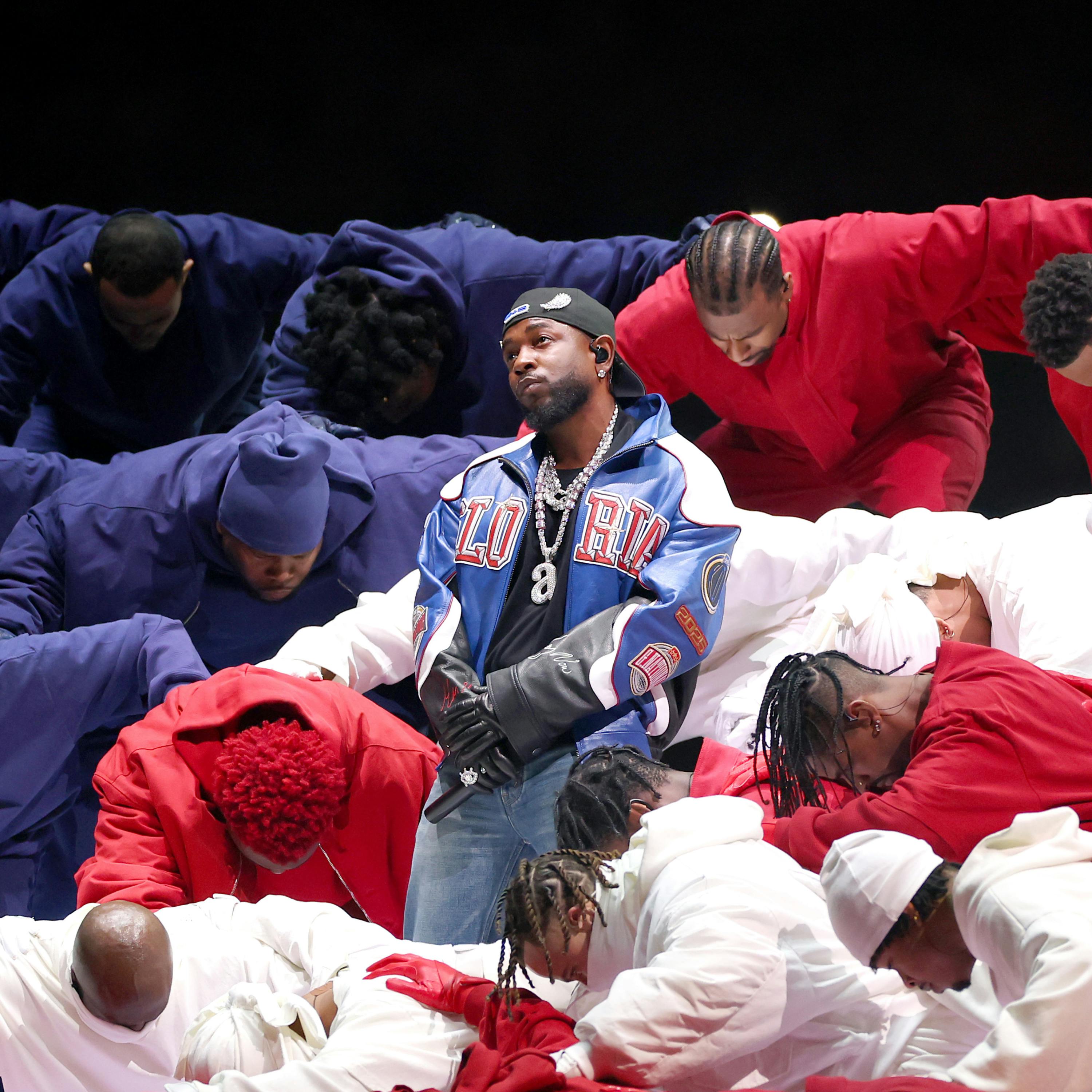
Today, Explained
Our complicated relationship with the flag
00:29:45
Beyoncé and Kendrick Lamar openly celebrate the American flag. But a lot of Black Americans feel differently. What does that tell us about identity today?
Loading summary
Transcript49 lines
- [00:01]
Jonathan Hill
Support for Explain it to me comes from WhatsApp. Nobody likes having someone look over their shoulder when they're texting or listening in on a personal call, or peeking at your note to self. You deserve privacy in person and digitally, and WhatsApp gets that by design. No one, not even WhatsApp can see or hear your personal messages except the person you send it to. If someone tries to take a peek, all they see is gibberish, and that includes WhatsApp themselves. WhatsApp message privately with everyone. Visit WhatsApp.com privacy to learn more.
- [00:46]
Al
Hi, my name's Al, and I have a question about the relationship between African Americans and the American flag. I've just been thinking about the Kendrick Lamar performance and really, Beyonce's concert country album, and how both of them used the American flag, or at least its colors. And I'm just interested to see how that's kind of evolved or where it sits today or tomorrow and yesterday.
- [01:11]
Jonathan Hill
Anyway, I've been thinking about this too. Anyone who knows me knows I'm a Beyonce fan. By the time you hear this, I'll be recovering from her July 4th show outside D.C. beyonce famously doesn't do many interviews, but she's intentional about every choice she makes, so a big concert on the fourth in the nation's capital isn't a coincidence. With Cowboy Carter, Beyonce leaned into her American identity, and that was kind of surprising. It's a weird time for America right now. We have ice raids messing with birthright citizenship and getting in wars in the Middle east again. But it's not just Beyonce with the Americana aesthetic. That's where Kyle Dennis comes in. Last year, he wrote an article about artists making use of American flag imagery. Not just Beyonce, but also the rapper Sexyy Red, who released a mixtape called Make America Sexy Again.
- [02:11]
Ted Johnson
I think part of it is probably because we're at a point where how we define America varies so broadly and so widely across generations that we're in a moment of okay. Is it okay to have pride in this country, knowing what it is doing across the global south, what it's doing in the middle EAs, what it's doing to its own constituents back home? Is it okay to still look at this flag and look at this country and be like, I can still find pride and love for this thing and what my ancestors helped build and what I helped contribute to this country to make this a livable place that's full of diversity and full of so much goodness? Can that live alongside the bad? Those are questions that I think we're all consciously asking a lot more, especially having access to everybody's thoughts and opinions online. And a lot of the conversations feel a lot more tense than. Than maybe they actually are for the general public.
- [03:03]
Jonathan Hill
Okay, let's go through some of these artists. Where should we start?
- [03:06]
Ted Johnson
So Sexyy Red, we can start off with her. She's bad and Sexy Beatruss was her mixtape that had, you know, the little Drake song on there. You my everything, bae, I love you.
- [03:17]
Lisa Ackermolder
You my everything.
- [03:19]
Ted Johnson
Sexy's music is very fun, very casual, very delightfully ratchet. We're just here to have a good time with Sexyy Red. The way that I kind of interpreted her use of the American flag and really wasn't even her use of the FL specifically, was her use of maga aesthetics on top of that, because it's not just the American flag. On stage during her sets during this time, she has an inflatable red cap that says Make America Sexy Again. She's selling merch and towels and baseball caps that have Make America Sexy Again on it. And the way I kind of interpreted that was as much as there are people in this country who find a sort of freedom in how balls to the wall Trump is and how just like, he can say whatever he wants to say without any regard for retaliation, he's just being him. And there's just a cult of personality that's built around being that brash and that loud. I think Sexy kind of sees a similarity in how her music just inspires you to be as ratchet and as rocket as all hell.
- [04:15]
Lisa Ackermolder
Pound Town just left Pound Town.
- [04:21]
Jonathan Hill
And what about Queen Bey?
- [04:23]
Ted Johnson
Beyonce. Beyonce. Beyonce. I don't even really know where to begin with Mrs. Carter.
- [04:30]
Lisa Ackermolder
Say, hey, Ms. Carter.
- [04:34]
Ted Johnson
Cause it is just there's so much happening with Cowboy Carter. And I think from the onset, I want to say I try very carefully to level out my criticisms and my critiques and my thoughts about this particular project, because it is still part of and still unfurling trilogy. But generally, Cowboy Carter, when this album cover dropped, we have Beyonce sat atop a white horse waving the American flag.
- [05:02]
Jonathan Hill
This ain't Texas.
- [05:04]
Ted Johnson
It is not an altered version of the flag, as a lot of previous album covers from black artists tend to do. Whether that's turning the stars into bullet holes, making it black and white, making it pink and navy. This is just your regular red, white, and blue flag. Everything seems to be intact. Nothing's, you know, torn or tattered. What was interesting to me when the album cover dropped was that you don't see the entire flag parts of it are cropped off the entire top half of it, pretty much almost all the stars you don't really get to see. You can obviously make that assumption that it's the American flag, but that's a choice not to have the entire thing in the frame. You could have zoomed out a couple pixels and we would have gotten the whole picture. So it made me think, okay, this is intentional. So her use of the American flag, generally, I do think it's just her trying to give black Americans a window to understand that it is okay for them to have pride and love for this country, Especially if there are parts of bloodlines that they can really trace back generation upon generation to this country, this land. That the contributions of their ancestors are something to be proud of.
- [06:09]
Jonathan Hill
I want to go back in time a little bit. Who are some modern black musicians who use the flag to, like, really say something politically?
- [06:18]
Ted Johnson
So we can go. We can start electron in the 70s. Sly of the Family Stone actually did top the Billboard 200 with there's a Riot Going On. Thank you for letting Riot be Myself. That album cover replaced the stars of the American flag with nine point stars emblazoned across a black background instead of a blue background. The LP's title was a direct response to Marvin Gaye's what's Going on, which was released six months earlier.
- [06:45]
Lisa Ackermolder
Brother, Brother, Brother, There's Fox.
- [06:49]
Ted Johnson
And they altered the classic look of the flag to kind of complement the album's really bleak outlook on the turbulence of the 60s and the fate in the face of a rising black power movement. So then we can go to the 19 to 1990. One of my favorite rap groups, 2 Live Crew. They kicked off the decade with Band in the usa. It was actually the first album in music history to have the RIAA parental advisory sticker on it. And they kind of leaned on Americana to double down on their claim to Americanness. We've got white collar people trying to crap our stars saying we're too nasty and we're too live Corrupted politicians playing games bringing us down to boost their fame they must. No, they were being forced out of the label of being American, both culturally and legally due to the vulgarity of their music. So it was like, y' all are too nasty to be American number one. And number two legally won't even allow you to release this music without a sticker because it's so un American. And they're like, oh, bet you know what? We banned in the usa and we gonna have Americanaesthetics all over this album to let you know that this too is America. They're using not just the flag, but the colors, the word America, the acronym usa, other era of Americana aesthetics to make a kind of political statement.
- [08:12]
Jonathan Hill
Does utilizing the flag motif feel especially fraught right now? You know, I think of my own relationship with patriotism, and I feel like I never get like, ooh, go America. Until I don't know. I see Simone Biles do something every four years, and I think that's the case for most black people I know. Why are artists leaning in in this particular moment?
- [08:35]
Ted Johnson
We're seeing right now a conscious effort to redefine what America means, whether that's culturally or whether that's legally in terms of immigration status, with them trying to take away breadfight citizenship. If we can allow the concept of Americanness to be that malleable, why not make it malleable enough that it also fits us? Why just kind of sit down and let them rewrite what being pro America looks like? Why should we let the MAGA crew take all of the aesthetics and make it their own when we're here too, and we're not going anywhere and we haven't been going anywhere, especially when it's coming out of a fear of America hurtling towards becoming a country that has a minority of white people in the near future. We know where that kind of fear is coming from. But this is also our country. We also help build it. So we should also be able to access those symbols and use them for whatever we want to say in our own ways.
- [09:37]
Jonathan Hill
More when we're back on Explain it to me. Support for Explain it to me comes from WhatsApp. WhatsApp is committed to keeping users personal chats safe. That means the things you want most to keep private are indeed kept private, even from WhatsApp. Say your family reunion's coming up. You devise a plan to surprise your grandparents with color coordinated outfits. So you gotta get all your cousins in on the gag. And WhatsApp can be the place everyone hashes out the details. Or maybe you're an academic who needs a secure way to connect with subjects for your research. For all your calls, messages and personal chats, WhatsApp is the secure place for you and everyone in your circle. No one, not even WhatsApp, can see or hear your personal messages. When it comes to sharing everyday messages, milestones and meaningful moments, the only people who see your personal messages are the people you send them to. That includes personal calls, plus any documents, photos or media that you share in your personal chat. No one's listening in. Not even WhatsApp. Because all WhatsApp sees of your personal messages is gibberish. That's how WhatsApp works. Your personal messages stay yours. WhatsApp message privately with everyone. Visit WhatsApp.com privacy to learn more.
- [11:02]
Lisa Ackermolder
I'm Lisa Ackermolder. I'm the director of the Betsy Ross House in Philadelphia, and today is actually my 25th anniversary with the organization. I just realized that I started as collections manager in 2000 and I became the director eight years later.
- [11:18]
Jonathan Hill
The Betsy Ross House is literally a house. It's a little townhome in Philly where visitors can interact with early American history. And with Betsy Ross, who's said to have made the first American flag. I think most of us probably have this image of Betsy Ross sitting in a rocking chair by the fire, sewing this flag and then presenting it to General George Washington. Is that how it really went down?
- [11:43]
Lisa Ackermolder
Not exactly. You're onto the right track though. Betsy Ross was actually an upholsterer. She met her husband, John Ross, while they were both doing a seven year long upholstery apprenticeship. They married and they started their own business and they were getting some pretty big jobs from important people like Ben Franklin and George Washington, so they were really on their way to a lucrative career. So as the story goes, according to her family, she was working in her upholstery shop one day and George Washington, Robert Morris, who was a financier of the American Revolution, and George Ross, which was her late husband's uncle, came through the door. And she knew they had to have been there for an important reason.
- [12:25]
Jonathan Hill
They announced themselves as a committee of Congress and stated that they had been appointed to prepare a flag and asked her if she thought she could make one, to which she replied with her usual modesty and self reliance. That quote she did not know, but she could try. She had never made one, but if the pattern were shown to her, she had no doubt of her ability to do it.
- [12:44]
Lisa Ackermolder
She certainly had the skills and the supplies needed to make the flag because they weren't much different from the work that she had done as an upholsterer. So she did make one suggestion to change the design. She said that the six pointed stars that were in the design should be changed to five pointed stars and nothing.
- [13:02]
Jonathan Hill
Easier was her prompt reply. And folding a piece of paper in the proper manner with one clip of her ready scissors, she quickly displayed to their astonished vision the five pointed star.
- [13:13]
Lisa Ackermolder
She showed them her trick and they were impressed with that trick and decided that that would be A good change to the design of the flag. The reason why she chose a five pointed star rather than six was simply it was just easier to make. Keep in mind, stitching the flag for the rebel colonies would have been an act of treason. So she had to do it in secret. If caught, she could have been imprisoned or executed. She had to do it in a private place, and we believe that was done in her bedroom. After her public work was done in her upholstery shop. During the day, she would retire to her bedroom and sew the flag in secrecy. There.
- [13:48]
Jonathan Hill
Are historians in agreement that Betsy Ross is the one who made the first flag.
- [13:54]
Lisa Ackermolder
No, they're not. And that's because there's no quote, unquote, smoking gun, so to speak, to prove that Betsy made the first flag. I'd be thrilled if we could find a journal entry entry or a letter from George Washington referencing his meeting with Betsy. But unfortunately nothing like that has been discovered yet anyway. But we do know that George Washington was a previous customer of Betsy. He hired her to make bedding for for Mount Vernon. Also, her husband's uncle, as I said, was a member of the flag committee that visited her. So it makes sense that he knew of his nephew's recent passing and that his widow was probably struggling. So it makes sense that he'd suggest Betsy to make the flag so she could earn. There's also a receipt in which Betsy was paid a substantial sum of money for making flags for the Pennsylvania Navy board. But it was a year later in 1777. We knew she went on to make flags for over 50 years. So there's a great deal of circumstantial evidence to suggest that she had something to do with the creation, but no definitive documented proof. And that's part of the reason why there's some disagreement among historians.
- [15:00]
Jonathan Hill
Earlier in the show, we talked about musicians using flag iconography to send a particular message. Are there groups of people who are especially focused on this early Betsy Ross flag as a symbol of America?
- [15:14]
Lisa Ackermolder
Sure, yeah. There are people who have adopted not just early flags, but many of the symbols and quotes and people of the American Revolution to represent their agenda or their beliefs? Unfortunately, there are some members of the far right who have used this imagery. But now we're seeing a lot of people who identify as progressives who are using Revolutionary War iconography to represent the fight against the policies of the current administration. In fact, a woman who carried a Betsy Ross style flag at the Philadelphia no Kings rally this past June donated it to the Betsy Ross house and told me that she and her friends dressed like Betsy Ross and George Washington as they marched, which was really great to hear.
- [15:54]
Jonathan Hill
Do you find that people who visit the Betsy Ross house feel an emotional connection to the flag on their visits? And if they do, where does that come from?
- [16:04]
Lisa Ackermolder
Some people have a very emotional reaction when they come here. They almost like consider their trip to the Betsy Ross house like a pilgrimage because the American flag is so meaningful to them. But then there are also people who have a negative response to seeing the American flag. I think people who do feel positive emotions when they come here or when they see the flag, they feel pride and they see it as a symbol of hope and unity. But then it's, you know, some people feel anger or sadness, and they view it as a symbol of exclusion or injustice or oppression. I would say that it is the most powerful and recognizable symbol of our national identity. So it makes sense that people have a strong response to it, either positive or negative.
- [16:53]
Al
This Fourth of July is yours, not mine. You may rejoice. I must mourn.
- [17:06]
Jonathan Hill
So the flag can be complicated, no matter your background. But what if you have to defend it when it doesn't defend you? That's next. Support for Explain it to me comes from WhatsApp. WhatsApp is committed to keeping users personal chats safe. The things you want most to keep private are indeed kept private, even from WhatsApp. If you've used WhatsApp, you probably already know this. It might be where you reconnected with that friend you met during study abroad in your college years. Or it might be where you organized a surprise going away party before your neighbor's cross country move. WhatsApp is there for everyday connections and important milestones alike. And through it all, privacy is the name of the game. That goes for your personal chats too. It's a place on WhatsApp where you can share everything and a place you can feel like is your own. And it's WhatsApp's priority to make sure it stays private from outside eyes. Even theirs. That's why no one, not even WhatsApp, can see or hear your personal messages. The only person who sees your personal messages is the person you send them to. From personal calls to documents, photos and media, your personal Messages stay yours. WhatsApp message privately with everyone. Visit WhatsApp.com privacy to learn more, it's Explain it to me. We're back talking about Black Americans and the American flag. I went to college with a few posters to hang on my walls. My roommate had a Jamaican flag her pants are from Jamaica. Mine are from the US And I would always be like, that's so cool that you have a flag you can rep. I do not have that because I'm not gonna big up America. But Ted Johnson does. He doesn't think America is perfect, but despite all of it, he says black people have been able to build lives here, create a culture here. We built the White House. And he's not gonna abandon that just because there's bad stuff, too. Ted is a retired US Navy commander who served in Iraq and Afghanistan, and he's a patriot, even though he knows the word is loaded. He told me, yeah, the flag elicits a lot of complicated feelings for him, too.
- [19:26]
Al
Yeah. So, look, the flag has sort of been hijacked a little bit, I think, by. By nationalists, folks that believe, you know, either American. America is perfect and exceptional, or at the very least, anything that it's done wrong in the past should be sort of excused by all the things that it's done well. And that is not my relationship with the flag. It's much more complicated because there has been tons of harm done under that flag. So there is no uncritical pride in the flag for me. But it is also a flag that black folks have fought under, have bled, died, and sacrificed for the principles, you know, Frederick Douglass, Martin Luther King, these folks call these principles out that the. The flag's supposed to represent. And I take the beauty of those moments with the same ugliness that the flag has represented. It can be both things. Both things. Something to be proud of and ashamed of. And so I think if you take it that way, allow it to be complicated and complex, it becomes something beautiful and worth honoring.
- [20:29]
Jonathan Hill
We were talking about how to kind of tease out this relationship between black Americans and the flag. And one way to do that is to talk about the experience of black service members. Can you go ahead and lay up that history of military service for us?
- [20:45]
Al
One of the earliest instances of this that I think sort of sets the stage for everything else that happens in the country is an enslaved man named Jehu Grant in Rhode island during the Revolutionary War. He was enslaved. The man that owned him was a loyalist to the Brits. He was afraid that he was going to be shipped off, sold essentially to the Brits to fight for them. So he runs away, joins Washington's army, and then his master shows up and says, army, you've got my property, and I want it back. And the army turns him back over to the guy that owns him, where he serves for many Years eventually buys his freedom. And when Jackson, Andrew Jackson becomes president in the 1820s, 1830s, he makes it policy to provide pensions for those Revolutionary War folks still alive. And so Jehu, like a Revolutionary War veteran, applies for his pension and is denied. The government says that services rendered while a fugitive from your master are not recognized. That is the relationship of black service members to the flag. It represents a set of principles that many would be willing to die for and also a way of life that intentionally excluded black folks for no other reason than race and status of their servitude. And so if you look at any war, War of 1812, World War I, 2, Vietnam, Korea, Desert Storm, you name it, you will find black folks in uniform who have both been oppressed in the country they represent and are willing to die for that country because of the values it stands for and because of the folks that came before them that died blood and sweat for their right to be able to serve and benefit from the programs that the military has made available to folks.
- [22:29]
Jonathan Hill
My grandfather served in the military, and I never got the chance to really talk with him about that and that experience. But. But I'm curious if you can speak to the motivations of black Americans who continue serving, especially during the Jim Crow era. I mean, the idea of fighting for a country that's persecuting you is just so dissonant. And yet a lot of black Americans have done it.
- [22:54]
Al
Yeah, it's super complicated. I mean, I think pre Civil War, a lot of enslaved black folks that decided to fight did so because they believed their chances at liberty, emancipation, freedom were connected to their willingness to serve the country. And so it was sort of like, I can earn my citizenship, I can earn my equality if I'm willing to fight for the country's interests. After the Civil War, the motivation still very much the same because of black codes and Jim Crow, but then we get the draft. And so a lot of the black folks that served in the early part of the 20th century were drafted into service. They weren't like, you know, eager volunteers lined up as a way of earning their citizenship or equality. But the fact that most of the large, vast majority of them, nearly all of them, honored that draft notice, you know, the sort of the commitment of citizenship, though they were treated as second class citizens, was also a sort of implicit demand for access to the full rights of the Constitution and willing to serve in the military as a, as sort of collateral on that demand, as a sort of down payment on the citizenship that they're demanding and eventually was delivered you know, thanks to legislation and the Supreme Court and, you know, the movement of the public. It was not, you know, because the country decided that what it had done was so wrong that it now must open the doors. Instead, it was. These were concessions. These were gains that came at the expense of black people's lives. And again, their work, their sweat, their commitment, and the progress is a product of black work. But there's also something I want to say here. It's not just one way and sort of black folks love for the flag. You know, in the. When black folks were coming home From World War I and 2, many were lynched in uniform. So, I mean, they weren't even excused from sort of the racial dynamics by willing to die for the country. One of the most famous genres of music in this period was called coon music. And one of the. Yes, literally, like that word, right? If he won't work, then let it go. And the music was basically Jim Crow put the song to make fun of black people and their, you know, their desire for humanity. One of the songs was about black people not having a flag. They talked about white folks in the northeast could fly flags from Italy, Ireland, wherever they're from. And white people in the States could just fly the American flag. Black people could fly none of those because we didn't know where we were from, and the United States is not ours. And so in this song, they say the black flag is basically two possums shooting dice. And that would be an accurate represent representation that is like some.
- [25:47]
Jonathan Hill
That's like some classic racism. I don't know. You're hitting me with the classics right now.
- [25:52]
Al
Yeah, it was. The song is called Every Ra Has a Flag but the Coon. And so we are very familiar with sort of the red, black, and green Pan African flag. This was Marcus Garvey's response to this genre of music. Say, oh, we do have a flag. It's red, black and green. For these reasons. And that. That continues to represent. You see a lot of Juneteenth, Kwanzaa, you know, things that have the red, black and green, that sort of Pan African, black look.
- [26:19]
Jonathan Hill
But what about black artists and also black people in general who just say, hey, like, yeah, our ancestors may have done all this work, but there really is no way to be a part of this slash. Maybe we should not be trying to be part of this. What do those. When you're having those conversations, what do they sound like? Cause I know you probably get a lot of pushback when you're having these conversations with people.
- [26:47]
Al
So it's like what you take pride in. You know, it's. If you take pride in the flag because you believe America is exceptional, you're going to find a lot less subscribers to that belief system than one that if you say pride in the country means being proud of the people you come from and proud of the arc of your people's story in this country. So it is very complicated and there's no easy way through it. But I will say that I think part of the reason we're seeing more folks willing to sort of reclaim the flag for their own is because Gen X, I'm Gen X. I was born in 75. My generation was the first one born. Post Civil Rights act of 64, really, post Voting Rights act of 65. So Jim Crow was the experience of our parents more than of us and millennials and Gen Z. It's the same thing. So those experiences connected to the sort of hijacking of the flag to connect it to explicit statutory racism feels generations removed from folks, black folks today, Gen X and younger, who have grown up in America where opportunity is more available, where Jim Crow kinds of racism is not as permitted. And while the country is not even close to being the kind of equal nation it says it was founded to be, it's made progress. And I think a reclamation of that flag by Beyonce and others is a sort of signal that, yes, we built it, yes, we've progressed here, and no, we're not leaving. There's no go back to Africa. This is home. And so if this is home, I'm gonna fly the flag of my country. And look when Curry's hitting threes in the Olympics, when you go overseas and get to show that American passport when you land back in the States, there's parts of this country, our music culture, especially black culture, has changed the world. We've changed basketball. I mean, there's lots to be proud of about what the country has achieved and black Americans in particular. And for me, that is all the things that patriotism represents, not the more narrow, exclus version that tends to get more daylight.
- [28:52]
Jonathan Hill
That was retired Navy Commander Ted Johnson. He's an advisor at New America and a columnist for the Washington Post. This episode was produced by Victoria Chamberlain, and this is her last production with us. Thank you so much, Victoria, for your 4 years plus of service to this team. It was edited by our executive producer, Miranda Kennedy, fact checking by Melissa Hirsch, and engineering by Andrea Christensdotter. Special thank you to Martha Jones and Hannah Pfeiffer. Also, shout out to Noel King for the extra eyes. I'm your host, Jonathan Hill, and fingers crossed, I still have a voice after this concert. Thank you so much for listening. Talk to you soon.
- [29:33]
Lisa Ackermolder
By.
- [29:48]
Jonathan Hill
Support for Explain it to me comes from WhatsApp. Your private messages should remain that way. Private. From everyday, mundane texts to photos of major milestones to meaningful calls and voice messages, WhatsApp is your go to for secure private messaging. By design, no one, not even WhatsApp, can see or hear your personal messages except the person you send it to. If someone takes a peek, all they'll see is gibberish, and that includes WhatsApp themselves. WhatsApp message privately with everyone. Visit WhatsApp.com privacy to learn more.