Loading summary
Transcript95 lines
- [00:02]
Sean Ramsford
It's summertime. Happy summertime. And maybe you're not totally happy because of that one war or that other war, or your concerns over our trade war, or maybe you're worried about some new war. But at least we've got summer and the sun. Or where I live in D.C. we've got rain and sun. Summer in D.C. means lots and lots of rain. Just like earth shattering thunderstorms that break when the humidity builds and builds and builds and the skies just can't take it anymore. And it turns out there's plastic in that rain, not like big chunks of plastic. Our old arch nemesis, Micro Plastics are in the rain. And earlier this year we explained and today we're going to revisit that explanation.
- [00:51]
Salesforce Ad
Support for this show comes from Salesforce. Today, every team has more work to do than resources available, but digital labor is here to help. Agentforce, the powerful AI from Salesforce, provides a limitless workforce of AI agents for every department. Built into your existing workflows and your trusted customer data, AgentForce can analyze, decide and execute tasks autonomously, letting you and your employees save time and money to focus on the bigger picture, like moving your business forward. Agentforce what AI was meant to be learn more at salesforce.com agentforce.
- [01:32]
Adobe Ad
As marketing channels have multiplied, the demand for content has skyrocketed. But everyone can make content that's on brand and stands out. With Adobe Express, you don't have to be a designer to generate images, rewrite text and create effects. That's the beauty of generative AI that's commercially safe. Teams all across your business will be psyched to collaborate and create amazing presentations, videos, social posts, flyers and more. Meet Adobe Express, the quick and easy app to create on brand content. Learn more@adobe.com Express Business.
- [02:08]
Sean Ramsford
I just want to say one word to you. Just one word. Yes, sir. Are you listening? Yes, I am today, explained Sean Ramsford. I'm here with Benji Jones, environmental correspondent at Vox, and Benji's here to talk about a piece he wrote for Vox on Plastic Rain. But before we get there, Benji, you know regular listeners of the show will be familiar with microplastics. But for all the irregulars out there, could you just remind them what they are?
- [02:37]
Benji Jones
Sean? It's in the name Micro. It's just right.
- [02:39]
Sean Ramsford
It's that easy, no?
- [02:41]
Benji Jones
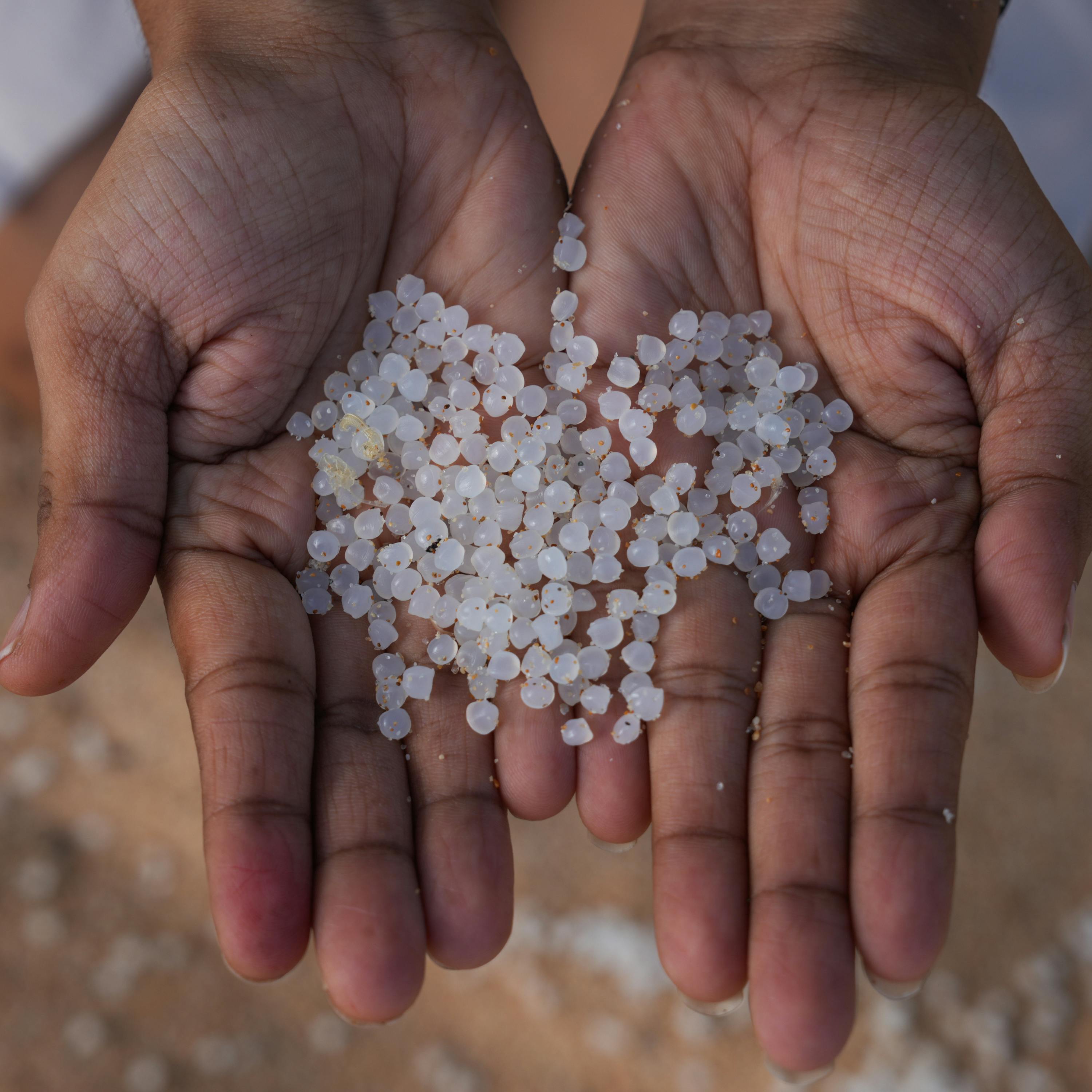
Yeah. Basically it is really tiny bits of plastic. Technically speaking, we're talking about plastic pieces that are less than 5 millimeters long on like their longest side. So it's like half a centimeter, not necessarily invisible, but you can get much, much, much smaller and into like another category called nanoplastics, which are less than one micrometer, which is a millionth of a meter or a thousandth of a mill or so. They can get very, very, very small. Basically, everywhere scientists look on this planet, in our bodies, in animal bodies, we find microplastics. So they are truly absolutely everywhere. And these are like plastic fibers. So like the fibers that make up your nylon or polyester jackets or T shirts, they could be broken down pieces of water bottles that have been crushed on highways. They could be nurdles, which are like these little pellets that are used to make other things out of plastic. They're like the virgin use to make plastic. So they're like, they're just all over the place.
- [03:39]
Sean Ramsford
And that includes in our rain.
- [03:43]
Benji Jones
Yeah.
- [03:43]
Sean Ramsford
Which I didn't know until I read your piece.
- [03:45]
Benji Jones
Yeah. So, like, on the one hand, microplastics are absolutely everywhere. So, like, the fact that it's in the rain is maybe not as surprising. But to me, when I was learning about plastic rain, that there is plastic in our rain, it was really shocking to me because it suggests that, like, plastic is part of our ecosystems. It is like, as fundamental at this point as like, microbes and bacteria. It's just like part of the world that we live in, part of the fiber of the planet. And that, to me is quite scary and like, another level.
- [04:17]
Sean Ramsford
And when you say that it's in our rain, can you just help us understand what exactly that looks like? I mean, can you literally see it?
- [04:27]
Benji Jones
More often than not, you can't see it. So these are really, really small particles of plastic. And that's because in order for microplast to get into the rain, they have to be transported by the air. They have to be in the air. And so all these sort of invisible pieces of plastic are in the rain, falling down. And there are a handful of studies that have found plastic in rainfall all over the world and in some, like, kind of scary quantities too.
- [04:51]
Sean Ramsford
Hmm. Like how much?
- [04:53]
Benji Jones
Yeah. So the study that I was like, okay, I need to write about this was. It was a study of rain and dust falling on national parks and wilderness areas in the West. These are like Grand Canyon, Bryce Canyon, Joshua Tree. And these researchers found that the amount of plastic that was falling on these national parks and wilderness areas every year is equivalent to like 120 to 300 million plastic water bottles every year. So, like, you see trash when you're hiking through the wilderness, but, like, there's actually trash, like falling from the Sky. And it is probably more than the physical pieces that you can actually see. It's just like, everywhere.
- [05:37]
Sean Ramsford
Everywhere. Like, does that mean there's microplastics in the rain in Detroit, Timbuktu, Fiji? Like, is there no place on Earth where you won't encounter microplastics in the rain? Or is it, you know, closer to polluted spaces, closer to cities, whatever it might be?
- [05:54]
Benji Jones
Yeah, it's really everywhere. I mean, Sean, it's in the French Pyrenees. Like, it's in snowfall in the Alps. It is. Just because there is microplastic in the air, it's able to get all over the world. And so I saw studies in China, India, Europe. There are microplastics in the ocean, like tens, if not hundreds of trillions of plastic particles. Beach sand, all around the world, seafood, which is like, again, it's in the ocean, so it's in our fish, it's in our homes, it's in the carpets, plastic fibers, et cetera. It's in snow in Antarctica, it's in sea ice, it's at the bottom of the Mariana Trench. One of my favorite studies, but also kind of sad. Scientists looked at dolphin breaths, like the size of dolphins, and found microplastics in the breath of these dolphins. So, like, dolphins are breathing out microplastics.
- [06:45]
Unknown Speaker
This is a microplastic fiber found in dolphin breath, and it's 14 times smaller than a human hair. We found it by holding a petri dish over dolphins bullet holes so we can analyze what they breathe out.
- [06:56]
Salesforce Ad
Dolphins are top predators in marine ecosystems, so scientists use them as a way of monitoring the effects of plastic pollution on marine ecosystems and coastal communities.
- [07:04]
Unknown Speaker
Ocean waves are basically plastic confetti machines, and they can launch 100,000 metric tons of plastic into the air every year.
- [07:11]
Benji Jones
And then it's also everywhere that we've looked in the human body. So it's in our blood, it's in our kidneys, it's in our semen, the placenta. And in the human body, we're finding microplastics that are so small, these nanoplastics, that they're actually able to cross the blood brain barrier. I mean, one of the big news stories of this year was that scientists found a plastic spoon's worth of microplastics in the human brain, like in an average brain by weight, which is perfect. Terrifying to think about.
- [07:41]
Unknown Speaker
New research out of the University of New Mexico finds alarmingly high levels of that plastic in human brains. At most, much higher concentrations compared to the liver and kidney.
- [07:51]
Benji Jones
They looked at some Individuals with dementia.
- [07:53]
Unknown Speaker
They had higher levels of microplastics in the brain.
- [07:56]
Benji Jones
According to researchers, the amount of microplastics in analyzed brains rose by about 50% from 2016 to 2024. This study found that, like, 99.5% of our brain is brain and the rest is plastic. So, like, 0.5% of our brain is plastic, which is another way to think about the spoon and scary. And it's also, like, more plastic currently than it was in the past. So, like, that indicates that with the rise of plastic in the environment, we're seeing a rise of plastic in our heads. So that's great.
- [08:27]
Sean Ramsford
Sorry, I didn't hear anything you said. I think I had a seizure from all the plastic in my brain. And where exactly is it coming from?
- [08:36]
Benji Jones
So there's a lot of trash on the side of roads that gets run over by car after car, and then it gets ground up into little pieces. They become airborne, and then they get transported everywhere and rained out. You can also have plastic, plastic in the ocean, getting all the way inland and being rained out on land. We know there is a lot of plastic in the ocean, including a lot of microplastics. And even when bubbles on the surface are popping, they're flinging microplastics into the air. And also when waves are crashing on the shore, they're causing the microplastics to become airborne. So the oceans are a big source. The highways are a big source. Also. Tires are a big producer of microplastics as they wear down. So just the tires degrading over time can put microplastics into the air. And it's not just plastic that's in our rain. It's actually other chemicals like pfas. So a bunch of studies have also found these forever chemicals in the rain, too. So our rain is, like, quite dirty.
- [09:28]
Sean Ramsford
And just for the people out there who are maybe like, yeah, there's plastic in the rain. Whatever. There's plastic in my bed, there's plastic in my brain. Why do we not want plastic in the rain, Benji?
- [09:39]
Benji Jones
Yeah, this is, like, the most important question in my mind is, like, is there an actual risk to being exposed to all this plastic? That has many benefits, right? We benefit from plastic. We're talking on devices made of plastic right now. It's light, it makes cars less polluting, et cetera. Scientists are learning that microplastics in our bodies, which could get there because of what we're drinking and what we're eating, are linked to a number of health concerns, like cardiovascular disease. Mental issues like dementia. So like there is actually quite a long list of health problems that are linked to exposure to microplastics.
- [10:15]
Unknown Speaker
Could it be increasing the risk of stroke or heart attack? Could it be increasing the risk of cancer, Inflammatory bowel disease, infertility? So there are any number of things. Preterm birth, it is thought that it can disrupt your hormones, so it can.
- [10:28]
Benji Jones
Cause some fertility issues, it can mess.
- [10:30]
Unknown Speaker
With your metabolism and it can cause neurological issues.
- [10:33]
Benji Jones
Part of that is just the physical bit of plastic being in your body. It's like this foreign substance that your body is trying to get rid of. And so it's going to have an inflammatory response which can be bad over time. But also there are a lot of chemicals, there are like hundreds if not thousands of chemicals used in plastics. And those chemicals like phthalates which make plastic bendy are also associated with other issues like hormone disruption and fertility issues. So yeah, I would say it is pretty fair to say that there are health problems linked to all this exposure. That personally makes me worried personally.
- [11:08]
Sean Ramsford
But you're also worried for your fellow human.
- [11:12]
Benji Jones
Oh, I don't care about anybody else. Yeah, I am worried. And like we do have chronic illness problems in the us, in countries all over the world. Like we know that chronic disease is getting worse over time in terms of like how many people have it. And I think that we should be looking at things like the spread of microplastics.
- [11:32]
Sean Ramsford
Well Benji, is there anything we can do about it?
- [11:35]
Benji Jones
Yeah, so I mean it's really easy to just feel kind of hopeless. And I, I do at times personally, but I like to look back at history and other environmental problems that we actually solved. So there are examples of problems. So like the ozone layer, that big giant hole in the ozone that was letting all this harmful solar radiation in. We like are on track to close that through regulations. And then more relevant to this conversation is acid rain. So like in the sun 60s, 70s and 80s, acid rain was a huge environmental problem talked about by like congressmen, the public, etc. And we pretty much fixed that. I mean it's not fixed everywhere but like you don't really hear about acid rain anymore. And that's because it doesn't really exist, especially in the developed world.
- [12:26]
Sean Ramsford
Let's drop some acid when we return on Today Explained.
- [12:28]
Benji Jones
Fun.
- [12:36]
Unknown Speaker
Support for Today Explained comes from open phone. Modern businesses need a modern phone system. That might mean being able to collaborate seamlessly on those customer calls or being able to text your customers if they want you to, or needing an after hours system that actually operates after hours. Open Phone is a business phone system that says it can streamline and set scale your customer communications. It works through an app on your phone or computer and lets your team collaborate on those customer calls and those customer texts. That way any teammate can pick up right where the last person left off and they say their AI agent can be set up in minutes to handle calls after hours, answer questions, capture leads. Whether you're a one man operation drowning in calls and texts or you have a large team, Openphone says it might be the solution you desperately need. Openphone is offering today explained listeners 20% off their first six months@openphone.com explained. That's o P e n p h o n e.com explained if you have existing numbers with another service, OpenPhone will port them over at no extra charge. OpenPhone no missed calls, no missed customers Support for today's show comes from Jerry There are lots of things, says Jerry, that one has to do as an adult that are kind of a headache. And here I'm supposed to tell you something that Sean thinks is a headache. I think Sean thinks that reading ads is a headache. Another thing that can be headache inducing is shopping for car insurance. Sean would not know he doesn't have a car. I also don't have a car. Who is this ad for? Well, it's not for me and Sean. Maybe it's for you. Jerry says they do car insurance shopping differently. To get started, you just answer a few simple questions. They say you can find rates as low as $87 a month with Jerry. And they say that drivers who switch save an average of $110 a month. Do the math. That's over $1300 a year. So before you renew your policy, download the Jerry app or head to Jerry AI Slash explained where you can compare quotes and coverages side by side from up to 50 top insurers. Jerry Car Insurance Made simple and finally on your side. That's the tagline. This data is based on drivers who switched and saved with Jerry over the past 12 months. Over 20% of drivers who switched with Jerry found a monthly premium of $87 or less. Not all drivers find savings.
- [15:07]
In today's business world, trust matters more than ever. Whether you're a startup founder navigating your first audit or a seasoned security professional scaling your GRC program, proving your commitment to security as never been more critical or more complex. That's where Vanta comes in. Vanta is a trust management platform that helps businesses automate security and compliance, enabling them to Demonstrate strong security practices and scale. Vanta automates up to 90% of the work for over 35 in demand security and privacy frameworks like SOC2 and ISO 27001, as well as the latest European frameworks like the EU, AI ACT and DORA. Join over 10,000 global companies like Flow Health, Synthesia and Allica bank who use Vanta to manage risk and prove security in real time. Go to vanta.com voxpod to meet with the Vanta expert about your business needs. That's vanta.com voxpod.
- [16:15]
Benji Jones
Here comes the plastic rain. Have you seen the plastic rain? Plastic rain, Plastic rain.
- [16:27]
Sean Ramsford
Today Explain back with Benji Jones who's going to tell us how we fixed acid rain. Is that what we did, Benji?
- [16:34]
Benji Jones
Yeah. I'm going to go and say we have mostly fixed acid rain.
- [16:37]
Unknown Speaker
Huh?
- [16:38]
Sean Ramsford
And remind us what the problem was.
- [16:39]
Benji Jones
Okay, so acid rain, rain that is slightly acidic, like several times more acidic than regular rain, probably not like pure lemon juice, but maybe like lemonade or something, slightly diluted. And the rain was largely acidic because of a handful of gases. So sulfur dioxide and nitrogen oxides, which is nitrogen oxide and nitrogen dioxide. And these were gases largely emitted by coal, power plants and the tailpipes of cars.
- [17:06]
Unknown Speaker
In our time, acid rain has become a subject of international concern and scientific research.
- [17:12]
Acid rain looks, feels and smells like any other rain. But the water in acid rain carries poisons like sulfuric acid. That acid and its effects have been blamed for killing fish and plant life in hundreds of lakes in the northeastern United States and Canada.
- [17:29]
Our Canadian neighbors to the north are becoming impatient to a point where U.S. canada relations are more strained than ever. However, at the center of this irritant is the acid rain problem, one that has no respect for international boundaries.
- [17:42]
Benji Jones
And as all this acidic rain was falling, we started to see impacts from that. So, like, I don't know, maybe you've seen the photos of statues that look like they're kind of melted. But we also saw, like, forests starting to collapse, fish die in lakes in the Adirondack. So it was like a human problem and an environmental problem.
- [17:59]
Sean Ramsford
And then we did something about it.
- [18:02]
Benji Jones
Yes, we did. The US in 1990 passed amendments to the Clean Air act, which is like the seminal regulation in the US to clean up the air that started to limit the amount of sulfur dioxide that coal power plants were able to produce.
- [18:18]
Unknown Speaker
This bill will cut emissions that cause.
- [18:20]
Benji Jones
Acid rain in half and permanently cap them at these new levels. And also around the same time, catalytic converters were becoming a big thing Those reduce emissions in tailpipes. And so you started to see these regulations limiting the amount of pollution coming from these important sources like coal and cars. And as a result, we saw acid rain start to decline.
- [18:42]
Sean Ramsford
Huh. Did anyone, like, celebrate it? Was there, like, a day where we said, we did it, guys. We beat acid rain.
- [18:49]
Benji Jones
I didn't come across anyone being like, congratulations, we fixed this. I think, like, when regulations work, they don't maybe get the attention they deserve.
- [18:58]
Sean Ramsford
Let's take a moment now on the show to just celebrate that we, at least for now, managed to beat acid rain.
- [19:08]
Benji Jones
But I should also just say, so, like, some places, like China. Oh, no.
- [19:12]
Sean Ramsford
Are you gonna caveat it?
- [19:13]
Benji Jones
Oh, always. Come on.
- [19:15]
Sean Ramsford
Okay, great.
- [19:16]
Benji Jones
There are some places around the world that still have a lot of coal energy, like China and India, and you will still see acid rain there. I actually saw, like, a headline about the Taj Mahal being, like, affected by acid rain, like, eroding the surface of the Taj Mahal. So, like, some parts of the world still deal with, like, slightly acidic rain because they have emissions from these fossil fuels. But in general, especially in wealthier parts of the world, we are not getting rained on by acid, which is great.
- [19:44]
Sean Ramsford
I mean, no biggie. There was, like, another Taj Mahal in New Jersey at some point, Right? They'll just make another one.
- [19:48]
Benji Jones
Amidst great hoopla this week, Donald Trump is opening his $1 billion Taj Mahal casino in Atlantic City. Some economists call it a reckless gamble.
- [19:59]
Sean Ramsford
Can we apply any of the learnings from how we, at least in some places in the world, defeated acid rain to this plastic rain, plastic rain situation we've got currently all over the world?
- [20:13]
Benji Jones
Yeah. Okay, great question. So I think in some ways, the plastic problem is worse because plastic stays around forever, like, decades, centuries, really hard to get rid of once it's in the environment. Pfas, same story.
- [20:28]
Sean Ramsford
But, but, but.
- [20:30]
Benji Jones
And this is my rare bout of hope, which is that we learned from acid rain, from the ozone hole, that when we as a. As a species, humans, governments, want to solve a problem, want to solve an environmental problem, we do it. There was public outcry around acid rain. We fixed it largely. And so I think that is a lesson in, like, this is a question about will. Do we have the will to get rid of plastic, and do we have the regulations in place to do so? And that is the other kind of important takeaway, which is that when you have major industries that are benefiting from this incredible amount of plastic flowing into the environment, we need to often create regulations that are Tamping down on that supply of plastic.
- [21:13]
Sean Ramsford
Mm. Do we have any of those?
- [21:16]
Benji Jones
Well, I don't think folks who follow the plastic conversation closely are very hopeful about that. The current administration, as you may have seen, Trump, is trying to bring back plastic straws.
- [21:32]
Unknown Speaker
Oh, yeah, we're going back to plastic straws. These things don't work.
- [21:35]
Benji Jones
He seems to be passionately against paper straws, which, like, okay, there's some merit to that.
- [21:40]
Unknown Speaker
I've had them many times and on occasion they break, they explode. If something's hot. They don't last very long, like a matter of minutes, sometimes a matter of seconds. It's a ridiculous situation though.
- [21:53]
Sean Ramsford
That one seems to have unified left and right.
- [21:57]
Unknown Speaker
He is right on this one. Those straws are terrible.
- [22:04]
Benji Jones
Yeah, it is true. I mean, no one wants that dissolving paper straw.
- [22:10]
Sean Ramsford
I think it's overblown. Personally, I've had like compostable straws that work just fine, I want to say.
- [22:14]
Benji Jones
But you're also famously antiplastic. Famously.
- [22:17]
Sean Ramsford
Everyone knows about that. Wah, wah, wah. I hate plastic. Wah.
- [22:23]
Benji Jones
Anyway, so like, right, are we gonna see regulations in this administration to start limiting plastic when the president is so pro oil and gas, which is the same industry as the plastic industry?
- [22:34]
Unknown Speaker
We will drill, baby. Drill.
- [22:37]
Benji Jones
I think probably not. I will say though, and this is something fairly hopeful, there is a global effort right now to create a plastic treaty involving over 100 countries. So countries around the world are trying to create a global agree to reduce plastic waste. That could include things like a cap on the production of plastic, bans on certain types of single use plastics, and also best practices for companies that are producing plastic for end of life. So like better recycling and so forth. So there are efforts at the global scale to fix the plastic problem. They're ongoing. There's like some roadblocks, but it's happening. And so I think that is something that is worth celebrating should it come to pass.
- [23:17]
Sean Ramsford
Okay, so you're saying fixing the plastic rain problem is really just fixing the plastic problem. But then you were also saying that, like, it's in our tires and the tires are on the road and it's just constantly getting in the air. That just feels like unwieldy.
- [23:32]
Benji Jones
Yeah, I mean, I think this is a situation where, like, we need to focus on getting rid of the plastics that are not as essential. Like, we can acknowledge the fact that tires are useful. I mean, we can probably make tires that are not like wearing away and filling the air with microplastics. But like, in general, tire is good. I Think like getting plastic cutlery with takeout every time probably pretty easy to get rid of. Like we don't really need plastic straws. Like use seaweed or whatever the. To make straws not disintegrate. It's fine. Like we are innovative, we don't need to be. This is not a problem. So I think being clear about what the like priority plastics are that we should get rid of is a way to like make this problem not seem so overwhelming.
- [24:14]
Sean Ramsford
You know Benji, a former colleague of ours, Jerusalem Dempsis, I saw recently on our cursed shared social media platform, she wrote something like, I need everyone to stop talking to me about microplastics. I don't care. Do you think at all it's hard to care about the microplastics that are evaporating into the air. Do you think this is too low on the priority list that, that it's raining plastics?
- [24:41]
Benji Jones
Yeah, I mean I feel like it's totally fair to not care about this. Like I am writing about the climate crisis, extinction crisis like every week. And so I get it. Like I don't want another problem in my life. But there are also fairly simple things we can do as individuals on like a day to day level that help us reduce our own exposure. Like I don't want to get sick, I don't want to have chronic illness. So like I'm going to filter my water, for example. That is what I like about this topic, which is that there are things you can do. And so like the headline is limit plastic that you're exposed to. Obviously plastic Tupperware. Don't use it. Use glass, especially if you microwave in it. Dust is full of microplastics. So clean up after yourself. Use vacuums, etc. Avoid polyester and nylon clothing if you can afford like cotton. It's more comfortable. I think some people avoid sea salt because it comes from the sea and there's like plastic in the sea. Avoid sea salt.
- [25:43]
Sean Ramsford
That one breaks my heart.
- [25:44]
Benji Jones
I didn't know about that one.
- [25:45]
Sean Ramsford
Dang it. But then it's like don't eat fish either because they're also from the sea.
- [25:48]
Benji Jones
Yeah, like that is like performative if you're not eating sea salt. Like, yeah. I mean this is like the whole question about using plastic cutting boards too. Like, oh yeah, you're not ingesting like a credit card's worth of plastic by using a plastic cutting board.
- [25:59]
Sean Ramsford
News you can use. Benji Jones Vox. Thank you, thank you so much.
- [26:03]
Benji Jones
Thank you, SEAN.
- [26:12]
Sean Ramsford
Benji Jones, Vox.com, you can read his piece there. It's called We Got Rid of Acid Rain. Now something scarier is falling from the sky. Abhishai Artsy produced today's show. Jolie Meyers edited Andrea Pritzsten's daughter, Patrick Boyd and Brandon McFarland mixed. Myles Bryan checked the facts this is the rain explained.
- [27:09]
Benji Jones
I only wanna see you dancing in the.