Loading summary
Transcript75 lines
- [00:01]
Sean Ramis
It's been a rough week for your retirement account, your friend who imports products from China for the TikTok shop and also Hooters.
- [00:10]
Peter Rothplitz
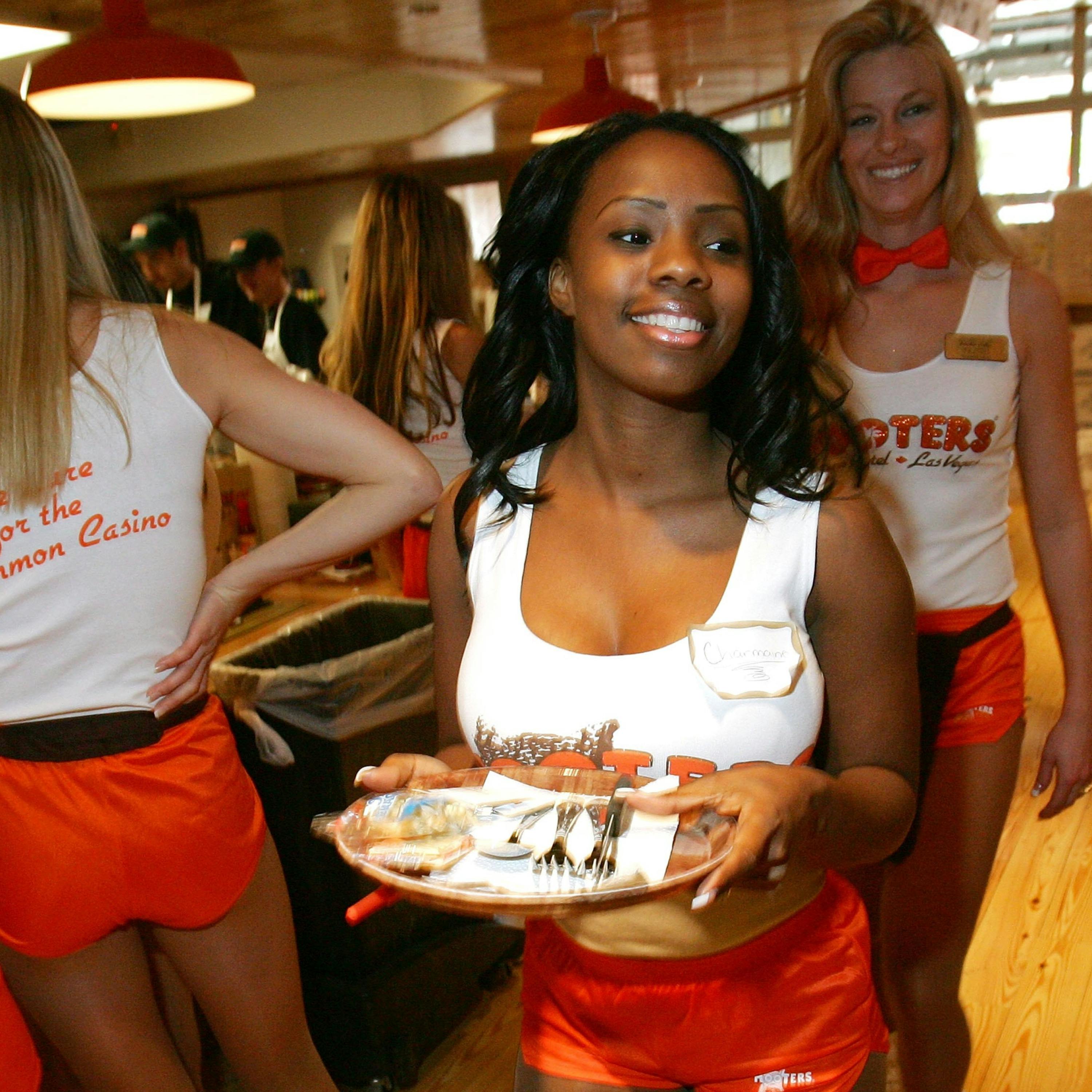
Hooters has now filed for bankruptcy, but they say they are not going anywhere.
- [00:14]
Last year, Hooters closed dozens of restaurants because of rising food and labor costs.
- [00:18]
Sean Ramis
Hooters is shifting away from its iconic.
- [00:21]
Noelle
Skimpy waitress outfits and bikini days, instead opting for a family friendly vibe. They're vowing to improve the food and ingredients. And staff is now being urged to to greet women first when groups arrive.
- [00:33]
Sean Ramis
Maybe in April of 2025. You're thinking, good riddance. Does the world still really need this chain of restaurants? But then we were surprised to learn of who exactly was mourning the potential loss of Hooters. Straight guys who like chicken, sure, but also a bunch of gay guys who like chicken. Why exactly? That is coming up on the show today.
- [01:00]
Noelle
Hey there, it's Noelle with some exciting news for those of you who do not care to listen to the ads on Today Explained. If you become a VOX member, you can now get TODAY Explained ad free. You can also get unlimited articles on the Vox website, vox.com you can get member exclusive newsletters and even more special perks to be determined. As a thank you. Vox, you should know, is an independent publication. This means we rely on support from listeners such as yourself to produce journalism that we believe the world really needs right now. At Vox, we want to help you understand what is going on. Not just that, why it is going on. And so we report on big important issues that shape our world and also essential stories that other people neglect. If you would like to support our work, let's be honest, if you want to listen ad free, go to Vox.commembers today. That's Vox.com Botox Cosmetic Adobotulinum Toxinae. FDA approved for over 20 years. So talk to your specialist to see if Botox Cosmetic is right for you.
- [02:11]
Peter Rothplitz
For full prescribing information, including boxed warning, visit botoxcosmetic.com or call 877-351-0300.
- [02:20]
Noelle
Remember to ask for Botox cosmetic by name. To see for yourself and learn more, visit botoxcosmetic.com that's botoxcosmetic.com support for this episode comes from Nike. When the world says no, athletes say yes. They win, they lead, they dominate. All while rewriting the rules of the sport and inspiring the world. Nike's so Win campaign showcases the power of audacious dreams and relentless pursuit from the national women's soccer league finals to the Women's March Madness tournament. The campaign is a rallying cry, a reminder of what the best athletes do when the haters get in their head, just win. Go to nike.com to learn more and see their Sewin collection.
- [03:25]
Sean Ramis
Today, explained Sean Ramis. Forum here with Peter Rothplitz. Peter's a writer, and recently, for the first time, he became a guy who writes about Hooters.
- [03:35]
Peter Rothplitz
Yeah, well, actually, I was nursing a hangover in a small Colorado airport when I was just looking through Twitter and saw a report from Bloomberg that they were considering filing for bankruptcy. And it was at that point that while I was hurting waiting for my plane, I shared a story about a lunch that I had with my grandfather more than a decade ago at a Florida Hooters. It was an annual tradition. I would fly down to Florida before the rest of my family just a few days before Thanksgiving. So I would get to hang out with my grandfather a bit. He would pick me up at the airport, and we would then go out to lunch and chat about politics, chat about my soccer season, chat about changes to the Fox News primetime lineup, and this particular trip. I was 14 or 15. This was when I was just beginning to question my sexuality. I was just beginning to realize that I was gay. I don't think I had quite admitted it to myself yet, but it was certainly top of mind. And then to walk into a Hooters, it was a. It was an experience. The Hooters waitress is not your average waitress. They are, objectively speaking, beautiful women, and they tend to be rather scantily clad. They are extremely friendly, extremely welcoming, and all I can say is eating a meal at Hooters is unlikely. Any dining experience I'd ever had previously, and I can't quite compare it to anything I've done since. So we sat down for lunch. The meal was good, as I recall, we had chicken wings. Later on, my grandfather at one point gets up to use the restroom. And I remember just sweating and feeling so uncomfortable. And then out of the corner of my eye, I see our waitress, who was very tall, was very blonde. A caricature of the caricature of the Hooters waitress. And she slides into the booth across from me. And I wish I remember exactly what she said, but I know it was something along the lines of, you're perfect just the way you are, kid. And it just meant the absolute world to me.
- [06:09]
Sean Ramis
She saw something going on at that table between you and your grandfather.
- [06:15]
Peter Rothplitz
Yeah. I mean, who knows if it was how I held myself or how My voice quivered when I responded to her, or how I never quite met her gaze, or how I was just sweating my way through the lunch. But she could tell that I was not comfortable. And I don't know if that's because she actually clocked me as gay, but she could tell that I was hurting in that moment and she wanted to help.
- [06:42]
Sean Ramis
And you shared this story while you were at the airport hungover?
- [06:47]
Peter Rothplitz
I did. I really didn't think about it much. And then, of course, I get on the airplane. I don't have access to Wi Fi. I land at LaGuardia some five hours later, and it had. I think it was already over 100,000 likes.
- [07:02]
Sean Ramis
What were people saying to you in response to this story you shared?
- [07:08]
Peter Rothplitz
Part of the response I anticipated. I thought that folks would be charmed by the story, would find it sweet and sentimental. The part of the response that I did not anticipate was the deluge of direct messages from queer people who described very similar dynamics, very similar experiences. I describe it in the piece as a baptism into manhood. Time and again, I saw the exact same refrain. Conversion therapy with a side of ranch. These young men who, you know, didn't know what they were being brought into, being coaxed into the family sedan and driven to Hooters to ogle some breasts.
- [07:58]
Sean Ramis
Tell us specifically about stories you heard from people. Was it like just a carbon copy of your story or were there, you know, some variations?
- [08:05]
Peter Rothplitz
A lot of them were similar, but there was a great deal of diversity as well. I note in the piece. Mike Dare grew up in Omaha, Nebraska, and his father would take him to Hooters quite regularly. Mike told me that he was a very flamboyant little boy. It was clear from. From an early age that he was queer. And this one particular meal was seared into his memory. He recalled his dad asking two Hooters waitresses to take a photo with him, kissing him on the cheeks. And as he recounts it to me, they look at him, can tell he's uncomfortable, and say, we think he'd prefer this. Instead, they gave him bunny ears, and then as they're walking away, one of them turns around to wink at him. And as he describes it to me, from that moment forward, he viewed Hooters as his safe space. And I'm quoting him there. He said it was his quote, unquote, safe space. After that dinner, he looked forward to going to Hooters.
- [09:12]
Noelle
Wow.
- [09:13]
Sean Ramis
Amazing.
- [09:14]
Peter Rothplitz
This one gentleman I spoke with shared how when he was just nine years old, his parents took him to A Hooters in Atlantic City. And as he expressed it to me, it was very obvious that he was gay. And his parents kept encouraging him to flirt with their waitress. In fact, they pushed the waitress to flirt with him again, a nine year old child. And later in the meal, he excuses himself to use the restroom. The waitress finds him, kneels down and asks him if he's okay. He says yes. She smiles and as he puts it to me, it was one of the most important moments of his life. And he still lives in Atlantic City. And every time he passes that Hooters, he thinks back on it and reflects on that moment. And I spoke to a number of Hooters waitresses too, who echoed all of these accounts. Lucy Wilkinson, who's quoted in the piece, who's been a server at Hooters for a number of years, said that she has witnessed this phenomenon many, many times. To the extent that she now goes out of her way to comfort the queer kids that she sees being brought in by their family members.
- [10:36]
Sean Ramis
It's kind of funny to be having this conversation as we're hearing that Hooters is in some serious financial trouble. Have you heard from anyone who said like, wow, I really thought Hooters was all about something else and I wish I had gone as a kid or as a teenager or even as an adult.
- [10:57]
Peter Rothplitz
Yeah. What I've learned in the past week or so is that there is a hell of a lot of love for Hooters out there, particularly from queer folks. And it's especially funny because I think if you just look at pop culture, from Saturday Night Live to American dad to Joe Rogan, the Hooters waitress is not presented well. She is depicted as a dim I say in the piece, vacant eyed succubus, a wannabe Stepford wife. And what I heard time and again from all of these queer people in my inbox was that perception is a slander, as lazy as it is persistent. These women genuinely care, earnestly care about the folks who come into their restaurants and go out of their way to make everyone feel as comfortable and as welcome as possible, queer or not.
- [12:06]
Sean Ramis
Peters opinions about Hooters were published in the New York Times opinion section. Currently the piece is titled why Dads Take their Gay Sons to Hooters. But at one point it was titled Failed Conversion Therapy with a side of Ranch at Hooters. I prefer that OG title Onward to the origins of this breastaurant when we're brack on Today explained.
- [12:38]
Noelle
The number one selling product of its kind with over 20 years of research and innovation. Botox Cosmetic Adobotulinum Toxinae is a prescription medicine used to temporarily make moderate to severe frown lines, crow's feet and forehead lines look better in adults.
- [12:53]
Peter Rothplitz
Effects of Botox Cosmetic may spread hours to weeks after injection, causing serious symptoms. Alert your doctor right away as difficulty swallowing, speaking, breathing, eye problems or muscle weakness may be a sign of a life threatening condition. Patients with these conditions before injection are at highest risk. Don't receive Botox Cosmetic if you have a skin infection. Side effects may include allergic reactions, injection site pain, headache, eyebrow and eyelid drooping and eyelid swelling. Allergic reactions can include rash, welts, asthma symptoms and dizziness. Tell your doctor about medical history, muscle or nerve conditions including ALS or Lou Gehrig's disease, Myasthenia gravis or Lambert Eaton syndrome, and medications including Botulinum toxins as these may increase the risk of serious side effects. For full safety information, visit botoxcosmetic.com or call 877-351-0300.
- [13:35]
Noelle
See for yourself@botoxcosmetic.com.
- [13:41]
Peter Rothplitz
The Nintendo Switch 2 is basically guaranteed to be the most interesting gadget of 2025, and we learned a lot of new stuff about it this last week or so. Some of the games that are coming out, some of the specs of the new device, and the fact that it's going to cost $449.99. Except maybe it's not, because the other thing going on right now is tariffs. And tariffs threatened to change just about everything about tech. What it is, how it's made, where it comes from, and crucially, how much we have to pay for it. So that's what we're talking about on the Vergecast all week, wherever you get podcasts.
- [14:18]
Noelle
Hey kids, you want to do your dad a really big favor? Tell your mom you want to go to Hooters.
- [14:25]
Ty Matiaski
I'm Ty Matiaski, a professor of anthropology at the University of Central Florida here in Orlando, and Ty, believe it or.
- [14:36]
Sean Ramis
Not, is putting the finishing touches on a book about Hooters and other restaurants like it.
- [14:43]
Ty Matiaski
The Hooters brand originates in Clearwater, Florida, April 1, April Fool's Day, 1983.
- [14:50]
Sean Ramis
This week.
- [14:51]
Ty Matiaski
Yes, it's sort of an anniversary.
- [14:54]
Sean Ramis
Wow. So did people think it was a joke?
- [14:57]
Ty Matiaski
Yeah. And even the original owners behind the brand kind of saw the humor in six guys who really had no experience in terms of running and operating a restaurant, much less one that would go on to have such an iconic status. And so the actual name Hooters surprisingly enough, was inspired by a Steve Martin bit from one of his comedy albums of the early 80s.
- [15:26]
Sean Ramis
Wow.
- [15:26]
Ty Matiaski
Called what I believe a patriotic statement.
- [15:30]
Peter Rothplitz
And I believe in going to church every Sunday unless there's a game on.
- [15:35]
Ty Matiaski
And he makes a comment about what he thinks this part of women's anatomy should be called, and you should only refer to them as hooters. It got off to a shaky start in October of 1983, but by the following year, it had reaped considerable success locally that then blew up nationally.
- [15:59]
Sean Ramis
Tell me how it gets there. How does it go from a potential april fool's joke to blowing up nationally?
- [16:05]
Ty Matiaski
The original Hooters 6, basically men who had kind of blue collar service sector jobs who wanted to find a place, according to them, where they could hang out, drink, and not get kicked out of the establishment.
- [16:22]
Noelle
If you like what you see here on the outside, you're gonna love what you'll see on the inside.
- [16:28]
Ty Matiaski
Televised street sports, beach shack atmosphere and ambience.
- [16:33]
Noelle
The recipe for hooters chicken wings is so secret, even our cooks aren't allowed to know it.
- [16:39]
Ty Matiaski
Our food that you can eat primarily with your hands and attractive, scantily clad servers.
- [16:48]
Noelle
Hey, kids, you want to do your dad a really big favor? Tell your mom you want to go to hooters.
- [16:55]
Ty Matiaski
The original Hooter 6, when they initially launched the business, were looking for ways to drum up customers to get them to come, you know, into the restaurant. So they would do all types of guerrilla type marketing things. Dressing up in a crazy chicken suit. They would go out into traffic and try to direct people into the parking lot. There was a famous kind of derelict boat that had been kind of half sunk in Tampa bay. And one of the Original, original Hooters 6 swam out there with a can of orange paint and a six pack and painted the word hooters on it. So this boat had a lot of visibility on the nearby roadway, and so people began to see it. So they were, like, fully committed to the brand and making people know about it. And I don't think you can argue with the results in terms of, like, the success it had in terms of getting people aware and familiar with the hooters brand. One of the things that kind of brought it to national attention was the 1984 Super bowl was played in Tampa.
- [18:07]
Peter Rothplitz
Super Bowl 18.
- [18:08]
Ty Matiaski
A matchup between the two best teams. Coach Tom Flores. Yes, Mr. President, congratulations. One of the standout players was a running back named John riggins. John Riggins kind of had this outsider, edgy, kind of rebel Persona. Somehow he found Hooters in nearby Clearwater. Apparently he was spending a lot of time there rather than prepping for the Super Bowl. I'll start off by saying, I'm bored, I'm broke, and I'm back. It somehow got national press by that point. You have this restaurant entrepreneur who became aware of the brand. He made them an offer that he would take the Hooters idea and concept nationwide. And so you have this kind of beginning of this split in the Hooters brand between two companies, Hooters Incorporated, which is the original six owners. They would be the ones that oversee the Hooters in and around Tampa, Florida, as well as many in the Chicago area. And then Hooters of America, which became the kind of national brand for Hooters and then would go on to have an international footprint within dozens of countries around the world. Over time, Hooters has kind of ebbed and flowed in terms of popularity, in terms of success, and was the bellwether brand for this whole genre. What is termed restaurants.
- [19:44]
Sean Ramis
And what exactly is the definition? A restaurant where women are kind of.
- [19:49]
Ty Matiaski
A variation of a stereotypical sports bar. So it's a type of casual dining venue where beer drinking, where meat eating, where televised sports is foregrounded. But it's probably most known and well associated with the types of servers that are employed there. The restaurant genre itself did pretty well in the years like immediately following the Great Recession. So you have the emergence of brands like Twin Peaks, Twin Peaks Eats Drinks, Scenic Views, Tilted Kilt, Tilted Kilt, Papa.
- [20:34]
Noelle
Neateri, Cold Beer never looked so good.
- [20:37]
Ty Matiaski
And then multiple other brands that came out at the time. Maybe the peak of the genre itself would be the mid 2010s.
- [20:46]
Sean Ramis
Okay.
- [20:47]
Ty Matiaski
After that, you have like this kind of convergence of forces that kind of put restaurants on the ropes, so to speak. You have, of course, me too. And time's up. Where these types of venues came under scrutiny in a lot of ways because, you know, a lot of times the servers have to endure or are subject to unwanted advances. Not so nice comments from patrons.
- [21:17]
Noelle
When we get, for example, a customer, it's like a couple. You'll be surprised. Like the minute the lady goes to the bathroom, he'll ask you for your number or something like that.
- [21:27]
Ty Matiaski
You have like this kind of power differential between young, wage earning servers, female servers who depend on their livelihoods for tips. With these kind of older, primarily male customers.
- [21:40]
Peter Rothplitz
This is just a restaurant. To us, we're just waitresses. But to them, it's like you're an entertainer. So Sometimes they're like, well, you're not getting this tip because you didn't entertain me.
- [21:53]
Ty Matiaski
You know, it creates kind of this dynamic, has created problems.
- [21:59]
Sean Ramis
And this is how we get to Hooters declaring bankruptcy this week. Is Hooters Inc. The one declaring bankruptcy, or is it Hooters of America?
- [22:09]
Ty Matiaski
No, it is the Hooters of America. So the Hooters of America is the one that it was, like, had the wider geographic footprints, international. It was the one that was more highly capitalized. The restaurants affiliated with Hooters of America were the ones that were experiencing, you know, the closures, the problems, things like this. Hooters Inc. The ones primarily in Tampa area as well as Chicago, have remained pretty solid. And now they're the ones that are looking to buy out their counterparts in the Hooters under the Hooters of America umbrella. And so I guess it remains to be seen if they will be successful. It's a brand that now a lot of people have fond, perhaps memories of. You know, even though the primary clientele is like a male 18 to 34, perhaps older demographic, families do go to Hooters. Parents take their children to Hooters. Grandparents take their grandkids to Hooters. You know, there are high chairs at Hooters. The Hooters gift shop sells onesies. So I think they recognize the reality of kind of the market situation. And, you know, really no brand can be successful by just, like, focusing specifically on half of the population. In order to thrive and be viable, you really have to have a, you know, broad, broadening appeal.
- [23:56]
Sean Ramis
And do you think the. The original six owners of Hooters, who. Who came up with this concept in the first place and incorporated on April Fool's Day, 1983, had any idea that one day they'd be trying to, you know, better appeal to. To women and kids and. And be selling baby onesies?
- [24:17]
Ty Matiaski
Yeah, I. I mean, I think that would be a stretch to think they had any inkling that this would kind of become the iconic brand that we recognize today. I mean, that's kind of like what is notable and, you know, for some people, special about the Hooters brand. You know, it's kind of like these guys decided to, you know, start this place basically where they can hang out and be themselves, and it became this global phenomenon. Problematic phenomenon, of course, but nonetheless one that is an integral part of our corporate foodscape here in the US and elsewhere.
- [25:04]
Noelle
I would be sad mainly because of my co workers. Like, I love them so much, and I love working with girls, all women. And we're just like a family. And I feel like if we did close down tomorrow, then I probably wouldn't talk to them like I would, but.
- [25:23]
Peter Rothplitz
It wouldn't be the same.
- [25:30]
Sean Ramis
Ty Matiaski is the author of the forthcoming Risque Business Restaurants in American Culture. It drops in August, but you can make your reservation now. Our show today was produced by Victoria Chamberlain with a little help from our senior researcher Laura Bullard, who visited a Hooters in her neighborhood for the very first time to talk to some servers. For us, y'all, Hooters is like I've.
- [25:57]
Noelle
Never been in a Hooters before and that's not gonna be my last time.
- [26:03]
Ty Matiaski
Those were the nicest women.
- [26:07]
Peter Rothplitz
Wow.
- [26:09]
Sean Ramis
It'S such a lovely place. Jolie Myers Edited Patrick Boyd Mixed Avishai Artsy, Gabriel Burbe, Hadi Mwagdi, Amanda Llewellyn, Carla Javier, Miles Bryan, Peter Balin On Rosen, Andrea Christensdottir, Devin Schwartz, Amina Al Saadi, Miranda Kennedy and Noel King make the show too, with Breakmaster Cylinder on the ones and twos Today Explained is distributed by wnyc. The show is a part of Vox. You can support our journalism by joining our membership program today. Go to Vox.com members to sign up and I'm pretty sure that's also how to get this show without ads if you're interested.
- [27:09]
Noelle
Subtle results still you, but with fewer lines Botox Cosmetic Adobotulinum Toxinae is a prescription medicine used to temporarily make moderate to severe frown lines. Crow's feet and forehead lines look better in adults.
- [27:23]
Peter Rothplitz
Effects of Botox Cosmetic may spread hours to weeks after injection, causing serious symptoms. Alert your doctor right away as difficulty swallowing, speaking, breathing, eye problems or muscle weakness may be a sign of a life threatening condition. Patients with these conditions before injection are at highest risk. Don't receive Botox Cosmetic if you have a skin infection. Side effects may include allergic reactions, injection site pain, headache, eyebrow and eyelid drooping and eyelid swelling. Allergic reactions can include rash, welts, asthma symptoms and dizziness. Tell your doctor about medical history, muscle or nerve conditions including ALS or Lou Gehrig's disease, Myasthenia gravis or Lambert Eden syndrome and medications including botulinum toxins, as these may increase the risk of serious side effects. For full safety information, visit botoxcosmetic.com or call 877-351-0300.
- [28:06]
Noelle
See for yourself at botoxcosmetic.com.