← Today, Explained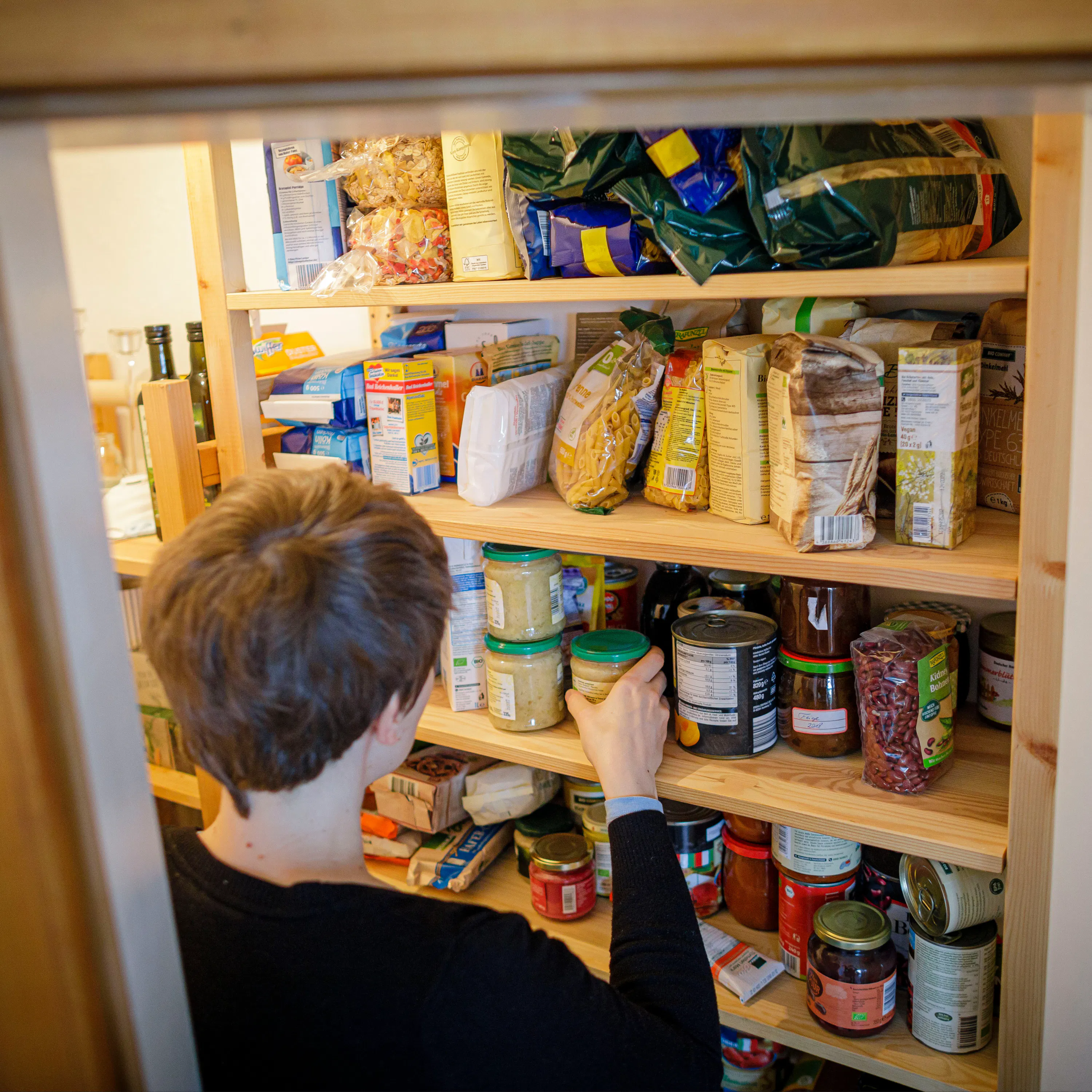
Today, Explained
Prepping for doomsday (or Tuesday)
00:30:24
How to prepare for the worst while still living your best life.
Loading summary
Transcript111 lines
- [00:01]
Amanda Ripley
Girl, winter is so last season and now spring's got you looking at pictures of tank tops with hungry eyes. Your algorithm is feeding you cutoffs.
- [00:10]
Commercial Announcer
You're thirsty for the sun on your
- [00:12]
Amanda Ripley
shoulders that perfect hang on the patio Sundress those sandals you can wear all day and all night. And you've had enough of shopping from your couch. Done. Hoping it looks anything like the picture when you tear open that envelope. It's time for a little in person spring treat. It's time for a trip to Ross. Work your magic.
- [00:32]
Commercial Announcer
Ready to soundtrack your summer with Red Bull Summer All Day Play. You choose a playlist that fits your summer vibe the best. Are you a festival fanatic, a deep end dj, a road dog, or a trail mixer? Just add a song to your chosen playlist and put your summer on track. Red Bull Summer All Day Play. Red Bull gives you wings. Visit red bull.com brightsummer ahead to learn more. See you this summer.
- [00:59]
Ana Maria Bounds
I started doing some prep work after the pandemic.
- [01:04]
Disaster Preparedness Enthusiast
I feel very underprepared for disasters that are always seeming to be lurking around the corner.
- [01:10]
Ana Maria Bounds
I did go so far as to even purchase it. Firearm just for protection and safety in case the world went absolutely nothing.
- [01:21]
John Glyn Hill
You guys, it's almost summer. The flowers are in bloom.
- [01:27]
Disaster Preparedness Enthusiast
We're now just a week away from the eastern Pacific Basin. Hurricane season starting.
- [01:32]
John Glyn Hill
Time to treat yourself, plan a vacation.
- [01:35]
Dr. Chris Ellis
And inflation rose about 3.8% in April, according to new numbers.
- [01:39]
John Glyn Hill
Life is great.
- [01:41]
Dr. Chris Ellis
Ukraine has become a testing ground for robotic warfare.
- [01:45]
John Glyn Hill
Okay, I consider myself a glass half full kind of person, but even I'm not that naive. That said, I'm woefully unprepared if things go left. You, on the other hand, if there
- [01:57]
Dr. Chris Ellis
ever is something like a nuclear strike
- [01:59]
Disaster Preparedness Enthusiast
or war, whatever, we are right down
- [02:01]
Dr. Chris Ellis
the road from the interstate so we
- [02:02]
Disaster Preparedness Enthusiast
can get outside of Massachusetts to a more rural area.
- [02:06]
Ana Maria Bounds
I do have a go bag ready for hurricanes.
- [02:10]
Commercial Announcer
I got an old school paper map, a satellite communicator, a power bank with every adapter and cord you can imagine.
- [02:16]
Amanda Ripley
It doesn't matter about guns. How many guns you have or how many how many MREs you have stored. If you don't have strong communities, you're
- [02:23]
Ana Maria Bounds
not going to get very far.
- [02:25]
John Glyn Hill
Living on high Al can be absolutely exhausting. But if you stay ready, you don't have to get ready. I'm Jon Glyn Hill and this week on Explain it to Me from Vox. We're prepping without the panic to start. I talked to someone who's a prepping expert and that's putting it Mildly.
- [02:46]
Dr. Chris Ellis
My name's Dr. Chris Ellis. I am a disaster resilience, civil defense, homeland defense Expert. Got my PhD from Cornell University, have four master's degrees, and been doing this work for about the last seven for the military, for those skills that I just listed.
- [03:00]
John Glyn Hill
What made you want to start going down that path in the first place?
- [03:05]
Dr. Chris Ellis
So a few things. One, as I was growing up, I was told, this is back in the 80s, that the only time that I would see polar bears would be in zoos because we had global warming at the time. The ice caps were going to melt and, you know, climate apocalypse was coming. And then from my father's side, he was an evangelical Christian, and he told me that we needed to be ready for the Antichrist and to get ready for, you know, kind of the end of days. As I went through my life, I joined the military and I kind of saw man's inhumanity to man. So all of those various things, economic collapse, the Y2K threat, et cetera. I really started looking at preparedness more and more and found that it was exceptionally rational. And I wanted to kind of bust some of the myths that are involved in it. And you can only do that if you kind of get really into the practition of the thing.
- [03:46]
John Glyn Hill
When most of us think of prepper, we might think of a man, probably white, with a lot of guns in a bunker somewhere in the woods.
- [03:55]
Dr. Chris Ellis
I have enough food stock to last 20 people for three months.
- [03:59]
Disaster Preparedness Enthusiast
I'm preparing my family for the imminent
- [04:01]
Dr. Chris Ellis
collapse of the United States economy.
- [04:03]
Ana Maria Bounds
I'm prepping for a terrorist attack on
- [04:06]
Dr. Chris Ellis
our electrical grid that will send our society into chaos.
- [04:10]
John Glyn Hill
Are we getting this wrong?
- [04:12]
Dr. Chris Ellis
What we're finding right now, and this is one of the myths that I wanted to debunk based on hard statistics. So what I found is that back when the data was being released by FEMA, they did this national household survey between 5 and 7,000Americans for several years and release the raw data. So when I looked through that, I actually saw that the number of white men was about 75% of preppers back when they first started releasing the data. And now it's only about 55%. We're actually finding that other ethnicities actually prepare more on average than whites do. For example, those that are isolated, so native Hawaiians, Pacific Islanders, Alaskan Natives, et cetera. And so we're seeing a very large ecumenical portrayal now of preppers, both in the reality and then also their coverage as well. So it is no longer the stereotype that is true.
- [05:00]
John Glyn Hill
What are these people preparing for? What are the most relevant disasters that are likely to come our way?
- [05:07]
Dr. Chris Ellis
So what I found is that there are five main heuristics of individuals that kind of do these things. I've been them into five groups and it's not just America, it's actually across the world. So one group I call the homesteaders. These individuals are concerned with just food security. Maybe they're afraid of genetically modified organisms or just want to be able to eat on a regular basis because they've seen famines in the past. Certain foods are pretty high in price. The supply chain still hasn't recovered in many cases. Right now, 63% of America is in a drought. There's a fear from the Strait of Hormuz about fertilizer. And so they're food prepped. Well, we just finished harvesting all of our storage crops from the season. They keep about 10 pigs year round. So I have about 400 pounds of meat in the freezer at any given time. Another group of the sentinels. These are kind of the more stereotypes group. These are the gun group. They're afraid of either a, without rule of law scenario, lots of crime, as
- [06:00]
Disaster Preparedness Enthusiast
simple as opening up a drawer and
- [06:02]
Dr. Chris Ellis
there's your protection or government overreach and, you know, and tyranny. I'm not going to depend on the police defend me.
- [06:08]
Disaster Preparedness Enthusiast
I'm going to depend on my.308, my.357, my.45 Colt, my AK, my AR.
- [06:14]
Dr. Chris Ellis
Another group are the interdependent. These are like your friendly neighborhood Spider man kind of folks.
- [06:18]
John Glyn Hill
Don't worry, ma', am, everything's gonna be okay.
- [06:19]
Dr. Chris Ellis
They want to help other individuals very much in their preparedness skills and are very widely based as what their threats are. The fourth group are the Noahs. These are usually exceptionally well off individuals. And what distinguishes them is that they have a bunker.
- [06:33]
Amanda Ripley
This is the fat boy. This is the largest bunker we make.
- [06:38]
Dr. Chris Ellis
And then the fifth group is the faithful. The faithful and the Noahs are a bit different. The Noahs are concerned about saving their skin. The faithful are concerned about saving their souls. They're the more religiously oriented. Jesus, of course, has repeatedly told us
- [06:51]
Disaster Preparedness Enthusiast
throughout the New Testament to be prepared
- [06:54]
Dr. Chris Ellis
to be watchful for his coming. So it really kind of depends about what prepper you're talking about. There's no one size fits all, and many people fit into multiple groups. There's not just one. But these are not like hardcore solid bins in which someone is in.
- [07:09]
John Glyn Hill
Is there a group that sort of Gets it right. I don't know. Like you said, people can go into multiple bins. But I don't know, maybe I hang out with some interdependents. They sound pretty like a winning team to me.
- [07:22]
Dr. Chris Ellis
What I will say is this is the more kind of facets that you have, the better you are off. One of the great things about the interdependent is that the American style of prepping has been very individualized since basically the 50s and 60s. And that's been kind of pushed. We're a very efficient economy and it's kind of, you know, this is a western way of doing things, which is why prepping in America is more expensive. But the interdependent have looked back and said, Pre World War II, how were we as societies? And we were as societies, we were very community resilient. So the interdependents are really reaching out to that community based preparedness mindset. And that is the next evolution. People are slowly moving back to that. I'm seeing a lot of individuals that are getting into the prepping movement saying, hey, I can't do all of this alone. I need to have a community of individuals that really kind of fits the things that I'm weak at.
- [08:09]
John Glyn Hill
What are the different ways we can prepare?
- [08:14]
Dr. Chris Ellis
So the three main areas are really location wise. The preparedness you have at your home, and that's for staying so the power gets knocked out because of winter storm or tornado, whatever it is. How can I be resilient within my house without publicly provided water, power or transportation? And that's usually your largest prep. I encourage folks at home to have at least 31 days if they can, after they've really gotten into this. And a multiple set of factors. The next place is in your car when you're traveling. That is your really your car accident bag. And if you were to run out of gas, if you were to get T boned, whatever, you're out of cell phone service, what would you need to be able to walk home or hail an Uber or something along those lines? And then the third place is at work. At work, you may have to shelter in place for 24, maybe even 48 hours. So a change of clothes, a few protein bars, things along those lines. Things that don't need any cooking skills or cooking energy, I should say. So the priority is just what I said, home first, then your bug out bag, your car bag, and then the office.
- [09:20]
John Glyn Hill
What is a bug out bag different for every person.
- [09:24]
Dr. Chris Ellis
So there's a thousand examples out there. Some people like to have A whole bunch of guns and ammunition because I think they're gonna have to go out and shoot deer, bears or fend off the looters, etc. I'm not too martial in my bugout bag. I would say that the basic bugout bag, you should keep it in your mud room or right by your garage so if there's a disaster, you have to go right now, you can grab it. So the things that would be in that would be three days of water and food for everyone in your family, pets included. I would have probably 500 to $1,000 in cash just in case you go to a hotel and the system is down, but they're still allowing bookends. Or again, you just need the cash on hand. I would have where your emergency documents, let's say you're at the threat of a big flood or a mudslide or something along those lines. Your emergency documents, your birth certificate, your marriage certificate to the kids, birth certificate, et cetera. Very quickly accessible and in one single fold. You can just open up that fireproof safe, grab it, stuff in your bugout bag and go. Also, some sort of emergency communication device, an emergency radio can be found very cheaply. There's a lot of them out there as well. But those kinds of things when you're covering all the bases is what is in the normal bugout bag. Medical supplies as well. Everyone should prep. But here's what I tell folks. You can't do it fear based. If you do it fear based, that's the, that's your limbic system, that's your lizard brain, you know, firing off. And it keeps you in a state of fear rather than a state of agency and hope. And you know, the saying is, we're not preparing for doomsday, we're preparing for Tuesday. So doing things that make you feel like you can have more agency over your life, that you can have more actions, that you can, you know, take positive steps to better yourself and better your community is a good thing. If it increases your agency and decreases your fear. That's the way to prep for sure.
- [11:17]
John Glyn Hill
Prepping can look different depending on who you are and where you live. Up next, prep in the city. Support for this show comes from Quince. You make difficult choices each and every day. So why does your outfit need to be one of them? Instead, you can try effortless, comfortable, sleek and well put together clothes with the help of Quint's. Quint's has all the wardrobe staples for spring. Think 100% European linen shorts and shirts from $34 lightweight, breathable and comfortable, but still look put together and clean. 100% Pima cotton tees with a softness that has to be felt. Everything is priced 50 to 80% less than what you'd find at similar brands. Our colleague Andrew Melnyzyk has gotten some
- [12:11]
Dr. Chris Ellis
quince, so Quints recently sent me their organic Comfort Stretch Chore jacket.
- [12:16]
Disaster Preparedness Enthusiast
I got it in the tobacco color. It's not too heavy, it's not too light. I've now worn it to a few
- [12:22]
Dr. Chris Ellis
basketball games, a couple concerts, a few dinners, and even just meeting up with some friends.
- [12:28]
John Glyn Hill
You can refresh your spring wardrobe with quince. Go to quince.com explain it for free shipping on your order and 365 day returns. Now available in Canada too. That's Q-U-I-N c-e.com explainit to get free shipping and 365 day returns. Quince.com explainit.
- [12:53]
Disaster Preparedness Enthusiast
Support for the show today comes from the boldly named Granola. It can be a real struggle to get through back to back meetings. You're nodding along, contributing, trying to stay present, but in the back of your mind you just want to go home and put on Olivia Rodrigo. Meetings can be a mess. Granola wants to fix that. Granola is an AI powered notepad built for the way people actually meet. You simply take rough notes like you normally would, and in the background, Granola's securely transcribing the meeting. Then it turns everything into clean, structured, actually useful notes when the meeting ends. And Granola works through your device's audio, which means it integrates seamlessly into the video conferencing tools you already use. No setup, no awkward bots. Granola says it's just your normal meeting with superpowers that you need to do your job better. So if meetings are eating up your day, Granola says there's a no brainer situation here. You can try it totally free for three months. Just head to Granola AI Explain. It's Granola AI Explained. To get your time back, get three months free at Granola AI Explained.
- [14:00]
John Glyn Hill
I'm Jacqueline Hill, back with more Explain it to me. Ana Maria Bounds is a sociology professor at Queens College in New York.
- [14:10]
Ana Maria Bounds
For me, the most fascinating thing as a sociologist is taking a look at how regular people manage to prep in very small apartments. You know, trying to maximize, trying to think of creative ways to better protect their families. And I think during the pandemic we all kind of became preppers, right? We had to figure out how to protect ourselves with limited means and limited Resources.
- [14:35]
John Glyn Hill
How different is prepping in an urban environment from prepping in, say, the suburbs or out in the country?
- [14:46]
Ana Maria Bounds
I would argue that the, with all due respect to suburban and rural preppers, urban preppers, particularly in this city of New York, are dealing with reality. So in other words, they've been through terrorist attacks, you know, they've been through natural disasters, they've been through technological failures, and they've been through near economic collapse with the Great Recession. So New Yorkers are used to being very street savvy. You know, they're used to having street smarts. Now they're developing what I call survival smart. Yeah.
- [15:20]
John Glyn Hill
You know, I am talking with you from my apartment. I actually refer to it as the babe cave, my little bachelorette.
- [15:28]
Ana Maria Bounds
Oh, that's right, it's a babe cave.
- [15:30]
John Glyn Hill
But I admit, you know, I have all these comforts. I love my house plants, I love all my little day to day snacks, but I am 0% prepared for a disaster. Where should I start? What do I need to do?
- [15:43]
Ana Maria Bounds
One of the things with, you know, the city is we're used to having what we want when we want it. But the idea of prepping, though, and with, especially during the pandemic, things slowed down. People realized that they had to rely on themselves. So if you're interested in prepping, one of the first things that you need to do is you need to take a look at how you eat and how you can store it in your apartment. And I'm saying this because unfortunately, during a disaster, doordash doesn't deliver, and we're all used to that. So for New Yorkers, the idea of just having a completed pantry with canned goods and, you know, rice and flour and salt and, you know, tinned meats, all of that, that's very foreign to us. Prepping makes you real. Well, what happens if I don't have any water? What can I do? Well, maybe I should store a little water. You know, maybe I need to take a look at some, make some extra space underneath my bed, under my couch. You know, there are all sorts of creative things, you know, that, that preppers do that I've seen.
- [16:41]
John Glyn Hill
Okay, I understand you've become a bit of a prepper yourself. Can you walk me through your setup? Because from what I can see, you've been able to do this in a way that is very aesthetically pleasing. I realize that's not the most important thing during a disaster.
- [17:00]
Ana Maria Bounds
It is important. Listen, you live in a babe cave, you know, it's important.
- [17:04]
John Glyn Hill
Yeah, okay.
- [17:05]
Ana Maria Bounds
It is important because the Whole thing is there's another myth about prepping, is that people think that, you know, that means that you have to have a whole room dedicated to stacks of toilet paper and rice and, you know, spaghetti sauce. Absolutely not. You just need to think carefully about how you live in to learn how to manage your space. In the living room, in the corner, I had a white freezer which looked absolutely ridiculous. I thought, you know what, I can do better than that. So I applied wallpaper to it and, you know, I think it looks really cute. It looks just a little box, like a little storage box. And the things that I keep in there are. Are varied. I keep several different types of meat. I have some uncooked, and then I have some that are cooked and sliced and, you know, that I've cooked and ready to go and I've packaged them. We have vegetables, we have pasta, and we have soup. We have pot pies and extra bottles of water. Because the idea is this is easy place to store water. And in the event of, you know, a blackout, our freezer will stay. Food will stay colder longer because we have the frozen bottles of water in there. If we get an injury and I need to place something cold on our leg or on our back, we could use that. And I certainly do actually relied on that more than, you know, one time. So, yeah, it's a real asset.
- [18:40]
John Glyn Hill
You know, I'm pretty fit. I try to go to the gym. Are there things I need to be prepared to do in a disaster?
- [18:47]
Ana Maria Bounds
If you're someone who says, well, you know what, in the event of an emergency, I'm going to leave. I'm going to put together a bug out bag. Well, you need to be sure that you can actually carry that, that you can, you know, that it isn't too heavy, that you edit what you have in there carefully and that you walk and that you practice with it. That was a really important part of, as an ethnographer, spending time with preppers is that they would do exercises where they would bug out, you know, and you would spend, you know, the weekend, you know, outdoors, which is unusual because for a lot of city people, you know, they're not interested in camping. Whatever it is that you decide is going to be best for you in an emergency, okay, don't try it out during the emergency. You need to practice it, okay. Because you need to get over your fear of whatever it is you're doing, because that's part of the game. You have to be confident. You have to be calm. Will you be perfect? No. But the idea is that you'll have your bearings and this won't be something new to you.
- [19:48]
John Glyn Hill
What have you found to be the most important thing to have on hand?
- [19:52]
Ana Maria Bounds
My husband.
- [19:54]
John Glyn Hill
Oh, I love that. Oh, I love love.
- [19:58]
Ana Maria Bounds
No, seriously, you know what? No, honestly, we went through the pandemic together and, you know, we've been through September 11, we've been through the blackout. So I think it's not just having supplies. It's about having a good system of support. You know, having people that you can work with, people you can depend on, that you can learn from during easy times and difficult times. Your ride or dies.
- [20:39]
John Glyn Hill
Coming up, how to prep your mind.
- [20:56]
Disaster Preparedness Enthusiast
Support for the show today comes from the Futurology podcast. With so much changing every minute, it can feel useless to think more than a few days into the future, they say. But exploring what could happen in the weeks, years, even decades after tomorrow can completely, completely reshape how we approach today. Which is exactly what futurology is for. This new podcast from the Begruen Institute can help you get ahead of tomorrow. Futurology isn't sci fi. It's not speculation. Each week they have thoughtful conversations with scientists and artists, technologists and philosophers who don't just predict. They illuminate the forces shaping our lives. Imagine where they'll take us and how we can respond. Whether the future is something we have to endure or something we can design. And if so, what will we build? Subscribe to Futurology wherever you get your podcasts or watch full episodes on YouTube.
- [21:54]
Commercial Announcer
This episode is brought to you by Prime Obsession is in session. And this summer, Prime Originals have everything you want. Steamy romances, irresistible love stories, and the book to screen favorites you've already read twice off campus, Elle every year after the Love Hypothesis, Sterling point and more, slow burns, second chances, chemistry you can feel through the screen. Your next obsession is waiting. Watch only on Prime.
- [22:24]
John Glyn Hill
It's jq. This is Explain it to Me. When we think of prepping, we often think of items, stuff like canned goods or clean water tablets. But Amanda Ripley says to survive a disaster, that's not all you need. She wrote about it in her book the who Survives When Disaster Strikes and why.
- [22:45]
Amanda Ripley
I learned from covering disasters as a reporter that survivors have these incredible insights into what it actually feels like physically, socially, mentally to go through a disaster. There's usually three phases that most of us go through, and sometimes we circle in and out of all three of them over and over again. But the first one is this very intense period of disbelief or denial.
- [23:14]
Disaster Preparedness Enthusiast
Did that Just happen. That did not just happen.
- [23:17]
Amanda Ripley
Where your brain will work very creatively to convince you that everything is fine.
- [23:21]
Disaster Preparedness Enthusiast
I'm just imagining things. Everything is okay. Everything is fine.
- [23:25]
Amanda Ripley
That is important to plan for. And the second one is deliberation. So after denial, you tend to get very social and you look to the people around you.
- [23:35]
Disaster Preparedness Enthusiast
Did y' all just hear that?
- [23:36]
Amanda Ripley
The people in your circle?
- [23:37]
Disaster Preparedness Enthusiast
I'm not sure, but I think it's over there.
- [23:40]
Amanda Ripley
Strangers on a train or a bus, wherever you happen to be co workers. And you tend to move in groups and you will remain very loyal to that group even if you didn't know them before.
- [23:51]
John Glyn Hill
I think you're right. I'm seeing what you're seeing.
- [23:52]
Disaster Preparedness Enthusiast
I've got you.
- [23:53]
Amanda Ripley
And that is a very normal reaction that we share with, you know, chimpanzees and other higher order mammals that we form groups and we tend to be very pro social, almost courteous to a fault.
- [24:05]
Disaster Preparedness Enthusiast
After you. No, after you. No, please, after you.
- [24:09]
Amanda Ripley
And we check with each other before doing anything. So this phase is really important. On average, people check with five sources before they evacuate before a hurricane, for example. So the wisdom of that group really matters. So after denial and deliberation, you have the decisive moment.
- [24:26]
Disaster Preparedness Enthusiast
Okay, I think it's really time to go.
- [24:28]
Amanda Ripley
And that's where you take action. Or in many more cases than you might expect, you shut down and sort of freeze or stop moving or move very, very slowly, which is sometimes called negative panic. And so that is much more common than what we tend to expect, which is, you know, hysteria or antisocial behavior or panic.
- [24:54]
John Glyn Hill
Our brains are really these amazing machines, how they protect us. But sometimes what they do doesn't always work in our favor. What are some things we should be doing when disaster strikes? How can we take control of our brains in that moment so we can do what we need to to survive?
- [25:17]
Amanda Ripley
I think there's three things that I have learned and still take with me in my everyday life. And the first one is to have a little more situational awareness of the places where I spend time.
- [25:28]
Ana Maria Bounds
Right.
- [25:29]
Amanda Ripley
So even in a hotel. Right. I'll try to take the stairs down. I know that sounds crazy, but sometimes you end up in some weird places, like you end up in the kitchen. But it's really helpful to have some muscle memory for how to get out of the places that you're in. Right. And so that includes if you work in a tall building or if you live in a tall building, just going down the stairs, having that muscle memory, because it'll be really, really hard to find the stairwell for the first time under extreme stress. So having a situational awareness, but then also really trying to build connection and rapport and relationship with the people that you see every day. Right. I mean, I know that sounds very basic, but those are the people who are always going to be there in a disaster. It's not first responders. Right. They just cannot get to you quickly enough. Usually in big disasters, it's days or weeks if you ever come into contact with a first responder. So it is really important to know who on your block is elderly and might need someone to check on them in an extreme heat event. Or who on your block is a nurse. Right. In case you need help or someone else does. Just knowing that kind of thing and building those connections. I love that advice because it serves you. Even if nothing terrible ever happens.
- [26:43]
Commercial Announcer
Right.
- [26:44]
Amanda Ripley
It just makes life better to have connections in the place where you live and build those connections. And then the third one in the immediate moment. So once you've maybe you're trying to push through denial, deliberation at a decisive moment. The most effective way under stress to access your nervous system on purpose and calm yourself down a little bit, which is what we need. We need to kind of calm ourselves down, not all the way, but a little bit, is through conscious, intentional breathing. So that is really the only way to do that in the moment. One thing that I do is just as a normal everyday practice when I start getting stressed out, you know, when I'm, you know, trying to pay my taxes or dealing with traffic or whatever, I do box breathing, which is something that is taught to, you know, everyone from soldiers to people doing, you know, yoga. Right. So it's in for four counts.
- [27:40]
Disaster Preparedness Enthusiast
One, two, three, four, hold for four,
- [27:45]
Amanda Ripley
exhale for four, hold for four. And it's a very effective way to get in the habit of lowering that nervous system response so that you can access your higher order thinking skills so you don't get tunnel vision. Right. So you don't lose eye, hand, coordination. All the kind of things that start to degrade under extreme stress.
- [28:09]
John Glyn Hill
Us, you've given us a lot of good information and a lot of good tips here about what to do during a disaster. But what about preparing for one? How do you live daytoday in this uncertainty?
- [28:26]
Amanda Ripley
Well, the technical term for this kind of anxiety about disasters is dread, which I think is a great term.
- [28:36]
Ana Maria Bounds
Yeah.
- [28:36]
Amanda Ripley
And there's an equation for dread. There are certain variables that dial up or down your dread level, and one of them is unfamiliarity with the threat. The less exotic and strange a threat is to you, sometimes the less dreadful it is. So one thing you can do is understand the threats that you're most likely to face and understand that while it is true that disasters are very frequent now, at the same time, and this is really important and I think often gets missed, the number of deaths has dropped by about two thirds over the past 50 years. So disasters have gotten less disastrous even as they've gotten more frequent. And so why is that? Well, it's because humans have gotten better at working together to predict disasters and get out of harm's way just in the nick of time. So as an example, in 1990, the National Hurricane center could predict the path of a hurricane only 24 hours in advance. Now you get 72 hours. So that's a very big deal. But all of this progress and all the future progress we can make, which is huge, depends upon trust. We need to work on trusting each other as Americans and building institutions that we can trust. So in the longer term, if you're thinking about preparing. For me, I don't do a lot of stockpiling of resources and that kind of thing. And for me, I try very hard to find opportunities to try to build human trust and connection. The stronger your neighborhood or family or school is before a disaster strikes, the better you will recover. And so that health of a community, how fair it is, how trustworthy it is, connected it is, that matters way more, it turns out, than the threat itself.
- [30:47]
John Glyn Hill
That's it for us this week. We have a show coming up about infidelity, what counts as cheating, and why it makes us so angry, even when we're not the one that got cheated on. But we want to know, have you ever been unfaithful? Why'd you do it? And what do you make of that Choice now? Tell us. 1-800-618-8545 or email askvoxox.com Also consider becoming a VOX member. VOX members get to listen to this podcast ad free. Head over to Vox.com members to learn more. This episode was produced by Dustin DeSoto. It was edited by Jenny Lawton, fact checked by Melissa Hirsch and engineered by David Tadashore. Our executive producer is Miranda Kennedy, and I'm your host, John Quillen Hill. Thank you so much for listening. Bye.
- [31:48]
Disaster Preparedness Enthusiast
Did you know if your windows are bare, indoor temperatures can go up 20 degrees. Get ahead of summer with custom window treatments like solar roller shades from blinds.com and save up to 45% off during the Memorial Day Early Access Sale. Whether you want to DIY it or have a pro handle everything, we've got you free samples, real design experts, and zero pressure. Just help when you need it. Shop up to 45% off site wide right now during the Early Access Memorial day sale@blinds.com Rules and restrictions apply.
- [32:18]
John Glyn Hill
Your next chapter in healthcare starts at Carrington College's School of Nursing in Portland. Join us for our open house on Tuesday, January 13th from 4 to 7pm you'll tour our campus, see live demos, meet instructors, and learn about our Associate Degree in Nursing program that prepares you to become a registered nurse. Take the first step toward your nursing career. Save your spot now@carrington.edu events. For information on program outcomes, visit carrington.edu sci.