← Today, Explained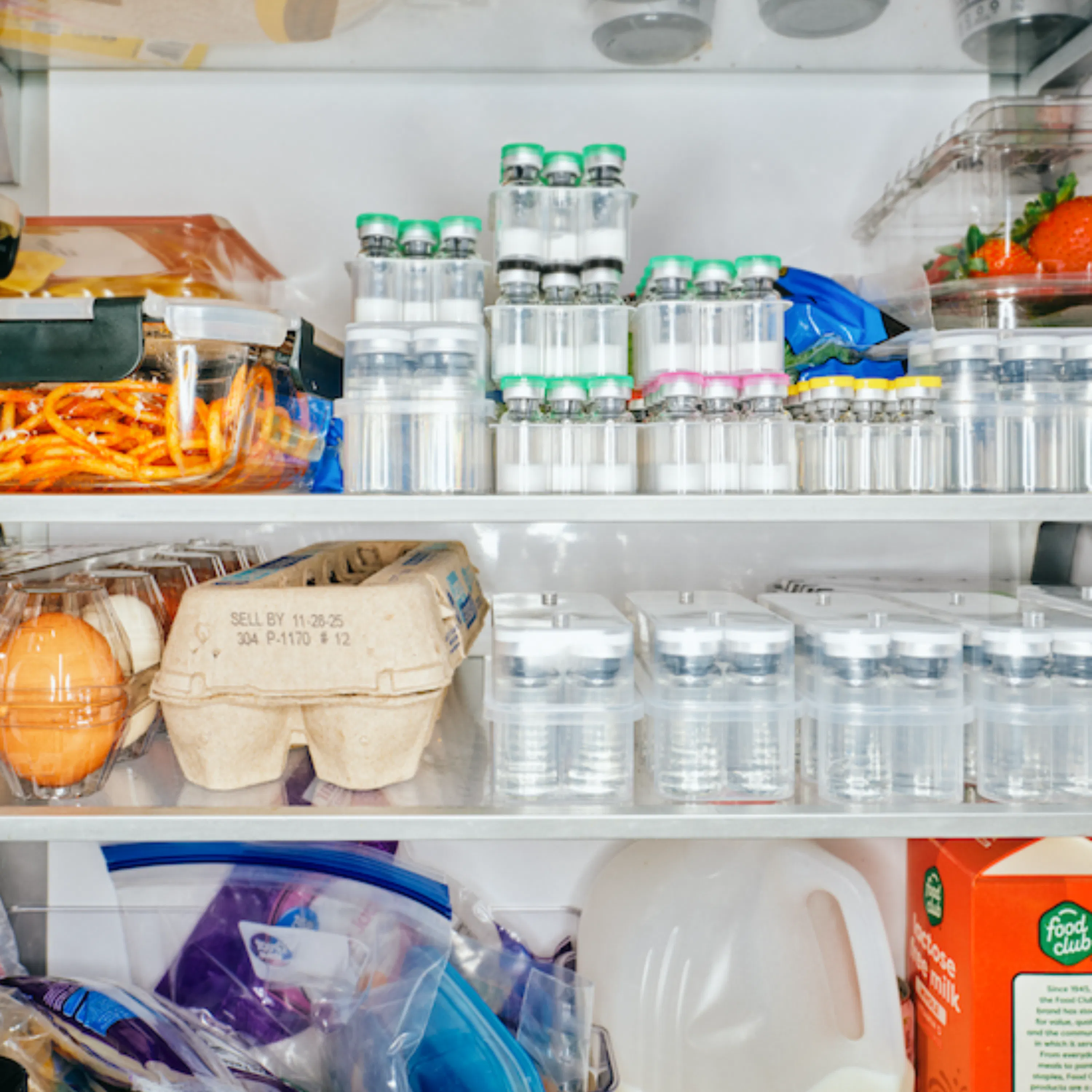
Today, Explained
Pushing peptides
00:26:06
The FDA and RFK Jr. want to make it easier for you to take peptides.
Loading summary
Transcript85 lines
- [00:01]
Sean Ramasur
Kristi Noem's husband? No, no. April Fool's Peptides. Peptides. I keep seeing ads about them. You probably keep seeing ads about them. Wanna bulk up? Take this peptide. Wanna have healthier skin? Take that peptide. Wanna cure that ankle injury? Peptides. Chains of amino acids you can inject from the comfort of your own home. Maybe you already have, or maybe not, because you're scared or skeptical. But maybe you don't have to be. I bet there are a few peptides you're already familiar with. Insulin is one of them. Ozempic is another. Turns out The P in GLP1 stands for peptide. But what about BPC157 or CJC1295 or TB500 or GHKCU? Sounds a little R2D 2C3PO to me. Should we really be shooting these things into our bodies? On Today Explained we're going to hear from a guy who did and these still alive. So yay. Support for the program comes from Anthropic, the team behind Claude. Have you heard of him? Every story on the show exists because someone wanted a deeper understanding of the world around them. Anthropic says Claude was built to follow that same instinct. It doesn't hand you the tidy version. It helps you work through the complicated one, pushing back on your assumptions and helping you sit with what doesn't add up. And with deep research, Claude digs across dozens of sources where they agree and where they don't, so you can trace the reasoning yourself. You can try Cloud free at Claude. AI todayexplained when is the AI bubble gonna burst? How do you AI proof your job? How should colleges handle AI and prepare students for a shifting job market? I'm Henry Blodgett, and on my show Solutions, I've been exploring all of those questions and more with experts who have actual answers. We hear enough about our problems. Let's solve them. Follow Solutions with Henry Blodgett
- [02:01]
Lauren Gardner
Put that
- [02:02]
Sean Ramasur
back tied tied you're step Put that back tied in your step Back tied you're step today explained Sean Ramis from I've never shot any peptides into my already perfect body, but Ezra Marcus has.
- [02:15]
Ezra Marcus
I'm an investigative reporter for New York Magazine and other publications.
- [02:19]
Sean Ramasur
Ezra's latest opus for New York Magazine was called Life on Peptides. Feels amazing. We asked him what made him want to live that peptide life.
- [02:28]
Ezra Marcus
I became curious about it when I just started hearing people I know bring up that they had started taking these injectable substances that I didn't really understand and I felt like the term was just sort of popping up. Like you'd hear somebody at a party say, oh yeah, I've started taking this or that peptide for, you know, joint pain or anti aging or weight loss or what have you.
- [02:49]
Lauren Gardner
Is there a reason that literally every single person and their mother are on
- [02:52]
Ezra Marcus
peptides at this point?
- [02:53]
Unidentified Wellness Enthusiast
I'm starting a new peptide today.
- [02:54]
Sean Ramasur
This one is for pain and inflammation.
- [02:58]
Lauren Gardner
I'm starting with GHKCU Glow stock.
- [03:01]
Sean Ramasur
I take peptides. So what?
- [03:05]
Ezra Marcus
So what?
- [03:06]
Sean Ramasur
It's for my health.
- [03:07]
Ezra Marcus
And it was just sort of felt like a buzzword that was increasingly everywhere, not just in, you know, real life, but on online influencers, celebrities, this and that. So it just felt like something that was just sitting out there and was percolating. And I wanted to know more.
- [03:24]
Sean Ramasur
Before we get to how it went for you particularly, tell us about the influencers. What are they saying about peptides and who are they?
- [03:34]
Ezra Marcus
There's a huge endless constellation of influencers pushing, you know, health and wellness trends online. Obviously there has been for years and that ecosystem is flourishing more than ever. And they're always looking for what, you know, it feels like the hot new thing, the kind of like just around the corner invention that's going to change everything about anti aging and weight loss and muscle growth and you know, everything under the sun. Especially when it comes to kind of, you know, vanity outcomes that typically move the needle for large numbers of people in America. And so we're talking about everyone from like, you know, Maha, like life extension, RFK types of influencers.
- [04:21]
Unidentified Industry Insider
Yeah, I mean I'm a big fan of peptides. I've used them myself.
- [04:24]
Ezra Marcus
I was talking to a pro football player, pulled his hamstring. He's like, dude, I shot that shit right into my hamstring for two weeks. And I was right back on the field.
- [04:30]
Sean Ramasur
Wow.
- [04:31]
Ezra Marcus
I was like, that's nuts to just like straightforward beauty influencers to gym bros.
- [04:37]
Unidentified Wellness Enthusiast
If you want one peptide that you
- [04:39]
Lauren Gardner
can actually see when you look in
- [04:40]
Unidentified Advertiser/Promoter
the mirror, you're going to want GHQCU.
- [04:43]
Sean Ramasur
If I was anything under 200 pounds,
- [04:45]
Ezra Marcus
there's a 3 peptide stack that I would definitely be taking right now to put on some weight to the so called look smackers. Everything I'm taking to look smacks as a woman.
- [04:56]
Sean Ramasur
So what's the best way to improve upon your coloring?
- [04:58]
Ezra Marcus
Right, so Melano 10 2, guys, Melano
- [05:01]
Sean Ramasur
102 is the best peptide that you could take for your coloring? Right.
- [05:05]
Ezra Marcus
It's almost every sector of people talking about how to optimize your life at some point, dip their toes into the peptide hype cycle over the last year or so.
- [05:19]
Sean Ramasur
When you want to take peptides, there are a few doors you can open. Let's talk about the door that you chose to open. Where did your journey begin?
- [05:28]
Ezra Marcus
Yeah, so when I was researching this, I was talking to people and I was sort of coming across, like you said, a variety of entry points for the consumer. And I explored two different ones, the sort of above board way and the gray market way. And the above board way is just you go to any number of wellness clinic, med spa, whatever, and all of them sell peptides now. And I basically just went to one in the city, made an appointment, talked to the nurse, I said, you know, I'm a reporter working on a story about peptides, but I'm also curious about trying one. What do you got for me? And he was like, well, what do you want to try fix about yourself? And I was like, well, I guess I, you know, I could use a little more energy. I freelance, so I get, I get sleepy in the afternoon. What do you have for me? And he suggested a compound called NAD plus, which is a really popular compound that people take for a variety of supposed benefits, including more energy, anti aging stuff.
- [06:26]
Lauren Gardner
Week three update. And I think it's an obsession at this point. You guys, I am aging backwards, truly. I feel 15 years younger than I did a year ago.
- [06:37]
Unidentified Advertiser/Promoter
I Simply am taking NAD.
- [06:39]
Ezra Marcus
I basically paid for a 6 week supply. They gave me a bunch of insulin needles and taught me how to inject and sent me on my way.
- [06:47]
Sean Ramasur
How much did it cost?
- [06:48]
Ezra Marcus
It cost $250 for a six week supply. So, you know, it's expensive, definitely not covered by insurance.
- [06:56]
Sean Ramasur
You go home and what do you immediately start shooting? Peptides straight up. Tell us how it goes. What do you
- [07:04]
Ezra Marcus
given to you in the form of a, what's called a lyophilized powder, which basically just means powder in a vial. You mix that with something called bacteriostatic water, which is just water with a bit of alcohol mixed into it, that turns it into a fluid, which you then draw into a syringe and then you inject it in your fatty tissue. So in my case that was into my stomach. That's pretty much that. I wouldn't say that the NAD produced particularly dramatic effects. It felt a bit like taking a very mild of Adderall for the day that I'd taken it, but without the kind of comedown or anything like that. The next day I didn't feel Much.
- [07:43]
Sean Ramasur
It sounds like, basically, it felt like you drank a Matcha Latte one day. But there are definitely power users out there and you spoke to a bunch of them. How much differently are their peptide experiences to the one that you had?
- [08:00]
Ezra Marcus
Well, it's not really comparable just in that people are taking so many different kinds of peptides for so many different things. I would say probably the peptide that had the sort of biggest hype cycle around it and the biggest push on social media and that was making the most dramatic changes for people is really just the GLP1 drugs. There's also a drug called Retatrutide that's a sort of the next generation of GLP1 that Eli Lilly, the pharmaceutical company, is developing, that's not on the market yet, but it's basically being synthesized, you know, technically, illegally, and sold at scale. And a lot of people were taking that because it seems to have much stronger effects than even the current class of GLP1 drugs on the market. What if I told you that there's a weight loss drug that is going to make Ozempic obsolete? Would you believe me? So today we're talking more Retatrutide, and I will say it works freaking wonders. Okay, and I took that one as well.
- [08:56]
Sean Ramasur
How'd that go?
- [08:57]
Ezra Marcus
So that's the other pathway into the market that I explored, the gray market.
- [09:03]
Sean Ramasur
Oh.
- [09:05]
Ezra Marcus
I went on Reddit and started talking to people that were posting about taking peptides. And I came into contact with somebody who introduced me to his Discord server, where he helps coordinate a group of a few hundred enthusiasts purchase peptides from a Chinese factory. And the representative from the Chinese factory who was using the name Jasmine was posting in the Discord and letting people know, you know, we have this X, Y and Z product. We have a. We have a special for the Lunar Festival. We have, you know, bulk discounts.
- [09:43]
Unidentified Advertiser/Promoter
Dear friends, Happy New Year. Wishing you a joyful holiday with family. Our exclusive sale is on. Perfect. Time to stock up.
- [09:52]
Ezra Marcus
So I started talking to Jasmine on WhatsApp, and I basically said, look, I want to buy a GLP one called the Reddit Truetide, which is not available yet in the legal market, but is being synthesized in China. And she basically said, Great, send me $150 in Bitcoin, which I did.
- [10:13]
Unidentified Advertiser/Promoter
You can send me screenshot after payment. I also need your name, phone number, and address to make an order. Thank you.
- [10:20]
Ezra Marcus
And then, you know, half expecting, basically nothing to happen. But then two weeks later, I got a shipment which was labeled as face masks from the Philippines but in fact contained a six month supply of retatrutide. Ten vials, 5 milligrams each.
- [10:42]
Sean Ramasur
Were you nervous to try the Chinese peptides?
- [10:46]
Ezra Marcus
So I went to a third party testing company which have a number of them have sprung up. As these things have grown popular, people are understandably wary about injecting the stuff that they're buying sight unseen, you know, from overseas. I sent them one of the vials, they tested it, and it came back that it was what it was supposed to be. It was, it was in fact 5 milligrams of retatrutide without any toxins or anything. You know, some 20% of the vials that they get in for testing have something wrong with them. They're over or under dosed, they might be contaminated in some way. You know, all things you don't want to be injecting. So, yeah, I mean, the risks are very real. But in my case, it was what it said it was. I injected it and it did exactly what it's supposed to do, which is curb my appetite. So I became really curious about how much of this stuff, these factories in China were actually capable of producing and selling to America. Because I think a lot of this stuff is being bought at scale white, labeled and sold for huge markups. So I started just messaging dozens of these factories who all had enthusiastic representatives on WhatsApp who largely had AI generated images of young, beautiful women as their representative. And I just started asking like, hey, how much of this could I buy per month? Let's say I operate a storefront in the US and I want to purchase 10,000 vials of red at true tide a month. Could you sell me that? And they were like, of course. I said, how about 100,000? They were like, no problem. And I got to the point, I was like, could I buy a million vials a month? And they said, absolutely.
- [12:22]
Unidentified Advertiser/Promoter
We are airlifted. Don't worry about customs. We will give you a refund if you are detained.
- [12:27]
Ezra Marcus
And we have other customers buying this much as well. And we'll help you get it through customs. Send the cash now. And I was blown away, just that it was as seamless as that.
- [12:39]
Sean Ramasur
You're obviously not a doctor, but you wrote this piece in which you waded into this world that a lot of people are curious about right now. What was the reaction?
- [12:48]
Ezra Marcus
I had a lot of random people emailing me asking for the name of my Chinese supplier.
- [12:53]
Sean Ramasur
Because there's an implication in your piece that this is a great way to get rich.
- [12:56]
Ezra Marcus
Well, no, because they wanted to buy and use peptides for themselves. I heard from other people that were like, oh yeah, my cousin took this and like had kidney issues. I heard of some of that and I heard a lot of people just basically being like, okay, so should I do it? And I was like, I mean, the kind of, the whole point of the piece is like, I don't know. And I don't think anyone really does. You know that this is, this is a total wild west. And you know when people are telling you about it on social media, that's because they're making money off of that and they're not experts. There's just these like economies of people with skin in the game trying to pump their bag essentially. And that, you know, basically buyer beware. At the same time, these things have real effects.
- [13:45]
Sean Ramasur
You can read life on peptides feels amazing on nymag.com, it's a good read. The FDA would like to make it easier for you to shoot peptides. The view from Washington when we return on Today Explained.
- [14:00]
Unidentified Industry Insider
Foreign.
- [14:07]
Unidentified Advertiser/Promoter
Comes from Chime. Perhaps you think all banking apps are the same. Chime says there's so much more than just a banking app and they want to make banking for everyday people more accessible. How? By removing overdraft fees, minimum balance requirements, monthly fees, your everyday spending could deliver tangible rewards and a clear path toward your financial goals. Chime has products like MyPay which can give you access to up to $500 of your paycheck anytime. They say you can earn up to 3% APY on your savings. That is nearly eight times more than what traditional banks offer. And if you get stuck, Chime says they have you covered with five star USA Today rated customer service real live human beings available 247 Chime is not just smarter banking, it is the most rewarding way to bank. You can join the millions of people who are already banking fee free today. It just takes a few minutes. Head to chime.comexplained that is chime.comexplained Chime
- [15:04]
Unidentified Wellness Enthusiast
is a financial technology company, not a bank. Banking services and the secured Chime Visa credit card are provided by the Bancor Bank NA or Stride bank na. Optional services and products may have fees or charges. See chime.com feesinfo terms apply. Limited time only. Must open the new account and complete qualifying activities to earn rewards. Advertised annual percentage yield with Chime plus status only. Otherwise 1% APY applies. No minimum balance required. Chime card on time Payment history may have a positive impact on your credit score. Results may vary. See chime.com for details on applicable terms.
- [15:28]
Sean Ramasur
Support for the show comes from Anthropic, the team behind Claude. Do you know Claude? There's a reason you listen to the show. You want to actually understand what's going on, not just hear a headline. Thanks for listening. Anthropic's Claude works the same way. It doesn't flatten a complex topic into one neat take. It helps you think through the nuance challenges where your logic is thin and follows the threads most tools skip past. Deep research pulls from dozens of sources, surfaces contradictions, and gives you a full breakdown you can actually trace. And it can help you get your work done. Cowork lets you point Claude at folders on your computer, notes, research documents, and it just starts working through them. Thanks, Claude. Anthropic was founded by scientists, FYI, who said they wanted AI that expands human thinking. FYI, you can see why problem solvers choose Claude as their thinking partner and try Claude free at Claude AI Todayexplained. Everything feels more expensive right now. That's why this matters. TikTok shop has a huge selection of products with surprising deals. You don't expect affordable fines for everyday life.
- [16:39]
Ezra Marcus
Download TikTok now.
- [16:47]
Sean Ramasur
Today Explain is back. I'm Sean Ramasur. I'm here with Lauren Gardner. She's an FDA and founder pharma policy reporter at Politico. Lauren, we just heard from this guy Ezra Marcus, about the growing popularity of peptides. Where does Uncle Sam stand on them?
- [17:03]
Lauren Gardner
As of now, the United States government is generally not on board. But this is for specific peptides, the kind that I'm sure you were talking about with Ezra. So essentially what happened is the FDA reclassified a little more than a dozen of these peptides, basically saying we don't have enough safety information to confidently allow these things to be made for American consumers without stepping in here. So what this did was it moved several of these peptides to this agency list that refers to them as bulk drug substances that may present significant safety risks. Now, the thing about that is that in some cases, FDA really doesn't know whether they're safe or unsafe. They truly just don't have, or they say they don't have enough data to make that call.
- [18:00]
Sean Ramasur
What happens in 2023 when FDA comes out and says without a whole lot of data, like some of these things are unsafe, we don't like them?
- [18:08]
Lauren Gardner
According to several of these wellness influencers, compounding pharmacists who are big in this space, to them, they said this made their market essential, eventually dry up the
- [18:21]
Ezra Marcus
peptide industry is collapsing. The US Government is stepping in and finally regulating peptides. If you are guys, I don't lie when I say things like this. I would get it while I can, because who knows if it's ever going to come back.
- [18:36]
Lauren Gardner
A lot of these online platforms, you know, there's a wellness clinic side to it, and then they might be tied to a specific compounding pharmacy. So the compounding pharmacy being the entity that, you know, has a lab and they make these concoctions for people if they can get a prescription for them. By this action happening, the compounding pharmacies couldn't legally make them anymore. So instead people who had been getting them from providers, you know, wherever in the United States turned to kind of black and gray corners of the web.
- [19:12]
Sean Ramasur
So FDA tries to come out and say, hey guys, we're really worried about these peptides. We're going to say maybe don't. And then. And everyone says, but I want to. And goes online to China, gets them. Sometimes they come disguised in the mail and uses them anyway. Surely that isn't the system we want. And the implication is that Robert Flourde Kennedy Jr. Wants to do something about it.
- [19:40]
Lauren Gardner
Yes. So if you listen to Secretary Kennedy in some of his many podcast appearances, particularly on Joe Rogan during the Biden
- [19:49]
Unidentified Industry Insider
administration, they illegally move those to category two, which says do not formulate. It was illegal. Because they're not supposed to do that unless there's a safety signal. And they didn't have a safety signal. They're not allowed to look at efficacy. They're not allowed to say, well, we don't believe these are efficacious or whatever. They can only look at safety. They move those category too, which means do not formulate.
- [20:18]
Lauren Gardner
He recently referred to what the FDA did a few years ago. He called it illegal. So that kind of gets at the expectation that he is going to institute some kind of change here. The argument that he and many of his allies make who are big in this peptide space is that it's already a wild west out there in peptides. People are already getting this stuff and injecting it into themselves. Their argument is it's being done. We might as well A, have people have access to safe substances that they're injecting into themselves and B, have them be American made. So that's been a huge part of kind of the context swirling around this is that we've done it before. They say it was being done safely here until the FDA made this change two plus years ago. Let's go back to that and now we'll be in this situation where people will have more freedom to experiment with these types of things, but to do it in a way where they're under the care of a provider who's prescribing it to them. It's being made here in the US they'll know the sourcing of the ingredients. It'll just be. It'll be better all around for both consumer safety and the US Writ large.
- [21:40]
Sean Ramasur
Okay, so RFK wants to do something about this. He is not the head of the Food and Drug Administration. When should we expect some decisive action to be taken on peptides in this country?
- [21:52]
Lauren Gardner
There have been lots of indications from people who are very active in this space who, you know, talk to Secretary Kennedy, that something is coming on this. And that only ramped up more once the secretary went on Joe Rogan's podcast and basically said as much in February.
- [22:09]
Unidentified Industry Insider
Oh, I'm very anxious to move not, probably not all of those peptides, some of them are in litigation, but about 14 of them back to making them more accessible. And FDA is in the middle of. I think within a couple of weeks, we will have announced some kind of new action and might.
- [22:34]
Lauren Gardner
You know, I have been refreshing the webpage that would contain such an update for several weeks now, and nothing's changed. So, you know, this is the type of thing where there are, like, I's to be dotted and T's to be crossed on the FDA side. But also at the same time, what is expected here is that probably about a dozen or so of these peptides will be moved to another category where legally it's okay for them to be made. But it's not like the FDA is going to be saying, don't worry, they're safe or safe enough, like, it's no big deal. It essentially is. It's like a regulatory purgatory. The term of art in FDA parlance is enforcement discretion. But even once that happens, it doesn't necessarily mean it's the end of the road because someone can petition the FDA to do something more formal on it, and then that would unleash a whole separate regulatory process that would take probably years to go through.
- [23:33]
Sean Ramasur
How soon is it, do you think, before we see, like, the next GLP1 situation here in Peptide Town? Because it feels like insulin, pretty big deal. All these weight loss drugs, pretty big deal. And then there's like a lot of fringy stuff going on that Ezra mentioned and that you talked about too. Is it only a matter of time before we see the next huge Peptide trend or do you think this is like a passing fad?
- [23:57]
Lauren Gardner
It does seem like there is some kind of craze to be capitalized on here. But whether it's going to be one or two of these in particular or just a giant class of these substances that people are just going to be flocking to telehealth sites like Himss for, I think that's kind of the open question. I think a lot of it's going to come down to how many legit actors start to step into this space. And by that I mean in particular the telehealth platforms like Hims ro, the ones that you see a lot of advertisements for on TV or online, how many of them get into this? Because telehealth has also democratized access to things like GLP1s in a way that has fundamentally changed the industry. And I think that's how a lot of people would be accessing peptides as well, because it's. You can easily access a provider and don't necessarily have to look up some wellness clinic in whatever area you happen to live in and see if there's someone who has any idea how BBC 157 works or might work for you.
- [25:04]
Sean Ramasur
But one thing that feels true of like our current experience as a society with GLP1s right now and what Ezra wrote about with his experience just trying a bunch of stuff out is that like we are all just guinea pigs right now until the government figures this out or even once they do, it
- [25:23]
Lauren Gardner
feels like, yeah, and these things aren't without risk. And I do think that can get lost in the conversation. For instance, there was a case last summer of two women going to a wellness conference in Las Vegas and they ended up getting really, really sick after they were injected with peptides there at this festival. And just earlier in March, Nevada regulators find three people who played a role in offering peptides to attendees of this anti aging conference. So they're certainly not without risk. And I think what is TBD is to what extent will people as like the pool of consumers taking these sorts of things? How many people are going to experience bad reactions like that versus, you know, on the flip side of the coin, actually see benefits? Or is it all just one big placebo effect? How will that be measured? Who knows?
- [26:30]
Sean Ramasur
Watch this space to find out.
- [26:32]
Lauren Gardner
Exactly.
- [26:34]
Unidentified Industry Insider
Okay,
- [26:38]
Sean Ramasur
Read Lauren Gardner@politico.com Find Miles Bryan, Danielle Hewitt, Aminah Al Saadi, David Tadashore, Patrick Boyd and Andrea lopez crusado@vox.com this is today expl.