← Today, Explained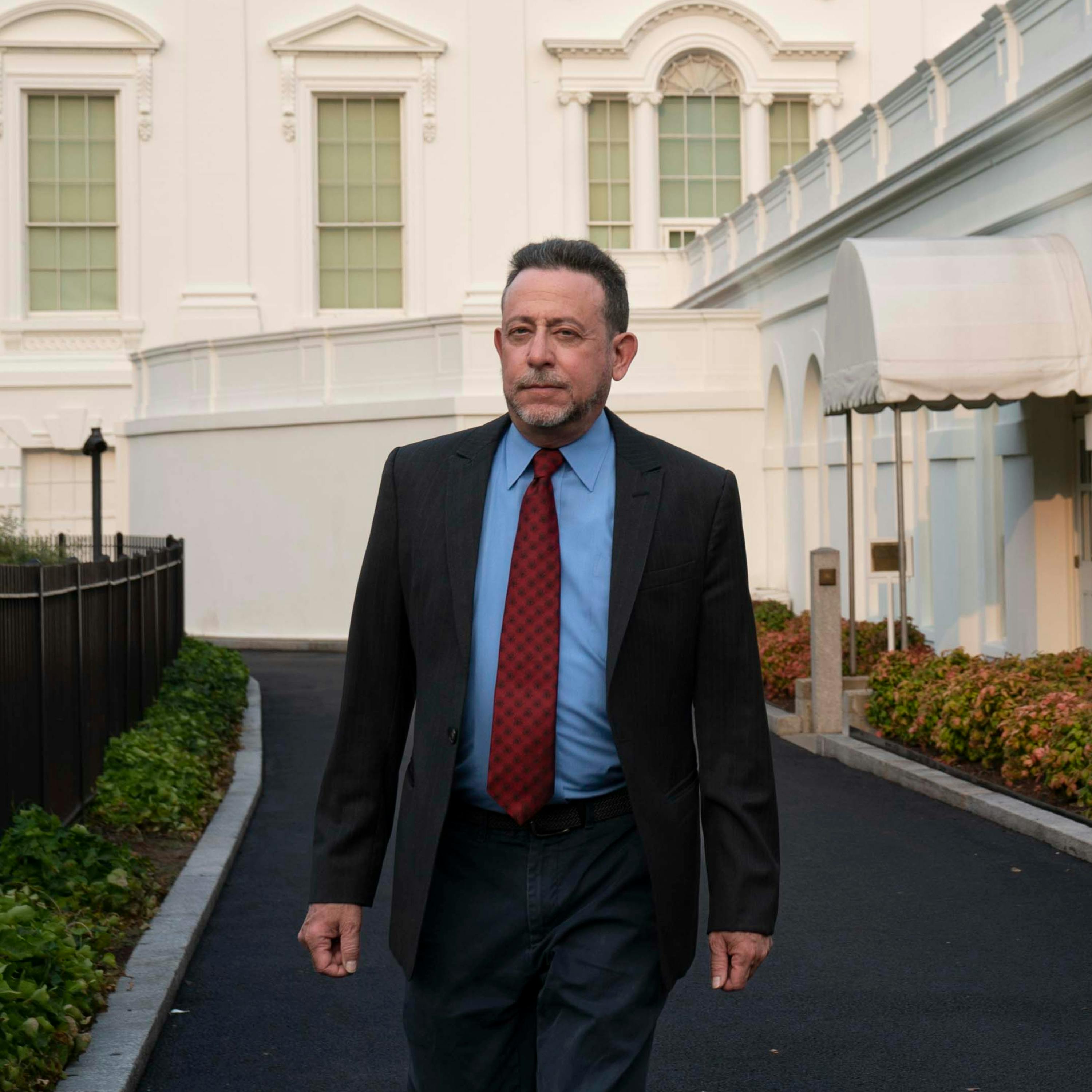
Today, Explained
Silencing the Voice of America
00:27:52
President Donald Trump has ordered the federally funded broadcaster to be “eliminated.” Longtime VOA correspondent Steve Herman explains why it will be missed.
Loading summary
Transcript67 lines
- [00:01]
Sean Ramsdorf
Remember World War II? Bad guys, Nazis, Good guys, not the Nazis. It was during those simpler times that the United States launched Voice of America.
- [00:14]
Steve Herman
This is a voice speaking from America.
- [00:17]
Sean Ramsdorf
Its mission was to fight Axis propaganda with American propaganda. But then that war ended and a new, colder one began and Voice of America became an anti authoritarian tool for for the United States. And it grew far beyond the radio.
- [00:34]
Steve Herman
Around the clock, the Voice of America broadcasts America's message of democracy to the world.
- [00:40]
Sean Ramsdorf
You can find Voice of America on the TV in dozens of languages. And then over the weekend, after more than 80 years of broadcasting, Voice of America went dark on Today. Explained it wasn't the Nazis or the Communists who finally silenced Voice of America. It was the President of the United States.
- [01:00]
Sarah Ellison
Sometimes a single performance can define an artist's legacy. Think about Hendrix's fiery Woodstock national anthem or Beyonce's homecoming at Coachella. Coming up on Switched On Pop, we're exploring artists who've had recent transformative live shows. First is Missy Elliott, who recently put on her first world tour where she taught everybody to get the freak on. And then there's her collaborator Timbaland, who recently evolved from beat maker to orchestra conductor at the Songwriter hall of Fame. And then Lady Gaga, whose chromatica ball featured a theatrical museum of brutality revealing the darker side of Gaga's mayhem. Listen to these live moments on Switched On Pop wherever you get Podcasts brought to you by Defender Thumbtack presents the.
- [01:43]
Sean Ramsdorf
Ins and outs of caring for your home. Out Indecision, overthinking, second guessing every choice you make in plans and guides that make it easy to get home projects done. Out Beige on beige on beige in knowing what to do, when to do.
- [02:06]
Sarah Ellison
It and who to hire.
- [02:08]
Sean Ramsdorf
Start caring for your home with confidence. Download Thumbtack today.
- [02:16]
Carrie Lake
This is today.
- [02:18]
Sean Ramsdorf
Signing On On Friday, President Trump signed another executive order to dismantle a bunch of federal agencies, including the one in charge of Voice of America, where Steve Herman works. Worked tbd.
- [02:33]
Steve Herman
I'm apparently still the chief national correspondent of the Voice of America and a former VOA White House bureau chief and author of the nonfiction book behind the White House Curtain, which goes into some of the stuff that we're gonna talk about today dealing with the challenges VOA faced in the first Trump administration.
- [02:57]
Sean Ramsdorf
More than 1,000 staff at Voice of America have been placed on administrative leave. But Steve's special They're investigating Steve Steve's posts on social media, to be specific.
- [03:08]
Steve Herman
That's the perception that there was a high ranking US Government official who took umbrage with A particular post that I had quoted from a news release from an NGO which was upset with what was happening to the US Agency for International Development, usaid. And that official reacted, saying that because I'm with voa, I should basically just be a mouthpiece of the US Government. And that what I had posted on social media, this innocuous quote from an NGO president, was, I don't remember the exact language, but basically saying that I was probably a traitor, which, if you look up the punishment for treason, it's relatively dire in the United States. You know what we used to do in the old days when we were smart with spies and treason, we used to handle it a little differently than we do now.
- [04:11]
Sean Ramsdorf
Steve, I was born in the 80s, and I guess I grew up knowing what Voice of America was. But for all our audience members who were maybe bored after 9, 11, who have no idea what this outfit is, would you mind just telling them what it is that Voice of America does?
- [04:32]
Steve Herman
Yes, we broadcast radio, television, streaming, online, social media, apps, all that sort of stuff in about 50 languages. Our original language was German, then Japanese. We do not broadcast in German or Japanese anymore. The languages change over time based on what is the geopolitical situation of the world. We are not only telling America's story to the world, but we're telling people what's happening in their regions of the world in their own languages. We are very integrated in the Washington D.C. inside the Beltway press, and that's been the case for many decades. Of course, there are people that scoff and say, oh, you know, voa, because it's funded by the US Government, must just be propaganda. Well, I urge people to watch the newscast. There's still stuff up on the web@voanews.com I don't know how much longer it may be up there, but draw your own conclusion about what VOA is and is not.
- [05:33]
Sean Ramsdorf
In defense of the people who think that this is just a propaganda arm of the United States government, was that the original intent when this was established in 1942?
- [05:43]
Steve Herman
Well, yes and no. I would say we went on the air in the early days of World War II, and of course, you could actually be in the United States, turn on your radio, and you could hear the broadcast from Berlin about how the Germans were winning every victory and they were the greatest people on the planet, and they were going to liberate the world. VOA came on the air saying, whether the news is good or bad, we're going to essentially tell you what it is like it is, which was A radical concept at the time because most state funded broadcasters around the world, possibly with the exception of BBC, were propaganda outlets. That's what they were designed to do. And so VOA was very unique and unusual in that regard. It's like we're going to build credibility by getting people to believe that what we're putting out on the airwaves has some credibility that it's true. Now, VOA was under the Office of War Information, which was under wartime censorship conditions. So the VOA reporters weren't just free to put on the air anything that they wanted. And then after World War II, there was a, what I call a struggle for the soul of Voice of America, which has continued, I think, since then, about whether there was any need for it, whether it should continue. And with the, the Iron Curtain descending across Eastern Europe, there were lawmakers on Capitol Hill said, hey, you know, we may have some qualms about the government being in the broadcasting business, but as long as it's not targeting the United States, as long as it's not a commercial oper will fund this. And there are historians out there who would say Voice of America, Radio Liberty, Radio Free Europe contributed to the bringing down of the Berlin Wall, not only for the news and the information, giving hope to people, but also for putting on programs such as jazz music, which apparently was considered quite subversive if you were listening in communist countries at the time. And of course, it was assailed by those in Moscow, in Beijing, as American propaganda. And it still is. In fact, the people who are celebrating the demise this week of VOA are those in the halls of power, in the autocratic regimes in Moscow, in Beijing, in Naybedaw, in Tehran.
- [08:27]
Sean Ramsdorf
Because if you're an Iranian in Tehran and you turn on your radio this morning to listen to Voice of America on the station, you've always heard it. What are you hearing right now?
- [08:38]
Steve Herman
You're not hearing any programming. And most, I think, people in Iran watch voa. It comes to them via satellite television. A lot of people in Tehran have satellite dishes up to watch it. So there's just a video loop running. There's no programming. It's just a promo of what? Explaining what the Voice of America is, which is kind of ironic because we're voiceless at the moment.
- [09:03]
Sean Ramsdorf
You've told us who's happiest about this. Who do you think is saddest about this? What have you heard from people who listen or watch or stream Voice of America?
- [09:14]
Steve Herman
Oh, they're astounded. You know, I can tell you I've been a foreign correspondent, Sean, in a number of countries. And when state media all of a sudden that the programming would stop and maybe music would come on, that was indicative that there was a coup being carried out. Right? It was something really dire. And so a lot of people who are in these countries that don't have a free press or autocratic are wondering what is really going on in the United States. There's been no broadcast explaining to them why VOA is suddenly off the air. And the American people are not our audience, but they are stakeholders. Your taxpayers pay for this. And a lot of people will tell you, in the realm of public diplomacy, this is probably the biggest bang for our buck in terms of the hard edge of soft power.
- [10:11]
Sean Ramsdorf
What did they do in the first administration? Because they didn't shut it down.
- [10:15]
Steve Herman
They did not shut it down. But we're seeing, actually some of the language that I've seen in recent days coming out of the administration echoed what we had seen during that time, which was accusations that there were, you know, subversives in the Voice of America. In other words, that there were somehow there were some foreign spies. And so what they did is they canceled all the people on the J1 visas and sent some of them back home. And that appears to be happening again. Some of these people will be going back, possibly to end up in prison or worse.
- [10:52]
Sean Ramsdorf
And this time around, Donald Trump announces that his pick to run Voice of America is. Is Carrie Lake. Were you and your colleagues nervous when you heard about that choice?
- [11:07]
Steve Herman
Well, I think anytime you're getting a new politically appointed leader, you're anxious at least. But there was some hope, based on public statements that she had made, that she didn't want to destroy the Voice of America. She wanted to reform it. And we've seen this with past people who've come into the VOA with all sorts, sorts of, you know, politically motivated intentions, and they come in and see what the place is really about, and they go, aha, this isn't what I thought it was. Of course, everyone at VOA would acknowledge, you know, there's room for improvement right there. There definitely can be reform. And it. Sometimes it's frustrating to us when you're using government money, how slow it can be. But when I write a story, Sean, it goes through a couple of editors. And then if there's anything remotely political in it, it would go through a balance editor, a third editor, and I've even had stories that go through four editors. And again, the stuff that gets out there is going to be shorn hopefully of being inaccurate, incomplete or biased in any way.
- [12:18]
Sean Ramsdorf
You know, Steve, when I hear you talk about like room for improvement, it feels like we've heard like a similar refrain echoed for the past two months about any number of cuts to any number of federal agencies. I think the biggest difference with Voice of America is that most Americans won't notice a difference from yesterday to today when Voice of America shuts down. What would you say to those Americans right now?
- [12:45]
Steve Herman
You raise an excellent point. It makes it much more of a challenge to make this relevant to the American people because it's an external entity and these sort of exercises, activities will have geopolitical ramifications. The war in World War II was as much a battle for hearts and minds, keeping morale up or trying to destroy morale of the troops, of the people who were having their family members die in combat. That's a really, really important part. Now, we're not engaging in psychological operations or overt propaganda, but we believe that by basically telling the truth, reporting accurately, that that is something really, really powerful. And when we're talking about a kind of asymmetrical warfare, which is what's going on between the west and Russia and China, talking about human rights, talking about what's happening in Ukraine, talking about the intimidation that China is carrying out against its neighbors, these are really, really powerful messages.
- [14:20]
Sean Ramsdorf
Steve, thank you so much for your time. I think that's a good place for us to leave it.
- [14:24]
Steve Herman
Thank you, Sean.
- [14:29]
Sean Ramsdorf
Steve Herman, chief national correspondent at Voice of America. Apparently still, when we're back on TODAY Explained, we're going to talk about how Carrie Lake, of all people, became a defender of this institution.
- [15:05]
John Green
Support for TODAY Explained comes from the new book Everything Is Tuberculosis by number one best selling author, John Green. In the book, Greene charts how the world's deadliest infectious disease has shaped the course of human history. Everything Is Tuberculosis highlights systemic failures within the global health care systems that, according to the author, have allowed tuberculosis to persist as the world's deadliest infection, killing one and a quarter million people every year.
- [15:31]
Steve Herman
Huh.
- [15:32]
John Green
Despite being curable since the 1950s. In everything is Tuberculosis, John Green tells the story of a young TB patient in Sierra Leone and he weaves in the scientific and social histories of how it has shaped our world and how our choices will shape tuberculosis future. John Green, you might Know, is the award winning, number one bestselling author of books including Looking for Alaska, the Fault in Our Stars, Turtles all the Way down and the Anthropocene. Reviewed Everything Is Tuberculosis is on sale now wherever books and audiobooks are sold and World Tuberculosis Day is observed on March 24th.
- [16:10]
Leila DeVaucci
Fox Creative this is advertiser content from NerdWallet.
- [16:17]
Carrie Lake
It's quite a miraculous job that the brain is doing. Literally. Your brain is changing physically when you're forming a memory, and that takes a lot of work.
- [16:27]
Leila DeVaucci
That's Leila DeVaucci, a psychology and neuroscience professor at Columbia University who's studies how memory works. While our brains can store a mind blowing amount of data, it's not limitless when it comes to learning new information, like, for example, researching credit cards or car insurance. That's where NerdWallet can jump in to free up your brain for the stuff you really care about.
- [16:51]
Carrie Lake
The memory system is actually quite wise. It's picking and choosing things from the day that it will consolidate overnight. Those are things that tell the memory system, you better remember this because this could impact my survival later on. But that doesn't necessarily include things like.
- [17:08]
Leila DeVaucci
Math or knowing every detail about your credit card or car insurance options for that matter. Let the nerds at NerdWallet do the work for you. Give your brain a break. Get matched in minutes@nerdwallet.com.
- [17:24]
N/A
Take your plans out of the group chat and get long weekend ready in new Abercrombie. From day to night, pack new outfits for every part of your itinerary, grabbing brunch, throw on the A and F Mila dress, then head to your dinner reservation in their new bubble hem mini dress. And yes, permission to overpack for pics with the girls. Abercrombie's best selling Scarlet Squirt deserves a post in your feed. Your plans are worth it. Shop Abercrombie's new Long Weekend collection online or in store.
- [17:58]
Sean Ramsdorf
Today, explained Sean Ramsford. Back now with Sarah Ellison, National Enterprise Reporter at the Washington Post, where she writes about the media. Sarah Kerry Lake is best known for losing a gubernatorial election in Arizona and then losing a Senate race in Arizona. Why did Donald Trump tap her, of all people, to lead the Voice of America at the start of his second term?
- [18:21]
Carrie Lake
Well, Carrie Lake, before she lost the race for governor and before she lost her race to become a senator, she was a longtime television news presenter.
- [18:34]
N/A
Look at our forecast. No delays here, just pure gorgeous weather. A sunshine alert for you.
- [18:41]
Carrie Lake
And she had done that in Arizona for decades. By the time she gets to these two losses, she has become one of the most ardent supporters of Donald Trump and his false election denial claims that he lost the election in 2020 because of massive fraud.
- [18:59]
Steve Herman
Kerry, we'll start with you.
- [19:00]
Carrie Lake
You've called Joe Biden an illegitimate president.
- [19:04]
Steve Herman
What does that mean?
- [19:05]
N/A
He lost the election, and he shouldn't be in the White House. We had a corrupt election.
- [19:09]
Carrie Lake
So Carrie Lake is sort of a real loyalist to Donald Trump. And when she. After she loses her race for Senate and after Donald Trump wins the the presidency, she tells him, I want to help advance your priorities from inside the administration. And she wants to be the director of Voice of America. It's a federally funded news organization, and she wants to sort of help shape how that news is delivered to a global audience.
- [19:42]
Sean Ramsdorf
So are you saying that it wasn't really Donald Trump who found this job for her, but. But it was she who found this job and asked for it from Donald Trump?
- [19:53]
Carrie Lake
According to our reporting, she really, really wanted Voice of America. And that was something that she pitched to the president? Absolutely.
- [20:02]
Sean Ramsdorf
Hmm.
- [20:03]
Carrie Lake
Kari Lake told her associates that she wanted to shape the Voice of America to be more in line with President Trump's vision and more in line with America first messaging.
- [20:15]
N/A
We will focus on accurate and honest reporting. It won't become Trump tv, but it sure as hell will not be TDS tv. You can find all the Trump derangement syndrome that you want over on CNN, MSNBC, CBS, 60 Minutes, the Washington Post, and the New York Times, but I believe it is worth trying to save.
- [20:40]
Carrie Lake
She said she's fully qualified for this. She's been doing this kind of work for decades. She understands the industry, and she made a really impassioned pitch for it. And it was something that clearly appealed to Trump in terms of the way that he was thinking about. She could use her experience as a news anchor, and it was something that he was gonna be able to kind of shape from afar through her.
- [21:05]
Steve Herman
Hmm.
- [21:06]
Sean Ramsdorf
Did she get to do anything before the Trump administration just decided that they were gonna kill this agency?
- [21:14]
Carrie Lake
Yes. I mean, when she first arrived, there were a couple of people who were in the building with her. First of all, she arrived with a few Doge staffers, and there was another woman who wrote Project 2025's chapter on what should happen to Voice of America. And it was full of allegations that there were spies in the agency, that there were leftists who had taken over. And Carrie Lake was eager, Eager to kind of clean all that out. What she did when she first got there was she targeted two journalists. One of them, a reporter named Steve Herman, who you've heard from earlier in the show, was placed on administrative leave for his social media activity, which was alleged to be biased and anti Trump. And then Kari Lake Canceled all of the wire contracts that Voice of America had. So they took. She took away Agence France Press, the ap. She was sort of trying to doge the agency herself, but she was not talking about shutting it down altogether.
- [22:23]
Sean Ramsdorf
And then in February, we start to see that Carrie Lake's dream for perhaps reforming Voice of America might be in trouble because Trump's special envoy, Rick Grenell, tweets essentially that we don't need Voice of America anymore in the United States. And then Twitter's owner, Elon Musk, says to shut them down. And I guess, like a little out of character for such a Trump loyalist, Carrie Lake comes out and says she thinks Voice of America is worth saving. She disagrees with Trump's special envoy and Trump's special vice president. How did the MAGA vision for VOA sort of get away from her?
- [23:02]
Carrie Lake
Carrie Lake is sort of a microcosm of what's happening to a lot of these Trump loyalists who are placed at the top of very high profile agencies. Voice of America is not a high profile agency. You know, Voice of America is sort of this backwater. But what you see happening with her is that she's coming in, she's there because she's loyal, and Donald Trump has rewarded her, and she has ideas for what she wants to do with this, with this agency. And whether it's Rick Grenell or Elon Musk, they're just gutting the entire operation. They are not interested in reform, or if they are interested in reform, it's more of a kind of break this thing down and rebuild it from absolute scratch, which was not what Kari Lake was planning to do, according to our reporting.
- [24:00]
Sean Ramsdorf
So does she ultimately get on board with them?
- [24:02]
Carrie Lake
So Kari Lake is trying to kind of cancel contracts and cancel the lease on this building as a way to sort of doge the agency herself. And then she starts to talk about how once she got in the building, she was so aghast to see all of this corruption, and it was really an unsalvageable place based on everything that she had learned. So she sort of quickly pivots from I want to reform this to saying, well, once I got in the building, I found so much rot that there was nothing I could do with it.
- [24:44]
Sean Ramsdorf
She becomes an interesting figure in this moment. Right, because unlike, say, you know, Cash Patel at the FBI or Lee zeldin at the EPA or Linda McMahon, of all people at the Department of Education, these are characters we know resent the agencies that they've been put in charge of. They are on board with the Doge mission, or at least the MAGA mission to deeply reform, cut, drain the swamp. But Kari Lake actually saw some good in Voice of America. Do you think there's a chance, I don't know, she could end up trying to save it, or do you think she's just gonna fall in line and oversee maybe its final chapter here?
- [25:34]
Carrie Lake
Oh, I mean, I don't think there's much that she can really do. What you're seeing when you look at the Voice of America's website and its different sort of broadcasts, there's no one left to report the news. So, you know Carrie Lake, I wouldn't say that. I wouldn't overstate. She saw this as a possibility for her. But if there's anything that we have seen with Kari Lake is that she knows how to survive as someone in MAGA world, in Trump world, in some capacity. So she is not going to die on the Hill of saving Voice of America. She's going to figure out a way to be relevant for Donald Trump. And if he doesn't want to have Voice of America exist, she is not going to fight that.
- [26:32]
Sean Ramsdorf
So Voice of America may be dead, but Kari Lake may survive.
- [26:35]
Carrie Lake
I guess that's where we. I guess that's where we landed.
- [26:42]
Sean Ramsdorf
Sarah Ellison, WaPo.com this episode of Today Explained was produced by Gabrielle Burbay and Travis Larchuk, with help from Miles Bryan, Miranda Kennedy edited. Amanda Llewellyn and Laura Bullard fact checked. Patrick Boyd and Andrea Christensdotter mixed. Tomorrow on the show Tren de Aragua.