← Today, Explained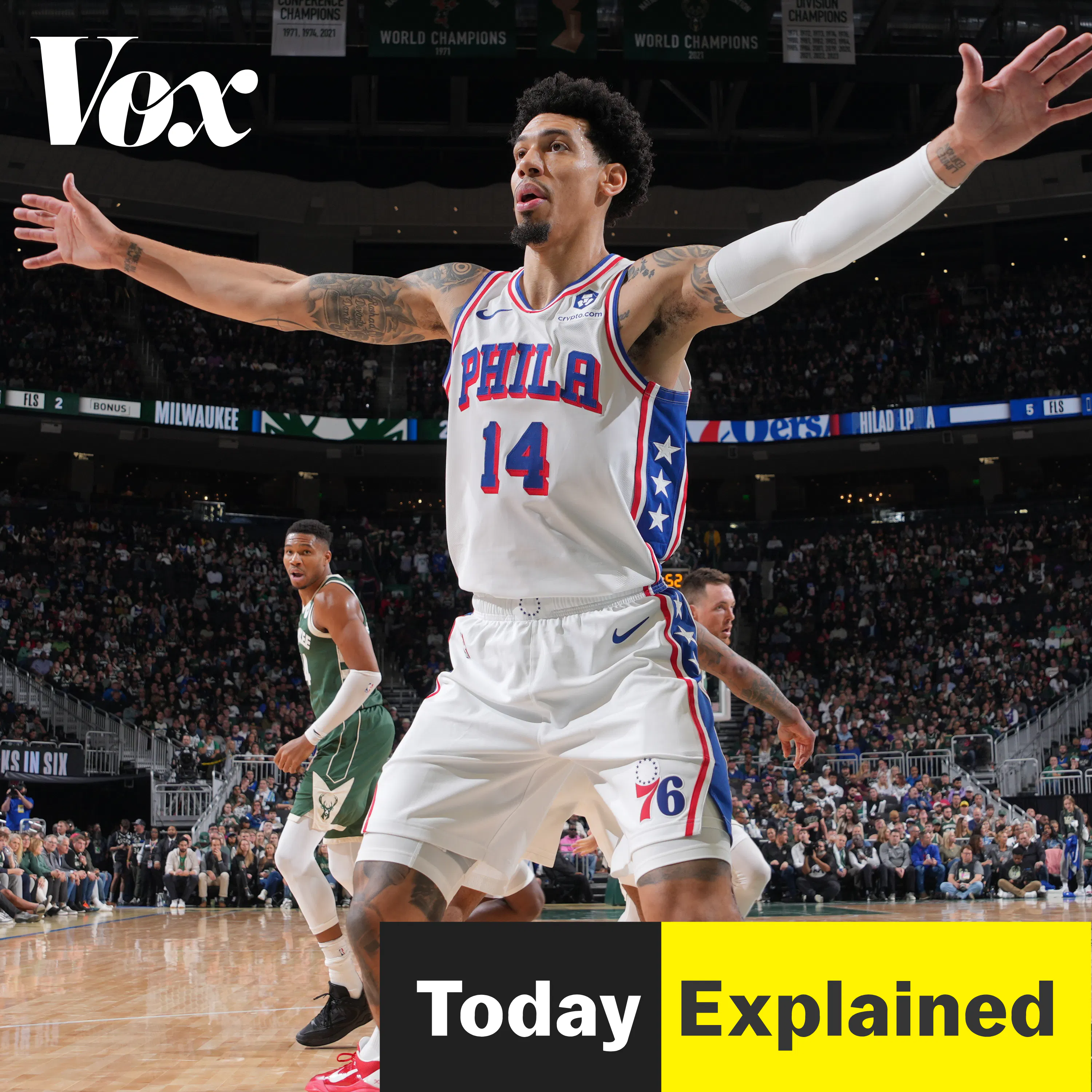
Today, Explained
The case against legal sports betting
00:27:38
Sports betting is a costly mistake, says addiction researcher Charles Fain Lehman. He and NBA great Danny Green discuss how it's changed sports for the worse, and whether there's a way to fix it.
Loading summary
Transcript88 lines
- [00:01]
Sean Ramaswamy
Remember when sports betting wasn't everywhere you looked in this country? Back in the 90s, Congress passed a pretty sweeping ban on sports betting across the United States.
- [00:12]
Charles Fain Lehman
This is a pretty universally popular law. It passes overwhelmingly. All the sports leagues speak out in favor of it. It's the law of the land between 1992 and 2018.
- [00:21]
Sean Ramaswamy
It wasn't until 2018 that the Supreme Court stepped in and basically undid that law. Since then, almost all of the states have gone ahead and legalized sports betting.
- [00:31]
Charles Fain Lehman
The American Gaming association estimates that last year Americans bet over $100 billion on sports. Something like one in three Americans now bets on sports.
- [00:42]
Sean Ramaswamy
It's everywhere. It's on your phone.
- [00:44]
Charles Fain Lehman
It's on tv, espn, which is to say Disney now runs its own sports book.
- [00:48]
Sean Ramaswamy
Mickey Mouse is now a bookie.
- [00:50]
Charles Fain Lehman
That's completely correct.
- [00:51]
Sean Ramaswamy
Pay up or I'll break your knees. Charles here says legalization was a terrible mistake. He's gonna tell on today, explained Botox.
- [01:01]
Botox Advertiser
Cosmetic Adobotulinum Toxinae FDA approved for over 20 years. So talk to your specialist to see if Botox Cosmetic is right for you.
- [01:10]
For full prescribing information including boxed warning, visit botoxcosmetic.com or call 877-351-0300.
- [01:19]
Remember to ask for Botox Cosmetic by name. To see for yourself and learn more, visit botoxcosmetic.com that's botoxcosmetic.com support for this.
- [01:31]
Klaviyo Advertiser
Show comes from Klaviyo. You're building a business. Klaviyo helps you grow it. Klaviyo's AI powered marketing platform puts all your customer data plus email, SMS and analytics in one place with Klaviyo. Tinned Fish phenom Fishwife delivers real time, personalized experiences that keeps their customers hooked. They've grown 70 times revenue in just four years with Klaviyo. Now that's scale. Visit K L A V-I-Y-O.com to learn how brands like Fish Wife build smarter digital relationships with Klaviyo.
- [02:12]
Danny Green
Listen up, it's today, explained.
- [02:17]
Sean Ramaswamy
Charles Fain. Lehman wrote a piece for the Atlantic this year titled Legalizing sports gambling was a huge mistake. We got holidays coming up. There's lots of sports to watch. Felt like a good time to ask him why he wrote that.
- [02:35]
Charles Fain Lehman
When you do the sort of cost benefit math, gambling looks like any other addictive substance, which is that most of the people who participate in it get some small sort of utilitarian hedonic benefit. They get some fun out of it and then A smaller subset of those people will become seriously addicted and do serious harm to themselves, to others, and potentially ruin their lives.
- [02:59]
Danny Green
You know, I'd stop for a week.
- [03:01]
Charles Fain Lehman
Or a month or whatever it was, and then I'd realize I still have this credit card bill to pay or I can't believe what I did. I have to win this money back or I have to keep playing. Gambling addiction is associated with all sorts of terrible outcomes, including loss of your home, loss of family, loss of life through personal action. And so we've created this enormous concentrated social harm and in return we've gotten some kind of anemic tax revenue and a bunch of ads everywhere just doesn't seem like a worthwhile trade off to me.
- [03:35]
Sean Ramaswamy
Wow, it sounds like you really don't like it though.
- [03:37]
Charles Fain Lehman
I don't, I don't, you know, and I don't like it for the reasons that I'm skeptical of a lot of vice goods. And I think we tend to systematically underrate their harms. But the problems are the same in every case, which is that they concentrate in a small number of users who will do the overwhelming majority of the using and will experience the overwhelming majority of the harm. And everybody else is sort of benefiting off of their backs, which is an alarming arrangement to me.
- [04:05]
Sean Ramaswamy
Do we actually have any receipts? Charles, of the widespread legalization of sports gambling increasing how many lives are ruined due to legal sports betting in this country?
- [04:19]
Charles Fain Lehman
Yeah, absolutely. And I think at this point many Americans know somebody who's been affected by this. Many Americans know people are in the hole. I was at a wedding recently and a friend of mine from college told me about a friend of his back home in Erie, Pennsylvania. He works at the post office. Not a well off guy who's $28,000 in the hole on sports betting. Just a tremendous problem. The interesting thing about gambling legalization, we have information on this mostly from the UK's experience. The UK's experience is pretty grim. There's one estimate that says 8% of all completed suicides in the UK are attributable to sports gambling addiction. Yikes, that's not great. But the thing about the US context is to sort of try to simplify it, because gambling was legalized in different states at different times, economists can use fairly specific set of methods to isolate the causal effect of sports gambling, not just sort of the correlates of sports gambling, really what sports gambling causes on a number of different outcomes. One of the studies that I point to from economists at Northwestern University estimates that for every dollar spent on sports gambling households put $2 less into investment accounts. There are big increases in the risk of overdrafting a bank account or maxing out a credit card. There's another paper from economists at UCLA in looking specifically at online sports gambling, and they find that legalization increases the risk of bankruptcy by 25 to 30%. Wow. Which is a big relative risk increase against a small baseline. But still. And the other thing that really sticks out in those studies is that the harms tend to concentrate among the most economically precarious. Right. The people with a history of overdraft end up overdrafting more. There is sort of ecological evidence that the harms tend to concentrate in the areas with highest levels of poverty, that they also tend to concentrate among young men who are already at risk for all sorts of, frankly, not great financial decision making. And so it seems like it's not just that gambling harm befalls some people, it's that gambling harm befalls often the people who can least afford to have it come down on them. Like the guy I was talking about earlier, who's nearly 30 grand in the hole working at the post office.
- [06:32]
Sean Ramaswamy
Do we know how much money on average people are losing versus, say, they're winning?
- [06:39]
Charles Fain Lehman
Yeah, actually. So there's another study from folks at Southern Methodist University where they have a panel of 700,000 sports bettors, and they show a couple of really interesting things. So only about 5% of people in the panel withdrew more from the apps than they deposited. So 95% of people are losing money.
- [06:58]
Danny Green
Wow.
- [06:58]
Charles Fain Lehman
That's actually not the interesting thing. The really interesting thing is that about 3.3percent in their estimate, about 3% of bettors drive 50% of sports gambling profits. And this, just to go back to the conversation earlier, is what you see in all markets in addictive goods. They follow what's sometimes called a Pareto distribution or power law distribution. 5 to 10% of the people who are doing the consuming will do 80 to 90% of the consuming. And that's pretty clearly true here as well.
- [07:25]
Sean Ramaswamy
How much does the amount people are losing, the amount people are betting, the amount people are gambling altogether, have to do with how much gambling has changed, with the little devices that we keep in our pockets?
- [07:42]
Charles Fain Lehman
It's a big part of the story in more ways than one. You know, one component of it is just it's much more readily available, which is to say, if I have to go to a casino to gamble, I may not want to take the time out of my day. I may not make the effort at the Margin, I may not get drawn in. And so over the long run, you generate fewer people who are addicted because they never get exposed in the first place. This is the virtue of keeping gambling in Las Vegas is you have to go to Vegas to do it.
- [08:11]
Danny Green
Remember, what happens in Vegas stays in Vegas.
- [08:15]
Charles Fain Lehman
But then I think, to my mind, the much more alarming thing is that app based gaming facilitates algorithmic discrimination on the part of the sportsbook provider. They can tell, it's actually trivial to tell with modern methods who the people are who are going to spend the most know when you check your bets in the middle of the night. They know when you are watching the game, they know what you are doing and how much you are betting. And then what they can do is algorithmically reinforce that they can make you offers. They can assign you a personal concierge who encourages you to bet more. This is actually what they do at casinos in Vegas. If you are a whale, a big spender, you'll get all sorts of good stuff comped. But instead of that happening in sort of a dingy hotel or even a glamorous hotel, that's happening on your phone all day, every day until they get all of your money, it's quite clear.
- [09:12]
Sean Ramaswamy
From speaking with you, Charles, that there's a lot of harm being introduced to this entire country, but certainly states across the country from legal sports betting, and it's especially hitting young men, but it was legalized with the promise that it was going to bring a lot of benefits to the states that, that approved it. You seem to believe that isn't paying off.
- [09:40]
Charles Fain Lehman
Yeah, and you know, I think that there are a few arguments here. One is tax revenue, and that's a big selling point.
- [09:48]
Sean Ramaswamy
Yeah.
- [09:48]
Charles Fain Lehman
And the reality is that the tax revenue has been pretty anemic. If you look at the census figures from Q Tax, say you look at the 38 legal states in their most recent count together, gambling is generating about half a billion dollars a quarter, which is not nothing, but is a drop in the bucket compared to not just most state revenue needs, but also substantially less than you get from alcohol, tobacco or marijuana, which is legal in fewer states. So it's not even a particularly revenue generating syntax. Another argument is that you would reduce the reach of the offshore gambling sites. That doesn't really appear to be happening. There's a survey, I think, out of Massachusetts where they found that bettors were just as likely to use unauthorized betting sites after legalization. But it makes sense. If you're an active sports bettor, you're betting on Multiple sportsbooks. You're trying to get as much action as possible. And so the offshore sites are just compliments, they aren't substitutes. And then the third argument is one that I think we should take seriously, which is like the hedonic benefits and the sort of individual liberty benefits. But as I talked about earlier, you know, a, we didn't like live in a terrible dictatorship in 2017. If you and I made a bet together, neither of us was at any risk of going to jail. Right? That was, it was not illegal for us to make up an interpersonal bet. The thing that was illegal was for big businesses and states to get involved in the action. And you know, I, I'm just not that upset about restricting the liberty of like the state of Georgia or Fluttershy to get involved in your and my bets. So I, you know, that argument doesn't hold a lot of water with me either.
- [11:35]
Sean Ramaswamy
Charles Fain Lehman. He mostly writes about drugs, but makes exceptions for gambling. He's a fellow at the Manhattan Institute and a contributing editor at City Journal. City-journal.org all the sports betting isn't just changing the experience for fans, it's changing the experience for athletes, too. We're gonna hear from a pretty good one when we're back on TODAY Explained. Support for TODAY Explained comes from Noom. Noom wants to remind you that the end of the year is on the horizon. And so if you made a New Year's resolution back in, you know, Jan, it's crunch time, they say, and yes, maybe you cheated, maybe you lost track. We're all human. But Noom wants you to know that, you know, if you started rebounding with junk food on that diet, you resolved to, you know, commit to it may have less to do with discipline and more to do with psychology. Ask Phoebe Rios, one of our colleagues here at Vox who tried Noom herself.
- [12:43]
Charles Fain Lehman
I feel like the plan Noom created was catered to my individual needs. It was very thorough. I felt like the questions they asked I hadn't even asked myself, like what time I get out of bed in the morning and if I eat with my phone in my hand. It was very helpful and very, very educating of how I spend my day.
- [13:02]
Sean Ramaswamy
Stay focused on what's important to you with Noom's psychology and biology based approach. Sign up for your trial today@noom.com.
- [13:17]
Charles Fain Lehman
Support.
- [13:17]
Sean Ramaswamy
For today explained comes from Hydro. Most of our home workout dreams crash and bur after a few months says Hydro, you end up with a pile of unused dumbbells, perhaps a treadmill that's too heavy to move and a bag full of those multicolored stretchy bands you never actually tried. But what if there were a piece of equipment out there that could help you get a full body workout at home? Allow me to introduce you to the Hydro Rowing machine. You can give the gift of a full body workout all from the comfort of home with Hydro. Head over to hydro.com and use the code explained to save up to $475 off your hydro. That's hydro w.com code explained to save up to $475 hydro.com code explained.
- [14:20]
Klaviyo Advertiser
Support for today's show comes from Vanta. Whether you're starting or scaling your company's security program, demonstrating those top notch security practices and establishing trust is more important than ever. Vanta says they can Automate compliance for SoC2, ISO 27001 and so much more, saving you time and money, helping you build customer trust. Plus Vanta says you can streamline security reviews by automating questionnaires and demonstrating your security posture. Sit up straight with customer Facing Trust center all powered by Vanta AI. According to Vanta, over 8,000 global companies like Atlassian Flow Health and Quora use Vanta to manage risk and provide security in real time. You can get $1,000 off Vanta when you go to vanta.comexplained. that's vanta.comexplained for $1,000 off.
- [15:14]
Danny Green
Today.
- [15:15]
Sean Ramaswamy
Explained is back and I'll be back too.
- [15:19]
Klaviyo Advertiser
For.
- [15:23]
Sean Ramaswamy
Danny Green didn't just win one NBA championship. He won three with three different teams, including my Toronto Raptors, for which I had to thank him.
- [15:32]
Danny Green
No thanks necessary. It was my pleasure.
- [15:35]
Sean Ramaswamy
All that winning served as inspiration when it came time to name his son.
- [15:39]
Danny Green
His name is Win.
- [15:40]
Sean Ramaswamy
Win?
- [15:41]
Danny Green
Yeah.
- [15:42]
Sean Ramaswamy
Like Win?
- [15:43]
Danny Green
Yes. Like I win, you lose. So yeah, he's part of the brand. It's on brand and he was a celebration himself because we weren't sure if we were able to have him naturally. And he did happen naturally. So he was a Win.
- [15:57]
Sean Ramaswamy
Danny's got time to spend with Win and talk to us because he just retired from professional basketball. But he played in the NBA for 15 years and witnessed the boom in sports betting firsthand from the court. And it was a far cry from what he saw when he was starting out as a college player almost 20 years ago.
- [16:17]
Danny Green
Very illegal. Everything was illegal. There was no Nil. There was none of that. Everything was illegal.
- [16:21]
Sean Ramaswamy
By the time Danny's ready to retire from the NBA, he's not just getting yelled at by an opposing player or his coach. There are fans who are mad about their parlay getting messed up.
- [16:31]
Danny Green
So you messing up someone's parlay or messing up someone's gambling bet on you is that they took you for usually over a certain amount of points, rebounds or assists or all the above together. And it's like, all right, sometimes a parlay may be Boston is going to win by plus six and a half or. And then so. And so is going to lose by, you know, minus four and a half. And then this player is going to get over 10 rebounds, this player is going to get over six assists, this person to get over two and a half, three pointers made. That's usually, I'm one of those guys at least one and a half, three pointers made. And like, if you win or if you get hit on all these people that you gamble on, risk, like, is a big payout and they might get nine out of the 10. And if you're the one out of 10 that doesn't get that, that one and a half threes or two and a half threes for them, they're going to cuss you out. And you know, because they were this short of turning $5 into $25,000. You know what I'm saying? So.
- [17:25]
Sean Ramaswamy
Right.
- [17:25]
Danny Green
That's ultimately what a parlay is.
- [17:27]
Sean Ramaswamy
So tell me when you're, when you're playing towards the end of your career and, and, and sports betting has become a daily part of the conversation. When you think back to those days, which aren't that long ago, did you ever get the impression on the court that someone was mad at you for a given play or for some.
- [17:47]
Danny Green
Yes, 100%. Like if you score at the end of the game, you mess up the spread, you turn the ball over or whatever it is, or if you lose a game that you were favored in, we are more aware of it and it's brought to our attention. Do we care? No.
- [18:03]
Sean Ramaswamy
But my initial reaction, to be honest. Damn.
- [18:08]
Charles Fain Lehman
Damn. Damn.
- [18:10]
Sean Ramaswamy
So players aren't scared of that. They're not worried about fans and their various bets?
- [18:15]
Danny Green
No, it's a risk. It's called gamble for a reason. If you want to risk your house or your life or your life savings on something, obviously our job is to play basketball. It's a physical, performing type of game. And as much as we want to play well, we can't control every night that we're going to play great. It's a very unpredictable, and most sports are very unpredictable in terms of who's going to win, the outcome, who's going to get hurt, who's not, or how well you're going to play, how well you're going to feel when you're in that, or how the coach is going to play you, or how the team's going to guard you. A lot of those things are out of your control. If we go out every night trying to do our best, of course we try to win. Nobody tries to perform terrible. Unless you're betting the unders on yourself and you're trying to win some money.
- [18:57]
Sean Ramaswamy
Which is illegal, apparently.
- [18:59]
Danny Green
Yes, very illegal. So none of us are going out there trying to get the unders or trying to play bad. We want to win, we want to play well ultimately, because us playing well gets us the contract.
- [19:10]
Charles Fain Lehman
We want Danny Green committing to the lakers on a two year deal. He's a career 40 plus.
- [19:15]
Danny Green
We get more money, we get more looks, we get to stay in this profession longer. We get a chance to do what we love and play more minutes. So nobody wants to play bad. Nobody wants to to do under what they're expected.
- [19:26]
Sean Ramaswamy
You know, players like Kevin Durant and Kyrie Irving have complained about the harassment and said, you know, it's distracting from their game.
- [19:33]
Danny Green
Gambling and sports betting has completely taken the purity away from and the fun away from the game at times. I'm gonna just be honest with y'all, so I could imagine on that level, I mean, they're superstars, so I'm sure it's a, you know, I was a role player, so. And I got it. So I can imagine on superstar level how much DMs. I mean, it's give and take advantage disadvantage. Sure. They get a lot of opportunities for sponsorships money and people will want to have access to them that they would love to meet or they look up to or want to hang out with or kick it with or do business with. On the flip side of it is people flooding your DMs with BS too. So, like, it's a give and take, It's a gift and a curse on both sides of it.
- [20:13]
Sean Ramaswamy
Did the opposite ever happen? Did it ever feel good to get off the court and hear from someone that you made them like $10,000 or something like that?
- [20:21]
Danny Green
Yeah, I mean, sometimes it's cool. Not that you're gonna get a cut, but it's like, oh, that's cool, man. I'm glad I did. I used to bet on you all the time and some people. I lost a lot of money too, man. Trust me, if I played better, I probably would have made more money. Yeah, and it's like, you know, but when you make the money, you ain't gonna give me the money. So why? You know, there was one time Floyd won big money. We beat the Lakers. He gambled on us beating them. I was in San Antonio, hit a big shot.
- [20:45]
Sean Ramaswamy
Undefeated boxer Floyd Mayweather.
- [20:47]
Danny Green
Yeah. And people are like, oh, he ain't send you a car. Absolutely. Why would he? It's his money. He risked it. But no, you know, he's sent me a little, you know, money. Team back, like, gift, small thing. We connected was cool, good people, but I ain't gonna see the money. So as great as it feels, it's not like I'm getting to really share that with you. It's like, oh, that's cool, but I really don't care. But I'm happy for you. I'm happy you won money on my behalf.
- [21:12]
Sean Ramaswamy
You know, you've talked about how the athletes aren't betting themselves and, you know, they don't have money riding on the games. But of course, earlier this year, we saw former, now Toronto Raptors player Jontay Porter got. Got kicked out of league for betting.
- [21:26]
Charles Fain Lehman
Toronto Raptors forward Jontay Porter has been banned from the NBA for life.
- [21:31]
Danny Green
The NBA says Porter committed several serious violations that include betting on games, providing confidential information to betters and worse, limiting his own participation in games. It's cardinal sin. You know, what he's accused of in the NBA, and the ultimate extreme option I have is, you know, to ban him from the game. There is nothing more serious.
- [21:57]
Sean Ramaswamy
What did you think when you saw what happened to John Day? What did you make of that?
- [22:01]
Danny Green
I mean, they had to make an example of something, so rightfully so. I mean, like, what do we do? Like, come on, man. Like I said, if you're gonna bet on yourself, at least bet the overs and try to make it happen. But to bet the unders and then hurt your own career, you know, be sick or get hurt mid game and call out or purposely not take shots or try to miss shots. That's just. That's. That's just something I can't fathom. Like, I just don't understand that in the. In the realm of being a basketball player and a competitor, I just can't understand why you would ever set yourself up for failure on both sides. Like, you're risking getting kicked out and you're risking not getting a contract or being picked up by another NBA team by playing bad and being hurt all the time. So, like, it's a double negative, a double L in My. In my eyes, I was like, man, bad way to go out. But, you know, and he got punished rightfully so, you know, and they. Within good reason, and they had to make examples somebody so that nobody else comes along and tries to do it again.
- [22:59]
Sean Ramaswamy
Do you think there's any chance, instead of getting the periodic reminder that, you know, you're not allowed to do this, so another athlete's getting banned from the league? Do you think there's a chance that gambling, sports betting becomes so pervasive and so detrimental to the game that actually we dial it back and say, you know what? We're not going to allow X kind of betting. We're not going to allow Y kind of betting to preserve the sanctity of the game? Or do you think the cat's out of the bag?
- [23:26]
Danny Green
Cat's out. It's never going back. Too much money involved. It's always everything in business is money, right? When money's involved, and this is bringing so much money into the world, into the sports in every industry, I honestly think it'll go the other way where they'll start saying, we'll allow guys to bet on their respective sports. But all right, listen, you can't bet on your own sport. That's the. But I'm sure they're gonna. Guys are gonna be betting on other sports openly at some point. You know, we'll be. NBA players, bet on football, football, NBA, mlb, hockey, whatever it is. But once it's open, once, it's hard to go backwards. You know, once you. You go, you can be strict early and set the rules, but once you lighten up, you can't go back. You know what I'm saying? Like, all right, we're going to go back to this. It's like trying to tell NBA players, we're going to insist on the drug rule again. You know, the marijuana drug rule again, and be like, what the. What the hell? You know? So I just don't see it happening. Anything's possible. Anything's possible, but I just don't see that happening.
- [24:27]
Sean Ramaswamy
We asked Charles from earlier in the show the same question. You'll recall he hates sports betting. We told him Danny said, the genie's not going back in the bottle. And Charles had a counter argument.
- [24:40]
Charles Fain Lehman
I mean, look, we say that, and my response TO that is 1992 is not a million years ago. Right? It's not a different universe. Joe Biden was an important political figure in 1992, and he's an important political figure today. I will make the argument for the virtues of prohibition. And the argument for it is in essence that prohibition is big and dumb and it works. When you try to set up a regulatory system, you run into the risk of what's called regulatory capture. Or in less fancy terms, the entities that are being regulated will have a lot of incentive to spend as much money as possible influencing the regulators. Prohibition seemed to work pretty well and it avoided precisely the problems that regulatory capture can bring up. That said, I think we could certainly do a heck of a lot better than we're doing right now. You could ban advertising. You could severely restricted the usage of or altogether ban app based betting. You could try to limit the ability of sportsbooks to discriminate against that 5% of players who are taking money out because that ends up being obviously unfair. You could put caps on how much they're allowed to solicit deposits or other targeting methods for sort of bringing in those addicted users. The thing is that I think all of those would make a difference and also because I think they'd make a difference, I suspect that the sports gambling corporations will fight them tooth and nail and the current political track record is that they will win. The sort of strong argument for the prohibitionist position is trying to reach a half measure may actually be harder than just going all the way if you can convince people that sports game legalization isn't worth it. Whether or not I can convince people, I don't know, but I'm trying.
- [26:30]
Sean Ramaswamy
That was Charles. You know Charles before that, Danny Green, champ. He has a podcast. It's called Inside the Green Room. Get it this episode was produced by Hadi Mwagdi. It was edited by Matthew Collette Fact Checked by Laura Bullard Mixed by Patrick Boyd and Andrea Christensdottir I'm Sean Ramaswoorom. This is Today Explained. Merry Christmas to all who celebrate Happy Hanukkah to all who celebrate. Happy Monday to all who celebrate. Today Explained is back in your feeds on Boxing day.
- [27:24]
Botox Advertiser
The number one selling product of its kind with over 20 years of research and innovation. Botox Cosmetic Adobotulinum Toxin A is a prescription medicine used to temporarily make moderate to severe frown lines, crow's feet and forehead lines look better in adults.
- [27:39]
Effects of Botox Cosmetic may spread hours to weeks after injection causing serious symptoms. Alert your doctor right away as difficulty swallowing, speaking, breathing, eye problems or muscle weakness may be a sign of a life threatening condition. Patients with these conditions before injection are at highest risk. Don't receive Botox Cosmetic if you have a skin infection. Side effects may include allergic reactions injection site, pain, headache, eyebrow and eyelid drooping and eyelid swelling. Allergic reactions can include rash, welts, asthma symptoms and dizziness. Tell your doctor about medical history, muscle or nerve conditions including ALS or Lou Gehrig's disease, Myasthenia gravis or Lambert Eaton syndrome and medications including botulinum toxins as these may increase the risk of serious side effects. For full safety information, visit botoxcosmetic.com or call 877-351-0300.
- [28:20]
See for yourself at botoxcosmetic.com the number one selling product of its kind with over 20 years of research and innovation, Botox Cosmetic Adobotulinum Toxinae is a prescription medicine used to temporarily make moderate to severe frown lines, crow's feet and forehead lines look better in adults.
- [28:39]
Effects of Botox Cosmetic may spread hours to weeks after injection causing serious symptoms. Alert your doctor right away as difficulty swallowing, speaking, breathing, eye problems or muscle weakness may be a sign of a life threatening condition. Patients with these conditions before injection are at highest risk. Don't receive Botox Cosmetic if you have a skin infection. Side effects may include allergic reactions, injection site pain, headache, eyebrow and eyelid drooping and eyelid swelling. Allergic reactions can include rash, welts, asthma symptoms and dizziness. Tell your doctor about medical history, muscle or nerve conditions including ALS or Lou Gehrig's disease, Myasthenia gravis or Lambert Eaton syndrome and medications including botulinum toxins as these may increase the risk of serious side effects. For full safety information, visit botoxcosmetic.com or call 877-351-0300.
- [29:20]
See for yourself at botoxcosmetic.com.