Loading summary
Transcript88 lines
- [00:02]
Sean Ramaswamy
Over the weekend, flags from the McDonald's at Guantanamo Bay, Cuba, to a transgender pride flag in West Hollywood, California, to flags all over our nation's capital, flew half staff for Charlie Kirk. Coldplay's Chris Martin sent love from a concert in London. South Koreans were out in the street chanting the world was mourning a pretty divisive guy. But the Trump administration wasn't satisfied. They're doubling down on retribution.
- [00:31]
Zach Beauchamp
So when you see someone celebrating Charlie's murder, call them out in hell. Call their employer.
- [00:37]
Ellie Reeve
We will absolutely target you, go after you.
- [00:41]
Sean Ramaswamy
We are going to channel all of the anger that we have over the organized campaign that led to this assassination to uproot and dismantle these terrorist networks. They're doubling down. Even though we still don't fully know why Charlie Kirk was murdered, what we do know on Today Explained from Vox.
- [01:01]
Ellie Reeve
Support for this show comes from pure leaf iced tea. When you find yourself in the afternoon slump, you need the right thing to make you bounce back. You need pure leaf iced tea. It's real brewed tea made in a variety of bold flavors with just the right amount of naturally occurring caffeine. You're left feeling refreshed and revitalized so you can be ready to take on what's next. The next time you need to hit the reset button, grab a pure leaf iced tea. Time for a tea break. Time for a pure leaf.
- [01:33]
Sean Ramaswamy
Avoiding your unfinished home projects because you're not sure where to start. Thumbtack knows homes, so you don't have to. Don't know the difference between matte, paint, finish and satin or what that clunking sound from your dryer is. With thumbtack, you don't have to be a home pro. You just have to hire one. You can hire top rated pros, see price estimates and read reviews all on the app. Download Today.
- [01:58]
Ellie Reeve
You're listening to Today Explained. Okay. My name is Ellie Reeve. I'm a correspondent for CNN and author of the book Black Pill.
- [02:06]
Sean Ramaswamy
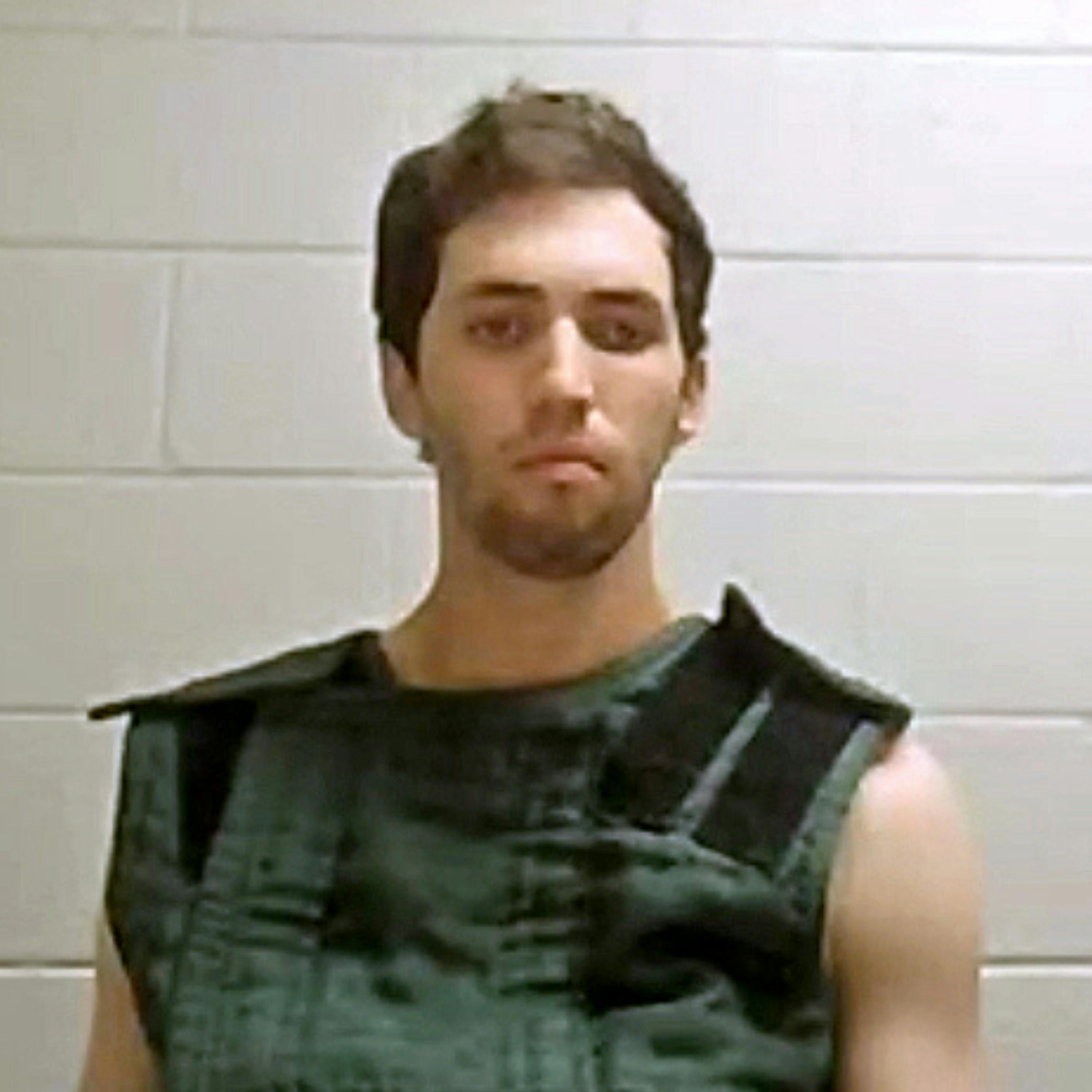
Okay. And Ellie, it's been almost a week since Charlie Kirk was murdered. What do we know at this point about his alleged shooter, Tyler Robinson?
- [02:18]
Ellie Reeve
To me, we still don't know enough. We know that he was a young man referred to as very smart and quiet by a lot of his friends that have talked to the press. Tyler was always kind of quieter since we were little, but not like quiet. Weird kid was smart, quiet. He never caused any problems. I don't know, he just. I think this was really unexpected. I didn't see it coming at all. You know, he was a Big gamer, like really into video games. And according to investigators, he was dating his roommate who was transitioning to be a woman.
- [02:56]
Sean Ramaswamy
The first sort of tranche of information we got about this alleged shooter was when investigators revealed what he wrote on the bullet casings. Allegedly. Could you help us understand what exactly he wrote?
- [03:13]
Ellie Reeve
Yeah, I have the indictment pulled up, so it's easiest for us to go through. So the first one is notice his bulge. Oh, whoa, what's this? So this is a furry meme. It's a 10 year old meme. It comes from an image that's a drawing of two middle aged, unattractive men role playing with each other online, like making sexy talk as furries. And if people don't know, that's kind of like a thing where you like imagining yourself as an anthropomorphic animal, usually a specific one. And so notice his bulge is an erection. Oh, whoa, that's a emoticon. That's like kind of really cute. Surprise. It's like cute but a little sexy. And what's this? As in again the erection.
- [04:03]
Sean Ramaswamy
So just starting out here, he allegedly wrote a bunch of jokes on these casings.
- [04:10]
Ellie Reeve
He wrote a whole bunch of jokes. He wrote dumb Internet jokes. Some of them, if it were in a movie, would be funny, but he wrote them before killing a person. And that's what's like, honestly, like pretty chilling. It's, it's one of the details that's hard for me to get past. So this can be interpreted as a pro furry joke or an anti furry joke, because hating furries on the Internet is a big thing both in the right wing world and other very online spaces. But it's also been reclaimed by furries. Kind of like the word queer. So the point of saying all that is that an outsider trying to establish with certainty what exactly was being expressed by this message, that's a fool's errand. I mean, you just don't know. We just don't know. But we're getting a few more details, but it's still pretty ambiguous.
- [05:04]
Sean Ramaswamy
Which feels similar to another casing which said, if you're reading this, you're gay. Lmao.
- [05:11]
Ellie Reeve
Exactly. And that one again. And I saw other people pick this up on the Internet, you are supposed to imagine, or for me, what it conjures is like a grizzled law enforcement veteran, you know, bulletproof vest, bends down in the dust to pick up a piece of evidence and it says if you read this, you're gay, right? You're supposed to laugh or the image is funny. And yet he did it before killing somebody.
- [05:38]
Sean Ramaswamy
What did the rest of them say?
- [05:40]
Ellie Reeve
So the second cartridge says, hey, fasch is catch, and has these arrow symbols. It's a reference to a video game called Helldivers 2, which is kind of like a fascist satire, like Stormtroopers. The arrow symbols are what bring the biggest bomb in the game. The third cartridge is, oh, bella chow, bella chow, bella chow, chow chow. So that's an old anti fascist song. Like, history buffs are very familiar with this. It's an Italian antifascist song. I'm told it's a meme among antifascists. I have done quite a bit of reporting with them, and I had never come across it. But that doesn't. I mean, that's the Internet, I guess.
- [06:25]
Sean Ramaswamy
So is there some sort of, like, through line in what Tyler Robinson may have written on these casings?
- [06:31]
Ellie Reeve
Well, he's really into video games. And the, like, dominant pose in these, like, very online chat rooms is ironic detachment, or so many layers of irony that you can't even fully understand the author's meaning, other than that they're implying we're part of an in group and the people outside don't understand. Hmm.
- [06:58]
Sean Ramaswamy
And what do we know about the online spaces that Tyler may have lived in?
- [07:04]
Ellie Reeve
We don't know enough. We just don't know enough. We know he was in A Few Discords, a gaming chat platform, but you don't have to be using a video game to use it. I've done quite a bit of reporting in these Discord servers that become cultures unto themselves. Like, they become almost cult. Like, I've interviewed incels who spent like 18 hours a day in their Discord server. Wow. The Discord server of white nationalists became very important evidence in a federal civil trial involving Charlottesville. It can become this bubble that leads to very intense groupthink. But what we've seen so far of his messages on Discord, and Discord did confirm that Tyler Robertson had an account isn't like that they messaged him being like, bro, you look like these pictures of the alleged shooter, he's like, oh, my doppelganger's trying to get me in trouble. Ha ha. Better throw away my manifesto and exact copyrightful. If he was in a very political space. We have not yet seen evidence of that.
- [08:11]
Sean Ramaswamy
And Discord itself does not necessarily have a right lean or a left lean.
- [08:18]
Ellie Reeve
No, no, it's not for that. There are anti fascist servers and communist ones and right wing ones and fascist ones and incel ones. And the thing that like the part of the culture that is unsettling is that you see in a lot of these spaces is just this nihilistic, black pilled, like, ironic culture where nothing is taken seriously. Like you're a loser if you take something seriously.
- [08:48]
Sean Ramaswamy
Tyler Robinson, of course, now in jail, at least incarcerated and appeared in court virtually yesterday for, for his indictment. He's been charged with aggravated murder. What more did we learn about Tyler from the charges yesterday?
- [09:07]
Ellie Reeve
So the most interesting thing in the indictment goes to the motivation. We're joined today by our sheriff and.
- [09:14]
Zach Beauchamp
Our prosecution team and our county commissioners.
- [09:17]
Ellie Reeve
They said that over the last year his family had told investigators that he had become more left wing in his politics, including more interested in gay rights and trans rights. That he had had disagreements with his father over this.
- [09:32]
Court Transcript / Legal Official
She stated that Robinson began to date his roommate, a biological male who was transitioning genders. This resulted in several discussions with family members, but especially between Robinson and his father, who have very different political views.
- [09:51]
Ellie Reeve
And the really fascinating thing is his texts with his significant other. Roomma after the shooting.
- [09:58]
Court Transcript / Legal Official
ROOMMATE why? Robinson? Why did I do it? Roommate yeah. ROBINSON I had enough of his hatred. Some hate can't be negotiated out now.
- [10:10]
Ellie Reeve
There are, there are no time stamps and there are ellipses in this. So we're not exactly sure when all of these messages were sent, but it's clear from the transcript one that the roommate was surprised by this.
- [10:21]
Court Transcript / Legal Official
After reading the note, the room roommate responded. What? You're joking, right? ROBINSON I am still okay, my love, but am stuck in Orem for a little while longer yet. Shouldn't be long until I can come home, but I gotta grab my rifle still, to be honest, I had hoped to keep this secret till I died of old age.
- [10:45]
Ellie Reeve
I just he over and over and over in this transcript. He's obsessed with the rifle that was his grandfather's rifle. And particularly that his father will be angry if he has lost the rifle.
- [10:55]
Court Transcript / Legal Official
If I am able to grab my rifle unseen, I will have left no evidence.
- [11:01]
Ellie Reeve
It's one of the other, like, just surreal things in this exchange, you know, like you just killed a guy and all he can think about is, my dad's going to be so mad if I don't bring back grandpa's rifle.
- [11:15]
Sean Ramaswamy
Not about the fact that I just killed a guy.
- [11:18]
Ellie Reeve
Yeah. In front of thousands of people. And there's another message that's related to what we've been talking about. He says, remember how I was engraving bullets? The fucking messages are mostly a big meme. If I see notices bulge UWU on Fox News. I might have a stroke. And then he goes back to saying, man, I'm gonna have to leave my rifle behind. That sucks. It's crazy.
- [11:44]
Sean Ramaswamy
This, this whole incident, or at least what we know of it so far, just feels like a very uncomfortable clash of like, I live online versus I live in the real world.
- [11:59]
Ellie Reeve
Yes, yes. And particularly when talking to older colleagues who did not grow up online, it's been very hard to, like, explain. Like, and you see it in the, in the national discourse, too. Like, this is not about, like, support Trump, anti Trump. Like, it's not, it doesn't break down into easy political motivations. It's many of the young people that I have talked to who are, like, locked into these worlds. Like, they, they think that's absurd, like, rooting for one party or another. You're a dupe or a fool if you care about that stuff. I can't stop watching the way people are trying to pull, like, their own ideological goals out of this horrible event. So it's like, even as people are lecturing like that, people haven't been taking seriously the death of this young man and father. They're still making it crass themselves by trying to turn it into an ideological prop to further their own ends.
- [13:12]
Sean Ramaswamy
Ellie Reeve is the author of Black How I Witnessed the Darkest Corners of the Internet Come to Life, Poison Society, and Capture American Politics. When we're back on Today Explained. Using Charlie Kirk's murder as an ideological prop to further your own ends.
- [13:43]
Ellie Reeve
Foreign.
- [13:49]
Sponsor Voice (Saks Fifth Avenue)
For Today Explained comes from Saks Fifth Avenue. Fall is here. Might be time to find some nice new pieces you can wear again and again. With Saks Fifth Avenue, it can be a breeze to shop for your personal style. Like maybe a relaxed Prada blazer or Gucci loafers that are great for both work and the weekend. This is very Sean. This is very Sean. Coated Gucci loafers. Saxophone says Saks makes shopping feel totally customized to you. Whether that's from an in store stylist or a visit to Saks.com where they can show you just what you want to see. They say they'll even let you know when arrivals from your favorite designers are in or when something you've been eyeing is back in stock, you can find inspiration for your personal style every day at Saks Fifth Avenue.
- [14:33]
Sponsor Voice (Vanta)
As a founder, you're moving fast towards product market fit your next round or your first big enterprise deal. But with AI AI accelerating how quickly startups build and ship, security expectations are also coming in faster. And those expectations are higher than ever. Getting security and compliance right can unlock growth or stall it if you wait too long. Vanta is a trust management platform that helps businesses automate security and compliance across more than 35 frameworks like SoC2, ISO 27001, HIPAA and more. With deep integrations and automated workflows built for fast moving teams, Vanta gets you audit ready fast and keeps you secure with continuous monitoring as your models, infrastructure and customers evolve. That's why fast growing startups like LangChain, Rytr and Cursor have all trusted Vanta to build a scalable compliance foundation from the start. Go to vanta.com Vox to save $1,000 today through the Vanta for Startups program and join over 10,000ambitious companies already scaling with Vanta. That's V A N-T A.com Vox to save $1,000 for a limited time.
- [15:48]
Ellie Reeve
This.
- [15:48]
Zach Beauchamp
Episode is brought to you by Jack Daniels Jack Daniels and music are made for each other. They share a rhythm in the craft of making something timeless while being a part of legendary nights. From backyard jams to sold out arenas, there's a song in every toast. Please drink responsibly. Responsibility.org, jack Daniels and Old no. 7 are registered trademarks. Tennessee Whiskey 40% alcohol by volume. Jack Daniel Distillery, Lynchburg, Tennessee you're listening.
- [16:13]
Ellie Reeve
To.
- [16:16]
Sean Ramaswamy
Today Explained is back with Zach Zack Beachum, senior correspondent@vox.com Zack we still don't fully know what motivated the alleged shooter, but that doesn't seem to be stopping Trump to Trump harder from ramping up their response. Whom is it that they blame for the murder of Charlie Kirk?
- [16:36]
Zach Beauchamp
Well, you know it's interesting a lot of the time the language they use.
- [16:39]
Ellie Reeve
Is they they killed Charlie because he.
- [16:42]
Sponsor Voice (Saks Fifth Avenue)
Preached a message of patriotism, faith and.
- [16:47]
Ellie Reeve
Of God's merciful love.
- [16:49]
Zach Beauchamp
They did this, they killed Charlie and they're vicious and they're horrible and they're politically savvy. The they is not very well defined, right? But from what I can tell from listening to a lot of what they have to say and listening especially to JD Vance guest hosting Charlie Kirk's radio show where he hosted Stephen Miller and a bunch of other notable folks to talk about this, they seem to believe that there is a wide ranging a web, a cell, but bigger than that right of left wing organizations and individuals who work to inspire hatred, targeting them personally.
- [17:27]
Sponsor Voice (Vanta)
Charlie was gunned down in broad daylight.
- [17:30]
Zach Beauchamp
And well funded institutions of the left.
- [17:33]
Sean Ramaswamy
Lied about what he said so as.
- [17:36]
Zach Beauchamp
To justify his murder. When you listen to Vance talk about it his, his closing monologue in that show, he talks very personally about how it's a threat to leading right wing figures, not just because he was friends with Charlie, but also the way that he talks about Trump's assassination.
- [17:51]
Sponsor Voice (Vanta)
Donald J. Trump escaped an assassin's bullet.
- [17:54]
Zach Beauchamp
By less than an inch. Our House majority leaver, Stephen Scalise, came within seconds of death by an assassin himself. He believes that these people, the they, these liberal institutions, are responsible for fomenting an atmosphere in which he and his friends can be killed and in fact have been targets of assassin's bullets.
- [18:16]
Sean Ramaswamy
Vance says explicitly people on the left.
- [18:19]
Zach Beauchamp
Are much likelier to defend and celebrate political violence.
- [18:23]
Sean Ramaswamy
And is that true, Zach? Is the left more violent than the right in the United States?
- [18:29]
Zach Beauchamp
No, it's not. And the key thing to look at is actual data on political violence, specifically politically motivated murders. And there was a recent attempt to tally this by Alex Norasta, who is a scholar at the libertarian Cato Institute. And what he found was, if you exclude 9 11, which because 911 is such an outlier that it makes everything else look small by comparison, political violence in the US Is overwhelmingly perpetrated by people on the political right, a majority. So the left, if you look just at the actual raw data, is not even close to as violent as the political right is. We have, however, seen recent high profile instances of what might be termed left wing political violence. The targeting of Donald Trump is not one of them. Right. The first, the assassin who nearly killed Trump in Butler, Pennsylvania, has no discernible left wing ideology, no evidence that he has any left wing politics. They were his. His motivations were weird and odd. And at one point there was a report that suggested that he also looked at Joe Biden's campaign movements and he may have just shot Trump because he was there. Right. Like it's this. Sometimes violence targeting major political figures has no explanation. The entire underlying belief here is a fiction. Right, A sense, and this is widespread in the right wing press, that the American left is celebrating Charlie Kirk's death. Those people do exist. They're real. And I find it disgusting too. I don't think they should be fired for their beliefs. They're treating it, you know, these mainstream voices on the right up until the President's senior advisors, like, this is the position of the Institutional Democratic Party, when in fact, like no one at any serious level of Democratic politics has even come close to justifying Charlie Kirk's death. I haven't read an op ed in a major left wing publication or saying that Charlie Kirk deserved to die or that it was good. This is just not the opinion of the American left. It isn't. But there's an effort to make it look as if it is.
- [20:32]
Sean Ramaswamy
What are they proposing the country does about this problem that they characterize as them? Very much us versus them. You mentioned firings.
- [20:45]
Zach Beauchamp
I mean, the first wave of the response has been an overwhelming attempt at what can best be described as cancellations. Right. You know, we're familiar with the concept of an ordinary person saying something that offends someone's political sensibilities and losing their job over it. Right. That's. That's what I take that term to mean. And there's been a huge wave of those since then.
- [21:04]
Ellie Reeve
We will absolutely target you. Go after you this morning.
- [21:09]
Zach Beauchamp
Some harsh critics of Charlie Kirk are.
- [21:11]
Court Transcript / Legal Official
Now looking for new jobs.
- [21:13]
Ellie Reeve
Cobb county schools placing an unknown number of employees on leave after officials said the workers made comments on social media about the conservative activist who was killed last week.
- [21:22]
Zach Beauchamp
I read through some tweets by libs of TikTok, who's an account that's famous for. For sort of doxing and trying to get punish liberals that are or leftists who have allegedly bad opinions. And libs of TikTok has been working overtime after Charlie Kirk's murder to try to get people fired.
- [21:39]
Ellie Reeve
They canceled and debanked us for saying men can't get pregnant. They're getting fired for celebrating assassination. This distinction is important. We are not the same. This person reportedly works for Social Security and he's calling for white people to be killed. Our tax dollars pay his salary. He needs to be investigated at FBI chi.
- [22:02]
Zach Beauchamp
The author Hya Raichik behind it will say, is this acceptable to you, a person's employer, when she tweets about whatever.
- [22:09]
Ellie Reeve
Their comment is, make these lunatics famous.
- [22:12]
Zach Beauchamp
And sometimes they are justifying violence. Again, I find it abhorrent. We are talking about people who will often say things like people will tell.
- [22:21]
Ellie Reeve
You to have respect for someone who spent their whole career making sure others couldn't live equally happily or safely or Charlie Kirk is not a martyr for the gospel of Jesus Christ.
- [22:33]
Zach Beauchamp
These are things that are well within the bounds of acceptable political discourse about a public figure.
- [22:38]
Sean Ramaswamy
And it seems like at no point has the top of this administration, the president, the vice president, someone like Stephen Miller acknowledged that this is a problem that both parties have had to deal with in recent years, if not since the dawn of time in this country. I haven't heard a lot of talk about Paul Pelosi and we'll stand up.
- [23:04]
Zach Beauchamp
To crazy Nancy Pelosi, who ruined San Francisco. How's her husband doing, by the way?
- [23:12]
Sean Ramaswamy
Anybody know? Or Josh Shapiro? Or the deceased Minnesota lawmaker, Melissa Hortman?
- [23:21]
Ellie Reeve
Do you think it would have been fitting to lower the flags to half staff when Melissa Hordman, the Minnesota House speaker, was gunned down by an assassin as well?
- [23:32]
Zach Beauchamp
I'm not familiar.
- [23:34]
Ellie Reeve
The Minnesota House Speaker.
- [23:36]
Zach Beauchamp
It's not. That's not what's happening here. Because that would. Those facts, those incidents, contradict the story that's being told, which is, as Vance said in the clip that you played, which is of a uniquely violent left whose institutions deserve to be targeted by the state.
- [23:51]
Sean Ramaswamy
I suppose there's, like, lots of levels of irony here in the response from this administration, but one of the most tragic ones feels to me that they're overlooking what most Americans agree on in a moment like this. Like, maybe not every single person wants to come out and mourn Charlie Kirk. Maybe not every single person believes what Charlie Kirk believed, but more Americans than any other aspect of this assassination here can agree on I think one thing, which is that we shouldn't do this to people.
- [24:33]
Zach Beauchamp
Yeah.
- [24:34]
Sean Ramaswamy
We shouldn't go out there and murder people because we disagree with them. That's un American. And yet here we are blaming the left and leftist institutions and leftist thinkers, and what's that gonna lead to? It feels like the most obvious answer is, like, more violence.
- [24:54]
Zach Beauchamp
Yeah. Yeah. I mean, violent episodes tend to last for a while once they start. And I'm very worried what the Trump administration is talking about, the language they're using, the message measures they're proposing in response, will continue to escalate political violence. For years, those on the radical left have compared wonderful Americans like Charlie to Nazis and the world's worst mass murderers and criminals. This kind of rhetoric is directly responsible for the terrorism that we're seeing in our country today. There are so many different permutations for how bad things can get that the only responsible thing to do right now is to say we have to be able to trust each other. That's not the route the White House has gone, though, and it really scares me.
- [25:57]
Sean Ramaswamy
Zach Beauchamp is the author of the Reactionary How America's Most Insidious Political Traditions Swept the World. Denise Guerra made our show today with help from Devin Schwartz, Jolie Myers, Laura Bullard, Danielle Hewitt, Patrick Boyd, and Adrian Lilly, and myself. I'm Sean Ramaswoorom. This is Today Explained.
- [26:31]
Sponsor Voice (Vanta)
Sam.