← Today, Explained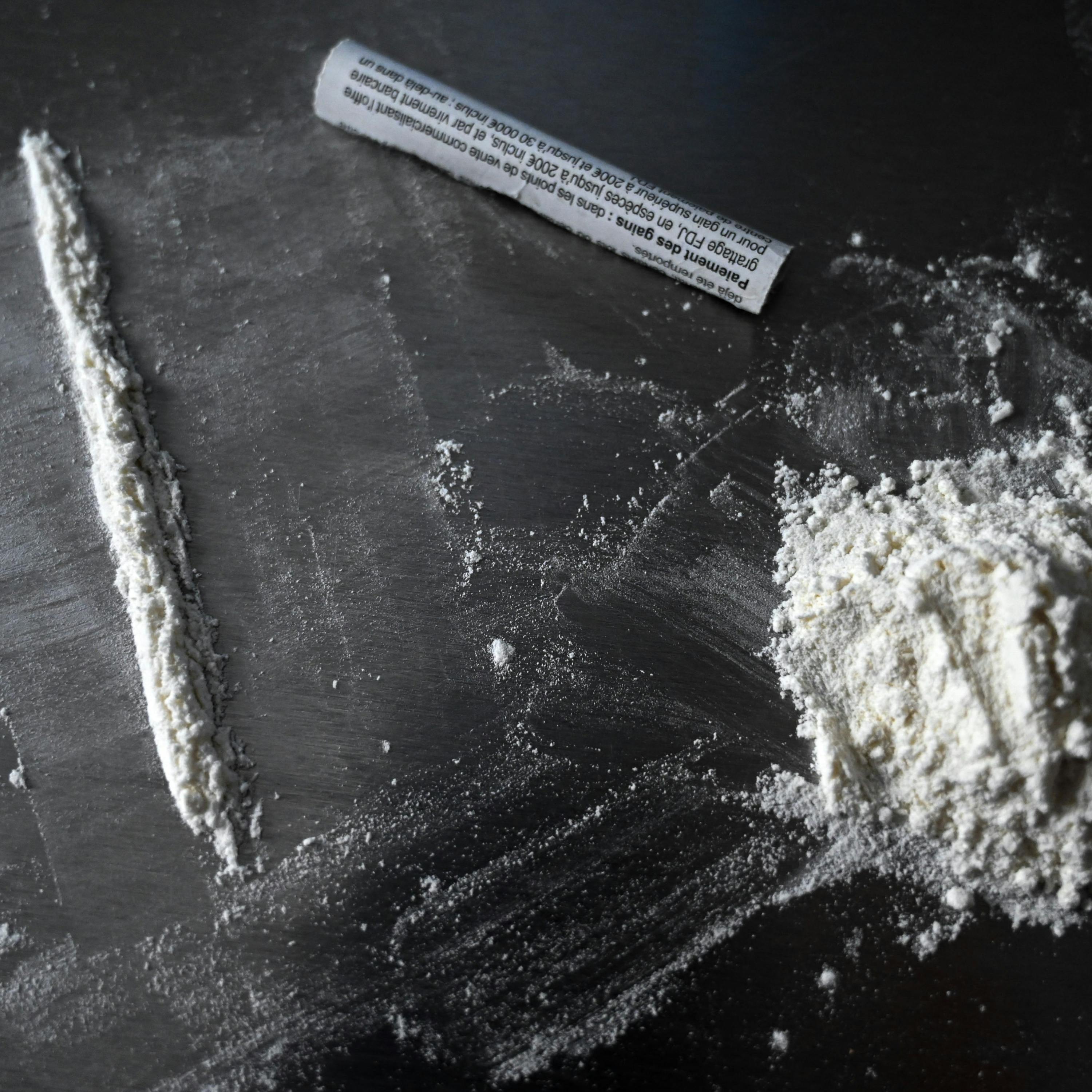
Today, Explained
The cocaine comeback
00:25:56
Demand for cocaine around the world has exploded. Production is at record highs. Law enforcement can barely keep up. Cocaine is back in a big way.
Loading summary
Transcript77 lines
- [00:01]
Jon Glen Hill
Let President Trump tell it. And America has a problem. A drug problem, to be specific.
- [00:11]
Donald Trump
We're formally classifying fentanyl as a weapon of mass destruction.
- [00:15]
Jon Glen Hill
The administration thinks fentanyl is so widespread that they're calling it a WMD and bombing boats in the Caribbean. But for all the press it gets. Fentanyl isn't the fastest growing illegal drug around the world. That would be cocaine. Cocaine.
- [00:29]
Donald Trump
Cocaine. Oh, I would just do cocaine. That was really. Yeah. So not just. Yeah, that's down and that's down and dirty. Right.
- [00:38]
Jon Glen Hill
The down and dirty might make you think of discos in the 70s or 1980s penthouse parties. But this resurgence is rooted in modernity. The coke games changed. I'm Jonquin Hill in for the Usual Suspects. And up next on Today explained where the cocaine comeback came from.
- [01:00]
Narrator/Host
This episode is brought to you by ebay. Before all the algorithm fed blah and the endless sea of dupes, shopping used to feel more fun. Find that feeling again on ebay. It's not mindless scrolling. It's a fashion pursuit. And when you score that rare Adidas collab or the Dior saddlebag you've been manifesting, it's a rush. Ebay has millions of pre loved finds from hundreds of brands backed by authenticity guarantee. Ebay things people love.
- [01:31]
Sponsor Voice 1
This episode is brought to you by the Farmer's Dog, a service that delivers gently cooked freshly made pet food straight to your door. Each balanced recipe is developed by board certified nutritionists and clinically proven to support healthy aging. The Farmer's Dog, guided by science, driven by love. New customer. Get 50% off your first box at the farmersdog.com Spotify + you get free shipping.
- [02:03]
Samantha Schmidt
This is TODAY Explained. I'm Samantha Schmidt and I'm the Washington Post's Mexico City bureau chief.
- [02:10]
Jon Glen Hill
Okay, I want to start by getting a rough sense of scale. How big is the global cocaine trade right now?
- [02:18]
Samantha Schmidt
It basically year after year is breaking records. We are seeing from the origin, the land in Colombia that is used to cultivate cocaine is about more than five times the size during the Pablo Escobar years. Today it is so much bigger. And we see both demand and supply surging in many parts of the world and particularly we see seizures in Europe growing to levels that now rival the United States as a main destination point. Pablo Escobar was killed in 1993. So up until that point, you know, that was when the United States was really focused on cocaine and trying to tackle the cocaine trade and the the cartels moving it.
- [03:14]
Donald Trump
Cocaine in the United States. A multi billion Dollar high for the corrupt and the rich. Despite our best efforts, illegal cocaine is coming into our country at alarming levels, and 4 to 5 million people regularly use it. The experts apparently disagree on whether or not the government is doing enough about the increasing use of cocaine. But one thing they do agree on, cocaine is not a harmless and frivolous plaything.
- [03:39]
Samantha Schmidt
But that was a very different era. At that point, we were talking about mostly the United States as a destination point, mostly Colombia, Mexico and United States. When we talked about the trade, now it is globalized. We are talking about a proliferation of smaller, much more nimble, very strategic drug trafficking organizations across South America. Many people will say Ecuador is now the world's cocaine superhighway.
- [04:12]
Donald Trump
On the Pacific coast of Peru, just above the capital Lima, sits El Callao, the country's main shipping port. It's also one of the world's primary distribution points for cocaine.
- [04:24]
Samantha Schmidt
Even within Colombia of proliferation of these smaller armed groups that have mastered the cultivation process and the production process to more quickly, easily move it out of the country. And we see all these new different transit points and routes that are capable of moving the drugs in much larger quantities around the world to destinations that previously were pretty irrelevant in terms of the cocaine trade. So it is a much more globalized business than before, and it works in an entirely new way that makes it much more difficult to combat.
- [05:03]
Jon Glen Hill
Yeah. What's behind that globalization? Why? What's. What's driving that growth?
- [05:08]
Samantha Schmidt
Some of it is the demand side. We are seeing demand soaring in countries that previously were not considered main markets. Europe now is a top destination alongside the United States.
- [05:22]
Donald Trump
There is now more cocaine flooding into Europe than ever before. We see a lot of cocaine in the European streets, especially in the past two, three years. Basically, the Europe cocaine market is always oversaturated.
- [05:34]
Samantha Schmidt
So some of it is demand side, but some of it is also supply side. I mean, we are seeing within Colombia just the amount of land with cocaine. And the productivity of that land is so much higher than before. And each year it grows and grows. And when you talk to experts, some of that is explained by the way that they've created these cocaine enclaves where they not only have much more productive land and they grow a lot more of the crop. The base plant is called coca. It's way more productive. And they've managed to concentrate these enclaves near the borders and near the coasts so they can more quickly move it out. And before, we had this sort of like one or two main armed groups that controlled the trade in Colombia.
- [06:19]
Narrator/Host
The Revolutionary Armed Forces of Colombia, known by their Spanish acronym, farc, are Colombia's largest and oldest guerrilla group.
- [06:27]
Amelia Petrarca
This is the eln.
- [06:29]
Samantha Schmidt
It's a leftist anti government group that.
- [06:31]
Amelia Petrarca
Is made up of more than 2,000 fighters, plus militias based in the Colombian countryside.
- [06:36]
Samantha Schmidt
Now, because of the peace negotiations in 2016 and sort of the collapse of those peace negotiations and the aftermath of that, the Colombian president and the FARC rebel leader will sign a deal to end 50 years of fighting that has killed more than 200,000 people.
- [06:52]
Donald Trump
The peace agreement between the government and the Revolutionary Armed Forces of Colombia, known as FARC, was rejected by Colombian voters by less than 1 percentage point.
- [07:01]
Samantha Schmidt
And it's also sort of opened up the country to criminal networks from around the world. From Europe, the Mexican cartels, groups like these Albanian mafias that have been able to take advantage of this and move the drug through different transit countries as well. So they'll take it out of Colombia and move it through countries like Ecuador. And so we just have these sort of much more creative and strategic ways of moving these drugs.
- [07:36]
Jon Glen Hill
We're talking about how the trade has expanded via, you know, cultivation methods and diversified markets and logistics. It feels like we're talking about any other kind of business.
- [07:48]
Samantha Schmidt
Absolutely. And actually, much of this is happening on legal container ships. So we're not necessarily talking about, you know, sometimes you do see, you do see these, you know, crazy stories about these submarines ending up in Australia and these go fast boats in the Caribbean. But a lot of times it's container ships, legal container ships, banana ships that are leaving through legal ports. And so a lot of what has also allowed this explosion in the cocaine trade is corruption. It's buying off people in the ports, in the police, in the courts. So it's gonna be a lot harder to get rid of of this when it has infiltrated every level of the state.
- [08:34]
Jon Glen Hill
So you profiled this guy who's sort of emblematic of the way the cocaine trade has changed. An Albanian guy who created an empire from an Ecuadorian jail. Who is he?
- [08:49]
Samantha Schmidt
Yeah, so this is a fascinating character named Dritin Rajepi, who is an Albanian criminal who essentially started off as this gunman hitman who was sort of one of the most wanted criminals in Europe. But he actually, after fleeing prison multiple times, he managed to sort of find a home in Ecuador and actually built his cocaine business out of a prison cell because he once again was caught and he was put in prison in Ecuador. But actually, that was the perfect location for him to develop alliances, to learn how the criminal World worked in Ecuador at times working with rivals in Mexican cartels and using these connections to find new ways to move large quantities of drugs through Ecuador and primarily to Europe. You know, when we think about cocaine, we think about cartels, right? We think about these organizations that demand loyalty. You know, when we think about sort of the narcos Netflix series, right? That is not how it works these days. It is not about hierarchy, it's about being strategic, it's about developing alliances, it's about who you know. And sometimes you don't even need that many people to move cocaine. You just need to know the right people in the right ports and the people who can get the drugs across one border into another and who can ship it off to Europe. And sometimes it's just about, you know, having those few people who can make that work and building from there. And it's a low bar of entry, basically. And I think that's what Triton recepi exemplifies.
- [10:40]
Jon Glen Hill
So we have a global cocaine trade that's acting like a lot of legal supply change for stuff that's in demand. But this is not legal. How is law enforcement dealing with this new era of the cocaine trade?
- [10:56]
Samantha Schmidt
So the answer to that depends on whether you're talking about last year or this year under the Trump administration. You know, sort of last year we were following and I, and I think the focus was, you know, on trying to dismantle the criminal structures from the top. And fast forward to this year and in the current moment, we're in. The Trump administration has taken a vastly different approach.
- [11:19]
Amelia Petrarca
Colombian President Gustavo Petro criticized the United.
- [11:23]
Samantha Schmidt
States by saying, well, the Southwest has.
- [11:24]
Amelia Petrarca
Stolen land and that it should be.
- [11:26]
Samantha Schmidt
Returned to Latin America.
- [11:27]
Donald Trump
I just wanted to know what your.
- [11:28]
Amelia Petrarca
Response to that is.
- [11:28]
Donald Trump
Well, he has to watch because, you know, he's got drug factories, they make cocaine in Colombia and he's no friend of the United States. He's very bad, very bad guy. And he's got to watch his ass because he makes cocaine and they send it into the United States of America from Colombia.
- [11:46]
Samantha Schmidt
And they have had this massive buildup of the military, in particular the Navy in the Caribbean and in many parts of the waters in Latin America and have been bombing, essentially attacking, striking drug boats in at sea that they allege are drug traffickers moving drugs to the United States.
- [12:12]
Donald Trump
We attacked a submarine and that was a drug carrying submarine built specifically for the transportation of massive amounts of drugs. Just so you understand this was not an innocent group of people. I don't know too many people that have submarines.
- [12:30]
Samantha Schmidt
The Trump administration is saying that this is a threat, that these are narco terrorists flooding the United States with drugs. And they talk about it in a way that implies that fentanyl is moving on these boats when we know that it is predominantly cocaine. And so it's interesting because we don't really hear the Trump administration talking about cocaine and the specifics of that trade as much as we hear them talk about the fentanyl crisis. So we're kind of conflating two things here.
- [13:00]
Amelia Petrarca
Foreign.
- [13:09]
Jon Glen Hill
Samantha Schmidt, Washington Post Mexico bureau chief. Coming up, it's not just the drug itself that's back. A new take on the cocaine aesthetic is back, too.
- [13:31]
Sponsor Voice 2
Support for today's show comes from found. Found has a message for all the small business owners out there. When was the last time you felt like you had your business finances totally under control? That's what found is for. Found is a business banking platform that says they can let you effortlessly track expenses, manage invoices and prepare for taxes all in one place. Found says. Found has found the tasks that create the most hassle for small businesses, such as categorizing your expenses, preparing for your taxes, managing invoicing, budgeting. Ans has found they built an app that does it all directly from your business checking account. They even say they can help you uncover tax write offs. Oh, you can take back control of your business. Today you can open a found account for free at found.com that's f O-U-N-D.com found is a financial technology company. It is not a bank. Banking services are provided by lead bank member fdic. You can join hundreds of thousands who've already streamlined their finances with found.
- [14:34]
Amelia Petrarca
Limu emu.
- [14:36]
Donald Trump
And Doug, here we have the limu emu in its natural habitat, helping people customize their car insurance and save hundreds with liberty mutual. Fascinating. It's accompanied by his natural ally, Doug.
- [14:51]
Sponsor Voice 2
Uh, limu is that guy with the binoculars watching us.
- [14:54]
Donald Trump
Cut the camera.
- [14:55]
Jon Glen Hill
They see us.
- [14:56]
Samantha Schmidt
Only pay for what you need@liberty mutual.com Liberty Liberty Liberty. Liberty Savings ferry Unwritten by Liberty mutual insurance company and affiliates excludes Massachusetts.
- [15:04]
Sponsor Voice 3
The holidays mean more travel, more shopping, more time online and more personal info in more places that could expose you more to identity theft. But lifelock monitors millions of data points per second. If your identity is stolen, our U. S Based restoration specialists will fix it, guaranteed your money back. Don't face drained accounts, fraudulent loans or financial losses alone. Get more holiday fun and less holiday worry with lifelock, save up to 40% your first year visit lifelock.com podcast terms apply today explained.
- [15:36]
Donald Trump
It's a hell of a drug.
- [15:40]
Jon Glen Hill
I'm John Glen Hill. Last time cocaine was king was the 80s. And yeah, you could find the drug at parties, but you could also find it all over the culture.
- [15:50]
Donald Trump
The point is, ladies and gentlemen, that greed, for lack of a better word, is good. About 150 kilos or thereabouts. Let's see, 40 grand. That's about 5 million wholesale. Gentlemen, we're looking at about 75 million on the street. She likes to fight it all the time.
- [16:12]
Jon Glen Hill
2025 was the year of a new kind of cocaine aesthetic. So something called boom boom. A noted trend forecaster coined the term to describe this revamped, updated aesthetic. And writer Amelia Petrarca wrote about boom boom and fashion for the Cut earlier this year.
- [16:27]
Amelia Petrarca
It feels very 80s. It's looking like you've spent money for the sake of looking like you spent money. It's very sort of shameless pursuit of the bag. And I think, you know, the bag can, can mean whatever you want it to mean. But yeah, it's about looking rich, feeling rich, feeling like you're moving fast and breaking things. And I think the aesthetic matches perhaps the energy of the 80s and the drug of choice of that time.
- [17:00]
Jon Glen Hill
Give us some examples of this new cocaine aesthetic. Where are we seeing.
- [17:08]
Amelia Petrarca
Could be evoked in a restaurant. That is dark wood feels like where you would go with your guys after work at the Wall street, like work at the bank, I don't know, to, you know, have a cigar or something like that. I think you see it in pinstripe suits and broad shoulders and sort of garish ties. To me, the sort of enduring boom boom look is the, the Row or the Saint Laurent loafer that was one of the best sellers of the year. I think it's like eel skin. It's, it's leathery, it's slick. It's a little bit to sort of steal a phrase from like a party invite, like, quote unquote, corporate baddie. Like you're, you're, you're going to an office. But also I think it's a bit of a costume. Like you've maybe never actually stepped out of the office in your life, so. So that's the sort of gist of it.
- [18:14]
Sponsor Voice 1
Yeah.
- [18:15]
Jon Glen Hill
I wonder if there are any examples you can think of of this sort of cocaine chic aesthetic that have come out over the past year. You know, one example I think of, there's this song from the rapper JT called Ran out. And basically one of the lyrics is.
- [18:32]
Narrator/Host
I'll do coke, but I'll judge boo. I met a cool white bitch in the bathroom.
- [18:37]
Jon Glen Hill
And I was like, oh, wow, she really is talking about that, huh?
- [18:41]
Amelia Petrarca
I think something that the person who coined the term emphasized was that it is not necessarily a politicized term, but I think it is a look that we obviously associate with Trump, that we obviously associate with the right. There was a New York mag cover story about the parties that took place in D.C. after Trump won.
- [19:03]
Narrator/Host
They are crypto nerds and influencer girlies and recent Maha converts and gays of all stripes, plus your standard fare, Rogan Listening Bros. They refer to their political affiliation almost always as the movement. Many are hot enough to be extras in the upcoming American Psycho remake.
- [19:23]
Amelia Petrarca
And I think that that cover image was very indicative of Boom Boom. Cause it was, you know, it was a lot of young people wearing suits and slicked back hair. You know, it sort of embodied the look. But I think we also saw it, you know, being adopted in ways that were subverting it and challenging it. I think, you know, some examples that I gave in the piece were Dochy and Chapel Roan. Both wore suits around the same time that I published it. Both felt like subversive takes on gender. And I think especially Chapel Roan, like, very obviously, like taking the look of like a lawyer, or one could say a Republican, and making it their own, making it queer, making it feel like drag. I'm your dream girl's dream girl. There was a sense of humor to it. There was a wink to it. And so, you know, I think in the piece I ask, like, what are you saying by wearing stuff like this? Are you saying that you. All you care about is cash, basically, Cash is king. Or are you saying something. Something deeper than that?
- [20:39]
Jon Glen Hill
Yeah, you know, the 80s and 2025 have another thing in common. And you touched on that. Donald Trump, does he have anything to do with the resurgence of this aesthetic?
- [20:52]
Amelia Petrarca
Yeah, I think at the very top of the year, we were sort of asking, what is this next year going to look like? How is going. How is Trump going to affect aesthetics? And I think there was definitely a sense that his sort of gilded toilet, bad suit look, you know, had seeped its way into fashion, into culture. But I don't think Boom Boom really took hold in the way that normcore took hold. That like, it was, I think, you know, in the age of TikTok, a new TikTok trend every five seconds. There's not these, like, sort of over big sweeping trends anymore. I Think it. I really saw it pop up in very more subtle ways, sort of trickle. I don't. I don't think it was. Oh, my God, the 80s are everywhere. It was more like, huh, where did you get that? Like, that seems like it. You know, it's a reference to something that has layers to it.
- [21:54]
Sponsor Voice 2
Yeah.
- [21:54]
Jon Glen Hill
Trends are so different now because of the Internet, because of the TikTok of it all. You know, I remember cottagecore and these things stick around, but they can, like, be in these small pockets. Do you think Boom boom is gonna stick around for the rest of this presidency kind of in this small pocket kind of way?
- [22:14]
Amelia Petrarca
Definitely. I mean, I can see. I don't think it's like, it's so simple as, like, people see Trump, so they want to dress like Trump. Like, that's. I don't. I don't think that's it. I think it's just. It's sort of in the ether and people are grabbing it and, you know, interpreting it in their own various ways. If we're talking about high fashion and the runways, I certainly saw it like, you know, you see 80s color palettes, you see 80s shoulders. You see, you know, the sort of power look, for sure, but fashion moves very quickly. I don't really see the sort of Wolf of Wall street look, really having much longer of a life. But maybe that's my optimistic. Maybe I'm projecting. I certainly don't really want to see it, but that's just me.
- [23:09]
Jon Glen Hill
Why I'm curious.
- [23:11]
Amelia Petrarca
I mean, I think. I think that, like I said, there's certainly ways to subvert the look that are interesting. But to me, at its core, it represents something a bit rotten. Like, it's about just sort of shameless capitalistic impulses and not having a regard for anything other than, you know, making as much money as you possibly can. And I just, you know, obviously I understand that the impulse to look like you're rich and that you're a bit dangerous, that you're a bit sleazy, like, I'm obviously as drawn to gilded things as the next person, but I don't really want to be associated with those ideas necessarily. I want my. To think a little bit harder about what I wear and why I'm wearing it. And I think. I don't know that it's funny. I guess I think it was maybe seen as a bit ironic or, wink, wink, or, ooh, look at this thing that I'm trying on. And isn't that a bit, like, bad, maybe? And it's just like, no, that's. It's just we. I think we can leave that behind.
- [24:27]
Jon Glen Hill
Yeah. You know, I think it's interesting because I think one thing we have to acknowledge about the 80s is that this coke era of the past was not all glitz and glamour. It gave us the crack cocaine epidemic. And this amped up war on drugs.
- [24:40]
Amelia Petrarca
Yeah.
- [24:40]
Jon Glen Hill
Is. Do you think maybe that's part of the darkness you see there?
- [24:45]
Amelia Petrarca
Yeah, there, like I said, can be nuance to it. It's not. I don't want to say this is all bad. I just think with fashion, nuance gets lost pretty quickly. And, yeah, it's definitely dark. It's definitely a bit twisted. That's the appeal. And you can do interesting things with it. But personally, I think. I don't know. I look forward to sunnier days.
- [25:22]
Jon Glen Hill
Amelia Petrarca is a freelance writer based in Brooklyn. Today's show was produced by Kelly Wessinger, edited by Jolie Myers, fact checked by Laura Bullard and engineered by Patrick Boyd. And hey, we've got a show coming up about student loans. The Trump admin is about to crack down on people who are behind on payment. Is that you? Are you falling behind or worried that you might give us a call and leave a message? 844-453-4448. I'm Jon Glenhill. You can catch me every Sunday in this very feed. The name of the show is Explain It To Me. We're off for the next two days to celebrate the New Year, but we will be back on Friday. This is Today Explained.