← Today, Explained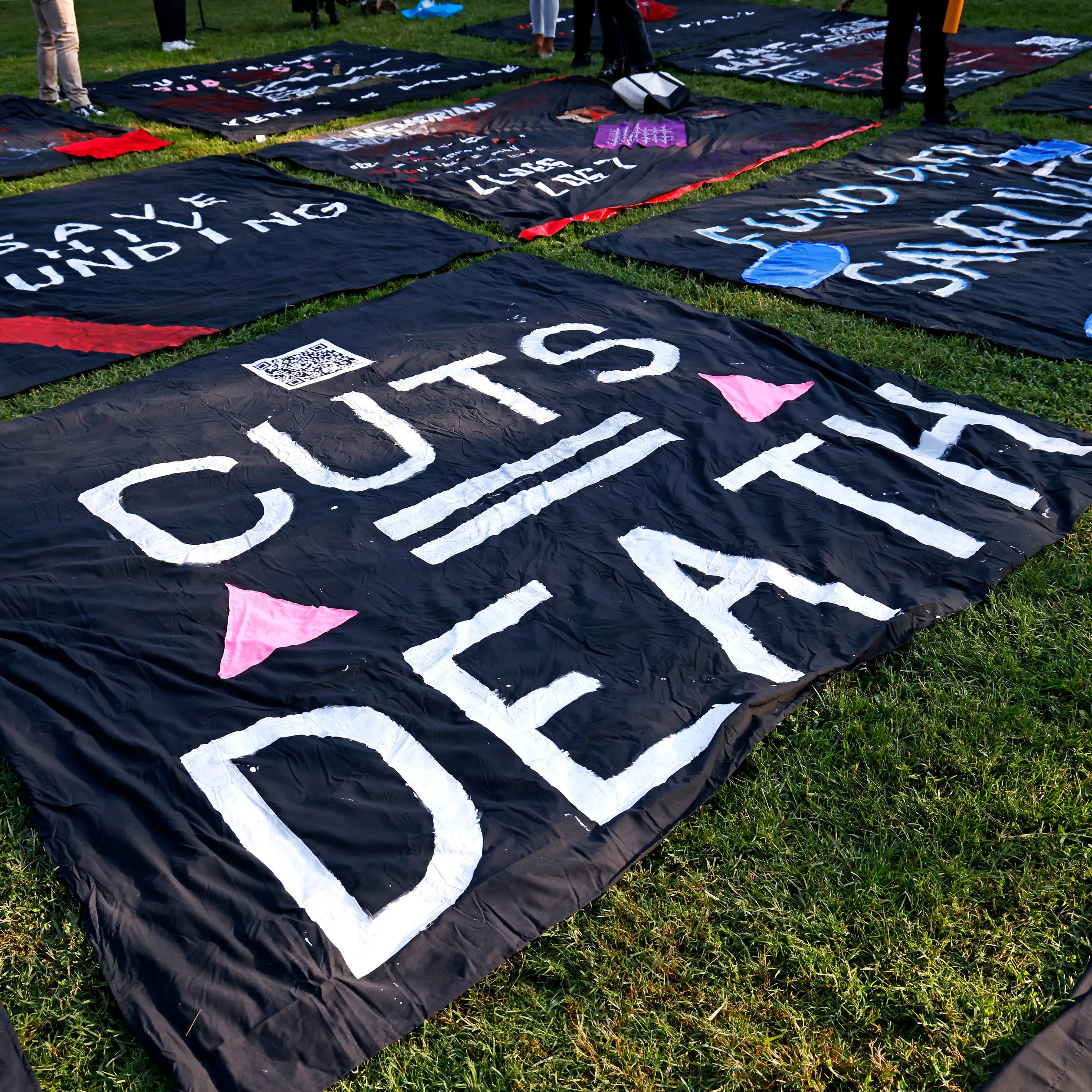
Today, Explained
The culture wars turn deadly
00:26:05
The US is intentionally losing a fight against HIV that could be won.
Loading summary
Transcript63 lines
- [00:00]
Sean Rames
What's Elon been up to lately? He says he's going to make a historically accurate version of the Odyssey by end of year. That's a work of historical fiction, by the way. He's suing Minnesota over a new law that protects people from having naked images of themselves generated by AI, a thing his X AI loves to do. And he's getting in fights with the Economist over who's hated more, Musk or the media.
- [00:22]
Ailey Dalgan
Maybe some people do loathe me.
- [00:23]
Sarah Hirschender
I don't care.
- [00:24]
Ailey Dalgan
A quarter billion people follow me. I think a lot more people actually like me than don't. And I think a lot more people hate you and the media more than you realize.
- [00:34]
Sean Rames
He's got time to do all that because he's no longer slashing and burning the federal government. On Today Explain from Box we're going to take a look at one set of doge cuts, those to HIV treatment and prevention. Around the world, something like 1700 clinics have shut down. 16,000 health workers have been laid off. People are dying. But somehow there's reason to be hopeful. Support for this show today comes from Anthropic, the team behind Claude. Claude is the AI for minds that don't stop at good enough. It's the collaborator that actually understands your entire workflow and thinks with you. Whether you're debugging code at midnight or strategizing your next business move. Claude extends your thinking to tackle the problems that matter with deep research. Claude's research capabilities go way deeper than basic web search, comprehensive research, reliable analysis with proper citations, turning hours of research into minutes for problems worth solving. You can get started with Claude at Claude AI todayexplained. That's Claude AI todayexplained. Support for the show comes from Chime. Chime's changing the way people bank by offering rewarding fee free banking. You can join the millions millions who are already banking fee free with America's number one choice for banking. You can head to Chime.com explained. That's Chime.com explained. You can sign up now. It only takes a few minutes. Chime is a fintech, not a bank. Bank banking services and Chime card provided by Chime's bank partners. Qualifying direct deposits required terms and limits apply. Go to chime.com disclosures for details.
- [02:12]
Ailey Dalgan
This is TODAY Explained.
- [02:15]
Sean Rames
Sarah Hirschender is a reporter at Vox and her most recent reporting is on how we're intentionally losing a fight we could win.
- [02:21]
HIV Expert / Medical Specialist
I think we should start in 2003 and the reason why I think we should start There is that. That's when the US got involved in this so called fight against HIV. 2003 was when HIV was surging across sub Saharan Africa. If you look at a chart of like infections and deaths from AIDS at the time, it is like at the top right in this moment, millions of people were dying each year. Southern Africa now has the fastest rate of AIDS growth in the world.
- [02:55]
Ailey Dalgan
Today on the continent of Africa,
- [02:59]
Sarah Hirschender
nearly
- [03:00]
Ailey Dalgan
30 million people have the AIDS virus, including 3 million children.
- [03:05]
HIV Expert / Medical Specialist
It was also just a few months before the US invaded Iraq. We had George W. Bush, famously a Republican, in office. He's giving a State of the Union in January, and to the surprise of pretty much everyone, he decides to allot $15 billion of US funding to this global fight against HIV.
- [03:27]
Ailey Dalgan
Ladies and gentlemen, seldom has history offered a greater opportunity to do so much for so many.
- [03:36]
HIV Expert / Medical Specialist
He was working with a bunch of medical experts behind the scenes, including someone people might recognize, Anthony Fauci. And that was when the US really like put its foot in the door and it ended up being a huge success. If you think about that chart I mentioned earlier, we're at the top of infections right now. It goes down after 2003. And PEPFAR, which is what the program ended up being called, the President's Emergency Plan for AIDS Relief, which describes anything that the US is giving to this sort of fight against HIV just expanded, became better as time went on. Sure there were problems over time, but every presidential administration after Bush, after 2003 continued to provide funding through this program.
- [04:16]
Sean Rames
And people love to, you know, remember that George W. Bush may be responsible for the deaths of hundreds of thousands of people in his Iraq war, but how many people may he have saved through pepfar?
- [04:30]
HIV Expert / Medical Specialist
Yeah, this is the crazy thing. Like it might have been the best thing that a US President has ever done. If we're looking specifically.
- [04:36]
Sean Rames
Say it again.
- [04:36]
HIV Expert / Medical Specialist
Specifically at.
- [04:37]
Sean Rames
Say it again.
- [04:37]
HIV Expert / Medical Specialist
Don't make me say it again. Sean. The. One of the, or perhaps the most consequential things, arguably the best thing that a US President has ever done. I like to say it was a rare W for George w. Bush of 25 million people.
- [04:56]
Sean Rames
25 million.
- [04:56]
HIV Expert / Medical Specialist
That's how many people have been. Whose lives have been saved because of PEPFAR services. And you can't even count the number of people, many more, millions of people who probably didn't even get HIV in the first place because of these all important prevention services.
- [05:13]
Sean Rames
Those are like world War numbers. Sarah.
- [05:15]
HIV Expert / Medical Specialist
It's crazy. It's so crazy.
- [05:18]
Sean Rames
Okay, an incredible win that maybe George W. Bush doesn't even get enough credit for it. Must be said in his defense, they don't kill the program in Obama won. Obama 2, Trump won. Biden won. But then what happens in Trump 2 when Elon shows up with the chainsaw?
- [05:42]
HIV Expert / Medical Specialist
Chainsaw, yeah. So pepfar, at least the very beginning, was not immune from Doge and from these broader major cuts to U.S. foreign aid that was led by Elon Musk. When he first came in, Elon Musk decided to freeze pretty much all U.S. foreign aid. And PEPFAR was included in that freeze. People were so worried about it, and there was so much uproar. Again, this was always a bipartisan program. The outroar was big enough that they decided not to kill PEPFAR entirely. But what we're seeing now, over a year later, is that while PEPFAR still technically exists, it's been entirely reshaped under the Trump administration. And that refers to both funding. There's just less funding than there used to be. That refers to these all important preventative services that stop people from getting HIV in the first place. When our staff had to be pulled away with immediate effect, it meant that the patients were left stranded. Imagine if you no longer get your HIV treatment and it's going to cause a lot of damage in your body and you end up dying. And it also comes to the kind of groups that are being served with specialized services. So something that we've seen under the Trump administration that's quite unprecedented is that the groups that are most at risk of hiv, that refers to, for example, young women and teen girls, it refers to sex workers, it refers to the LGBTQ community. People who are getting specialized services as part of, like, just epidemiological wisdom on how to fight this, are seeing unprecedented cuts. They've been disproportionately affected. And we have reasons to believe that that is probably because of the Trump administration's ideology. They've been particularly targeting these sort of groups. So we're also seeing kind of a reshaping of how prevention is distributed, how treatment gets distributed.
- [07:43]
Sarah Hirschender
Right.
- [07:43]
Sean Rames
Your headline was how the Culture War Came for Condoms Prep and HIV Testing. Tell us more about how this particular life saving initiative that the United States got into in 2003 became a part of a culture war.
- [08:03]
HIV Expert / Medical Specialist
Yeah, I mean, there's a lot of things that can make one angry about what happened here, but this part I found to be sort of the most surreal, and that's the fact that under the Trump administration, a rule that had long been in place under Republican administrations around how the U.S. distributes foreign aid. It's called either the Mexico City policy if you're a Republican, the global gag rule if you are a Democrat. Typically how they refer to it for a long time, it kind of shifted how foreign aid was distributed depending on if an organization supported abortion services. That was like where the ideological battle lied. And under the Trump administration, that was expanded threefold, maybe even more than that. He explicitly changed that rule to also include any organization that so much as mentions abortion, any organization accused of promoting gender ideology, and any organization that could be accused of promoting dei. And what we're seeing now is that it appears that that rule is now affecting these at risk communities. So a lot of groups are getting these, like weird emails saying that they don't comply with DEI policies for reasons like that. We're also seeing, for example, gender based violence clinics who are changing their language and feel like they might be getting flagged because they have gender in their name potentially. I mean, something that I cannot stop thinking about is the fact that over 90% now of organizations that serve gay or bisexual men have had to cut their prep services because of these cuts. And prep is a pill that people take to prevent hiv. This is really important. It's key to lowering case numbers, lowering infections. It's key to the fight against hiv. And we're seeing it being decimated in a lot of the communities that need it most. The question is no longer whether we can end aids. The question is whether we choose to end aids. The AIDS is no longer limited by science. It's limited by inequality, by political choices. What I find crazy is that under his first administration, Trump was actually pretty good on hiv, both abroad and within the United States. It was almost a pet issue for him. I think he wanted, like, it's hard to say exactly what happened behind the scenes, but I think it ties to his sort of ceding of control. Elon Musk, at the very beginning of last year. And then I think a lot of people, probably in his ear, who've been clamoring for changes for a long time. Oftentimes when you sort of confront the administration about these changes, and I have spoken to the State Department about their sort of HIV funding, they will tell you that this is because there were problems with PEPFAR to begin with, that it was too directed by sort of liberal or liberal coded nonprofits from the United States or from Europe, and that these countries ought to be spending money on their own health care. And this is like a change that we've always needed. And, you know, there are some limited elements of truth to that. There are reformers within PEPFAR that for many years have called for countries to take more ownership of their own health programs for, like, logistical reasons. It just makes more sense for it to be run by a country there, and that's something that the Trump administration has been advocating for. While they might be saying in their rhetoric that they still care about HIV prevention, particularly in certain communities, it's being deeply affected on the ground in ways that are going to set people back for probably a long time, unfortunately.
- [11:46]
Sean Rames
But this isn't something that can't be undone.
- [11:53]
HIV Expert / Medical Specialist
Yes and no. I think some of the damage is unfortunately already done. But at the same time, if we remember 2003, we know how quickly things can come together too, and that's possible as well in the future, again, especially because we have all of these new sort of interventions. So while things are really scary right now, it definitely doesn't mean that things can't change moving forward.
- [12:26]
Sean Rames
The aforementioned reason to be hopeful when we're back on Today explained. Support for the show comes from Talk Iatry. When your mental health is suffering, therapy can help. But sometimes it's not the whole answer. Talk Iatry gives you access to psychiatric care with licensed clinicians who can diagnose and prescribe medication if it's right for you. Talk I actually is a 100% online, like your cousin, psychiatry practice practice that provides comprehensive evaluations, diagnoses and ongoing medication management for conditions like adhd, anxiety, depression, bipolar disorder, ocd, ptsd, insomnia and more. You get to meet with a medical provider who can diagnose mental health conditions and prescribe you medication when it's needed. And because it's 100% online like your cousin, you have a lot more flexibility. You can head to talkyatry.com explain to complete the short assessment and and get matched with an in network psychiatrist in just a few minutes. That's T-A-L-K-I-A T-R-Y.com explained to get matched minutes tochiatry.com explained. Support for the show today comes from Anthropic. In case you were wondering who's behind Claude, that's Anthropic. Claude is the AI for minds that don't stop it. Good enough Is that you? It's the collaborator that actually understands your entire workflow and thinks with you. Have you been looking for that? Whether you're debugging code at midnight or strategizing your next business move, Claude extends your thinking to tackle the problems that matter with deep research. Claude's research capabilities go way deeper than basic web search. Comprehensive, reliable analysis with proper citations turning hours of research into minutes. We love a proper citation, don't we? Plus, you can connect Claude to your professional tools like GitHub, Jira, HubSpot, Notion, Google Workspace and watch it become your command center with context from all your work. That means Claude has context from your calendar, emails and all of your Go to tools for problems worth solving. Get started with Claude at Claude AI todayexplained that's Claude AI todayexplained.
- [15:04]
Sarah Hirschender
Support for this show comes from im8. Ever feel like you're cycling between whatever the hot supplement is but never sticking with one to see real results? Imaid is the way to simplify your supplement routine once and for all. IMAID's daily Ultimate Essentials can replace 16 separate supplements all in one drink for just $2.61 a day. That's 90 ingredients that can work across nine major organ systems. Imate was co founded by David Beckham and built by leading doctors and researchers. Which is to say, Imate was designed by the world's best 95% of people who tried it over 12 weeks felt more energy. And that's from a clinical trial conducted by the San Francisco Research institute. Go to imate.com explain right now or click the link in the description to use Code Explain for a free welcome kit five travel sackets plus 10% off your order. That's code explained@imadehealth.com explained code explained@imadehealth.Com explained these statements have not been evaluated by the Food and Drug Administration. This product is not intended to diagnose, treat, cure or prevent any disease.
- [16:14]
Ailey Dalgan
You're listening to Today Explained how about
- [16:19]
Sean Rames
an HIV vaccine for some Hope?
- [16:22]
Ailey Dalgan
Well, scientifically, we're in a more exciting time than ever when it comes to developing an effective HIV vaccine. There are challenges both in terms of the actual research and obviously the kind of funding environment around it. But in terms of the scientific roadmap towards getting a truly effective vaccine, researchers have never been more excited than they are today.
- [16:49]
Sean Rames
Science journalist Ailey Dalgan wrote about it for Vox.
- [16:53]
Ailey Dalgan
I mean, basically, since the day that we discovered the virus over 40 years ago, people have thought, well, it's an infectious agent, we should try to develop a vaccine. And pretty quickly people narrowed in on the obvious target, which is a protein called envelope. It's the protein on the outside that the virus uses to kind of latch onto our cells and infect ourselves. And so it seemed like, okay, well we found the virus, we found this great target. On its surface, we should be able to get a vaccine. But here we are 40 plus years later and it didn't work out that way.
- [17:33]
Sarah Hirschender
Right.
- [17:33]
Sean Rames
I mean, as a general consumer of the news, I don't feel like I'm often reading about an HIV vaccine. What have been the greatest barriers to its success?
- [17:45]
Ailey Dalgan
I think what scientists realized in recent years is that they kind of needed to go back to the drawing board. There were several high profile attempts in years past. It's been a while where they thought, okay, we've got a prototype vaccine, let's put it into large, you know, efficacy trials in Africa or in India and put tons of money and effort and resources into it, only for the vaccine to come up empty and fail in those trials. And so the scientists thought, okay, whatever we're doing isn't working, working. This envelope protein that we thought was the ideal target, we still think it's a good target, but something about the targets that we're going after within it are not eliciting the type of immune responses that we need. So we need to really do our immunological homework, do the analysis, and figure out what it is exactly that we need to get an effective product.
- [18:39]
Sean Rames
And what is it?
- [18:41]
Ailey Dalgan
Well, hiv, when it comes to its envelope protein, most of it is basically kind of a decoy. The part that the immune system sees changes really easily. It's not that important to the virus, so they can just mutate. And so whenever we would try to go after it, our vaccines wouldn't work. And so when scientists then looked deeper into what it is that gets you kind of a truly effective immune response, the kind that is going to neutralize all the different viruses that are out there, all the HIV viruses that are out there with all its variability, they realized that we were kind of going after the wrong part of the envelope protein. And the part that gets you, the kind of immune response we need is kind of hidden. And only a small minority of people who are naturally infected develop those immune responses. And so the key was, what we can now see in those rare individuals is that they have these immune responses. But, but it's, it's even more complicated because they don't just get them right away. What the immune system does is it kind of matures over several months, even years, as it learns and evolves to recognize those key parts of the virus. And so in order to do that in a vaccine, researchers now think they basically need to give a series of components, kind of a series of different pieces of that envelope protein in the right order with the right timing to kind of nudge and carve out exactly the immune response that we want. And they think they basically know how to do that. Although there's a fair amount of trial and error that will be necessary going forward to kind of refine that strategy.
- [20:34]
HIV Expert / Medical Specialist
After years of research, a breakthrough has finally been reached on the medical watch. A new HIV vaccine offers hope for eliminating the disease.
- [20:45]
Sean Rames
How big a deal is this moment for the people who've been at it for decades, if they're even still around?
- [20:52]
Ailey Dalgan
Yeah, I mean, the HIV vaccine research field has a lot of old timers, that's for sure. Both here in the United States, but also in South Africa, there have been researchers like someone at the University of Cape Town, an infectious disease specialist I spoke with named Linda Gail Becker. She's been at this for decades. And she told me how she was so excited they had finally developed this first in Africa designed vaccine trial with the components discovered by African scientists. And they were all set. She had gone to the manufacturing plant and seen the vaccine getting made. They were all meeting in Tanzania last year at the beginning of the year just to kind of work out the last details. And that's when President Trump, you know, got back into power and signed his executive order disbanding usaid. And the thing is that this trial was reliant on a $45 million grant from USAID, and it all kind of disintegrated before their eyes.
- [21:59]
Sean Rames
Now, Ailey, we came to you for hope. No, we can't just go back into this death spiral.
- [22:05]
Ailey Dalgan
Oh, I'm sorry. I mean, they have salvaged some of the trial. They were able to get some funding from the South African Medical Research Council and some nonprofits stepped up, like the Gates foundation and the Wellcome Trust. But it's, you know, it's a lot less money. And one of the kind of weird things about right now is that the scientists are more excited than ever. They think they know what they need to do, but. But they need the funding to do it.
- [22:33]
Sean Rames
But you also mentioned that there are, like, research challenges. What are they?
- [22:41]
Ailey Dalgan
Well, the field is at this trial and error period where they want to do a lot of these small scale trials to prepare for the big one. Once they figure out the right pieces to put into the final product. I'd say, you know, getting those trials funded remains a huge challenge. And especially because one of the key technologies that could really speed up this research, namely MRNA, is also under attack politically.
- [23:10]
Sean Rames
MRNA enters the chair the vaccines for
- [23:12]
HIV Expert / Medical Specialist
COVID 19 cleared the threshold for emergency use in less than 11 months. The secret behind this speed is a medical technology that's been developing for decades, the MRNA vaccine.
- [23:26]
Sean Rames
Growing backlash over President Biden's vaccine mandate.
- [23:29]
Ailey Dalgan
After reviewing the science and consulting top experts at NIH and fda, HHS has determined that MRNA technology poses more risk and benefits for these respiratory viruses. Oh God. Yeah. So it's not just that the US is pulling out from HIV funding generally, but now we're talking about MRNA vaccines. And the key advantage here of MRNA is kind of the same thing that was the key advantage with the COVID fight. It's really fast. I mean, if you want to create a vaccine, you just enter the string of genetic letters into a computer and you can order the sequence and basically manufacture the vaccine very quickly. Obviously HIV is not an emergent pathogen like Covid was, but the researchers are at this point now where they want to run small scale trial, do the analysis, learn from it, design the next vaccine, and then run another small scale trial. And the MRNA lets you kind of get from one trial to the next really quickly in a way that if you're using other vaccine technologies, it can take a year or two just to manufacture the your product for the next trial. And that would really slow things down. But of course we've got a vaccine skeptic heading our health department. And MRNA vaccines in particular have become part of the, you know, the COVID fights and the culture wars. So it's especially for fraught as we pull away from not only HIV research generally, but MRNA technology more specifically.
- [25:19]
Sean Rames
Well, let's do some alternate history here just for fun. Let's just say there is someone who flips the switch and there is a resumption of the funding levels that we've seen in the past. If not, who knows, more funding, let's say, with all the money in the world and the support, what are the impediments? How soon do we see this? What kind of difference does it make? How many millions of lives do we save?
- [25:44]
Ailey Dalgan
I mean, at the moment, over a million people are still dying from HIV AIDS every year. So a truly effective vaccine that could have, you know, even a 50% efficacy would, would save hundreds of thousands of lives every year. There are still real scientific issues. I mean, some of the vaccines have caused some weird side effects. They're trying to work out what that's all about. They need to figure out all the right pieces in the components at the moment in order to kind of nudge the immune system in the right direction. It takes many shots, up to eight in some of the monkey studies. That's not really feasible. So they need to get that down to, I don't know, three say. But there are technologies like slow release depots that you could, say, implant in your arm and it would release the pieces of the vaccine over the course of months in the right order at the right time. And there are companies that are developing that technology. So I think with the right minds being focused on this problem and with the adequate level of investment, I truly think we will have a vaccine within a decade.
- [27:01]
Sean Rames
And then we get to save millions of lives.
- [27:03]
Ailey Dalgan
And then we get to save millions of lives.
- [27:18]
Sean Rames
Both Ailey and Sarah wrote about the fight against HIV recently for Vox.com, which is also the engine that powers today, explained Kelly Wesinger made this episode. Jolie Myers edited with help from Miranda. Kelly Wessinger made this episode. Jolie Meyers edited with help from Miranda Kennedy and David Tadashore and Patrick Boyd mixed. Gabriel Donatov did the due diligence. I'm Sean Ramis. Forum tomorrow it's Noel King.
- [28:09]
Ailey Dalgan
It's mushrooms with me, Matty Matheson. You know what's better than thinking about dinner too hard not stop that and just choose mushrooms. Five minutes.
- [28:17]
Sean Rames
Done.
- [28:17]
Ailey Dalgan
Dinner's that easy and you feel like a genius. It's not magic, it's mushrooms. Stop stressing at mushroomcouncil.
- [28:24]
HIV Expert / Medical Specialist
Com.