← Today, Explained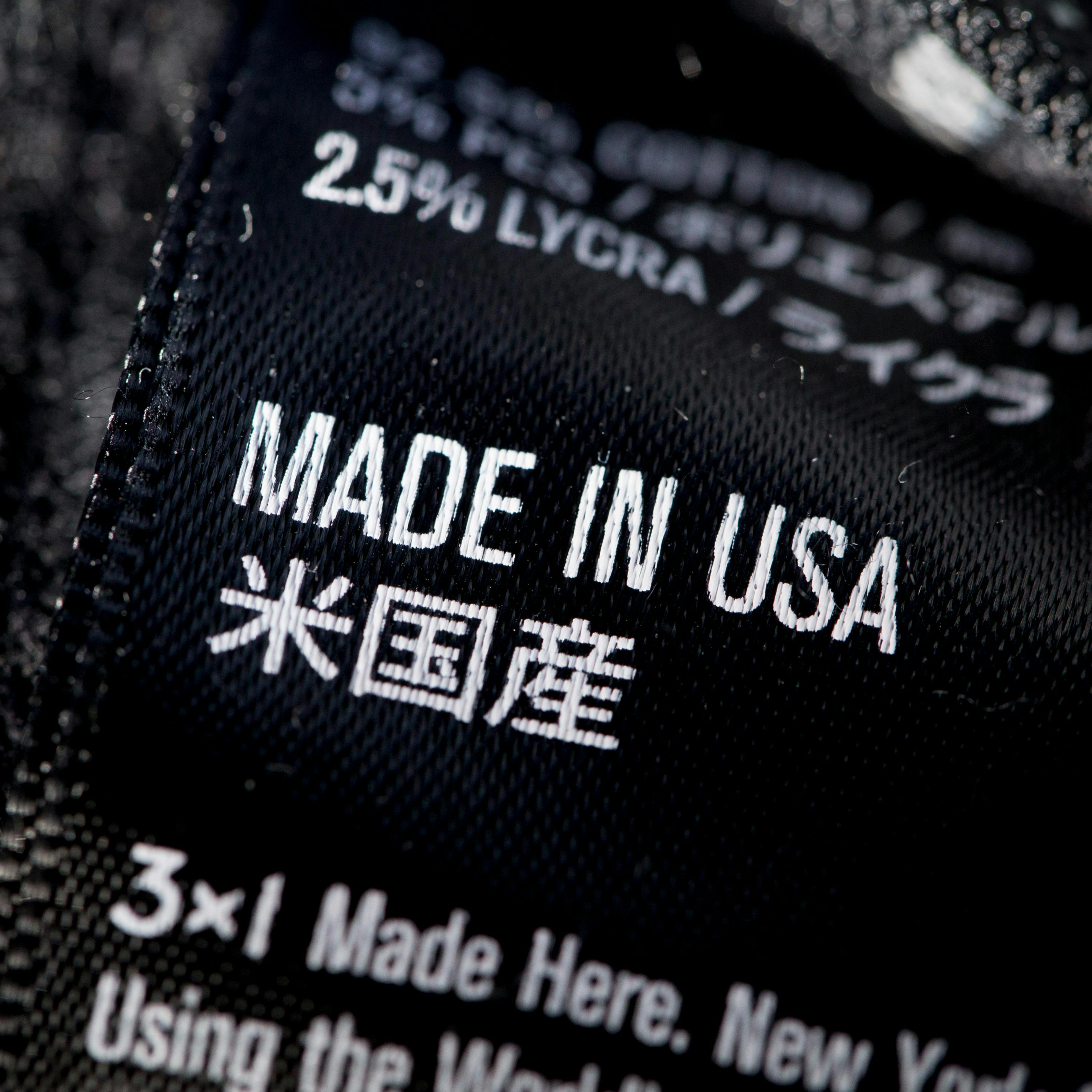
Today, Explained
The Made in the USA myth
00:31:55
This special feed drop of NPR's Planet Money examines the United States' dwindling domestic garment industry and whether it is ever likely to come back.
Loading summary
Transcript117 lines
- [00:01]
Home Depot Announcer
Labor Day Savings are happening right now at the Home Depot. So what are you working on? Prep for fall with our wide selection of cordless power tools that make it easy to clear your lawn starting at $79. And once the leaves are clear, keep your yard looking fresh with colorful mums that bloom all season long. Shop Labor Day Savings now through September 3rd only at the Home Depot. See select stores for details.
- [00:30]
Mint Mobile Advertiser
Mint is still $15 a month for premium wireless. And if you haven't made the switch yet, here are 15 reasons why you should. One, it's $15 a month. Two, seriously, it's $15 a month. Three, no big contracts. Four, I use it. Five, my mom uses it. Are you playing me off? That's what's happening, right? Okay, give it a try. @mintmobile.com Switch upfront payment of $45 per.
- [00:54]
Podcast Host (Sarah Gonzalez)
Three month plan, $15 per month equivalent required.
- [00:56]
Lynn Burady
New customer offer first three months only.
- [00:57]
Sarah Gonzalez
Then full price plan options available, taxes and fees extra.
- [00:59]
Podcast Host (Sarah Gonzalez)
See mintmobile.com hey, it's Noel here today Explained is taking a break today so Sean can watch women's tennis. But we have an episode from our friends and my former colleagues at NPR's Planet Money. It's called Made in America. Okay, so made in America is a good thing, right? Jobs for American workers better pay, a higher standard of working conditions than in say, you know, a foreign sweatshop. Eek, you guys, it's not quite that simple here. Here's Planet Money's Sarah Gonzalez.
- [01:30]
Sarah Gonzalez
This is Planet Money from npr. Maria doesn't speak any English.
- [01:37]
Maria (Garment Worker)
No casino.
- [01:38]
Sarah Gonzalez
Not a word she says.
- [01:39]
Maria (Garment Worker)
No, no, no. Nada, nada, nada.
- [01:43]
Sarah Gonzalez
But she does know some like sizes.
- [01:46]
Maria (Garment Worker)
She knows sizes, small, mediano, large, extra large.
- [01:51]
Sarah Gonzalez
She knows label, ticket, all words related to her job manager.
- [01:56]
Maria (Garment Worker)
EL Mr. EL Mr.
- [01:59]
Sarah Gonzalez
Okay, the, the boss.
- [02:00]
Maria (Garment Worker)
You just call him Mr. Hola, Mrs. Mrs.
- [02:03]
Sarah Gonzalez
The boss is a girl.
- [02:04]
Maria (Garment Worker)
It's a Mrs. Mrs. Over here.
- [02:08]
Sarah Gonzalez
Mrs. Over there, she says you gotta call your boss is Mr. Or Mrs. She says. And I'm like, this is all English, Maria. Oh, Mr. Mrs. Maria is a garment worker in the U.S. one of not that many left. She's originally from Puebla, Mexico. Puebla, Camotera, Sweet potato City, she says, proud, nodding her head and making a little fist to herself when she says it. Maria is only 73 years old, but she has the presence of both a much older, comforting grandma and somehow also like this easily delighted kid. She has those little grandma sandals on and a little white flower tucked behind her ear. Whenever Maria sees a flower, she picks it up, puts it in her hair. You've been doing this since you were a little girl. Makes her happy. Little flower in her hair. Maria has been in the US almost 30 years, and she has done the exact same job the entire time. She's a trimmer at a garment factory in Los Angeles.
- [03:17]
Maria (Garment Worker)
It's Factoria.
- [03:20]
Sarah Gonzalez
Half of what is left of the garment manufacturing industry in the US Is in Los Angeles trimming. And when I ask Maria what a trimmer does in a US Garment factory, Maria reaches for my shirt. She tucks her hand under the bottom of my shirt, at the hem, the back of her warm fingers on my bare stomach the way only a grandma can do. That was so cute. She taps all the places on my top where a piece of thread would be left behind when a hem or a seam or a stitch ends. The side of my stomach, at the side seam, my shoulder where a sleeve was sewn on, the back of my neck where the tag was sewn on. And when she's tapping me like this, it feels like something my grandma's sister would do, actually, like this blessing. And when I tell Maria, she looks at me like I understand. Maria's job is to cut off all the leftover thread. That's what a trimmer does all day, crouched over, just snip, snip, snip, snip, snipping loose threads. And as we're talking, Maria notices a little spot at the the hem of my shirt where a tiny piece of thread was left over, like, half a centimeter. And she goes, I guess the trimmer working on this was in a rush, but then again, they're all in a rush. Hello, and welcome to Planet Money. I'm Sarah Gonzalez. The shirt I'm wearing this day with Maria, made in Vietnam. My pants, made in Bangladesh. My bra, made in China. But the clothes that Maria works on are made in the US In Los Angeles, California. And a lot of people love the idea of making things like clothes in America. One of the Trump administration's goals is to bring manufacturing in general back to the U.S. but what people might picture when they think of a Made in America future might be different from the Made in America we have now today on the show. Why does a garment industry in the US Even exist still? What does it look like and can it grow? Is this a job that people want or even know how to do? When you start out as a garment worker, you often start out as a trimmer, like Maria. Then you might get trained on a sewing machine. But Maria never moved on to a Machine. She likes being a trimmer, but really she just likes having a job. She's liked every job she's ever had, she says, because you get money. Yeah.
- [06:10]
Maria (Garment Worker)
Si. Por dinero. Si.
- [06:12]
Sarah Gonzalez
When she first started out trimming, she was not the best. She'd nick the clothes, leave a little hole, but she'd show up with a little needle and thread set, hand sew it real quick. You couldn't even tell the hole was there. She says, all right. And her boss loved that she could patch things up, actually. So much intelligence, he told her. But what the garment industry really prizes is speed. Speed more than anything else. And in the beginning, Maria was not so fast. She didn't know how to move the scissors, she says, so she'd do like 100 pieces of clothing a day. The boss would be like, friend, friend, faster, faster. And she did get fast. Okay, so when you first started, you were doing like 100 pieces a day, and now you're 700, 800 pieces. One ochocintos, piesa, serunia.
- [07:23]
Maria (Garment Worker)
Escanzado, escanzado.
- [07:25]
Sarah Gonzalez
800 pieces a day is a lot. It's a lot. OK. Mira comprehended. I brought Maria a garment that was made in the US so we could talk about the work that goes into it. It's a purple sports bra from a fancy, pricey American brand. The nice thick cardboard tag says made in the USA. It sold for $62. And it's good quality, definitely. You can feel it in the fabric. But it's all Maria sees is the amount of loose threads that she would need to trim. On a piece like this, there's not much. She says, okay, so you want something like this. This is an easy job for you. Oh, this is like potato chips, like a piece of cake. You know, you can really make money doing the trimming on a bra like this. She says if you want to earn money, you have to do it fast. Why?
- [08:22]
Maria (Garment Worker)
Porque por piesa?
- [08:25]
Sarah Gonzalez
Why does she have to work fast to get money? Maria gets paid by the piece, meaning the faster she works, the more pieces she does, the more money she makes. It's called piece rate pay and it is very common in this industry. This is why Maria likes a nice simple garment. Jeans. No. Oh, you don't like working on Jean?
- [08:45]
Maria (Garment Worker)
No. I said no.
- [08:46]
Sarah Gonzalez
A button up shirt. Oh, the worst. The buttons. The buttons take a while. You have to trim all the loose thread. You don't make much money when there's buttons involved. Leftover button thread just really slows you down. You get paid by the Quantity you produce, right? The number of garments you get through, and the pay. Well, when Maria started out as a trimmer in 1994, the pay was habilla.
- [09:14]
Maria (Garment Worker)
De tre centavos, de cuatro sentavos de.
- [09:17]
Sarah Gonzalez
Tres sentavos, 3 cents to 5 cents. 3 to 5 cents per piece. That's the pay she started at. Maria would do 100 pieces a day, make $5, and she'd walk out happy, she says, feeling great about her $5 a day. Today, 15 cents today. Today Maria makes 15 to 16 cents per piece. And that can be okay pay if she gets a nice easy sports bra. But if she gets, I don't know, a jacket, a jacket with buttons, working as fast as you possibly can, sometimes you do not get close to making minimum wage. Many times in her career, Maria has taken bundles of garments home, stayed up till 2, 3 in the morning, just trimming, trimming, trimming more and more pieces, trying to earn enough money to pay her bills. Like, it's so weird that they are like, yeah, sure, take the clothes here. I'm a big brand. Like, take the clothes home and do and work on it at home. I'm like, what if you get the clothes dirty at your house?
- [10:26]
Maria (Garment Worker)
Oh no, no, no, no, no.
- [10:28]
Sarah Gonzalez
And she's like, oh no, no, no. You do not get the clothes dirty. And many workers who get paid by the piece will do this. Their whole families will work on the clothes together. Now sometimes when Maria gets a bundle of really time consuming garments, she will ask for more pay. Again, she doesn't speak English, but she makes gestures to the boss, she says, and gets by just fine. She'll be like, mister, come, come look. Look how much trimming this garment needs.
- [11:01]
Maria (Garment Worker)
Okay, okay.
- [11:04]
Sarah Gonzalez
He'll be like, okay, you want an extra cent? No, two cents.
- [11:08]
Maria (Garment Worker)
She'll say, okay, okay, this is no problema.
- [11:10]
Sarah Gonzalez
And she's gotten it. But that would get her like an extra $10 for the day. Now, piece rate pay varies depending on what you're doing. The trimming is considered the finishing touches before a garment gets ironed and sent out to a store or brand. The person on the iron in LA might get 50 cents per garment. It's more dangerous. The person who folds the clothes and packs it up, 20 cents. The person who sewed on the sleeves, did the bottom hem, maybe 12 cents.
- [11:38]
Lynn Burady
Well, actually, that's better. When I started an industry over 30 years ago, we laughed and called it a penny a pocket, because that's what they were paid for. Every pocket they would put on in.
- [11:47]
Sarah Gonzalez
The U.S. in the U.S. lynn Burady is the head of the department of design and merchandising at Oklahoma State University. But back in the 90s, Lynn actually also what garment workers working for US brands would be paid like. She'd watch them on the assembly line, sewing on a pocket, sewing on a seam.
- [12:05]
Lynn Burady
Say you've got an 18 inch seam that you have to make. They pick up the two pieces, put it together, put it through the machine, cut the thread at the end and lay it down. 18 inch seam takes X amount of seconds to make. I would keep track of that cycle and write down the cycle, watching their movements, et cetera.
- [12:26]
Sarah Gonzalez
So you're standing there with a stopwatch like, okay, she did that in 30 seconds. Oh, now 35 seconds.
- [12:31]
Lynn Burady
Yes. And I'm marking that down right in front of. Yes, it was very awkward. You didn't do it all the time. You did it to set the piece rate and to set the cost of the garment.
- [12:40]
Sarah Gonzalez
So you were. Your job was to determine how many cents to pay or to charge per piece.
- [12:45]
Lynn Burady
I gave the data to the people. I gave the data to the.
- [12:48]
Sarah Gonzalez
We're blaming you, Lynn. We're blaming you.
- [12:50]
Lynn Burady
I know, I feel so terrible now, but, you know, this is just something that you're taught.
- [12:55]
Sarah Gonzalez
This is one of the main ways the garment industry in the US and globally has always paid pennies on the piece.
- [13:01]
Lynn Burady
This is a long standing tradition, at least since the Industrial revolution.
- [13:06]
Sarah Gonzalez
Piece rate pay was meant to incentivize workers to work harder so the people.
- [13:10]
Lynn Burady
Working harder and producing more would make more money than the people who were working slower.
- [13:15]
Sarah Gonzalez
And everyone's sounds fair.
- [13:17]
Lynn Burady
That's a fair system. Right?
- [13:18]
Sarah Gonzalez
But Lynn has some regrets about this now, and she says peace rate pay means workers often wreck their bodies working at as fast as they can.
- [13:26]
Lynn Burady
When you sew, you have one foot on a pedal, and so your weight tends to be on your other leg. Doing that for eight hours a day, 40 hours a week perhaps, or more, that can cause issues.
- [13:39]
Sarah Gonzalez
We spoke to workers who have gotten burned, scarred, need surgery on their shoulder.
- [13:44]
Lynn Burady
Doing the same arm repetitions every single day. And you do hundreds of these units.
- [13:51]
Sarah Gonzalez
Okay, wait, let me show you. So this is my garment that I bought.
- [13:58]
Lynn Burady
Okay.
- [13:59]
Sarah Gonzalez
I show Lynn the purple sports bra. There's like a little keyhole right here.
- [14:03]
Lynn Burady
Oh, that's nice.
- [14:04]
Sarah Gonzalez
Yeah.
- [14:05]
Lynn Burady
Let me see the shoulders.
- [14:06]
Sarah Gonzalez
When I show this garment to Maria, she could really only tell me about the part she does, the trimming. But Lynn can tell us how many people worked on a garment like this. And how much they each got paid.
- [14:17]
Lynn Burady
Okay, so you've got a front and a back. You've got the band along the bottom, and then you've got the piping pieces on the armhole in the neckline. It's a very basic bra.
- [14:29]
Sarah Gonzalez
This is not a structured bra. There are no cups, no liner pads, no holes for the liners, no wire, nothing like that. And still Lynn says it could have taken 13 different people to make it, each doing a different step just to sew the bra.
- [14:44]
Lynn Burady
I'm not talking about any of the prep work, like laying out the fabric, cutting out the fabric, bundling the pieces.
- [14:51]
Sarah Gonzalez
Would like a generous estimate. Be like every single person who touched this piece got no more than 30 cents for what they did. Or 40 cents.
- [15:02]
Lynn Burady
40 cents is probably too high.
- [15:04]
Sarah Gonzalez
40 cents is too high. Okay, so we'll go with 30 cents. Oh, 30 cents times 13 people would mean that potentially, theoretically, workers were paid $3.90 to make this bra. Yeah. Which was selling for $62.
- [15:23]
Lynn Burady
Correct.
- [15:24]
Sarah Gonzalez
And this is like made in America. So this is like as good as it gets. Yep, this is as good as it gets.
- [15:33]
Lynn Burady
Well, in terms of people actually being paid.
- [15:37]
Sarah Gonzalez
Yeah, basically as good as it gets in terms of pay. Now, some countries like Canada, Japan, Belgium, actually do pay garment workers more than the US Does. But generally, in countries that make most of our clothes, workers would make way, way less than $3.90 total to make a bra like this.
- [15:56]
Lynn Burady
Oh, pennies. It could be 50 cents in other countries.
- [15:59]
Sarah Gonzalez
So why don't they do it somewhere else? Is it because they want to be a brand that says, we use American.
- [16:04]
Lynn Burady
Labor that's worth money? Absolutely.
- [16:08]
Sarah Gonzalez
Do you think that your average consumer of this product thinks, oh, wait, that's what American labor is? It's like someone getting paid 18 cents to 30 cents to work on this?
- [16:20]
Lynn Burady
No, absolutely not. I think we have the image of a well run factory that's air conditioned, where people get nice breaks and go home to their families at night. And it's just not that I've seen worse factories in America than I have seen overseas.
- [16:37]
Sarah Gonzalez
Most of the garment factories left in the US over 76% of them are small operations with fewer than 10 workers. You'd walk by some of these and never even know there was a garment factory there. In New York City, a factory could be on top of a restaurant in Little Italy. In Los Angeles, it could be on a residential street looking like any other single story house on the block. There aren't that many factories or that many domestic garment workers. In 1990, there were like 900,000 apparel manufacturing jobs in the U.S. today, there are 82,000. The U.S. lost most of its garment industry in the 90s when brands and retailers started sourcing more and more products overseas and paying other countries to make more and more clothes. And when that happened, the US kind of stopped investing in the factories that were left, stopped innovating. So walking into some of these factories today can feel like going back in time.
- [17:33]
Aisha Barenblatt
It's tiny, subcontracted, overcrowded factories with these juky machines.
- [17:39]
Sarah Gonzalez
This is Aisha Barenblatt. Her work running a nonprofit called Remake, has taken her inside garment factories all over the US and abroad.
- [17:46]
Aisha Barenblatt
Come look at the factories in southeast, not just even China, in Cambodia, in Bangladesh. Some of these are state of the art facilities, innovative, you know, with robotics and AI and using clean technology. We don't have that.
- [18:02]
Sarah Gonzalez
We have some, not many. The governments in a lot of the countries where our clothes are made today actually subsidize those state of the art fancy factories. And unless the US were to do the same, Aisha says she cannot imagine that there would be the right incentives for anyone to invest in more U.S. factories.
- [18:20]
Aisha Barenblatt
This is an aging workforce. You know, who is going to do the skill development, the that's needed. Without investment in workforce, without investment in R and D, in technology, in actual factory development and patience. It's not as though these jobs are just going to come back. Can I just say that these jobs are not going to. We're not going to make iPhones in America and we're not going to make all our clothes in America. We don't know how to like. Let's just put that out there.
- [18:48]
Sarah Gonzalez
Yeah. The US outsource a lot of its garment making expertise. A long time ago, other countries got really good at making clothes. Not just sewing clothes, but like the pattern making, fitting, making a bra. Not a simple sports bra like our purple bra, but like a, a legit structured support bra with cups and the whole thing. Aisha says the US doesn't really know how to make those bras.
- [19:13]
Aisha Barenblatt
No. Look in your closet and see where most of your bras come from. Sri Lanka, probably. It's hard, you know, it's a technical garment. I mean, the wire, the clasp, the.
- [19:24]
Sarah Gonzalez
Sizing, the whole rounded molded part.
- [19:29]
Aisha Barenblatt
Yeah.
- [19:30]
Sarah Gonzalez
Different countries have become experts at different things. One country might be really great at making cheap pearl buttons for our clothes. Another great at working with silk. The US is apparently not known for its silk work. You really want to go to where silk production originated for good silk work. So China, the US got better at other things like services. And economists generally believe in this way of specialization that every country should leverage the resources available to them and only do the things that they are good at. But there is a garment manufacturing industry in the U.S. right? That's what Maria does. And if you're wondering why there is any industry left at all when clothes can be made cheaper, sometimes even better abroad, here's why. Some US brands like to have factories nearby for things like prototyping and making samples. They just want a few pieces right away. Why have it made all the way in China? And then there are clothes for the niche customer, like consumers who really want clothes that aren't shipped from across the world because they really care about emissions. For example, specialized clothes for people with physical disabilities. The US makes a decent amount of that. And here's another big reason. Basically all of the clothes for the US military have to by law under the Barry Amendment be made in the U.S. the fabric, the fiber, top to bottom, made in the usa. Because the US military doesn't ever want to have to rely on a particular country in case we ever go to war with that country or something. This is the part of the garment industry that the US government does prop up. And there's a perception, right, that made in America must mean better labor conditions, maybe better pay, good for the environment even.
- [21:24]
Aisha Barenblatt
Why do you think that, Sarah? That's not true. That's absolutely not true.
- [21:29]
Sarah Gonzalez
Aisha's nonprofit does these reports where they basically grade brands on labor issues like pay and worker well being and environmental issues like the raw materials brands use and where their clothes get discarded.
- [21:43]
Aisha Barenblatt
There's this perception that somehow if I'm paying more or if it's a luxury item, then the workers are paid better. And you know, time and time again, you know, there have been scandals with sweatshops in Italy and they have been high end brands, luxury brands. There's math out there. Something like 20 cents for a $20T shirt. But the same holds true for $120T.
- [22:06]
Sarah Gonzalez
Shirt, a $20T shirt, a $120T shirt, the workers likely got 20 cents to work on it. Either way, Aisha says you generally cannot buy your way into better wages for workers. There has been an effort in California where Maria and half of all US garment workers are to raise the pay. But the thing about making clothes is it has historically gone somewhere else where you can pay workers less. That's after the break.
- [22:41]
Podcast Host (Sarah Gonzalez)
Sarah will be back in just a minute.
- [22:43]
Sarah Gonzalez
How they Added up. Every day when Maria walks into work, she gets bundles of clothes that need trimming, sorted by size. And Maria keeps track of the cut, the style, and the number of pieces in a notebook, and then figures out her total pay at the end of the week. And the Mr. Or Mrs. Will do the same accounting on their end.
- [23:00]
Maria (Garment Worker)
And.
- [23:00]
Sarah Gonzalez
And sometimes their math might be five, six dollars short. And Maria will be like, no, no, no. Check your math again.
- [23:06]
Maria (Garment Worker)
Si hasto cuenta bien y vera quesi. Okay.
- [23:09]
Sarah Gonzalez
Maria does feel like she has to fight for every dollar she gets. Working a regular average day, where the garments she's working on is not so easy and not so hard. Maria might do like, 500 pieces at 15 cents a piece. So $75 a day. Ita pagan in cash. Working full time, she could make $375 a week, 1500 dollars a month. If Maria was making the minimum wage in California, though, she'd make $2,640 a month. When you convert peace rate pay to hourly wages, it can add up to much less than the minimum wage. According to a Department of labor survey of garment workers in Southern California, some workers made as little as $1.58 an hour. And in California, the way that Maria is getting paid by the piece is actually not legal. It's wage theft, and Maria knows it.
- [24:03]
Maria (Garment Worker)
Si es un rojo de salario.
- [24:06]
Sarah Gonzalez
Maria is a member of a group called the Garment Worker center in Los Angeles. The center, and also Aisha's nonprofit, pushed for this law in California that prohibits piece rate pay in the garment industry. It passed four years ago. So now, by law, Maria is supposed to be getting paid hourly at minimum wage or better, not by the piece. But getting all the brands and factories to comply with the law is another story. Sometimes garment workers are asked to clock in and clock out every day, even though they are not paid by the hour. Factories do this to try to avoid being caught by state investigators. They'll even coach workers on what color the paycheck would be if they got a paycheck, not cash, so that they can be more believable to investigators. Our purple sports bra, the one we bought, we spoke to a worker who says they worked on those bras paid by the piece. And the company that made it was actually fined for using factories in California that were committing wage theft and issuing fake checks. And listen, many brands have worked with factories that pay garment workers per piece. According to the Department of Labor, it's been contractors and manufacturers that may close for Neiman Marcus, Nordstrom, Lulu's Dillard's. So it's not just the, you know, bad fast fashion brands doing this. It's luxury brands. It's good American brands that boast about being made with US labor, like our sports bra. And if factories get wind that maybe someone is poking around on how they're paying workers, there's this thing that can happen. The factory can close up, relocate, change their name to avoid having to back pay workers. Lynn. Lynn, who used to have the stopwatch timing workers sewing on seams. She says she saw factories do this all the time.
- [25:57]
Lynn Burady
If they were caught doing anything and the government came in, they would say, sorry, that company no longer exists. We're this owner. We're, you know, the new company now.
- [26:08]
Sarah Gonzalez
But it would be the same owners, of course, just a different name. Yeah. Yep. And how can they do that?
- [26:13]
Lynn Burady
Oh, it's all illegal. It is the very definition of a sweatshop. But you have to catch them at it.
- [26:22]
Sarah Gonzalez
Yes, sweatshops, it's a term people toss out a lot. But the actual definition of a sweatshop is poor working conditions, low pay, long hours. And the problem with trying to make wages and conditions and hours better is that you can risk losing the industry altogether. For example, the law in California that prohibits piece rate pay in the garment industry, the California Chamber of Commerce labeled it a job killer. People said that if California is the only state in the country that bans piece rate pay, factories and brands will just make clothes one state over where they can still pay workers by the piece. There has been a years long push to eliminate piece rate pay nationally, but I mean, then the work could just go to another country. These jobs have already moved from China to Bangladesh and Vietnam where the labor is cheaper. We did talk to a garment worker who has been paid hourly, not by the beast. Why is it in English like what you do for work? What do you do for work? No, what do you do for work? Oh, what do you do?
- [27:22]
Aisha Barenblatt
What do I do for work?
- [27:25]
Sarah Gonzalez
This is Pacheco. She is a sewer in LA who has made clothes for the US military.
- [27:31]
Maria (Garment Worker)
Las camisas para losados.
- [27:34]
Sarah Gonzalez
This is for the soldiers. Camouflage. But even getting paid minimum wage, Pacheco says there is pressure to do things fast. You give everything you can physically, she says, and mentally, because you have to do really good work in some factories at least. And if you don't work fast, Pacheco says sometimes they can just take the work away from you. They might say, oh, there's actually not going to be a lot of work the next Few days. We'll call you when there's more and you get the message. She says to work faster next time. Pacheco says sometimes she actually made more money when she was paid by the piece. Now we are not using Pacheco's full name because she fears workplace retaliation. This is also why we're not using Maria's full name or the names of their employers. But the Garment Worker center, which fights labor violations, says this kind of thing happens all the time. And Pacheco has a lot of regrets about investing so much of her adult life in this industry. She says she has nothing to show for her work. No savings, no career advancements. She feels broken by it. You've lost a lot of time. What person doesn't want to move up in work and life and have more? She says. Pacheco, Maria. They say this is not a job they would want for their loved ones, like Pacheco's kids or Maria's grandkids who all graduated college.
- [29:28]
Maria (Garment Worker)
Oh, no, no, no, no, no, no. No esto no para no.
- [29:33]
Sarah Gonzalez
Not this job for them. Maria says. Maria says she wants them to be something in life. I tell her, you're something. Yeah, I'm something, she says, but she.
- [29:55]
Maria (Garment Worker)
Raised her kids comimo citodo.
- [29:57]
Sarah Gonzalez
They all ate. And she's proud of herself, but she cannot imagine many Americans would want this job. Com una americano gringo.
- [30:08]
Maria (Garment Worker)
No, no.
- [30:12]
Sarah Gonzalez
She's like, come on. You think they'd be crouched over all day. She can actually barely contain herself at the thought. Today's show was edited by Marianne McCune and fact checked by Sierra Juarez, who also helped with with research. It was produced by Willa Rubin with help from Emma Peaslee and engineered by Robert Rodriguez. Alex Goldmark is our executive producer. Also super, super extra special thanks to Shang Liu, who really helped us understand why the garment industry exists in the US at all and what it looks like. I'm Sarah Gonzalez. This is npr. Thanks for listening.
- [31:02]
Podcast Host (Sarah Gonzalez)
Thanks so much to Sarah Gonzalez and the team at Planet Money. Today explained. We'll be back with you on Tuesday. Explain it to me. Our sister city is also off this week. Explain it to me. We'll be back next weekend.
- [31:33]
Expedia Advertiser
Olivia loves a challenge. It's why she lifts heavy weights and likes complicated recipes. But for booking her trip to Paris, Olivia chose the easy way. With Expedia, she bundled her flight with a hotel to save more. Of course, she still climbed all 674 steps to the top of the Eiffel Tower. You were made to take the easy route. We were made to easily package your trip Expedia made to travel flight inclusive packages are atoll protected.