← Today, Explained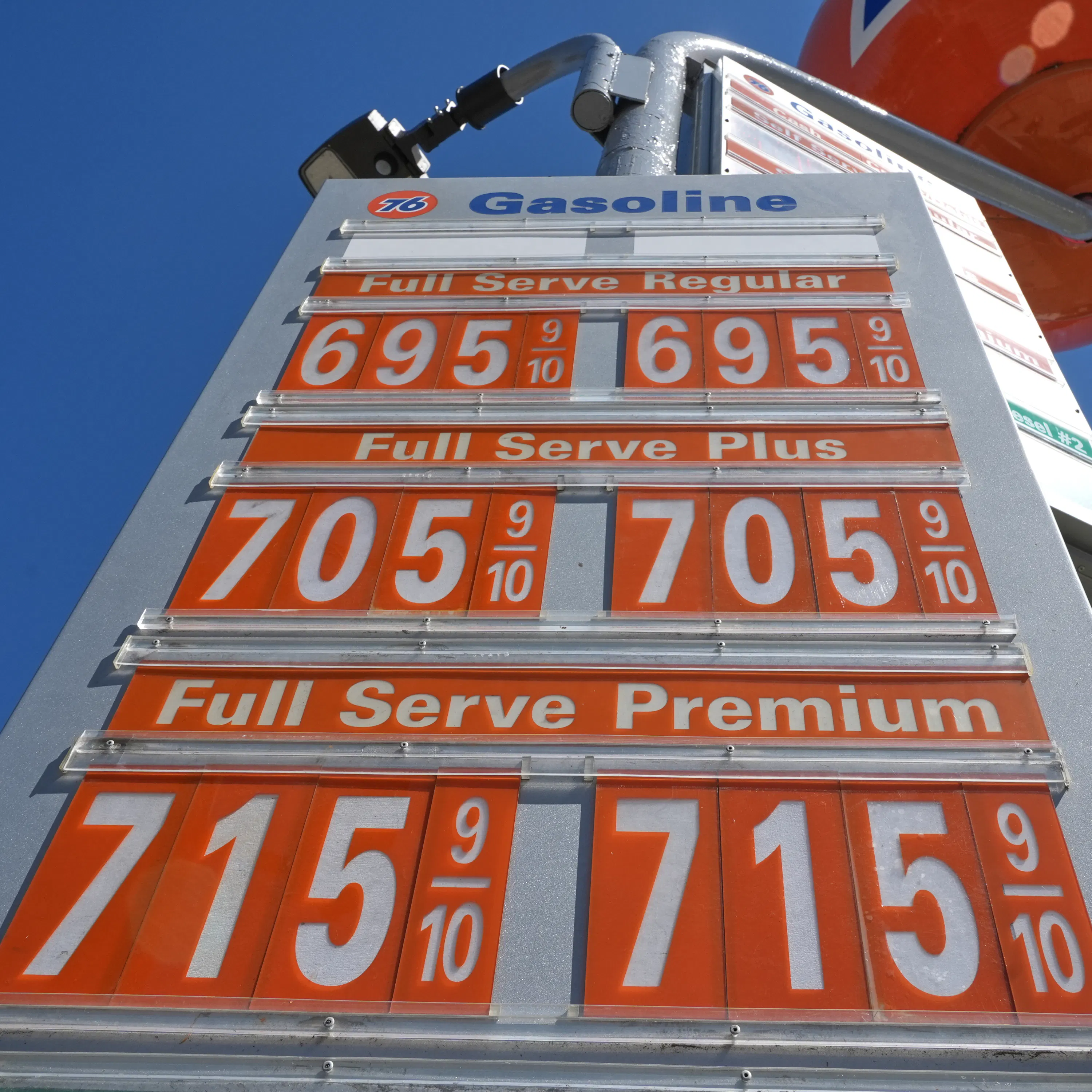
Today, Explained
The price of the Iran war
00:25:50
Gas prices are spiking in the US. Markets are crashing. The whole world will pay for this war.
Loading summary
Transcript95 lines
- [00:00]
Donald Trump
You know, they've said this about a lot of things no other president could do. Some of this shit I'm doing,
- [00:07]
Noel King
that's probably true. President Trump continues to give mixed messages about the war in Iran.
- [00:12]
Reporter
Mr. President, you've said the war is, quote, very complete, but your defense secretary says this is just the beginning. So which is it and how long should Americans be prepared for?
- [00:20]
Donald Trump
Well, I think you can say it both.
- [00:21]
Noel King
More clear is what's happening to the US and global economies as a result of this conflict. Markets falling like Liberation Day. The sequel, oil prices up like we haven't seen in years. That means gas prices up. That means other prices will go up. Trump's supposed to be focusing on affordability. His party has a midterm election to try to win. He talked to Republican lawmakers yesterday.
- [00:41]
Donald Trump
So our message is simple. Democrats created the high prices and our policies are totally ending them. And they, they're ended and we're doing better. We're even bringing them down further.
- [00:52]
Noel King
Self evidently untrue. Will the economic fallout of the war in Iran catch up with Trump? We're going to ask on TODAY Explained
- [01:00]
Attio Advertiser
Support for the program today comes from attio, the AICRM for modern teams. Are you a modern team? Are we a modern team? ATTIO connects to your email, calendar, calls, product data, billing data, and more. So your CRM is always complete, always enriched, and always in sync at Ask Attio anything. What's the status of this deal? What should I know before my next meeting? ATTIO will search across all your data to give you exactly what you need. If you want a CRM built for how you want to work, you can check out Attio. You can go to attio.comtodayexplained. you'll get 15% off your first year. That's a T T I O.com todayexplained Adobe Acrobat Studio.
- [01:45]
Adobe Advertiser
Your team's home base. Collaborate within a shared PDF space. You've got your docs, your plans, your specs, and then invite the crew to build what's next Team works. They think that this design could be a contender. And when somebody wonders what's the next step, AI helps you finish the rest. Bolts are tight now. Your plan's refined. Run a smoother business when you're all aligned.
- [02:10]
Mike Bird
Do that with Acrobat.
- [02:11]
Adobe Advertiser
Learn more@adobe.com do that with Acrobat today,
- [02:15]
Noel King
explained Mike Burt, Wall street editor at leading magazine the Economist. Is the war in Iran already affecting the U.S. economy?
- [02:24]
Mike Bird
Yes. Is the short answer Oil prices move very quickly to account for future conditions and current conditions, and that is fed almost immediately into gas prices.
- [02:38]
Noel King
Americans are feeling the pain at the pump.
- [02:40]
Mike Bird
The widening war is rattling investors around
- [02:43]
Mohamed Sergi
the world, sending oil prices soaring. The price of crude oil has risen
- [02:47]
Mike Bird
above $100 a barrel as the Strait
- [02:49]
Mohamed Sergi
of Hormuz is effectively closed and Iranian
- [02:52]
Mike Bird
fuel depots are battered. So if you own a car, if you've been to fill it up recently, you will have noticed it was more expensive than the last time. People who spend money on gas have less money to spend on other things. That also feeds into all manner of other things that we can go into all sorts of energy costs. But the most visible immediate term impact is at the petrol pump on gas prices.
- [03:15]
Noel King
Why don't we go into all manner of other things while we're here?
- [03:19]
Donald Trump
Absolutely.
- [03:20]
Mike Bird
So energy's an input. Good. The amount of energy you consume is mostly not in the form of gasoline. It's embodied in products and all sorts of things that you purchase, even things that you wouldn't consider as being energy intensive. You know, agricultural goods require fertilizer, they require tractors, they require all sorts of things. Everything that's manufactured is made somewhere and uses some amount of energy.
- [03:49]
Mohamed Sergi
The past couple years in farming have been very thin on margins and this is another year where farmers are looking to cut costs anywhere.
- [03:57]
Attio Advertiser
A lot of guys have just said,
- [03:58]
Donald Trump
I'm done, we're going to quit. They're hanging it up.
- [04:00]
Attio Advertiser
There's sales everywhere, lots and lots of farm sales.
- [04:03]
Mike Bird
Financially, it's causing a lot of mental
- [04:06]
Mohamed Sergi
health problems as well.
- [04:07]
Mike Bird
So the feed through from energy prices really hits every consumer item, every intermediate item, every machine, anything manufactured, almost anything you can buy other than sort of some high end professional services where someone might be doing that for you with relatively little energy put in, almost everything is affected by energy.
- [04:27]
Noel King
How long does it take? Like if I were to go to the grocery store today, which I really should do, am I going to find that, you know, eggs and vegetables are more expensive?
- [04:35]
Mike Bird
You probably wouldn't find that immediately, if only because a lot of the supply chain activity around what you see in the store today will have begun before the attacks on Iran began. These things feed through with a sort of long and variable lag time. Uh, some things will be appreciating relatively soon in the store and some place, some things, you know, it, it might take months and months, maybe even more than a year to feed through. If you imagine something like fertilizer costs, which are very, very closely pegged to the price of oil. Those fertilizer costs affect the amount of food produced in various parts of the world. You won't start to see those lower amounts of food produced for quite a long time and the price effects won't be seen for quite time. So it's going to vary depending on the item.
- [05:29]
Noel King
What about the markets? The markets, fair to say, are kind of always whipsawing. I'm old enough to remember Liberation Day.
- [05:38]
Donald Trump
You don't have to pay too much. As I understand it, you'll pay nothing. It's a lot of work, a lot of work for something.
- [05:44]
Noel King
Actually little, little under a year ago and we all said this is the end of the world and the Dow crashed and everything crashed and, and today, you know, you wake up, were speaking on Monday I should note, and you see sort of the same kinds of warnings. But the markets always go back up, right?
- [06:01]
Mike Bird
Markets tend to in the long term go back up. It's just whether you can see it through to the long term. There are not many extended, say 10 year periods in American equity market history where you weren't looking at positive returns afterwards. There are a couple, most of them quite a long time ago at the moment. There's been a lot going on in markets already this year. There's been a lot of worry about AI and technology companies and how things will be affected and private credit and borrowing at the slightly less credit worthy end of business borrowing in the US So the S and P, a broad index of stocks been very volatile more or less at the time of speaking, hasn't really gone anywhere this year.
- [06:46]
Noel King
Stocks are down across the board.
- [06:47]
Mike Bird
It is an historic day in the market. Good for people who have their retirements in the stock market.
- [06:51]
Reporter
Wall Street's main indexes tumbled Friday.
- [06:54]
Mike Bird
Stocks end the day higher.
- [06:55]
Mohamed Sergi
The stock market plunging.
- [06:57]
Mike Bird
There's been a lot of ups, there's been a lot of downs. I would say it's been generally down the past few days because of all of this volatility. I think there's just a lot of uncertainty as to how long all of this lasts. As much as there is uncertainty over exactly what form the pressure on the oil market takes, the bigger question is just is this something that's going to be over by the end of the week and there's going to be an embarrassing withdrawal and a walk back.
- [07:25]
Donald Trump
So we're winning very decisively, we're way
- [07:29]
Mike Bird
ahead of schedule or is it something that we're going to be talking about in six months time if it starts
- [07:34]
Donald Trump
up again, they'll be, they'll be hit even harder.
- [07:37]
Mike Bird
And your guess is as good as anyone else's on this matter.
- [07:40]
Noel King
Hmm. What would a. Let's say it does drag on beyond the week, beyond the month even. What about other economic indicators, things like inflation and growth? What do you envision happening?
- [07:53]
Mike Bird
Absolutely? Well, for the same reason that the energy prices in prices all across the economy, you would expect this to be inflationary. It doesn't mean it's going to be an absolutely explosive impact. What you are going to get in the US Is you're going to get oil producers moving to drill and produce more precisely because this is the sort of signal they look at. Oil hits certain amounts, it tips over for certain business models and they say, okay, yep, let's get drilling on that slightly more marginal patch or whatever. So you're going to see some sort of pressure coming back in the other direction, but ultimately higher oil prices. Oil prices are one of the major inputs into consumer prices and they inform everything else.
- [08:35]
Noel King
All right, now we should talk about President Trump, I think, because you may recall that in the 2024 election, when voters were asked why they were voting for President Trump, there were two big issues, right? Immigration was one and the economy was the other. Americans were very, very, very angry about inflation, which, in layman's terms, higher prices. And here we have one of the President's actions leading directly to higher prices. What do we hear him saying about his war with Iran and his affordability agenda?
- [09:06]
Mike Bird
Well, there's been a lot of. There's been a lot of, shall we say, muddled communication from the White House over the past few days. When it comes to oil prices, it
- [09:17]
Donald Trump
affects other countries much more than it does the United States. Doesn't really affect us. We have so much oil. We have tremendous oil and gas, much more than we need.
- [09:26]
Mike Bird
The President has asked investors and the American public in general to sort of look through these what he calls short term effects.
- [09:34]
Donald Trump
We're putting an end to all of this threat once and for all, and the result will be lower oil prices, oil and gas prices for American families. We've done that. We've done it. We've brought it very low.
- [09:46]
Mike Bird
This was just, I think, one thing we did see with the tariffs last year, and that is a big matter for debate among investors and traders and analysts, is there is this idea that the market is a disciplining factor on the president, on the White House, that basically he doesn't like seeing the red line go down and that there is only so much of the sort of negative press that he's willing to put up with. Whether that transpires to be true, and most importantly, how much of it you need to see before it transpires to be true is not clear at all. Last year it allowed for the reduction of tariffs. The tariffs didn't go away, obviously. You know, the tariffs still really largely in place by various means. So what that means for something as complicated as this, because it's a military endeavor, is very, very unclear.
- [10:41]
Noel King
I wanna ask you about something Trump said. It was about a week ago, but it was a really interesting moment. He was in the Oval and he was asked if he was worried about higher oil prices.
- [10:50]
Donald Trump
I'll tell you what, I have never had more compliments on something I did. People felt it's something that had to be done. So if we have a little high oil prices for a little while, but as soon as this ends, those prices are going to drop.
- [11:04]
Noel King
Okay, so a little mangled there. But what the President is saying is when it's over, oil prices will immediately go back to normal. What. What does that depend on? Let's say we want to envision a world where we can get oil prices back down to where they were three weeks ago. What has to happen?
- [11:24]
Mike Bird
That's a great question. So I think it would necessitate an immediate decision by US And Israeli forces that they no longer wish to pursue this campaign, which the Iranian government would essentially have to agree to. You would also now need several Gulf countries that have become involved in this to say, we're not involved anymore. Right. You can imagine a circumstance, whether the US Withdraws or halts airstrikes, but strikes between Gulf countries and Iran continue, which would be, you know, really difficult for getting oil out.
- [11:57]
Donald Trump
If you notice, they did something which was very foolish, very stupid, I would say they attacked their neighbors, and their neighbors were largely neutral or at least weren't going to be involved, and they got attacked.
- [12:12]
Mike Bird
The main question in terms of how quickly things go back to normal is how long this goes on in the first place. The longer it goes on, the more difficult it becomes to get this production all going again. You can't just switch it on and off overnight. You don't have all the workers required sat there ready to go. There is not just a, yeah, not just simple on, off, switch. The longer the disruption lasts, the more the shipping is out of place, the more all of the elements of production are in the wrong place at the time this gets turned back on. So if it does drag into weeks and months, I think it's not a linear process. It can get worse and worse depending on how long it lasts.
- [12:54]
Noel King
How do we see the President's critics seizing on his sort of inability to acknowledge, or his refusal to acknowledge that he has not provided an end in sight at this point?
- [13:08]
Mike Bird
Absolutely. Well, I think from a sort of affordability perspective, this is now the second major supply shock economically caused sort of directly by actions the administration's taken. So I think in terms of the President's opponents and critics, the most important thing to start thinking about is how much this affects the midterm elections. The one thing the American people are
- [13:30]
Mohamed Sergi
clear about is that they do not
- [13:31]
Mike Bird
want the United States dragged into another long term war in the Middle East. Throughout his 2024 campaign, he insisted that he was the pro peace president. On election night he even declared, I'm
- [13:43]
Donald Trump
not going to start a war, I'm
- [13:45]
Mike Bird
going to stop wars. And I think if you see people paying, you know, significantly more for gas, seeing prices rise across the economy as they have for the past few years, that is going to be pretty bad for the Republicans electorally. It's going to be a really, really hard sell.
- [14:08]
Noel King
That was the economist Mike Bird coming up. They won't let me call it World War 3, but the whole world is paying for this war. Foreign for today explained comes from Chime. It's easy to feel overwhelmed by choosing the right banking app. Chime says they're more than that. They want to make banking accessible for everyday people by eliminating overdraft fees, minimum balance requirements and monthly fees. They also say they can help your everyday spending go further, offering real rewards and a clearer path toward financial progress. That means things like helping you build your credit history. Plus, you can earn up to 3% APY on savings, which Chime says is eight times higher than a traditional bank should you need help. Chime is also rated five stars by USA TODAY for customer service and has real humans working 24. 7. Chime says it's not just smarter banking, it is the most rewarding way to bank. You can join the millions who are already banking fee free. Today. You can add to chime.com explained that is chime.com explained they say it takes only a few minutes to sign up and today explained listeners can earn up to an extra 350 bucks.
- [15:17]
Reporter
Chime is a financial technology company, not a bank. Banking services and the secured Chime Visa credit card are provided by the Bancorp Bank NA or Stride bank na. Optional services and products may have fees or charges. See chime.com fees info terms apply. Limited time only. Must open the new account and complete qualifying activities to earn rewards. Advertised annual percentage yield with Chime plus status only. Otherwise 1% APY applies. No minimum balance required. Chime card on time payment history may have a positive impact on your credit score. Results may vary. See chime.com for details on applicable terms.
- [15:43]
Noel King
Support for Today Explained comes from Vanta. If you run a business, perhaps you've noticed a sh Risk and regulation are increasing and customers want clear proof of security before they will even consider signing with you. Building that trust is essential to closing deals as Vanna, but it's also complex, costly and time consuming. Vanna says they can automate that process to bring compliance, risk and customer trust together on one AI powered platform. They say they automate the process of achieving and maintaining compliance with over 35 security and privacy frameworks including SOC2, ISO 27001 and HIPAA. This helps companies get compliant fast and remain compliant, freeing up time Instead of getting buried in audits and spreadsheets, Vanna says you get a system that runs behind the scenes, minimizing risk, powering growth. Vanna says that companies such as Ramp and Ryder spend 82% less time on audits with Vanna, not just faster compliance. More time for your business to grow. You can get started@vanna.com explain. That's V A N T A dot com explained Vanna.com explained.
- [16:47]
Strawberry Me Advertiser
Everyone's heard of a midlife crisis, but what about a mid career crisis? Turns out countless people are going through one right now. For some, they're starting to feel they've hit a wall, that there's no room for growth, no new opportunities. Promotions pass them by. Raises are few and far between. Others worry they're becoming replaceable either by younger talent or by technology. And still others find themselves asking over and over, is this all there is? If any of this feels familiar, it's time to visit Strawberry Me, where a certified career coach will work with you to get you out of your rut and help you move forward, either at your current job or by helping you land a new, more rewarding one. Your Strawberry coach will help you turn a mid career crisis into a mid career revival. Go to Strawberry Me unstuck and get 50% off your first coaching session. That's Strawberry Me unaware. Unstuck. Now is the most affordable time ever to find out if career coaching is right for you. This is TODAY Explained.
- [17:54]
Mohamed Sergi
My name is Mohamed Sergi. I'm the editor of Semaphore Gulf and I'm usually based in Dubai, but I left a few Days ago. And I'm in Istanbul now on my way back to the U.S. the U.S. state Department issued a recommendation for U.S. citizens to evacuate, and I was able to get a flight out and decided to take my family out.
- [18:12]
Noel King
Good. I'm glad to hear that. Glad you're safe. All right, so the Gulf states are, of course, part of the global economy. Let's talk first about what this war has meant for their economies in the Gulf.
- [18:25]
Mohamed Sergi
Yeah. So the Gulf has been sitting on a massive pool of oil and natural gas and has been able to use that to become an integral part of the global economy. It produces more than a third of the world's oil and gas, and it's become a logistics, tourism, and trade hub for Africa, for South Asia, and into Europe. Now, what has happened to them with the war is it really has severed many of these links and networks that has built up over years, and it's created both an economic constraint on them and really almost a catastrophe when it comes to its ability to export this energy, as well as the far more dire effects of being subject to Iranian ballistic missiles, cruise missiles, and drone strikes on their infrastructure.
- [19:14]
Noel King
Tell me about the exporting catastrophe. What does catastrophe mean here, exactly?
- [19:19]
Mohamed Sergi
Because about a third of the world's traded oil passes through a narrow strait between the edge of the UAE and Iran. It's called the Strait of Hormuz, which everybody's now talking about. Now, that has been effectively shut down, and that means that some oil supply has been shut in and actually a very large amount. So when they can't get the oil out and energy and condensate and other products, this means that they're losing a lot of revenue every day. And at the same time, they're also spending a lot of money to fight this and wage this war.
- [19:54]
Noel King
All right, so we know in the United States that oil prices, gas prices at the pump are going up. So we are seeing it firsthand. But it's not just in the United States. Right. Oil from the Gulf goes all over the world. Tell me about the other ripple effects here.
- [20:10]
Mohamed Sergi
Yeah, so actually, the US Imports very little oil from the Gulf, but the rest of the world, China, Japan, South Korea, large parts of Europe, India, Pakistan, they need this oil. This allows them to do everything, right? To run their factories, to run their power plants, and become the industrial and manufacturing power hubs that many of these countries are today. So they have a crucial interest in that. And then it just feeds through the global economy. It's a global commodity. It rises somewhere, or there's a crunch Somewhere. It goes up everywhere.
- [20:41]
Noel King
What else is produced in the Gulf that we're seeing held up at this point?
- [20:45]
Mohamed Sergi
The big one and this one that maybe doesn't get as much attention is liquefied natural gas. Qatar is one of the biggest producers of liquefied natural gas in the world. It's what made Qatar wealthy in the 90s. They took this bet, went out and developed an offshore field and built up. They're called liquefaction plants. They have 14 trains, and they produce 77 million tons of LNG per year. Most of that LNG goes to East Asia and to Europe. And now Qataris have stopped producing it completely because as far as the Qataris say, and we've seen evidence of that, one of their plants was hit by an Iranian drone. And these are very complex and sensitive production lines. You can imagine gas is being pumped through and then it's chilled down, and any type of spark around there would just blow everything up. So they can't, you know, they really had to shut it down for safety reasons. And the other factor is you can't really store it anywhere. So, you know, you can load it onto ships, but then the ships become these, you know, floating bombs. So they just shut down production completely. Generally speaking, there are supplies right now, but we will start to see the perhaps rationing of power and so on. But the other commodities, I don't know how much you think about helium and fertilizer and all that stuff. It also comes from this region.
- [22:07]
Noel King
Ah, okay. So at a certain point, farmers start feeling this. Yeah, correct.
- [22:13]
Mohamed Sergi
Farmers, tech companies. Right. Helium is not only used to make balloons, you know, rise and float and to make your voice sound funny. Helium is also used in precision manufacturing and to create semiconductors and MRI machines. So helium is this crucial component. It's a byproduct of natural gas production. And Qatar is one of the bigger producers in the world, if not the biggest.
- [22:40]
Noel King
Wow. Wow. When and how did the Gulf region become so central to the global economy?
- [22:49]
Mohamed Sergi
Since oil was found, obviously. Saudi Arabia became a crucial source of supply during World War II. Oil, one of the materials that is making a truly great contribution to our modern civilization. And then the other Gulf states, the uae, Qatar, Oman, Kuwait, they also found oil, and they started producing it at ever increasing quantities. The populations themselves, the people who were living there, there wasn't enough demand for domestic development because they were such small populations. So they built up their economies to serve them. But there was surplus, massive amounts of money that was surplus. And what were they to do with this money? A lot of it was recycled through US assets, Western assets, and then they became larger and larger. Right now, Gulf sovereign wealth funds control maybe 4, $4.5 trillion of wealth that is projected to increase to about $7 trillion in the next four or five years. You know, that's serious money.
- [23:48]
Donald Trump
Other industries are now bigger even than oil, which is always going to be a big monster. It's a big one.
- [23:54]
Mohamed Sergi
And the other parts of the economy that they've developed next to it. There's a high precision aluminum manufact, requires energy. They bought a lot of planes. If you've ever traveled to this region, you know about the airlines. Emirates, Etihad and Qatar Airways.
- [24:09]
Reporter
This is Qatar Airways, the world's best, for a record ninth time, trade links.
- [24:16]
Mohamed Sergi
So they built ports and then once their ports became efficient in the Gulf, these were great routes to bring in products from Asia to Europe and beyond to Africa. Then those port companies went out and bought ports in Africa. They built up their warehousing. They became central nodes of logistics hubs throughout the world. These are industries that are crucial to global trade.
- [24:38]
Noel King
We know that businesses and investors really hate instability. And nothing gives instability like an outright war. Is the rest of the world looking around and thinking the Gulf is no longer reliable, the Gulf is no longer safe? We gotta find other options.
- [24:54]
Mohamed Sergi
If you want to be close to a well organized, efficiently run economies with access to incredible amounts of energy. If you're an AI company and you need to build data centers, you will look at the Gulf, you will look at this instability and consider ways to mitigate it. Are there ways to protect an AI, AI data center or other types of investments that you're making? But absolutely, if you don't have to be there and you're concerned about risks, this could be the time where you start to reconsider and you start to slow down investments and you maybe diversify a bit and go somewhere else where there's fewer drones or fewer missiles hitting.
- [25:34]
Noel King
All right, so we talk about the global economy because it is global. And we're seeing this week wild swings in the market, wild swings in oil prices, all of those things. As I understand it, could end up being temporary. If this thing is ended soon, what do you think the long term effects, if any, might be here?
- [25:54]
Mohamed Sergi
I think this is actually not going to end soon. I think the question of it ending soon is, you know, the genie's out of the bag, right? Is that the right term? I could be wrong. Yeah, that could be the bottle. The genie's out of the bottle. The cat's out of the bag, the genie's out of the bottle. Yeah. Once you threatened the choke point of Hormuz, once you've sent missiles out either, there has to be a complete defanging of Iran, which is what the U.S. many in the Trump admin talking about, and Israel as well, because that threat persists unless there's a dramatic change in how Iran wants to operate. Because at any point they can just shoot out a couple of drones and it would bring everything back to a standstill again. So that risk premium I think is going to remain for both commodity prices and also for the threat or the potential for doing more business in the Gulf. And that's something that it will take time maybe for people to forget, but I think it's going to be very hard, especially, you know, with how much we see of these things now.
- [27:02]
Mike Bird
Right.
- [27:02]
Mohamed Sergi
So. So we see on social media the strikes people talk about can't be buried.
- [27:17]
Noel King
Mohammed Sergi is the editor of Semaphore Golf. Kelly Wessinger and Avishai Artsy produced today's show. Amina El Saadi edited Patrick Boyd and David Tadashore engine Andrea Lopez Cruzado Check the facts I'm Noel King it's today explained.
- [27:59]
Adobe Advertiser
Adobe Acrobat Studio your new foundation. Use PDF spaces to generate a presentation. Grab your docs, your permits, your moves, AI levels of your pitch gets it in a groove. Choose a template with your timeless cool Come on now let's flex those two draft design deliver, make it sing AI builds the deck so you can build that thing. Do that, do that, do that with
- [28:23]
Mohamed Sergi
that Quebec learn more@adobe.com do that with Acrobat.