← Today, Explained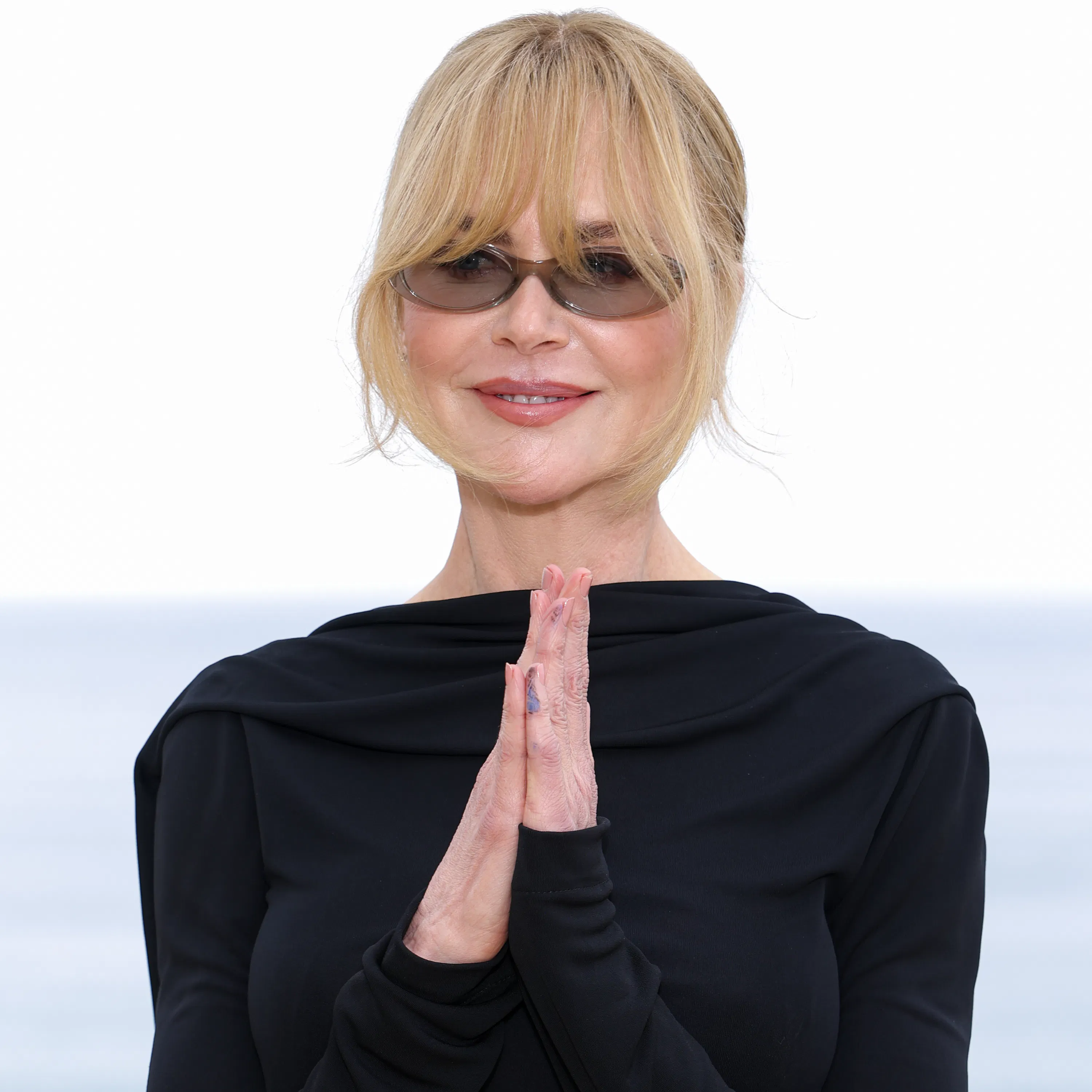
Today, Explained
The rise of death doulas
00:25:46
Celebrities like Nicole Kidman and Chloé Zhao say they're training in this growing field. What preparing people for death teaches us about life.
Loading summary
Transcript68 lines
- [00:02]
Noel King
Actress icon Nicole Kidman says she's training to be a death doula.
- [00:07]
Guest or caller
Heartbreak feels good in a place like this.
- [00:10]
Noel King
No be serious. Death doulas are people who help people transition from life to whatever's next. Some of it is spiritual, some of it is logistical. The profession is about comfort for the dying, yes, but some of it is also about the living. The director Chloe Zhao, who made Hamnet, told the New York Times that she's trained as a death doula because because
- [00:30]
Anna North
I have been terrified of death my whole life, I still am so afraid.
- [00:37]
Jane K. Callahan
And because I've been so afraid, I
- [00:41]
Anna North
haven't been able to live fully.
- [00:44]
Noel King
Coming up on Today Explained from Vox Death doulas they stare into the abyss and see something kind of wonderful. Stay tuned for that.
- [01:00]
Adobe Acrobat Ad Voice
Adobe Acrobat, your team's home base. Collaborate within a shared PDF space. You've got your docs, your plans, your specs, and then invite the crew to build what's next. They talk up the teamworks. They think that this design could be a contender. When somebody wonders what's the next steps, AI helps you finish the rest. Bolts are tight now your plan's refined. Run a smoother business when you're all aligned. Do that with Acrobat learn more@adobe.com do
- [01:29]
that with Acrobat Adobe Acrobat Acrobat your new foundation. Use PDF spaces to generate a presentation. Grab your docs, your permits, your moves, AI levels of your pitch. Gets it in a groove. Choose a template with your timeless cool. Come on now let's flex those two draft design deliver, make it sing. AI builds the deck so you can build that thing. Do that, do that do that with Acrobat learn more@adobe.com do that with Acrobat.
- [02:16]
Noel King
It's today explained Vox's Anna north recently wrote about the rise of the death doula, and Anna says interest in the profession isn't just coming from celebrities.
- [02:25]
Anna North
When I talked to death doulas about this, they really emphasized that the interest from celebrities mirrors interest that we're seeing from just the population as a whole. So there's been a rising interest in death doulas in recent years, especially kind of since the COVID 19 pandemic began when so many people were forced to encounter death kind of at the same time.
- [02:49]
Jane K. Callahan
Grim milestone in the pandemic. More than 1 million people have now died from COVID 19 in the U.S.
- [02:55]
Sponsor or Ad Voice
it's a number few thought was possible when the pandemic began.
- [02:58]
Jane K. Callahan
You know, we've all been given a diagnosis to pause and reflect and go inward and maybe get your advance directives in order and think about what matters.
- [03:09]
Anna North
And there's also just been a real explosion of content around sort of being more open around death and dying on social media. Good evening, fellow mortal souls.
- [03:19]
Adobe Acrobat Ad Voice
My name's Tanner, and I am dying. I have stage four colon cancer.
- [03:25]
Anna North
I'm dying, and I'm really okay with it, and I really want to talk about it. So the idea of being a death doula or hiring a death doula has just become a lot more visible with people talking about it more. Hi, I'm Sarah. I am a recently certified baby death doula.
- [03:42]
Noel King
We need more death doulas in society. So if you've been thinking about becoming a death doula, I honestly really recommend it. So what do they do exactly?
- [03:50]
Anna North
So a death doula can do a number of things. They're not a doctor, so they're not going to be providing direct medical care, but they really are there to support in this complicated transitional period. Something a lot of folks told me is that the American health care system is set up to take care of people when they're sick. And then we have funeral homes and, you know, other types of arrangements when people have actually passed away. But there's this real gap when people are dying, and there's often not a lot of assistance in terms of help. For example, helping family members contact funeral homes, helping people make arrangements to deal with someone's body, helping a person maybe decide what do they want to have happen with their remains, or how do they want their life celebrated after they die, and then really providing companionship and care. So something that Nicole Kidman actually talked about is that she and her sister both have families and careers. Obviously, Nicole Kidman's very famous. They couldn't necessarily be with their mom every second while she was dying.
- [05:00]
Guest or caller
I love when people say there is no limit to your grief. You don't have to have a time limit on it. You don't have to be all better by this time. So you're allowed to constantly let it pass through in waves.
- [05:12]
Anna North
This is an issue for a lot of people. So a death doula can actually just sit with a dying person, and that can provide a lot of comfort to really everyone involved.
- [05:22]
Noel King
The sitting is the thing I would have assumed. What surprises me about what you just said is how much of this is logistics.
- [05:29]
Anna North
Yeah, I mean, if you think about it, you know, if you have someone close to you that has passed away or you've been with someone, trying to support them through that kind of loss, a Lot of it is really boring but difficult stuff, right? There's a lot of, like, phone calls. There's a lot of, like, shutting off people's bills and utilities. There's a lot of, you know, if someone is dying in their home, their home still has to run, their household has to run, the trash has to go out, the dog has to be walked. They absolutely can be the person holding someone's hand. There's just so much, I think, around death that we kind of don't think about until we're in that situation. And a death doula can take care of a lot of that stuff.
- [06:08]
Noel King
I think a lot about birth doulas. And there's like, the old joke that, like, you know, you don't bring a birth doula into the hospital with you because the birth doula is gonna upset the hospital staff. And this actually makes me wonder, like, if you are dying, there are some odds that you're either in a hospital or you're in a hospice. You're in end of life care. You're someplace where there are people who are trained to be helping you. What does a death doula do in, like, these more formal medical, clinical settings?
- [06:39]
Anna North
It's actually very similar to the role of a birth doula. So, you know, for example, we had a doula present for the birth of our first child, and part of her role was to know what did we want and how did we want that birth to go and to kind of help advocate for us with the medical staff in case there was any question around how things were going. They are not gonn step in and try to practice medicine. But the way that one person explained it to me is that in dying, there can be a lot of space for taking some time for asking questions, for getting options. Not everything always has to go the same way. And so a death doula can kind of be there to advocate for the dying person, to advocate for their family, and just be asking those kinds of questions to medical staff. They're, again, they're not supposed to be getting in a fight. I have found with birth doulas, both in my experience and in my reporting, that now hospitals are a lot more comfortable with them and they're much more integrated into obstetric care. I wonder if that will happen with death doulas, too.
- [07:46]
Noel King
How long have death doulas been a thing?
- [07:48]
Anna North
This kind of work has been around forever. There have always been people in communities, in families, in religious traditions, who sit with a dying person, right, who prepare them for religious rituals that might happen around Death and dying, who come, you know, and weep with the family. Right. And grieve with them, who bring food, all these kinds of supports. So it's always been a role that people take. You know, humans have always died. Right. We always need that support. I think what is newer is the idea that this could be a profession or something that people might be paid to do, or, you know, it might be someone that you hire, you bring in when you didn't know them beforehand.
- [08:29]
Noel King
What you've been describing is something that people in families, people in communities, even friends, once upon a time, would do for free would do because, you know, it's expected.
- [08:44]
Sponsor or Ad Voice
How.
- [08:44]
Noel King
Have you thought about the fact that there is now, however small, there is an industry taking care of things that used to be assumed to be the responsibility of family and community?
- [08:56]
Anna North
Absolutely. So this is something that death doulas and death workers talk about also, that people who tend to hire a professional death doula to do this work, they might be people who aren't connected any longer to the kinds of communities that historically have done this. Right. So one of the many people in America who are not religious, for example, people who live far from their families of origin, people who aren't really embedded in the kind of neighbor or friend community that might step up and offer this kind of support. And, you know, there is like this bowling alone aspect to it. Right. This sense of like, why do we have to pay people for this when at one time this would be something that we would all do for one another. I think that is a really valid question to ask. At the same time, I think two things. One, I think that there are very specific logistical things around death in America that really might require some specific training. Right?
- [10:05]
Noel King
Yeah.
- [10:06]
Anna North
So you might be a very well versed practitioner in your religious community and someone that is really relied upon. And at the same time, you might not know, like all the ins and outs of filing the death certificate in the right place and getting the right funeral home. You know, like, that stuff is very complicated legally and medically. And we could talk too about whether it should be the case or whether, you know, there should be death doulas that they're paid for by the state. You know, there's a lot of questions there. So that's one bucket the logistics. And then I think too, you know, with birth doulas, we talk a lot about care work and compensating care work.
- [10:45]
Jane K. Callahan
Right.
- [10:46]
Anna North
We know that birth doulas really improve birth outcomes for a lot of people. Doulas have been part of a lot of big strategies to reduce black maternal mortality in particular. And so doulas like became this like linchpin of maternity care that we kind of all rely on. And if they're going to be that important, we should pay them.
- [11:06]
Noel King
Right?
- [11:06]
Anna North
We should recognize that this is care labor. And I just wonder, are we going to have these same conversations around death? You know, do we need to say like, this care is having a real value and we need to make sure we're supporting the people who are giving it? I think these are all like complicated questions when you get into these life transitional periods.
- [11:34]
Noel King
That was Vox's Anna North. Coming up, a death doula speaks.
- [11:39]
Jane K. Callahan
I always joke like, oh, I'm great at parties. Cause sometimes I'll just say things. People are like, oh God.
- [11:50]
Sponsor or Ad Voice
Support for today explained comes from GrowTherapy. They're trying to grow you. I remember this May is mental health awareness month. Hey, if you've been considering getting professional support, now could be a great time to start. Growth Therapy says they make it easy to find care that's covered by insurance and actually built around you. I wish more things were built around me. Whether it's your first time in therapy or your 50th. Wow, that's a lot. Grow says they can help you find a therapist who fits you. Wow. They say they connect you with thousands of independent licensed therapists across the US Offering both virtual and in person sessions, nights and weekends. You can search by what matters like insurance, specialty, identity or availability and get started in as little as two days. And if something comes up, you can Cancel up to 24 hours in advance at no cost. Whatever challenges you're facing, Growth therapy can help. Grow says they accept over 125 insurance plans and that sessions average 21 with insurance and some pay as low as $0 depending on their plan. You can go to growththerapy.com explain today to get started. That's growtherapy.com explain growtherapy.com availability and coverage vary by state and insurance plan. Support for the show today comes from pipedrive. You know what can silently kill sales teams? The inability to see what's actually happening in your pipe line. Many businesses are running their sales on a CRM so complicated that half the team won't even log in. That's where pipedrive comes in. The easy, intelligent CRM Loved by growing sales teams, pipedrive gives your team one complete record of every customer and deal. So instead of chasing information across disconnected tools and teams, everything you need is right in front of you. Pipedrive centers around a visual pipe line where you can see every deal, what stage it's in, and exactly what needs to happen next, giving you complete clarity on your entire sales process at a glance. Pipedrive is designed to be fast, to set up, easy to learn, and genuinely delightful to use across the full selling cycle. It's designed to accelerate the work, not become work itself. You can switch to a CRM built by salespeople for salespeople and join the over 100,000 companies already using Pipedrive. No credit card or payment needed, just head to pipedrive.com explain to get started and receive an exclusive 30 day free instead of the usual 14 day trial. That's pipedrive.com explained and you can be up and running in minutes. Support for the show today comes from the Futurology Podcast. With so much changing every minute, it can feel useless to think more than a few days into the future, they say. But exploring what could happen in the weeks, years, even decades after tomorrow can completely reshape how we approach today. Which is exactly what futurology is for. This new podcast from the Begruen Institute can help you get ahead of tomorrow. Futurology isn't sci fi. It's not speculation. Each week they have thoughtful conversations with scientists and artists, technologists and philosophers who don't just predict. They illuminate the forces shaping our lives. Imagine where they'll take us and how we can respond. Whether the future is something we have to endure or something we can design, and if so, what will we build? Subscribe to Futurology wherever we get your podcasts or watch full episodes on YouTube.
- [15:29]
Noel King
Today Explained. We're back with Jane K. Callahan. Jane's a death doula in Durham, North Carolina. She came to this line of work after losing her mom at the age of 27 and feeling like the whole process had just been wrong.
- [15:43]
Jane K. Callahan
I didn't understand what was happening to my mother's body because I had no knowledge of how the body dies. It was hard to get a direct answer from a doctor. In fact, no one told me until towards the end that she was dying. I was waiting for her to be discharged and I kind of sat with that for a couple of years and eventually I got pregnant and I had my son. And when I gave birth to my son, I did not have a birth doula. I I didn't really understand what that was. A lot of things went wrong and so I started researching birth doulas and realized that would have really helped. And that's how I found out that there's death doulas, which is based on the birth doula model. And I realized those were all the things that were missing in the last two weeks of my mother's life. And so I attended a training and I started volunteering with hospice, and I've been doing that for eight years.
- [16:32]
Noel King
My dad passed when I was 30, and I have very aggressively refused to think about death ever since. It's interesting to hear that your mom's passing was the thing that made you lean in. Do you think that you are more comfortable with death than most people?
- [16:48]
Jane K. Callahan
I think I've gotten comfortable with being uncomfortable, which is really the main skill of being a doula. You know, we're not untouched by the work we do. I have moments where losing someone I've worked with is very hard and watching them suffer and die is very hard. But you start to accept the reality of it through learning how to sit with discomfort.
- [17:14]
Noel King
Do you think that being in close proximity to death changes the way you think about being alive?
- [17:20]
Jane K. Callahan
Absolutely. So in Bhutanese culture, they're encouraged to think about death five times a day.
- [17:25]
Noel King
Wow.
- [17:25]
Jane K. Callahan
Now, do I think it's mentally healthy to just spend your entire day, every day, thinking about death? No, that's not healthy. It's also not really possible. But. But I think being consistently aware of the fact that we're not here for very long and that it can end at any time today even makes you appreciate what you have. And since I've started doing this work, I have found myself being a lot more present in my everyday life and appreciating small things. Definitely more gratitude and more awareness.
- [17:56]
Noel King
I think that one of the things, One of the many things that freaks us out about death is the finality of it. The sense that, like, oh, I will never see this person again. I wonder whether, and I've often wondered this about people who deal with death a lot. I wonder whether you have ideas about where we go after we die, if there's something in there that you find comforting.
- [18:20]
Jane K. Callahan
So, yes. But I will say as a disclaimer, doulas are trained not to answer that question.
- [18:25]
Noel King
Really?
- [18:26]
Jane K. Callahan
When a client asks you, do you believe in an afterlife? You should really reflect it back on them and say, why is that important to you? Because when someone is scared and unsure, you know, maybe even desperate, they see doulas as a guide. And your answer has an influence. And doulas are not meant to influence people. Doulas are meant to facilitate what someone wants. And so by sharing my opinion directly with a client about what I believe there's potential there to Influence them and their journey towards the end of life. And so I try to steer the conversation away from my beliefs because really what I'm there for is them and their beliefs and their values and goals. But I will say, before I started this work, I was a hardcore atheist. I am not anymore. I'm not gonna pretend I have any idea what happens, but I've seen enough in the dying process and in death itself that there's something I just can't put my finger on, but I just cannot say that there's nothing.
- [19:29]
Noel King
What is it that's making you think that?
- [19:31]
Jane K. Callahan
You know, when someone is in what we call active dying, which, by the way, can last up to two weeks, it's not like we close our eyes and die suddenly. Dying can be a process. The person looks different. It's the same person. Their body's still working to a different degree, obviously. But something looks different, something feels different. And there's a point where someone loses consciousness and you can just feel, and I know this is not very scientific, but you can just feel like they're halfway somewhere else. And right before the moment of death, there's like a. Almost like a brightening of the person, kind of like this. Clarity in appearance is the best way I could explain it. I don't want to say glowing, but you know when you see someone who's in love and they just look different, kind of like that. And after they die, in those minutes, their face has not changed at all, they've just died. But something looks and feels different. I think there's always going to be a fear if the light switch turns off and there's nothing. But I see that as kind of a win win situation, because if there's nothing, then I'm not going to know, right, what I'm missing. And if there's something, then great.
- [20:51]
Noel King
What's it like to get trained as a deaf doula? Do you end up with like a certificate or a degree?
- [20:56]
Jane K. Callahan
There's pros and cons to that. Right now, there is no national standard. There are not even state standards for death doula work. And there is no formal or formally recognized licensure. That's part of why we're not reimbursed. Right now, what you're seeing is you have a couple of major player organizations who offer trainings across the country. And then increasingly, you're seeing a lot of death doula schools pop up online. These courses vary in their content and their quality and in how much they cost. Every curriculum has its own content. There are things Some curriculums touch on that, others may not. Some people will take the training and immediately market themselves as doulas to their community. But there's no clear pathway to, you know, hands on mentorship or apprenticeship or anything like that.
- [21:48]
Noel King
Can you tell me about someone that you've worked with, someone who sort of stands out in your mind?
- [21:53]
Jane K. Callahan
Oh, sure. Well, I've been doing this for eight years, so a lot of people I think, you know, there was one family that I learned a lot from, and that's primarily because they engaged me early enough, which is not as common. It was two adult children and they reached out to me. Their mother had terminal cancer. She was still being treated with chemo. She had some other health issues and her teams were not speaking to each other. She was low income and there was issues with her housing. There was issues with her being able to get transportation to her chemo appointments. Both of her adult children were working full time. One was dipping into the 401k to pay for mom's care. Another one took a second job driving Uber at night to pay for mom's care. And. And there was tension within the family. And so we come in and as dual as we can, do kind of some of the logistical stuff. Right. Do you have your advance directives? And then we worked on logistical issues like how let's find ways for you to get transportation to your appointments. Once she enrolled in hospice, and this is a very common misunderstanding with families. Most people get home hospice, which means they die in their own homes and the hospice team comes to them. Many people think that that means 24,7 care. It does not. A nurse will come to your house towards the end, one hour a day. The other 23 hours are on the family who have no caregiver training. And if they don't have money for that, then there's a problem. So working through those kinds of challenges and then also creating a sort of what we call a vigil plan or a death plan. I talked to the dying woman about what kind of environment she would want. Well, I love country music. So we made sure we had her favorite country musicians playing any kind of scents, you know, like a rose candle. She wanted fuzzy socks and a fuzzy blanket. Cause she really liked that feeling for her comfort. You know, we talk about, do you want to be touched? Yes. Hold my hand, but don't touch my feet. Some people want all their friends and family coming and going and laughing and telling stories and looking at photos. Whereas other people, you know, like this woman was said, I want my dignity. And When I start dying, going into active dying, I really just want these couple of people around me. I don't want anyone else coming in and out. And so it's really about giving what control is left in these situations to the dying person. And it's also about avoiding panic and chaos by thinking ahead and talking these things through. And, you know, if I'm having a conversation with you, then you've never died before, so you may not know what to think about and what to ask. Right. You don't know what you don't know. And doulas who have that kind of experience know how to help you think about planning for the most peaceful death possible.
- [25:00]
Noel King
It's so cool how much you learn about people. Like I was thinking about what you said. Some people want everybody coming in and out and like talking and laughing. And other people are, I, I, I imagine find that exhausting. I don't know, it's just, it, it must, people are very different in life. And it is just so cool to hear you talk about how different people are in death as well, you know?
- [25:25]
Anna North
Yeah.
- [25:25]
Jane K. Callahan
I have my whole death plan. Like, I want lots of plants around me because I like plants. And then, you know, have you ever been really sick with like the flu or cold and you wake up in the middle of the night, like there's no sense of time and it's just horrible.
- [25:36]
Noel King
Yep.
- [25:37]
Jane K. Callahan
Well, I want to have Christmas lights so that, because those, I associate those with comfort and coziness.
- [25:42]
Noel King
Smart.
- [25:43]
Jane K. Callahan
Yes. But the thing is like, like it asks us to have an imagination about our own death. And that's really challenging for some people. And doulas, a skilled doula will be able to help someone kind of open that door at a pace that works for them. One of the values of doulas, outside of patient work, is this public education about, hey, we do kind of have to think about these things if we want the best for ourselves. This is the death positive movement. That's what it's referred to. Right. Is educate yourself, have these conversations, normalize talking with your parents about what they want at the end of life instead of guessing. The death positive movement isn't asking people to be excited and happy about dying. All it is asking people to do is understand that this is an inevitability. It is part of being a human being. And you can also still be scared and you can also still grieve the fact that this ends one day. You can have both, and I think I exist in both.
- [26:56]
Noel King
Jane K. Callahan. Her new book is called A Death Doula's Guide to a Meaningful end. Avishai Artsy produced today's show, Aman El Saadi edited, Gabriel Dunnataub checked the facts and David Tadashoren Bridger Dunigan engineered the rest of us Hadi Mwagdi, Miles Bryan, Peter Bell and On Rosen, Patrick Boyd, Danielle Hewitt, Kelly Wessinger, Ariana Esputu, Dustin Doto and Sean Ramas Firm Mgmt, Jolie Myers and Miranda Kennedy. We use music by Breakmaster Cylinder. I'm Noel King Today Explained is distributed by WNYC and the show is a part of the Vox Media Podcast network. Find us at podcast.vox media.com listen ad free by signing up@vox.com members.
- [27:50]
ServiceNow Ad Voice
AI is moving fast across the enterprise, but without visibility, it's just chaos. Different tools, different models, different teams using AI in completely different ways. ServiceNow turns that chaos into control. With the AI control tower, you see all your AI across the business in one place, what it's doing, what it's done and what it's about to do. So you stay in control. To put AI to work for people, visit servicenow.com why send your docs and
- [28:21]
Adobe Acrobat Ad Voice
note the land share a PDF space for microbut they'll understand A custom intro that's so clear. An audio summary that says what they need to hear. An AI assistant that makes it all click so they'll understand it real good. Real good, real quick. Ain't just some files on the screen. It's exactly what your clients need to see. You can do that. Do that. Do that with Acrobat. Learn more@adobe.com do that with Acrobat.