← Today, Explained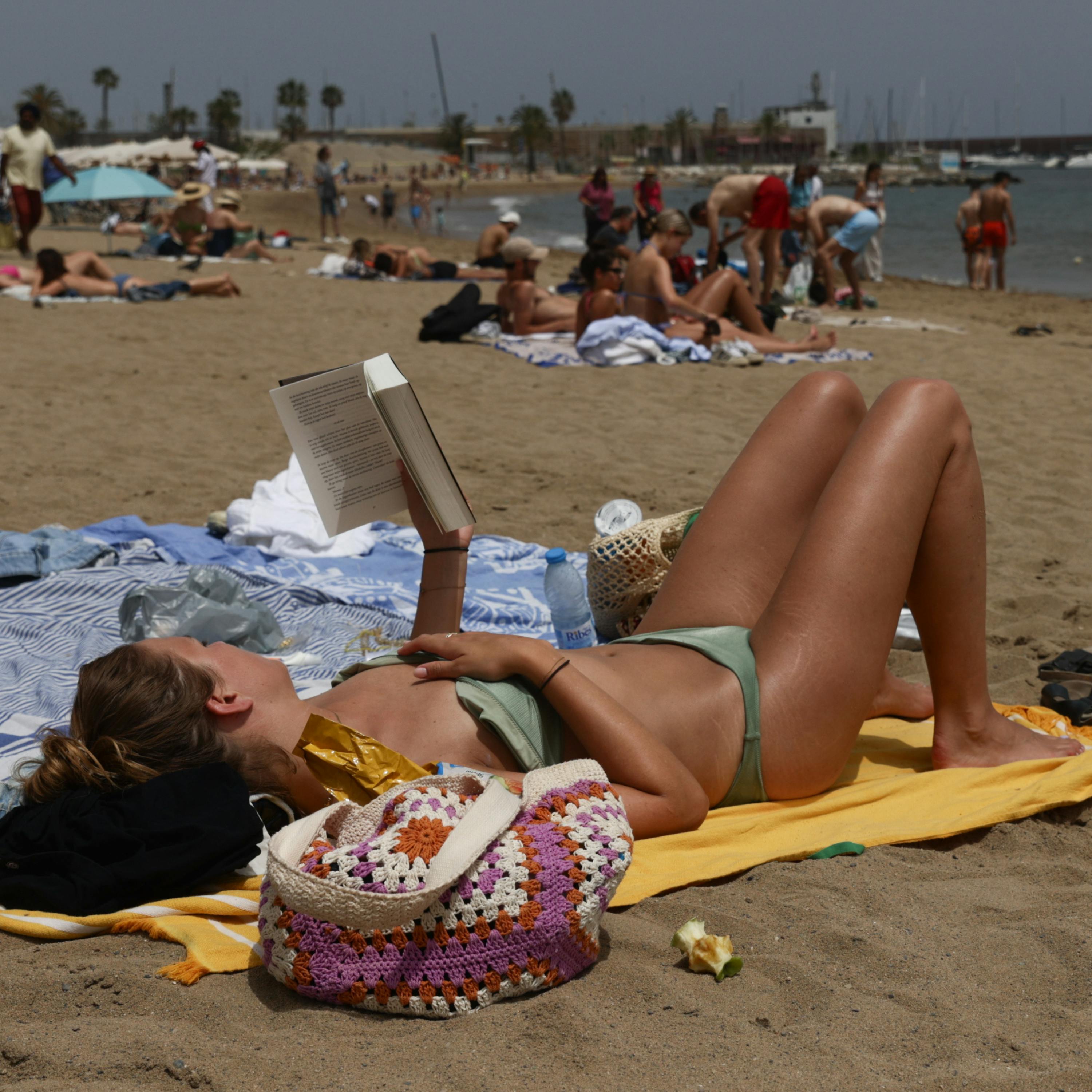
Today, Explained
The summer I turned into a bookworm
00:32:49
Summer. Time for pools, BBQs, and the beach read. But why do we read "summer books"?
Loading summary
Transcript130 lines
- [00:01]
Jonathan Hill
Support for Explain it to me comes from WhatsApp. Your personal messaging is also your personal space. Completely private. So when you're looking for a messaging app, you want one that affords you the peace of mind that no one can see or hear your personal Messages. That's where WhatsApp comes in. Whether it's calls with your mom, chats about the latest work drama, voice messages with your best friend, and all those photos and videos of your dog. On WhatsApp, every personal message stays private. WhatsApp message privately with everyone. Visit WhatsApp.com privacy to learn more. Right now at the Home Depot, you'll find storage solutions made to fit your needs. Grab an HDX Tuff Tote to protect your tools, or keep your sports equipment contained with reinforced Snap fit lids. Or stack up and make better use of your space with bins and totes Built to last. Whatever your story, we've got the gear to keep it organized and protected at the Home Depot. How doers Get More Done.
- [01:06]
Helen Bowie
I've recently.
- [01:07]
Jonathan Hill
Gotten super into reading this summer. To me, summer reads are meant to be fun and fast.
- [01:14]
Donna Harrington Luker
I'm pretty big into sci fi, general mysteries like that.
- [01:19]
Jonathan Hill
I'm Jonathan Hill. This is Explain it to Me. And I think one of the best parts of summer is Love Island.
- [01:26]
Helen Bowie
I love to call myself a sensitive gangster, so here I am, crying again.
- [01:31]
Jonathan Hill
But that's over now. So it's time for the second best grabbing a book and sitting outside by someone's pool. Usually I go for the it book of the summer. Think you're Brit Bennett or Emma Cline? Or a medium to spicy romance novel. Something along the lines of Jasmine Guillory or Talia Hibbert. It's fun. It's an escape from the doom scroll and it just feels right. But how did summer reading become such a thing? Before we dive into that, we wanted to hear from some readers about why and what they read in the summ. So we sent our producer Avishai Artsy on a quest to find readers. Okay, Abishai, set the scene for us. What did you find?
- [02:12]
Avishai Artsy
Hey jq. Yeah, so I went to a meeting of a group called the Silver Lake Reading Club.
- [02:17]
Jonathan Hill
Welcome everyone. This is our 85th reading club. It's not insane. 85.
- [02:28]
Avishai Artsy
So this group meets every Tuesday evening at a cafe or restaurant here in Los Angeles. And they read together.
- [02:35]
Helen Bowie
So.
- [02:35]
Jonathan Hill
So like silently but next to each other. They're just. They're reading together, right?
- [02:39]
Avishai Artsy
Yeah, yeah, there's some breaks for socializing, but otherwise they read for two 45 minute stretches, and then at the end they might have an author come and do a reading and sign books. But yeah, you could just imagine like a couple dozen people sitting at tables or in armchairs, sometimes in a group or just by themselves, and they're just engrossed in their books. There's soft music playing. It's very serene, very calm. And the Reading Club was founded by Helen Bowie, and she says she's really blown away by how successful it's been.
- [03:11]
Jonathan Hill
In total, we've had 2,000 people come to Reading Club since we started, and they've read a total of 5,000 books at our evenings together, which is pretty amazing if you think people in LA don't read.
- [03:23]
Avishai Artsy
The events sell out every week, and now Helen is forming a nonprofit and is going to even start a kids reading club as well.
- [03:30]
Jonathan Hill
All of this sounds really awesome, but why go to a single silent book club instead of, you know, just taking your book and reading it on your own?
- [03:37]
Avishai Artsy
Yeah, I wondered that too. Especially because it does cost $20 to attend and that money does go towards the space. They usually rent out the cafe or the restaurant just for these events. But still, that's, you know, real money to show up somewhere and just read your book. So I asked some of the attendees, why do you come here? And we stepped outside of the reading club so you'll hear traffic noise. Just because I didn't want to disrupt people while they were reading quietly.
- [04:02]
Jonathan Hill
That's very polite of you.
- [04:03]
Helen Bowie
I grew up loving reading as an avid reader and fell out of the habit. And so just having a dedicated time to read and focus on just that has been really nice.
- [04:13]
Heather Acumia
I would just self describe myself as an introverted person.
- [04:17]
Jonathan Hill
And so for me, I love this socialization. It sounds so crazy, but I sometimes I almost feel like I'm doing myself a disservice by reading. Like I should be like, outdoing something else with other people or being more social or whatever. And this bridges that gap in that ridiculous anxiety in a nice way. You know, I really love this idea of reading as a social activity. You know, we're both in book clubs and I really just love reading a book and being able to dissect it afterwards with my friends. What did these readers have to say about what makes for a good summer read?
- [04:53]
Avishai Artsy
Yeah, I asked them about that. And I should note that I'm in Los Angeles, which doesn't have as defined seasons as other parts of the United States, but we do still have summer, and we do like to read in the summer. So some of the attendees shared their thoughts about what they look for in a good summer book.
- [05:10]
Jonathan Hill
I approach summer reading like Love Island. I need to read the hottest books of the summer. So I just finished Atmosphere by Taylor Jenkins Reid, and it was so incredible and amazing. Binge read in the fall. I gravitate toward things like fantasy and mystery and like, that cozy kind of stuff. Whereas in this summer, I would say I'm a mix of a literary fiction reader and some romance thrown in there. I definitely think about maybe like, locational.
- [05:37]
Helen Bowie
Reading, like beach reading or vacation reading.
- [05:40]
Jonathan Hill
Which then I'll go for something easier.
- [05:43]
Helen Bowie
Or funny or like rom comy as opposed to like something a little bit more intense. And I guess that's the summer vibe.
- [05:52]
Jonathan Hill
Is like easy, breezy lesbian vampires. That's the vibe. Ooh, breezy lesbian vampires. That's amazing.
- [06:00]
Avishai Artsy
And as to why we might like to read in the summer, here's what folks had to say.
- [06:05]
Jonathan Hill
I think because it's ingrained in our childhood, you know, we always had summer reading lists, whether you were in sixth grade or a freshman in college. And I think it's always that time where you feel like you can kind of rest a little bit more if you're lucky and just pick up a few more books. So I think it's just something that's been ingrained in us since. Since we were kids. Very much like a summer vacation.
- [06:27]
Heather Acumia
You see what happening with Love island, where everybody's watching it every night.
- [06:30]
Jonathan Hill
I feel like that's the same bond.
- [06:32]
Heather Acumia
You get with reading. And especially if you're reading off the summer lists. You know, you have other people that you know that you can talk to immediately about something crazy that happened in the book.
- [06:42]
Jonathan Hill
I feel like reading more in the summer. I think my body's, like, a little more conditioned to it, and I'm more prone to, like, stay out later in the daylight with a book. And I think the last piece of summer reading is. I think people are finding time to escape, and literature is that outlet. And I think if you combine that actually right now with what's going on in just our atmosphere, then you'll find that people are looking to escape even more. And literature has always been there for us, and it is more important than ever now. Okay, Abishai, thank you so much for taking us to the Silver Lake Reading Club. I loved hearing their theories on why we do summer reading. There is a little more to it, though, and we've talked to the woman who wrote the book on how summer reading became a thing. That's after the break Support for Explain it to me comes from WhatsApp. For all your calls, messages and personal chats. WhatsApp is the secure place for you and everyone in your circle. Say you're planning a tattoo and need a secure place to brainstorm motifs. If you do it on WhatsApp, you can rest assured those design details are for you and your artist's eyes only. Or, say your best friend lives one state over. You can stay connected through voice messages on WhatsApp, updating each other on the goings on of your lives like a personalized little podcast. The things you want most to keep private are indeed kept private even from WhatsApp, because no one, not even WhatsApp, can see or hear your personal messages. The only people who see your personal messages are the people you send them to. That includes personal calls plus any documents, photos or media that you share in your personal chat. All WhatsApp sees of your messages is gibberish. That's how your personal Messages stay yours. WhatsApp message privately with everyone. Visit WhatsApp.com privacy to learn more. Hey, it's Ryan Reynolds here for Mint Mobile. Now.
- [08:49]
Donna Harrington Luker
I was looking for fun ways to.
- [08:51]
Jonathan Hill
Tell you that Mint's offer of unlimited Premium Wireless for $15 a month is back. So I thought it would be fun.
- [08:58]
Donna Harrington Luker
If we made $15 bills, but it turns out that's very illegal, so there goes my big idea for the commercial. Give it a try@mintmobile.com, switch upfront payment of 45 for 3 month plan equivalent.
- [09:11]
Jonathan Hill
To 15 per month required new customer offer for first 3 months only.
- [09:14]
Donna Harrington Luker
Speed slow after 35 gigabytes of network's busy taxes and fees extra.
- [09:17]
Jonathan Hill
See mint mobile.com.
- [09:20]
Donna Harrington Luker
I came here for books.
- [09:23]
Jonathan Hill
We're talking summer reads, so it's only right to talk to the woman who wrote the book about them.
- [09:28]
Donna Harrington Luker
I'm Donna Harrington Luker and I'm the author of a book on summer reading called Books for Idle Hours.
- [09:34]
Jonathan Hill
How did this idea of summer reading even start? Were we always like, oh my gosh, it's hot out. Guess I gotta like grab a book?
- [09:43]
Donna Harrington Luker
No, not really. My research focused on the 19th century and I started kind of way back looking at newspaper articles, advertisements from book publishers and the like, and I kind of divided into two periods, before the Civil War and after the Civil War. Before the Civil War. It's definitely constructed as a masculine practice. The idea was that men would get away from the heat and the pressures of their lives, and they should read something cool. So the essays of Charles Lamb of all things for summer reading mankind, says a Chinese manuscript, which my friend M. Was obliging enough to read and explain.
- [10:30]
Jonathan Hill
To me for the first 70,000 ages.
- [10:33]
Donna Harrington Luker
Ate their meat raw, clawing or biting.
- [10:36]
Jonathan Hill
It from the living animal, just as they do in Abyssinia to this day.
- [10:41]
Donna Harrington Luker
From Charles Lamb's A Dissertation upon Roast Pig. Poetry was mentioned often as well. It all changes after the Civil War. After the Civil War, there's an increase in travel and tourism. The performance of some of leisure becomes an aspiration for a growing middle class. So you have many, many more people engaging in this tradition or in this practice. And you have an increase in railroads as well. And hotels begin to spring up. And as a result of that, publishers start really promoting summer reading. And it takes a very, very specific form. And increasingly it becomes something that women do. It becomes a rather gendered summary. So it kind of has its beginnings in the 19th century and in a middle class desire for learning how to perform summer leisure the way an elite class, a moneyed class, already did.
- [11:44]
Jonathan Hill
Yeah. Can you talk about that performance a little bit? I think that's really interesting.
- [11:48]
Donna Harrington Luker
Yeah. Publishers would advertise a variety of things as summer reading, but one of the kind of central things was what I was calling the summer novel. It would be a novel that would be set in. In Saratoga Springs or Newport or Cape May. It would be set at a summer resort. Regardless of how wealthy or not people were, they always seemed to stay there for an entire summer as opposed to a week or a weekend. And it would involve kind of a courtship novel. And over the course of the novel, over the narrative arc, two young people would meet, they would resolve their differences, they would visit various places, and at the end they would be married. I think one of the most popular novels of the period definitely kind of showcased this. It was called One Summer by an author by the name of Blanche Willis Howard, who was very prominent in the day in the 19th century. And it involves, at the very, very start, the young woman, the heroine of this novel. She doesn't have a summer novel to read. And so she goes out on a rainy night and she goes to the drugstore to buy a novel for entertainment. She accidentally bumps into a young man and nearly blinds him with her umbrella. Oh.
- [13:03]
Helen Bowie
She moved towards him with an expression.
- [13:06]
Jonathan Hill
Of sincerest regret upon her lips. Her remark was, however, unspoken, for the stranger at the same moment advanced and in a gentlemanly voice said, my good woman.
- [13:17]
Helen Bowie
Good woman indeed, she thought indignantly and.
- [13:20]
Jonathan Hill
With a sudden revulsion of feeling her sympathies.
- [13:23]
Helen Bowie
Giving way to wounded pride of station.
- [13:26]
Donna Harrington Luker
Does he take me for a milkmaid? And so from that start, needless to say, they have to get over a certain animosity. It's kind of Beatrice and Benedict from Shakespeare time. He is trying to woo her, she is resisting. And over the course of the novel, they finally, indeed, do admit their love for each other. The other part of the arc was that it took. Took you through the various things you could do at the different resorts. There'd be a plot development at the toboggan ride at Saratoga, or there would be the ending when the couple comes together, would be celebrated by fireworks set off at Bar Harbor, Maine. So by reading these, you'd get an idea of what these resorts were about, and you'd get an idea of how you performed leisure. There's also a good bit of fashion. So for the young woman, you'd get an idea of how you're supposed to dress. So they're really serving two functions here.
- [14:27]
Jonathan Hill
That's so interesting. So it sounds like it's serving the purpose. Kind of a mixture of, like, Hallmark movie with your romance, but, like the drama and intrigue of, like, White Lotus. That's what it seems like.
- [14:41]
Donna Harrington Luker
Definitely the hallmark characteristic of it. Absolutely, definitely. On that, I think over the course of the reading, I only uncovered a couple, two novels that summer, novels that were kind of aimed at men, and they moved very, very differently than for the young women. And one of them takes place in California at a resort there in kind of the wintertime rather than the summertime. And every chapter is based on a different animal or bird that needs to be shot at and eaten. Oh, so very, very different. Different gendered perspective here.
- [15:18]
Jonathan Hill
Very. Were these books purely escapist or did they get at larger themes, too?
- [15:25]
Donna Harrington Luker
Yes, they are escapist in the sense of allowing you to experience another lifestyle, but they were very, very much kind of a liminal space, a space of betwixt and between. And for young women especially, it's doing the cultural work of what does it look like to have more freedoms as a young woman? Because there was markedly more freedom, or at least as these books constructed it, during the summer and at summer resorts so that you have women hiking and women going out on boats on their own and being unchaperoned and so opening up vistas of freedom. Now, admittedly, at the end of all these, order is reasserted. People go back to their normal lives. Marriage as the ultimate institution of tradition gets reasserted. But for the space of the novel, there are more freedoms and the novels weren't spaces that were necessarily completely out of touch. There's questions about American imperialism, there's questions about treatment of Native Americans. And so when you take the book as a whole, it's nation building in a way as well.
- [16:35]
Jonathan Hill
What was the reaction to the rise of summer reading at the time?
- [16:39]
Donna Harrington Luker
The publishing industry had a very serious marketing challenge on its hands. Early, say, post Civil War especially, you have rising literacy rates, especially among young women. But you have a very solid and profound discourse that says novel reading is evil, that it is dangerous, especially for young women. The fear was that it would be sexually arousing, that the morals would be questionable. One of the people that I talk about is the Reverend T. DeWitt Talmage. He was a major voice against summer reading, basically saying that summer reading is literary poison in August.
- [17:21]
Jonathan Hill
Would it not be an awful thing.
- [17:24]
Donna Harrington Luker
For you to be struck with lightning.
- [17:26]
Jonathan Hill
Someday when you had in your hand one of these paper covered romances, the hero a Parisian roue, the heroine an unprincipled flirt, chapters in the book that you would not read to your children at the rate of $100 a line? I really believe there is more pestiferous trash read amongst the intelligent classes in July and August than in all the other 10 months of the year.
- [17:57]
Donna Harrington Luker
So that kind of clerical concern about what novel reading does to young women, that had to be overcome. And so they've got to kind of shift the focus that it has to become light reading has to become a pleasure reading. It has to become an escape from the dangers of or the pressures of modern life, and even for young women, and they're very successful.
- [18:28]
Jonathan Hill
Do we still have a lot of these summer reading conventions in book publishing now?
- [18:32]
Donna Harrington Luker
I mean, the idea of summer reading as marketing, it's still with us today. It may have lost its idea of schooling a middle class in the performance of summer leisure, but as a marketing strategy, it is still here today.
- [18:46]
Jonathan Hill
This week, each host is giving her.
- [18:48]
Donna Harrington Luker
Summer reading list in a series we like to call Ladies Get Lit.
- [18:51]
Jonathan Hill
Are you on the hunt for a good summer read?
- [18:53]
Donna Harrington Luker
Well, look no further. Summer reading season is almost upon us, which means it's time for a visit. Book Talk is going to be an important influence here as well. So it persists as a marketing effort. Absolutely. The lists that I've seen all kind of include novels, but then also important fiction. We're living in difficult times, and I think that the recommendations for nonfiction, the ones that I've seen, have been fairly substantial. And I think they kind of reflect that it's Just a different marketing world now. And in the 19th century, you had probably four or five tastemaking publications, and they were the places that you went to get your recommendations for what to read next and to get your judgments. And that kind of centralization doesn't seem to be the case anymore.
- [19:44]
Jonathan Hill
All right, thanks so much for explaining this to us.
- [19:47]
Donna Harrington Luker
Okay. Thank you so much.
- [19:51]
Jonathan Hill
That's Donna Harrington Luker. She's the author of books for idle, 19th century publishing and the Rise of Summer Reading. Coming up, the case for getting serious about summer reading.
- [20:12]
Donna Harrington Luker
You know that one friend who somehow.
- [20:14]
Jonathan Hill
Knows everything about money? Yeah.
- [20:17]
Donna Harrington Luker
Now imagine they live in your phone. Say hey to Experian, your big financial friend.
- [20:22]
Jonathan Hill
It's the app that helps you check your FICO score, find ways to save, and basically feel like a financial genius. And guess what? It's totally free. So go on, download the Experian app.
- [20:33]
Donna Harrington Luker
Trust me, having a BFF like this.
- [20:35]
Jonathan Hill
Is a total game changer.
- [20:39]
Avishai Artsy
Rated T for teen.
- [20:40]
Donna Harrington Luker
Each year, thousands of adults lose their shred. It's an epidemic simply known as shred loss. But it doesn't have to be this way, because rekindling your shred is as easy as playing the new Tony hawk's Pro Skater 3 and 4. With new parks, cross platform multiplayer, and.
- [20:56]
Jonathan Hill
Sick new game modes, we can put.
- [20:59]
Donna Harrington Luker
An end to shred loss everywhere. Hit the new Tony hawk's Pro Skater 3 and 4 and show the world.
- [21:04]
Jonathan Hill
That the shred's not dead.
- [21:05]
Donna Harrington Luker
Get Tony hawk's Pro Skater 3 and 4 available.
- [21:08]
Jonathan Hill
Now. We're back with Explain it to Me. And when you hear summer book, you might be thinking of something light.
- [21:20]
Helen Bowie
And I guess that's the summer vibe.
- [21:21]
Jonathan Hill
Is like easy, breezy lesbian vampires. That's the vibe. But what about a big old classic? That's what one listener who called in is doing.
- [21:32]
Heather Acumia
My name is Heather. I'm a writer living in New York, and I host a live reading series and podcast, both of which are called Limousine, with my friend and co host and fellow writer whose name is Leah. And for our podcast, we usually interview writers about their career and stuff like that. But this summer we actually decided to do an Anna Korean and a book club.
- [21:53]
Jonathan Hill
I called them up to hear why.
- [21:55]
Heather Acumia
I think it, like, it weirdly does suit itself to the summer because the summer feels like a time where things are a little bit slower and we have more free time, even if we don't actually have more free time. There's like, often, like the illusion of free time because you'll go on vacation. Like a vacation that You've been planning all year so you have time off work or like, the days are longer or maybe, maybe you actually do do the kind of work that like, slows down over the summer. Stuff like that. And ironically, it feels like spending time with like a massive classic that takes all of your attention is almost more indulgent than, you know, reading something that's short and frothy and quick that you actually probably could read when you're busier. It feels almost like more leisurely and more. More indulgent to like, take time on this, like, really huge, impractical thing to be reading, you know?
- [22:45]
Jonathan Hill
Yeah. Okay. With that in mind, you told us in your voicemail that you decided to do something different with your podcast this summer. What are y' all doing this summer?
- [22:54]
Heather Acumia
This summer we're basically breaking down Anna Karenina by Leo Tolstoy. And we're doing every two weeks we're reading a different part. So if you're familiar, it's a massive book. It's an eight part book. And yeah, just every other week we're dissecting a part. We're talking about it with everybody in our discord. We're posting memes about all of the sections and yeah, just like building a little community around reading Anna Karenina.
- [23:21]
Jonathan Hill
What made you all pick Anna Karenina?
- [23:24]
Helen Bowie
I think we both had this feeling that one. I mean, it's one of those books that like, you have to read before you die. Like, we both had felt like, oh, we want to read this. And it might be fun to do like a book club version since it's. It's a doorstop. It's quite literally massive. And it's easier if you break it down and have some friends and accountability. And then as soon as we said it, we just started noticing people in the wild were reading it. And I do think, like, that's not necessarily a coincidence. People are looking for something longer, something classic right now to challenge themselves to spend time away from their phones. And it also is just such a fabulous, juicy book. It's the perfect read. So there was something in the culture outside of us, and we just wanted to be in conversation with it.
- [24:16]
Jonathan Hill
Yeah. How's the response been to Big Book Summer from Yalls community of listeners?
- [24:21]
Heather Acumia
It's been amazing. It's been so much fun. When you read something like Anna Karenina, you realize this was incredibly popular for a reason. It's just a fun, juicy. It's a romance. And I think having other people go on that journey with you, having other people read it alongside you really helps you enjoy it a lot more.
- [24:40]
Helen Bowie
Someone in our Discord took a picture of a line that's like, Levin put on his big boots and put that in the discord, and they're like, slay boots. And so I think, like, having a group of people to, like, exactly.
- [24:55]
Jonathan Hill
Like I was about to say, slay the boot. Oh, my God.
- [25:00]
Helen Bowie
Boots the house down Tolstoy. Slay mama. To have people who are, like, kind of engaging with it on every level, not only does it make it more accessible, but I think it just genuinely enriches the conversation of the book. It allows you to bring Love island into the picture.
- [25:18]
Jonathan Hill
Oh, so you're women of culture, is what you're telling me.
- [25:21]
Helen Bowie
Exactly.
- [25:22]
Jonathan Hill
Exactly.
- [25:22]
Heather Acumia
Well, yes. We're high, low, and we can talk offline.
- [25:27]
Jonathan Hill
You know, when I think of these big books, these classic books, I also think of required summer reading from high school or from college, and it's very easy for that to not scream summer fun. I find reading to be such a joy, and returning to it has just been absolutely amazing. But also, on the flip side, I recognize there are times where it can be so much work. How do you get over the feeling that reading classic literature feels like homework?
- [25:54]
Heather Acumia
I think, for sure, speaking about it with other people and making connections with contemporary life, I think that's really helped to make it a lot more fun. But I also think just because something is a little bit difficult doesn't mean that it's not enjoyable. You know, like, that kind of friction can also be enjoyable and really, really rewarding. But, yeah, I truly open. Anna Karenina doesn't feel like homework. It feels like. I don't know, it feels like watching, like, Desperate Housewives or something. It's, like, very. Yeah, it is. Yeah.
- [26:26]
Helen Bowie
And, yeah, I do think what Heather said is so true. Like, there's something satisfying or, like, rewarding about a task, like completing something that's, like, that momentous and that long. And I also think, like, they did summer reading pizza parties for a reason. Like, it worked on me at least.
- [26:46]
Jonathan Hill
Oh, my gosh. Like, so many personal pan pizzas. The amount of personal pan pizzas I was throwing back, exactly.
- [26:54]
Helen Bowie
Like, it worked on me, and I think it worked on a lot of people. And so even if it does feel like homework, it was the type of homework that, like, yeah, of course I want to win the contest. Like, of course I want my name on the list of people who finished their summer reading goals. So maybe there's something satisfying in returning to that, too.
- [27:14]
Heather Acumia
Yeah, I honestly, I was Gonna say, wait, what's wrong with summer reading?
- [27:17]
Helen Bowie
What's wrong with summer reading?
- [27:18]
Jonathan Hill
Homework. No, I mean, I liked it. That's how I mean. But I was a very specific type of child where I was like, I mean, you want me to read holes for assignment? Sure. I was gonna do that anyway.
- [27:31]
Heather Acumia
Yeah, no, exactly.
- [27:34]
Jonathan Hill
Do y' all think reading for pleasure is having a resurgence? Like, are we so back when it comes to reading?
- [27:39]
Heather Acumia
We are so back. We are so back. Yeah, I think so.
- [27:43]
Helen Bowie
1000%. The vibe shifted.
- [27:45]
Heather Acumia
Totally. And shout out to the Romantasy girlies for getting that going. I can't lie, man. They started that.
- [27:51]
Jonathan Hill
Wow. Ye done a lot of work there.
- [27:53]
Heather Acumia
Yeah.
- [27:54]
Helen Bowie
Carrying literacy on their backs, really.
- [27:56]
Heather Acumia
Carrying Barnes and Noble on their backs.
- [27:59]
Jonathan Hill
Honestly, before I let you go, if someone's like, I, it's summer. I want to get into reading something. What are some suggestions you have?
- [28:08]
Heather Acumia
I just finished reading Perfection by Vincenzo Letronico, which is like, this book that I'm sure maybe listeners have heard of, but definitely when I finished Anna Karenina, I was like, how about something short? And it feels summery somehow. I think in part because it's like, I don't know, it's about, like, young people who are living abroad, and it definitely has, like, more serious themes. But I think that's a good one. And that's definitely. If you just spent a bunch of time on a classic and you're like, I want to see what it's like to finish a book quickly. You should try. You should read that for sure.
- [28:40]
Helen Bowie
Well, my number one book that I would recommend is bad Witches by H.V. acumia. I think that should be on everybody's summer reading list. But on top of that, I think, like, if you want more of the classics, I have never read Mrs. Dalloway, I'll be brave and admit that. And I think that's probably next on my list is like, oh, I want to sit down with Mrs. Dalloway and hear what she's up to.
- [29:09]
Jonathan Hill
Leah, Heather, thank you so much for explaining this to us.
- [29:14]
Heather Acumia
Thank you for having us.
- [29:15]
Helen Bowie
Thank you for having us. This was so fun.
- [29:21]
Jonathan Hill
That was Heather Acumia and Leah Abrams. You can find a link to their podcast Limousine in our show notes along with a link to Heather's book, Bad Witches. If you're looking for recommendations, my colleague Constance Grady has a great newsletter full of them. You can find a link to that in the show notes, too. Before you go, we want your help with next week's show. Tipped wages are making a lot of noise right now. People who get tips make a different minimum wage from those of us who don't. What are your questions about tipping and the minimum wage? Give us a call at 1-800-618-8545. This episode was produced by Avishai Artsy who's reading? You didn't hear this from me. Aminah Al Saadi, who just started the Ministry of Time, edited the show. Fact Checking by Melissa Hirsch, who's reading the aptly titled Problematic Summer Romance and Engineering by Matthew Billy, who's reading Two Wheels the History and Mystery of the Bicycle. Special thanks to Alex, Aaron, Allison, Bernie, Helen and Alexis, and the rest of the Silver Lake Reading Club. I'm your host, Jonathan Hill, and I just finished the God of the Woods. Thank you so much for listening. I'll talk to you soon. Bye. Support for Explain it to me comes from WhatsApp. Whether it's memes or a vacation itinerary or a heartfelt voice message, your private messages are just that private. They're yours and no one else's. WhatsApp understands that, which is why it's a core component of the app's design. No one, not even WhatsApp, can see or hear your personal messages. That includes personal calls, plus any documents, photos or media that you share in your personal chat. WhatsApp makes sure your personal messages stay yours. WhatsApp message privately with everyone. Visit WhatsApp.com privacy to learn more. Mama Papa Mikuerpo Crese Bacos de la vuelta Classes Amazon Gastamenos Sonrimas.