Loading summary
Transcript83 lines
- [00:02]
Sean Ramis
Summer's a great time for reading. Our pal Jonquilin just made a whole show about it over at Explain it to Me.
- [00:08]
Noel King
And I guess that's the summer vibe is like easy, breezy lesbian vampires. That's the vibe. Ooh, breezy lesbian vampires. That's amazing.
- [00:19]
Sean Ramis
The only problem is Americans just don't care to read as much anymore. We made a whole show about that over here at Today Explained.
- [00:28]
Noel King
When it comes to reading, one of the things that I've been hearing a lot from a lot of different faculty members is that students simply aren't doing the reading.
- [00:36]
Sean Ramis
But now we're bringing you a different show. Today, we're all about what we're doing instead of reading and what it's doing to our brains, our politics, and our potential to connect with each other now and in future. Buckle up.
- [01:00]
Noel King
Running a business comes with a lot of what ifs, but luckily there's a simple answer to Shopify. It's the commerce platform behind millions of businesses, including Thrive Cosmetics and Momofuku. And it'll help you with everything you need. From website design and marketing to boosting sales and expanding operations. Shopify can get the job done and make your dream a reality. Turn those what ifs into Sign up for your $1 per month trial@shopify.com specialoffer Megan Rapinoe here this week on A Touch More, we're joined by Nafisa Collier to talk about her phenomenal season so far. Predictions for the WNBA second half and what's next for unrivaled. Plus, sue and I recap our trip to see the Eurofinals and how England dominated on and off the field. Check out the latest episode of A Touch More Wherever you get your podcast and on YouTube, take a look. It's in a book.
- [01:58]
Sean Ramis
Today Explained Today Explained from Vox Here with Eric Levitz from Vox to talk about what we're doing instead of reading.
- [02:08]
Eric Levitz
Yeah, well, so at the same time that reading is going down, the amount of time that Americans are spending on screens is going steadily up to record highs. This raises questions about how this really massive change is affecting the way that we think and the way that our culture and politics operate.
- [02:29]
Sean Ramis
And your piece focuses on something called orality. Help us understand what that is.
- [02:35]
Eric Levitz
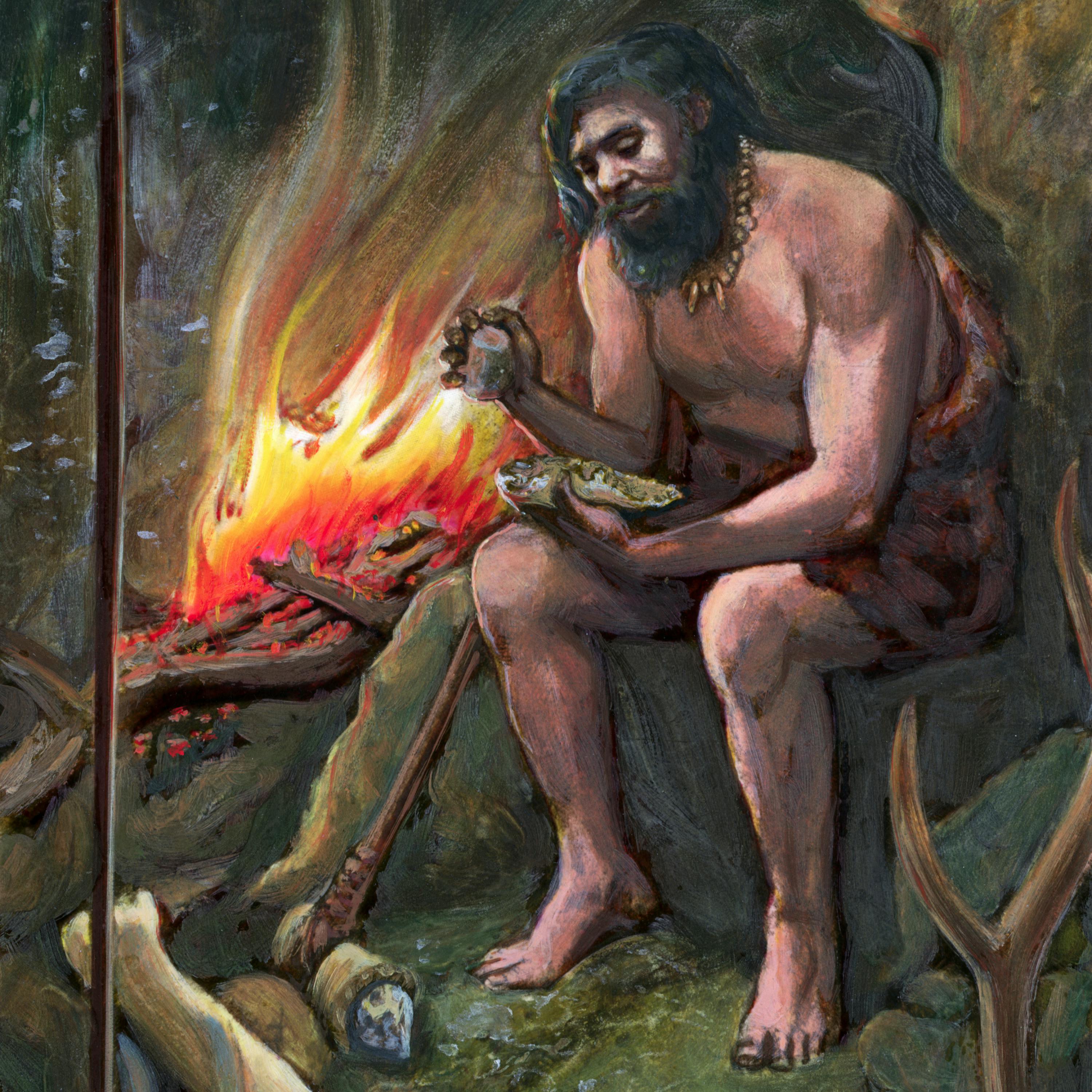
So some analysts who have tried to answer this question of what is all this doing to us have looked back to how the advent of literacy and the rise of book reading changed human consciousness and culture and what human consciousness and culture were like before literacy and before reading. A lot of this analysis is really rooted in this 1982 book, Orality and Literacy, by the philosopher Walter Ong. In that book, Ong argues that there are a few defining traits of communication in oral societies. One is that in an oral world, information needs to be verbally repeated in order to survive. So you need to speak in a way that is going to be enjoyable and easy to repeat. And this leads to the heavy use of repetition in speech, the heavy use of formulaic lines, mnemonic devices and epithets.
- [03:34]
Sean Ramis
The law of the harvest is to reap more than you sow.
- [03:37]
Eric Levitz
Red sky at night, sailor's delight, early.
- [03:39]
Noel King
Bird gets the worm.
- [03:41]
Sean Ramis
Ivan the Terrible, Alexander the Great.
- [03:46]
Eric Levitz
For example, in the Iliad, the Greek poet Homer, this is an oral epic, always refers to Achilles as swift footed Achilles, a phrase that helps the listener simultaneously have an easier time remembering who Achilles is and also his sort of defining trait.
- [04:03]
Sean Ramis
So when they had assembled and were gathered together, swift footed Achilles rose and.
- [04:09]
Eric Levitz
Spoke among them separately. In an oral society, communication always happens face to face or within, and often within earshot and ta'. Ong. This imbues discourse with a combative spirit as every sort of spoken statement kind of doubles as a bid for status or social affirmation because people are watching and you're looking someone else in the face. All this makes orality less accommodating of abstract thought. You know, people can't isolate ideas from their social context or subjective experience, and that makes it difficult to formulate general rules or abstract categories or rules of logic. And this book was written in 1982, long before we had Facebook or social media or anything. But some people look at this and say, hey, this kind of sounds familiar. In our age of social media, there is a real emphasis on making your speech easy and enjoyable to repeat, in the sense of whatever goes viral is kind of what is going to reach people's consciousness.
- [05:13]
Adam Clark Estes
Very demure, very mindful.
- [05:15]
Eric Levitz
It's about to be a white boy something.
- [05:16]
Adam Clark Estes
What the hell?
- [05:18]
Noel King
What the helly?
- [05:18]
Eric Levitz
It's not clocking to you that I'm.
- [05:20]
Noel King
Standing on business, is it?
- [05:21]
Sean Ramis
Yes.
- [05:22]
Eric Levitz
People are now communicating through the spoken word through podcasts like this one.
- [05:28]
Sean Ramis
It's today explained.
- [05:29]
Eric Levitz
I'm Noel King through YouTube videos. Hi, I'm Noel King. And as we celebrate, people are communicating through speech and facial expressions and even in our textual exchanges with emojis. We're now re approximating the nonverbal aspects of communication. Waving emoji.
- [05:44]
Noel King
It's Noel King crown emoji.
- [05:47]
Eric Levitz
Put all this together. And some people argue that we have this. We're entering this age of digital orality. We're entering this new cultural moment that is distinctive but recalls some of the aspects of the oral condition.
- [06:02]
Sean Ramis
There's a lot to take in here orally. But you're not talking about humanity or American culture regressing back to, like the cavemen. You're talking about regressing back to an era where ideas, concepts, characters were chiefly communicated and conveyed through speech. Can you tell us what changed when reading and writing came along? How did that impact our capacity for thought? I believe on our reading episode we did last year, I'm gonna say our guest, UCLA professor Marianne Wolf, called reading.
- [06:44]
Noel King
The closest thing to telepathy humans ever get.
- [06:50]
Eric Levitz
Yeah, and so all of this that I've been speaking about is kind of premised on a certain account of what writing and reading does to human consciousness and culture. And Marian Wolf actually supplies a really important concept here, which is that there's a distinction between reading as in just processing written text, and reading as in deeply engaging with a long form piece of writing. And it's that kind of reading specifically that is in decline. So that form of reading, that deep reading, there's this belief that the advent of it really enabled abstract thought and in fact, inherently inspired it. Text conjures this voice that speaks inside your head rather than through your ears. You encounter these ideas that are stripped from any immediate social circumstance, and you're encountering it just evaluating it in the privacy of your own head. Abstract thought allows us to formulate rules of physics.
- [07:56]
Sean Ramis
E equals MC squared.
- [07:58]
Eric Levitz
It allows us to formulate constitutions, the people of the United States, monotheistic religions.
- [08:05]
Noel King
I, the Lord thy God.
- [08:07]
Eric Levitz
So it helps to scale up human societies in terms of their cooperation economically and politically. And it makes the defining sort of rational enlightenment aspects of our culture possible. Science and liberal democracy. This, anyway, is the argument among proponents of this orality versus literacy kind of thesis. And a lot of people have looked to this concept of orality as a way of understanding where our culture might be going. So we had this pre literate age before people had ever encountered books and read text. Then we had this literate age where books were really central to the culture. Now we're in this era where we're potentially leaving the age of literacy behind.
- [08:59]
Sean Ramis
It just feels like we have to bring up politics here and talk about what impact orality is having on the way our world's being run right now.
- [09:14]
Eric Levitz
Critics of digital or reality have attributed it as the driver of the rise of right wing populism. You know, Donald Trump arguably is the most successful communicator of our social media age. And kind of like Homer, he references persons very often with an epithet. So instead of swift footed Achilles or Wily Odysseus, Trump talks about lying Ted.
- [09:40]
Sean Ramis
He's lying Ted, Crooked Hillary and Sleepy Joe Biden.
- [09:44]
Eric Levitz
Come on, man. His communication style obviously is also very combative, very performative, always sort of a bid for dominance or status, etc. And so, you know, more more broadly, these theorists argue that orality erodes commitment to these abstract principles of liberal democracy. Now, it could be that that's true, but in the piece, I raise a couple of, you know, complicating factors here. You know, I think that it's just not the case that the people who are most hostile to liberal democracy in our day and age are all universally poorly read people. You know, there's Peter Thiel, Antichrist or Armageddon, Curtis Yarvin.
- [10:31]
Adam Clark Estes
The absolute normal form of government is monarchy.
- [10:34]
Eric Levitz
J.D.
- [10:34]
Adam Clark Estes
Vance, have you said thank you once?
- [10:36]
Eric Levitz
Whatever else you think about them, they read a lot of books. They talk about books. I think that a lot of the most prominent authoritarian leftists or Stalinists generally weren't especially unacquainted with libraries. Often they were intellectuals. And so reading is no vaccine against having authoritarian, illiberal ideas. It's reasonable to worry that the mental habits instilled by TikTok and ChatGPT won't be as conducive to liberal democracy as the written word. That said, I think that this is really speculative, and I think that there's a lot of reasons to doubt that this change in human consciousness or culture, this return to an oral mode, is what's driving political dysfunction in the United States, as some of them suggest.
- [11:28]
Sean Ramis
Okay, but one thing on which there is no ambiguity is that we are trending in one direction, which is reading less and watching more. And where is this heading? I mean, with what the advent of AI and the fast creep of AI into every aspect of our lives, Are we only to expect more orality, less literacy?
- [11:54]
Eric Levitz
You know, the one bit of caution that I put in the piece about this is just that there's always anxiety about new technologies and how they're going to change the way that humans think and communicate. So more than 2,000 years ago, Socrates was really worked up about the novel media technology of his day, writing. And he kind of decried it in much the same terms that people decry AI today. You know, addressing himself to the inventor of writing, the hypothetical inventor of writing, he said, you have not discovered a potion for remembering, but for reminding you. Provide your students with the appearance of wisdom, not with its reality. Your invention will enable them to hear many things without being properly taught, and they will imagine that they have come to know much, while for the most part they will know nothing. So you know, he thought that being able to write things down, people won't have to memorize poems anymore. They're going to get dumber. I think there's more reason to be worried about AI than there was about writing in ancient Greece. But you know, something worth keeping in mind?
- [13:12]
Sean Ramis
Eric Levitz wrote about orality for Vox.com when we return on Today Explained, we're going to talk about what got us here, those pesky little videos. Support for today's show comes from OpenPhone. Mine's locked right now. All of us know how frustrating it could be when you need to get in touch with a business and can't get through. And for the companies, leaving your customers hanging and frustrated is just bad for business. With OpenPhone, you'll never miss an opportunity to connect with your customers. OpenPhone says they can streamline and scale your customer communications. It works through an app on your phone or computer so your team can collaborate on customer calls and texts. That way any teammate can pick up right where the last person left off. So whether you're a one person operation drowning in calls and texts, or have a large team that needs better collaboration tools, OpenPhone could be a good option for you. OpenPhone is offering our listeners 20% off their first six months at openphone.com explained. That's O P E N P-H-O-N-E.com explained. And if you have existing numbers with another device, OpenPhone will port them over at no extra charge. Open Phone no missed calls, no missed customers.
- [14:49]
Adam Clark Estes
Put us in a box. Go ahead. That just gives us something to break out of because the next generation 2025 GMC terrain elevation is raising the standard of what comes standard. As far as expectations go, why meet them when you can shatter them? What we choose to challenge, we challenge completely. We are professional grade. Visit gmc.com to learn more.
- [15:19]
Noel King
This episode is brought to you by JCPenney. And if you've been to JCPenney recently, yes, JCPenney, you'll know it's becoming the way to buying good clothes for prices that still make sense. They've got hidden gems for everyone and every budget with deals and rewards that actually make a dentist. If you already shop, JCPenney, you feel like you know a secret. But if not it's time to ask. Wait, am I sleeping on JCPenney? Shopjcpenney.com, yes, JCPenney.
- [15:49]
Sean Ramis
Scrolling, scrolling scrolling Today Explained is back with Adam Clark Estes, a senior technology correspondent here at Vox. Adam, in the first half of the show we talked about this idea of orality that our colleague Eric wrote about, which has a lot to do, it turns out, with little videos. Are you a little video guy?
- [16:10]
Adam Clark Estes
I don't think of myself as a little video guy. I'm not a big TikTok user. I enjoy them when they come across my screen. But what I've noticed over the course of the last months and years is that I actually can't escape the little videos. It's not just on TikTok, they're just little videos everywhere. It's a vertically oriented video. It's usually a short one, but if you're watching them on Spotify, it's maybe like a little music video. Hi, it's Charlie xcx.
- [16:41]
Sean Ramis
Hey, y', all, this is Monaskin.
- [16:43]
Adam Clark Estes
If you're watching on LinkedIn, it's maybe like a little motivational speech.
- [16:47]
Noel King
Welcome to a day in the life of a work from home entrepreneur, fractional exec and parent of two.
- [16:52]
Adam Clark Estes
For a little like, mini thing about work culture, I saw one where I learned the, the phrase peanut buttering.
- [16:59]
Noel King
The idea that you apply the same tactics to all areas of a business on shopping sites. This right here is going to be my go to base makeup in five minutes with five products.
- [17:10]
Adam Clark Estes
But then on TikTok, it's, it's an entertainment platform, right? Like people go to TikTok to, to have fun and to, to zone out and, and some people do it too much.
- [17:19]
Sean Ramis
Why can't we look away from these things? Why are we so inclined to watch the next video and the next video after that?
- [17:25]
Adam Clark Estes
There are a couple answers to your question, Sean. One is the really simple one, which is that these products are designed to keep you engaged. TikTok is powered by an algorithm that is really good at not just giving you things that you will like, but giving you things that will surprise you. The other thing happening here is, you know, because of the way our brains work, you know, if you look back to the primitive versions of ourselves, we used to be hunter gatherers and our brains were designed to, to look for things. You can imagine a TikTok feed being sort of like a forest floor full of junk with like little berries sprinkled in between.
- [18:02]
Noel King
Ooh, yummy.
- [18:04]
Adam Clark Estes
Every time we see something that we like or find A berry in that forest, we get a little hit of dopamine. This has also been described as kind of the slot machine effect, where we keep wanting to pull the lever to see if we're going to win the next time.
- [18:19]
Sean Ramis
And what is this doing to our brains? Because every time we pull the lever, some sounds go off, some pictures happen, and there's like an endorphin rush. Right?
- [18:29]
Adam Clark Estes
Well, it's reinforcing that behavior. But if you're looking at kind of the, the longer term, what it does to our attention span, researchers have found that our attention spans are shrinking. One of the sources I talked to for my story, Gloria Mark, she's a psychologist who literally wrote the book on attention span. The book is called Attention Span. She found, she's been studying this for, for a couple decades and she's found that since 2004, kind of like the length of time we've had the social Internet, our attention spans have shrunk from about two and a half minutes to 47 seconds, which, wow, happens to also be the average length of a TikTok video.
- [19:10]
Sean Ramis
And how much time are we spending watching these 47 second videos?
- [19:16]
Adam Clark Estes
One study I looked at showed that on average, TikTok users spend 108 minutes on TikTok. That's about double what Instagram users spend on Instagram.
- [19:25]
Sean Ramis
So these videos are killing our attention spans slowly but surely, if not quickly but surely, what's it doing for the rest of our health? Did, did you talk to anyone about that?
- [19:36]
Adam Clark Estes
I talked to a, a researcher who led a team in Germany that looked at memory. In a study that they did, they found that TikTok is especially good at impairing your prospective memory. This is the to do list in your head, the. The part of your brain that helps you remember to remember something. So they had them do a task and they interrupted them in the middle of the task. And the researchers would let the subjects of the study look at TikTok or scroll Twitter, watch YouTube videos, or do nothing. And they found that those that looked at TikTok videos were 40% more likely to struggle with that initial task. So if you kind of like put this in a real world scenario, if I am sitting down trying to write an article for Vox and I get a little tired and I look at my phone and it's, you know, 10 minutes of TikTok.
- [20:37]
Noel King
Ooh, yummy.
- [20:39]
Adam Clark Estes
And then I go back to what I was doing, I'm probably gonna have a harder time remembering where my train of thought was or what point I was Trying to make. And there's another thing too. An increased social media use has been linked to depression and anxiety, especially in young people. It was a study along these lines where we got the term TikTok brain, which is describes a brain that is not just having a hard time paying attention, but that is also actually anxious and prone to depression and just feeling bad.
- [21:11]
Sean Ramis
What's the end goal here, Adam? Did you figure that out while writing this piece? Is it to just have us watching little videos for the maximum amount of time in a given day with no clear purpose in mind?
- [21:22]
Adam Clark Estes
If you're Meta or TikTok or, or Google, I think it's safe to say that the end goal is maximizing profits, selling ads, keeping people engaged. So yeah, having people looking at these little videos for the greatest number of minutes possible, even if that starts eating into the time that they sleep. And I saw some research on this too, where actually some of these platforms are running up against that. People have to sleep, so how do they fight against that urge to sleep?
- [21:52]
Sean Ramis
But of course, your piece is titled Little Videos are Cooking Our Brains. Importantly, your piece is not titled Little Videos have Cooked Our Brains. We are cooked. There is no going back. If I'm recalling correctly, you have some advice for people who are maybe trying to fight the urge to just watch little videos all day.
- [22:15]
Adam Clark Estes
The psychologist Gloria Mark, who wrote the book on attention span, she told me that the number one thing is to take breaks. If you find yourself spending a lot of time looking at TikTok or scrolling through Reddit or Twitter or whatever, take a break. And, and usually when you do, you'll be able to kind of reclaim your time and get yourself out of that loop.
- [22:37]
Eric Levitz
It's a way to reflect on our.
- [22:40]
Noel King
Actions and by reflection we can understand why we're doing things. For me, it's usually because I am bored or I'm procrastinating. And when we're more intentional in our actions, we can form a plan.
- [22:59]
Adam Clark Estes
Another thing that she told me, picture yourself at the end of the day where you want to be what you want to get done. It is probably very likely that 108 minutes of TikTok watching is not part of that plan that you might have for your day. When you wake up in the morning. An easy trick that people may have heard of is also just to make your phone more boring. That's what I have done and it's been somewhat effective. You can set your screen to grayscale. So as our technology has become more compelling and engaging, we have to become a little bit more proactive about pulling ourselves away from it.
- [23:32]
Sean Ramis
And a cool thing about books is like, you can read from like page one to like page 436 and not encounter a single ad anywhere in the text.
- [23:43]
Adam Clark Estes
That is one of my favorite things about books, whether it's learning about the history of the Roman Empire or reading a novel that helps me escape into a world of sci fi. You know, whatever you like in a, in a story, you can find it in a book. I think that's from the Reading Rainbow song.
- [24:10]
Sean Ramis
But it doesn't have to be books.
- [24:11]
Adam Clark Estes
It can be anything. It can be gardening, it could be going outside. It can be playing with your kids. A lot of us do want to keep our phones with us all the time. And by making those devices more boring, we're less tempted we by the little videos that are everywhere.
- [24:28]
Noel King
Take a scroll, it's a TikTok hole it's another, another, another, another.
- [24:51]
Sean Ramis
Peter Balin on Rosen made our show today. He was edited by Jolie Myers and Aminah Al Saadi. We were mixed by Patrick Boyd and Andrea Christenstarter and fact checked by Denise Guerra. The rest of our team includes Avishai Artsy, Happy birthday. Hadi Mawaghdi, Miles Bryan, Devon Schwartz, Gabrielle Burbe, Rebecca Ibarra and Noel King. Of course. Laura Bullard is our senior researcher. Miranda Kennedy is our executive producer. We use music by Breakmaster Cylinder and today we used a little by Dean Antonio. I'm Sean Ramis. From Today Explained is distributed by wnyc. We're a part of the Vox Media podcast network and you can find more of the stuff we make to keep you from reading books@podcasts.voxmedia.com.
- [26:05]
Noel King
Hi, I'm Teffy. Maybe you've seen me on TikTok or TV or interviewing celebrities on the red carpet. But before all that, I was just another girl running late to her desk job, transferring calls, ordering printer ink. I don't miss that. But I do miss not working at work, gossiping with my co workers about celebrities. What's the latest with Bieber? Where's Britney? And which Jonas brother is which? That's what I want my new podcast to feel like. Like you and I are work besties. We'll chat about celebrities we're obsessed with. How could you be registered to vote and not know who Jennifer Aniston is? Look up their star charts. Sagittarius and a Capricorn. They do clash and have so much fun avoiding real work together. I'm having a silly goose of a time. Teffy runs, Teffy laughs. Teffy overshares, Teffy explains. But most of all, Teffy talks from me. The Cut and Box Media podcast. This is Teffy Talks. Let's go.