← Today, Explained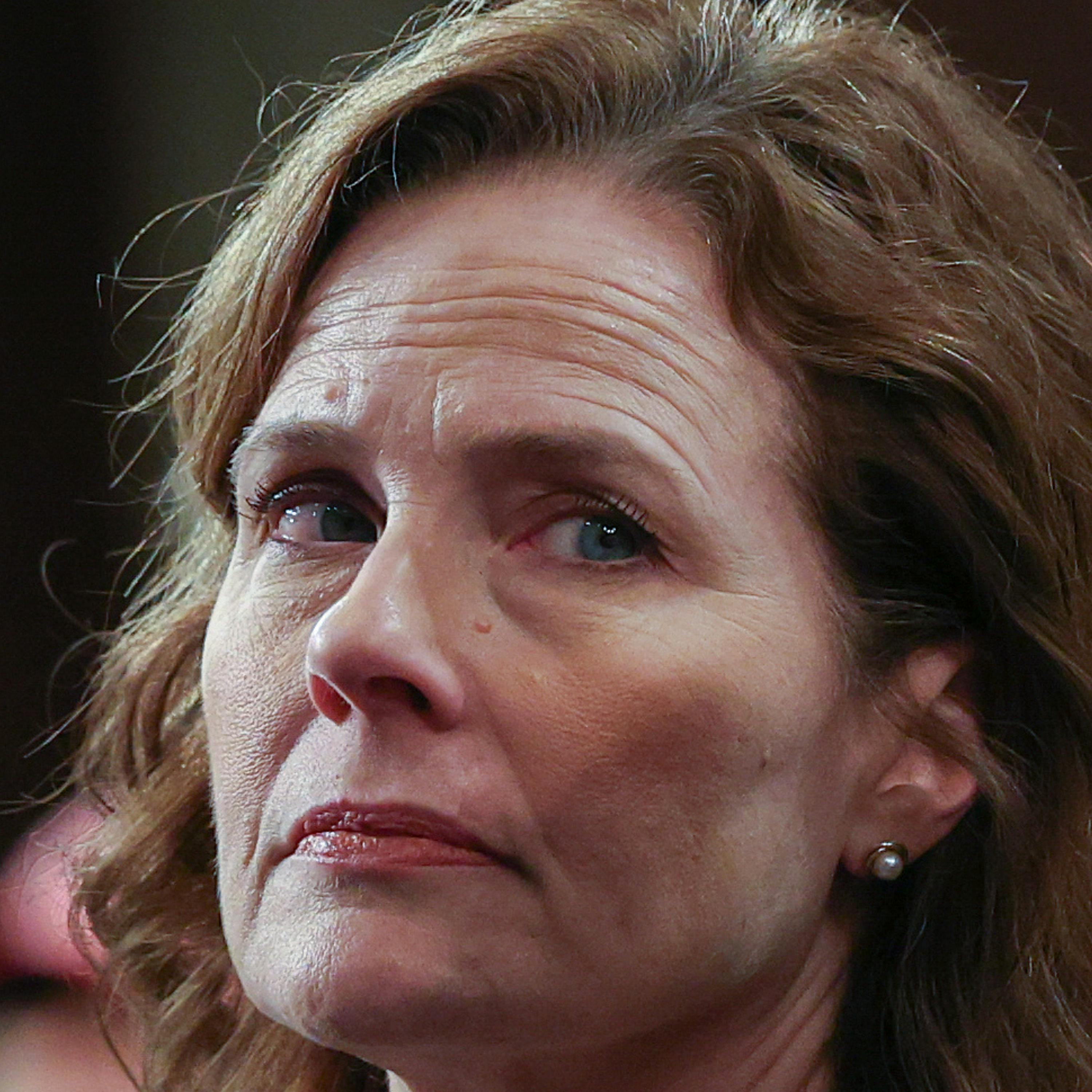
Today, Explained
Trump's judge grudge
00:27:53
Judges, including one of his own Supreme Court appointees, are trying to rein President Trump in. In return, Trump is threatening to impeach judges.
Loading summary
Transcript75 lines
- [00:01]
Host
The biggest story in the country right now is one of gross incompetence. By now you've surely heard about the group chat where a bunch of our nation's top security brass accidentally added a journalist to a signal thread where plans to bomb Houthis in Yemen were laid out. The president of the United States said it's news to him.
- [00:22]
Co-host
I don't know anything about it. I'm not a big fan of the Atlantic.
- [00:25]
Host
The Fox News Secretary of Defense is trying to discredit the journalist who was added to the chat against his will. You're talking about a deceitful and highly discredited so called journalist and speaker. Mike Johnson says everyone did a great job.
- [00:39]
Co-host
What you did see though, I think was top level officials doing their job doing it well.
- [00:44]
Host
The federal government is not in its accountability era, but somehow, concurrently, this administration is calling for federal judges to be impeached for doing their actual jobs. That is coming up on today explained.
- [01:01]
Ad Sponsor
It's 2025, so stop struggling to get your job. Post seen on other job sites. Indeed's sponsored jobs can help you stand out and hire the right people fast. There's no need to wait any longer. Speed up your hiring right now with Indeed and listeners of this show will get a $75 sponsored job credit. To get your jobs more visibility@ Indeed.com VoxBusiness just go to Indeed.com VoxBusiness or right now and support our show by saying you heard about Indeed on this podcast. Indeed.com VoxBusiness Terms and Conditions apply. Hiring Indeed is all you need.
- [01:41]
Co-host
Okay business leaders, are you here to play or are you playing to win? If you're in it to win, meet your next MVP NetSuite by Oracle NetSuite is your full business management system in one convenience suite. With NetSuite, you're running your accounting, your finance, your HR, your e commerce, and more, all from your online dashboard. Upgrade your playbook and make the switch to NetSuite, the number one cloud ERP. Get the CFO's guide to AI and machine learning at netsuite.com Vox netsuite.com Vox oh yay. Oh yay. Oh yay. Oh yay.
- [02:17]
Host
Today Explained. Kate Shaw is a law professor at the University of Pennsylvania's Carey Law School. She's also the co host of a podcast called Strict Scrutiny. We asked her what's up with Trump and the judges.
- [02:32]
Kate Shaw
Trump has fared remarkably poorly in litigation in the last two months. He really is on an impressive losing streak. He's 0 for 3 in the courts of appeals in trying to defend the constitutionality of his birthright, citizenship, executive order, he has been losing in cases challenging various aspects of Elon Musk's role in government and Doge and the activities of Doge. In the only two cases to reach the Supreme Court so far, those were both like very early stage procedural matters, but he lost both of them. And he's notched a couple of wins in the lower courts, but mostly on kind of procedural issues. Is this person really the right person to be bringing a challenge? So, you know, he's losing a lot, and he's clearly really unhappy about it.
- [03:14]
Host
And the biggest controversy in all of the losses is perhaps this situation with El Salvador.
- [03:25]
Kate Shaw
I mean, I think it's the one that he is the most incensed about. That seems clear. Right. And so that is the invocation of this 1798 statute, the Alien Enemies Act. That's been used. Right. Three times, always in wartime. 1812, World War I, World War II. Now they try to make an argument that this Venezuelan gang, TDA Trende Aragua, is somehow working in concert with the Venezuelan government in ways that makes them a state actor that we're basically engaged in active hostilities with, because that's the predicate for invoking this old statute and that that allows essentially the designating individuals as alien enemies and expelling them essentially to this prison in El Salvador. That has been challenged, and it is before this district judge, Judge Boasberg, and that seems to be the kind of. It's not there. You know, there's been some preliminary determinations made, but it's pretty clear the administration is going to lose big in front of Judge Boasberg. But for sure, this is the one that I think has Trump the most spun up based on his social media.
- [04:34]
Co-host
Truth Social. Judge James Boasberg is doing everything in his power to usurp the power of the presidency. He is a local, unknown judge, a grandstander looking for publicity, and it cannot be for any other reason because his rulings are so ridiculous and inept. Save America. Yeah.
- [04:58]
Kate Shaw
I mean, he has taken to truth Social and basically called for Boasberg to be impeached. He has called him a radical left lunatic of a judge, a troublemaker and an agitator, which I don't know this judge, but no, that is not an accurate characterization of him. Right. He was put on the DC Actually local court by George W. Bush and then in the district court by President Obama and then also designated to serve on the Foreign Intelligence Surveillance Court by Chief Justice John Roberts. Right. Well known Liberal. So, you know, this is not a judge who is in any way a radical left lunatic. It's a preposterous characterization. But calling for his impeachment based on this, you know, preliminary set of rulings is an enormous escalation in terms of the way Trump has been talking about and acting toward the judiciary.
- [05:43]
Host
And is that calling for a judge's impeachment? Like, has that been reserved for Judge Boasberg? Or does that apply to a number of these court battles that the Trump administration is facing, be it on birthright citizenship or doge or immigration, what have you?
- [05:59]
Kate Shaw
He has been criticizing federal judges and others, I think, including Musk, have called for other impeachments.
- [06:07]
Host
A corrupt judge protecting corruption, he needs to be impeached. Now, I'd like to propose that the worst 1% of appointed judges, as determined by elected bodies, be fired every year. This will weed out the most corrupt and least competent.
- [06:23]
Kate Shaw
I think this might be the first that Trump has. Has called for himself.
- [06:27]
Co-host
We have very bad judges, and these are judges that shouldn't be allowed. I think they. I think at a certain point, you have to start looking at what do you do when you have a rogue judge. The judge that we're talking about, he's, you look at his other rulings. I mean, rulings unrelated, but having to do with me. He's a lunatic.
- [06:50]
Host
How do judges fight back when a president or a, you know, all but official vice president call for their impeachments?
- [07:00]
Kate Shaw
I mean, I. I think it's a good question. And judges are very limited in what they can do. Right. They can't take to, you know, public sort of facing communications channels. They don't have a bully pulpit the way the president does. They cannot, you know, tweet or skeet or truth or whatever in their own defense. And so they, you know, they have a lot of power in a very limited domain, and so they can certainly respond if they want in their, you know, discussions with counsel, in front of them and in their written opinions to things that are said outside of the courtroom. But, like, you know, when. If it actually escalates to the point of. Now, there have been some articles of impeachment already introduced around a couple of these federal judges. Whether they go anywhere is a different question. But, but I. There's the. Defending themselves in the court of public opinion. But then there's also the possibility that if actually the House gets serious about this, they could actually have to end up defending themselves in, you know, the actual United States Congress against impeachment.
- [08:05]
Host
How Often do we see judges getting impeached?
- [08:07]
Kate Shaw
Remind us, pretty infrequently. So there have been 15 impeachments of federal judges. Only eight of them have resulted in conviction. So impeachment is a two step process. So we say somebody has been impeached if a majority of the House of Representatives has voted to approve one or more articles of impeachment against them. So it just requires a simple majority in the House. And then again, colloquially we say the person has been impeached, but then they actually just go to the other house of Congress, the Senate, and that's where there's an actual trial that happens. And it requires a 2/3 super majority to actually convict someone in a Senate trial which results in their removal from office. And that's happened, I think, in eight of the 15 cases involving federal judges. So impeachment, again is the first half of the two step process in the Constitution. And it does not seem impossible to me that we might see federal judges actually subject to real impeachment proceedings in the House, although 67 votes in the Senate is very hard for me to see ever occurring.
- [09:04]
Host
But that's still playing within the boundaries of what's legally acceptable. What about if they just openly defy the courts? That's kind of what is at stake with this case with Boasberg and the flights to El Salvador. Do we have concrete evidence that that has happened yet?
- [09:26]
Kate Shaw
I don't think so. I think we are close. I think that this kind of, you know, sort of delicate dance in front of Judge Boasberg in which the administration does suggest that it is complying with, you know, a narrow and I think probably wrong, but at least like defensible in like words and like legal sounding language argument that they weren't subject to this order, they weren't defying the order, they were trying to comply with the order. And so they are at least not saying to the court, you essentially have no power over us. They are maybe inching a little closer to that. I think it matters a lot. They're continuing to make legal arguments and that they're continuing to appeal. And I think in some ways, like that's when like the real like kind of red lights start flashing. If they stop doing that and simply don't comply. Like here, where the President is making claims about national security, the President's power is always understood to be sort of at its apex. And so they think they have the strongest legal footing for suggesting a court has no power over them here than in other spaces where it's obvious that courts absolutely have the power to review and maybe invalidate things the executive branch has done.
- [10:33]
Host
And interestingly, one source of that, you know, vast executive power comes from that liberal you mentioned earlier, Chief Justice John Roberts, who last year helped expand our. Our views of presidential power in this country. But Chief Justice John Roberts, in this case, especially when it comes to this fight between TRUMP and this D.C. judge Boasberg, there's a bit of tension there.
- [10:56]
Co-host
Yeah.
- [10:56]
Kate Shaw
So as you just referenced, right, July 1st of last year, Roberts authors this opinion granting sweeping new authorities and immunities to presidents and ex presidents.
- [11:07]
Co-host
The Supreme Court last July said that essentially Trump is allowed to commit crimes while he is president. It says that he is immune from prosecution for virtually any criminal act he commits using the powers of the presidency.
- [11:25]
Kate Shaw
And I think it sort of hangs over virtually everything that we've seen in the last two months in terms of these extravagant assertions of executive authority and kind of disdain at the idea that courts or any outside institution could act to check a president in any way. It's like there's a straight line between some of the description of presidential power in that Trump versus United States case and sort of the predicament we find ourselves in. So I do think that John Roberts bears a ton of responsibility for the way the administration has comported itself and kind of broadcast its vision of essentially boundless executive power. So it is interesting that Roberts kind of came out swinging after Trump issued this, you know, on truth, Social, essentially like, kind of suggestion that Boasberg should be impeached. Roberts issued this very unusual statement, kind of a rebuke of President Trump.
- [12:18]
Co-host
For more than two centuries, it has been established that impeachment is not an appropriate response to disagreement concerning a judicial decision. The normal appellate review process exists for that purpose.
- [12:32]
Kate Shaw
And, you know, it was like measured language, came out swinging as obviously like, you know, sort of an overstatement. But it is still unusual. The Chief justice rarely kind of wades into the political fray in any way other than he issues his opinions. He does like this very, you know, annual year end report on the state of the federal courts. And that's basically the way he speaks about the court. And so he was obviously worried enough to speak up.
- [12:53]
Host
Any response from the Trump administration, from the White House?
- [12:56]
Kate Shaw
Trump likes to have the last word, but the fact that he did not respond forcefully to Robert's, I think actually did suggest to me that maybe it landed in some way, like, I don't know, that the White House wants to antagonize John Roberts at least, you know, kind of directly and explicitly, at least right now. And in some ways, again to the sort of earlier point, that does suggest that they are still in some ways like, you know, dwelling in the land of law. And so I think that's important.
- [13:29]
Host
Okay, so it sounds like the Supreme Court still has some sway and so some deference from Trump, too. But that doesn't mean Supreme Court justices have been spared the wrath of the greater MAGA community. What did Amy do next on Today Explained.
- [14:01]
Ad Sponsor
Support for Today Explained comes from Vanta Vanta says that trust isn't just earned, it's demanded. That's none of my business, but whether you're a startup founder navigating your first audit, or a seasoned security professional scaling your GRC program, governance, risk and compliance. For those in the know, proving you and your business's commitment to security can be critical, but it can also be complex. That's where Vanta comes in. Vanta says that businesses establish trust by automating compliance needs across over 35 frameworks like such as SoC2 and ISO 27001. They can also help centralize security workflows, complete questionnaires up to five times faster, and proactively manage vendor risk. And that could save you time and money. A new IDC white paper found that Vanta customers achieve $535,000 per year in benefits and that the platform pays for itself in just three months. You can join over 9,000 global companies like Atlassian, Quora and Factory who use Vanta to manage risk, improve security in real time. For a limited time, our audience gets $1,000 off vanta@vanta.com explained. That's V A N T A dot com explained for $1,000 off.
- [15:16]
Support for this podcast comes from Vanta. Trust isn't just earned, it's demanded. Whether you're a startup founder navigating your first audit, or a seasoned security professional scaling your GRC program, proving your commitment to security has never been more critical or more complex. That's where Vanta comes in. Businesses use Vanta to establish trust by automating compliance needs across over 35 frameworks like SoC2 and ISO 27001 centralize security workflows, complete questionnaires up to five times faster, and proactively manage vendor risk. Vanta not only saves you time, it could also save you money. A new IDC white paper found that Vanta customers achieve $535,000 per year in benefits, and the platform pays for itself in just three months. You can join over 9,000 global companies like Atlassian, Quora and Factory who use Vanta to manage risk, improve security in real time. For a limited time, Our audience gets $1,000 off vanta@vanta.com Vox that's V-A-N-T A.com Vox for $1,000 off.
- [16:26]
Support for this show comes from Oracle. Even if you think it's a bit overhyped. AI is suddenly everywhere from self driving cars to molecular medicine to business efficiency. If it's not in your industry yet, it's coming fast. But AI needs a lot of speed and computing power, so how do you compete without costs spiraling out of control? Time to upgrade to the next generation of the cloud. Oracle Cloud Infrastructure, or oci. OCI is a blazing, fast and secure platform for your infrastructure, database, application development, plus all your AI and machine learning workloads. OCI costs 50% less for compute and 80% less for networking, so you're saving a pile of money. Thousands of businesses have already upgraded to oci, including Vodafone, Thomson Reuters and Suno AI. Right now, Oracle is offering to cut your current cloud bill in half if you move to OCI for new US customers with minimum financial commitment. Offer ends March 31st. See if your company qualifies for this special offer@oracle.com Vox that's oracle.com Vox.
- [17:47]
Kate Shaw
This.
- [17:48]
Host
Is today Explained did you watch Trump's address to that joint session of Congress, the one with the cute signs and Representative Al Green standing up and waving his cane? When it was over, Trump descended from the dais and among the first hands he shook were those of the Supreme Court justices. But they didn't all look so happy to be shaken.
- [18:09]
Co-host
Look at the way Amy Coney Barrett.
- [18:11]
Kate Shaw
Looks at the President on Tuesday night.
- [18:14]
Co-host
Go for it. Ugh. Whoa.
- [18:17]
Kate Shaw
She hates.
- [18:18]
Co-host
Go back to it again, Rob. Look at that smirk. That's disgust.
- [18:22]
Host
And now MAGA is mad.
- [18:24]
Kate Shaw
Uh oh, the MAGAs are very upset.
- [18:26]
Co-host
With Amy Coney Barrett.
- [18:29]
Kate Shaw
I wonder what it was that she did.
- [18:31]
Ad Sponsor
Oh, her job.
- [18:34]
Kate Shaw
She's a little squishy and it's, you know, concerning. I'll tell you, just like as a, as a female who leans right, kind of sick of like the female conservatives who get appointed to the supreme court. Sandra Day O'Connor. Now Amy Coney Barrett like being too squishy.
- [18:50]
Co-host
She's weak and she's scared of her shadow.
- [18:53]
Kate Shaw
Amy Commie Barrett wants to be praised by the New York Times.
- [18:58]
Host
She's weak. AF Ian Millhiser, Supreme Correspondent to Vox. Remind me who appointed Justice Amy Coney Barrett.
- [19:06]
Co-host
Donald Trump, as a matter of fact, appointed Justice Barrett. Weird.
- [19:10]
Host
That doesn't make sense. Make it make sense, Ian. What's going on?
- [19:14]
Co-host
I mean, to a certain extent, it makes a lot of sense. So, like, one thing that comes up all the time with the Supreme Court is that when a president is picking justices, they pick them hoping that they will fall in line based on whatever issues the President cares about. Right at that moment, Franklin Roosevelt's justices famously were all over the map on issues of race. So, like, you know, 20 years after Roosevelt appointed them, you couldn't tell, like, which Roosevelt justices would be on the right side of segregation and which ones would be on the wrong side of segregation. Because Roosevelt didn't care about that. What he cared about was the New Deal. The program for Social Security that is now pending before the Congress is a necessary part of the future unemployment, employment policy of the government. And so all of them voted to uphold the New Deal because they were vetted for that. We must begin now to make provision for the future. Chief Justice Roberts was picked because he had really broad, really extreme views about executive power. George W. Bush picked him because what George W. Bush cared about was Guantanamo Bay and that he wanted his people that would uphold his attention to put suspected terrorists in Guantanamo Bay. And Roberts did vote with George W. Bush on most Guantanamo Bay related questions. Roberts famously broke with the Republican Party at Obamacare. God save the United States and this honorable court. I have the announcement in case number 11 393, National Federation of Independent Business versus Sebelius. And the reason why is because in 2000, in 2005, George W. Bush couldn't have known that Obamacare was going to be signed into law in 2010. So this white House didn't vet him for that. This portion of the Affordable Care act is upheld. And so Barrett, the important thing to know about Barrett, she is very, very, very conservative. And on every single issue that Republicans cared about in 2020 when she was appointed, whether it is abortion, whether it is affirmative action, like on all the kind of stuff that Republicans cared about in 2020, she has fallen in line with the Republican Party. But there's now new issues coming up. You know, Trump wants to get rid of birthright citizenship for a lot of people. He is claiming the power to do something called impoundment, where he just cancels federal spending that Congress has appropriated. Those were not issues that were really being discussed in 2020. So the first term Trump White House didn't vet her for that kind of stuff. And, and surprise, turns out she has her own opinions that are different than Donald Trump's.
- [21:57]
Host
Yeah. Tell us about the cases that are getting under conservative skin right now.
- [22:01]
Co-host
I mean, I wanna be clear again. There aren't that many of them. She's a very, very conservative judge. But there was one really high profile case recently involving usaid, the foreign aid agency that Donald Trump is trying to eliminate.
- [22:18]
Ad Sponsor
We have some breaking news that came.
- [22:19]
Kate Shaw
In over the break.
- [22:22]
Co-host
A federal judge has just paused the USAID administrative leave. The Supreme Court getting involved in a case involving the Trump administration's use of federal funds. Nearly $2 billion in frozen foreign aid at issue in a case testing the.
- [22:35]
Kate Shaw
Constitutional separation of powers.
- [22:37]
Co-host
The specific issue in this case was very narrow. A judge ordered the State Department to pay the vendors who had provided services to USAID before the Trump administration started canceling contracts. And it went up to the Supreme Court. And in a 5 to 4 decision, the court left in place the lower court's order which said that the government has to pay these vendors. Two Republicans, Roberts and Barrett, crossed over and voted with the Democrats. And so that's why that order remained in effect. That was the big one.
- [23:16]
Kate Shaw
Why can't we just get like this Judge Aileen Cannon down in Florida, get a female Alito on there, get somebody with some, you know, rhetorical balls who will hold as, as fiercely to conservative principles in the judiciary as the left wing does.
- [23:35]
Co-host
Amy Coney Barrett is a warning against the dangers of Republican D E I. Jack is his name, pronounced Basobiec. You know, who is a central figure in the. In the Pizzagate scandal. Called her a DEI hire. So you said disparagement. Well, kind of goes to show you that we need to be a little bit more discerning in the future when it comes to these judicial nominees. You know, the only legal scholar I'm aware of who's really gone after her is a law professor named Josh Blackman. And I mean, funny story, I literally used to fight Josh Blackman. We used to be in a kung fu class together. I've known him for a very long.
- [24:19]
Host
Time in like a socially acceptable way. You literally hit this person?
- [24:23]
Ad Sponsor
Yes.
- [24:23]
Co-host
No, I literally used to throw punches at him. He has kicked me in the chest before. As a public intellectual, he tends to take maximalist, MAGA friendly positions on pretty much every issue. And so he wrote a long piece that was very critical of Barrett and suggested that it was a mistake to appoint her. So on the fringes of the Republican Party, you have people going after Barrett. And the only reason why I think that matters is because people on the fringes of the Republican Party have a lot of influence within the Trump White House. And so there is a real chance that these sorts of criticisms, I mean Trump can't remove Barrett, she serves for life, but that it's going to influence who he appoints in the future.
- [25:12]
Host
This just brings me back to like, why are people mad in the first place, especially on the right when you have Justice Barrett, Chief Justice John Roberts, sure, you know, having some judicial independence from MAGA on occasion. But also these are still people who see Donald Trump as someone who should have vast executive power and people are mad at them or especially her. Is it just sexism in?
- [25:39]
Co-host
I mean it's certainly, you know, I never rule sexism out. But like, I think to a certain extent the Republican Party is spoiled by people like Justice Samuel Alito. There was a study that one lawyer did where they, he looked at all of the cases that the court has decided over the course of like a 10 year period involving a jurisdictional issue called standing that like there's some ideological content there, but it should be fairly non ideological. And what this lawyer found was that in every single case, Justice Alito ruled in favor of the conservative of conservative parties and against liberal parties. So like there are judges out there who are just rubber stamps for the Republican agenda. And Barrett is not that most of the time she's going to reach the same conclusion as Donald Trump's lawyers. Sometimes she does not. And I think what all of these attacks on Barrett are really about are people in Trump's base trying to rise up and say, no, we are not doing that Barrett thing again. We are not having independent thinkers. We are having loyalists and that is what we expect from the White House this time around. You can't go against Donald Trump when.
- [26:53]
Ad Sponsor
You'Re on the payroll. Absolutely not. And now they are calling her a di higher.
- [27:01]
Co-host
I never thought. Leopard, Tweety my face. No, I never thought.
- [27:10]
Host
Ian, we're getting listener questions already. They want to know if you've ever sparred with Amy Cody Barrett.
- [27:14]
Co-host
I, I, I, I have not sparred. I want to make clear I have never once thrown a punch at Amy Cody Barrett. The the only physical contact I think I've ever had with her is I probably shook her hand.
- [27:24]
Host
Okay, good. Milhiser vox.com he's got books too. Find them wherever you find your books. Devin Schwartz and Gabrielle Burbay made the show today. Patrick Boyd and Andrea Christensdotter mixed the show today. Jolie Myers and Laura Bullard edited and facted the show today. That's it for the show today. The show's called today.