Loading summary
Transcript71 lines
- [00:00]
Sean Ramiser
Where'd you go for the long weekend if you spent most of your time online, you couldn't escape the rumors that the president was dead.
- [00:08]
Muriel Bowser
Trump hasn't been seen in days. The bruises on his hands. Vance said he's ready to take over.
- [00:14]
Andrew Prokop
If Trump's dead, they should bury JD Vance alive with him like they did with pharaohs and their cats.
- [00:20]
Olivia George
Imagine not believing Trump is dead just because there's no evidence. Where's your sense of whimsy and joie de vivre?
- [00:27]
Sean Ramiser
By Sunday, Donald Trump himself had to weigh in. Never felt better in my life. Also, Deacon DC Is a crime free zone. I'm alive and I fixed DC On TODAY Explained from Vox. We're gonna assess that second claim because it's bold.
- [00:42]
Andrew Prokop
It is a literal statement that President Trump has freed 700,000 people in this city who are living under the rule of criminals and thugs.
- [00:54]
Sean Ramiser
He literally liberated D.C. and he wants to do Chicago next.
- [01:00]
Muriel Bowser
Support for Today Explained comes from Saks Fifth Avenue. Fall is here. Might be time to find some nice new pieces you can wear again and again with Saks Fifth Avenue. It can be a breeze to shop for your personal style, like maybe a relaxed Prada blazer or Gucci loafers that are great for both work and the weekend. This is very Sean. This is very Sean coated Gucci loafers, saks says. Saks makes shopping feel totally customized to you, whether that's from an in store stylist or a visit to Saks.com, where they can show you just what you want to see. They say they'll even let you know when arrivals from your favorite designers are in or when something you've been eyeing is back in stock. You can find inspiration for your personal style every day at Saks Fifth Avenue.
- [01:39]
Sean Ramiser
Avoiding your unfinished home projects because you're not sure where to start. Thumbtack knows homes so you don't have to don't know the difference between matte paint, finish and satin or what that clunking sound from your dryer is with thumbtack. You don't have to be a home pro, you just have to hire one. You can hire top rated pros, see price estimates and read reviews all on the app download Today. Today is gonna be explained. See you. We asked Olivia George from the Washington Post over to answer one question. Did Donald Trump solve crime in D.C.
- [02:20]
Olivia George
The short answer is no. The longer answer is that Trump and other White House officials have been quick to claim victim for improving conditions, citing, among other things, a 12 day stretch without a homicide.
- [02:36]
Donald Trump
But in the last 11 days, we've had no murders. And that's the first time that's taken place in years, actually. Years. We always have a murder a week. They call it a murder a week. You come here from Iowa, you come here from Indiana, you come here from Idaho because you're so proud of your country, you love your country, and then you get murdered. Your son gets murdered, your daughter gets murdered, you get murdered. See the media, you get murdered.
- [03:01]
Olivia George
Trump erroneously claimed was the first time that that had taken place in years.
- [03:05]
Sean Ramiser
It's not the first time.
- [03:07]
Olivia George
That's right. It's not even the first time this year. He's also said things like, people are flocking back to D.C. it's been one of the most dangerous cities, and we are turning things around.
- [03:19]
Donald Trump
Nobody wanted to come here. They didn't want to come here and get murdered. I have a friend of mine and.
- [03:24]
Olivia George
At the same time continued to talk about the other things that he would like to implement in D.C. you know, wading into policy debates ranging from an expansion of the death penalty, capital capital punishment.
- [03:38]
Donald Trump
If somebody kills somebody in The Capitol, Washington, D.C. we're going to be seeking.
- [03:45]
Olivia George
The death penalty to things like improving the quality of the grass and eradicating the city's rat population.
- [03:53]
Donald Trump
I'm very good at grass because I have a lot of golf courses all over the place. I know more about grass than any human being, I think, anywhere in the world.
- [04:02]
Olivia George
But out of the White House, it's been a continued message of we are seeing results and we are proceeding with full force.
- [04:19]
Muriel Bowser
Good afternoon, everyone. I am Muriel Bowser. I'm the mayor of Washington, D.C. what's.
- [04:25]
Olivia George
Been interesting is that the mayor of D.C. last week gathered a hosted a press conference in which she presented herself. A very rosy picture.
- [04:39]
Muriel Bowser
We greatly appreciate the surge of officers that enhance what MPD has been able to do in this city.
- [04:51]
Olivia George
She recited how carjackings are down, 87% reduction, motors are down. Other instances of violent assault and violent crime are down.
- [05:03]
Muriel Bowser
So this surge has been important to us for that reason.
- [05:08]
Olivia George
And she said, quote, we greatly appreciate the surge of federal officers. That comment has drawn pretty swift rebuke from D.C. council members and residents alike.
- [05:20]
Sean Ramiser
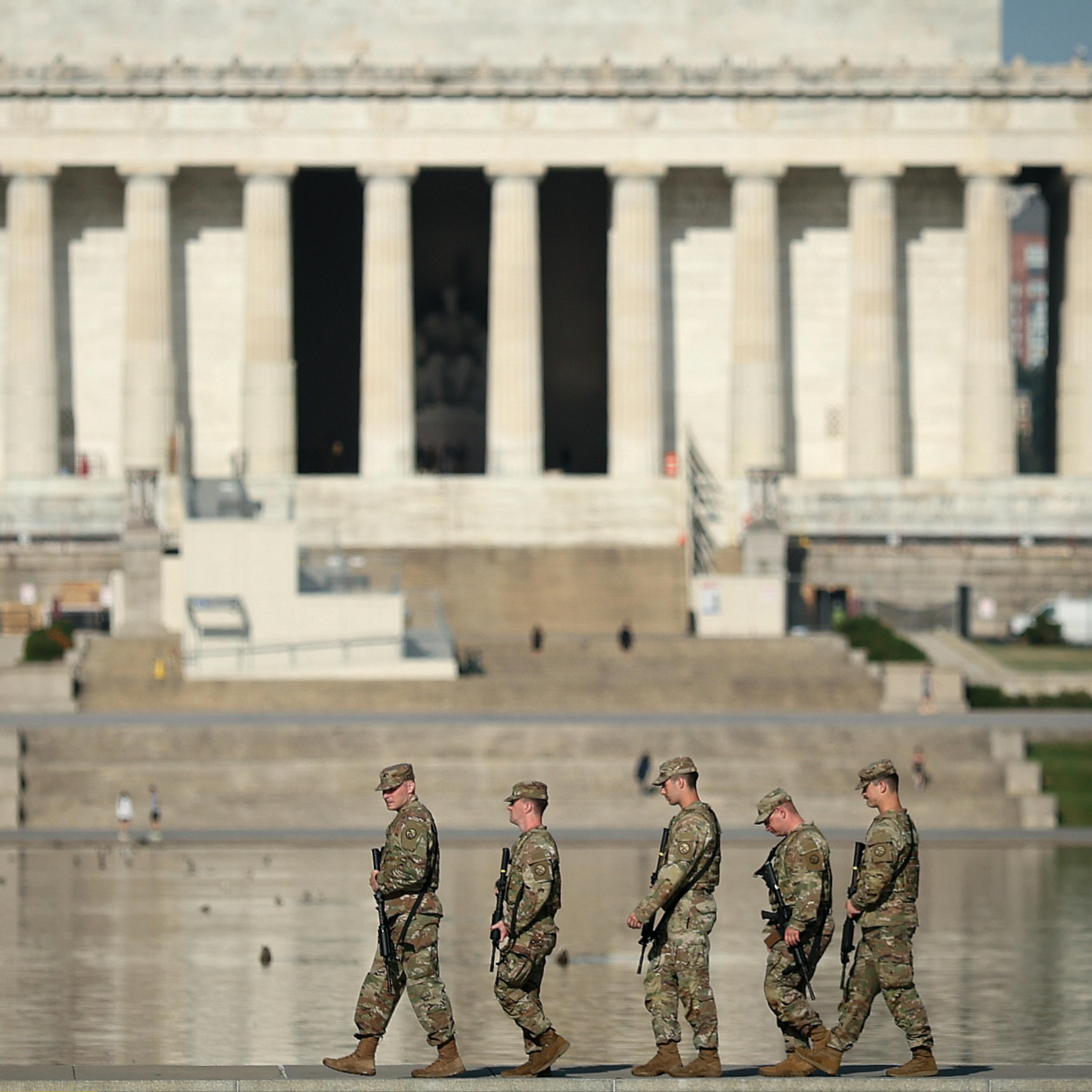
You know, it's funny, this whole time that Trump has sort of taken over D.C. you've seen any number of posts on social media or even reported pieces of journalism about the sort of confusing manner in which he's done it. You've seen National Guard troops picking up trash in the District of Columbia. We're out here supporting the National Park Service and trying to keep D.C. and the federal areas clean.
- [05:46]
Olivia George
Trash duty.
- [05:47]
Sean Ramiser
Like a half dozen of them standing outside of a Krispy Kreme. Federal police officers from four to five different agencies helping a passed out drunk woman. And yet in neighborhoods in D.C. where there is significant crime, where people are worried about their safety, typically eastern neighborhoods, Southeast, Northeast D.C. you don't see a National Guard presence.
- [06:12]
Andrew Prokop
Everybody's asking where all these additional forces are, but we don't see them anywhere.
- [06:18]
Muriel Bowser
It seems like it's more of a.
- [06:19]
Andrew Prokop
Spectacle for those that are visiting. I haven't seen the National Guard deployed. You don't know exactly where they are, what communities they're going into.
- [06:27]
Sean Ramiser
Do we know what exactly he did and what exactly he accomplished, if anything?
- [06:32]
Olivia George
So you're right. There's this kind of drumbeat of viral videos of people being detained.
- [06:41]
Andrew Prokop
I'm so ho. What the fuck?
- [06:43]
Olivia George
Of small kind of acts of protest and heckling and residents voicing that disapproval.
- [06:51]
Andrew Prokop
Get out of our neighborhood.
- [06:52]
Donald Trump
Trump must go now.
- [06:54]
Olivia George
And every single day, we see the White House present their recap of what they call kind of the successes of the previous night's operation. Since President Trump's intervention, there have been more than 1,283 arrests right here in the District of Columbia. And yet basic information about the charges, where people were arrested, who was arrested, who were they arrested by, continues to be kind of unusually elusive. The lack of specifics and the gaps in details about who is being arrested and why continues to fuel the frustration that many residents are feeling in this very unusual moment. And I think is why the mayor's comments about greatly appreciating the federal surge, you know, stirred some disappointment and anger from residents, is because there was a view that it was kind of at odds with the lived experience of residents in D.C. right now.
- [08:05]
Sean Ramiser
Why would the mayor of Washington sanction a takeover of her city?
- [08:11]
Olivia George
I'll start by saying that she does not use the word takeover for many months now. You know, throughout Trump's second term, we have seen the mayor hone this approach of, for lack of a better phrase, not wanting to poke the bear, not wanting to kind of use similar tactics to other Democratic leaders around the country who are much more forceful sometimes in their disapproval of the president and his tactics.
- [08:41]
Andrew Prokop
Mr. President, do not come to Chicago. You are neither wanted here nor needed here. Your remarks about this effort over the. The last several weeks have betrayed a continuing slip in your mental faculties and are not fit for the auspicious office that you occupy. Most alarming, you seem to lack any appropriate concern as our commander in chief, for the members of the military that you would so callously deploy as pawns in your ever more alarming grabs for power, just to show a brazen abuse.
- [09:23]
Muriel Bowser
Of power and brazen force. There's no reason for them to come here.
- [09:27]
Olivia George
And this is in large part because of the unique vulnerability of DC to the exact kind of federal intervention that is now in full swing. So Trump has said that he wants to see the death penalty imposed on every person convicted of murder in D.C. and that announcement, you know, if it transcends to an attempt to implement that, is likely to endure intense political and legal pushback. In D.C. most homicides are prosecuted under local law, but U.S. attorneys can seek the death penalty for certain crimes under federal statutes. Those laws cover some, but not all, homicides. So there are a couple obstacles in place for Trump's vision of an expansion of the death penalty to actually become a reality. One broader note that I'll make to that point is that it's yet another example of the President fixating on a wide arrange of policy issues and quality of life issues in the District. When the initial declaration of a crime emergency was declared in early August, I think there was a hope among local officials that his interest would quickly wane, he would turn his attention elsewhere. And what we've seen with this drumbeat of additional statements that the President has made on a wide range of issues from the death penalty to the quality of Gross in D.C. it's showing us that the interest isn't waning, the fixation isn't shrinking.
- [11:12]
Sean Ramiser
Why do we think that is?
- [11:14]
Olivia George
D.C. in some ways represents more than itself. You know, I think it's important to view the steps that he's taking in the District in the broader context of his criticisms of liberal policies, of the kind of hellscape that he paints Democratic run cities. And at the same time, D.C. is uniquely vulnerable to Trump's efforts to try and overturn and interject and correct those policies that he disagrees with. The D.C. national Guard, for example, is the only National Guard unit that reports directly to the President. So that was one tool that was already at his disposal, and he was well within his right to command them and order those troops to deploy onto D.C. streets.
- [12:03]
Sean Ramiser
And this is why D.C. is so important. Not because what happens to this town, really, of 700,000 people is so important for the country, but because it feels like Donald Trump is trying to create some sort of template here. But of course, he is allowed to do this stuff in DC for the most part, but he isn't necessarily elsewhere or it might upset a lot of people elsewhere. He's already threatened to do the same in Chicago. Do we know if the administration is going to try and use DC to justify taking similar actions in other American cities, blue cities, left leaning cities?
- [12:48]
Olivia George
In rhetoric, it definitely appears that they are they are touting their successes in D.C. in very clear cut terms, painting the steps they have taken here as a success story. But as we've discussed, it's important to note that it can't just be a copy and paste situation because D.C. is in a very unique place due to its lack of statehood. The key takeaway is that the rhetoric the president uses to describe D.C. is part of a broader push to present Democratic run communities as these hellscapes that he is positioned to rescue from their danger and their kind of decay. But he does not have the same tools at his disposal that he does for DC.
- [13:47]
Sean Ramiser
Read Olivia George@washingtonpost.com Trump may not have solved much of anything in DC but he's not going to stop talking talking about crime because it's a winner for him. We're gonna tell you why when we're back on Today Explained.
- [14:10]
Muriel Bowser
Support for Today Explained comes from Built Rewards these days it seems like everybody has a rewards program. You swipe your card and you get one cent on the hundred dollars. But with your rent, frequently you just pay month after month. You never get anything from it other than that roof over your head. Not anymore, says Bilt Rewards. Built Rewards says it lets you earn points on your rent. By paying rent through Bilt, they say you can earn flexible points that can be redeemed toward hundreds of hotels and airlines, perhaps a future rent payment, your next Lyft ride, and so much more. Your home isn't just where you sleep. It's your community. And Bilt wants you to go out and do things in the community. You can eat at your favorite local restaurant, then earn more points. You can get VIP treatment at certain fitness studios. You can enjoy exclusive experiences just for Built members every month when you're ready to travel. They say Built Points can be converted to miles or hotel points all around the world. You can earn points on rent and around your neighborhood, wherever you call home by joining Bilt.com explained. That's J-O-I-N-B-I-L-T.com explained Mama Papa, mi cuerpo.
- [15:20]
Olivia George
Crece ahos de la vuelta amazonos son riemas.
- [15:34]
Andrew Prokop
Olivia loves a challenge. It's why she lifts heavy weights and likes complicated recipes. But for booking her trip to Paris, Olivia chose the easy way with Expedia. She bundled her flight with a hotel to save. Of course, she still climbed all 674 steps to the top of the Eiffel Tower. You were made to take the easy route. We were made to easily package your trip. Expedia made to travel flight Inclusive packages are atoll protected. It is a literal statement that President Trump has freed 700,000 people in this.
- [16:12]
Sean Ramiser
City who were living under the rule of today, explained Sean Ramiser. I'm here with Andrew Prokop from Vox, who writes about politics. Andrew, you wrote that taking over D.C. doesn't poll well, but crime is still Trump's best issue. How come?
- [16:31]
Andrew Prokop
Polls repeatedly and pretty strongly show that the public, or majority of the public, more the public, trusts Republicans and Trump over Democrats on the issue of crime. In polls that ask about, you know, more than a dozen different issues, crime turns out to be Republicans single best one.
- [16:57]
Donald Trump
I'm announcing a historic action to rescue our nation's capital from crime, bloodshed, bedlam and squalor.
- [17:06]
Andrew Prokop
If you think that crime is a serious problem, you want to vote for the party that seems united around the idea that we should do something about it, not a party that's kind of split among, oh, you know, is policing or enforcement of laws really a good idea or not? And Trump has found many ways to signal that he is on the tough on crime side. And often voters think when you ask them about the specific things that Trump is proposing, they say he's too tough on crime. Like they say, you know, that's a little too far for me. And yet they still trust him more than Democrats because, you know, at the end of the day, Trump is trying to signal I'm on the side of voters like you, law abiding citizens who are worried about criminals. And Democrats are on the side of the criminals. All they worry about is getting criminals out of prison, preventing them from being convicted, preventing our police from doing what's necessary to crack down on criminals. So that kind of messaging has been really effective at hurting the Democrats brand when combined with the very real struggles in cities to get the rising crime rates under control in the early 2000s.
- [18:17]
Sean Ramiser
And he's framing this as like a left versus right issue. As, you know, Democratic controlled D.C. and Chicago and Baltimore. They need my help. They're not gonna solve their own crime issue. While he's sort of ignoring cities like St. Louis or Memphis that are in red states but also have crime issues. How are Democrats responding or handling this in recent weeks.
- [18:42]
Andrew Prokop
Yeah. So if you listen to Trump and Trump officials, they say this is just all about violent crime. Democrats have not taken the problem of violent crime in cities seriously and Trump is taking it seriously. We're going to ignore these stupid white hippies that all need to go home and take a nap because they're all over 90 years old. And we're going to get back to the business of protecting the American people and the citizens of Washington D.C. and the instinct for many Democrats has been to argue that violent crime is actually no big deal and that we shouldn't be worried about it so much.
- [19:21]
Muriel Bowser
Mr. President, I can give you all the data you need to show that crime is down. It's working. Our policies are working.
- [19:30]
Andrew Prokop
The biggest crime scene that hurts everyday Americans in Washington, D.C. right now is 1600 Pennsylvania Avenue. That's the crime scene that we need to clean up. Minority Leader Hakeem Jeffries said that. Oh, well, you know, crime in D.C. is already trending downwards, near record lows. So this is obviously fake and political. Violent crime in Washington D.C. is at a 30 year low. Donald Trump has no basis to take.
- [19:59]
Sean Ramiser
Over the local police department and zero.
- [20:01]
Andrew Prokop
Credibility on the issue of law and order. Get lost. It's definitely clear that crime in D.C. has declined since its peak in 2023, but that peak was very high. And the murder rate at least is still something like twice where it was in 2012. But I think my broader point is that it is a political loser for Democrats when we look at polls. Polls show overwhelmingly that the public thinks that crime in cities is a very serious issue.
- [20:37]
Olivia George
A new Associated Press poll shows crime remains a top concern nationwide.
- [20:42]
Muriel Bowser
The poll found that 81% of Americans say crime is a major problem in large cities and 66% say it's a problem in the country as a whole.
- [20:50]
Andrew Prokop
And anytime 81% of the public thinks something and Democrats and progressives instinct is to be like, no, you're wrong, it's not. Actually, that's a bad political place for them. And Democrats have kind of fallen into this bad political place because of the past decade of discourse on criminal justice and crime issues within the Democratic coalition. Progressives have focused so much on mass incarceration and police violence as the two biggest sort of urgent moral causes in America. And any concern about crime in cities was viewed as inconvenient, political, perhaps racially coded. And so there a habit has formed for Democrats to kind of say crime in cities is no big deal. It's fine. Anyone who worries about it is like A whiner or a racist. And in April 2024, the Pew Research center asked registered voters whether they thought the US Criminal justice system was generally too tough on criminals or not tough enough. 61% said not tough enough, and a mere 13% said too tough. This really goes to show that among the public, the belief that the criminal justice system is too harsh on criminals is kind of a fringe view. But this is a core belief of progressive activists and it has become quite important to the Democr Party coalition over the past decade.
- [22:32]
Sean Ramiser
I know it's early yet, but have we seen Democrats pivot on crime at all in the two or three weeks since Trump threatened and then did Indeed.
- [22:41]
Andrew Prokop
Take over D.C. i think it's been awkward. They're not really sure how to talk about it in a convincing way. The Democratic polling firm Blue Rose Research tested many different possible messages on this for Democrats and found that the best testing one was to say, this is just all a distraction from his high tariffs and bad economic management that's ruining the economy. So according to that research, the best strategy is to change the subject away from crime entirely. What's happening here in Washington D.C. is just a stunt to manufacture a crisis and create a distraction because he's deeply unpopular. The one big ugly bill is deeply unpopular. Ripping health care away from millions of Americans is unpopular. It's just a distraction that Donald Trump wants to utilize to take our eyes off of his tax bill that's ripping away Medicaid from more than 100. Now, a lot of Democrats don't believe this. They think that actually calling out Trump's authoritarianism, warning the public about his abuses of power, the dangerous steps down the road he's taking, will pay off. This is how the authoritarians operate.
- [23:54]
Sean Ramiser
They declare an emergency and then they.
- [23:57]
Andrew Prokop
Think that the rule of law doesn't govern anymore. What voters are looking for is which party they trust on an issue and which politician they trust on an issue. And also the question of like, who is on my side? Trump uses the crime issue to signal that he is on the side of ordinary law abiding Americans and not criminals. That's why he brings it up constantly. And when Democrats respond by saying actually Trump trying to crack down on criminals is dangerous and bad, they like Trump, will just respond by saying, oh, that proves that they're on the side of the criminals. I'm just trying to protect you ordinary law abiding citizens. And I think that is kind of the heart of Democrats dilemma on this issue and why responding to it has been so difficult for them.
- [25:06]
Sean Ramiser
Andrew Prokop the website is vox.com Peter Balin on Rosen produced today's show for Vox. Amna Al Saadi edited Andrea Christensdotter and Andrea Christensdotter were on the mix. Laura Bullard TB4T G O G Did you go to college in the American south, by the way? Apparently more and more people from the north are choosing to do their four years in the South. If you're one of them, the good people over at explain it to me. Want to hear about what motivated your decision to head southward? Give them a call. Call at 1800-618854-51800-618-8540. Thank you. This is TODAY Explained.
- [26:06]
Donald Trump
Sam.