← Today, Explained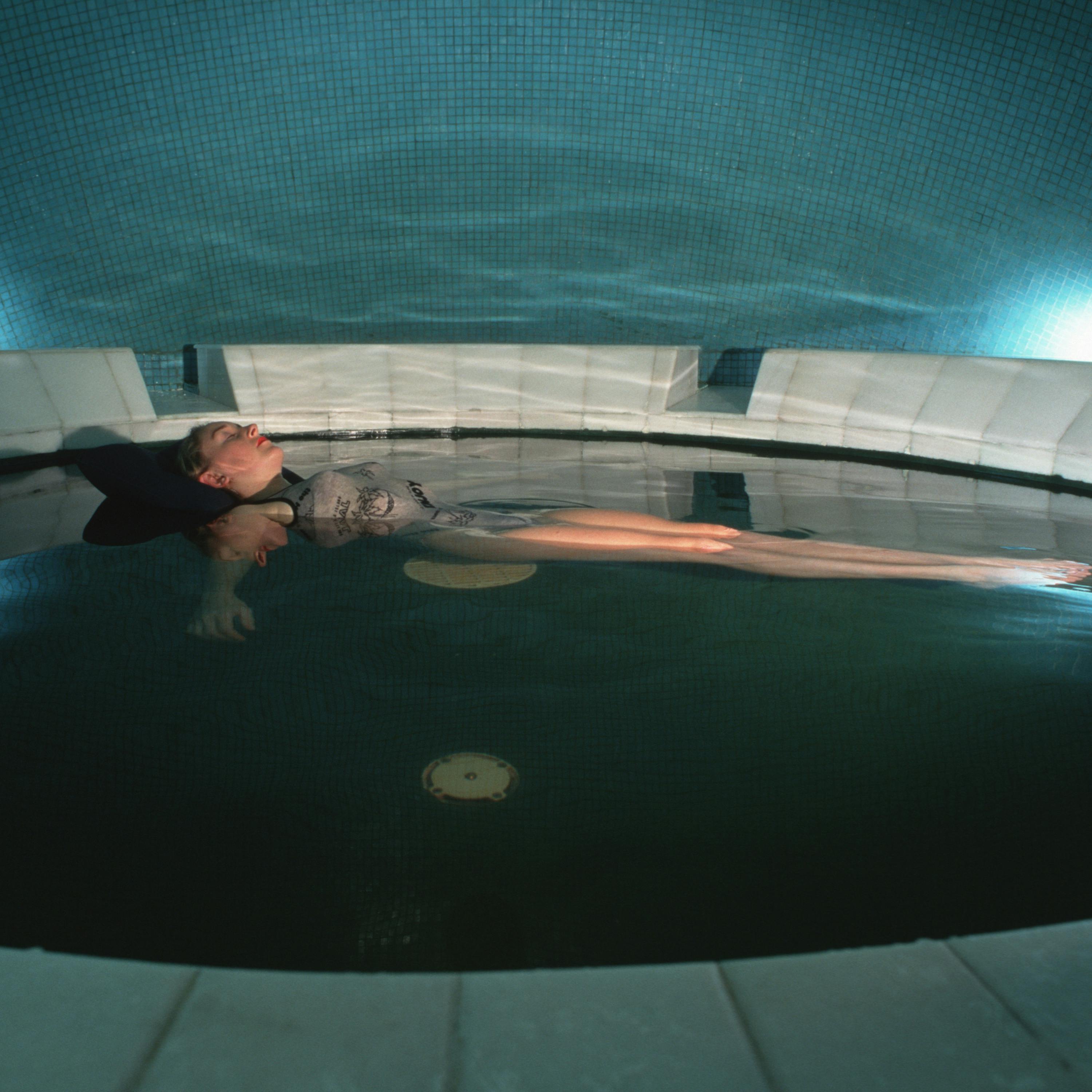
Today, Explained
What wellness costs us
00:30:23
Americans are investing billions in their health and wellness. What good do all these green powders and costly club memberships actually do?
Loading summary
Transcript131 lines
- [00:00]
Jhon Gwynn Hill
Support for Explain it to Me comes from Pure Leaf Iced Tea. When you find yourself starting to slump in the afternoon, you need the right thing to revitalize you like a beverage. And not just any beverage. Pure Leaf iced tea is real brewed tea made in a variety of bold, refreshing flavors with just the right amount of naturally occurring caffeine. The next time you need to hit the reset button, have a Pure Leaf iced tea. Time for a tea break. Time for Pure Leaf. Support for this show comes from Robinhood. Wouldn't it be great to manage your portfolio on one platform? With Robinhood, not only can you trade individual stocks and ETFs, you can also seamlessly buy and sell crypto at low costs. Trade all in one place. Get started now on Robinhood Trading. Crypto involves significant risk. Crypto trading is offered through an account with Robinhood Crypto llc. Robinhood Crypto is licensed to engage in virtual currency business activity by the New York State Department of Financial Services. Crypto held through Robinhood crypto is not FDIC insured or sipc. Protected investing involves risk including loss of principal securities. Trading is offered through an account with Robinhood Financial LLC member sipic, a registered broker dealer. We all want to live long, healthy lives without pain. That is like the single most important thing.
- [01:23]
Hadi Mwagdi
The problem is that often what we see in the wellness world is that the cart is put before the horse.
- [01:32]
Jonathan Stia
So if I'm coming in here on.
- [01:33]
Hadi Mwagdi
A day to day basis, I'm definitely hitting the cold plunge and I'm definitely hitting the sauna.
- [01:38]
Jhon Gwynn Hill
A couple weeks back, producer Hadi Mwagdi got an opportunity to improve his mood, enhance his muscle recovery, and to have a great night's rest.
- [01:46]
Hadi Mwagdi
We gotta get you the cold plunge with me, bro.
- [01:49]
Jonathan Stia
Come on. I should have brought shorts.
- [01:52]
Hadi Mwagdi
Well, you know what they have here Shorts for you.
- [01:56]
Jhon Gwynn Hill
All he had to do was decide to take the plunge.
- [01:59]
Jonathan Stia
We're literally taking a dip in wellness.
- [02:01]
Jhon Gwynn Hill
Oh, man.
- [02:02]
Jonathan Stia
All right, I'm ready.
- [02:03]
Jhon Gwynn Hill
I'm ready.
- [02:10]
Jonathan Stia
Oh, my goodness. This is freezing.
- [02:14]
Jhon Gwynn Hill
I'm Jhon Gwynn Hill and this is Explain it to me from Vox.
- [02:20]
Hadi Mwagdi
Okay.
- [02:21]
Amy La Rocca
Breathe.
- [02:21]
Hadi Mwagdi
Yep. Breathe. Slow it down.
- [02:25]
Jhon Gwynn Hill
We're the that takes on the big questions. Questions like, what is wellness? Wellness. It's a word influencers use as a hashtag in videos of them pouring collagen into their smoothies. Collagen is so good to help support healthy skin, hair, nails, joint support.
- [02:42]
Amy La Rocca
It's just everything good. And it's so easy to throw into.
- [02:45]
Jhon Gwynn Hill
Smoothies that celeb chefs use to describe the theme of their newest book.
- [02:49]
Amy La Rocca
This is the book that I wish I had when I was confused about what to eat and how to eat.
- [02:54]
Jhon Gwynn Hill
And it's an obsession of the Secretary for Health and Human services.
- [02:57]
Amy La Rocca
We're spending $4.5 trillion annually on health care in our country and we have the worst health outcomes.
- [03:06]
Jhon Gwynn Hill
But what does it actually mean?
- [03:08]
Amy La Rocca
Hi, this is Hannah calling from the Hudson Valley of New York. I'm a 35 year old psychotherapist, so I think of wellness a lot. I also think wellness is so much more than just going to a yoga class and drinking electrolytes. I think it's a lot de it's spiritual and it's something that we all need to be thinking about on the regular.
- [03:30]
Jhon Gwynn Hill
Here's how journalist Amy La Rocca describes wellness. She's the author of how to Be Navigating Our Self Care Epidemic One Dubious Cure at a Time.
- [03:39]
Amy La Rocca
I've seen that word attached to absolutely everything. I've seen it attached to massages and I've also seen it attached to very serious things to do with important health choices like vaccines. And then I've seen it attached to really weird stuff like checking a accounts condos.
- [03:59]
Jhon Gwynn Hill
After her research, Amy's nailed down her own personal definition of it.
- [04:03]
Amy La Rocca
My working definition is wellness is a luxury good and it's the packaging of our health and our beauty into a consumable for sale product.
- [04:16]
Jhon Gwynn Hill
We're going to hear more from Amy a little later in the show. But first, Hadi's going to take us to a place where wellness is top of mind. A health and longevity club called Kuya Wellness in Austin, Texas. Okay, Hadi, I assume that you are out of the tub and all warmed up. Are you ready to go?
- [04:33]
Jonathan Stia
Absolutely. Let's do it. J.Q. i had heard of these places called social wellness clubs. Folks pay lots and lots of money to be part of these clubs. In New York and LA, I've saw memberships for as much as $1,000 a month. And these places, they don't have gyms or massage tables. There aren't beauty offerings. There's no med, spa or body sculpting happen. And instead this is a place where people rest, a place where people who are well get well. Here's Megan Butler. She's the president of Kuya.
- [05:09]
Jhon Gwynn Hill
Kuya is very it's a clinic, right? So we do wellness modalities, we have deeper medical experiences, but it doesn't feel like a clinic and it's built that way on purpose. So you're invited to want to Stay.
- [05:24]
Jonathan Stia
You know, Megan told me about a infrared light sauna.
- [05:27]
Jhon Gwynn Hill
You sit in the sauna about 15 minutes in a safe space to detox, right?
- [05:33]
Jonathan Stia
To vasodilate, to about ice baths, about sensory deprivation tanks.
- [05:40]
Jhon Gwynn Hill
So there's no light, there's no sound, there's no weight. This is really the only time that you're completely weightless. You're laying down, but you're buoyant in about 2,000 pounds of sodium, magnesium, water.
- [05:52]
Jonathan Stia
But also about injectable. These things are administered by health professionals and you can get things like an IV vitamin therapy treatment.
- [06:00]
Amy La Rocca
Today you're getting one of our most popular signature infusions, the Total Vitality drip. It has an amino blend, a mineral blend, vitamin C and also a B complex in it. It's great for recovery.
- [06:13]
Jonathan Stia
But these year round memberships, they include free Kuya events like storytelling workshops, aromatherapy workshops, and breathwork classes inside of a saun. Find my count. In 2, 3, 4, out.
- [06:34]
Hadi Mwagdi
2, 3.
- [06:35]
Jhon Gwynn Hill
Oh my gosh. So who is the clientele at this place?
- [06:39]
Jonathan Stia
Well, the easiest way for me to say this, jq, is that these are really pretty young people. Everyone there was in great shape and they're also making a lot of money. But the thing that really caught my eye when talking to people was that they were all looking for a way to relax. These are people who have high powered jobs, they have busy schedules and wellness is something that they find as a key or important factor in their life. So they're pursuing it. I'll tell you about a guy I met named Chase Salazar. He was like all smiles to talk to me, especially about wellness. This man knew about peer reviewed studies.
- [07:24]
Hadi Mwagdi
Google Scholar, baby, Google Scholar.
- [07:26]
Jonathan Stia
He was telling me about his IV treatments. Chase was the kind of person who doesn't drink, limits the meat. He eats, wakes up every morning at 4am and tries to get in bed before 8:30pm so that he could pursue wellness. Chase told me a story about being.
- [07:48]
Hadi Mwagdi
Clinically obese when I was 15 and a doctor pulling me to the side and telling me, hey, do you want to live this lifestyle for your entire life?
- [07:56]
Jonathan Stia
On top of that, unfortunately, his mother dealt with cancer and he saw firsthand what it was like for her to deal with these health issues. And it felt as though to Chase, that if she had been healthier to begin with, maybe she could have fought that off a little bit longer.
- [08:15]
Hadi Mwagdi
Trauma's a good reason for change sometimes. And more importantly, like, you know, some people are like, the only way I learn is if I touch the hot.
- [08:23]
Jhon Gwynn Hill
Stove type people so that's Chase's story. What sort of treatments did you partake in?
- [08:30]
Jonathan Stia
Well, I mean, when we started the episode here, you heard me gasping for air inside of a cold plunge with Chase, actually. And I also did a sauna class which included a cold plunge. Again, I will tell you, I don't think I've ever sweated so much doing absolutely nothing. I was just sitting there and just pouring out sweat. But I have to admit, by the end of it, I felt this high and so did so many of the other people who were in there with me.
- [09:02]
Jhon Gwynn Hill
Yeah. Okay, I admit, whenever I do a cold plunge or a sound bath or, you know, a new facial treatment, I think this is gonna. This is gonna fix me. Did any of this work for you? Did it fix you?
- [09:15]
Jonathan Stia
Did it fix me? Is that the question? I can tell you, jq, that in the days before I visited Kuya, I was actually dealing with like one of those 48 hour flus. And then I got to Kuya, I did my cold plunge and my heat, my sauna class, and at the end, I felt really energized. I also felt super, super thirsty.
- [09:37]
Amy La Rocca
So.
- [09:38]
Jonathan Stia
So I also got an IV treatment and I definitely felt hydrated by that iv. Then the treatments continued. I decided to jump into a sensory deprivation tub. Now, did I get that feeling of, I don't know, separation from the world? I didn't. I quickly realized, jq, that, like, I'm scared of the dark.
- [10:08]
Jhon Gwynn Hill
Oh, yeah. I would have a full on panic attack in a sensory deprivation situation. No, thank you. All right. I guess, like, that makes me wonder, how do you think of wellness now that you've done all this? Has the way you've thought about it changed?
- [10:25]
Jonathan Stia
Well, I guess it has because, you know, it's hard to not be skeptical of paying so much for a club. I don't know that these are practices I'll take into my everyday world, but I can see myself buying a day pass and going back and sauna ing and cold plunging and, I don't know, laying around on that sound bed after a very long work week. You know, wellness is still this phrase that we're trying to really dissect, but I did feel pretty great at the end of my trip.
- [11:05]
Jhon Gwynn Hill
All right, Hadi mwagdi. Thanks for going on this journey for us.
- [11:10]
Jonathan Stia
Oh, yeah, it was a pleasure.
- [11:13]
Jhon Gwynn Hill
Okay, so wellness is this trillion dollar industry, but. But how did we get here in the first place? That's next. Support for Explain it to Me comes from pure leaf iced tea. You've been working hard all day. You had lunch not too long ago and now your shoulders are starting to droop and your motivation is starting to tank. We've all been there, but the clock only reads 3pm and as much as you might want to call it a day, you still have a lot of stuff left to do. Well, you can bounce back from that slump with a refreshing beverage in hand and you can take a real break. A tea break with Pure leaf iced tea. Pure leaf iced tea is real brewed tea made in a variety of bold flavors. With just the right amount of naturally occurring caffeine, you can renew your mindset and your motivation so you can be ready to take on what's next and close out the day strong. The next time you need to hit the reset button, have a pure leaf iced tea. Time for a tea break. Time for pure leaf.
- [12:25]
Amy La Rocca
On top of building this fake volcano for months, I give my daughter Smarty Pants vitamins to support her brain health. So her science fair project sounds more like and less like. And while I may say it's not a competition, of course it's a F competition. Choose Smarty Pants vitamins to support your kid's brain health and save the science fair. Shop on Amazon, smartypantsvitamins.com or at target today.
- [12:59]
Jonathan Stia
Dying to live.
- [13:01]
Jhon Gwynn Hill
Well, we're back. It's Explain it to me. Okay, so as a whole, we're doing a lot of things in the name of wellness these days, but how did we get here? I spoke with Jonathan Stia to find out. By day, he's a clinical psychologist, but his side hustle is combating pseudoscience and misinformation. He wrote a book called Mind the Science that's all about it. And he says he gets why all this stuff appeals to people.
- [13:29]
Hadi Mwagdi
I would say that obviously we can't blame anyone for seeking alternatives. The problem is that one of the way in which wellness promoters market their materials is by promoting, quote, unquote, science or research to support their claims. And when you do a deeper dive into that research, what people will often find is that you can find a study, say, to promote or to support any kind of treatment or claim. And if you dig even deeper than that, there's a whole. It opens up a can of worms. Because this is what in part we mean by pseudoscience. Pseudoscience is a. Is in short, a very hijacked or fake attempt at science. I think we can trace the modern wellness industry back to about the late 19th century. That's when two prominent figures really played a role in Shaping kind of the modern wellness industry we see today. One of those players was a guy named John Harvey Kellogg. And what he and his brother did, his brother was named Will Keith, is they built something called the Battle Creek Sanitarium, which was a really huge famous medical center. It was a spa, it was a grand hotel. And it really attracted a lot of wealthy, high influential people from its time all over the world to this place. And what John ended up doing in that center was promoting a lot of his ideas about health and about how to treat diseases. They tended to really blend a lot of what he called biologic living, which is really just a kind of virtuous way of approaching our health and kind of blending that with some of religious, kind of Christian beliefs.
- [15:24]
Jhon Gwynn Hill
So when I hear the name Kellogg, I admit that I think of my breakfast cereal. Was John Kellogg a scientist or an inventor of some kind? Is that where this came from?
- [15:34]
Hadi Mwagdi
Kind of, yes. So his brother Will Keith actually started the cereal company. John was a physician and he was a best selling author. He had a magazine, he did lectures. His magazine was followed by millions of people.
- [15:50]
Jhon Gwynn Hill
So was he the inventor of wellness as we know it today?
- [15:54]
Hadi Mwagdi
Not quite. When he was promoting his ideas, it was before the term wellness as we use it today was formed. He was promoting a precursor to wellness called biologic living, which essentially promoted the idea that all diseases and all health conditions can be treated with a basically a trifecta recipe of good sleep, good exercise and eating a specific diet, which was sort of, in his view, a bunch of vegetables and fruits, et cetera, which, you know, in and of itself is not a bad thing. I mean diet, exercise and sleep.
- [16:28]
Jhon Gwynn Hill
Yeah, I was about to say like exercise, diet, sleep, eating fruits and veggies. That feels like something I hear from my doctor totally.
- [16:35]
Hadi Mwagdi
And that's part of evidence based care. And that's really foundational to even what we do in the hospital. The problem is that it's what we see even in the modern wellness industry is when people sell these things as a cure all, as a panacea for all health conditions. So John had a lot of ideas that if we weren't following a trifecta recipe, recipe of sleep, eating and eating well and exercise, and we were doing other things like drinking alcohol or eating meat or sugar or even if people were overweight, he considered that to be non virtuous and, and essentially really bad behaviors. And he would view it in a very punitive way. Even masturbation was considered self abuse by John Kellogg. And he thought that it would lead to things like mental illness and cancer and moral destitution. And he would advocate treating people who would masturbate. In boys, he would recommend circumcision or bandaging their hands together. And in girls, he would recommend pure carbolic acid to the clitoris.
- [17:39]
Jhon Gwynn Hill
Oh, my God.
- [17:41]
Hadi Mwagdi
And even its removal.
- [17:42]
Jhon Gwynn Hill
Oh, my God.
- [17:44]
Hadi Mwagdi
Yes.
- [17:44]
Jhon Gwynn Hill
Was John Kellogg the only person like this of his time, or was this more widespread?
- [17:49]
Hadi Mwagdi
It was more widespread. And. And I would say he was one of the most prominent ones. In parallel with his ideas, there was another huge player that played a role in the birth of the modern wellness industry. And he was a guy named Bernard McFadden, who some consider the 20th century's first celebrity health influencer. This guy was equally eccentric to John. I mean, Bernard McFadden would strut around New York barefoot so that his souls could absorb the earth's energy. And, you know, he would sleep on the floor so that his. His energy would align with the earth's natural magnetic rhythm. And he was very hostile to vaccines.
- [18:27]
Jhon Gwynn Hill
Oh, okay. So you're telling me that an anti vaxx wellness influencer is not a new phenomenon?
- [18:33]
Hadi Mwagdi
Very old. Over a century old. And that's because a lot of these ideas tend to coalesce. And similar to John Kellogg, you know, Bernard McFadden would also sell this kind of idea of health as a moral virtue, where it's all about virtuous eating, it's all about virtuous exercise. And the problem with these ideas is that health is not a moral virtue. What these ideas do is they promote an idea about health that ignores the science, and then they downplay the role of other important things that we know play a role in health, like genetics, social factors, and just plain old bad luck.
- [19:10]
Jhon Gwynn Hill
It's very interesting that all of this happened in the 19th century, because I also think of that time as a lot of, like, I don't know, advancements in science and in health.
- [19:18]
Hadi Mwagdi
Totally around the the same time that these wellness ideas were kind of percolating, there was also something called the flexner report of 1910. And that really ushered in the dawn of modern medicine. And what that report did was it essentially wanted medicine and medical schools to get their act together and make them much more scientific. And so it would encourage schools to either get rid of alternative medicine from their curriculum or just shut these schools down altogether. At the same time, it really disadvantaged folks who were economically underprivileged. And what that did is it opened the arms, so to speak, for, again, alternative medicine or wellness to kind of step in and to take the role of the art of listening and humanizing and, and comfort.
- [20:18]
Jhon Gwynn Hill
What about the term wellness specifically though? When did that officially become a thing?
- [20:24]
Hadi Mwagdi
Some consider the father of the modern wellness industry to be Halbert Dunn. He was a biostatistician and he first used the term wellness as we use it today, publishing an article in the Canadian Journal of public health in 1959. And what Dunn did is he distinguished good health, which he defined as freedom from illness, from what he dubbed high level wellness, which is a kind of optimal functioning in one's environment. And I think his definition was quite thoughtful, but it really didn't stick.
- [20:54]
Jhon Gwynn Hill
I was about to say that's an actually pretty good way to think about wellness.
- [20:58]
Hadi Mwagdi
Totally. It's sort of one's freedom from living and then you have an optimal functioning in one's environment. The problem is that from there the term wellness quickly took a life of its own. And nowadays in many parts of North America, wellness is everywhere and anywhere. And the definition has really ballooned to include anything and everything. And if we, you know, if we ask one wellness guru to define wellness, we'll hear a different answer from, from another one.
- [21:33]
Jhon Gwynn Hill
So that's then. But where does wellness stand now? That's after the break. Ryan Reynolds here from Mint Mobile. With the price of just about everything going up, we thought we'd bring our prices down.
- [21:53]
Hadi Mwagdi
So to help us, we brought in.
- [21:54]
Jonathan Stia
A reverse auctioneer, which is apparently a thing Mint Mobile Unlimited Premium Wireless.
- [21:59]
Jhon Gwynn Hill
How many to get? 30. 30.
- [22:00]
Jonathan Stia
Better get 30.
- [22:00]
Hadi Mwagdi
Better get 20.
- [22:01]
Jhon Gwynn Hill
20. 20. Better get 20. 20. Better get 15. 15. 15. Just 15 bucks a month.
- [22:06]
Jonathan Stia
Give it a try@mintmobile.com Switch upfront payment.
- [22:10]
Jhon Gwynn Hill
Of $45 for 3 month plan equivalent to 15 per month required new customer offer for first 3 months only. Speed slow after 35 gigabytes of networks busy. Taxes and fees extra.
- [22:16]
Amy La Rocca
See mintmobile.com @new balance. We believe if you run, you're a runner, however you choose to do it. Because when you're not worried about doing things the right way, you're free to discover your way. And that's what running is all about. Run your way@newbalance.com running well, well, wellness.
- [22:58]
Jhon Gwynn Hill
Remember how Hadi tried all those different wellness treatments? Well, Amy La Rocca does that for a living all the time. She's a journalist and author of the book how to Be Navigating our Self Care Epidemic. One Dubious cure at a Time.
- [23:11]
Amy La Rocca
We become obsessed with this idea of wellness, which is something that we can take on for ourselves, that we can Buy that. We are told if you spend enough money, you can have it.
- [23:21]
Jonathan Stia
These mushrooms make you feel better.
- [23:23]
Hadi Mwagdi
They increase focus and energy while keeping you calm and stress free.
- [23:27]
Amy La Rocca
This is the future of foundational nutrition. One scoop, once a day.
- [23:32]
Jhon Gwynn Hill
Being a human is hard, especially if you're a woman who's also having trouble doing that totally normal thing all humans do. Oh, you mean pooping.
- [23:40]
Amy La Rocca
And that's where it gets into. Why? Why do people want it? Because it's a luxury product. Why do people want a Prada handbag? And I think wellness is kind of following that trajectory. I'm a wellness girly, of course.
- [23:50]
Jhon Gwynn Hill
I start my morning with oil pulling.
- [23:52]
Amy La Rocca
Wellness girly, of course I only use.
- [23:54]
Jhon Gwynn Hill
Use clean, vegan, cruelty free makeup products.
- [23:58]
Amy La Rocca
Because we have a really messed up healthcare system in this country. But healthcare to the very wealthy is excellent. Probably the best it's ever been anywhere in the world. Again, wellness is a luxury.
- [24:11]
Jhon Gwynn Hill
Yeah, you know, we have like this western idea of treating the whole patient, but it feels like a lot of people have lost faith in traditional medicine. How did we get there?
- [24:22]
Amy La Rocca
I think we got there because so many segments of the population have been neglected and really mistreated by the medical establishment.
- [24:31]
Jonathan Stia
Patients were being harmed by a lot of the embedded conflict of interests within United's business empire and its operations.
- [24:40]
Amy La Rocca
Steward executives had slowly taken money out of the system and that patient care had suffered. We found 15 patients died and thousands more were put at risk.
- [24:50]
Jhon Gwynn Hill
Who is wellness marketed towards? Who is wellness for? Is it for everyone?
- [24:55]
Amy La Rocca
Right now it's really being marketed to everyone. It's kind of like the sort of devil wears Prada blue sweater. Right.
- [25:00]
Jhon Gwynn Hill
You go to your closet and you select, I don't know, that lumpy blue sweater, for instance, because you're trying to tell the world that you take yourself too seriously to care about what you put on your back. But that blue represents millions of dollars and countless jobs. And it's sort of comical how you think that you've made a choice that exempts you from the fashion industry when in fact you're wearing a sweater that was selected for you by the people in this room.
- [25:28]
Amy La Rocca
But I would say it is really marketed at kind of white women with disposable income because there's money to be spent and there's, you know, a lot of historical precedent for sewing insecurities and getting money out of that population.
- [25:46]
Jhon Gwynn Hill
You've talked about this idea of being a well woman.
- [25:49]
Amy La Rocca
Yeah.
- [25:50]
Jhon Gwynn Hill
How can you be a well woman? And is it worth it?
- [25:54]
Amy La Rocca
Well, I mean, if you Think of like the or, well, woman as Gwyneth Paltrow. No, most of us are never, ever, ever going to be that. And thank God. I eat dinner early in the evening. I do a nice intermittent fast. I have bone broth for lunch a lot of the days. And then for dinner, I try to eat, you know, according to Paleo, but I think what you can do. And a lot of people keep asking me, well, you know, what's your takeaway? You've researched all these things and you've tried all these things. My takeaway is, like, really basic. You need the meat. Like, you need to sleep. You need to move your body around. You need to eat food that's as close to its original form as possible. You need to drink some water. You need to manage your stress levels. Like, it's really the, the basics that matter. And I don't say that lightly. I know for a lot of people those basics are very elusive and very difficult to attain, but they're really what make the difference.
- [26:49]
Jhon Gwynn Hill
Yeah, you've talked about the discrepancies and who gets to be well in America. And, you know, if you're lucky, you have access to a lot of state of the art treatments. Yeah, I read all the time about, like, just what it takes to keep LeBron James up and running.
- [27:04]
Amy La Rocca
Yeah, for sure. But you know what, like, LeBron James is a, is a professional athlete. Like, yeah, do it, LeBron. Like, that's your, that's your work.
- [27:12]
Jhon Gwynn Hill
But it feels like it's like you all should be doing these things too.
- [27:15]
Amy La Rocca
That's right.
- [27:15]
Jhon Gwynn Hill
It's like, I can't afford that. I am not King James. I am so sorry.
- [27:19]
Amy La Rocca
I mean, that's just a. It's working on you, right? It works on me too. Oh, my God. It works on me. So I'm like, yes, I am going to click on this email. And when I click on this email, inside this email, it's gonna tell me, like, everything. And then I'm like, oh, not this time. And then the next email will come, like, wellness secrets. And I'm like, ooh, here they are.
- [27:39]
Jhon Gwynn Hill
What are some of the most interesting wellness treatments you tried out when you were writing this book?
- [27:43]
Amy La Rocca
I definitely did a lot of, like, cold and hot stuff. So I've been in the cryo chambers. I've been in the cold plunges. I definitely, like, experimented with some of the food stuff. But to be very honest with you, I don't like messing around with food stuff. It's too close to disordered eating. And I did bite the bullet and get a colonic, which do not recommend thousand percent.
- [28:04]
Jhon Gwynn Hill
Oh, oh, okay. Because people have told me. They're like, I do it. It's great. You should do it.
- [28:10]
Amy La Rocca
I think it's chasing that sort of high feeling of emptiness. There's a lot of unanswered questions and hypocrisies in wellness. So you'll spend all of your time being like, oh, my microbiome. My gut. Have to fix it. I have to fix it. And then you're like, I'm just gonna go to this place and have someone, like, turn a garden hose up my butt. And like, I'm like, I thought I was building my flora, you know, now you're just gonna wash it all out. So, yeah, so there's a lot of things that don't add up. But I've just. I've sort of realized when it comes to the things that don't add up, the consistent factor that makes people kind of overlook things not adding up is, like, weight loss.
- [28:48]
Jhon Gwynn Hill
Why is it that we give these things a try? You know, Like, I admit, if there's a cold plunge and a sauna, I'm gonna go back and forth, oh, yeah, I'm in there. I'm gonna do that temperature.
- [28:59]
Amy La Rocca
I'm in there.
- [29:00]
Jhon Gwynn Hill
Yeah. Like, some of this is.
- [29:02]
Amy La Rocca
I am not here to make anyone feel bad about anything they do. And, like, as long as you're not, like, putting yourself in real financial distress to do these things, like, do it. And then I think there's, you know, there's a sort of more sinister part of it, like, why are we taking all these supplements? Why are we so scared of the pharmaceutical industry but so willing to gobble these partially labeled, untested tablets handed to us by, like, influencers, not doctors, you know, so there's a lot of, like, hypocrisies and things that don't make sense. But the truth is, like, there's a lot of pressure, like this idea that you're supposed to live up to something. But I think, like, also, we all want to feel good, and if there's a way to feel better, I think, wouldn't you want to try it? I would.
- [29:52]
Jhon Gwynn Hill
We have some more episodes about wellness coming up, and as part of that, we're talking about exercise. How has your relationship with it changed over the years? Give us a call at 1-800-618-8545. This episode was produced by Hadi Mwakdi. It was edited by our executive producer, Miranda Kennedy. Melissa Hirsch did the fact checking, and Matthew Billy engineered. I'm your host, Jonathan Hill. You can find more great podcasts by checking out podcasts.voxmedia.com thanks so much for listening and I'll talk to you soon. Bye. Support for Explain it to Me comes from Pure Leaf Iced Tea. We only have so many minutes in our day, so when you need to take a minute to breathe, you can do it with a refreshing, revitalizing beverage in hand. Pure Leaf Iced Tea is a real brewed tea made in a variety of bold flavors with just the right amount of naturally occurring caffeine. So the next time you need to hit the reset button, have a Pure Leaf Iced Tea. Time for a tea break. Time for Pure Leaf.