← Today, Explained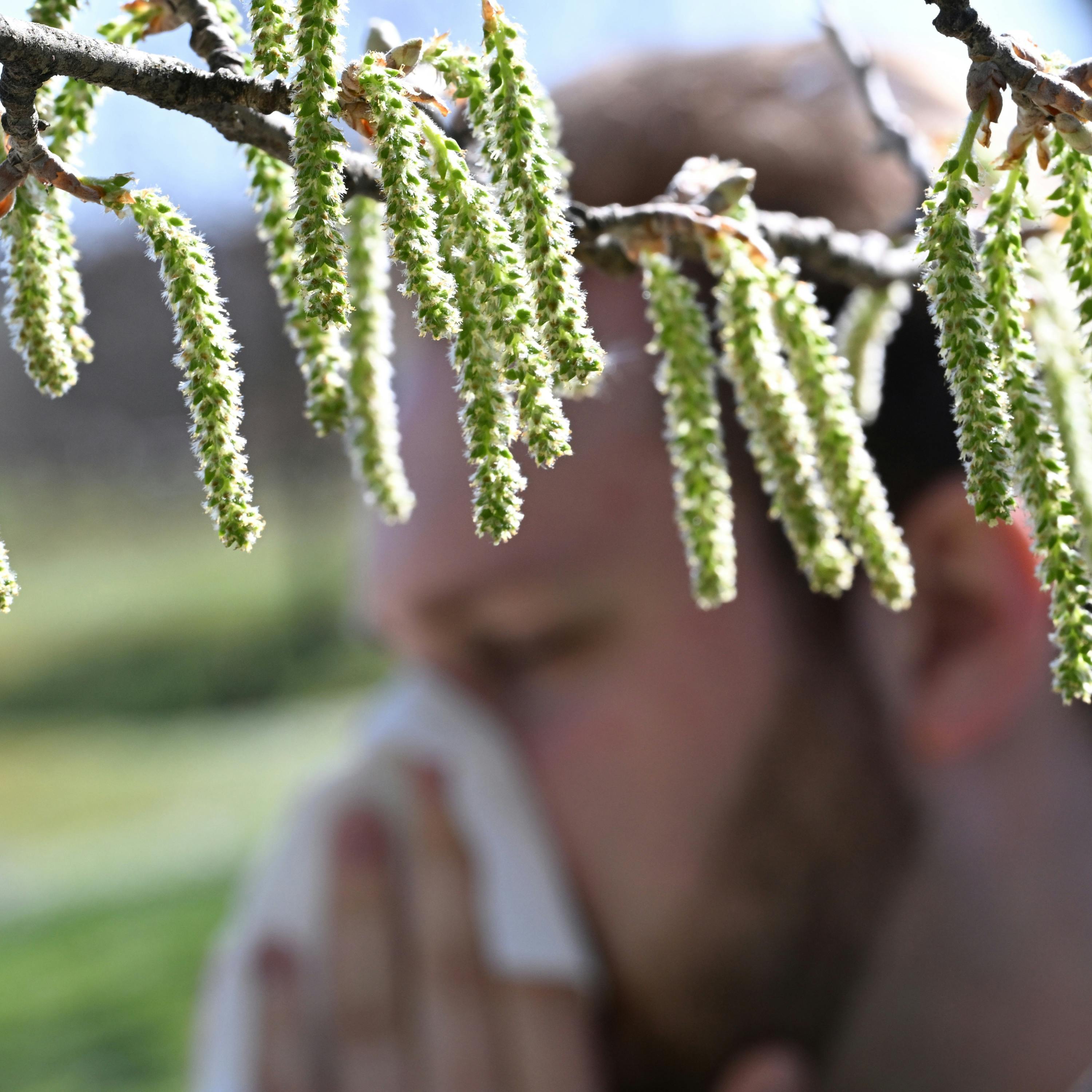
Today, Explained
Why are my allergies getting worse?
00:30:45
It feels like sneezing season lasts longer and takes more victims every year. An allergist and a public health specialist explain how to fight back.
Loading summary
Transcript64 lines
- [00:01]
Jacqueline Hill
As marketing channels have multiplied, the demand.
- [00:04]
Dylan Scott
For content has skyrocketed.
- [00:06]
Jacqueline Hill
But everyone can make content that's on brand and stands out. With Adobe Express, you don't have to.
- [00:11]
Dylan Scott
Be a designer to generate images, rewrite.
- [00:14]
Nilou Tumala
Text, and create effects.
- [00:15]
Jacqueline Hill
That's the beauty of generative AI that's commercially safe. Teams all across your business will be.
- [00:20]
Dylan Scott
Psyched to collaborate and create amazing presentations.
- [00:23]
Jacqueline Hill
Videos, social posts, flyers and more. Meet Adobe Express, the quick and easy app to create on brand content. Learn more@adobe.com Adobe Express Business your snacking routine can get a little dull Time for an Oikos Remix or Light and Fit Remix Like a crunchy storm of sea salt, praline pretzels, dark chocolate and butter toffee, showering down into a smooth, creamy yogurt. Enjoy six Remix varieties, three Epicomplete Protein Oikos Remix options, or three Craveable Light and Fit Remix options. See remixyogurt.com I've had allergies my whole life.
- [01:06]
Nilou Tumala
When trees grow, they produce pollen.
- [01:09]
Jacqueline Hill
Allergies suck. Hey, I'm Jacqueline Hill, and you're listening to Explain It To Me, the podcast where we answer the questions that matter most to you. A couple weeks ago we asked to hear about your allergy struggles, and we found out a lot of you have them. Hi, my name is Melanie Pozdil. I'm from Chicago, Illinois. Growing up, I didn't really suffer from seasonal allergies, but I feel like in my in the past couple of years, particularly since the pandemic, my seasonal allergies have gotten really bad. My name is Dorian. I happen to know JQ the host. Allergies have been the bane of my existence since I was a little girl, and the spring is my least favorite season because of them. Thank you. Hi, my name is Trey and I've had allergies my whole life. Allergies suck. I'm plagued by them myself. As the weather gets warmer, there's this fine gold dust that settles on everything. And that that's when the sneezing really begins. And it makes sense. One in five kids are allergic to pollen, and about a quarter of all adults are too. We're going to talk about how to make them better, but before we can work that out, we need to understand where they come from. So I reached out to Nilou Tumala. She's an ear, nose and throat surgeon at NYU Langone Health.
- [02:34]
Nilou Tumala
So right now, the most predominant pollen that we're dealing with is tree pollen. And so when trees grow, they produce pollen, and a lot of times the pollen is dispersed, especially early in the mornings. And when certain individuals, not everyone, but unfortunately, when certain individuals breathe in this pollen, it triggers an immune response inside their bodies. And so with this immune response, you get this cascade of inflammatory reactions. And so basically, basically, certain cells inside the body are activated, and then they release all of these inflammatory markers, including histamine. And then this causes a whole bunch of different symptoms. And from a nasal standpoint, the main symptoms that this causes is nasal congestion. So it's harder to breathe through your nose, it causes sneezing, and it causes a ton of nasal drainage and mucus production.
- [03:28]
Jacqueline Hill
Is allergy season now different from how it has been in the past?
- [03:33]
Nilou Tumala
The allergy season has changed over the years, and there's a couple of reasons for that. And one of the reasons that I think is really important is climate change. So over the past 30 to 50 years, as the environment has gotten warmer, as precipitation patterns have changed, the data also shows that the pollen allergy season has changed as well. But basically, over the past, like, 30 to 50 years or so, the pollen season is about three weeks longer. And there's slight variation depending on what region you're looking at in the US and there's about 20% more pollen in the air. So with warmer temperatures starting earlier in the year, the ground thaws and trees are able to grow earlier in the year in the fall, because it doesn't get as cold as fast and the ground doesn't freeze as quickly, ragweed pollen sticks around longer than it used to. And so that's why, on average, we're seeing this lengthening, both because there's an earlier start to the pollen allergy season, and the in allergy season is lasting longer into the fall.
- [04:42]
Jacqueline Hill
Okay, so this makes something in my life make sense, because it'll be fall, and I'm like, oh, is this a cold? Is it flu? And then I test negative for that. But I take allergy medication, I feel better, and I'm like, oh, that explains that. Should we expect seasonal allergies to just continue to get worse as climate change keeps going?
- [05:04]
Nilou Tumala
There have been studies that have tried to look at future projections of how the pollen allergy season will continue to vary and continue to change if global warming continues unmitigated? And the data does show that there is concern that the pollen allergy season will continue to lengthen and that there will continue to be more pollen in the atmosphere as carbon dioxide levels, one of the main greenhouse gases contributing to climate change, increases.
- [05:30]
Jacqueline Hill
Yeah, I wanna. I wanna get into impact now. What are the most common complaints you hear from your patients when it comes to seasonal allergies? Whenever the trees start blooming, like now, the bugs start coming out, I am just stuffed up like crazy. It's really heartbreaking to now be an adult with seasonal allergies because I never had them growing up. And I feel like I can't go through the summer now without, like, having Zyrtex or Benadryl by my side because I'm so stuffed up all the time. I woke up one morning with a really bad headache. It almost felt like the flu. Like my head was really heavy, my eyes were itchy, my ears were itchy, but also I felt it in my body. Then I went to the doctor, and they're like, yeah, that's cedar fever. You have seasonal allergies. And ever since then, I've been dealing with seasonal allergies for over 10 years.
- [06:17]
Nilou Tumala
So there's a couple of symptoms I hear very commonly from patients. And the big one is I can't breathe through my nose, and I always feel like my nose is dripping or I always have to blow my nose. And of course, there's just the constant feeling that you have to sneeze or constantly actually sneezing. And so what I hear a lot from my patients is the specific symptoms that are secondary to allergic rhinitis, which is the nasal allergy symptoms. And so the three main symptoms there are nasal congestion, difficulty breathing through the nose, increased mucus production. So it's like post nasal drip or constantly having to blow your nose and then sneezing. But then a secondary concern that I hear a lot from my patients is I don't. I can't sleep well at night. Right. The fact I'm not breathing well through my nose, that's impacting my sleep quality. And then also, I don't feel like I'm paying attention as well during the day. Right. And this is actually a huge concern in children as well. Studies have shown that kids who have allergies, whether it's to pollen, mold, dust, animal dander, they also are not doing as well in school in certain studies because they're impacted by their allergy symptoms. And so that impacts their ability to pay attention during the school day.
- [07:24]
Jacqueline Hill
Are there more serious side effects to allergies?
- [07:27]
Nilou Tumala
So basically, when you're introduced to these allergens, and, you know, we're talking about pollen here specifically, and it creates this immune reaction in the body that then causes this cascade of the inflammatory reaction that can increase your risk of having an asthma attack, which is a huge, you know, respiratory concern and definitely, you know, is a major driver of people having to go to the emergency department to be able to protect their breathing.
- [07:51]
Jacqueline Hill
Is there anything you want our listeners to know before we let you go? Anything we haven't touched on?
- [07:56]
Nilou Tumala
There's a lot of different ways that climate change is impacting allergies beyond just pollen allergies. One of the other things that we're seeing is the increased risk of mold exposure with worsening natural disasters in the face of climate change. And so we're seeing intensified hurricanes and flooding events. And all of this water is increasing the risk of mold exposure and mold growth in the homes. And so that's another really common allergy that we really need to be conscientious of. And we're definitely concerned about from a healthcare perspective of how people's allergies are getting worse in the face of climate change.
- [08:35]
Jacqueline Hill
Okay, that's outdoor allergies. So maybe you've thought of a solution. Why don't I stay inside all spring to avoid the pollen? I don't have to touch grass. But what if it's coming for you inside too? That's after the break. Foreign comes from Koala There are lots of awesome things, says Koala, that have come out of Australia on the beach. The book, not the movie. Joel Edgerton, Wake in Fright, who wrote this and now says Koala. You should also consider Koala. Koala says they make the most comfortable mattresses with Instagram worthy color options. Inspired by the Australian outb. Unlike traditional sofa beds, Koalas are designed just for comfort. No metal frame. They say they have tool free assembly, no Allen wrenches, no stress, no tears. Everything comes in the box, which you'd expect, but also it easily slides and clicks and screws together. Koala promises fast shipping and free returns. You can upgrade your space with what they call the most stylish, customizable and elevated sofa bed available. To get $100 off your new sofa plus fast shipping, go to us.koala.com exclusive explained. That's us.koala.com explained. To get $100 off your New sofa, Koala Comfy, Easy, Sustainable.
- [10:05]
Dylan Scott
Ryan Reynolds here from Mint Mobile. I don't know if you knew this, but anyone can get the same Premium Wireless for $15 a month plan that I've been enjoying.
- [10:13]
Joseph Allen
It's not just for celebrities.
- [10:15]
Dylan Scott
So do like I did and have one of your assistant's assistants switch you.
- [10:18]
Joseph Allen
To Mint Mobile today.
- [10:20]
Dylan Scott
I'm told it's super easy to do@mintmobile.com.
- [10:23]
Jacqueline Hill
Switch upfront payment of $45 for 3 month plan equivalent to $15 per month required. Intro rate, first 3 months only, then full price plan options available, taxes and fees extra. See full terms@mintmobile.com explain it to me is back. And unfortunately, so are your allergies. And the worst of it is you can't escape them inside. Enter Joseph Allen. He's the director of Harvard's Healthy Buildings Program.
- [10:50]
Joseph Allen
The majority of outdoor air pollution you breathe happens indoors. I think most people think that's wild and maybe inaccurate, but it's not. And the reason is this. We spend 90% of our time indoors. Outdoor air pollution, like pollen and other allergens comes inside and you're breathing most of your breaths each day indoors. The first thing we have to think about is outdoor air pollution coming inside. And then we have indoor sources of air pollution. When you cook, that releases particles in the air. When you use surface cleaners, that's releasing chemicals into the air. And indoor air pollution can be 5, 10, or even 100 times higher than outdoor air. So there's a whole bunch we have to be worried about when we're thinking about indoor air.
- [11:31]
Jacqueline Hill
Yeah. Can you describe what those indoor allergens are? What's causing this?
- [11:38]
Joseph Allen
Well, you have a bunch. So you have everything from outdoors that can trigger allergies, including things like outdoor air pollution or allergens that come inside. Indoors, you can have allergens like from pets, so cat allergen, dog allergen. You can also have it from unwanted pests like cockroach allergen, mice allergen, rat allergen. And then you have other things that can trigger allergic reactions or sensitivities in people. Things like some of these volatile organic chemicals or what we call VOCs or even. I mentioned, when you cook indoors, you're releasing particles in the air and that can have a triggering effect for some people too. Some are really quite toxic, some are more benign, but many of them can be irritants. In other words, they can in low levels may be okay, but in higher levels they can make your eyes itchy and things like that, or cause respiratory issues, particularly in kids.
- [12:30]
Jacqueline Hill
Do we know how prevalent indoor related allergies are?
- [12:34]
Joseph Allen
There are studies showing high rates of asthma attacks and exacerbations and other allergy related issues related to all of this in the indoor environment, related to whether it be pests or pets or some of the chemicals we use indoors, a lot of what we know about allergens and things like pollen, we spend a lot of Time thinking about outdoor air pollution, not so much thinking about what's going on inside of our homes that can trigger some of this. And people often attribute an allergic reaction or to something that they think is happening outside where it actually could be something indoors that's causing.
- [13:16]
Jacqueline Hill
I would love to go back in time and kind of talk about the history of this building quality situation. Let's start back in the mid-1800s kind of, and take us on through, like, what's it looking like? What do we know?
- [13:31]
Joseph Allen
All right, I love it. The history of air quality told through the lens of public health. So, yeah, about 150 years ago, we had Florence Nightingale telling us the only defense a true nurse either asks or needs is cleanliness and fresh air from open windows. She's talking about fresh air from open windows at about that time. We started to set these health based standards in the late 1800s, early 1900s, because of the prevalence of things like tuberculosis and other respiratory pathogens. So this was the basis for building codes and standards for like 100 years. Then come the 1970s. What happens? Well, in response to the global energy crisis, we start to choke off the air supply in our buildings. So we turned these, our homes and offices and schools into these little hot boxes of all this garbage indoors. And we stopped letting them breathe. And we started using filters that are worse, that don't capture a lot of the airborne particles. And then that started, really the era we're in now, which is the sick building era. But coming through Covid, people start to realize, oh, okay, we need better ventilation, more air coming in, better filters to capture those particles that carried the virus. And so I'm hopeful now that we're kind of seeing the folly of the past 40 years. We go back to Florence Nightingale, back to our roots, and say, you know what? It doesn't take that much to have a healthy building. It's a little more fresh air, some better filters, a couple other things. Of course, I'm simplifying it a bit, but it doesn't take all that much, really to have a healthy school, a healthy home, a healthy office, a healthy hospital.
- [15:06]
Jacqueline Hill
It's impossible to talk about health without talking about disparities. I'm curious how those disparities show up when it comes to indoor air quality.
- [15:15]
Joseph Allen
We talked about impacts on mental health, brain health, when you think about kids in schools. We also know better air quality is associated with better math scores, better tests of reading comprehension. So it's not just this amorphous thing, oh, it's a little worse air quality no, no, no, no. This is having a major impact on kids ability to function in the classroom. We see this in college kids, we see this in adults that air quality is influencing our brain health. And then we see these disparities across society when it comes to our buildings. So in schools that are predominantly black and or predominantly have kids on free or reduced lunch, we see even lower ventilation rates.
- [15:56]
Jacqueline Hill
Okay, say someone hears this and they're like, let me get my indoor life together. Let me get my indoor air quality life together. What do you recommend that they do? Are there things they should be buying, things they should be doing?
- [16:07]
Joseph Allen
Yeah.
- [16:08]
Dylan Scott
Good.
- [16:08]
Joseph Allen
Great question. I think there's a couple things I do and people should do I would recommend in their house. The first is I think you want to maximize how much outdoor air you're bringing in. So that can be popping open window. Second thing is you want to increase the level of filtration. If you're in a building with a central System, that's a MERV 13 filter, a higher grade filter. It doesn't cost much, much at all. Also, in my house, I use portable air cleaners with HEPA filters. I mean, think about your bedroom. You spend a third of your life in one little box on this planet, you better be sure that air quality is good in there. So, you know, you wanted to know where you should put an air purifier. I'd put one in the bedroom. That's where I have it. The third thing you can do is you can get one of these lower cost air quality monitors that are now available to the public. You can measure the particle levels. You can measure CO2, carbon dioxide, which is a proxy for ventilation. You can measure those VOCs we talked about, the volatile organic chemicals. You can measure things like radon, which is the second leading cause of lung cancer, big problem in homes. But these sensors, they used to be several thousands of dollars. Only scientists had access. Now maybe it's 100, 200, maybe 300. So not cheap. Cheap, cheap, but definitely more available to the masses. So if you do a couple things, you want to bring in more outdoor air, upgrade your filtration and measure the air.
- [17:26]
Jacqueline Hill
All right, Joe, thank you so much for explaining this to us.
- [17:29]
Joseph Allen
Well, thanks for having me. It's nice to be back on.
- [17:33]
Jacqueline Hill
Coming up, what if I told you there's a potential cure all on the horizon? Would you try it? That's after the break. Are you still quoting 30 year old movies? Have you said cool beans in the past 90 days? Do you think Discover isn't widely Accepted. If this sounds like you, you're stuck in the past. Discover is accepted at 99% of places that take credit cards nationwide. And every time you make a purchase with your card, you automatically earn cash back. Welcome to the now it pays to Discover. Learn more@discover.com credit card based on the February 2024 Nielsen report.
- [18:16]
Joseph Allen
Today we helped a latte for Sam.
- [18:19]
Jacqueline Hill
Coffee shop get an insurance quote simply and easily and made sure a floral delivery van was able to make someone's day. We're the Hartford with decades of experience.
- [18:30]
Nilou Tumala
Insuring millions of unique small businesses when it comes to your small business insurance.
- [18:37]
Jacqueline Hill
Thank you. One size absolutely does not fit all. Get a quote or find an agent today@theheartford.com small business. It's explained it to me. And we're back, this time with my colleague Dylan Scott, who covers health for Vox. Okay, so we've spoken about seasonal allergies and related issues with indoor air quality. How effective are the allergy medications that are available over the counter? You know, it feels like there are so many options. You've got your pills, your sprays, your, you, all these different things. What, what is the landscape like?
- [19:11]
Dylan Scott
Yeah, right. There's a whole aisle at the pharmacy where you can shop for these over the counter medications for allergies. And yeah, you've got Claritin, you've got Benitril, you've got Xarelto, this, this long list of medications. But, you know, antihistamines, you know, they can help, but they don't probably work as well as any of us would like to see. You know, these allergies hit us when it's springtime, when the weather's getting nice. All we want to do is get outside. So, you know, antihistamines, they're better than what we had before, which was basically nothing, but they aren't cutting it these days. And so, you know, nasal sprays, they're annoying. I don't know about you, but I hate spraying stuff up my nose. I think a lot of people have been looking around for a while and thinking, like, how can this be the best that we can do? This drug that maybe works like half the time or this sort of disgusting liquid that I have to shoot up my nostril? Like, we've gotta be able to do better than that, right? And we're actually finally getting to the point where maybe we can.
- [20:21]
Jacqueline Hill
So your reporting shows that, you know, we might be on the cusp of another medication revolution for allergies. Almost like the one allergy cure to rule them all. But it's not a new medication per se. There's some history there, sure.
- [20:37]
Dylan Scott
So there is an existing drug. It's called. I'm gonna butcher the scientific name, but I'll get the brand name right. It's called Omalizumab, but it's sold, it's sold by the brand name Xolair, which is a lot easier to handle. So this was a drug, it was approved 20 years ago and it was approved for the treatment of asthma. Now, as you can imagine, like asthma, you know, asthma reactions and allergic reactions tend to share a lot in common. And obviously people who have asthma tend to suffer more from seasonal allergies than people that don't have it. And obviously, like, you know, people immediately think that we're going to develop some new drug, we're going to start from scratch and come up with some kind of novel treatment. But a lot of times in medical science, the first step is to look at what you've got on your pharmacy shelf and think like, all right, is there any way that this could actually be effective for treating, you know, something that not been used to treat before? And so some preliminary clinical trials were held and they showed really promising results. People who took Xolair who got an injection shortly before the allergy season started, they reported having fewer symptoms, fewer days where they had to take a daily antihistamine or some other allergy medication. They just in general reported having a better quality of life during the allergy season. And so you've started to see some doctors here in the United States prescribe patients Xolair for their seasonal allergies. It hasn't been approved for that purpose by the FDA yet. Again, this was a medication originally developed for asthma. But this kind of off label use, where we have an existing drug and figure out it works for something else, that is something that happens all the time. And part of the reason doctors feel comfortable doing this is Xolair is a drug that's been on the market for 20 years. And so, you know, it's early stages. I don't think its use is widespread yet, but we are starting. I've talked with doctors who are starting to prescribe this for their patients specifically for seasonal allergies.
- [22:51]
Jacqueline Hill
How do patients take this medication?
- [22:53]
Dylan Scott
Yes, so I. Yes, so this is actually an injection, it's not a daily pill.
- [22:59]
Jacqueline Hill
Oh, okay.
- [23:00]
Dylan Scott
Yes. So this is a type of treatment. It's called monoclonal antibodies. Basically what monoclonal antibodies are are these specially designed proteins that can go into your body and stop certain biological reactions from happening, for example, your allergic reactions. And so the way that we develop these proteins is through a shot. And so, like, for example, with this 2022 study of Xolair, patients received a 300 milligram injection a couple of weeks before the pollen and grass allergy season was supposed to begin. So they weren't taking a pill every day. They got one injection, and over the following months had much better luck with their allergy symptoms than the people who were relying on, you know, an antihistamine or a nasal spray.
- [23:51]
Jacqueline Hill
So, you know, we've talked about Xolair in the context of seasonal allergies, but are there other allergies that this medication could help with?
- [23:59]
Dylan Scott
Yeah. So what is really exciting about Xolair, it can actually go in and stop your immune system from over overreacting in the first place. It can stop the allergic reaction from even beginning by blocking certain receptors in your body. And so this shouldn't just stop allergic reactions from pollen or from grass or for some other like seasonal allergy, but it could also stop reactions to food allergies like peanut allergies or insect allergies or mold allergies, like, because of the way that they function, function. This is stopping all allergic reactions. It's not just targeting the histamine release after the reaction has already started in the way that Claritin or Benadryl do. And so it seems at least, you know, plausible at this point that you could get this injection and at least for a certain period of time, it would stop any allergic reaction. Not only pollen, but food allergies, insect allergies, mold allergies. And so that makes them almost like an all in one genuine allergy wonder drug, the likes of which we have, we have never had before.
- [25:16]
Jacqueline Hill
That honestly is amazing. I'm sure there are plenty of people who will be able to say, oh my gosh, I can have shellfish or peanut butter or these things that I have not been able to have. What is the cost of Xolair looking like, you know, pharmaceuticals are notoriously expensive. Is this expensive?
- [25:33]
Dylan Scott
It is expensive. The list price especially is high. And that's why I do think going forward, health insurance coverage will be really important. So the list, the list priced on Xolair is $1,500 a pop. Now, obviously, like, the people who get prescribed this medication for their asthma do not necessarily have to pay that price. But this is sort of the problem with off label use. You know, doctors feel comfortable using Xolair for allergies because, you know, they've seen studies that show it can be really effective. But from the health insurer's point of view, they're like, well, wait a minute, you're just prescribing this drug that hasn't been approved by the FDA for this use. Like, that was an asthma drug. Like, why are we, why would we cover that for seasonal allergies? But we don't know. We're still kind of in this transition period.
- [26:23]
Jacqueline Hill
Earlier, we heard from an ear, nose and throat doctor about how climate change is making allergy seasons longer and more intense. Do you feel like American science is ready to face these challenges? You know, with so many attacks from the Trump administration on federal funding for scientific research.
- [26:44]
Dylan Scott
I think it's worth thinking about, like the chain of research that leads to a new drug getting developed. And almost every drug that has ever been developed in the United States started like its foundation was based on science that was funded by the federal government. In a lot of cases, for a clinical trial like that, it's the pharmaceutical company that's footing the bill because they want to get a drug approved so they could eventually sell it. But if we take the longer view, like, we so desperately need this kind of government funded research to give us new ideas about, like, how we could better treat all kinds of things, including, including allergies. And my fear would be that maybe not tomorrow, maybe not a year, even five years from now, but ten years from now. Suddenly the pipeline for allergy treatments is drying up because that kind of basic research that leads to new ideas for new treatments was cut off in 2025.
- [27:43]
Jacqueline Hill
Dylan Scott, thank you so much for explaining this to us.
- [27:46]
Dylan Scott
Thank you for having me, Jacob.
- [27:48]
Jacqueline Hill
You up next. We're working on a show about Gen Z and religion. Gen Z is in the midst of this really interesting trend. They're going to church more. We'd love to hear questions or any personal stories you have about finding faith as a gen zer. Have you recently found religion or know other young people who have? Tell us about your spiritual journey. Give us a call at 1-800-618-8545. This episode was produced by Devin Schwartz. It was edited by Miranda Kennedy, Fact Checked by Melissa Hirsch and engineering by Matthew Billy. Special thanks to the folks at WABE in Atlanta for helping make this episode happen. I'm your host, Jonquillen Hill. Thanks so much for listening. Bye. Achoo.