← Today, Explained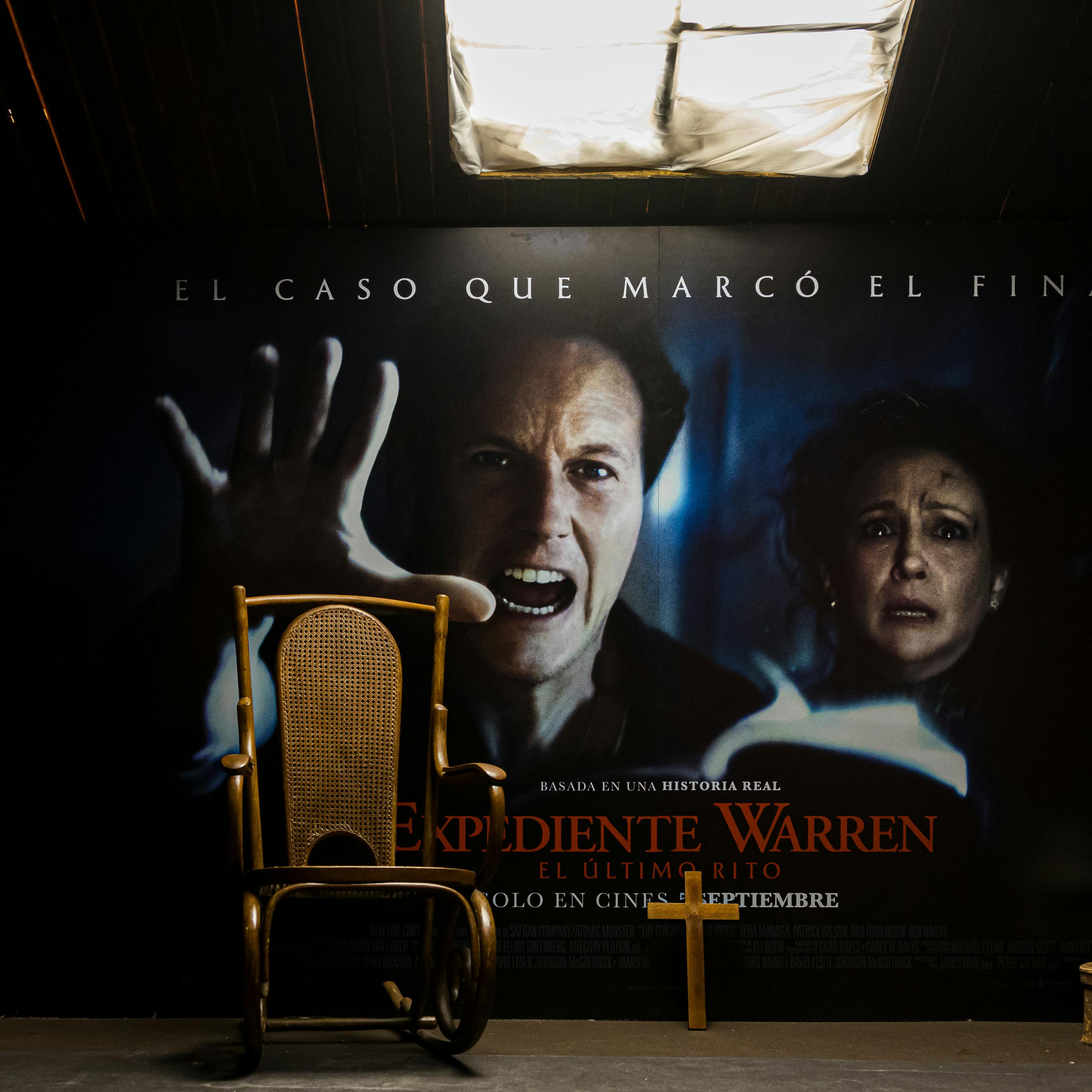
Today, Explained
Why horror kills at the box office
00:30:01
Hollywood has always made money from vampires and brain-eating zombies. But this year's a record-breaker thanks to sequels, hilariously unlikely creators, and pure thrills.
Loading summary
Transcript88 lines
- [00:00]
A
Support for the show comes from ServiceNow. AI is only as powerful as the.
- [00:04]
B
Platform it's built into, don't you know? That's why it's no surprise that more.
- [00:08]
A
Than 85% of the Fortune 500 use.
- [00:11]
B
The ServiceNow AI platform. Didn't know that.
- [00:13]
A
While other platforms duct tape tools together.
- [00:16]
B
ServiceNow seamlessly unifies people, data workflows, and AI connecting every corner of your business.
- [00:22]
A
And with AI agents working together autonomously, anyone in any department can focus on.
- [00:27]
B
The work that matters most. I've Never met an AI agent. Learn how ServiceNow puts AI to work for people@servicenow.com so good, so good, so good. New fall arrivals are at Nordstrom Rack stores now. Get ready to save big with up to 60% off. Vince, Kurt, Geiger, London and more.
- [00:44]
C
How did I not know Rack has Adidas?
- [00:46]
A
Cause there's always something new.
- [00:48]
B
Join the Nordy Club at Nordstrom Rack to unlock exclusive discounts on your favorite brands. Shop new arrivals first and more. Plus, get an extra 5% off every rack purchase with a Nordstrom credit card. Great brands, great prices. That's why you rack.
- [01:05]
C
Anytime anyone goes into a darkened basement, people freak.
- [01:09]
B
And yeah, I just think it's been by far the most innovative film genre of the past 15 years. The suspense is building, building, building. I'm Jacqueline Hill. This is Explain it to me from vox. Okay, you guys, I'm not big on truly scary stuff. I'm a little bit of a scaredy cat. Once my friend convinced me to go see it with her in theaters. I do not know why I did that.
- [01:40]
A
I'm Pennywise the dancing Clown.
- [01:43]
B
And when I got home, I turned on all the lights in my apartment and watched old episodes of SpongeBob as a palate cleanser before I could go to sleep.
- [01:50]
A
I wish I lived there. Really? No.
- [01:54]
B
But recently I've been dabbling. And a lot of you more than dabble. At a very young age, all of.
- [02:03]
C
My brothers and sisters, we were watching all of the horror movies that you should not watch.
- [02:08]
B
I'm a lover of all things monstrous. Always has been. I love the aesthetic of the scary. The teeth, the claws. Just think it's cool. So like we always have like the really gory, gruesome Halloween costumes. I have always been like a deep scaredy cat. But about five years ago I started watching horror movies during Halloween with my roommate. And I think it's because horror movies today are like kind of the last vestige of that kind of mid budget movie. It's not like a huge Marvel blockbuster that feels all the same. And I feel really great when I get a sense of exhilaration from the danger presented in a horror movie. But I'm actually safe in the audience. It seems we're in a kind of scary movie renaissance at a time when the box office is kind of in a slump. Fear's keeping it alive. That's according to Paul de Garabedian. He's head of marketplace trends for comScore, which keeps track of box office trends, and he is biased towards horror films.
- [03:12]
C
So I have a long standing relationship to horror movies, having grown up with three older sisters. They love movies. And yet I was too young to go see the Exorcist and they snuck me in to see it. I'm traumatized to this day in a good way, because I absolutely was blown away by the movie. What that movie proved to me is that seeing a horror movie in a movie theater, the only way I could hide from the scariness on screen as a kid was to cover my eyes, you know, and I was embarrassed to do so. But you're in that darkened room, so it really is in that communal environment. You can feel the electricity, the energy of people. That was really cool when you're in a theater and everybody kind of collectively jumps. Horror movies create that sense of dread, that fear factor.
- [04:01]
B
You talk about this sense of, you know, dread. Is that the definition of a horror movie? How have the definition of horror movies changed in recent years? Has it?
- [04:11]
C
I don't think it has. I think that's what's so pure and cool about horror movies is that they really haven't changed. If you go back to Nosferatu starring Max Schreck, way back, I believe it was the early 20s. You know, the horror movie genre has been a staple of cinema since the beginning, since the dawn of cinema. And I think it is just always been the same and that collectively, as human beings, we, you know, it's baked into our DNA to be afraid of certain tropes, situations, you know, the cues, the music cues that make you go, oh, wow, something scary is about to happen. That all plays in there. But I think the basic idea of what horror is is that sense of Dr. When you go see the conjuring and that music swells at the beginning with the, that ominous music and the Warner Brothers logo, new line logos come up and you're just braced and ready to go. People are giggling. It's kind of that nervous laughter. And so it's about the communal experience, but also what's going on in Your head. Horror really can separate different personality types. If you're like, I love horror movies. I want the most R rated, scary, gross. You know, some people are into like, you know, bodies being dismembered, torture porn as they used to unfortunately call it, those kind of movies. But to each his own. Whatever. Look at Terrifier.
- [05:41]
A
Now, for a guy who doesn't speak, he sure makes a lot of noise.
- [05:45]
B
Please welcome Art the Clown.
- [05:49]
C
I almost can't even watch that. Like, first of all, don't eat while you're watching Art the Clown.
- [05:55]
B
Good to know.
- [05:56]
C
And then there's the more cerebral films, you know, get out us. Jordan Peele's films. Conjuring, I would say especially the first Conjuring back in 2013. Just a great movie and as relevant today as we saw recently with that massive 84 million domestic opening for the Conjuring Last Rites, which blew the doors off and surprised a lot of people. And horror movies have already surpassed a billion dollars in domestic box office, according to our Comscore data. Horror movies continue to thrill audiences.
- [06:28]
B
Have scary movies always been such a big moneymaker?
- [06:32]
C
They generally have. They're actually very profitable. So even like back in the day, you would have a movie like the original Halloween to the very modest budget and then just became this box office juggernaut. But generally I always say, until now or until in the last maybe decade or so, I would always call horror the Rodney Dangerfield of genres. It can't get no respect.
- [06:57]
A
Well, that's the story of my life.
- [06:58]
B
No respect.
- [06:59]
C
Because a lot of times what would happen as a money grab, there's no better genre than horror, at least traditionally with horror, it's so much in your head and the situations don't necessarily require cgi, although of course that happens. But if you look at a movie like weapons at 2:17 in the morning.
- [07:19]
A
Every kid woke up, got out of.
- [07:23]
B
Bed, walk downstairs and into the dark.
- [07:27]
C
From Zach Krager, who also directed Barbarian, Barbarian is a very lo fi movie. I mean, there's these small intimate situations that are scary because they are just that, they're, they're more confined and that really works. But as a general rule, to make a very effective horror movie, you don't have to spend a fortune so they can be bloody profitable. And at the end of the day.
- [07:51]
B
Can you tell us who's leading the way in horror right now in 2025?
- [07:55]
C
If you just look at Sinners, Sinners for me is one of the best movies of the past five years, maybe more. It goes beyond the horror genre and to have Ryan Coogler directing Michael B. Jordan, that great cast, the entire premise, the music.
- [08:10]
B
There are legends of people born with the gift of making music so true it can pierce the veil between life and death, conjuring spirits from the past.
- [08:27]
A
And the future.
- [08:32]
C
It almost doesn't do it justice just to say that that Sinners is a horror movie because it's so much more. And then to be followed up by Final Destination Bloodlines, another older horror franchise. Okay, for the 1500th time, no one gives a shit about your stupid little death curse.
- [08:50]
B
Okay? So take a hint and leave us alone. Because that's not coming for our family.
- [08:56]
C
Again, overperforming at the box office and then at the end of the summer to have weapons dominating the month of August. And let's not forget last year Nosferatu. That movie opened on Christmas Day and Nosferatu is an example of an Academy Award level horror film. And again, they used to not get any respect. But you go back to the Exorcist, Rosemary's Baby, considered some of the greatest movies of all time, full stop. You don't have to even qualify as horror movie, they're just great. So it's just really cool to have a genre like this really bolstering the box office. I mean when you talk about $1 billion in box office, the first time we ever hit that in domestic meaning US and Canada box office was way back in 2017. The horror movie box office before then had never hit a billion dollars. But again, when you have it and get out and split that year, all great movies, 1.16 billion. Again not worldwide but US and Canada domestic gross. But right now, in 2025 through the weekend of the conjuring last rites, we're already at a billion, over a billion dollars and more to come.
- [10:12]
B
So these movies, but why do we like them so much? And what other genre scratches that same itch? That's next.
- [10:30]
A
As a founder, you're moving fast towards product market, fit your next round or your first big enterprise deal. But with AI accelerating how quickly startups build and ship, security expectations are also coming in faster and those expectations are higher than ever. Getting security and compliance right can unlock growth or stall it if you wait too long. Vanta is a trust management platform that helps businesses automate security and compliance across more than 35 frameworks like SoC2, ISO 27001, HIPAA and more. With deep integrations and automated workflows built for fast moving teams, Vanta gets you audit ready fast and keeps you secure with continuous monitoring as your models, infrastructure and customers evolve. That's why fast growing startups like Lang Ryder and Cursor have all trusted Vanta to build a scalable compliance foundation from the start. Go to vanta.com Vox to save $1,000 today through the Vanta for Startups program and join over 10,000ambitious companies already scaling with Vanta. That's V A n t a dot com Vox to save $1,000 for a limited time. Your teen adjective used to describe an individual whose spirit is unyielding, unconstrained, one who navigates life on their own terms, effortlessly.
- [11:56]
B
They do not always show up on.
- [11:58]
A
Time, but when they arrive, you notice an individual confident in their contradictions. They know the rules, but behave as if they do not exist. New Teen the new fragrance by Miu Miu defined by you.
- [12:17]
B
There have been a bunch of critically acclaimed horror movies in recent years. Get out. Talk to me. Weapons. What do they all have in common? They come from creators who originally got their start in comedy. So I asked Allison Wilmore, a film critic at Vulture and New York Magazine, to explain the connection between what frightens us and what makes us laugh. For me, the best horror comedies are both scary and funny. I also will say, I think that one of the great qualities of horror, as much as we associate it with being this, you know, it's a spooky genre. It's filled with a lot of dark things. It can be like, really upsetting sometimes. I think that comedy is always paired really naturally with horror. Even in movies that are pretty straightforwardly horror, I think there's usually some room for intentional comedy or sometimes, if the movie's not going well, unintentional comedy. The one I always think about just in terms of like an early horror comedy is like, there's Abbott and Costello meets Frankenstein. The nation's top comics, Abbott and Costello, petrified, but hilariously like, that was like back in the 1940s. So like, even back then, you've got classic comedy duo meeting classic movie monster in the spookiest laugh. Best on record movies that are horror comedies, but that are also sort of about the kind of like, tropes of horror, right? Like, Shaun of the Dead is a zombie movie that is clearly made for and by people who actually, you know, have seen zombie movies, including the characters within it.
- [13:47]
A
Get higher, baby, get higher, girl.
- [14:02]
B
We've all, at this point become so familiar with a lot of the basic ideas about how horror movies work, right? The Scream movies are all just a riff on what you should do or not do. If you realize you are a character in a horror movie, never, ever, ever, under any circumstances, say, I'll be right back. Cause you won't be back. I'm getting another beer.
- [14:20]
C
You want one?
- [14:21]
B
Yeah, sure.
- [14:22]
C
I'll be right back.
- [14:25]
B
Why do horror and comedy go so well together? You know, it feels like such an odd combination on its face. I know they do feel like they should be the opposite. But I think one. I think they're both genres that have been considered a little disreputable. It's entertaining and it's something that goes back to, like, the earliest days of kind of telling stories for entertainment. But at the same time, we don't treat it as seriously as drama. You know, a lot of the same elements that go into making, like, a bit work or joke work also are what makes a Scare work. Right. It's a question of, like, timing. It's a question of craft. It's a question of, like, landing that punchline or landing that jump scare, you know, kind of elaborate setups. And I think that that speaks to a certain kind of, like, shared spirit in both of those genres. And that's one of the reasons I think they fit so well together and people move back and forth between them. Yeah. It's interesting you say that. I guess they both do sort of thrive on the unexpected. There's a sense of surprise with both comedy and with horror. Absolutely. And I think, you know, we think a lot about jump scares as trademark experiences of watching a horror movie. But I think that they also.
- [15:40]
A
Right.
- [15:40]
B
What do you do when you get, like, a really good jump scare? I think you also, like, you laugh a bit. Right. Like, you build up tension and then there's a release. And I think that same thing happens with a joke as well. You know, I think of some of our most buzzy horror creators right now, I think of Jordan Peele of Get out and Zach Kreger of Weapons. They're comedians, you know, And I'm curious what you think about that crossover, like, why they are so good at getting those scares. I think that it goes back to that kind of shared DNA of how you set up a scare and how you set up a joke being. Being very similar, even if your aims are different in terms of, like, the response he wants from an audience. And yet, you know, I mean, you mentioned those two. I was also just, like, looking around the director of Heart Eyes, you know, which is a movie that is both a riff on, like, slasher movies and romantic comedies. He's like, Cupid With a kink. It was directed by Josh Rubin, who worked at College Humor. There's a pair of Australian brothers, the Filippo brothers, who did that movie. Talked to me about the kind of, like, hand that could let you see ghosts. Guys, the reception for the movie has been fucking crazy. All these directors that we've grown up.
- [17:06]
C
Loving are, like, reaching out to us personally.
- [17:08]
B
Jordan Peele, Ari Aster, Steven Spielberg, Stephen King wants to watch a f ing movie, and they got started on YouTube making, like, these kind of goofy sketches and videos for YouTube. So there is definitely a real trend there in terms of the kind of comedy to horror pathway. Something can be really frightening and also very kind of profound in its commentary and also funny. And I love, actually, that mix. It's one of my favorite things about horror is that it can accommodate so many mixes of tones. I think maybe more so than any other genre. It's just this, like, incredible container for things that can be really weirdly touching. You know, we're exploring grief, and then on the other side, like, just kind of outrageous and funny and shocking and grotesque. Yeah. It almost seems like it's the tofu of movie genres. Absolutely. It picks up the flavors of whatever it's cooked with. So the main focus of practically every horror movie is escaping death. And, you know, we got a few calls from listeners where people say, I've always been kind of an anxious person. And for me, engaging with horror gives me the chance to feel scared and feel anxious in a safe way. I'm in control. I can choose to turn off a movie and I can just walk away. It's like a safe environment to challenge myself without any real consequences of doing something in real life that I'm scared of. I wonder what that says about us. Like the fact that this can be funny, the fact that this can be cathartic. In a way. Yeah. I think it's something that very much appeals to an aspect of human nature. You know, we want to be able to sample, you know, the darkness, to sample the danger. But, like, as you said, having it be in such a controlled environment, having it come in a way where you know that the credits are gonna roll and then you get to go home. You know, I'm of the age where Blockbuster Videos are still around, and I would absolutely go and just like, look at the covers of all of the horror movies, and some of them would get lodged in my brain and also still give me nightmares. But there's a reason that I think kids are also fascinated by even if they're not ready for And I think it's because we really like the ability to kind of like, touch on these experiences, to kind of delve into them without putting ourselves in actual danger. Coming up on Explain it to Me. How did we even get scary movies in the first place?
- [19:51]
A
This episode is brought to you by Jack Daniels. Jack Daniels and music are made for each other. They share a rhythm in the craft of making something timeless while being a part of legendary nights. From backyard jams to sold out arenas.
- [20:04]
B
There'S a song in every toast. Please drink responsibly.
- [20:07]
A
Responsibility.org Jack Daniel's and Old no. 7 are registered trademarks. Tennessee Whiskey, 40% alcohol by volume. Jack Daniel Distillery, Lynchburg, Tennessee. This episode is brought to you by FXX and Hulu. Futurama returns on September 15. Blending heartfelt moments with razor sharp humor.
- [20:24]
B
While accidentally saving the day.
- [20:26]
A
The Planet Express crew is back, defying gravity and common sense. From the creator of The Simpsons comes 10 new episodes. Where the romance is is hotter, the threats are bigger, and the action hits harder.
- [20:38]
B
Don't miss the all new season of Futurama returning September 15th at 8pm Watch.
- [20:42]
A
It on FXX or streaming on Hulu.
- [20:48]
B
Andrew Stasulis is an indie filmmaker and a film professor at DePaul University. I call him a film nerd, specifically a horror film nerd. So I had to know what his favorite is.
- [21:00]
A
So you know, what is the first movie that scared the shit out of you? I think that's always the best way to approach talking about horror movies, but for me it would have to be George Romero's Night of the Living Dead from 1968. That movie traumatized me. It damaged me, did permanent damage to my psyche. The opening images that. That stark black and white where they're in the graveyard and way off in the distance in the background, you see this form shuffling closer and closer to the camera like that is one of, I think, the best opening introductions of horror in any film.
- [21:49]
B
How did we get the scary movie in America as we know it? It's a story that actually starts in another country over a century ago, definitely.
- [21:57]
A
Right after World War I, up to the early 1930s. For me, the German Expressionists really gave birth to what we, I think today understand a horror film to be. German Expressionism is often marked visually by this, you know, very dark, very, you know, foreboding kind of lighting scheme. Lots of like high contrast contrast shadows. You know, shadows are this kind of sublime delineation between like good and evil, you know, terror and safety and that sort of thing. But really the first major, like, codification of the horror genre is born in Universal's Dracula.
- [22:50]
B
You are too late. My blood now flows through her veins. Is that when we saw Hitchcock emerge?
- [23:00]
A
Well, Hitchcock has a long career. You know, Hitchcock starts in the silent era. And as a matter of fact, Hitchcock had an internship as a young film worker in Germany with the German Expressionists. But it's Really, I think, 1960, with the release of Psycho, that Hitchcock, you know, once and for all, like, pushes film into an entirely new era. Here we have a quiet little motel.
- [23:36]
B
Perfectly harmless looking, when in fact it.
- [23:41]
A
Has now become known as the Scene of the Crime. Psycho is a very important film. It's really, I think, one of the first major death nails for something like the Hollywood Production Code. For those who don't know, in the 1930s, Hollywood implemented the Hays Code, as it's sometimes known, the Production Code Administration. And this was a very restrictive, very conservative form of censorship that removed a lot of the explicit content that people started to panic about in the early 1930s. And this limited things that you could show on screen. Violence, sex. But I think really, Hitchcock in Psycho more or less was, you know, instrumental in bringing about its eventual demise. And so from like 1968 on, it's really just this parade of films and directors trying to outdo the next in terms of shocking the audiences. The power of Christ compels you. The power of Christ compels you. The Exorcist, one could argue. And that movie, I mean, that shocked the hell out of audiences. No pun intended, right? Cause it is about a. A satanic possession. But right after the Exorcist, you then get the Texas Chainsaw Massacre. And like, oh, my God, I mean, no one had ever seen anything like that before. It's just, again, a whole different level in terms of its depravity, in terms of its cruelty, its monstrousness.
- [25:33]
B
So I want to move on to the 1980s and that's when we get classic slasher films. You know, I'm thinking Freddy Krueger and Jason Voorhees, these iconic villains with all these movie sequels. What was it about that era that made slasher films so popular?
- [25:49]
A
The slasher sub genre in Hollywood was really triggered by John Carpenter's Halloween. And I think the reason that Halloween was so terr and somewhat different from even, you could say the Texas Chainsaw Massacre is, you know, because in this case, the horror is happening right here in our little quaint suburban subdivision.
- [26:17]
C
I spent eight years trying to reach.
- [26:19]
A
Him and then another seven trying to keep him Locked up.
- [26:22]
C
Because I realized that what was living.
- [26:24]
A
Behind that boy's eyes was purely and simply evil. The through line of Hollywood is if something is successful, get ready, you're gonna see 25 more versions of that.
- [26:36]
C
Hi, I'm Chucky. Wanna play?
- [26:43]
A
And, you know, I think too, really, if you look at the 80s, there's this kind of almost reactionary, conservative tone that's embedded within a lot of that horror. You know, after the permissible sort of decades really, of the 60s and early 70s, there's this kind of swing backwards in culture. And if you look at a lot of those slasher films, like, it's always the promiscuous kids. It's always the kids spoken hot who are, you know, doing something bad, who get their throat cut. Like, don't be that person, you know, and you gotta be the virginal, saintly one to survive in the 1980s. Yeah, it's just like if you go to summer camp and have sex, you're gonna get your head chopped off by a machete. So be good kids.
- [27:30]
B
So how would you describe Big Picture, where we are with the genre today? You know, how is today's slate of movies changing the way we tell scary stories on screen?
- [27:43]
A
We're in this sort of cycle where, you know, a lot of people are taking horror seriously. We now have swung into a phase of, I think, people really respecting horror, respecting its traditions. And, you know, you, you see that in some of the most, like, popular and well respected directors of today. Jordan Peele with Get Out. Ari Aster with Hereditary Midsommar, of course, Robert Eggers, you know, and Zach Kreger. But, but really, you know, one thing that, that all those directors have in common, if you go and you listen to interviews with them, they're talking about older horror films. Look, I'm a Kubrick guy when it comes to the Shining, you know, I definitely, like, worship that movie.
- [28:35]
C
Carpenter tailored this monster in. All of the choices, the mask, the way he moves.
- [28:41]
A
Polanski is just somebody that I've been.
- [28:43]
C
Studying for a long time.
- [28:45]
A
They're talking about the lineage that we've been describing and, you know, how, how much they've learned from these past films and filmmakers, you know, the greats who've come before them, and they very much have placed themselves within that tradition and, and sort of like reclaimed, I think, the mantle of, you know, like. No, horror is, is a very important part of film history. Not just a, a place for cheap thrills, but, but a space to grapple with deep fears and questions of, you know what it means to be a human like we find that in these films.
- [29:34]
B
This episode was produced by Denise Guerra and Hadi Milwaukti. It was edited by our executive producer, Miranda Kennedy, with fact checking by Melissa Hirsch, engineering by Adrienne Lilly. I'm your host, Jonathan Hill. Soon we're going to talk about self help books. Whether it's the Secret or the 48 laws of power or something else, these books are everywhere. Tell us about your experiences with the genre. Give us a call at 1-800-618-8545. Thanks for listening. I'll talk to you soon. Bye.
- [30:13]
A
Making films? Then you got footage in Dropbox, scripts and docs, notes and slack and no time to hunt. Dropbox Dash, new from Dropbox, pulls it all together so you can focus on the final edit. Learn more at Dropbox.com/.