← Today in Focus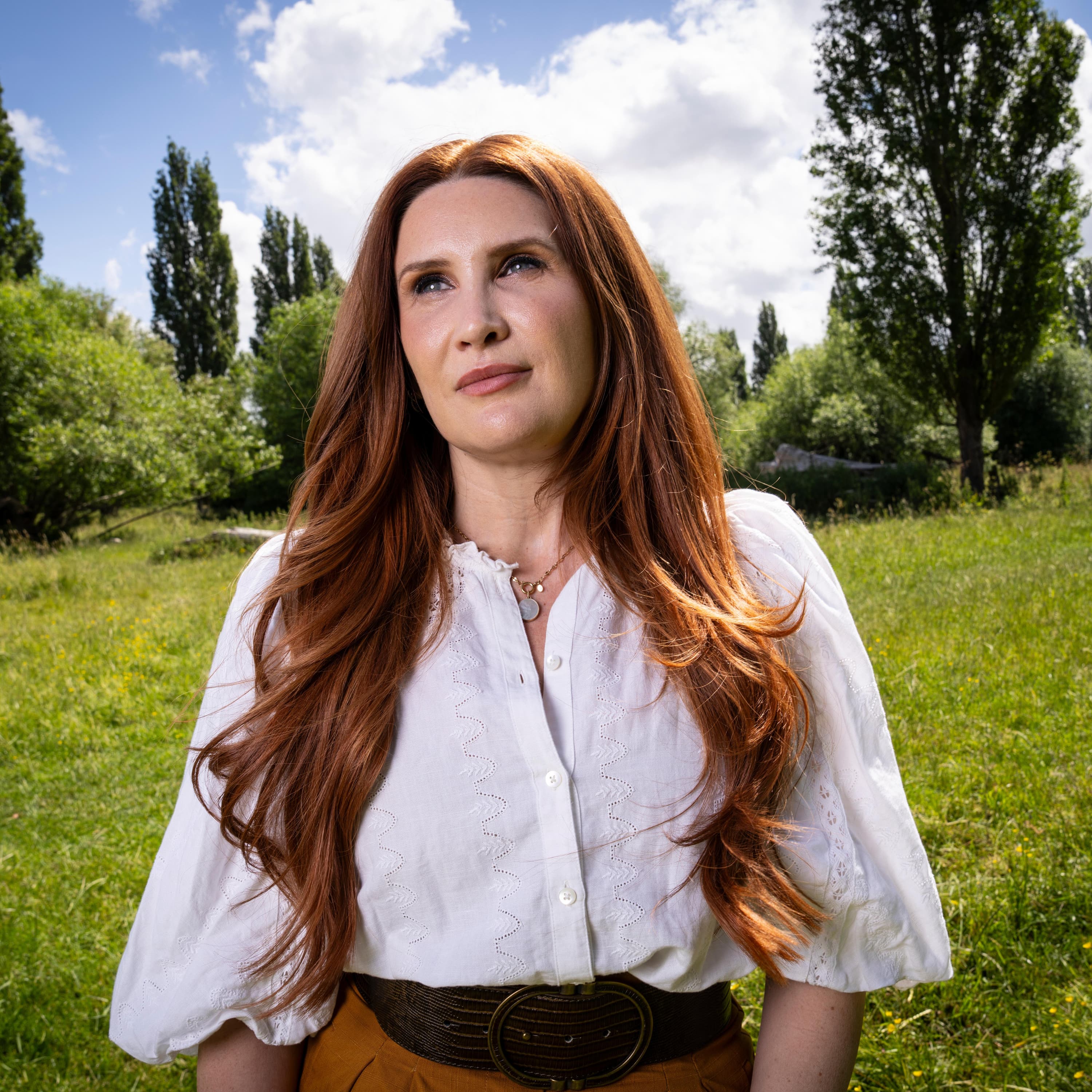
Today in Focus
A British woman was strangled in the UK – why did the US military try her case?
00:37:20
When the academic Sarah Steele was assaulted in England, she had no idea her case would end up in front of a US military court. Harry Davies explains why military judges and juries are ruling on crimes committed in the UK
Loading summary
Transcript144 lines
- [00:00]
A
This is the Guardian.
- [00:09]
B
Today, a British citizen was assaulted in Cambridge. Why did the US military decide her case?
- [00:24]
C
Running a business means juggling a lot of moving parts. And when your communication tools can't keep up, things start to slow. Missed calls, slow replies, scattered conversations. They're not just frustrating, they're lost opportunities and revenue left on the table. That's where quo comes in. Spelled q, U, O. Quo is the 1 rated business phone system on G2, trusted by over 90,000 businesses. One shared business number for calls and texts. So every conversation stays visible, organized and accountable. It works from an app or computer. You can keep your existing number, add teammates and sync your CRM, letting you scale without adding complexity. And with built in AI, Quo logs, calls, summarizes conversations and flags next steps, even after hours. Stop missing customers. Stop leaving revenue on the table. Try Quo free and get 20% off your first six months@quo.com tech. That's quo.com tech. No missed calls, no missed customers.
- [01:37]
B
And just before we start, today's episode does include discussions of sexual and physical assault. So please take care.
- [01:46]
A
Look at them in their uniforms.
- [01:49]
B
It's the spring of this year and Guardian Investigations reporter Harry Davis is in the east of England.
- [01:55]
A
My colleague Rob Evans and I, we're in the car and we are driving through a very luscious green English countryside in Suffolk.
- [02:03]
B
Their destination, one of the many US military bases scattered across the uk. RAF Lakenheath. Gate number one. It's called RAF Lakenheath. US Air Force planes use it as a base, even heading off to conflict zones like Iran.
- [02:19]
A
As you approach the base, you realise that you're approaching something secretive because there is a high perimeter fence, barbed wire, unauthorised persons entering the area may be arrested and prosecuted. There are armed guards who check you in and they have very large guns. And you enter into this little slice of America, as it were. Reminds me a bit of a university campus, isn't it? There are certain vehicles that are clearly American and then there are also, you know, restaurants and things like Taco Bell. That's actually a drive through. And there's also a sort of miniature Statue of Liberty on the base. It feels like it's a little kind of pocket of Americana in West Suffolk.
- [03:03]
B
Harry and Rob then make their way to a bland brick structure. The building looks like a sort of
- [03:09]
A
90s, very modern building.
- [03:12]
B
It's the base's courtroom and it's here where US Air Force personnel are court martialed.
- [03:18]
A
You walk in and one of the things that strikes you is you Feel like you've somehow been transported to either an American film set or just a room in, I don't know, Washington D.C.
- [03:29]
B
harry and Rob are here to sit in on the trial of a US fighter pilot accused of sexual assault and strangulation in Cambridge. Also in court that day is the alleged victim, Sarah Steele, an Australian born UK citizen. And she's still coming to terms with the fact that her case will be decided not by a British judge or jury, but by the American military.
- [03:52]
D
These courtrooms look really different. They look like what you see in Law and Order. They look like a miniaturized, militarised version of Hollywood. At the end of the day, they play the national anthem of the host country and the American national anthem and it's played across the loudspeakers, across the whole base. But that kind of happened in the middle of being in the courtroom too. And you're in the middle of something that is incredibly distressing and incredibly difficult to do. This happens on a US base in this big black box that you don't see until you're thrown into it. And it's happening quite literally behind gates, behind fences. You don't understand it until you're thoroughly in it, and then there's no going back.
- [04:57]
B
From the Guardian, I'm Annie Kelly. Today In Focus, the US military dispensing justice in the uk. Harry Davis, welcome back to Today in Focus. Harry, you've just published this extraordinary investigation which looks into how crimes committed on British soil can end up being heard in US military courts in the uk. You looked at one particular case which involved a US fighter pilot who was accused of assault by a woman who lives in the east of England.
- [05:34]
A
So could you tell me your name?
- [05:36]
D
My name's Sarah Steele. I am 42 years old and you
- [05:40]
B
spoke with her, so could you tell me a bit about her?
- [05:42]
A
So Sarah Steele was born in Australia.
- [05:45]
D
I'm from Adelaide.
- [05:46]
A
And then in 2007, she moved to the UK to begin her doctorate in law and criminology. She's now an academic and researcher. She focuses on public policy and has a particular expertise in violence against women and girls.
- [06:02]
D
For a long time I've taught consent workshops, sexual safety training within things like the nhs.
- [06:07]
A
She's a fiercely intelligent woman, she's a mother of one and she's a keen ice skater and I think, by all accounts, very good.
- [06:14]
D
I absolutely love the ice, I love the piece of it.
- [06:19]
A
She lives and works in Cambridge and that's where she teaches.
- [06:23]
B
So, Harry, the crime we're going to discuss Took place there in Cambridge in 2023. But could you start by giving me a bit of context? What was going on in Sarah's life at that?
- [06:34]
A
She had separated from her partner earlier on in the year, and I think she described in court that she was sort of trying to dip her toe back into that world.
- [06:42]
D
It was an interesting experience, having last dated, really before apps had become a massive thing for me. It was a cautious approach where I wanted to get to know somebody, get them to know who I was and to feel safe in that interaction.
- [06:57]
B
Right. And is this where she came across Jacob Wilson, the US fighter pilot?
- [07:01]
A
Yeah. So they first met on Tinder and that's where they began chatting, then moved over into WhatsApp and they spoke online for several months, including during a period when she underwent some quite serious surgery to correct an earlier mastectomy she'd had.
- [07:19]
D
When I first came out of the surgery, I literally could not make myself a cup of tea. I literally could not physically lift a kettle to pour the water into a mug. That made me feel really vulnerable, I think.
- [07:34]
B
So she was messaging Jacob Wilson during the time she was recovering from her operation?
- [07:38]
A
Yes. And they were certainly a kind of romantic, sexual aspect to their chemistry. And then they eventually met at the beginning of December, and just before she went to meet him, she sent him a message. And that message effectively sets him what she described as ground rules for how she wanted the evening to go. And she said to him that condoms needs to be used, that no means means no when said, and that he wasn't to touch her neck. So she explicitly said, please don't touch my neck. And he responded and said, yes, that's fair.
- [08:11]
B
And when you interviewed Sarah, she couldn't share her experience on the night of the assault with you because of legal reasons. Could have an impact on an ongoing appeal. That's happening. But you did hear her describe it in court when you were there. Could you tell us what prosecutors allege happened the night she met Jacob Watson?
- [08:31]
A
The prosecution case alleged that what happened was that when Sarah went to meet with Jakob Wolfson, they went up to his apartment and this is in the centre of Cambridge, and he offered her a drink, he poured her a whiskey and they chatted for a bit and then they moved into the bedroom. The prosecutors alleged that he had given her a potent benzodiazepine like drug called Atisolam. Things moved quite quickly. And the prosecution alleged that he assaulted her by strangling her. They alleged that he penetrated her with his penis without her consent and that he did so knowing that she had been drugged.
- [09:13]
B
And what's she describe on the stand about what she remembers?
- [09:19]
A
She said she remembered that Jacob Wolfson put her hand on her neck and that she was struggling to breathe. She describes looking up at him, seeing the light fixture above his head. She seems to have then passed out. So she described how she remembered waking up in the bath the following morning. She described his various injuries, bruising, a very painful foot. Jacob Wolfson then helped her out of the bath and she then returned to his bed. She said that she was in a state of confusion and the court heard that Wolfson gave her some limeade and he'd washed the sheets and eventually he drove her back to her house. She was unable to drive. Cause of the injuries in the immediate wake of the night in question. So the day afterwards he started sending Sarah Seal a series of text messages which were apologetic, which said that he felt very bad about what had happened. She said in court she went to ae.
- [10:20]
D
It was a very cold, typical December night. I was in a lot of pain. The NHS is absolutely heaving and you're repeating yourself a lot. You're already exhausted, you're already in that immediate post trauma period where you're trying to handle how you feel about everything and you're having to go through multiple NHS processes.
- [10:42]
A
She was examined by a doctor, although the doctor wasn't at that stage able to observe bruising on the neck. One of the doctors who testified in court said that her injuries were consistent with someone who'd been strangled. The following morning she goes to the Sexual Assault Recovery center and as well as undergoing a physical and intimate examination, there are photographs that are taken. She has a very off the record conversation with British police, which is a no names conversation, preliminary conversation about what would it mean to report this. And she was at this stage trying to work out what had happened to her, but also how to proceed and how, if at all, she wanted this to be investigated. And the friend who had taken her to the sexual assault center actually worked on an another base, another U.S. base near to RAF Lakenheath. And so this friend took her to her base.
- [11:34]
D
I was signed onto the base. I was taken to a building thinking I was going to have a very casual conversation about what the options were.
- [11:42]
A
What she has said is that she wasn't able to have that preliminary off the record conversation. It became, it was a formal interview
- [11:50]
B
straight away, that first day.
- [11:52]
A
Yeah, straight away. And this is the Sunday afternoon. And so she was there in an interview room with two federal U.S. law enforcement agents.
- [12:13]
D
And next thing you know, I'm in a room, camera on me, two way, kind of the, the blocked off glass and it's very American. It's very different than what I expected. It's really disconcerting. You can't ask for a break and go to Acosta for a coffee. You are on a military base. It was absolute hours. I found myself being formally interviewed in a way that would be used across the whole case without having slept properly, without having eaten. I'd gone from AE to the SARC to the base.
- [12:52]
A
Very shortly after, it seems that the US Military Police notified the local British Police Force, Cambridgeshire Constabulary, that they were going to be taking on this case and arrested Jacob Wolfson.
- [13:07]
B
But at any point was she asked whether this was something she wanted to happen?
- [13:12]
A
So Cambridgeshire police have told us they allowed the Americans to have primary investigative jurisdiction and Cambridge police told us that they let this go on the basis that the US Air Force had told them that the victim wanted this to be handled by the Americans. Now, Sarah has said to me that that's. That wasn't what she said.
- [13:31]
D
I would have expected somebody from the constabulary to ask me a simple question. Do you want us to hand this to the United States Air Force? No member of the British Constabulary ever asked me what I wanted.
- [13:47]
A
The British Police Force in this case seemed to have ceded investigative responsibility of the case very quickly. The victim in this case was a British citizen. This is clearly a crime that didn't relate to Jacob Wolfson's military duties. It didn't happen on the base. She isn't a dependent, a spouse of him. So it is striking that Cambridge police didn't contact her at this stage. She was later informed a few days later that the British police had handed over responsibility of the case to the US Air Force police.
- [14:18]
B
I mean, I just find this completely staggering that this, you know, this could happen to an alleged victim of sexual assault in the uk. So Jacob Wilson is then arrested by the US Air Force police and what's he charged with?
- [14:32]
A
He is issued an order by his commander not to contact Sarah Steele, which he almost immediately violates. Wolfson was charged with four offenses that the first charge was disobeying a commander's order. The second was a sexual assault charge and the sexual assault charge was that he penetrated Sarah's vagina with his penis without her consent. And the second sexual assault charge was that he did that knowing that she'd been drugged. And the fourth charge was violence against intimate partner by strangulation. So it's strangling an intimate partner.
- [15:05]
B
How might it have been different if Cambridgeshire Police hadn't passed that over to the military police?
- [15:10]
A
Yes. It would have gone to specialist rape and sexual assault prosecutors. And in the English jurisdiction, jurisdiction, an offence of this kind is charged as rape. It would be strange for us to call that as sexual assault.
- [15:24]
B
Can you tell us a bit about what you know about how this case was investigated by the U.S. military?
- [15:32]
A
Yes. So the case was investigated by a federal law enforcement agency. They are a military police force. They arrested Wolfson, they searched his apartment, they also brought in experts to look at. So, for example, Sarah Steele's urine sample. The federal US laboratory was able to detect the presence of this drug Atisolam. That investigation involved federal law enforcement agencies sort of going around different premises in Cambridge to get cctv. They were assisted in that by Cambridgeshire Police. They are US police officers, but they, you know, in this case, they operate here.
- [16:09]
B
Was Sarah given the opportunity at any point to insist that her case was handed back to UK law enforcement?
- [16:15]
A
So there was a point in February where there was a welfare check at her house where two police officers turned up. But this was two and a half months into the investigation. She feared at that stage that they handed it back to Cambridge, that first of all that the evidence they'd collected wouldn't be handed over. But also she worried that if the military police dropped that case to Wolfson, he would then become a flight risk.
- [16:43]
B
So Sarah decides, as you said, that she wants to continue this case against Jacob Wolfson, even though it's going to be tried in this military court. You spent a week in Suffolk on this military base attending this trial every day. So could you take us inside that courtroom? What was it like in there?
- [17:01]
A
Yeah, so it's a strip lit room with white walls, quite a low ceiling.
- [17:06]
D
It's really quite challenging to walk in there. You feel small and vulnerable and having to look so closely in the face of the person that is accused of these things that are quite horrific is just really very challenging. I utterly dreaded the whole thing. I was constantly just feeling an impending sense of doom.
- [17:36]
A
On one side, you have the defence team at the front of the courtroom, you have the prosecution team. These are all Air Force lawyers. Jacob Wilson also brought on an additional lawyer who was a civilian. And then there's a jury, there's a panel of eight Air Force officers who are hearing the case. They're all there in their sort of press. Navy blue uniforms.
- [17:56]
B
Were any of the jury women?
- [17:58]
A
No.
- [17:58]
B
So she was facing a jury exclusively male?
- [18:02]
A
Yes. It was an all male jury.
- [18:08]
D
It's been really difficult having to literally sit in a room full of people in uniform, overwhelmingly older men, and have those individuals who haven't any semblance of life experience similar to my own. They were culturally different. They weren't people that had grown up in Australia or Britain, they were American. And to say that they weren't representational of society at large would be an understatement.
- [18:38]
B
And just to clarify, Jacob Wilson, he was pleading not guilty to all of those charges, is that right?
- [18:44]
A
He pled not guilty to the charges. His lawyer said he was unequivocally not guilty and that he had been falsely accused, plain and simple.
- [18:52]
B
Right. So when the trial gets underway, Sarah Steele is called forward to testify. And I think I'm right in saying that in the British system there are these steps that are, are put in to try and protect, you know, alleged victims of sexual assault. So I think she could have maybe requested to have done this from behind a screen or maybe via video link, but she wasn't given any of these options in this court. And I think I'm right in saying that she ended up testifying just meters away from Jacob Wilson. And she was also cross examined by this private lawyer that he had hired. Who was this private lawyer?
- [19:31]
A
This is a guy called Tim Balecki. He's a quite prominent defence lawyer in the US military system.
- [19:37]
B
I mean, there are some kind of extraordinary videos, YouTube kind of promo clips of him talking about himself as a gun for hire. When I walk into court and I see the prosecution's got five or six people ready to prosecute the case and it's just myself. It's like bringing a knife to a gunfight. You can still bring five or six knives, but I've got the guns.
- [19:57]
A
He's a quite tall, imposing character, blond hair, in a sort of regulation crew cut pinstripe suit. He was pretty combative at times towards Sarah, towards Sarah in his questioning.
- [20:09]
B
What were his arguments? What kind of evidence was he presenting in his defence?
- [20:14]
A
So at one stage he asked her about various text messages that she had exchanged with Jacob Wolfson in which they discussed how they wanted to have sex together. And we were getting into the detail of sexting and what was he trying
- [20:28]
B
to do with that? How was he trying to present her with that evidence?
- [20:31]
A
Then the implication was that she wanted
- [20:35]
B
to be strangled, even though she'd expressly said that she didn't want to. His hands on her neck.
- [20:40]
A
Yes, he was dwelling on and scrutinizing earlier messages where in his mind, they had been talking about rough sex, but Lecky was suggesting that actually she wanted a kind of form of rough sex.
- [20:54]
D
I'm not gonna lie, there was moments of utter rage running through my head that somebody dared to even suggest that being able to be articulate and keep it together enough and not let the emotion take hold so that you can actually address that and not let them get you to that jumbled state.
- [21:20]
A
He depicted her as a liar, as someone who exaggerates. At one stage, he even questioned whether she'd even had the breast surgery. He said he asked the jury members, have you heard any record of that? The implication being, has she made that up, too? He also described this as a play for money, that she had concocted this whole sort of set of allegations in order to extract money out of a UK compensation scheme for victims of crimes. Not particularly large amounts of money that you would get from that, from a scheme like that.
- [21:55]
D
The aim of any defence counsel in this setting is to discredit you, to make you look either foolish or unsavoury or that you're dishonest. That is their job. Having to be exposed to that in front of a whole bunch of men in uniform was really, really something I did not want to do.
- [22:22]
A
Balecki seized on some texts that she had sent Wolfson while she was in hospital recovering from the surgery that she'd had. And she joked about how she was on quite strong American painkillers. This was part of his argument that he advanced to suggest that she had abused drugs, creating the impression or encouraging the panel to think that she was more likely to have taken the drug before going to see Jacob Wolfson than him administering it. And at one point, he suggested that she might have wanted to pop a few pills before going to meet a fighter pilot significantly younger than her.
- [23:00]
B
Wow. Okay.
- [23:05]
D
I had to withstand extended periods of intrusion into things that you never thought would be publicly shared. It feels like you're being torn apart. It feels like you're being ripped up and that you'll never be able to put yourself back together. And all you want to do is take a breath or all you want to do is go to the bathroom. And that is just a horrible experience. I wouldn't wish on my own worst enemy.
- [23:31]
A
She appeared across several days. It was north of six hours, I'd say.
- [23:35]
B
It must have been grueling for her.
- [23:37]
D
I was so exhausted. I think I got to a point where I was yawning and my eyes were drooping and it was just like, are we Finished yet.
- [23:54]
B
And Harry, correct me if I'm wrong, but I believe in the English legal system, if you are an alleged sexual assault victim, having to give evidence in court, I mean, I think it would just be a few hours, wouldn't it, that you would expect to be cross examined.
- [24:10]
A
Yeah. I've spoken to a few barristers who prosecute and defend these cases in English courts and they were surprised to hear that someone was on the stand for that long. They would try to limit it to one to two hours. I mean, throughout the trial, I thought you were remarkably composed, but obviously there were moments where you walked out and
- [24:27]
D
threw up in the toilets out the back. Yeah, I did. I literally, during one of the breaks, walked out and vomited in the bathroom. It feels like an attack and it feels like in order to see justice, you have to give up your privacy. You have to basically flay yourself open and let them take whatever they want in order to see that conviction happen.
- [24:51]
A
I think Sarah, she stood her ground. She stood up to him. But you can understand where she's coming from. When she said that, this felt like that it was her on trial rather than Wolfson.
- [25:03]
D
The raft of emotional highs, lows, distress to anger, to frustration, to feeling cornered, it felt like I was the one being punished for somebody else's choices.
- [25:24]
B
Did the judge in this case, I think you said it was a colonel.
- [25:28]
A
Yes.
- [25:28]
B
Did he ever step in and try and mitigate that kind of aggressive line of questioning?
- [25:33]
A
There was one point where he said that Balecki's questioning was becoming argumentative, was the word he used. That felt like a little bit of an understatement from. What I can also tell is that in the English courts these days, because there are women on the jury, because there are people who have certain ideas about how people should be treated or not treated. Barristers have told me actually that adopting that kind of strategy can often backfire because juries don't like it.
- [26:01]
B
Were there any other moments in the trial where the cultural divide between the UK system and this US military system became apparent?
- [26:12]
A
Pretty much every morning, just around about the time court day started, which was quite early, around about 8am, the fighter jets would be departing for their morning training missions. The courtroom would sort of rattle with the sound of the fighter jets taking off and then swooping over the base and then sometimes doing sort of quite kind of outlandish maneuvers.
- [26:34]
D
And so you'll be in the middle of a sentence and there'll be. It means that you can be mid flow talking about something incredibly difficult and Challenging to you. And then it's like, oh, hold up a minute. You've got to wait for the three jets to take off in a row. And that is quite challenging to have happen.
- [26:59]
B
After Sarah's testimony, which, you know, was periodically interrupted by all these fighters,
- [27:06]
D
it
- [27:07]
B
was finally time for the jury to decide their verdict. So how did that play out?
- [27:11]
A
So after all of the witnesses were questioned and cross examined, at that point the jury in this case left the courtroom for deliberations. Eventually we were called back into the courtroom and the judge read out the verdict. They found that he was guilty of disobeying the military order not to contact Sarah Steele. They found that he was not guilty of the sexual assault charges. Not guilty, not guilty. But they found that he was guilty of strangling an intimate partner. There is this silence in the courtroom, a kind of quite heavy feeling. Sarah Steele is sat at the back of the courtroom. The judge then asks Jacob Wolfson whether he would like to be sentenced by the judge or by the jury in the case, the panel of eight Air Force officers. And he chose the jury.
- [28:18]
B
I mean, this is a really unusual element here, isn't it, that he could choose whether the jury, not the judge, would be the ones to decide his sentence, which is something that has been phased out of most American courtrooms, you know, and that would never happen in the uk.
- [28:35]
A
No, that doesn't happen. That is the response, firmly, the responsibility of the judge who, you know, who sentenced someone in accordance with sentencing guidelines.
- [28:43]
B
Right. And so while the jury is deciding the sentence, the defence had the opportunity to present character witnesses for Jacob Wilson. And who are they?
- [28:53]
A
There was one Air Force officer and then there were two other pilots who had also flown with Jacob Wolfson on missions and they spoke about his military record. There were even references to the bombs that he carried. And at one point there were also references to the number of enemy combatants that he had killed. This was a part of the court martial where he was presented as a sort of consummate and decorated aviator and a sort of esteemed officer of the Air Force who was a sort of within the military, who was going places, and that this court martial and the sentence that the panel were now considering would jeopardise that.
- [29:32]
B
And did you hear from him at all throughout the trial?
- [29:36]
A
Eventually, yes. On the final day, he was there in his uniform. He's quite tall and lean. He looked very pale and wan and kind of ashen face, really. He read out a statement and he addressed the jury directly. He spoke about his time as a pilot. But he also spoke about the night in question, which he described as one night and one mistake. He said that he had taken things too far, that he'd been highly intoxicated.
- [30:07]
B
And it must have been quite a moment after all of this to finally find out what the jury had decided. What was his sentence?
- [30:16]
A
The panel were instructed that they could sentence him for as many as 13 years. The prosecution asked for five years and then when they came back, they gave him a sentence of confinement for six months. They also issued a reprimand and a dismissal from the Air Force, which is equivalent to a dishonourable discharge.
- [30:39]
B
So he had to spend six months in prison and then he was out of the Air Force.
- [30:43]
A
So he's currently serving his sentence in a military prison building at RAF Lakenheath, after which he will be free to leave and return to the United States.
- [30:53]
B
What's that facility like? Is that akin to a prison that he would have been sent to in the UK or even the us?
- [31:01]
A
It's a bit different. First of all, there's no prison suit. From what I can tell. They seem to just wear their military uniform. They are guarded. He is able to work, to do jobs around the base and go for dinners at the canteen. There are considerably fewer people in this facility than you would find in one of His Majesty's prisons here in the uk.
- [31:21]
B
Is there a way of speculating on what a comparable sentence might have been for the same crime if he was convicted of that in a UK court?
- [31:31]
A
So non fatal strangulation would be the offence and the maximum sentences in these cases, it can be around five years, usually with a starting point of one and a half to two years.
- [31:42]
B
So he's likely to have got a considerably longer sentence if he had been convicted of the same crime in the UK court. Yes, but actually he can appeal that sentence, can't he?
- [31:54]
A
There are higher courts in the military system, so there's an Air Force Court of Appeal. That court will automatically review his case. And they could automatically. Automatically, they could overturn the conviction and adjust the sentence. His dismissal from the Air Force could be reversed. If that fails, there isn't a higher court that he could go to.
- [32:15]
B
So this appeals panel could just look at the evidence in front of them without speaking to Sarah and overturn his conviction. And he'd be back in the Air Force?
- [32:24]
A
Yes.
- [32:25]
B
Does she have any right to any legal recourse now?
- [32:30]
A
No, no. I mean, she's supported by a victim's counsel, but that's it. Yeah, yeah. If you were asked to give some advice to a woman who's going through the system that you've just been through. I wonder what you would say.
- [32:44]
D
Don't. I don't need any more words than that.
- [32:48]
B
Don't.
- [32:49]
D
I feel like the dehumanisation has been one of the objectives and I feel like protection of the mission has been the central objective and that is just soul destroying.
- [33:08]
B
Coming up, the other UK crimes heard behind the tall fences of US military bases. I think many listeners will be really shocked to know that these US military courts exist in the uk.
- [33:39]
C
Running a business means juggling a lot of moving parts and when your communication tools can't keep up, things start to slip. Missed calls, slow replies, scattered conversations. They're not just frustrating their lost opportunities and revenue left on the table. That's where quo comes in. Spelled Q U O. Quo is the number one rated business phone system on G2, trusted by over 90,000 businesses. One shared business number for calls and texts so every conversation stays visible, organized and accountable. It works from an app or computer. You can keep your existing number, add teammates and sync your CRM, letting you scale without adding complexity. And with built in AI, Quo logs calls, summarizes conversations and flags. Next steps Even after hours Stop missing customers. Stop leaving revenue on the table. Try quo free and get 20% off your first six months at quo.comtech that's quo.comtech quo no missed calls, no missed
- [34:47]
E
customers did you know that passive fixed income ETFs only capture about 50% of the US public bond market? But with JP Morgan Asset Management's active fixed income ETFs, we can help you capture 100% of the US public bond market and explore twice as many opportunities. Visit jpmorgan.com getactive to learn more. JP Morgan Asset Management is the brand name for the asset management business of JPMorgan Chase Co. And its affiliates worldwide. This communication is issued by JP Morgan Distribution Services, Inc. Member of FINRA.
- [35:22]
B
And up until now we've been talking about this one case of a British citizen and an academic who actually works on policy around violence against women and girls, Sarah Steele. She was the victim of an assault by a US Fighter pilot and her case was heard in one of these US Court martials. Are there more of these trials being held in England as well?
- [35:44]
A
There was a moment when I realized that there were other cases and that this had been happening sort of for years. Over the past 10 years, since 2016, there have been around about 90 US court martials held on US bases here in the UK. Now these are called RAF bases, but in reality they're little slices of America. And some of those concern offenses where there is no connection to the uk. There's, they may have injured, got into a brawl with a fellow airman, those sorts of offences. But what we have been able to determine by going through court records is that there are instances where the British police do seem to have ceded their responsibility. Those include sexual assault cases, other sexual assaults, other sexual assault cases. It doesn't seem to be very much visibility or accountability over the police's decisions to cede jurisdiction. There is something, something of a discussion which happens between the British and US authorities and they decide who's going to take this case. And so when those conversations happen, what standards they're following, how they're recorded, how those decisions are accountable, is a little uncertain at the moment.
- [37:03]
B
I mean, it sounds really opaque. I mean, I just think it just seems that it creates a situation where the US military might be able to choose that crimes that are committed that could be embarrassing or in some way compromising for them can kind of get sucked onto these bases where they're very much not in the public eye.
- [37:21]
A
The court martial system is not transparent. It is difficult for members of the public to attend. There is very little information about what the cases relate to. There's very little public reporting on these cases. It was unusual for certainly British reporters to be attending and sitting in on these proceedings. Most people don't know that there is a sort of alternative justice system in pockets of the uk where if you are offended against by a member of the US military, you can find yourself caught up in this parallel criminal justice system which has different kind of standards, processes, culture, even to our own.
- [38:05]
B
I just wanted to ask at the end of the interview how Sarah's doing? Is she okay? Does she. She'd been able to move on with her life.
- [38:14]
A
I saw her not long after the court martial and she was still trying to process what had happened. Across that week.
- [38:23]
D
My faith in the system has definitely taken a hit. I've also had to manage the fact that the subject matter that I work on has now happened to me and how my emotional responses to that, like having a panic attack or something, do I need to find a whole other career? All of those questions are just churning.
- [38:43]
A
She described how she was once very confident and how she could kind of talk to anyone and that she became just less confident and at ease in herself.
- [38:54]
D
And I think the other thing has been that it's somewhat inevitable that my son will be exposed to information about me that's come through this process that in order to achieve a justice outcome, he'll come to know a lot about my personal life and that that will change what he thinks of me. It feels like I have had to give up piece by piece by piece of myself and that changes you.
- [39:39]
B
And that's all for today. My thanks to Harry Davies and you can read all of his and Rob Evans reporting on this story@theguardian.com this episode was produced by Saskia Colette and Eli Block and presented by me, Annie Kelly. Sound design was by Brian McNamara and the executive producer was Homa Khalil. And we will be back in your feeds this afternoon with the latest.
- [40:12]
A
This is the Guardian.
- [40:22]
F
Hey Yetis, this is Nick and Jack from the Best One yet podcast. Now the last company we worked at, they used Paylocity and everything just worked. It wasn't until launching our own media business this show that we realized how rare that is. Because Paylocity is one delicious burrito of operational needs. They roll up HR finance and it seamlessly into one delicious bite. When everything wraps together like that, all at once, your workforce, your tech stack, your business. You don't need more tools. You don't even need cilantro. You need one solution. And that is why Paylocity built a single platform to connect HR finance and IT with AI driven insights and automated workflows. And that simplify the complex and power what's next. Or as we call it, a delicious operational burrito. Yes, we do experience a one place for all your HCM needs besties. So start now at paylocity.com 1paylocity.com O N E Marketers.
- [41:13]
G
You know that feeling when your creative clicks, when that social post sends engagement through the roof, when your outside of the box campaign hits ROI positive. When a personalized homepage turns prospects into customers. It's utter marketing bliss. Contentful helps you create tailored omnichannel experiences without working overtime. No stress, no limits, only possibilities. Get the feels@contentful.com today we'll attempt a
- [41:41]
H
feat once thought impossible. Overcoming high interest credit card debt. It requires merely one one thing. A SoFi personal loan. With it you could save big on interest charges by consolidating into one Low fixed rate monthly payment. Defy high interest debt with a SOFI personal loan. Visit sofi.com stunt to learn more. Loans originated by Sofi Bank NA member FDIC terms and conditions apply. NMLS 696891.