← Today in Focus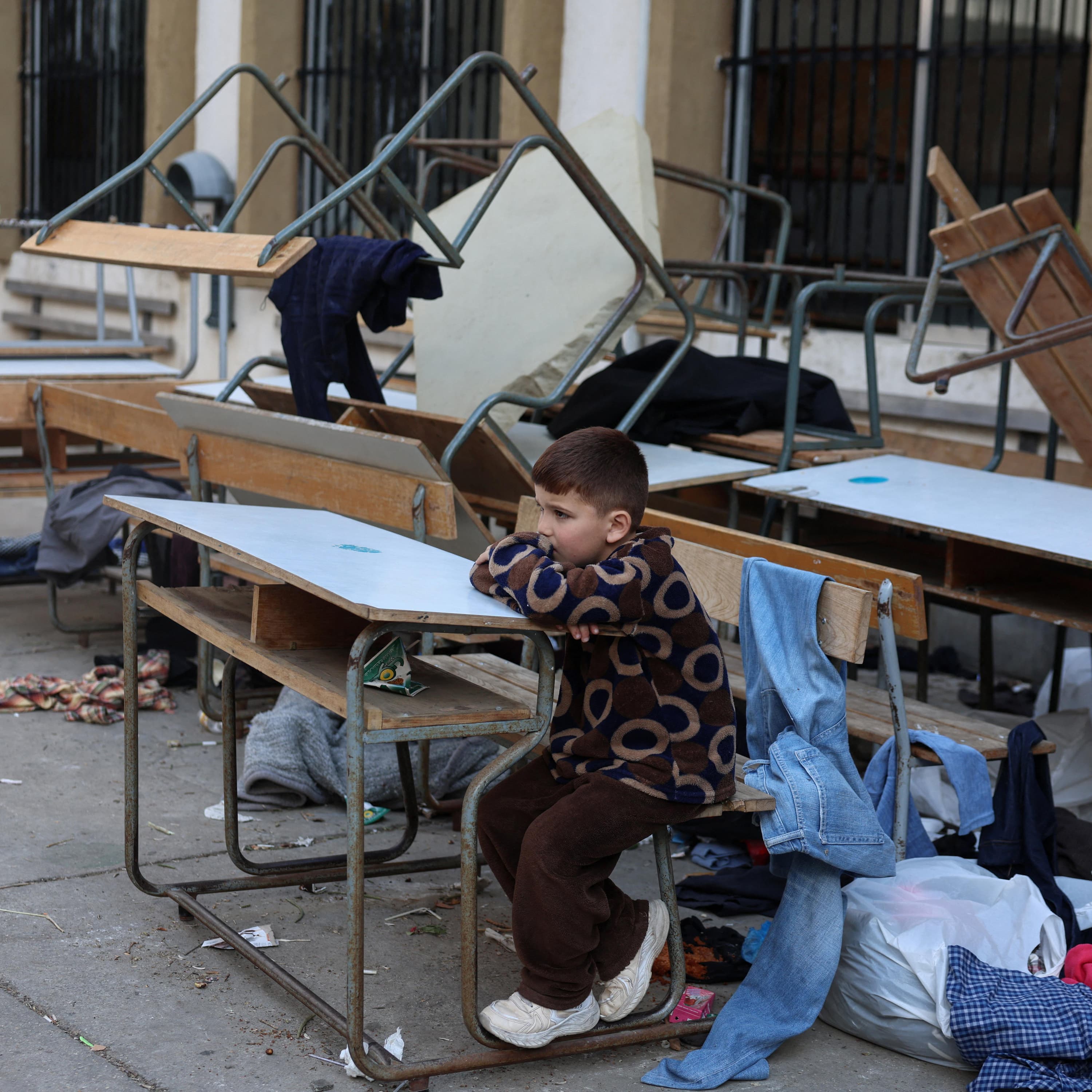
Today in Focus
After four decades, Lebanon and Israel finally talk
00:27:11
With the US and Iran in deadlock, could historic talks between Lebanon and Israel help steer the Middle East towards peace? William Christou reports
Loading summary
Transcript73 lines
- [00:00]
Will Christou
This is the Guardian.
- [00:09]
Nasheen Eqbal
Today, Israel and Lebanon have finally agreed to talk.
- [00:21]
Progressive Insurance / Advertisement
This episode is brought to you by Progressive Insurance. Do you ever think about switching insurance companies to see if you could save some cash? Progressive makes it easy to see if you could save when you bundle your home and auto policies. Try it@progressive.com Progressive Casualty Insurance Company and affiliates. Potential savings will vary. Not available in all states.
- [00:47]
Gyda Faqi
You know, it's just a normal sunny day, beautiful day. Everybody was optimistic. There's a ceasefire. People are happy that there is finally something good is happening between the leaders in the world. They're talking to each other. You know, this is what everybody has in mind. And then boom.
- [01:07]
Nasheen Eqbal
This is Gyda Faqi. Last week, like so many in Lebanon, waiting for that news that yes, finally there was hope that the war between the us, Israel and Iran might be ending. She was looking forward to stability again. But then Israel launched a bombing campaign in Lebanon that has been described as its deadliest in decades.
- [01:32]
Will Christou
You know, there are a lot of horrifying scenes that came out of the bombing on Wednesday. One of them was the story of Naya Faqih. She's a little girl, a 13 year old girl who is coming back from basketball practice.
- [01:47]
Gyda Faqi
She plays basketball like eight, nine times a week. And that day she had basketball because now they're on Easter vacation. She had basketball at 9 o' clock in the morning, she finished at 12 and then she had basketball again at 1 o'. Clock. So her dad went to pick her up.
- [02:03]
Will Christou
Naya was walking with her dad and she was filming herself happy. You could see that in the video. She's actually got a dog filter on her face on Snapchat when all of a sudden a bomb dropped right in front of her. And the video went from a video of a moment of levity to something of a nightmare. The dog filter remained on her face, but now she was screaming. She took shelter in a nearby building.
- [02:34]
Nasheen Eqbal
Israel bombed more than 100 sites across the country. Densely packed residential neighborhoods. In Beirut, the breadbasket of Lebanon, in the Bekar Valley villages in the south, at least 357 people were killed. More than a thousand people were maimed, many of them children. Luckily, Naya survived.
- [02:55]
Gyda Faqi
She was extremely terrified. She still is. I mean, she's in her room most of the times. She's not talking much. Hell, I know she's a strong girl, she will eventually come out of it, but this is. It has left a scar on her and the scar is going to be there for a very long time.
- [03:11]
Nasheen Eqbal
Geeta and her family are still coming to terms with what happened.
- [03:15]
Gyda Faqi
I consider myself very lucky. And guilty at the same time. I don't know. Guilty. You know, as a mom, my kids are next to me. Some other moms, the kids are not.
- [03:32]
Nasheen Eqbal
So many families are in mourning and so many around one in five Lebanese people have been forced out of their homes. Whole communities on the run for their lives.
- [03:48]
Gyda Faqi
I'm angry. I'm terrified. I don't know what to think anymore. I don't know where to go. Nowhere is safe anymore. In Lebanon, nowhere is safe. And every time they hit somewhere, they justify it with a stupid reason. There is whatever Hezbollah there's here. It's not always true. And there is no justification for what happened. No justification whatsoever. None.
- [04:13]
Nasheen Eqbal
Now, under pressure from the US And Iran, Israel and Lebanon have agreed to talks in Washington. It will be the first time they meet in four decades. From the Guardian, I'm Nasheen Eqbal. Today in Focus. With the US And Iran in deadlock, could Lebanon and Israel set the Middle east on a path to peace? Well, Kristu, you're reporting for the Guardian in Beirut. In what has been one of the most terrifying periods in Lebanon's recent history, there are now talks between Israel and Lebanon due to take place on Tuesday in Washington. What can you tell me about what's happening today?
- [04:56]
Will Christou
The pace of change this week has been really dizzying with the ceasefire with Iran and then also these talks between Lebanon and Israel directly, to give a sense of context, Lebanon and Israel haven't talked directly in decades. And if you were to tell me two months ago that Lebanon and Israel would be talking to each other without a mediator and that Hezbollah would allow that, I would be really surprised. So things are very much changing fast. And I think this is all because of the Iran war and sort of the door it's opened up and how much it's upended. We understand politics in the Middle east and really the rest of the world. Israel has agreed to negotiations with Lebanon as it continued strikes on Beirut today.
- [05:34]
Nasheen Eqbal
It comes amid confusion over whether the country was included in President Trump's ceasefire agreement with Iran.
- [05:40]
Will Christou
You know, Lebanon and Israel have been at war in some form since the early 1980s. And Israel, you know, in Lebanon, really, I can't overstate how much of a presence it has in domestic politics. I mean, you're not allowed to enter Lebanon if you have an Israeli stamp in your passport. The two don't have diplomatic relations. People go to jail if they talk to people within Israel. So very much Israel is a taboo of domestic politics. So the fact that these talks are happening directly between the two governments is something that's really astonishing. And on Tuesday, we'll see the ambassador of Lebanon to the US as well as the Israeli ambassador to the US meet in Washington to start the first round of these talks.
- [06:24]
Nasheen Eqbal
Well, Israel has always stated that its war aim is to rid Lebanon of Hezbollah, which we know is the political party, paramilitary group who retain an incredible amount of power in the country, yet these talks do not include them. Why? And how will that work?
- [06:41]
Will Christou
Yeah, I mean, it speaks to sort of schizophrenia of governments in Lebanon. Lebanese government says it's not at war, but Hezbollah is fighting in the south. The Lebanese government is negotiating a ceasefire, but it's not the one that's fighting. So it's pretty confusing. What we know is that Lebanese government's going to be talking directly with Israel, and up until now, Hezbollah has allowed it. You know, there was some protests over the weekend against this, but then Hezbollah issued a statement saying, because it's a very critical period, nobody take to the streets, nobody raised the Hezbollah flag. We need to keep things calm. And the reason for that, really, is because Hezbollah, it's a pro Iran group and it's very much following Iran's line in this. And Iran wants negotiations across the region, including in Lebanon. So, you know, there's two things. One, there's the negotiations between Lebanon and Israel, the governments, and then the second part would be implementing the agreements if they happen. If they reach an agreement, we'll see if Hezbollah would respect it.
- [07:37]
Nasheen Eqbal
Well, what do both sides want, the Lebanese government and the Israeli government, and what is actually on the table.
- [07:45]
Will Christou
So the Israeli government said they want two things. The full disarmament of Hezbollah across Lebanon and a lasting peace with the Lebanese government. Lebanon says that they want the withdrawal of Israel from Lebanese territory. They've said that the Israeli Defense Minister said that they'll occupy up to Litany river, which is around 20 miles north of the Israeli border, and they want an end to fighting. Now, whether or not either of these things could be achieved remains to be seen. I mean, Israel has said that they don't want to withdraw from the country. They want to indefinitely occupy the south of the country until the safety of the northern residents in Israel are assured. And the full disarmament of Hezbollah would be very hard to achieve, both for Israel and both for the Lebanese government. Hezbollah is a group that enjoys wide swaths of support across the country and among its power base. That support's only gone up since the beginning of this War, because many people who support Hezbollah view the Lebanese government as sort of impotent, you know, not able to fight the Israeli government. And so this bombardment we've seen is seen as, like, proving the point as to why they need Hezbollah.
- [08:55]
Nasheen Eqbal
I guess there's so much confusion over this because, I mean, even over the weekend, I was reading reports, statements from Hezbollah saying that the Israeli ground occupation in southern Lebanon is failing and that Hezbollah absolutely vowed to continue fighting. Now, if these talks are with the aim of ending casualties, ending the war, what will that look like? Or what is rather the purpose of them?
- [09:19]
Will Christou
Yeah, I mean, I think so many things could go wrong. And it's important to mention that the only reason these talks are happening is because the US really put pressure on Netanyahu. Israel doesn't want to stop. So I think it depends on what we think of as a ceasefire of peace. To Israel, a ceasefire might mean keeping the south and stopping airstrikes across the country and other parts of the country. To Lebanon, a ceasefire means a withdrawal of the Israelis and no Israeli troops on Lebanese land. So we'll see. But what we know is that despite talks of a ceasefire, fighting is still happening in the south. Benjamin Netanyahu, the Israeli Prime Minister, was in south Lebanon on Sunday with soldiers. You know, Hezbollah and Israel are currently fighting in Bentish Bayel, one of the most important cities in the south. And an Israeli airstrike killed a Red Cross volunteer on Sunday. So hostilities are ongoing.
- [10:19]
Nasheen Eqbal
Well, what do people in Lebanon that you speak to, what do they make of the talks?
- [10:25]
Will Christou
I think things are super split. You know, you have a big part of the country that says, listen, we're done with war. We're exhausted. You know, I might not like Israel, but I want peace. And if it comes at the cost of either recognizing Israel or talking to directly, fine, whatever. This isn't our war. And then you have a lot of people who are supporters of Hezbollah who say talking to Israel under these conditions is a humiliation because we don't accept
- [10:48]
Nasheen Eqbal
what's going on about the direct negotiation between Nawaf and Israeli. So we will never leave here until they stop the negotiation.
- [10:58]
Will Christou
You know, how do you talk to them while they're bombing people, killing people, both military and civilians alike, and that the only way to get rid of Israel is to fight them and that they, you know, they don't trust the Lebanese government to be able to defend Lebanese territory from Israel. So it's an incredible, incredibly schizophrenic sort of situation here, and it's exacerbating social tensions in a country that has, you know, a history of. Of civil war.
- [11:22]
Nasheen Eqbal
And will. What has that looked like for them on the ground? What's been happening over the last few days?
- [11:26]
Will Christou
Yeah, I think over the last few days, people have been sort of taking stock of the losses that happened this week.
- [11:32]
Gyda Faqi
Lebanon's declared a day of mourning after Israeli attacks on Wednesday.
- [11:37]
Will Christou
You know, on Wednesday, Last Wednesday, Israel Hit over 100 targets in under 10 minutes. Killed more than 357 people and wounded over a thousand.
- [11:47]
Nasheen Eqbal
Saw piles of charred cars at major intersections, mountains of rubble clogging the roads, entire apartment blocks raised to the ground. Panicked residents running through the streets trying to figure out where the different booms.
- [11:59]
Will Christou
Lebanese have started referring to this day as Black Wednesday. And as we speak, people are still looking for the loved ones under the rubble. People are going to morgues and hospitals to do DNA tests to try to see if bodies in the morgues that are so mangled that they can't recognize them belong to their loved ones. You know, political path forward is pretty unclear. We're in uncharted waters, both with the Iran negotiations, but also here in Lebanon. Also, as you walk the streets of Beirut today, you'll see army deployed everywhere, heavy security presence and checkpoints being set up. And that's because the government's very wary of anything sort of kicking off at this point because social tensions are quite high.
- [12:39]
Nasheen Eqbal
You went to one of the hospitals after the bombings took place. What did the medics there tell you?
- [12:45]
Will Christou
You know, what was striking to me about this attack was one how widespread it was. I mean, it hit residential buildings all over Beirut. I was sitting in my apartment, and I live in East Beirut, and you just hear boom after boom after boom. And then pictures of the smoke plumes coming up. And then you started hearing ambulances. I live next to a hospital, so I heard ambulances coming in and out. And I was talking to the doctors at one of the hospitals, and they told me two minutes after they heard the explosions, wounded started coming. And one of the doctors, you know what he said he turned to his colleagues because he was seeing so many children coming in. He asked them, did they hit a school, what happened? The attacks happened around 2:30. So men were at work, children were at home, and a lot of children are out of school because of the displacement crisis. And so Israel's been talking about we only hit Hezbollah targets. It's a great victory, a big operational victory. But here in Lebanon, the reality looks very, very different.
- [13:41]
Doctor
It was not targeted for military people. It was civilians.
- [13:46]
Will Christou
One of the doctors I spoke to, he was talking about the types of injuries he saw. He discussed how an entire family of five came in and unfortunately passed due to their wounds. Everyone but the father.
- [13:58]
Doctor
So imagine a family of five in the same apartment. I guess this was the type of, of casualties were received, frankly.
- [14:06]
Will Christou
And then he showed me a picture on his phone of a piece of shrapnel he pulled out of one of one of the kids, a little boy
- [14:12]
Doctor
from the intestine of a 10 year old. 10 year old. That big? This is the size of it. It is that big shrapnel of, in metal shrapnel.
- [14:23]
Will Christou
I mean, we're talking two or three inches, right?
- [14:25]
Doctor
It's that big. Exactly. Went to the belly.
- [14:30]
Will Christou
And it just goes to show, you know, this is an operation that it might have, you know, had military targets, but overwhelmingly harmed civilians.
- [14:47]
Nasheen Eqbal
Well, you've also been doing a lot of reporting about the villages in the south of Lebanon that have been destroyed in Israel's bombing campaign. Can you tell me a bit more about that?
- [14:55]
Will Christou
Yeah. So as Israel has invaded the south and has steadily pushed back Hezbollah fighters, they've started rigging entire villages with explosives and demolishing them. And slowly these videos have been leaking out on social media. You see a video of a town like Taibe in the south or Der Sirian just exploding. And then the aftermath is a village that's completely flattened. And so we started looking at some of these videos, geolocated them, verified them, and talk to some of the residents of these towns. And you know what the residents told us it was, it was quite heartbreaking. Like the town of Taiybe, for example. We spoke to a man from there, Ahmed Abutam, 56 year old guy who owns a construction shop. He talks about how he had a house there that was in his family since the 19th century, and how watching that video of the entire town exploding really cemented how, you know, that he was truly displaced. Because when he left the village on March 2, when the war started, he thought he'd come back. He left most of his stuff there. And he had an experience in 2024 of being displaced as well. And he discussed how when he went back last time, they lit the town up and okay, things were destroyed, but they started working together to build the town up again. But this time there's no town to go back to.
- [16:05]
Nasheen Eqbal
He watched it blown up on videos, on social media.
- [16:09]
Will Christou
Yeah. And he said that for the first time, I feel like a refugee. And the feeling of watching your entire life Being blown up just feels like you could be erased. And you know, it's sort of mind boggling to the Israelis. This is a military strategy. You know, the Israeli Defense Minister, Israel Katz explicitly said they're going to blow up the houses along the border. He said, like we did in Gaza and Beit Hanun and Rafah. And they've made sure on their word. And since we published that article on Friday, they've blown up two more villages.
- [16:41]
Nasheen Eqbal
Will. Stories like Ahmed Abu Tam's are so heartbreaking. And I just wonder, I mean, he says he feels like a refugee, but where are displaced people going? Where are they living?
- [16:52]
Will Christou
So about 1.2 million people have been displaced by this conflict. That's more than one out of five Lebanese people. Only about 150,000 of those are in state shelters. Most are either with other relatives or lots of sleeping rough. You know, if you walk around Beirut today, you'll see tents everywhere. The nightclub district, for example, on the beach filled with tents. People are just sleeping on the streets. And it's a really, really tough situation. It's very humiliating. You know, I was speaking to one father, he was there with his two kids. He was displaced from the city of Sur after his house was hit by an airstrike. His wife is in a coma, unlikely she recovers. His 17 year old daughter is also in the hospital. And we were talking and there's so many things that were horrible. You know, the fact that there's one bathroom for hundreds of people, the fact that he can only take a shower once a week, the fact that nobody is helping. He said, I own a house or I owned a house, I'm a normal person, I have a job and all of a sudden I have none of those things and there's nothing I can do about it. He was saying, look at the time, it's 5pm I haven't had a meal today. No one's come, no one's come by. Occasionally there will be NGOs that come by and cook hot meals, but the government doesn't, doesn't come here. This displacement crisis sort of outstrips the capacity of the Lebanese government.
- [18:16]
Nasheen Eqbal
Coming up, what do the talks mean for Hezbollah?
- [18:34]
Jackson Financial / Advertisement
This message comes from Jackson. Taxes aren't something you can only think about once a year. With investments, planning for tax day is year round. Fortunately, Jackson offers tax efficient products. Visit Jackson.com for more information on how our products can make your tax bill a little bit less painful. Jackson is short for Jackson Financial Incorporated, Jackson National Life Insurance Company, Lansing, Michigan and Jackson National Life Insurance Company of New York Purchase New York.
- [18:59]
Progressive Insurance / Advertisement
Running a business means juggling a lot of moving parts. And when your communication tools can't keep up, things start to slip. Missed calls, slow replies, scattered conversations. They're not just frustrating, they're lost opportunities and revenue left on the table. That's where quo comes in. Spelled Q U O. Quo is the one rated business phone system on G2 trusted by over 90,000 businesses. One shared business number for calls and texts so every conversation stays visible, organized and accountable. It works from an app or computer. You can keep your existing number, add teammates and sync your CRM, letting you scale without adding complexity. And with built in AI, Quo logs calls, summarizes conversations and flags next steps even after hours Stop missing customers. Stop leaving revenue on the table. Try Quo Free and get 20% off your first six months at Quo.com Tech. That's Quashuo.com Tech no missed calls, no missed customers.
- [20:13]
Nasheen Eqbal
Will do we know any more about why Israel launched these strikes when they did? Because, you know, they came hours after the ceasefire had been announced between the US and Iran. And for the briefest second, there seemed hope that this war was coming to an end.
- [20:29]
Will Christou
It seems designed to derail the ceasefire that was just announced between Iran and the us. We know that the inclusion of Lebanon has been a big stumbling block. It almost stopped the talks from happening in Islamabad. Trump has leaned on Netanyahu to limit the attacks in Beirut since, but also Israel's again praised this as a big operational success. But it really raises questions about the way they they conduct war. Because when you conduct any military strike in a war, there's a process you have to go through to make sure that you're minimizing casualties, civilian casualties. Part of that, they say you need to take all feasible precautions to protect civilians. And so when you hit over 100 targets, did you need to bring down entire buildings with people in them at the same time? Were you really taking all feasible precautions to protect civilians, or is the high civilian death toll a part of the military strategy?
- [21:20]
Nasheen Eqbal
I mean, we've seen similar in Gaza and we've seen similar in Iran. But will, when it comes to the talks today, are the two sides likely to be able to agree to something in Washington and what would that outcome look like?
- [21:34]
Will Christou
Listen, I think it all depends on the US and Iran. Israel is dependent on the US as its main backer. Lebanon and Hezbollah, it's a mix of both the US and Iran. If Iran wants the negotiations to go through, Hezbollah will stay quiet and they'll allow the Lebanese government a measure of freedom to negotiate a ceasefire. If the US Reigns, Netanyahu in the talks will go ahead. So it's really not up to these two states. I think what we're likely to see, though, on Tuesday is paving the way for more negotiations. You know, the US Is their priority here is to keep the ceasefire talks with Iran going to stabilize the situation. You know, Trump does not want $4 a gallon, $5 a gallon. He wants the Strait of Hormuz open. And if the key to keeping it open is stopping the fighting in Lebanon, at least temporarily, I think we'll see that.
- [22:27]
Nasheen Eqbal
I mean, he's also stated that he aims a naval blockade for the strait. So, I mean, judging by what Trump wants and what Trump gets is quite a risky calculation to make when you're looking at the future of an entire region. Will, could these talks, the beginning of these negotiations, lead to a world where Lebanon and Israel are actually cooperating together to neutralize Hezbollah?
- [22:49]
Will Christou
It could lead to that. I think if we saw that, we might see some domestic unrest in Lebanon, but I don't think it's so likely. You know, Hezbollah is walking a very fine line at the moment. They want the talks to go forward because Iran wants the talks to go forward, but they want to keep the pressure on the Lebanese government so that they can maximize their space within the domestic scene and Hezbollah can mobilize lots of people. And over these past five weeks of fighting, we've seen certain calls from certain officials in the group to even overthrow the government. So if we saw a scenario in which Lebanese government was seriously moving to eliminate the group with Israeli backing, US backing, and the group saw it as an existential crisis, we could see some serious domestic unrest in Lebanon, and there's precedence for that. In 2008, you, Hezbollah took to the streets and they fought in the streets of Beirut with domestic political opponents.
- [23:43]
Nasheen Eqbal
But then that also begs the question of whether sort of the memory of 70s 80s when Civil War broke out, would that then be a potential outcome for Lebanon if the government trying one thing? And obviously, as you say, there's so much support for Hezbollah.
- [23:59]
Will Christou
I think, you know, we're at a point in Lebanon where social tensions are very high. There's more than 1.2 million people on the streets displaced, and there's a lot of anger from the other side against Hezbollah and its support base for dragging the country into a war. So things are not great in Lebanon. I don't think we're quite at a situation where civil war is on the table. God Forbid. But social tensions are serious, are definitely high. And this is something that officials are taking seriously, but also people are taking seriously. I've spoken to some people who say that they are buying arms as much as they can. They're buying weapons as much as they can because they fear what's coming next. There's people I've spoken to in areas outside of Beirut that have said that they've started volunteer night patrols to make sure that nobody comes into the village. And unfortunately, this is sort of reminiscent of what happened during Lebanon civil war, where you had neighborhood patrols sort of patrolling areas. It's not a good sign. We're certainly not at the point of the civil war, but it's just a sign that tensions are really ratcheting up.
- [25:07]
Nasheen Eqbal
And all the while, as you say, the real power brokers, Iran and the us, their war is ongoing. There is this conditional two week ceasefire in place, but separate talks held in Pakistan last weekend failed to reach a deal on what would happen when the Strait of Hormuz was reopened. So that ceasefire looks shaky, understandably, given all that, how will talks in Washington today affect that ongoing crisis in the Middle East?
- [25:35]
Will Christou
Yeah, I think, you know, what's that phrase? Beware of small states. Lebanon's a very small country, but it's proven to be a very pivotal part of this Iran ceasefire. There was a big disagreement between the Iran, Pakistan, the US and Israel whether or not Lebanon was including the ceasefire. The fact that these talks in Washington are even happening between the Lebanese and the Israelis is a result of the US feeling the pressure to make the ceasefire work. Iran has said that the ceasefire between the US and Israel and it will not go forward unless Lebanon is included. So these talks really are crucial to the success of a greater regional ceasefire. And I think to sort of zoom out here, I think what we're seeing is a desire from Iran to sort of reestablish deterrence in the region and change the balance of power in the Middle East. That has really shifted towards Israel and the US since October 7, 2023. Iran wants a Middle east where Israel cannot bomb with abandon. Iran does not want a Middle east where every six months it's subject to a bombing campaign and can't do anything about it. It doesn't want the Middle east where Israel can bomb Lebanon, can bomb Syria, Iraq without any sort of consequences.
- [26:47]
Nasheen Eqbal
Well, we've made clear in this what Iran wants and hopes for, and by proxy what Lebanon does to some degree. What does Israel want?
- [26:56]
Will Christou
Yeah, I think what Israel has said is that they want to establish sort of security buffer with Lebanon. And so what they've been doing is they've been seizing the south and pushing their border northwards. They've said that they want to stop the threat of Hezbollah to its northern communities and Hezbollah's abilities to launch rockets into the into. They've also said that they want complete disarmament of the group. That's going to be very difficult to achieve through military means. Politically, diplomatically, it's more likely, but that really is going to take agreement of not only Israel and Lebanon, but also of Iran and maybe even the United States.
- [27:31]
Nasheen Eqbal
And finally Will. How hopeful do you think the Lebanese people are about these talks today?
- [27:37]
Will Christou
I don't think very hopeful. I think the last five weeks has really left people reeling and expecting the worst. Most people I spoke to on Wednesday when Israel struck across the country in Lebanon, it came hours after the announcement of the Iran US ceasefire. And everyone I spoke to, I asked them, I said, were you expecting that the Iran US ceasefire might lead to some peace in Lebanon? They said, no, no way. We knew that things were just going to get worse because now Israel has the capacity, capacity to completely focus on us. I think unless we see some really clear statements and guarantees coming out of the talks in Washington between Lebanon and Israel and maybe some guarantees from the US and Iran, I don't think there's much grounds for optimism.
- [28:24]
Nasheen Eqbal
Will, thank you so much for your time. It goes without saying, stay safe.
- [28:28]
Will Christou
Thank you.
- [28:33]
Nasheen Eqbal
That was Will Christou. My thanks to him again. You can follow all of Will's reporting and keep up with all of our coverage of these talks today@theguardian.com and that's it for today. This episode was presented by me, Noshi Nikbal and produced by Alex Atak, Eli Block and Joe Pinner. Sound design was by Rudy Zagadlo and the executive producer was Huma Khalili. Lucy Hoff will be back in your feeds this afternoon with the latest.
- [29:07]
Will Christou
This is the Guardian.
- [29:18]
Progressive Insurance / Advertisement
This episode is brought to you by Progressive Insurance. Do you ever think about switching insurance companies to see if you could save some cash? Progressive makes it easy to see if you could save when you bundle your home and auto policies. Try it@progressive.com Progressive Casualty Insurance Company and affiliates. Potential savings will vary, not available in all states, from globalization to innovation sustainability to market volatility. There's always more than one side to a story. Explore different perspectives on today's most important business and economic issues with the Flipside podcast from Barclays Investment Bank. Hear two research analysts in a lively debate and get insights from every angle to further inform your view. Listen to the flip side on your favorite platform.
- [30:03]
Jackson Financial / Advertisement
Parle tu francais hablas espanol par le italiano. If you've used Babbel, you would Babbel's conversation based technique teaches you useful words and phrases to get you speaking quickly about the things you actually talk about in the real world. With lessons handcrafted by over 200 language experts and voices voiced by real native speakers, Babbel is like having a private tutor in your pocket. Start speaking with Babbel today. Get up to 55% off your Babbel subscription right now at babbel.com acast spelled B A B B E L.com acast rules and restrictions may apply.