← Today in Focus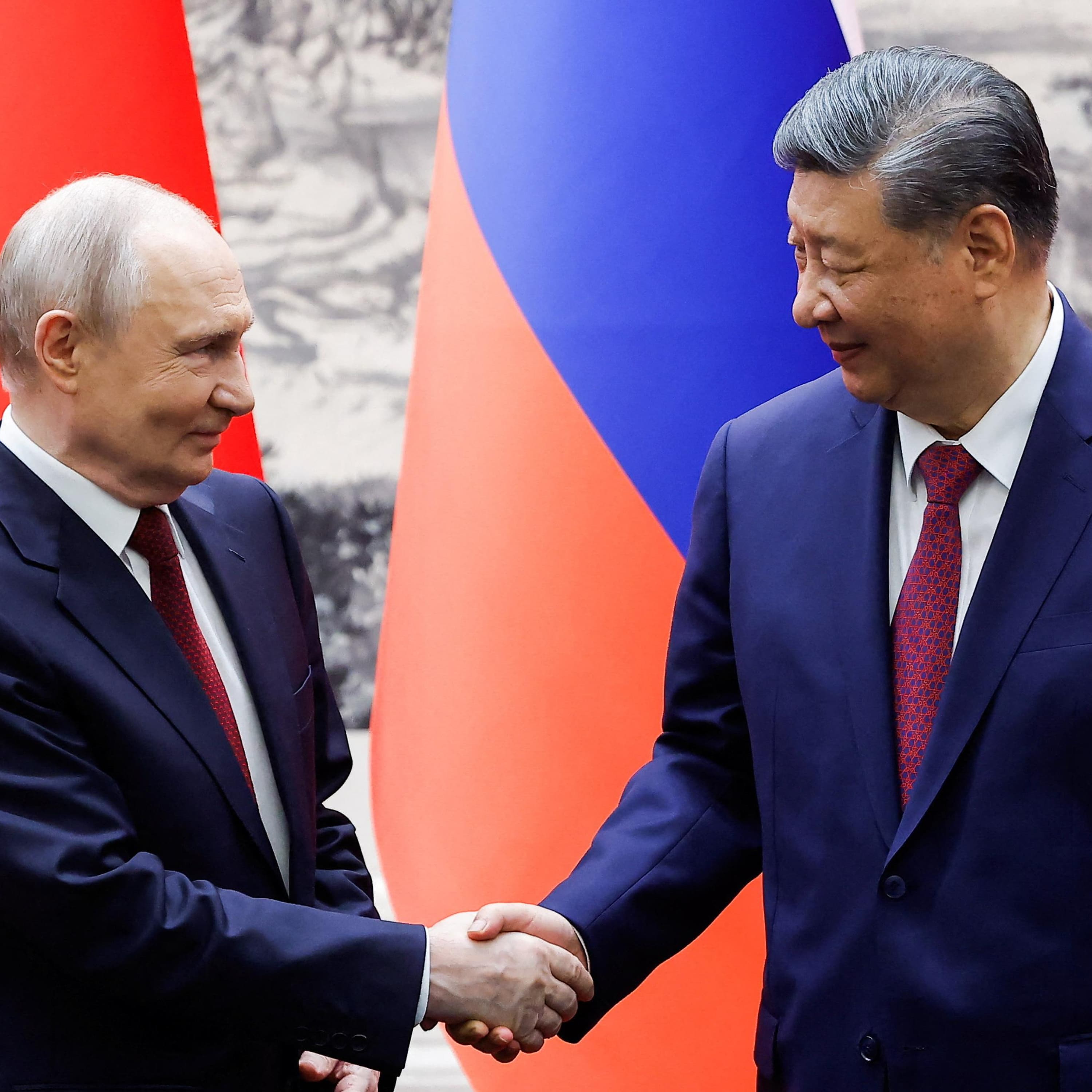
Today in Focus
Are Xi and Putin still ‘best friends’? – The Latest
00:11:51
Xi Jinping welcomed Vladimir Putin to Beijing with pomp and pageantry, just days after hosting Donald Trump. But with an increasing power imbalance between the pair, has their relationship changed? Lucy Hough speaks to the Guardian’s deputy head of international news, Devika Bhat
Loading summary
Transcript37 lines
- [00:00]
Devika Bhatt
This is the Guardian.
- [00:11]
Barclays Brief Host
Today's markets move fast. Get the insights you need in 10 minutes with the Barclays Brief, a new podcast from Barclays Investment Bank. Through sharp dialogue and scenario based analysis, our leading experts analyze key market themes each week. So whether you're managing a portfolio or leading a business, the Barclays Brief podcast can help you make smarter decisions today. Stay sharp, stay brief. Find Barclays Brief wherever you get your podcasts.
- [00:47]
Devika Bhatt
It's almost Xi trying to show he can meet the world's top leaders whenever he likes. Everyone sort of wants a piece of him. There's no doubt that Beijing is really reveling in this now that China is having this moment on the sort of diplomatic stage. China definitely has the upper hand on this occasion. And I think both parties know that. Xi knows that. Putin knows that.
- [01:06]
Lucy Hoff
Xi Jinping has welcomed Vladimir Putin to Beijing just days after hosting Donald Trump. But with an increasing power imbalance between the pair, has the relationship between Russia and China changed from the guardians today? In focus, this is the latest. With me, Lucy Hoff. Well, I'm joined by Devika Bhatt, the Guardian's deputy head of international news. Thanks for joining us, Devika. So this morning we've been seeing all these scenes of pomp and pageantry in Beijing as Vladimir Putin, the Russian president, has traveled to China for, I think the 25th time and he and Xi Jinping have had more than 40 meetings in the past. We'll talk about the optics of this meeting because it's in the exact same location that Donald Trump was in just a few days ago.
- [01:49]
Devika Bhatt
Yeah, thanks for having me, Lucy. Yeah. So as you say, Trump was there just last week and this visit has come hot off the heels of that, probably much to Trump's chagrin, I'd suspect. And yes, the optics and the theater of feels very, very similar. So, you know, there's been the honor guard and a gun salute, which Trump got too, cheering children, you know, waving, in this case Russian and Chinese flags, a marching band. And you know, alongside the kind of formal talks and the sort of handshakes, there's going to be background discussions behind the scenes which again, we sort of saw with the Trump visit, you know, and the optics will be watched especially closely for this sort of compare and contrast opportunity it gives us. But the relationships are very different.
- [02:34]
Lucy Hoff
So let's talk about that because, I mean, these are two strong men who've been seen as being very much allies on the global stage. I think Xi Jinping has described Putin as his best and most intimate friend, slightly Disquietingly. But has that shifted in recent years, do you think? And perhaps this year, given how much turmoil we're seeing? And in light of course, of Russia's invasion of Ukraine.
- [02:56]
Devika Bhatt
Yes, I think so. So, yeah, it's absolutely the case that unlike Trump and Xi, this is a kind of really historic relationship that goes back for years and years and they share a lot in common. They're both sort of autocratic strong men who've managed to maintain power for years and years. Again, you know, one suspects Trump might look on, on that quite jealously. And so there's a pre existing relationship here and this trip feels a lot more about, from the Chinese point of view anyway, working out how to sort of leverage that relationship in a kind of useful way. Now that China is having this moment on the diplomatic stage that it's long kind of sought, it's long wanted be seen as the sort of seat, the center of power of global diplomacy in a way it's not really had the opportunity to before. And I think, you know, there's a big sense now that although there is this relationship with Russia, China will want to really think about how it uses that to its advantage. The fact that the two visits come so closely together. It's almost Xi trying to show he can meet the world's top leaders whenever he likes. Everyone sort of wants a piece of him. Yeah.
- [04:01]
Lucy Hoff
And striking to see the optics of all this pomp and pageantry and this display of military and economic heft from China. Also striking that Xi Jinping has said this quote, that the world risks regressing into the law of the jungle. I mean, striking that China would be advocating the rules based international order and kind of seeming a bit like the adult in the room.
- [04:25]
Devika Bhatt
Yes. And I think, you know, there's no doubt that Beijing is really reveling in this moment. It sort of gets to say that because of the war in Iran and because of the war in Ukraine, it gets to sort of relish this role that it can kind of seek to play as this sort of global player in diplomacy. There's been no sort of direct mention of the US she has sort of warned of unilateral and hegemonic counter currents running rampant in the international system. And he also sort of said, as you say, the world faces the danger of reverting to the law of the jungle. And Putin, interestingly, has kind of made a big thing of Russian and Chinese cooperation on the world stage and said that that's one of the key stabilizing factors in the world, which, again, feels ironic given the war in Ukraine. But, you know, some might say that we're in a position where the US's actions have sort of enabled both of them to say this, not with a straight face, because it still seems ridiculous, but when the US is also now a volatile player, it has sort of enabled Xi to position himself in this kind of way.
- [05:23]
Lucy Hoff
Yeah. And perhaps as the sort of leading strongman superpower of this strange new world that we're living in. But in terms of the dynamic between the. These two men, Putin and Xi, meeting today, there's a sense that they've previously met as equals, but that on this occasion, things are very much working in China's favor. They're signing a number of deals on tech and trade, particularly this gas pipeline. Right. But there's suggestions that these are deals that are very much being signed on Chinese terms. Is that fair to say?
- [05:54]
Devika Bhatt
Yes, very much so. So China definitely has the upper hand on this occasion in a way it may not have done in the past. And I think both parties know that. She know that, Putin knows that, and you can sort of see it on how the trip has played out. So even in the language, there are kind of subtle differences in what they've sort of said. So Putin has said that ties were at a unprecedentedly high level, which is something he said before, and, you know, it's this really unequivocal love for. For China in that sort of statement, whereas Xi has described relations in a much more neutral way as unyielding. So, you know, there's an acknowledgment there that this is a very close relationship. As we sort of discussed before. They, you know, have considered each other and have said openly that they are friends, and there's certainly a kind of warmth there that you don't necessarily see in other relations that both of those countries have with other countries. But nonetheless, the relationship has shifted, and it does feel like China is trying to play a game where it is positioning itself depending on what could be for its advantage at this moment, rather than tying its mask to Russia and saying that that is a relationship it wants to pursue at cost to all others, because that's. That's definitely not the case anymore.
- [07:04]
Lucy Hoff
And of course, Russia's economy has been absolutely battered by international sanctions, but also the sort of war of attrition that's ground on.
- [07:12]
Devika Bhatt
Yeah, absolutely. Yeah. So the war in Ukraine has put Russia in this position, not least because of the sanctions, which mean that on the battlefield, things are not going as well. As it would have hoped. And that's just had this massive impact on the economy. The trade relationship, the economic relationship is not equal. It's very uneven. And so Russia really needs China, and there's an opportunity here. With the war in Iraq, Iran, China has faced big problems in terms of energy supplies because of the sort of holdups in the Strait of Hormuz. And so there's an opportunity here for Russia which feels like Putin would really want to seek to increase that relationship on the energy front with China, get China more reliant on Russian energy supplies, and that could be a boon for its economy at a time it really needs it.
- [07:57]
Lucy Hoff
Yeah, it certainly does. But is there any sign of what she is likely to be saying to Putin behind closed doors about ending the war in Ukraine? Like, do we know what's. Of messaging he. He has towards Russia on. On that?
- [08:09]
Devika Bhatt
Well, this comes back to your point earlier about the sort of hypocrisy of both countries talking about kind of wanting stability in the world order. China's position on the war has always, in terms of its public stance, has been very much. It is a neutral player, and it's released these really kind of carefully caveated statements about wanting peace and, and the world order to be maintained. But behind the scenes, we know that it has supported Russia in many ways, diplomatically, you know, through state visits such as this one. And also economically, with all these deals that are going on, the countries have had joint military exercises together. There have been reports this week not fully stood up yet, that China might have even had a role in sort of helping with training of troops. So even though it says it does not support Russia in this war, it is certainly making moves behind the scenes to help the Russian war effort.
- [09:01]
Kari Sherman
Yeah.
- [09:02]
Devika Bhatt
And so it's quite possible those conversations will have been had behind the scenes. One would have thought Putin will be kind of quizzing Xi on how the Trump visit went, because obviously the Trump Putin relationship is also important for both parties.
- [09:17]
Lucy Hoff
Yeah. So how do you think this meeting will be looked on by the. By Europe and by the wider West? Because, I mean, they've met several times before, dozens of times before, but this meeting under particular scrutiny and has particular consequences for the, for the rest of the world.
- [09:32]
Devika Bhatt
Yeah, I think that's right. I think the world is in a really kind of perilous state at the moment with these wars we are seeing, with the way the US has become such a volatile player and has proven time and time again it really cannot be relied upon in a way Europe might have once hoped. And so pursuing the relationship with China, Europe has made clear is very important because it needs to be friends with other big bullies in the playground, if you like. And I think this visit highlights that there are all sorts of problems in being friends with China. You know, as we've, we've talked about, we know that there's been this tacit support behind the scenes, from which, of course, Europe will be deeply uneasy about, given the war in Ukraine happening on Europe's very doorstep. And Ukraine itself is probably looking at this very closely, too.
- [10:20]
Lucy Hoff
Yeah. Well, Devika, fascinating. Thank you so much for your time.
- [10:23]
Devika Bhatt
Not at all. Thanks for having me.
- [10:26]
Lucy Hoff
That's it for today. My huge thanks again to Devika Bhatt, the Guardian's deputy head of international news. You can keep up with all our coverage of Putin's visit to Beijing over@theguardian.com and if you're an Arsenal fan or not, head over to our sister podcast, Football Weekly, where they'll be discussing the Gooner's first Premier League title win in 22 years. You can watch it on YouTube or listen wherever you get your podcasts. Thanks for listening to this episode of the latest Today in Focus will be back in your feeds as usual tomorrow morning. The latest will be back tomorrow night. This episode was presented by me, Lucy Hoff. It was produced by Bryony Moore. The senior producer was Ryan Ramgobin. The lead producer was Zoe Hitch.
- [11:09]
Kai Wright
I'm Kai Wright.
- [11:10]
Kari Sherman
I'm Kari Sherman.
- [11:11]
Kai Wright
And we are here to tell you about our new show, which is rooted in this feeling that at least I have, I know you have, where, you know, it's kind of like when you wake up in the morning and you pick up your phone and you're just hit in the face with a fire hose of news, right?
- [11:28]
Kari Sherman
Like there's war, there's authoritarianism, our planet is burning. I could go on and on and
- [11:34]
Kai Wright
on and on and on and on. But, like, we're trying to figure out how to manage it, right? Like, how do you manage it?
- [11:38]
Kari Sherman
I manage it by leaning in and trying to learn more and trying to figure out, okay, how can I be smarter about this particular topic and who can I talk to that's going to make me feel better about it?
- [11:49]
Kai Wright
And who can tell me who's responsible for the mess that I'm reading about? So that's our mission and that's the show.
- [11:55]
Kari Sherman
Welcome to Stateside with Kai and Carter. We're a new show from the Guardian.
- [11:59]
Kai Wright
We're talking to big thinkers and the best journalists just trying to understand the world through smart conversation and honest reporting.
- [12:06]
Kari Sherman
We don't have billionaires telling us what to say.
- [12:08]
Kai Wright
Stateside with Kai and Carter is out now every Monday, Wednesday and Friday.
- [12:13]
Kari Sherman
Follow on Apple Podcasts or catch us wherever you watch or listen.
- [12:17]
Devika Bhatt
This is the Guardian
- [12:21]
Jackson Taxes Advertiser
Foreign. This message comes from Jackson Taxes aren't something you can only think about once a year with investments planning for tax day is year round. Fortunately, Jackson offers tax efficient products. Visit Jackson.com for more information on how our products can make your tax bill a little bit less painful. Jackson is short for Jackson Financial Incorporated, Jackson National Life Insurance company Lansing, Michigan and Jackson National Life Insurance Company of New York, Purchase, New York High interest debt is one of the toughest opponents you'll face unless you power up with a SOFI personal loan. A SOFI personal loan could repackage your bad debt into one low fixed rate monthly payment. It's even got super speed since you could get the funds as soon as the same day you sign. Visit sofi.compower to learn more. That's S-O-F I.com p o w E R Loans originated by SOFI bank and member FDIC terms and conditions apply.
- [13:21]
Aura Advertiser
NMLS 696891 Most people don't realize how much of their personal information is being bought and sold every day. Data brokers are making billions, pulling details about you from public records and the Internet, then packaging and selling it, usually without your consent. That's how your information lands in the hands of scammers, spammers, even stalkers. It's why you get endless robocalls and why ads seem to follow you everywhere. That's where Aura comes in. Aura actively removes your data from broker sites and keeps it off. They also instantly alert you if your information shows up in a breach or on the dark web. But Aura goes beyond data protection. With one app, you get a vpn, antivirus, password manager, spam, call protection, Dark web monitoring, and even up to $5 million in identity theft insurance. All backed by 24. 7 US based fraud support. Other companies might sell just credit monitoring or even just a vpn. Aura gives you of it together at the same price competitors charge for just one service. Start your free trial today at aura.com safety. Protect yourself now at aura.com safety.