← Today in Focus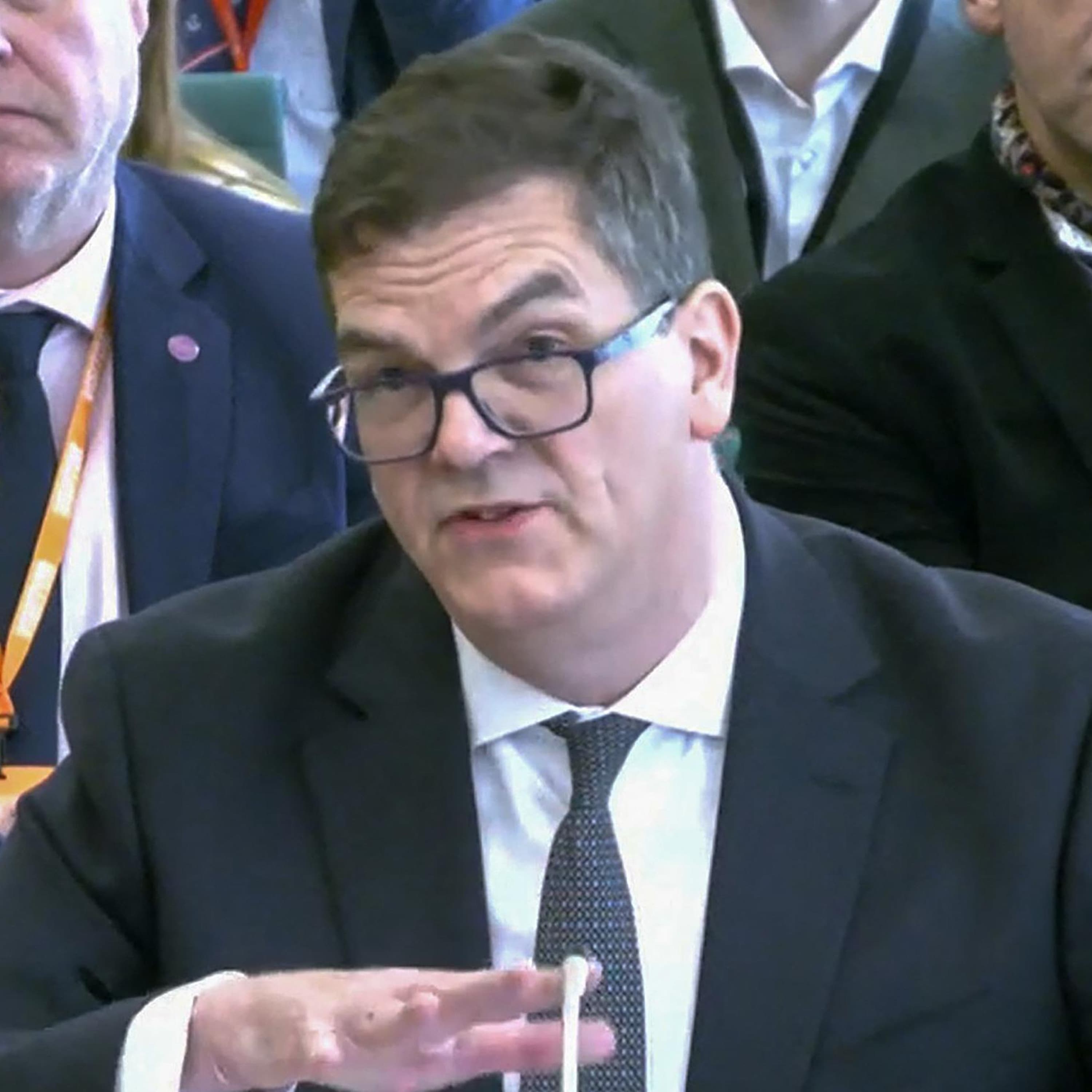
Today in Focus
Mandelson vetting row: sacked civil servant speaks out - The Latest
00:15:16
The Foreign Office chief sacked over the Peter Mandelson security vetting scandal has finally given his side of the story in an explosive appearance before MPs. Lucy Hough speaks to the Guardian’s political editor, Pippa Crerar
Loading summary
Transcript26 lines
- [00:00]
Lucy Half
This is the Guardian.
- [00:10]
Jackson Financial Representative
This message comes from Jackson. Taxes aren't something you can only think about once a year. With investments, planning for tax day is year round. Fortunately, Jackson offers tax efficient products. Visit Jackson.com for more information on how our products can make your tax bill a little bit less painful. Jackson is short for Jackson Financial, Inc. Jackson National Life Insurance Company, Lansing, Michigan, and Jackson National Life Insurance Company of New York, Purchase, New York.
- [00:41]
Lucy Half
You didn't need deep vetting to tell you that he was going to be a risky appointment. And we knew that he'd been sacked from previous Labour cabinets twice.
- [00:49]
Pippa Crerar
There was already a very, very strong expectation coming from number 10 that he needed to be in post and in America as quickly as humanly possible.
- [00:59]
Lucy Half
At its heart, it comes down to that original sin, the Prime Minister's judgment, or lack of judgment in appointing Peter Mandelson. The fact that he could be this Trump whisperer, that quite clearly was the wrong decision, a catastrophically wrong decision.
- [01:14]
Pippa Crerar
The former Foreign Office chief sacked over the Peter Mandelson vetting scandal revealed by the Guardian and has finally given his side of the story in an explosive appearance before MPs from the Guardians today. In Focus. This is the latest. With me, Lucy Half. Well, we're thrilled to have Pippa Carrera, our political editor and one of the three reporters behind the extraordinary Guardian exclusive published last week. That has, of course, caused so much fallout in the last few days that, Pippa, you have been responsible for much of the coverage of. It's not usual, is it, that a former civil servant giving an appearance before the Foreign Affairs Select Committee becomes this kind of blockbuster event? There were three people on my train carriage watching the livestream this morning, which felt quite unusual given it's not a direct route into Westminster. But this is Ollie Robbins, the former Permanent Secretary to the Foreign Office, who has sort of taken the hit, hasn't he, for the Mandelson fallout. Why was this so significant?
- [02:16]
Lucy Half
Well, as you say, Lucy, it's very unusual to have so much focus on a hearing, but ultimately it's because that this a key moment in answering the question that so many MPs and so many members of the public, including those on your train this morning, have, which is how on earth did Peter Mandelson end up as our ambassador to Washington despite having failed his security vetting? And how on earth did the Prime Minister not know about it? And ultimately that gets to the heart of why this has been this huge interest in this appearance before the Foreign Affairs Select Committee and this morning.
- [02:56]
Pippa Crerar
Yeah, let's sort of break down the key issues that were raised. I think Ollie Robbins made it clear that he felt that he was under political pressure to sort of greenlight this appointment, despite the reservations, despite the meetings that he'd had and the knowledge he possessed about this vetting.
- [03:13]
Lucy Half
Yeah, and I think it's worth flagging that Ollie Robbins came into this job in the Foreign Office after the Prime Minister had announced that. That Peter Manderson was going to be his man in Washington, after they'd gone through the official bit of the process, which is going to the King. And even if they say that these jobs, these postings, only proceed once somebody has got their secure vetting, it is almost a fait accompli by the time he arrived. And so the vetting process was also already underway, though what he revealed was that the Foreign Office, not just during his time, but particularly under his predecessor, Philip Barton, had come under quite a lot of pressure from Downing street to expedite that process. Now, what Downing street would say is because they wanted to get Peter Manderson to the embassy in Washington before Donald Trump, or as soon as possible after Donald Trump entered the White House. But nevertheless, it was absolutely clear to Ollie Robbins that the expectation from his bosses was that Peter Manderson was going come what may.
- [04:13]
Pippa Crerar
It's worth saying that Downing street have denied these claims by Robbins, that there was an atmosphere of pressure over the appointment of Mandelson as U.S. ambassador, or that there was a dismissive approach to his. But one thing I found striking about what Robbins told the committee this morning was that he felt personally, it might be reputationally, diplomatically, politically damaging for the UK to withdraw their choice of ambassador as the second Trump administration was incoming, and that he said he was free to say now that he was no longer a civil servant. And obviously, as we know, it was the view inside Downing street that they felt strongly, however much they might regret that now, that Lord Mandelson was the correct choice for ambassador at that time.
- [04:59]
Lucy Half
Yeah, and I think that's really. I think that's really important point, Lucy, because ultimately, that's at the heart of why this has become a big problem for the Prime Minister, is that all roads lead back to what one MP described to me as the original sin, which was Keir Starmer's decision to appoint Peter Manson in the first place, despite knowing everything that we already knew about him and everything that was in the public domain about his business links, his personal relationships, particularly his friendship with Jeffrey Epstein. You didn't need deep vetting to tell you that he was going to be a risky appointment. So we all knew that. And that's ultimately what it comes down to, is whether the Prime Minister's judgment on this was wrong. And quite clearly it was catastrophically so.
- [05:41]
Pippa Crerar
Yeah. A decision that Keir Starmer has come to deeply regret, as he told MPs in the comments again yesterday. I mean, obviously, these vetting processes at this level are highly confidential, but one thing that was striking in what Robbins told the Foreign Affairs Select Committee was that as far as he was aware, none of the concerns that were raised were to do with Epstein. I also think it's striking that Robbins told the committee that as far as he was aware, he was told this was a borderline case, that there were some concerns, but they could be handled with some mitigations, which doesn't quite track with your reporting and that of your guardian colleagues. Yeah.
- [06:21]
Lucy Half
We don't know all the details, of course, of what the deep vetting process found, but what we do know is that the vetting officer, the individual responsible for carrying out those checks, for interviewing Mandelson twice, and indeed people in his life, and for sort of investigating his financial dealings, his personal life, his business dealings, came to the conclusion, out of three options, low, medium and high, that appointing Peter Manson to the role would be a high risk. And faced with three options of what his or her recommendation or advice would be to the Foreign Office, one would be to agree to give security clearance and approve the vetting, one would be to approve the vetting with mitigations, and one would be to deny security clearance. The recommendation was to deny it. So we may not have known all the details. And indeed, one of the fascinating things out of the hearing this morning was that Ollie Robbins didn't know all the details, not the details that the vetting officer would have gleaned from interviews and Peter Munson's bank statements and so on. But Apparen hadn't seen that sort of template decision that was produced by the vetting process or indeed any sort of summary documents explaining why he'd had an oral briefing about it and had decided not to ask. So it's really quite astonishing, then, that he goes on, appears in front of MPs and says, well, there was no pass or fail under the process is just not the case. The process is that the vetting conclusions in this case failed Peter Manderson, and that it was then up to Ollie Robbins to make a decision under the rules about whether he received clearance. And on that, of course he did.
- [07:57]
Pippa Crerar
Yeah. And obviously the key question that has been asked in the last few days, since the story broke on Thursday, is why on earth did the Prime Minister not know this? Why didn't he ask about this? Or was the information available to him or to the Foreign Secretary? What did we learn this morning? Did we learn anything new about that?
- [08:17]
Lucy Half
Yeah, in that there seems to be a sort of a point of contention between Downing street and Ollie Robbins, that as far as Oliver Robbins was concerned, the whole vetting process concluded with him making the decision to. He didn't use the word overturn, but effectively to come to a different conclusion from the deep vetting process. And that that decision meant that Peter Mandelson's appointment couldn't then have been signed off by the Foreign Office, which it was, were he not to have received clearance. So as far as he's concerned, he did inform, effectively, Downing street about the conclusion of the process. Of course, what Downing street says and what actually our reporting says, is that the developed vetting process is different from the whole clearance process and he did fail the developed vetting process. Now, Downing street believes that they should have been informed of that, just that headline decision, rather than just Oliver Robins approval, or the way we've interpreted it as his overturning it. And that even though the rules say, and everybody agrees this, that no minister should be involved in the vetting process, there's nothing in there that suggests that they shouldn't be informed of its outcome.
- [09:30]
Pippa Crerar
Another quite sort of shock revelation from this morning was that number 10 tried to get Matthew Doyle, who was Keir Starmer's former Director of Communications, a posting as an ambassador, and that Sir Oliver was instructed not to discuss that with the Foreign Secretary. That's pretty extraordinary. And I wonder if you can remind people of the context of that and why that's very controversial.
- [09:54]
Lucy Half
So at the time, March 2025, when Matthew Dahl was about to stand down as Director of Communications at Downing Street, Keir Starmer or Downing street, asked or tapped up the Foreign Office to see if there was a posting available for him. And Ollie Robbins, who, let's not forget, is overseeing this project to decrease the size of the Foreign Office civil Service, said that this made him feel incredibly uncomfortable because he was having to let really experienced people go in the Foreign Office. And yet here was somebody who didn appear to have the qualifications for any ambassadorial role. Downing street wanted to find a political appointment. So ultimately that didn't go ahead, but is damaging for Downing street because Matthew Daw then received a peerage from Keir Starmer and is now in the House of Lords. But shortly after taking up his seat in the Lords, he was actually suspended from the Labour Whip after it emerged he'd campaigned for a friend who'd been charged with possessing indecent images of children. So that in itself is damaging for Daniel Street. What is potentially even worse is that there was a massive conflict of interest, because anyone who's been following this story closely will remember that during the separate due diligence process that the Cabinet Office conducted. Now, this is separate from the deep vetting process, which gets into much more detail. As a result of that, Matthew Doyle was dispatched by the Prime Minister to investigate Peter Manderson's responses about the extent of his ongoing relationship with Jeffrey Epstein. He then concluded that he was satisfied with Peter Mandelson's answers and the announcement of the appointment went ahead. And what Oliver Robbins told us this morning was not only was the Foreign Office asked if there was an opportunity for Matthew Dore to become an ambassador, but also they were asked to see whether there was a job available for him in Washington working for Peter Manderson, despite the fact that, as we now know, he cleared the path for him taking up the role. So a real potential conflict of interest there. And to all those people on the Labour side who spent years decrying the cronyism that existed under the Tories, I mean, this is exactly the same sort of thing that was happening then, and
- [12:03]
Pippa Crerar
exactly the same sort of thing that Keir Starmer, as leader of the Opposition, repeatedly criticized Boris Johnson's government for. I mean, obviously this is immensely politically damaging for Starmer and for his government. And Starmer, you know, when he addressed the Commons yesterday, sort of it started by taking full accountability for what had happened instead of, you know, passing the blame. He's also expressed his. He kept saying how staggered he was, he's expressed his anger about this. How do you think this testimony from Sir Oliver Robbins will feed into this kind of swirling scandal and Keir Starmer's future, particularly ahead of the May elections?
- [12:41]
Lucy Half
Well, I think it's very damaging, Lucy, and as we've already said, at its heart, it comes down to that original sin, the Prime Minister's judgment, or lack of judgment in appointing Peter Manderson, despite everything that we already knew about him. We knew about his links to Jeffrey Epstein, we knew about his business dealings with the Russians and Chinese, and we knew that he'd been sacked from previous Labour cabinets twice. And at the time, we were told that Peter Munson was a high risk, high reward appointment, but that the reward Bit of it. The fact that he could be this Trump whisperer who would get into the White House and secure the special relationship for this Labour administration outweighed the risk. Part of it that quite clearly was the wrong decision, a catastrophically wrong decision. So, as well as showing the Prime Minister's lack of judgment, I think in both appointing Peter Manderson without all the information available to him, and in sacking Oliver Robbins, again without all the information available to him, Keir Starmer comes across as somebody who doesn't have control of the processes and the grasp on the detail that you might expect. Not just any Prime Minister, but this one in particular, who came in on a promise of being somebody that was not only going to restore stability to
- [13:53]
Pippa Crerar
British government, that was his big selling
- [13:55]
Lucy Half
point, but also order. And so he's failed on that front. Now, what's interesting is that unless in the next few days, when we see those documents, once the Intelligence and Security Committee gets their hands on them, and then ultimately they come back to government and release to the public, unless there's any sort of more revelations that suggest that the Prime Minister was lying and therefore he has to go, and there isn't, I should say, currently, any indication that that's going to be the case. It comes down to his MPs and the conversations I've had with MPs and the team here at Westminster, for us at the Guardian, have had with MPs over the last few days. Is that, yes, this is a terrible moment for the Prime Minister. Yes, this is incredibly damaging for the Prime Minister and his reputation, but actually, as far as they're concerned, it's over for Keir Starmer anyway. And whether that happens after the May elections, I think that's unlikely because they don't seem to be able to settle on who would take over from him, or whether that happens further down the line when we're closer to the next general election. We don't yet know, but as far as MP is concerned, it's very much a matter of when, not if, and this doesn't make any difference to that.
- [14:56]
Pippa Crerar
Well, you're gonna have quite the quiet year, I imagine. Pippa, thank you so much for your time.
- [15:01]
Lucy Half
Thanks for having me.
- [15:03]
Pippa Crerar
That's it for today. My huge thanks again to Pippa Crerar, our political editor, who broke this story, along with her colleagues, Paul Lewis, head of investigations and investigations correspondent Henry Dyer last week. Keep up with all our coverage of the fallout of the story and today's explosive account from Sir Oliver Robbins over at the guardian.com thanks for listening to this episode of the Latest Today in Focus. We'll be back in your feeds as usual tomorrow morning. The latest will be back tomorrow night. This episode was presented by me, Lucy Hoff. It was produced by Bryony Moore. The senior producer was Ryan Ramgobin and the lead producer was Zoe Hitch.
- [15:38]
Lucy Half
This is the Guardian.
- [15:49]
Sofi Personal Loan Advertiser
High interest debt is one of the toughest opponents you'll face unless you power up with a Sofi personal loan. A Sofi personal loan could repackage your bad debt into one low fixed rate monthly payment. It's even got super speed since you could get the funds as soon as the same day you sign. Visit sofi.compower to learn more. That's sofi.com p o w E R Loans originated By Sofa Bank NA Member FDIC Terms and conditions apply. MLS 696891.