← Today in Focus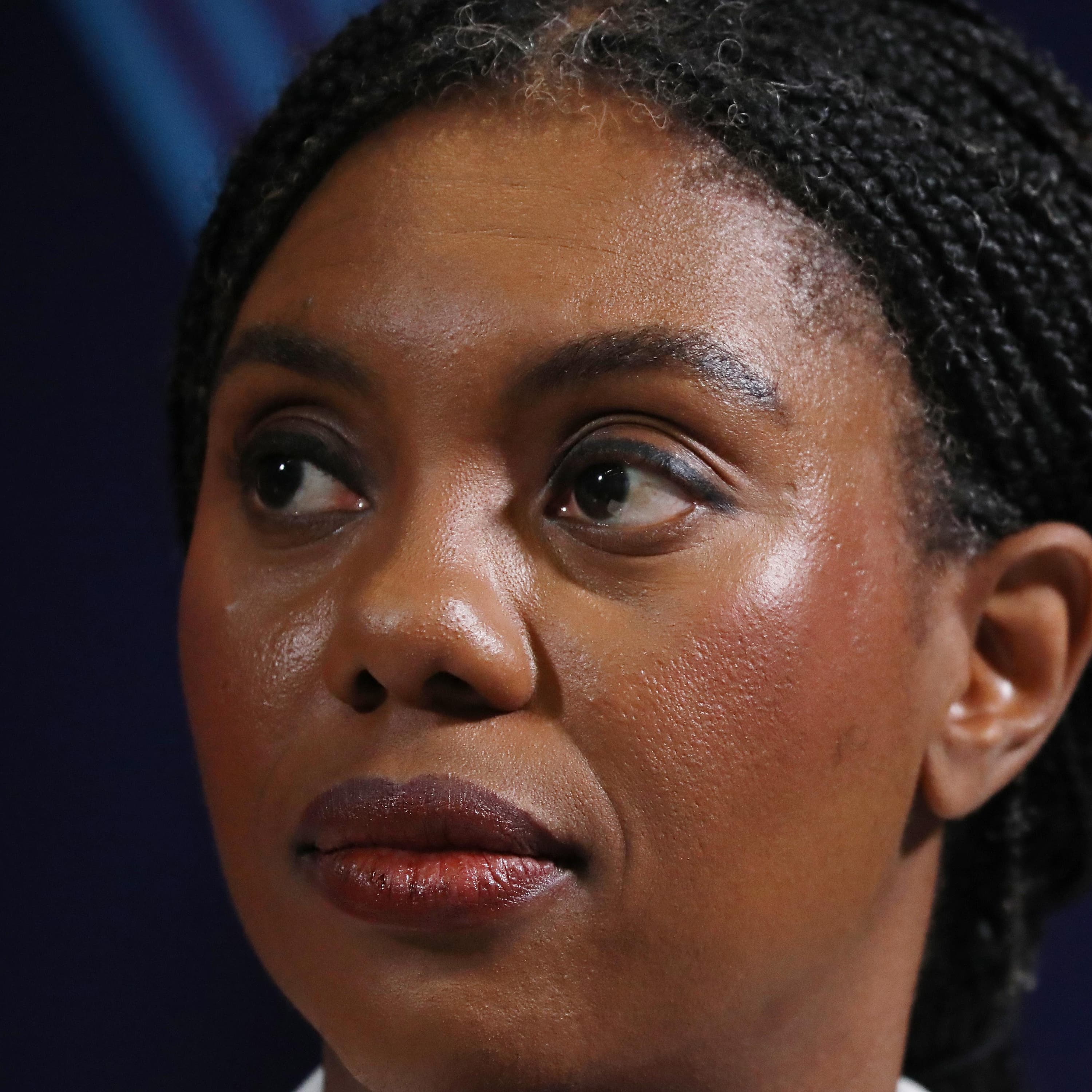
Today in Focus
Can Badenoch’s culture war win back Reform supporters? – The Latest
00:10:10
Kemi Badenoch has vowed to reform the Equality Act in what is viewed as an attempt to win back support from Reform voters. Nosheen Iqbal speaks to community affairs correspondent Aamna Mohdin – watch on YouTube
Loading summary
Transcript29 lines
- [00:00]
Guardian Announcer
This is the Guardian. Today in Focus is supported by Paramount, the Agency. All episodes streaming June 21st on Paramount. In the world of espionage, truth is a moving target and every decision carries a dangerous consequence. This new mission explores what it means to live as a double agent. Twice the lies, twice the risk. The lines between ally and enemy blur like never before. And survival depends on trusting no one. Starring Michael Fassbender, Jeffrey Wright, Jodie Turner Smith and Richard Gere. Don't miss the Agency. All episode streaming June 21st on Paramount. Plus,
- [01:12]
Amna Modin
This is not a left or right wing problem. It is a common sense problem. We are going to overhaul the act, starting by removing this duty. What's quite shocking, really, is that she links this duty to major crime and political scandals. People are now saying diversity in its entirety. It's wrong. The Overton Window has shifted so far to the right that Badenoch is a
- [01:34]
Noshi Neqbal
moderate on this question from the Guardians Today in Focus, this is the latest. I'm Noshi Neqbal. Amna Modin, you are community affairs correspondent for the Guardian. And we're here today to talk about what potentially looks like a paradox on the face of it. The country's first black female leader of a major political party calling for a total overhaul of equality rules. Amna, could you have a crack at explaining Kemi Badenoch's position on the public sector equality duty and essentially, what is it?
- [02:08]
Amna Modin
First of all, this duty is a legal obligation for public bodies. So that's hospitals, police officers, teachers. That requires them to have a thinking before they act and to make sure that they are thinking about equality law. So, for example, if a local council wants to shut down a local library, they need to have a think about the impact that could have on local community, on children, on people from lower income backgrounds, on disabled people. So, for example, if you close down that local library, and in that area there are quite a lot of disabled people, can they access the next nearby library? If the answer to that is no, they have to ensure that there's public transport available to them to go to that next library. Or they a mobile library, or they rethink the decision to close down that library.
- [02:54]
Noshi Neqbal
And so why does Badenoch say that she wants to abolish this duty? Because it sounds quite sensible on the face of it.
- [02:59]
Amna Modin
So she says what was a sensible safeguard has now gone too far. She links a lot of that to Black Lives Matter and what she describes as identity politics. But this is a misreading, perhaps a willful misreading of equality law. This duty has existed since the Stephen Lawrence murder and the inquiry that has followed, again, it just tells public bodies, why don't you have a think about what impact your actions could go on to have? But she argues that this has become a vehicle for grievance politics, for identity politics, that it's pushing EDI diversity initiatives and it means that public bodies are no longer focused on their core responsibilities. What's quite shocking, really, is that she links this duty to major crime and political scandals that we've had, such as the Manchester arena bombing, the Nottingham attacks, southpaw and grooming gangs.
- [03:48]
Noshi Neqbal
So Badenoch is absolutely confident in her beliefs about what this duty leads to. But you've spoken to experts in the field, Amna. Can you tell me what their take is on Badenoch's claims and what real life impact could this rollback potentially have?
- [04:04]
Amna Modin
Yeah, so I spoke to equality experts. So professors and barristers who were quite sceptical of her linking with this public duty, with some of the recent scandals that they've had. Many have just said that it's complete nonsense on what impact that this could. They said that the duty can impact disability access, maternity services, again, support for vulnerable children. There's a reason his duty exists because it hasn't been common sense in the past. There was a requirement that told them, please stop, have a think and act
- [04:37]
Noshi Neqbal
on the common sense that she insists that everyone just has by default.
- [04:40]
Amna Modin
Exactly.
- [04:41]
Noshi Neqbal
And it is curious timing, because while Badenoch says that she's been working on this policy for months, she did then talk today about the Henry Novak case again, and claims that police who arrested Novak were influenced by guidance saying that hate crimes should be treated as a priority. Now, we know that she's a very skilled and experienced culture warrior. She's an avowed fan of Trump's rollback of diversity, equity and inclusion policies in the States. How much do you think, though, that this political strategy will help her win back those former Conservative voters who have defected to either reform or to rest?
- [05:18]
Amna Modin
Badenoch has been really consistent on this question, on racial equality, on gender equality. So when she was the Equalities Minister, she was very, very critical of what she described as critical race theories in schools. She's always been very critical about the idea that the UK is institutionally racist. She was behind the widely criticized race report that said that the UK does not have an issue of institutional racism.
- [05:41]
Noshi Neqbal
It's the Soell Report.
- [05:42]
Amna Modin
Exactly. So she has always been quite consistent on this. She does believe that people should be treated as individuals, that there's an element of universal which I think many of us can agree with, but it's worth saying she's doing this now because this figures to the right of her who are winning voters. You mentioned reform, of course, and then there's also Restore Reform has called for the Equality act to be abolished in its entirety. In its entirety. That should concern all of us because that would mean that it would be legal to discriminate against you if you're a woman, if you're a black person, if you're a disabled person. So we really need to ask ourselves, do we want to live in a world where someone could be turned away to rent a property or to be turned away because they're pregnant or they've had a baby recently and they might have another baby soon, so their employer wants to get rid of them? Like, do we want to live in a society where that exists or people who experience that have no legal redress to challenge that?
- [06:35]
Noshi Neqbal
Well, Badenoch says she's saying this and working on this policy because she believes it promotes unity. But there's an irony that it seems to foster more division than anything else. And she takes this real pull yourself up by a bootstraps approach to the workplace, to equality, full stop. I mean, what, what do you make of how she's tackled all of this when she's, as you say, competing with the likes of Restore and Reform?
- [06:59]
Amna Modin
Yeah, Badenoch has quite a consistent narrative, but what's quite frightening now is that it's not the most right wing narrative in our political system. I would say about 10 years ago, some of the things that she was saying was quite shocking, was quite frightening. But again, she now seems to fit more closely to the center right compared to what Reform are saying and again, what Restorer saying. What seems to be happening in British society is several things at once. There is real deep seated public anger at policing, failures around, again, so many different issues. Failures around immigration, failures around public service. You know, I do think that anger is real from my reporting from going to different parts of this country at the same time. Britain is a remarkably diverse country and nearly the majority of the people that live here are fine with living with people that are different from them. What we're really seeing from the right is two arguments coming. One, and I think this is where Badenuks count Lampset ask, how do institutions respond to diversity? She's suggesting that they've been doing it wrong since BLM or perhaps since the Stephen Lawrence inquiry, that DEI or EDI or identity politics has gone too far and that actually some of these policies are discriminating against white Britons. But there's an argument to the right of her. And it's quite scary, actually, that, you know, people are now saying diversity in its entirety. It's wrong. We need mass deportation of people who've been here for several generations. We need mass deportations of people here who are migrants, who are legally here. The Overton window has shifted so far to the right that Badenoch is a moderate on this question.
- [08:40]
Noshi Neqbal
No, I mean. I mean, arguably, you know, she can talk about this stuff and. But she's so far from achieving power that it kind of seems irrelevant to some people. Like, why are you talking about it? It's just a distraction. However, as you say, this stuff seeps into the discourse. It moves the conversation further along, and Badenoch is there again, without actually being Prime Minister, having a massive impact on policy and on the conversation that people have. And I wonder, you know, in your reporting, as you've been across the country, how reflective do you think her position actually is of where the British public sits?
- [09:14]
Amna Modin
I think we have to be honest that the public conversation has definitely shifted ideas that would have been considered fringe perhaps a decade ago. People are saying on doorstops, people are making those comments on Facebook, and Stan X is a bit perhaps to the right of other social media platforms.
- [09:31]
Noshi Neqbal
It's its own beast, isn't it?
- [09:32]
Amna Modin
Yeah, but people are saying this in a way that I don't think they would have said a decade ago.
- [09:37]
Noshi Neqbal
When you say. Say this, saying racist things.
- [09:39]
Amna Modin
Yes. Yeah, yeah. I think people are saying quite shocking racist things about people of color in this country. They're saying quite shock things about what equality law actually says and the impact it will have. But I think what we have to do is ask them to be very particular. Ask them to give us examples. Right, so if Reform wants to abolish the Equality act, we have to ask them, do you. Are you saying that if a woman has been fired because she is pregnant, that is okay in a reform country? Like, we should really begin to ask those questions? Because the other thing that really came out from speaking to experts is how fuzzy a lot of what the right wants and to happen to the Equality act is. So they say they want to abolish the Equality act and they want to bring their own act. Okay, well, what does that mean for direct and indirect discrimination? What does that mean if you're an Asian person? Can someone just call you the P word at work? We should begin to ask those kind of questions, because I don't think they've got answers to that.
- [10:31]
Noshi Neqbal
Amna, thank you so much for your time.
- [10:33]
Amna Modin
Thank you.
- [10:35]
Noshi Neqbal
That's it for today. My thanks to Amna Modin, the Guardian's community affairs correspondent. You can keep up with all of Amna's reporting and coverage of this story over@theguardian.com thanks for listening to this episode of the latest Today in Focus will be back in your feeds as usual tomorrow morning. The latest will be back tomorrow night. This episode was produced by Bryony Moore and Annie Nevespa. It was presented by me, Noshi Nickbal, and the senior producer was Ryan Ramgovin.
- [11:03]
Guardian Announcer
This is the Guardian.
- [11:12]
ServiceNow Advertiser
If every team has the best data, the best tools and the best AI, what's left? The athlete, WNBA legend Diana Taurasi, Olympian Allison Felix and former F1 driver Pedro de la Rosa Spill the tea on how AI has leveled the playing field and why raw talent matters now more than ever. Discover this and more at Workflow, ServiceNow's new destination for AI insights that rise above the slop. Dig in at servicenow.com workflow Today's markets move fast.
- [11:42]
Barclays Advertiser
Get the insights you need in 10 minutes with the Barclays Brief, a new podcast from Barclays Investment Bank. Through sharp dialogue and scenario based analysis, our leading experts analyze key market themes each week. So whether you're managing a portfolio or leading a business, the Barclays Brief podcast can help you make smarter decisions today. Stay sharp, Stay brief. Find Barclays Brief wherever you get your podcasts.
- [12:10]
JP Morgan Advertiser
Did you know that passive fixed income ETFs only capture about 50% of the US public bond market? But with JP Morgan Asset Management's active fixed income ETFs, we can help you capture 100% of the US public bond market and explore twice as many opportunities. Visit jpmorgan.com getactive to learn more. JP Morgan Asset Management is the brand name for the asset management business of J.P. morgan Chase Co. And its affiliates worldwide. This communication is issued by J.P. morgan Distribution Services, Inc. Member of FINRA.