← Today in Focus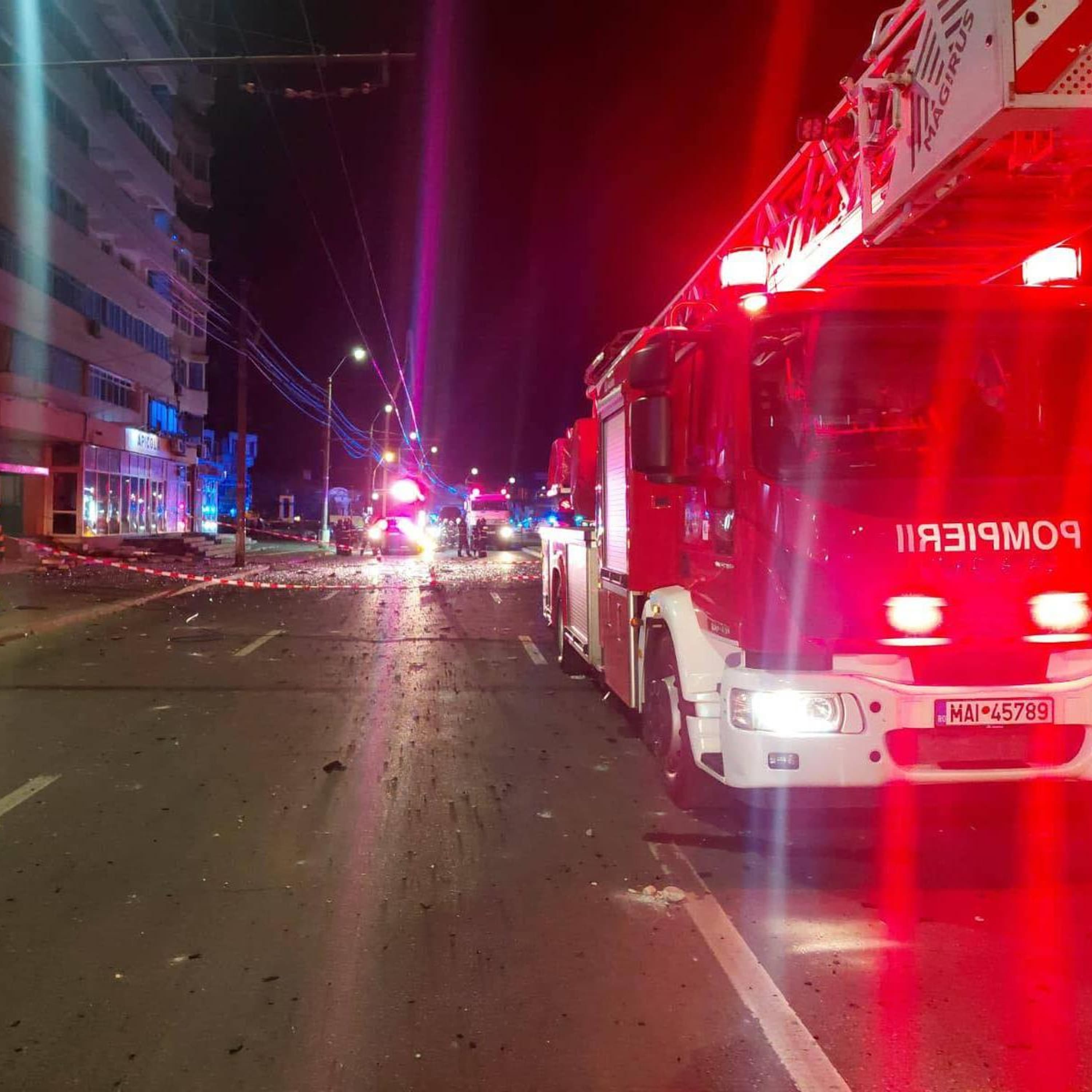
Today in Focus
Could Nato be dragged into war with Russia? – The Latest
00:09:50
Nato has vowed to ‘defend every inch’ of its territory after a Russian drone hit an apartment building in Romania. Is there a risk the war could expand beyond Ukraine? Lucy Hough speaks to senior international correspondent Peter Beaumont
Loading summary
Transcript21 lines
- [00:00]
A
This is the Guardian. Today's markets move fast. Get the insights you need in 10 minutes with the Barclays Brief, a new podcast from Barclays Investment Bank. Through sharp dialogue and scenario based analysis, our leading experts analyze key market themes each week. So whether you're managing a portfolio or leading a business, the Barclays Brief podcast can help you make smarter decisions today. Stay sharp, stay brief. Find Barclays Brief wherever you get your podcasts.
- [00:46]
B
Deliberately or not, the war is bleeding over the borders into NATO, into other parts of Europe. This is a spine stiffening exercise. The air war has got ever more intense. There's a very, very strong desire to remind Russia what kind of perilous territory that this is tilting towards.
- [01:03]
C
NATO says it's ready to defend every inch of its territory as a Russian drone hits an apartment building in Romania from the Guardians today in focus, this is the latest with me, Lucy Hoff, Peter Beaumont, our senior international correspondent. Peter, we're talking in light of an attack by a Russian drone on Romanian territory on an apartment block. That feels like quite a major escalation. What happened when this drone entered Romanian territory?
- [01:34]
B
What seems to have happened is that last night there was another fairly major Russian attack on Ukraine. And during this attack, one of the Russian drones crossed into Romania and hit the roof of an apartment block in a city called Galati, which is quite close to the Ukrainian border. I mean, it's not far from the Danube. And in the course of this impact, the drones explosives detonated, two people have been injured and all the residents of the apartment block have been evacuated. And it seems as though the Romanians were actually tracking this drone as it crossed in. But they were anxious that if they tried to shoot it down, you know, it might actually cause as many problems as simply allowing it to crash.
- [02:16]
C
But nonetheless, it sounds like there was a huge response, given that this is a residential area, to clear that area to prevent any casualties, which mercifully there were massive. Yeah, but too injured, as you say.
- [02:27]
B
Yes, there would have been an absolutely massive response. I mean, you know, this isn't the first time it's happened and we want to one of the problems as the ground war in Ukraine has become bogged down, as the air war has got ever more intense and both sides, the drones that have been used in attacks have gone astray. I mean, Ukrainian drones have landed in Baltic countries this year. I mean, this is the second time a Russian drone has landed near this city in Romania. And one of the issues is that it appears as though deliberately or not, the war is bleeding over the borders into NATO, into other parts of Europe. And that is obviously causing huge concerns. Part of the response that we're seeing is because there is a sense that NATO members and European countries, you know, want to draw a line. You know, there is concern that Russia might attack inside Europe. I mean, there was a Wall Street Journal account of this earlier this week.
- [03:21]
C
Right.
- [03:22]
B
There is concern about the sort of increasing hybrid warfare in Europe, you know, against UK and other countries. And I think people are seeing this as an opportunity to try and draw a very, very hard line under this because of the per. Recklessness of Russia in this conflict.
- [03:37]
C
Yeah. And that response has been really strong, hasn't it, that NATO Secretary General Mark Rutter says the alliance is ready to defend every inch of its territory. Obviously, this brings in the Article 5, which means that an attack on one member state is an attack on all. But the response has been robust, and particularly in the context that this is not the first time it's happened. How would you summarize the diplomatic response more broadly?
- [04:04]
B
I mean, it's been incredible. I mean, the language has been incredibly strong. I mean, Rutte's comments, comments from the German chancellor from France. One thing to note is that the acting head of the Romanian armed forces has made it clear that they're not seeing this as a deliberate attack, but they're seeing this as kind of an escalation in a different way. Now, that means that, you know, we're unlikely to see anything around Article 5, the core of NATO, which is that an attack on one NATO country is an attack on. But at the same time, I think senior European officials, what NATO is making clear is that this feels very, very close to the edge. And in light of all the other stuff that's been going on, whether, you know, we're talking about Russian inspired sabotage attacks in Poland, you know, it was the head of GCHQ was talking earlier this week about sort of the increase in Russian hybrid warfare against the uk. There is a sense that this is part of the picture of general Russian aggression, is the fact that we're seeing consequences happening across borders and inside NATO countries. And I think there's a very, very strong desire to remind Russia, you know, what kind of perilous territory that this is tilting towards. When you have drones exploding on the top of Romanian apartment blocks and in
- [05:22]
C
defensive terms, what will Romania be looking to do to bolster its defences? Or indeed any other country that borders with Ukraine or is close to the conflict? And will they be looking for NATO support in the shorter term?
- [05:36]
B
One of the things that Romania's clear is that they're very, very happy with a response by European and NATO allies. So far they're very happy with the kind of anger. I mean, in terms of what the response. I mean, it's not simply the Romanian response. It's going to be sort of a stepping up of the response around those borders. I mean, already we've seen Poland, Romania, the countries of the closest conflict, stepping up their preparedness for defenses. I mean, there is already talk about moving assets, particularly around air defenses, to help shore up countries that are more vulnerable to these kind of overspells. And you know, this week we saw the first time, I mean, Poland being able to spend extra money from this new agreement to bolster its defenses in terms of the collective defenses of NATO and Europe. So I think what this does is it dramatizes a problem that everyone is aware of and everyone is very, very concerned about. And I think it's an opportunity because, you know, at a time where, for instance, Ukraine is facing crucial shortage of Patriot air defence missiles because of the war in Iran, it gives people an opportunity to stand up and say, look, this is a really big deal for Europe, particularly looking across the Atlantic towards the United States and saying this is how bad the security situation is. And I think that's as important as the kind of local issues about whether you bring in more defenses to help cities on the edge of the conflict. I think it's like saying, hey, there is a big war going on here. The United States is part of NATO, we're all part of NATO. Everyone needs to start pulling together because, you know, we're in very risky territory.
- [07:19]
C
And how has Russia and the Kremlin responded to this? Have they had any justification for what happened? Have they responded to these very strong statements from NATO and European allies?
- [07:31]
B
So far it's been a kind of very classic Russian response from the Kremlin. You know, the one spokesman said they are aware of the allegation that something's happened and you know, at some stage, you know, they will, you know, over the next few hours, I think we can expect a sort of mealy mouthed explanation. I mean, Romania has already kicked out a Russian diplomat, one of the consuls, and I think it's in southeastern Romania. And so Russia's rather typically moved on saying, well, we're going to respond to Romania's diplomatic response. Right? So at the moment it seems though, you know, they're sort of doing their usual, we are outraged that you should think that, you know, you should chuck out one of our diplomats over this, which is unfortunately a sort of standard Kremlin operating procedure really, isn't it?
- [08:13]
C
And Peter, it's been a really grisly week in Ukraine, hasn't it? Earlier this week, there was an attack on a residential area in the center of kyiv that killed four people and injured more than 100. The drone attack that we saw on Romanian territory was part of a bigger drone attack to be carried out in Ukraine. And certainly the EU has been critical about these attacks happening in civilian areas. Will Russia, Russia and the Kremlin be concerned about this bolstered defence around Ukraine's borders by NATO in this very coordinated way?
- [08:47]
B
And my guess is that for now he will simply see this as a kind of NATO containment strategy. I think there's a huge amount of concern, particularly over the threats from Moscow to sort of like escalate towards systemic air attacks against targets in Ukraine, including decision making centers. I mean, I think it does feel in terms of the air attacks that we're entering more a more dangerous phase of the air war, you know, particularly since no one is in any doubts over the vulnerabilities of Ukrainians to certainly towards ballistic missiles. And it feels like the comments today in response to this and the fact that they've chosen to respond so strongly feels like this is a spine stiffening exercise for NATO and for Europe in the context of what we've already been seeing.
- [09:34]
C
Well, Peter, thank you so much.
- [09:35]
B
Thank you.
- [09:37]
C
That's it for today. My huge thanks again to Peter Beaumont, the Guardian senior international correspondent. You can keep up with his reporting and our live blog of this story over@theguardian.com and I recommend today's episode of our sister podcast, Politics Weekly America. Jonathan Friedland will be talking about why Trump keeps changing his mind on what to do to end the war in the Middle East. It's now also on YouTube. Just search for Politics Weekly. Thanks for listening to this episode of the Latest Today I'm focusing on will be back on Monday. The Latest will be back on Monday night. Have a lovely weekend. This episode was presented by me, Lucy Hoff. It was produced by Bryony Moore. The senior producer was Ryan Ramgobin and the lead producer was Zoe Hitch. This is the Guardian.
- [10:28]
A
The long weekend is here and summer is officially in the air. Make sure your home smells just as inviting during Pura's summer savings event. You can save 20% on our entire smart fragrance system. Whether you're hosting friends or enjoying a quiet staycation, Pura makes it easy to create the perfect vibe with just a tap on your phone. Don't miss 20% off site wide. Visit pura.com to shop the season's biggest sales.
- [10:54]
D
A History of the United States in 100 Objects is a brand new podcast from 99% Invisible and BBC Studios. Each week we're looking at a different object from across American history with a unique story to tell about who we've been, what we've built, and what we've allowed ourselves to forget. Some of these objects are well known, many are not, but all of them carry the story of how we got to this moment. Find A History of the United States and 100 objects on the 99% invisible feed. Wherever you get your podcasts.