← Today in Focus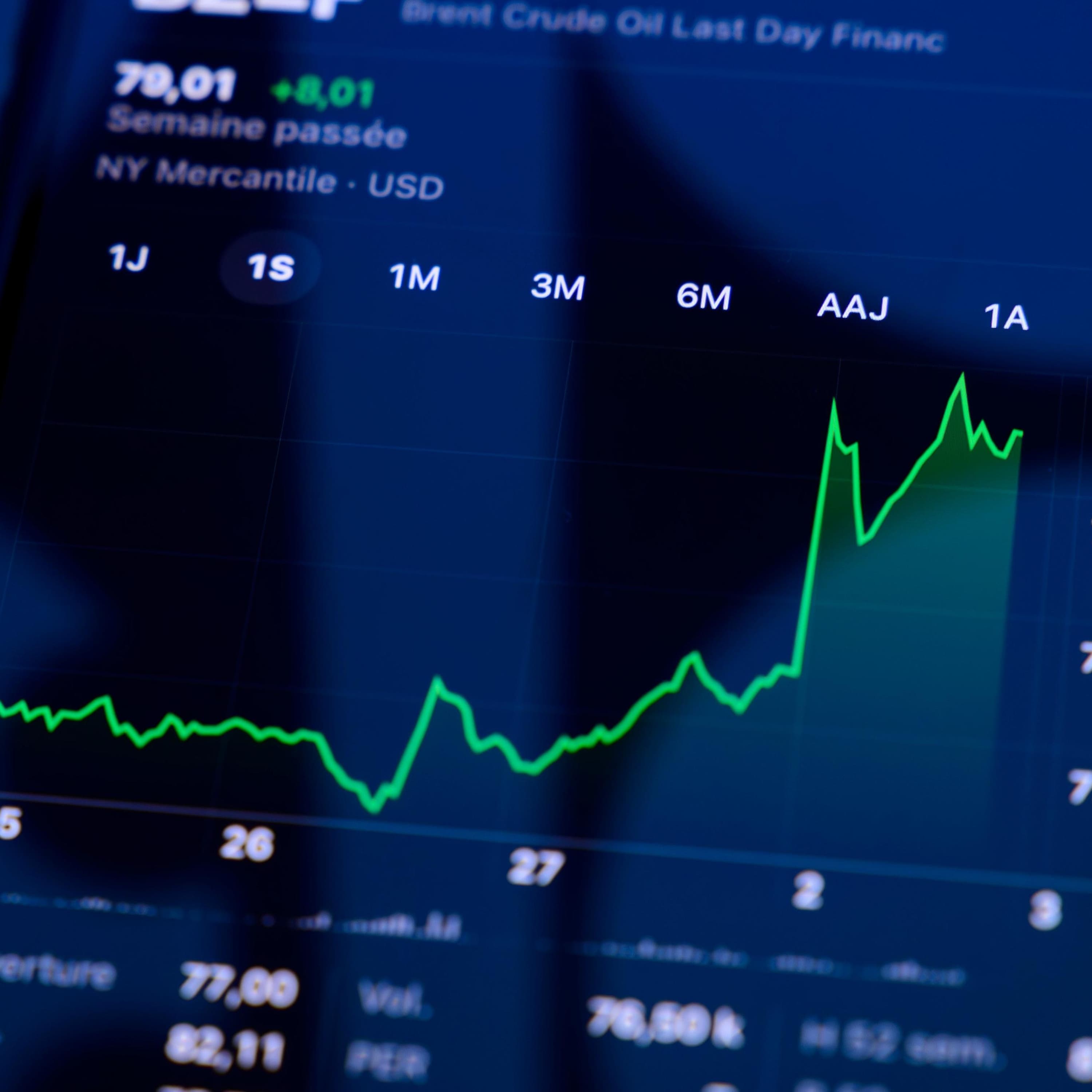
Today in Focus
Could the Iran war trigger a global economic crisis? – The Latest
00:11:10
Oil and gas prices are soaring as war halts exports from the Middle East, prompting fears of a global economic crisis. Nosheen Iqbal speaks to the Guardian’s head of business, John Collingridge
Loading summary
Transcript29 lines
- [00:00]
A
This is the Guardian. Stock markets reacting really violently. Steep falls around the world. Iran has basically said that anything that passes through the Strait is fair game. They'll set it ablaze, I think was the phrase that they used. It's effectively like the world's gas station and there's a huge queue outside it and nobody can get in, nobody can get out. It feels like a net result of all of this is you have a far more uncertain world and all that feeds through to higher prices.
- [00:36]
B
War in the Middle east is sending shockwaves through the global economy. But why does the price of oil and gas matter so much from the Guardians today? In focus, this is the latest. With me, Noshi Nikbal. Joining me today is the Guardian's head of business, John Collingridge. John, thank you so much for joining us. We are now on day five of this war and from the perspective of the global economy, it doesn't look great, does it? Now you're our head of business. I'm hoping you're going to walk us through this in the most simplest terms. But how have the markets been responding to all the turmoil in the Middle East?
- [01:15]
A
What we've seen over the last few days since the attacks over the weekend, stock markets reacting really violently, steep falls around the world. So overnight, the Asian markets fell really sharply. And in fact, in South Korea, they had to stop. They used a circuit breaker to stop, stop the market for temporarily because the falls were so steep. And then on the other side, you've seen commodity costs, particularly oil and gas, go through the roof. You've seen really sharp increases, particularly in gas because this region is such a big exporter of oil and gas and those ships are stopped from traversing through the Strait of Hormuz. And then one other effect is that has been really sharp in recent days or is starting to bite is the effect on governments and their borrowing ability. Around the world, government borrowing costs are starting to go up. They had been coming down. Governments around the world thought that they had slayed the inflation dragon. After the pandemic, after the war in Ukraine, it's been a long, steady slog to try and bring down those borrowing costs, try and ease the pressure on households and businesses. Now those things are starting to tick up because the fear is big spike in oil and gas becomes a prolonged spike and then that feeds through to higher prices for everybody and inflation.
- [02:29]
B
So there is all this focus on the Strait of Hormuz, which is this sea of water which links the Gulf to the Arabian Sea and beyond. Why is it so vital to the global economy.
- [02:39]
A
If you think about the Gulf, it is this vast repository of oil and gas reserves. Though the country's on the Gulf, the Irans, the Iraqs, The Kuwait's, the UAE's, the Saudis, they are some of the world's biggest producers of hydrocarbons and they export them around the world. So the gas particularly, that goes from Qatar, one of the biggest exporters of liquefied natural gas. It goes to Asia, it goes to China, goes to India, to Pakistan. Those countries need that, that fuel. And the only way they can get gas is in this form of freezing it, putting it onto large super cool tankers and shipping it through this very narrow strait. It's effectively like the world's gas station and there's a huge queue outside it. Nobody can get in, nobody can get out.
- [03:28]
B
Well, that's what I was going to ask next. I mean, literally what is happening there right now? I mean, are these tankers all backed up? Is like you said, is anything coming in? Is anything coming out?
- [03:36]
A
Missiles have been fired, drones have been fired from Iran. Some of their proxies, they've hit oil installations around the region. They've hit a Qatari gas plant. Those oil and gas producers are naturally saying, we're going to have to halt production, we have to limit our production. Therefore, all these ships which would normally traverse through the strait are either backing up, they're sitting at the ports, they can't get through, or if they're stuck in the Gulf, they can't get out. I've seen one estimate There are about 3,000 ships which are waiting to pass through the strait in one way or the other. And there's usually about 80, 80 vessels a day.
- [04:09]
B
And that is now just all in a massive backlog. And you've got the US Navy offering to escort ships through. I mean, how's that gone down?
- [04:17]
A
Iran has basically said that anything that passes through the strait, any ship that passes through the strait is fair game. They'll set it ablaze, I think was the phrase that they used. So if you're a shipping company, you own this very expensive vessel, you're an oil and gas producer, you don't want to take the risk with your people, you don't want to take the risk of your really expensive vessels to send them through. So it takes a lot of confidence to be able to say, I'll go against that threat from Iran and start traversing there. Which is why Trump has said, oh, we'll provide the U.S. navy to provide a sort of defensive escort along there.
- [04:50]
B
John, this is probably going to be really obvious to you, but why does the cost of oil and gas underpin and affect everything? Because it's not just petrol prices at the pump, is it?
- [04:59]
A
No, it's oil and gas are the feedstock for the world's economy. You think gas and oil go into heating as well, but then the petrochemicals that are made from hydrocarbons, you've got fertilizer. The Gulf is a huge producer of fertiliser. These fertiliser ships are used around the world. They're one of the things which helps, you know, the miracle of modern farming and feeding the world's population. So what you're going to see there is potentially demand for fertilizer from elsewhere in the world goes up in cost, that starts to feed through to prices on the shop, on the shop floor. You see the oil and gases used to build, make plastics. So plastics are in every part of our lives. The big fear is that if this goes on and there's an, there's a prolonged blockade of the Strait of Hormuz that then starts to feed through to higher prices for many, many, many things.
- [05:49]
B
And, you know, you're explaining this when we're barely a week in and as you've said, the markets have reacted violently, in your words. But if we believe Trump and that his operation Epic Fury is going to take four to five weeks, or even if we take Pete Hegseth's word and you know, it could go on for longer, just how bad do you expect this to get for the global economy?
- [06:10]
A
There's the big question right now. It's like, how long is it going to go on for? And you know, Trump has said earlier this week, you know, four to five weeks, which looked like he was sort of trying to contain expectations. Because the fear on markets is if it goes on for much more than a month, all those oil and gas reserves start to dry up around the world. The supply demand gets, gets out of kilter.
- [06:30]
B
So there's like a four week reserve.
- [06:32]
A
It's effectively like this four week window, right? But beyond that, then you get sort of unconstrained price expectations, inflation starts, it starts substantially go up. Because I think it is worth pointing out the increase in the price of oil at the moment. Whilst it is substantial relative to where it was, it's not what we've seen in recent years. If you go back to like the Ukraine energy price shock we had for three months in a row, oil above $100 a barrel, it's still sitting like $82, $83 a barrel right now. But it is not where it was gas after Ukraine was at several magnitudes higher than where it is right now. So it could be far, far worse. And it's is quite strange. We're sort of looking at this. Traders around the world are thinking, how long will this go on for? There's a kind of phony war going on as people wait to see will it get really bad, but they're waiting to see whether Trump finds an off ramp.
- [07:23]
B
And when it comes to Trump, I mean, he's approaching the midterms in a few months and I wonder how this, what impact this has on the American people, like when do they eventually start feeling this on their pocket and how is that going to figure in his calculation of what he does next?
- [07:38]
A
So I think it's worth pointing out that America is relatively insulated from energy price shocks because over the years, as we know, it's exploited shale gas and so it's got, it's self sufficient largely on energy, but it is not immune to energy price shocks around the world. And we've already started seeing prices at the pumps in the US start to creep up. Trump's a businessman. What does he care about? He cares about prices at the pumps, cares about how things look on telly, cares about stock markets, those sort of things. When he switches on Fox News in the morning and he sees leading on prices at the pumps, queues at the forecourts. If that starts to happen, stock market's falling, he makes a calculation. This is starting to look potentially bad for me as the president who wanted to bring down prices for Americans, but
- [08:23]
B
presumably it would have always have led to some sort of inflationary cost. I mean, and you kind of wonder about how far he's willing to go and to take this war, given that, as you say, he's a businessman, he's into money and the bottom dollar and profit.
- [08:38]
A
Yeah, we've been looking at it, thinking where that's the big question, like how does this end? Where is the off ramp? It feels like the net result of all of this is you have a far more uncertain world. Trump has gone like a wrecking ball through global norms, hasn't he? He's upending rules around war, around trade, around the law, and all that feeds through to higher prices.
- [09:00]
B
John, you've outlined just really clearly how much damage this is going to do to the global economy, the impact of which I guess we'll all feel trickled down at some point in some way. But there are Winners in war aren't there? And I just wonder who is coming out on top on this and where are the profits being made? On a US Israeli war on Iran.
- [09:22]
A
Yeah. If you're a defense company right now, particularly one which makes drones, you're probably thinking this is. You're starting to see this. Is this potentially very good for my business. If you're a US liquefied natural gas shale exporter, it's very good for you as well, because they can continue to export. They've been a massive exporter. The UK takes a lot of shale liquefied natural gas from the us. Right. Or if you're Russia, you'd been looking at the oil price. Oil price was, I think, around. Around Christmas. It was. It had come right down and it was proving a real problem for. For Russia and for its war machine. These prices are helpful for Russia and that sanctioned oil. The likes of India had been saying the pressure from Trump to stop buying sanctioned Russian oil. At what point will governments around the world start saying, well, actually, I just need the oil and if it's Russian sanctioned oil, so be it?
- [10:12]
B
And do you think that's likely, that might happen even here in the uk?
- [10:16]
A
I think in the uk, and I don't think Europe has been pretty vocal, unequivocal over the past few days about, we're not going to go back to a world of Russian hydrocarbons. Another net effect might be that countries start burning coal more.
- [10:29]
B
Right.
- [10:30]
A
Can't get gas burn coal, which is a scary thought.
- [10:35]
B
Volatile times. John, thank you so much for your time.
- [10:38]
A
Thank you.
- [10:39]
B
That's it for today. My huge thanks again to John Collingridge, our head of business. Thanks for listening to this episode of the latest Today in Focus. We'll be back with you as usual tomorrow morning and we'll be back tomorrow night. This episode was presented by me, Noshi Nikbala. The producers were Bryony Moore and Nicola Alexandru. The senior producer was Ryan Ramgobin and the lead producer was Zoe Hitch.
- [11:03]
A
This is the Guardian.