← Today in Focus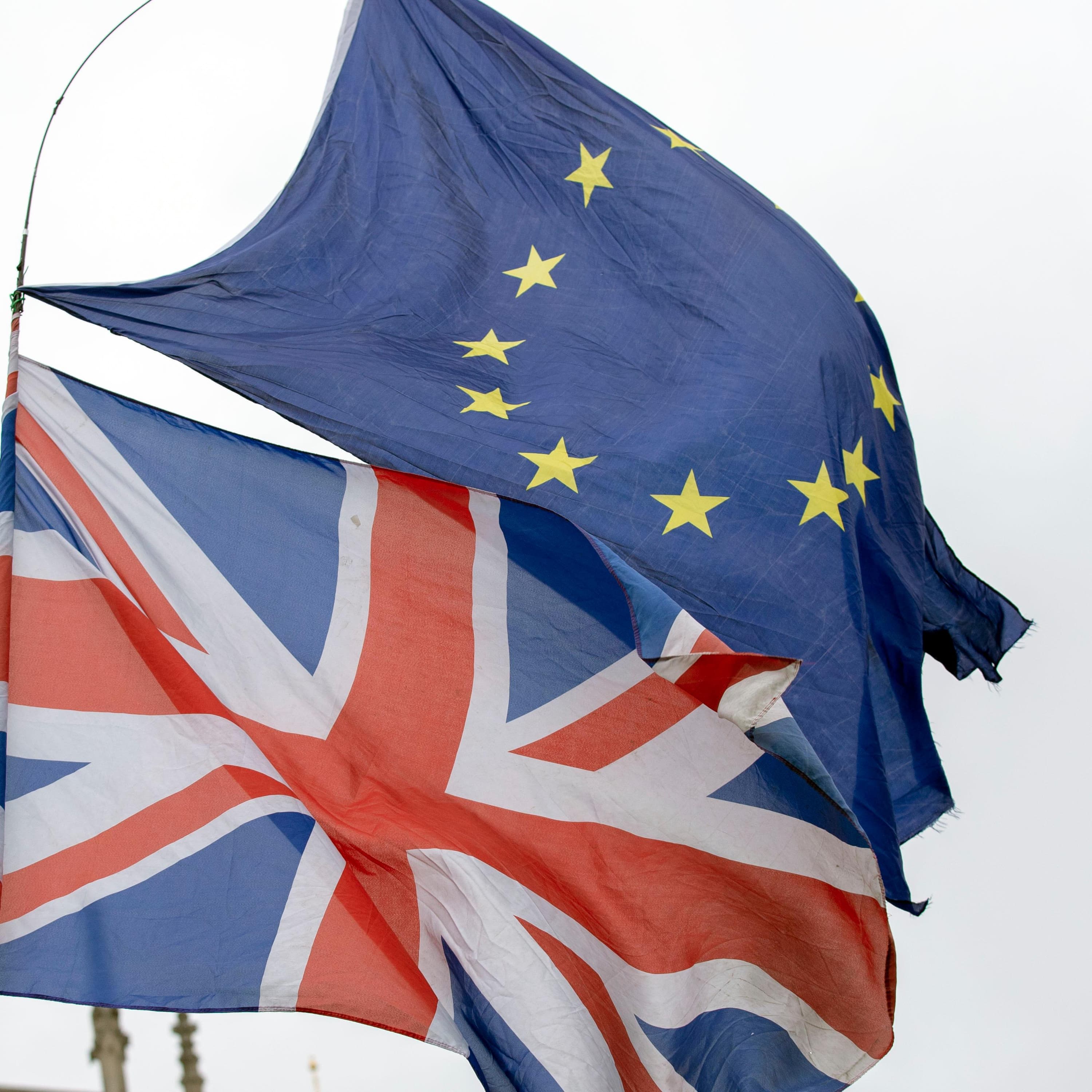
Today in Focus
Could the UK really rejoin the EU? – The Latest
00:11:34
The Brexit debate has been reignited after Labour leadership contender Wes Streeting said the UK should rejoin the EU, putting pressure on rival Andy Burnham. But how would it work and would the EU even agree to it? Lucy Hough speaks to Europe correspondent Jon Henley
Loading summary
Transcript29 lines
- [00:00]
A
This is the Guardian.
- [00:12]
B
Brexit remains the scar that hasn't healed. It's hundreds of billions of pounds that have been sucked out of the British economy. The problem for the politicians is that they can't really address that without risking reopening really awful, bitter war. Leaving the European Union was a catastrophic mistake. I am not proposing that the UK considers rejoining the eu. I respect the decision that was made at the referendum. European politicians are quite determined that if the UK does come back in, it will not be on the same terms as it had before. So they're really in a bind.
- [00:50]
A
The Brexit debate has been reignited after Labour leadership contender Wes Streeting said the UK should rejoin the eu. But with a crucial by election in Leave voting. Makerfield, is this a gift to reform from the Guardians today? In focus, this is the latest. With me, Lucy Half. Well, joining me from Paris is our Europe correspondent, John Henley. Hi, John, it's great to see you.
- [01:14]
C
Hi there.
- [01:14]
A
Nearly 10 years exactly since Britain voted to leave the EU, we are now suddenly having another conversation about Brexit after these comments from Wes Streeting, who's made it very clear that he plans to stand in any leadership challenge to Keir Starmer. He's described Brexit as a catastrophic mistake. Life quite hard, perhaps by design, for Andy Burnham, who's campaigning in a very strong Leave voting constituency in Makerfield in the hope that he might be able to run in the leadership race. It's odd to be having this conversation. It feels like Labour top brass are trying to put this back in the box. So why is it so toxic for Labour politicians to talk about?
- [01:53]
B
Well, I mean, it's toxic for Labour and for all the mainstream politicians in the uk. I think really it's this Brexit remains the scar that hasn't healed, the wound that hasn't healed. And it's just incredibly difficult for both Labour Party politicians and Conservative Party politicians. They're really caught in a trap. Insofar as you know, I think it's pretty much accepted now that the economic damage of Brexit has been really catastrophic. The latest kind of really quite reputable estimates from the National Bureau of Economic Research, really very respected economists saying that the hit to British GDP is basically between 6 and 8% by the beginning of last year since Britain left the eu. That may not sound like a lot, but it's hundreds of billions of pounds that have been sucked out of the British economy by these immense barriers that it's. That it's put up with its biggest trading partner. But the problem for the politicians is that they can't really address that without risking reopening that kind of, you know, really awful, bitter cultural identity war that Brexit opened up. So they're really stuck with that. And obviously, as Andy Burnham will have to confront in the meantime, there is Nigel Farage and Reform uk, who will clearly throw everything at this by election and will accuse whoever suggests rejoining the EU or even getting much closer to the EU of betraying Brexit. So they're really in a bind.
- [03:31]
A
Yeah. Andy Burnham at last year's Labour Party conference at a Guardian event said that he would like to see the UK rejoin in his life Time, to quote him. So in the longer term, those are comments that will likely dog this very, very crucial campaign. I mean, he's been keen to sort of pour water down on that. He said, you know, it's not something that I'm campaigning on at this point. But as you say, Farage is likely to put that on every single election pamphlet or, you know, every single conversation that happens on the doorstep in Makerfield in the weeks to come. So, John, in terms of the polling, according to YouGov, a majority of Brits now would like to rejoin the EU, 55%. And among Labour voters, that's as high as 80%. So that's given Keir Starmer the case to push for closer ties and to look for a reset, which he has done since taking office in 2024. What has that reset looked like?
- [04:26]
B
He walked into number 10 saying, Starmer, that, you know, he wanted a much closer relationship with the eu. And since then, he has on multiple occasions repeated that, you know, really wanting to put the UK back at the, the heart of the European Union, claiming that the various kind of quite small deals that he has managed to negotiate with the EU would give Britain the best access to the single market and all that kind of thing. But if you look at the actual progress that's been made, it's really baby steps. In fact, the UK has rejoined the Horizon program, which is the EU's science program, although that was negotiated by the previous government. They're also from next year, Britain is going to return to the Erasmus plus kind of student exchange and young people exchange program. But, you know, when things get a little bit tougher, particularly when money is involved, talks are really pretty much stalled. So there was hope that Britain would enter the European electricity market. That's been stymied by a demand from the EU that Britain pay into cohesion funds for sort of, you know, less well off EU member states. Similarly, Britain has been shut out of this big, safe kind of defence procurement loan program that the EU has, again, because Britain wasn't willing to make the financial contribution that the EU was asking for. And finally, there's a much vaunted youth mobility scheme, which the UK prefers to call a youth experience scheme for reasons, for quite telling reasons, I think. But, you know, that's stuck at the moment because the EU is insisting that EU students in the UK should have to pay EU student fees, air tuition fees, which are much, much lower than. So, you know, really there's, there's, there's not been much progress. It's kind of been, you know, really sort of small little gains here and there, but nothing that is going to move the dial, really. I mean, that's the key thing. Nothing that's going to move the dial on that big economic hit that we just mentioned.
- [06:40]
A
But the reality is quite different to the sort of rhetoric that we hear from Starmer, isn't it, John? Because, you know, Starmer talks about this, reset these closer ties. But the reality is, even if there is greater cooperation, you know, more meetings with the EU Commission chief, Ursula von der Leyen, more statements of support that cooperation, particularly on security and defense, when it comes to Ukraine, or more recently against Donald Trump in the Iran war, that doesn't necessarily equal greater economic cooperation.
- [07:10]
B
Absolutely, that's really the nub of it. I mean, there's certainly absolutely a willingness on the EU side to seek greater cooperation with the UK on defence and security matters. And clearly, you know, Britain is a, you know, a nuclear power. The only nuclear power in the EU is, is France. Britain has one of Europe's largest armies. You know, there's, there's plenty of interest in the EU in developing that cooperation around security and defence. But when it comes to the economy, the issue really is these red lines that the Labour government put in its, in its manifesto and has stuck to kind of religiously ever since, which are basically, you know, no, we will not be returning to the European Union, we won't be returning to the Customs Union and we won't be returning to the single market. And until those red lines are eased, I mean, that basically really constrains and really limits what can be achieved in terms of economic integration.
- [08:11]
A
And this was all part of the 20, 20, 24 campaign strategy, wasn't it, to win those red wall seats that gave Keir Starmer his landslide majority. But in a hypothetical world where Wes Streeting is victorious in any leadership challenge and he does follow through on this desire to rejoin the eu. What would that look like? I mean would that involve a second referendum or would it be a campaign pledge or a manifesto pledge?
- [08:38]
B
I mean it would need some kind of vote certainly either in an election or a refere referendum. I mean basically the, the EU would need to be convinced that Britain was serious about this. The big issue here is that, you know, although European populations are actually quite keen to see the UK return, European voters and European politicians are quite determined that if the UK does come back in, it will not be on the same terms as it had before. So you know, it won't have the opt outs of particularly like the Schengen Zone and various other opt outs that the Britain secured. It won't have the rebate that Margaret Thatcher negotiated. There might have to be a very difficult conversation about joining the Euro. So you know, basically Europe is interested but it needs to be on the EU's terms I think.
- [09:34]
A
Well that sounds like a conversation that is going to happen very much in the long term given how divided that things still are and how navel gazing the UK can still be on this issue. But John, thank you so much for your time.
- [09:46]
B
Thanks.
- [09:47]
A
That's it for today. My huge thanks again to John Henley, our Europe correspondent. You can keep up with his reporting over@theguardian.com and do listen to our sister podcast Politics Weekly. Looking ahead to another week of turmoil at the top of the Labour Party. Thanks for listening to this episode of the latest Today in Focus will be back as usual tomorrow morning. The latest tomorrow night. This episode was presented by me, Lucy Hoff. It was produced by Bryony Moore. The senior producer was Ryan Ramgobin and the lead producer was Zoe Harris.
- [10:18]
C
I'm Kai Wright.
- [10:18]
D
I'm Kari Sherman and we are here
- [10:20]
C
to tell you about our new show which is rooted in this feeling that at least I have. I know you have where, you know, it's kind of like when you wake up in the morning and you pick up your phone and you're just hit in the face with a fire hose of news. Right?
- [10:36]
D
Like there's war, there's authoritarianism, our planet is burning. I could go on and on and on.
- [10:42]
C
I could on and on and on. But like we're trying to figure out how to manage it, right? Like how do you manage it?
- [10:47]
D
I manage it by leaning in and trying to learn more and trying to figure out, okay, how can I be smarter about this particular topic and who can I talk to that's going to make me feel better about it.
- [10:57]
C
And who can tell me who's responsible for the mess that I'm reading about? So that's our mission. That's the show.
- [11:04]
D
Welcome to Stateside with Kai and Carter. We're a new show from the Guardian.
- [11:07]
C
We're talking to big thinkers and the best journalists just trying to understand the world through smart conversation and honest reports.
- [11:14]
A
Morning.
- [11:14]
D
We don't have billionaires telling us what to say.
- [11:16]
C
Stateside with Kyan Carter is out now. Every Monday, Wednesday and Friday.
- [11:21]
D
Follow on Apple podcasts or catch us wherever you watch or listen.
- [11:26]
A
This is the Guardian.