← Today in Focus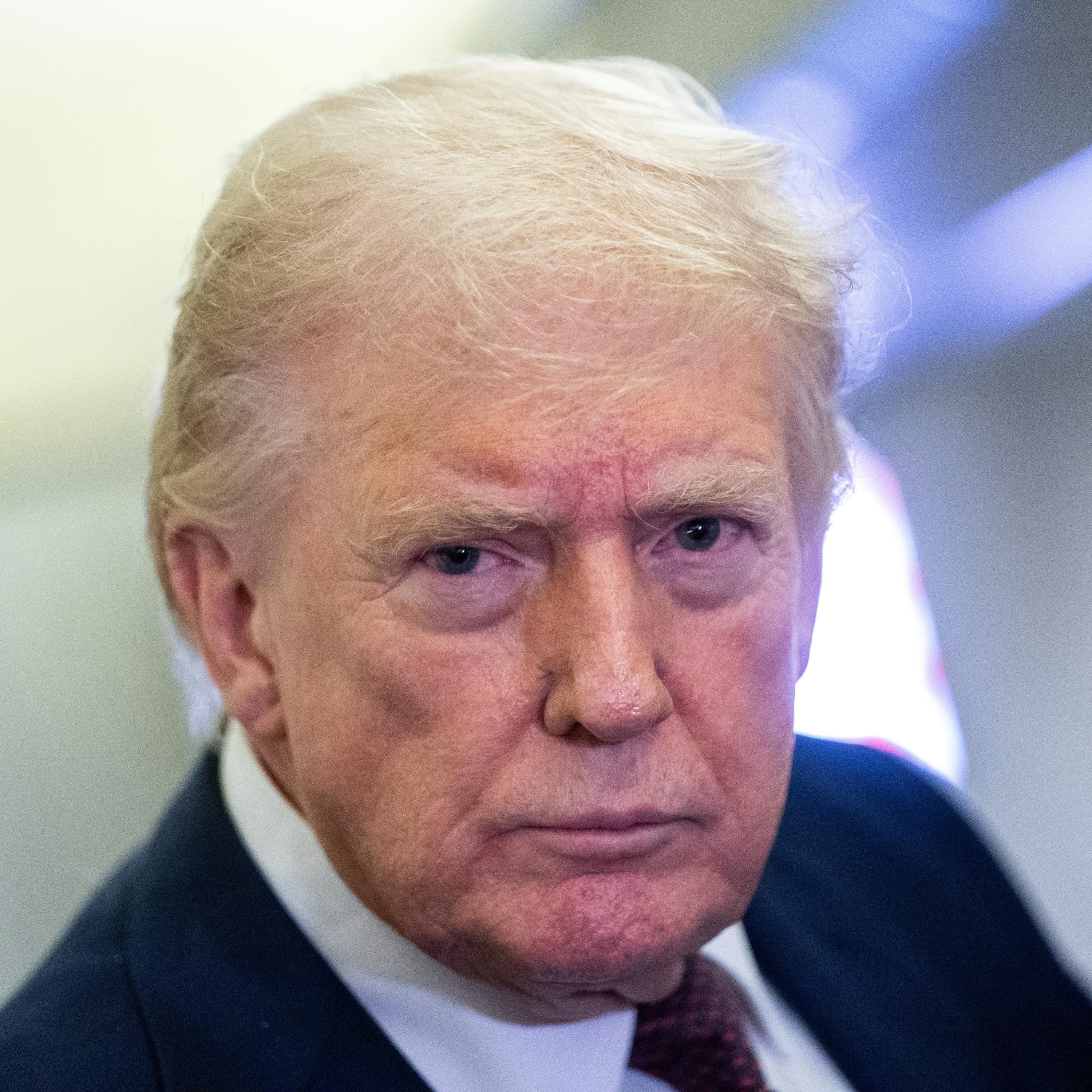
Today in Focus
Could Trump blow up Nato over Iran war? – The Latest
00:10:11
Donald Trump is pressuring European allies to protect the strait of Hormuz, warning that Nato faces a ‘very bad’ future if members fail to offer assistance. Lucy Hough speaks to the Guardian’s south Asia correspondent, Hannah Ellis-Petersen
Loading summary
Transcript26 lines
- [00:00]
Lucy Half
This is the guardian.
- [00:10]
Code 3 Advertiser
The path to purchase is more fragmented than ever. And that's exactly what Code three, a full service advertising agency, is built to solve. Today, your customers might discover you on social research on ChatGPT, read reviews on Amazon, and then buy on your website. But most brands still manage each of those touch points in silos. In this economy, every dollar has to work hard. Real growth happens when your retail partners and your website work as one. Code 3 is built at that intersection. We align paid search, paid social, programmatic marketplaces and creative into one connected growth engine that drives incremental revenue. Ready to stop siloing and start scaling? Visit code3.com that's code C O D E the number3.com.
- [01:01]
Hannah Ellis Peterson
We're going into what, the third week of this war and there is no sign of any of this violence relenting. It's very hard to see the temperature being kind of dialed down.
- [01:09]
Code 3 Advertiser
We're always there for NATO. We're helping them with Ukraine. It'd be interesting to see what country wouldn't help us.
- [01:16]
Hannah Ellis Peterson
It is in the interests of these NATO allies to find a way to secure and open the strait. And it is just a question of whether or not countries actually want to send their navies into the firing line.
- [01:26]
Lucy Half
Donald Trump threatens the future of NATO as he pressures allies to send ships to the Strait of Hormuz from the Guardians today. In focus this is the latest. With me, Lucy Half. I'm joined by Hannah Ellis Peterson, the Guardian South Asia correspondent currently in Dubai for us. Thanks so much for joining us, Hannah. So over the weekend, Donald Trump, the US President, has been putting lots of pressure on NATO allies as well as other partners around the world to help him reopen the Strait of H. Brittle crossing in the Gulf, in the Persian Gulf that is responsible for so much of the world's oil trade. What exactly is he asking of NATO and other partners?
- [02:11]
Hannah Ellis Peterson
Well, he's got one very simple demand is that he wants them to send their warships into the Strait of Hormuz to accompany the oil and gas tankers that are going through there that are currently being targeted by Iranian missiles and drones and that are causing this major disruption to one of the world's most important flows of energy in the world and causing oil to skyrocket exorbitant prices. And so he's essentially asking them to use their militaries to defend the oil and gas tankers and send their navies into this very, very small and very critical strip of sea.
- [02:46]
Lucy Half
We'll come on to the response of NATO and others in a second. But it's worth also saying that he has issued quite a kind of stark threat to NATO in particular, saying it could be very bad for its future. What are we getting the sense of the consequences that there might be if NATO refus, as seems to be the case, this demand? I mean, is this a question of sanctions, for example?
- [03:12]
Hannah Ellis Peterson
Who knows? This is Donald Trump. I mean, in the past, he's used tariffs as a very kind of punitive measure in these kinds of circumstances. What he means by very bad is very unclear. But what is true is that, you know, it is in the interests of these NATO allies also to find a way to secure and open the strait. This isn't only something that Donald Trump wants to do, but it is just a question of whether or not countries actually want to send their navies into the firing line and the consequences of that. And so I think there is a sense of countries kind of treading carefully of saying, you know, we, this is a priority for us as well. We want to ensure that oil and gas is flowing through their strait again, but also kind of ensuring that they're not brought into a war which they didn't start and which they have no intention of joining and have no intention of sort of putting their navies on the front line of.
- [03:58]
Lucy Half
And is there any sense that the US Is considering pulling out of NATO or that there's a threat that it might do that?
- [04:04]
Hannah Ellis Peterson
That's something that Donald Trump has made his threat repeatedly. Threated repeatedly. What that actually means is very unclear. He certainly kind of used that against to try and get what he wants in these circumstances. But it's very with him, it's very unpredictable and very hard to know. And it's hard to know what exactly will appease him in this situation.
- [04:24]
Lucy Half
What we do know is that the response from NATO, France, Germany, the UK has been very muted, very vague on what type of military support they would be prepared to provide, if at all. The uk, the Prime Minister, Keir Starmer, has been speaking this morning saying that it would be prepared to send minesweeping drones or that's certainly under consideration, but is ruling out sending ships with a view that that could further escalate the situation. And Starmer has been very clear that he doesn't want to get dragged into this war and to further escalate the situation. But there's also been a muted response from countries like Australia and Japan. Right.
- [05:02]
Hannah Ellis Peterson
I mean, for these countries to send their navies into the Strait of Hormuz at the current situation is Extremely risky and extremely dangerous. You know, these are countries not currently involved in this war. And, you know, but as soon as they put their navies into the Strait of Hormuz, and, for example, if they got hit by an Iranian missile, an Iranian drone, an Iranian mine in the water would be seen as a direct act of aggression against those countries and would risk bringing them into a war that they don't want to be a part of. You know, this waterway is currently very unsecure. There's no security in the skies. There's no security in the water. Iran's talked about laying mines in the water. And so, you know, to put their navies onto the front line and risk them being hit or targeted by Iranian missiles, you know, risks dragging all of these countries into a war that they're really desperate to try and keep out of as much as they can.
- [05:51]
Lucy Half
Yeah. And that perhaps the White House and the Trump administration have really underestimated how complex the situation is. You sense that Trump is looking for an easy way out of this, but Iran is saying it's not at all looking for a ceasefire and it will continue for as long as it takes. You are in the United Arab Emirates, in Dubai at the moment. We know that there's been continued attacks from Iran into the Gulf over the weekend. There's been continued U. S. Israeli strikes on Iran, but also heavy bombardment in Lebanon with a tragic 800 killed there. So the situation continues to be very febrile and very dangerous, doesn't it?
- [06:30]
Hannah Ellis Peterson
Yeah, I mean, we're going into, what, the third week of this war, and there is no sign of any of this violence relenting. I mean, yeah, I'm in Dubai right now in the uae, which has borne the brunt of the missiles and drones that Iran has been sending over into the Gulf as a form of retaliation over the weekend. You constantly hearing the low rumble of fighter jets. You get these alarms on your phones saying, there are missiles close by. Stay away from windows. Just this morning, Dubai airport was targeted. We saw a major port in the UAE targeted, which is where they export 2% of the world's oil comes out of this port. And you know repeatedly that they've been forced to halt any kind of loading of oil from there. You know, even in the Gulf, it still feels very, very volatile. And then, you know, beyond that, you've seen Israel launching fresh strikes on Iran this morning. You know, there's talk of possible kind of annexation in Lebanon. So there is no sense here of, you know, this kind of cooling down. And at the Other side, you've got Iran saying that they have no interest in negotiation or a ceasefire. It's very hard to see the temperature being kind of dialed down.
- [07:35]
Lucy Half
Yeah. And a U.S. administration and an Israeli government that perhaps seem increasingly isolated, perhaps in Trump's case, wanting to end the war as quickly as possible. But Netanyahu keen to press on, as is Iran. In perhaps a sign of how desperate the situation is becoming, Trump is keen to bring China into all of this. Given that Beijing relies so heavily on the oil that passes through the Strait of Hormuz. I mean, how plausible is that, given the state of US China relationship, the tariff war that we saw at the end of last year?
- [08:09]
Hannah Ellis Peterson
I mean, quite implausible. China has made absolutely no attempts to get involved in this, except for some sort of vague statements. And it doesn't seem like they're in any way willing to get entangled in Trump's war on Iran. They're an ally of Iran and, you know, they've made their own efforts to ensure the oil and gas are coming through the Strait, but for them, their interest is ensuring that their gas and oil comes through Chinese gas and oil. They don't have much interest in ensuring that American gas and oil than other Western countries. Gas and oil is coming through. There is no sense that China is in any way willing to certainly put warships on the front line. And so even though Trump is talking about pressuring China at this point, China has its own relationship with Iran and is securing its own interests there. Doesn't really need to bow down to the demands of Trump to ensure that they get what they need from Iran.
- [08:57]
Lucy Half
Yeah, and you've got some fairly major players in the global economy there, don't you? You've got the uk, France, Germany, Japan, Australia, others who are flat out refusing to bow to this pressure from Trump at the moment. It's worth saying that today. In Focus, we'll have a long look at the importance of the Strait of Hormuz in the global oil market and to enter the global economy at large. But for now, is there any sense, given that sort of relative coordination between those countries, refusing to bow down to Trump, that a diplomatic solution could be possible? Or do you think we risk further escalation?
- [09:32]
Hannah Ellis Peterson
I think ultimately it will have to be that, because there isn't a clear outcome of exactly what America wants with this war. Israel has its own agenda in terms of, you know, and we can clearly see that in the actions that they're taking in Lebanon. So I guess it's sort of dependent on how you know, America feels it can frame this as a victory and the point at which they feel they can kind of then say they would end it with negotiations. It doesn't feel like this is something that could be, you know, won by just kind of constant barrage of bombing. You know, Iran has made it very clear that they are not going to stop. And so, you know, it feels like a diplomatic solution is the only one that is possible to bring this to an end. But the ways in which that would take place, you know, are sort of impossible to predict.
- [10:10]
Lucy Half
Yeah. And we know that there was a very testy phone call between Keir Starmer and Donald Trump last night. Hannah, thank you so much for your time and stay safe in Dubai.
- [10:18]
Hannah Ellis Peterson
Thank you so much, Lisi.
- [10:21]
Lucy Half
That's it for today. And for more on Keir Starmer's response to Trump and his plans for energy bill support, don't miss today's episode of Politics Weekly. And to understand what's going on in the straight up Hormuz and why it's having a, such, such an enormous impact, keep your eyes and ears peeled for tomorrow morning's episode of Today in Focus. The latest will be back tomorrow night. This episode was presented by me, Lucy Half. It was produced by Annie Levespa. The senior producer was Ryan Ramgobin and the lead producer was Zoe Hitch. This is the Guardian.
- [10:58]
Hannah Ellis Peterson
Foreign.
- [11:03]
Code 3 Advertiser
The path to purchase is more fragmented than ever. And that's exactly what Code three, a full service advertising agency, is built to solve. Today, your customers might discover you on social research on ChatGPT, read reviews on Amazon, and then buy on your website. But most brands still manage each of those touch points in silos. In this economy, every dollar has to work harder. Real growth happens when your retail partners and your website work as one. Code 3 is built at that intersection. We align paid search, paid social, programmatic marketplaces and creative into one connected growth engine that drives incremental revenue. Ready to stop siloing and start scaling? Visit code3.com that's code C-O D E the number3.com Parle du Francai par if
- [11:52]
Babbel Advertiser
you've used Babbel, you would. Babbel's conversation based technique teaches you useful words and phrases to get you speaking quickly about the things you actually talk about in the real world. With lessons handcrafted by over 200 language experts and voiced by real native speakers, Babbel is like having a private tutor in your pocket. Start speaking with Babbel today. Get up to 55% off your Babbel subscription right now at babbel.com acast spelled B-A B B E L.com acast rules and restrictions may apply.
- [12:27]
Tommy John Advertiser
Guys, it's no use putting it off. The best time for an underwear refresh is now. Tommy John Underwear is designed for a perfect fit that stays put all day. There's zero chafe, thanks to four times more stretch than competing brands and their innovative horizontal quickdraw Fly is a game changer. With over 30 million pairs sold, there are thousands of men out there more comfortable than you don't settle for. Go to tommyjohn.com today for 30% off site wide with code comfort. That's tommyjohn.com comfort tommyjohn comfort perfected.