← Today in Focus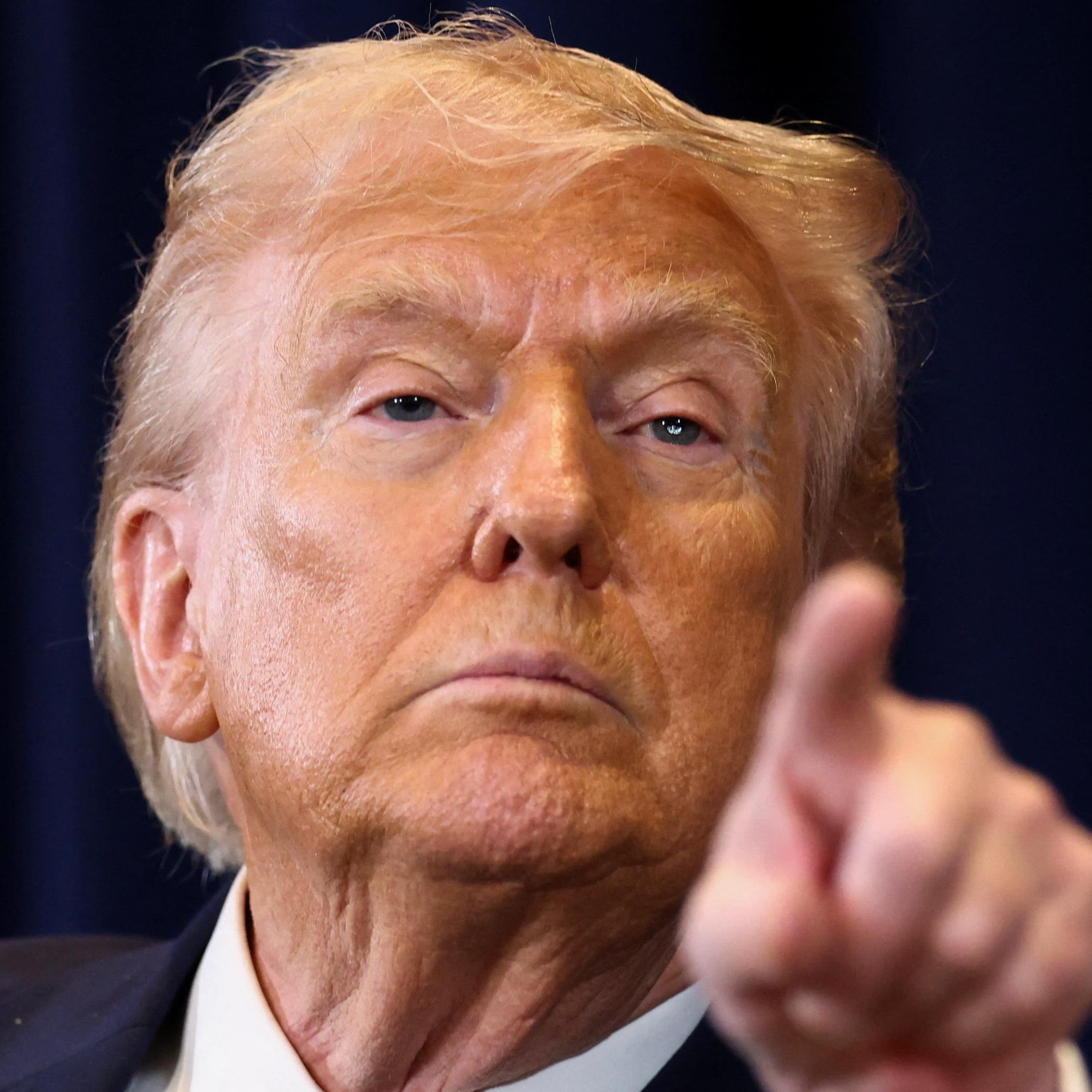
Today in Focus
Could Trump really end the war in Iran ‘very soon’? – The Latest
00:11:36
Donald Trump has held an astonishing press conference in which he said the war in Iran was ‘very complete’ and could end ‘very soon’, but also claimed that the US had not ‘won enough’. So is the war any closer to ending and has Trump underestimated the resilience of the Iranian regime? Lucy Hough speaks to the Guardian columnist Nesrine Malik
Loading summary
Transcript19 lines
- [00:00]
A
This is the Guardian.
- [00:12]
B
There isn't really a path for Donald Trump to come out and claim without egg on his face that this was a successful campaign. They're probably looking to some kind of off ramp.
- [00:23]
A
Are you thinking this week it will be over?
- [00:24]
B
No.
- [00:26]
A
But soon?
- [00:26]
B
I think so.
- [00:26]
A
Okay.
- [00:27]
B
And with respect, very soon. Look, everything they have is gone, including their leaders. I think that Iranians have a lot more appetite for this fight than Trump and I think the Americans in general would have expected.
- [00:40]
A
Donald Trump claims that the war with Iran is won, but not one enough. What does he mean? And what are the longer term risks for the wider region? From the Guardians today in focus, this is the latest. With me, Lucy Hoff. I'm joined by Nasreen Malik, a Guardian columnist. Nazreen, thanks so much for dialing in. It's great to see you. So if you're anything like me, you will have woken up this morning a little bit confused about the messaging from Donald Trump and the White House. Overnight, a series of interviews that he gave, one to CBS and then another a press conference at the White House where he variously described the war as being very complete, pretty much that it would be over very soon. He also described US Intervention in Iran as a short excursion. Meanwhile, US And Israeli strikes are continuing across the region. Iran is continuing its military activities. Do you feel Nazarene any clearer on what the US Strategy is, if at all? No.
- [01:41]
B
What is clear, though, is that they are in a bit of a quagmire now. The US Is in a bit of a quagmire. I wouldn't say the US And Israel is in the quagmire because Israel has kind of less to contend with. The Netanyahu government has less to contend with in terms of domestic policy, economic issues and concerns, upcoming midterms, et cetera. But as far as the US Is concerned, I think they're in a quagmire because I'm not sure what they expected was going to happen. I think maybe the hope was that once you decapitate the regime, once the Ayatollah is killed, then the IRGC and the rest of the Iranian regime will just lay down its arms, which was very unrealistic. But you can kind of see how they would think that. And once that didn't happen, now there's a situation where there isn't really a path to victory, shall we say? Right. There isn't really a path for Donald Trump to come out and claim with our egg on his face that this was a successful campaign if the regime is left intact. If the new ayatollah is now the head of that regime, if there is no material sense of dissolution and collapse on the part of the Iranian government, then the campaign has not worked. And so now I think they're stuck. I think there is a situation where they're probably looking for some kind of off ramp. And I'm not sure, ironically, that the Iranians would be interested in that now.
- [03:10]
A
Yeah. The Iranian regime and the IRGC have said they will continue and that Iran will determine the end of the war. They have chokeholded the Strait of Hormuz and chokeholding the supply of oil and gas to the world, something that has clearly rattled Donald Trump. It seems incomprehensible to your point that this wasn't factored in as part of the strategy when they were countenancing this type of military action on Iran. But it seems that that really wasn't taken into account. Donald Trump did say yesterday that he would step up, increase military strikes if Iran didn't stop that blockade of the Strait of Hormuz. Clearly trying to calm the markets, which have been really, really rattled by this activity.
- [03:56]
B
Yeah. I think what's becoming clear is that you have a clash of two ways of looking at the world and two ways of thinking about what survival is. Right. As far as the Trump regime is concerned, survival is about kind of going from one calamity, one adventure to the next while materially distracting or scattering domestic attention or diverting domestic attention from material, economic and social issues that have accumulated since the beginning of the Trump administration. The Iranian regime is in a fight for its life. Right. It's not just the existence of the government. It's the existence of a whole orientation, a whole ideology, a whole society and cultural product and way of living that has existed for decades and decades. Right. And so in terms of appetite, I think that Iranians have a lot more appetite for this fight than Trump, and I think the Americans in general would have expected, which also is a massive misreading of the Iranian regime. I don't think these sorts of foreign interventions and foreign campaigns would happen in the way they do, whether it's Iraq or Afghanistan or now Iran, if there was any sort of understanding of the dynamics and subjectivities under the hood of these regimes. So I think you kind of have to have that ignorance in the first place for this to happen. But there is a fundamental clash between the agendas, the appetites, the durations, the capacity for pain, I think between Trump and the Iranian government. Yeah.
- [05:43]
A
And as you say, Iranians who are supportive of the regime now rallying behind a new leader. And the messaging from Trump on that yesterday seemed to be like, well, this has been successful because Iran's lost its leader, but that is clearly far from that clear cut. The other person who has been consistent that you touched on is Benjamin Netanyahu, the Prime Minister of Israel, who's indicated that he is absolutely not done yet. And that influence from Israel seems to be hugely determinative in what the US Likely does next.
- [06:16]
B
Yes, I think there is an element there of again, divergent capacities for pain and appetites. I think for Netanyahu there is something useful in having a war with Iran kind of rumble on and on without a decisive outcome, because that then justifies and keeps open campaigns in Lebanon. It justifies the maintenance of an existential threat from the Iranian regime and its proxies there. It's just a very useful propaganda tool that would, as far as Netanyahu is concerned, justify the state of sort of perma war in the Middle east and dominion over the entire region. Because there's all these sorts of whack a mole threats that arise from the Iranian regime and its proxies. And so it's not in Netanyahu's interest to bring this campaign to a close anytime soon, and certainly not in his interest to bring it to an end in a way where Iran is not a threat or cannot be cast as a threat anymore.
- [07:21]
A
You've written a really brilliant column, Nazreen, about how talking about this as a sort of triptych of Washington, Israel and Iran misses a much bigger story, which is the instability or the risk of instability in the wider Gulf region, which is, you know, we think of the Gulf often as being this kind of homogenous, stable block. But you've written about how that is. It's much more complex and nuanced than that.
- [07:49]
B
It's much more complex and nuanced, as it always is, much more complex and nuanced when it comes to these territories that are just expected to subject themselves to the fallout of US intervention. But the Gulf in particular has been, I would say for the past five to 10 years maximum, has been at an inflection point when it comes to different countries. So Saudi Arabia is undergoing this massive liberalization drive. The UAE has become much more active in terms of foreign policy and backing proxy wars in Africa and the Middle East. Qatar has also been trying to kind of emulate the Dubai model and becoming much more Westernised, hosting the World Cup. There's all these shifting countries who are trying to position themselves as centers of global commerce, entertainment, sport, culture, et cetera, that each has a lot of baggage. Right. These are not states that are naturally a similar b necessarily aligned on matters of Israel, the Palestinian state, Palestinian cause, and also their relationship with Iran. And so the problem now is that if you only take this war as a matter of what Tehran, Tel Aviv and DC Are going to do, while these three countries and other smaller Gulf countries are being pummeled in the middle of them, what you're also doing is creating the conditions of an unraveling that no one has ever seen before. Right. I couldn't even tell you what could possibly come about if this continues for a few more weeks, let alone months. These countries have not seen open combat before. They've not seen this kind of destruction or booms or drones or missiles in their airspace, apart from Qatar, which saw it very briefly a few months ago with Israel. And so especially if there is an Iranian regime that is sort of left half hanging, if Trump withdraws because his appetite runs out for this sort of open ended conflict, the spillover of that, the anger and the resentment and the relationships that these three states have with Iran, this is the only thing people don't quite realize is that even though Iran is a, you know, a country under sanctions that's a pariah and blockaded there, it has very close relations that it manages behind the scenes with these countries as well. I mean, notably with Qatar, it shares a gas field with Qatar in the Persian Gulf. And so there is also how these relationships that were negotiated to a point of very fine balance and stability between these Gulf powers and Iran after this war, how can that balance be restored? So it's very worrying.
- [10:43]
A
It's very worrying and more worrying that Donald Trump describes this as an excursion given the picture that you've just outlined so brilliantly. Thank you so much, Nazrin.
- [10:53]
B
Thank you for having me.
- [10:55]
A
That's it for today. My huge thanks again to Nazri Malik. You can keep up with her work over@theguardian.com and do have a listen to our sister podcast, Science Weekly, which has a fascinating episode from Ian Sample looking into whether Iran was really building a nuclear weapon. Thanks for listening to this episode of the Latest, the new evening edition of Today in focus. Today in FOCUS will be back in your feeds as usual tomorrow morning. The latest will be back to tomorrow night. This episode was presented by me, Lucy Hoff. The senior producer was Ryan Ramgobin. The lead producer was Zoe Hitch. This is the Guardian.