← Today in Focus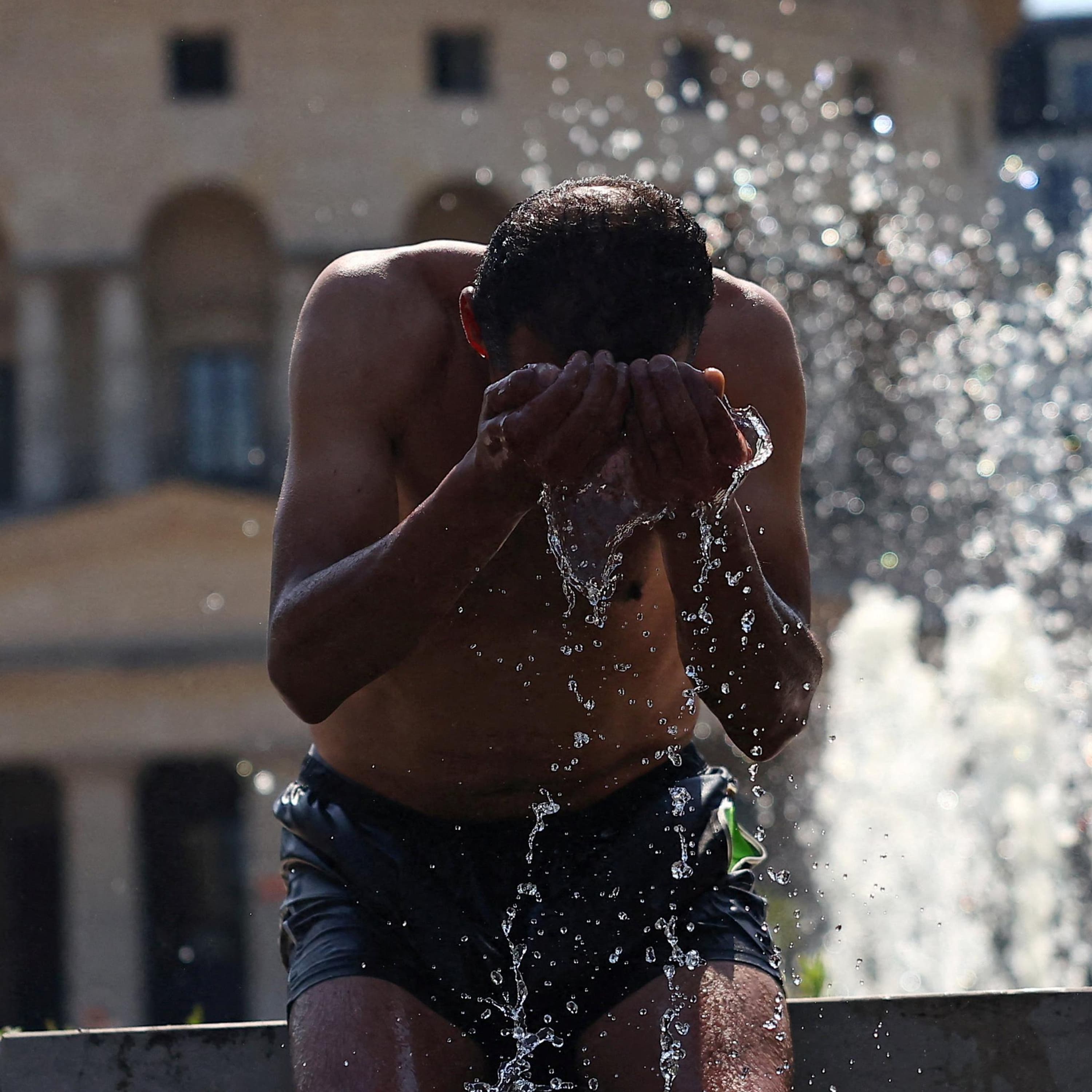
Today in Focus
Deadly heatwave grips Europe with record high temperatures - The Latest
00:11:33
Europe is dealing with a debilitating heatwave, with schools closed, trains cancelled and France holding an emergency meeting after heat-related deaths. Lucy Hough speaks to Europe environment correspondent Ajit Niranjan
Loading summary
Transcript15 lines
- [00:00]
A
This is the Guardian.
- [00:10]
B
We are seeing these temperatures of 40 and above and I think that's something that it's just very hard to comprehend. These are uncomfortable temperatures and it quickly becomes dangerous. There have already been dozens of reported deaths. We're not used to the heat and so we maybe failed to adapt when heat hits and maybe we weren't even very prepared in the first place.
- [00:29]
A
From the Guardians today. In focus, this is the latest. With me, Lucy Hoff. Europe is experiencing its second deadly heat wave at a very early stage of the summer, with the situation particularly acute and deadly in France at the moment, but soon to spread to other parts of Europe. Ajit Naranjan, you are the Guardian's Europe environment correspondent. Can we start with France? Because France has experienced a particularly terrible night and there have been sadly, multiple deaths, haven't there?
- [01:01]
B
So France has seen its hottest afternoons and nights on record if you average the temperatures out across the country. And there have already been dozens of reported deaths. Now, many of these are actually from drowning as people enter water bodies trying to cool down. A lot of them are very young people, young children in some cases. But there have also been cases of people reportedly dying from heat stroke, which I guess is what many of us think about when we talk about heat waves and I don't know, being caught outside having maybe not drunk enough water or working in a job like on a farm or sweeping a street. In one particularly tragic case, there were two young children who were found dead in a car in southwestern France. And although it's unclear exactly what happened, the public prosecutor is treating heat as the most likely line of inquiry. And this follows similar deaths in Spain just during the last heat wave, which, I mean, as any listeners in Western Europe will know, was only a few weeks ago. And in one of these cases, again, a toddler died after being left in a car during just brutal heat.
- [02:03]
A
It is absolutely heartbreaking, the reporting about those two children left in a car in those conditions. Ajit, there's a meeting, a top level meeting in the French government this afternoon. What do we know about the sort of measures that are being considered? As you say, some of this is about people kind of going into water resources to keep co. But it's also about closing schools as well, isn't it?
- [02:29]
B
Yeah. One of the big things that happens during heat wave when countries or cities respond well is that they adapt daily life. In some cases, employers letting people leave work early or not coming to work at all. And schools is a particularly important one. Right. We're just talking about how Children are very much at risk. And some schools have been closing, are closing this week, not just in France, but in other places. And there's kind of two reasons for this. On the one hand, teachers are kind of forced to send kids home because it's just too hot to concentrate. You can't study in these temperatures. Employees will also know, but maybe have less flexibility that you also often can't work in these conditions. But it is always a bit of a question mark. Right, because children are returning to homes. Some of them may be going to very nice air conditioned homes. Some of them might live in nice green areas where they've got something happening to get rid of this urban heat island effect that just baked cities further than the surrounding countryside. But others will be going to poorly insulated homes that kind of just let the heat get soaked up.
- [03:32]
A
So these existing wealth disparities that will invariably affect those on lower incomes and the most vulnerable, which is really worrying. Here in the uk we're about to. We're expected to see record temperatures this afternoon for June. Similarly, as in France, there are a number of schools that are closing. That seems to be quite a widespread measure. You're in Berlin where the heat wave hasn't quite hit but is coming down the track, is that right? And what does it look like across Europe?
- [04:03]
B
Exactly. So Germany for now is. I mean, it's still very hot. I think the issue when some of these heat waves hit is that your sense of scale just completely warps. Right. I think I was in 32 or 33 degree heat outside on Saturday for the whole day. And these are uncomfortable temperatures. You kind of quickly move past the threshold where sitting with your friends in a park and maybe enjoying a beer or something is fun, and it quickly becomes dangerous. And so parts of particularly western France and across Spain, you are like, if you open up these maps of what the weather has been over the last 24 hours or what it's forecast for the rest of the week, we are seeing these temperatures of 40 and above. And I think that's something that it's just very hard to comprehend in most of Western Europe.
- [04:50]
A
Yeah, well, it's temperatures that are perhaps comprehended in places like Greece, Portugal, Spain, that have fairly regularly in the last few years seen temperatures reach nearly 50 degrees, sort of the high 40s, and have perhaps been able to make adaptations as they've seen those higher temperatures. But what's been striking this year is that these temperatures are being reported in countries like Belgium, northern France, the uk, that are sort of unprecedented for this Part of the summer. What do you think we can learn from some of those countries that have perhaps adapted to the kind of high 30s, early 40s type temperatures that we're now seeing?
- [05:31]
B
Yeah, so on the one hand you have these countries across Southern Europe, on the Mediterranean, which by far are exposed to the most kind of astonishing temperatures that really lead to push the body past what it's able to cope with. And then on the other hand you have northern European countries where we're not used to the heat and so we maybe fail to adapt when heat hits and maybe we weren't even very prepared in the first place. Now, three quite concrete things I think can be taken away from what Southern Europe has done. One is shade buildings are just designed differently. Now, plenty of southern European cities are still very concrete, heavy and hit by the suburban heat island effect. But you do see a lot more of these smaller scale measures like external shading outside houses, which is really one of the easiest, simplest ways of reducing the heat. And the kind of the thermal mass of a building is what scientists talk about. Then take a step away from kind of how buildings and cities are designed. One thing that we all have quite a lot of power over is how we act in a heat wave. And this attitude of kind of how our behaviour is set up to manage heat, it does vary hugely across Europe. And some countries maybe have more of a culture of kind of staying indoors during the hottest parts of the day, having dinners later on in the evening when temperatures are cooler, staying outside when the kind of peak of the heat has dropped. These are things that maybe we will see more and more in northern European countries where potentially as children we never reckoned with the idea of getting to sit outside at 9pm and have a late dinner in the middle of the street. That kind of southern European lifestyle is coming further north with that. And the third thing maybe worth mentioning is air conditioning across Europe is maybe prevalent at much lower levels than you would see in places like the United States or parts of East Asia. Many countries have been quicker, or many cities in particular have been quicker at adopting this. There's always a lot of debate about to what extent air conditioning should be used in tackling excess heat or providing relief from excess heat. Scientists often will point out, yes, it is very draining in terms of energy. Yes, if your electricity is coming from a fossil based power grid, then yes, it's produces emissions that do further heat the planet. But they also say that the death toll from heat is just so astonishingly high that use of air conditioning can be Very helpful. And so in some countries and cities have thought about installing air conditioning in public spaces. So particularly places where people are vulnerable. And that means hospitals, care homes, increasingly schools. And that was actually in the uk I think the subject of a recent adaptation report from the Climate Change committee was recommending that within the next decades we do get air conditioning in care homes, nursing homes, in schools.
- [08:19]
A
Ajit, you did a really fascinating episode of our sister podcast Science Weekly yesterday about the various science and climate factors that are playing into this. Obviously linked to the climate emergency. But there's also the El Nino weather phenomenon which is beginning but is expected to turn into a super El Nino by the end of the year. The percentage of that is rising. So I guess in terms of solutions or ways to cope with this, I mean, what we've been talking about is structural and long term, but what are some of the shorter term options that we can be looking at to keep people safe?
- [08:54]
B
We can say that the heat that we're experiencing is very much from combination of natural variation plus all this extra warming that we've heated the planet up from burning fossil fuels, from destroying nature, and so just adding all these planet heating pollutants into the atmosphere. El Nino is going to hit later on in the year. It's forming currently in the Pacific. By November or so, it's expected to peak in strength. And that basically means next year will scientists kind of expect will quite likely be a horrifically hot global year. For now, this summer it's already, I mean, we're only a few weeks into the summer and it's already shaping up to be a very, very hot one here in Europe. The best advice I think that a lot of that health experts give is drink water, stay in the shade, avoid the hottest parts of the day, keep your windows and blinds closed if you've got them, if you can, so that you don't have direct sunlight filling your rooms might sound counterintuitive, but don't always just leave your windows open because at a certain point, if it's hotter outside than inside, then you're just letting even hotter air into your house. All of that being said, one very urgent thing that people often say can have almost an outsized impact is basically checking in on vulnerable neighbors, family members, friends. And that is partly because the people who are dying in heat waves are most often people with underlying health issues. People who are older, women are more at risk, people who are pregnant are more at risk. I don't know. I mean, it's something where I've heard doctors describe it as just a very, very easy fix, particularly if people are living alone in these conditions. They don't have air conditioning, they maybe don't know how to respond as quickly when heat hits. There's a lot that can be done.
- [10:38]
A
Yeah. A very simple measure which could really save lives in what feels like an unbelievably rapidly changing climate. Ajit, thank you so much.
- [10:46]
B
Thank you very much.
- [10:49]
A
That's it for today. My huge thanks again to Ajit Naranjan, the Guardian's Europe environment correspondent. You can keep up with all his reporting over@wtheguardian.com don't miss yesterday's episode of our sister podcast, Science Weekly, which we mentioned in the episode, which goes into more detail about the science driving this week's heat wave. Thanks for listening to this episode of the latest TODAY in FOCUS will be back in your feeds as usual tomorrow morning. The latest will be back tomorrow night. This episode was presented by me, Lucy Hoff. It was produced by Annie Levesper and Bryony Moore. The senior producer was Ryan Ramgobin. This is the Guardian.